
Most Affordable Trade School & Training Programs - Leading Certification Courses in Northeast for 2026

Co-Founder and Chief Data Scientist
Choosing the right trade school can be a life-changing decision, especially in the Northeast where options abound. This article introduces a carefully crafted trade school programs ranking developed by the Research.com team of data scientists to guide you through the best affordable choices for 2026.
By reading this, you’ll gain valuable insights that make navigating schools simpler and more confident. Earning a trade school diploma or certification opens doors to rewarding careers and personal growth. Exploring these options could be your first step toward a fulfilling future.
Key benefits of finishing trade school programs trade school in Northeast
- Strong earning potential: Trade school graduates in the Northeast can start with salaries ranging from $37,830 to $60,000 per year, with electricians earning up to $130,000 as they gain experience.
- Popular career paths: Many graduates pursue jobs as electricians, plumbers, HVAC technicians, or elevator installers, all of which offer rewarding and in-demand opportunities in the region.
- Flexible online options: Getting a trade school certification online allows students to balance learning with life, saving time and money while still earning valuable credentials recognized across the Northeast.
- Most Affordable Trade School & Training Programs - Leading Certification Courses in Northeast for 2026
- What can I expect from trade school programs trade schools in Northeast?
- Where can I work after finishing trade school programs trade schools in Northeast?
What can I expect from trade school programs trade schools in Northeast?
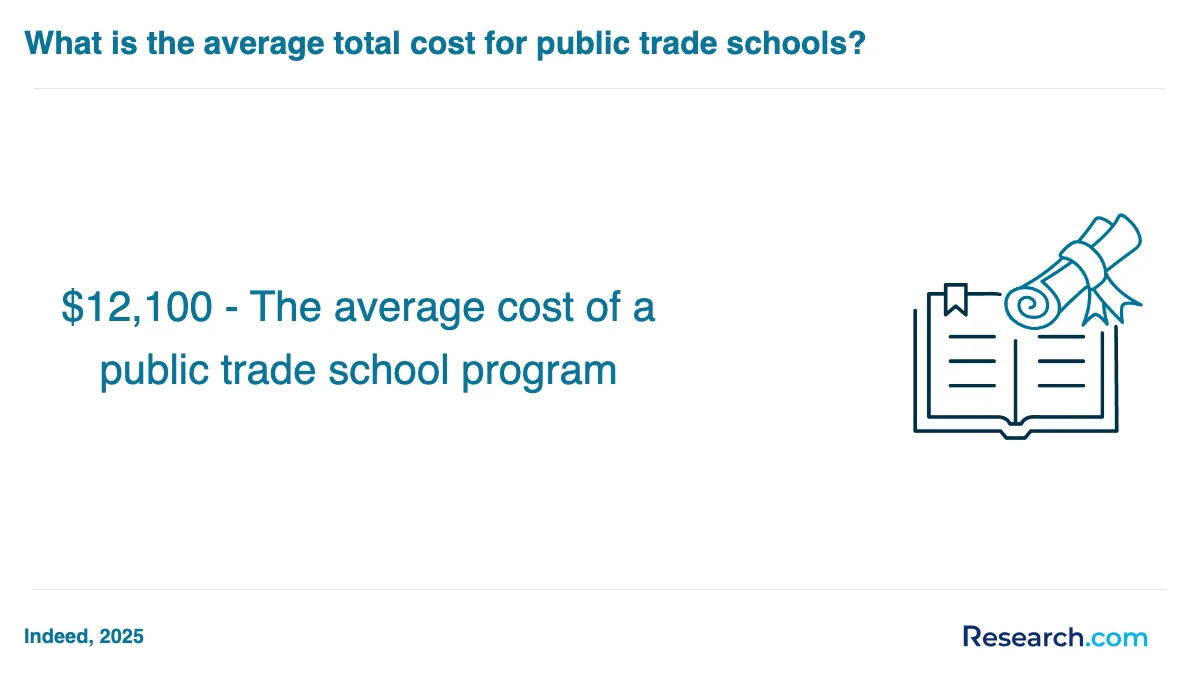
Trade school programs in the Northeast typically cost around $11,000 to $12,000, with Southeastern Technical Institute citing an estimated expense of $11,125 for some of its programs. Graduates often find this investment reasonable, especially given the hands-on training and up-to-date facilities these schools provide.
Students attending institutions like North American Trade Schools or SUNY Cobleskill benefit from programs regularly updated to meet industry demands. This keeps their skills relevant and opens doors quickly after graduation. Many students appreciate the flexible scheduling options-day, evening, or part-time classes-allowing them to balance work and study effectively.
Financial aid options play a crucial role for many students, helping to lighten the cost burden through federal grants and scholarships. The support doesn't stop at tuition; career services here actively assist with job placement, which many graduates cite as a vital factor in their smooth transition to employment in skilled trades or technical fields.
Where can I work after finishing trade school programs trade schools in Northeast?
After finishing a trade school program in the Northeast, graduates quickly find work in high-demand fields like HVAC, electrical work, welding, and facility maintenance. Many HVAC graduates secure jobs with commercial or residential companies, or in places like hospitals and schools, thanks to programs at well-known trade schools that align training with local employer needs.
Electricians and welders frequently land positions in bustling cities such as Boston and New York, joining construction firms, electrical contractors, or public utilities. Graduates often share how they started with apprenticeships, moving steadily toward salaries ranging from $55,000 to $110,000 annually.
Facility maintenance technicians find consistent work maintaining large office buildings, hotels, or government facilities, often through property management companies. Appliance repair graduates enjoy opportunities with service providers or by launching small businesses, discovering firsthand the independence this path offers.
Many trade schools also provide job placement support, so graduates feel confident stepping into careers where their hands-on certification skills are highly valued across urban and rural Northeast communities.
After finishing a trade school program in the Northeast, you can expect to earn a salary typically ranging from about $37,000 to $56,000 in your first few years. Graduates from North American Trade Schools near Baltimore reported making around $37,830 just one year after finishing, increasing to $45,750 after five years. This steady growth shows many students move into comfortable earning territory relatively quickly.
For those pursuing skilled trades, the numbers get even more encouraging. Electricians and plumbers in the region commonly earn around $56,000 per year, which means you could be supporting yourself well shortly after you finish your program. Barbers and hairstylists start near $47,000, and experienced pros can make upwards of $51,600.
At Northeast Wisconsin Technical College, trade-related graduates reported making a median salary of $52,250 just six months after finishing, highlighting fast employment and good pay in the region. Knowing this, enrolling in a Northeast trade school can lead to a fulfilling career with a dependable income.
- Applicants need a high school diploma, GED, or equivalent, and may have to pass an admissions test and an interview.
- Tuition costs typically range from $5,000 to $15,000, with financial aid options like federal grants available through FAFSA.
- Programs usually last one to two years and focus on hands-on learning with small class sizes.
- Employment is strong in healthcare, construction, and maritime trades, supported by employer partnerships and internships.
- Entry-level salaries range from $35,000 to $55,000, while experienced tradespeople can earn $60,000 to $80,000 or more annually.
Trade school programs in the Northeast typically take between 9 and 24 months to complete when attending full-time, making them a practical choice for those eager to enter the workforce swiftly. Many graduates from well-known regional schools share how finishing a diploma or associate degree in plumbing or electrical work within one to two years gave them the confidence to start earning quickly.
For those seeking quicker options, short-term certificate programs-lasting anywhere from a few months to a year-are common. These are popular in fields like HVAC, medical assisting, and welding, and graduates often appreciate how fast they could get their certifications and begin hands-on jobs.
Some apprenticeships, like those offered through partnerships at certain Northeast technical centers, extend for multiple years. Graduates note the value of combining paid work and coursework over three and a half years, which builds strong industry connections and skills, even if the total commitment stretches beyond typical trade programs.
Choosing full-time versus part-time also affects completion time; part-time students can expect longer durations but benefit from balancing work or family.
Online trade school programs in the Northeast offer unmatched flexibility, ideal for students juggling work or family. Graduates often mention how being able to study from home or on their own schedule made finishing courses feasible despite busy lives. For example, a student pursuing HVAC certification online appreciated accessing lectures at midnight after a day job, something traditional classes couldn't allow.
On-campus programs at well-known Northeast trade schools excel in hands-on training. Graduates reflect on the value of working directly with equipment in workshops, guided by experienced instructors. This direct mentorship and physical practice are crucial for fields like electrical work or CDL training, where muscle memory and real-world skills matter.
Networking also stands out. Those on campus benefit from daily interactions with peers and local employers, cultivating professional relationships that often lead to job offers. Conversely, online students rely more on virtual connections, which can feel less personal but still supportive for many.
Ultimately, choosing between online and on-campus depends on your lifestyle and the trade's demands.
The average trade school cost in the Northeast generally falls between $5,000 and $15,000, depending on the program's length and institution type. Graduates from schools like Naugatuck Valley Community College in Connecticut often remark on the manageable tuition of about $5,319 for associate degrees and certificates, making it a practical choice for those balancing work and studies. Similarly, students at Thaddeus Stevens College of Technology in Pennsylvania face average net prices near $5,742, providing solid value for trade-related certificates without an overwhelming financial burden.
Northeast trade school tuition and fees vary with program type and school ownership. Certificate programs, lasting 3 to 12 months, typically cost $3,000 to $10,000, reflecting many hands-on quick-start courses. Diploma programs, spanning 9 to 18 months, run from $5,000 to $15,000, aligning with public community college rates like those at Springfield Technical Community College, where the average net price stands at $7,770. Associate degrees, longer and more comprehensive, push costs higher, sometimes reaching $25,000.
Public trade schools in the region remain the most affordable option, with average tuition around $8,730, while for-profit schools may charge upward of $16,050. Nonprofit institutions often trend toward $19,300 for certificates but frequently include added resources or specialized training. Many graduates were relieved to find financial aid and scholarships helped offset costs, making their investment in skills feel worthwhile. For prospective students exploring practical, cost-effective pathways, especially those interested in fields like HVAC, exploring the best hvac online course with certificate can be a smart, accessible step.
Trade school students in the Northeast can tap into a variety of financial aid options that make completing their programs more affordable and manageable. The first essential step is filling out the FAFSA as early as December 2024, since this opens the door to federal grants like Pell Grants and Direct Loans. Graduates often say that qualifying for these funds eased their worries about tuition and helped them focus on hands-on training.
State grants are another crucial resource. For example, students in Massachusetts benefit from the MASS Grant if they submit FAFSA by May 1. Those in New York and Pennsylvania have access to their states' specific grant programs with spring or summer deadlines. Early applicants frequently share relief at securing funds before courses start, reducing financial stress.
Many Northeastern trade schools also offer merit-based scholarships and institutional grants. At well-known universities, over 70% of first-year students receive such aid, creating a supportive environment where learners can thrive. Tools like Net Price Calculators help prospective students forecast their costs, giving them confidence before enrolling.
External scholarships targeting technical fields further supplement aid, often rewarding strong GPAs or specific programs. This layered approach means students pursuing trade careers in the Northeast often find ways to fund their education without daunting debt, fueling optimism about their futures.
To enroll in a trade school program in the Northeast, you'll need to meet several straightforward prerequisites designed to set you up for success. Most schools require proof of a high school diploma, GED, or recognized home study certificate. Graduates often recall that having these documents ready early eased their enrollment significantly. For students with international diplomas, evaluations through recognized services like NACES smooth the process.
Applicants typically undergo an admissions interview, where they discuss goals and program options with a representative. This personal meeting is an opportunity to ask questions and tour the facilities, making the school feel more approachable-a moment many students remember as reassuring and motivating.
- Passing an admissions assessment such as the COMPASS or Wonderlic test is common to demonstrate readiness in math and reading.
- Submission of a valid government-issued photo ID and, sometimes, immunization records is required.
- Proof of English proficiency must be shown either through prior education, tests like TOEFL, or an internal English assessment.
Some programs, especially in healthcare or transportation, may ask for background checks or drug screenings. For example, graduates from popular Northeast trade schools in construction remember these steps as necessary hurdles before hands-on training began. Overall, these prerequisites make the pathway clear and manageable, helping you focus on your career goals with confidence.

Trade school programs in the Northeast focus heavily on fields that promise strong job prospects and hands-on learning. Graduates often praise the balance between classroom theory and real-world practice found at schools like Capital Region BOCES in New York or the New Castle School of Trades in Pennsylvania. Typical courses include:
- Skilled trades such as electrical, plumbing, carpentry, and building trades-essential skills in the region's construction industry.
- Heating, Ventilation, Air Conditioning, and Refrigeration (HVAC/R), with many short-term intensive options in states like Maine.
- Health sciences programs, including sterile processing and early childhood education, often paired with clinical experience at local hospitals.
- Automotive technology, diesel repair, and CDL trucking courses that prepare students for work in vehicle maintenance and transportation logistics.
- Manufacturing, welding, machining, and drafting courses that support the region's industrial sectors.
- Programs in criminal justice and entertainment technology reflecting emerging workforce needs.
Graduates consistently highlight how these programs are designed around local employer needs, making them confident about securing well-paying, stable jobs soon after completing their studies.
Trade school programs in the Northeast provide a variety of specializations designed to match local industry needs and student ambitions. Graduates often share how hands-on training in areas like automotive technology, healthcare, and skilled trades opens doors to well-paying jobs quickly. For example, Pennco Tech campuses emphasize career-training programs in healthcare and automotive technology, equipping students with practical skills that employers actively seek.
Construction specialization is strong in this region. At the New England Institute of Technology, students can dive into floor and wall trades, mechanical and electrical specialties, building science, and sustainability, which helps graduates confidently enter competitive construction roles. Similarly, the New Castle School of Trades updates its curriculum with employer input to focus on welding, electrical technology, industrial maintenance, and building trades, preparing students for immediate workforce entry with industry-relevant expertise.
For those seeking versatility, schools like North American Trade Schools in Baltimore offer seven skilled trades programs from automotive to HVAC and electrical. Students appreciate this range since it matches diverse career paths and local job demand.
If affordability is a priority, considering most affordable electrician trade school programs online can provide access to quality education while managing costs effectively.
To choose the best trade school program in Northeast, start by verifying that the school holds regional accreditation. Graduates from well-known institutions in the region often share how this ensures their credentials are respected by local employers and licensing boards. Next, consider programs that match your career goals, whether healthcare, skilled trades, or technology. For example, students leaving colleges popular in the Northeast recall how hands-on training and industry certifications boosted their confidence and job prospects immediately after graduation.
Reputation matters. Look into job placement rates and alumni success stories from schools in your area. Many students from established Northeast schools have expressed satisfaction with strong employer connections and post-graduation support, which made their job searches smoother and more rewarding. Financial considerations are crucial, so compare tuition and financial aid options carefully. Tools that break down net costs can help you avoid surprises.
Finally, focus on location and scheduling flexibility. Many working students appreciate part-time or evening classes offered by trade schools for auto mechanics and other disciplines. You can explore trade schools for auto mechanics in Northeast that offer such options, making it easier to balance education and life responsibilities while advancing your career.

Trade school graduates in the Northeast find career opportunities for trade school graduates in Northeast that align closely with regional industry demands. Popular trade schools like New England Institute of Technology equip students to enter skilled trades jobs in Northeast region sectors such as construction, welding, and electrical work. Graduates often take on roles as commercial contractors, electricians, or HVAC technicians-positions supported by rapid job growth and local infrastructure projects.
Many programs emphasize hands-on skills and real-world equipment, reflecting what employers seek. Graduates from schools such as New Castle School of Trades report smooth transitions to jobs in plumbing, diesel technology, and commercial truck driving. Opportunities also extend into health sciences, criminal justice, and early childhood education for those interested in public service.
These options are complemented by flexible online pathways; for example, students can explore the cheapest maintenance technician online courses to supplement their training while maintaining other commitments.
Looking at skilled trades jobs in Northeast region through this practical lens, career paths stand out as varied, well-supported, and immediately applicable to local labor markets.
The job outlook for trade school graduates in Northeast is strong due to ongoing shortages in skilled trades like construction, HVAC, welding, and plumbing. Graduates from regional institutions, such as Northeast Technical Institute in Maine, frequently report smooth transitions into stable jobs because the curricula are tailored to local industry needs. Many students complete hands-on programs and internships that lead directly to employer connections.
Skilled trades job demand in Northeast remains particularly high as large construction and infrastructure projects receive significant government funding. Trade schools in the area often collaborate with local businesses to offer apprenticeships, ensuring graduates gain relevant certifications and real-world experience needed by employers.
Many graduates enjoy competitive salaries and benefits, reflecting the region's higher cost of living and strong union presence. For those weighing their options, understanding the vocational school vs college dynamic can clarify the advantages of targeted trade training, including rapid job placement and career growth in the Northeast market.
Most Affordable Trade School & Training Programs - Leading Certification Courses in Northeast for 2026
# 1 position
Wor-Wic Community College - Computer and Information Sciences, General.
associateWor-Wic Community College offers a hybrid Computer and Information Sciences, General program that includes some distance-education options. The program covers computing, computer science, and information science and systems without focusing on specialized subfields. The annual in-state tuition is $3,744. The program is accredited by the Middle States Commission on Higher Education.
# 2 position
Wor-Wic Community College - Criminal Justice/Police Science.
associateWor-Wic Community College offers a Criminal Justice/Police Science program designed to prepare students for law enforcement roles including patrol, investigative duties, traffic and crowd control, and evidence management. The hybrid program provides some distance education options. Annual in-state tuition is $3,744. The program is accredited by the Middle States Commission on Higher Education.
# 3 position
Wor-Wic Community College - Welding Technology/Welder.
associateWor-Wic Community College offers a Welding Technology/Welder program that trains students in various welding techniques including arc welding, resistance welding, brazing, soldering, and high-energy beam welding. The curriculum covers welding metallurgy, safety, structural design, and applicable codes, preparing individuals to work with ferrous and non-ferrous materials. The program is accredited by the Middle States Commission on Higher Education. Annual in-state tuition is $3,744.
# 4 position
Wor-Wic Community College - Physical Therapy Assistant.
associateWor-Wic Community College offers a Physical Therapy Assistant program in a hybrid format, combining in-person and distance education. The program trains students to implement treatment plans, conduct interventions, and track patient progress under a physical therapist's supervision. Coursework covers anatomy, biomechanics, clinical documentation, neuroscience, and professional ethics. Annual in-state tuition is $3,744. Median earnings one year after completion are $40,345. The program is accredited by the Middle States Commission on Higher Education.
# 5 position
Wor-Wic Community College - Business Administration and Management, General.
associateWor-Wic Community College offers a hybrid Business Administration and Management, General program designed to prepare students for planning, organizing, directing, and controlling business functions. The curriculum covers management theory, human resources, accounting, logistics, marketing, and business decision-making. The annual in-state tuition is $3,744. The program is accredited by the Middle States Commission on Higher Education.
# 6 position
Wor-Wic Community College - Heating, Air Conditioning, Ventilation and Refrigeration Maintenance Technology/Technician.
certificate or diplomaThe Heating, Air Conditioning, Ventilation and Refrigeration Maintenance Technology/Technician program at Wor-Wic Community College trains students to repair, install, service, and maintain heating, air conditioning, and refrigeration systems. The curriculum includes diagnostic techniques, testing equipment use, and principles of mechanics, electricity, and electronics. The program's annual in-state tuition is $3,744. It is accredited by the Middle States Commission on Higher Education.
# 7 position
Wor-Wic Community College - Welding Technology/Welder.
certificate or diplomaWor-Wic Community College offers a Welding Technology/Welder program focused on applying technical skills for joining or cutting metal surfaces. The curriculum covers arc welding, resistance welding, brazing, soldering, high-energy beam welding, and welding metallurgy. Students learn about structural design, safety, and applicable codes. The program is accredited by the Middle States Commission on Higher Education. Annual in-state tuition is $3,744.
# 8 position
CUNY Queensborough Community College - Criminal Justice/Law Enforcement Administration.
associateThe Criminal Justice/Law Enforcement Administration program at CUNY Queensborough Community College offers a hybrid learning format with some distance education. It prepares students to manage public law enforcement agencies through courses in law enforcement history, leadership, labor relations, legal responsibilities, budgeting, and public relations. The annual in-state tuition is $5,210, and median earnings one year after completion are $26,907. The program is accredited by the Middle States Commission on Higher Education.
# 9 position
CUNY Queensborough Community College - Information Technology.
associateCUNY Queensborough Community College offers a hybrid Information Technology program focused on designing technological information systems to support business and research data needs. The curriculum covers computer hardware and software, algorithms, databases, telecommunications, application testing, and human interface design. The program is accredited by the Middle States Commission on Higher Education. Annual in-state tuition is $5,210, providing an accessible option for students seeking IT skills with some distance-education flexibility.
# 10 position
CUNY Queensborough Community College - Computer Science.
associateThe Computer Science program at CUNY Queensborough Community College offers a hybrid format with some distance-education options. It emphasizes computer theory, problem-solving, and system design from a scientific perspective. Students learn computational science principles, programming, and real-world applications. The program’s annual in-state tuition is $5,210. It is accredited by the Middle States Commission on Higher Education.
Frequently Asked Questions about trade school programs
After completing trade school in the Northeast, preparing for the job market involves multiple focused steps. First, graduates should seek internships or apprenticeships that provide hands-on experience and often lead to employment. According to the U.S. Bureau of Labor Statistics, many trade employers in states like New York and Massachusetts value practical experience highly. Networking with industry professionals through local trade unions and job fairs is also essential to increase job placement chances.
Additionally, obtaining relevant certifications boosts marketability. For example, electricians and HVAC technicians often require state licensure, which trade schools help prepare students to achieve. Career services departments in Northeast trade schools offer resources such as resume writing and interview practice, helping graduates present their skills effectively. Staying informed on labor market trends via resources like the Northeast Regional Council of Carpenters can guide job seekers toward growing industries.
Employers in the Northeast value both technical expertise and soft skills when hiring trade school graduates. According to the U.S. Bureau of Labor Statistics and regional labor market studies, skills such as proficiency with industry-specific tools and machinery are essential. Graduates with strong electrical, HVAC, or welding skills often find better job opportunities.
Soft skills like communication, teamwork, and punctuality are equally important. A 2023 report by the National Skills Coalition highlights that over 70% of employers in the Northeast prefer candidates who demonstrate reliability and problem-solving abilities. These combined skills help graduates adapt quickly in fast-paced work environments.
Finding internships in the Northeast relevant to your trade school program begins with exploring local industry connections. Many trade schools partner with regional businesses to offer hands-on internship opportunities. According to the National Association of Colleges and Employers, about 65% of Northeast trade students secure internships through school-affiliated programs.
Utilize your school's career services early, as they provide tailored listings and may have exclusive agreements with employers. Additionally, searching state workforce websites can uncover apprenticeships and paid internships in fields like construction, automotive, and healthcare. Networking at local job fairs and industry meetups also increases your chances of placement.
Sites such as the Department of Labor's CareerOneStop offer reliable internship databases filtered by region and trade specialization.
In the Northeast, a trade school diploma can significantly improve career mobility and advancement. Many industries in this region, such as construction, healthcare, and technology, highly value the practical skills acquired through trade programs. According to the Massachusetts Department of Higher Education, graduates with trade credentials often experience faster job placement than those with only a high school diploma.
Trade diplomas can also lead to higher starting wages; data from the New York State Department of Labor shows a 15% wage increase on average for certified trade professionals. Additionally, trade schools frequently offer apprenticeships that provide direct pathways into established companies, enhancing long-term career growth.
Part-time jobs that align with trade school education in the Northeast often focus on hands-on experience and skill development. Common opportunities include roles like electrician apprentices, HVAC technician helpers, and automotive service assistants. These positions provide practical training that complements classroom learning.
According to the Bureau of Labor Statistics, states in the Northeast show steady demand for skilled trades, supporting part-time employment options. For example, Massachusetts and New York report numerous openings for construction laborers and maintenance workers, which can be ideal part-time roles for trade students.
Healthcare-related trade programs also benefit from part-time work as medical assistants or pharmacy technicians in clinics or retail pharmacies, offering valuable patient care experience.
Overall, seeking part-time roles relevant to one's trade program enhances both skill proficiency and employability in the region.
Finding affordable degree programs near me in the Northeast is achievable thanks to the variety of community colleges and state universities that offer competitive tuition rates. Many institutions offer in-state tuition discounts, financial aid packages, and scholarships to help reduce the overall cost. Programs near Northeast provide quality education at lower prices, making them accessible options for students seeking budget-friendly academic opportunities.
- College vs Trade School - Update - Northeast Technical Institute https://ntinow.edu/college-vs-trade-school-update/
- Learn A Trade - SUNY https://www.suny.edu/trades/
- Trade School: What Is It & What to Expect https://erieit.edu/what-to-expect-when-attending-trade-school/
- Trade Schools Overview | ACT https://www.act.org/content/act/en/students-and-parents/career-planning/career-planning-resources/trade-schools.html
- Trade school: A comprehensive guide https://www.collegeessayguy.com/blog/trade-school-guide
- Benefits for attending a trade school | NSHSS | National Society of High School Scholars https://www.nshss.org/resources/blog/blog-posts/benefits-for-attending-a-trade-school/
- Skilled & Technical Trades https://northeast.edu/academics/fields-of-study/skilled-technical
- Career Areas | New York State Education Department https://www.nysed.gov/career-technical-education/student-career-areas-trade-and-technical-education
- Skilled Trades Degrees | NEIT https://www.neit.edu/academics/professional-building-trades
- Trades and Industry - Northeast Iowa Community College https://www.nicc.edu/business-community/training-by-topic/trades-and-industry/


