
Best Trade School & Training Programs - Leading Certification Courses in Sanford for 2026

Co-Founder and Chief Data Scientist
Exploring trade schools in Sanford can open doors to rewarding careers in skilled professions. This article introduces a carefully crafted trade school programs ranking created by the Research.com team of data scientists to guide you toward the best options available.
By reading this, you’ll gain valuable insights into programs tailored to real-world job markets, helping you make choices that fit your goals. Earning a trade school diploma or certification can boost your confidence and career prospects-taking this step can be a positive, empowering experience on your path forward.
Key benefits of finishing trade school programs trade school in Sanford
- Expected salary: Trade school graduates in Sanford can earn competitive wages, with hourly rates ranging from $16.59 to $23.80, and full-time positions offering between $28 and $30 per hour for jobs like maintenance technicians and multi-skilled craftsmen.
- Popular career paths: Graduates often find success in skilled trades such as carpentry, HVAC, electrical work, and advanced manufacturing-fields that offer steady work and opportunities to grow their skills and income.
- Online trade school benefits: Earning a diploma online provides flexibility, allowing students to balance life while learning at their own pace, just like many successful Sanford graduates who chose this convenient path to start their careers quickly.
- Best Trade School & Training Programs - Leading Certification Courses in Sanford for 2026
- What can I expect from trade school programs trade schools in Sanford?
- Where can I work after finishing trade school programs trade schools in Sanford?
What can I expect from trade school programs trade schools in Sanford?
Trade school programs in Sanford typically cost between $3,000 and $8,000 for a full course, depending on the field of study and the institution. Graduates from Central Carolina Community College often report that the reasonable tuition paired with flexible payment options made pursuing careers in automotive technology and welding accessible and stress-free.
Students can expect hands-on training with state-of-the-art equipment, enabling them to learn practical skills in real-world environments. For example, those in computer engineering technology programs describe working on actual systems that mirror industry settings, which builds confidence before entering the workforce.
Many Sanford trade schools maintain open admissions, welcoming students without extensive prerequisites. Several graduates have expressed relief at the straightforward enrollment process and appreciated professors' dedication to providing individualized support. Project-based learning is a major focus, with coursework often revolving around building or repairing equipment, reflecting daily tasks in skilled trades.
Ultimately, the blend of affordable tuition, hands-on experience, and flexible scheduling makes Sanford's trade schools ideal for those seeking prompt career entry without financial burden.
Where can I work after finishing trade school programs trade schools in Sanford?
Graduates of trade school programs in Sanford commonly secure employment in dynamic sectors like manufacturing, construction, automotive repair, electrical work, HVAC, and welding. Many find roles as maintenance technicians, skilled laborers, or repair technicians within local manufacturing plants and fabrication shops. These positions, often hands-on, offer clear career progression as skills deepen.
Students from Central Carolina Community College's Dr. Paul Howard and Dr. Barbara James Industry Training Center frequently report starting careers in industrial maintenance teams or welding fabrication facilities. The center's strong industry partnerships ease the job placement process, connecting graduates with employers actively hiring in Sanford's growing industrial base.
Job listings for roles such as multi-skilled craftsmen, carpenters, and conveyor belt splicing technicians regularly appear, reflecting expansive local demand. Auto tech graduates find steady opportunities at regional auto shops and service centers, often benefiting from employer-provided on-the-job training that builds specialized skills while earning.
Entry-level salaries typically range from $44,000 to $80,000 annually, providing a rewarding return on investment. Many graduates express satisfaction in quickly transitioning from training into meaningful, well-paying work within Sanford's vibrant skilled trades market.
Graduates from trade school programs in Sanford typically start with salaries around $21,100 per year, as reported by recent data from Central Carolina Community College. Many who have completed programs here feel optimistic about their financial prospects, especially as they gain experience and additional certifications. For example, a graduate working in installation and maintenance in Lee County earns about $54,900 annually, reflecting a solid mid-career wage in a hands-on, in-demand field.
The broader market in North Carolina supports even higher earnings over time. Trade school graduates statewide make an average of $61,025 per year, with some entering healthcare technical roles earning upwards of $95,600-an inspiring figure for those committed to advancing their skills beyond entry level. Early-career salaries reported by others from nearby schools range from roughly $30,854 to $39,166, providing a realistic and encouraging income outlook right after graduation.
Many Sanford graduates appreciate that starting salaries, while modest, quickly improve. Pathways in construction, extraction, and technical healthcare careers in this region show substantial growth potential, helping students feel confident about their investment in a trade education.
- Central Carolina Community College in Sanford offers accredited trade programs like automotive technology, welding, electrical systems, and building construction technology.
- Most trade schools in Sanford have open admissions policies requiring only a high school diploma or GED, with CCCC having a 100% acceptance rate.
- In-state tuition at CCCC is approximately $2,432 per year, plus $122 in fees and $1,460 for books and supplies; out-of-state tuition is $8,576.
- Trade programs typically last 12 to 24 months, providing hands-on training in high-demand industries using state-of-the-art labs and customized training centers.
- Entry-level salaries for graduates range from $35,000 to $45,000 annually, with potential earnings above $55,000 as experience and certifications increase.
Trade school programs in Sanford offer a range of completion times tailored to different career goals and lifestyles. Graduates from fast-paced certificate and pre-apprenticeship programs, such as the nine-week paid Construction Academy at Central Carolina Community College (CCCC), often share how quickly they transitioned from training to job sites with confidence. These short, intensive courses-typically lasting 9 to 16 weeks-are designed for those eager to dive into skilled trades like construction or forklift operation.
For those pursuing diplomas or more comprehensive certificates, most programs in Sanford take about one year of full-time study. Students appreciate the balance of classroom learning with hands-on training, preparing them to step directly into professional roles or certifications.
Associate degrees in technical trades usually require around two years of full-time enrollment. Sanford graduates value these programs for providing deeper expertise and wider career options, often feeling proud of the advanced skills gained within a community-focused college environment.
Flexibility with part-time options also helps Sanford students accelerate or pace their training to fit personal commitments while moving steadily toward employment.
In Sanford, the core difference between online and on-campus trade school programs lies in how students engage with their courses and develop practical skills. Graduates from online programs often appreciate the flexibility to study business or healthcare management while balancing family and work commitments. One reported feeling empowered by the ability to access lectures anytime, which allowed for steady progress despite a busy schedule.
On the other hand, students attending on-campus programs at Sanford's well-known trade schools highlight the immersive, hands-on experience offered in fields like HVAC and welding. These programs provide access to specialized equipment and supervised workshops, which many graduates say boosted their confidence in real-world scenarios, such as troubleshooting electrical systems or fabricating metal parts.
Some alumni note that hybrid models help bridge the gap by combining virtual lessons with in-person labs, catering to those who need flexibility but also value tactile learning. The choice often depends on whether a student prioritizes convenience or direct industry practice in Sanford.
The average trade school cost in Sanford Florida is considerably affordable compared to four-year college tuition. At Central Carolina Community College, which is the main public trade education provider in Sanford, the in-state tuition for trade programs is $2,432 per year. When combined with mandatory fees of $122 and average annual costs for books and supplies of $1,460, the total estimated expense reaches about $4,014 per year. Many students, such as recent graduates from automotive or welding programs, have found this cost to fit within their budget without sacrificing quality education.
For non-residents, Sanford Florida trade school tuition and fees rise significantly, with out-of-state tuition at $8,576 per year. However, fees and supplies costs remain the same, meaning the overall expense understandably climbs but still remains a fraction of typical university costs. Graduates from these programs often express satisfaction with the return on investment, especially when factoring in widely available financial aid, which reduces the actual out-of-pocket cost.
Financial aid plays a crucial role, as 88% of students receive assistance averaging $6,551 yearly at Central Carolina Community College. This support can dramatically lower costs, making trade education accessible to most. Students pursuing technical certificates often highlight how this financial aid enabled them to complete their studies without significant debt.
Trade school programs in Sanford also align well with national trends, and students interested in exploring alternatives beyond traditional degrees should consider easy online trade programs that leads to high paying careers. Such opportunities emphasize practical skills, faster completion times, and cost efficiency, meeting the needs of many local and out-of-state students alike.

Trade school students in Sanford benefit from several financial aid options that significantly lower education costs. The Next NC Scholarship stands out, especially for residents from households earning $80,000 or less. Graduates from Central Carolina Community College often share how this scholarship made their tuition effectively free, covering fees automatically once the FAFSA is submitted.
Many Sanford students also rely on federal grants like the Pell Grant, which adjusts aid amounts based on FAFSA results. Combining these grants with state scholarships creates a powerful funding mix that eases financial burdens for families.
Work-study programs offer trade students flexible part-time jobs, often on campus, allowing them to earn while gaining experience. Those who couldn't secure scholarships appreciated how work-study helped manage daily expenses without interrupting their studies.
For those requiring additional assistance, federal and private student loans provide necessary funds, though graduates advise careful borrowing due to repayment obligations. Moreover, emergency relief funds and targeted support for veterans and individuals with disabilities further enhance financial accessibility in Sanford's trade schools.
Enrolling in a trade school program in Sanford is accessible but tailored to the specific field you choose. Most schools adopt an open-door admission policy, welcoming U.S. residents with a high school diploma or GED. For example, graduates from automotive technology programs often start confidently after meeting this basic criterion, enjoying hands-on training without excessive barriers.
More specialized programs in healthcare or technical fields require additional steps, reflecting the higher level of precision and responsibility involved. Graduates from Sanford's radiography or nursing tracks recall completing prerequisite courses such as Anatomy & Physiology, Medical Terminology, and developmental math and English, each needing at least a C grade.
- High school diploma or GED is generally required
- Specific prerequisite classes for health-related programs
- Minimum GPA around 2.0 depending on program
- Entrance exams like the HESI A2 with minimum scores
- Background checks, drug screenings, immunization proof for clinical courses
Students appreciate how clear prerequisites make the path forward more manageable and foster confidence in their readiness. Those enrolled through Sanford's dual enrollment options find starting early in "High School Connections" programs specially rewarding, bridging high school success with career-focused education seamlessly.

Trade school programs in Sanford commonly include courses tailored to high-demand sectors like construction, automotive, healthcare, and hospitality. Graduates from institutions such as Central Carolina Community College frequently highlight hands-on learning in programs like Automotive Mechanics, where students master vehicle diagnostics and repair-skills that lead to strong local job prospects.
Typical courses in Sanford trade schools include:
- Automotive Mechanics: Emphasizes engine diagnostics and advanced vehicle systems with direct lab work.
- Welding: Focuses on metal fabrication, cutting, and joining, essential for construction and manufacturing.
- Carpentry and Building Construction Technology: Covers blueprint reading, framing, and safety, often with real-world tool use.
- Culinary Arts and Food Service: Teaches food preparation, safety, and sanitation, supporting Sanford's growing hospitality sector.
- Cosmetology and Barbering: Prepares students for state licensure and careers in personal care.
- Computer Engineering Technician: Reflects growing demand in IT and electronics expertise.
Students appreciate the balance of theory and practical training, often sharing that their courses provide confidence for immediate employment. The availability of specialized aviation and medical assistant courses, although more limited, broadens career pathways further. Hands-on experiences-whether in automotive garages, kitchens, or labs-make the programs relatable and directly applicable to Sanford's job market.
Trade school programs in Sanford cover a broad spectrum of technical and personal service specializations designed to meet local workforce demands. Graduates from these programs often express satisfaction with the practical, hands-on training they receive, which prepares them for immediate employment in thriving regional industries.
Key technical pathways include:
- Automotive Mechanics, Welding, and Electrical Engineering Technician roles, where certifications from recognized bodies like NCCER and MSSC validate skill sets
- HVAC and Refrigeration Engineering Technician, and Robotics and Automation Engineering Technician programs that align with cutting-edge manufacturing trends
- Drafting and Design (CAD/CADD), Computer Engineering Technician, Mechanical and Manufacturing Engineering Technician training emphasizing both traditional manufacturing and emerging technologies
Personal service and creative fields are equally valued by Sanford trade schools. Many graduates thrive in areas such as Barbering, Cosmetology, Esthetician and Skin Care, Nail Technician, and Culinary Arts, which blend classroom theory with real-world customer interaction.
Additionally, programs in General Construction Trades, Plumbing, Machine and Metal Working, and Woodworking cater to the ongoing local demand for construction and maintenance professionals. These courses often offer flexible credentials ranging from short-term certificates to diplomas and associate degrees.
Students exploring options can find recent graduates enthusiastic about how Sanford's trade schools propelled their careers, especially when pursuing affordable online maintenance technician trade school programs that allow for adaptable learning schedules alongside hands-on experience.
To choose the best trade school programs in Sanford, start by verifying accreditation to ensure your credentials carry weight with employers and licensing boards. Graduates from popular Sanford institutions often share that accredited programs gave them confidence during job searches, particularly in specialized fields like veterinary technology, where AVMA CVTEA accreditation is essential. Next, evaluate the specific trade interests you have and research local employment trends. For example, nail technology students benefit from programs meeting North Carolina's 300-hour training mandate, aligning with the growing demand for qualified nail technologists in Sanford.
How to compare Sanford trade schools effectively involves looking beyond curriculum to outcomes such as job placement rates and student satisfaction. Many graduates recall how supportive advising and hands-on training at community colleges and technical institutes in Sanford eased their transition into the workforce. Cost is also critical; public options often provide more affordable tuition and flexible scheduling.
For students considering specialized areas, reviewing programs including affordable options is helpful. Resources highlighting the cheapest baking and pastry arts online programs can supplement local searches when comparing trade schools.
Trade school jobs in Sanford FL span multiple high-demand sectors perfectly aligned with local economic growth. Graduates from Central Carolina Community College and other area institutions enter diverse fields, including manufacturing and industrial technology, where hands-on training in automation, robotics, and welding equips them for roles as maintenance technicians and industrial mechanics. Many find rewarding careers with Sanford's manufacturing companies eager for skilled talent.
Sanford Florida skilled trades careers also include construction and building technology. Programs in carpentry, plumbing, and electrical systems prepare graduates for steady opportunities as carpenters, plumbers, electricians, or HVAC technicians amid ongoing residential and commercial development. Automotive systems technology training creates pathways to become automotive technicians or collision repair specialists, meeting the area's consistent demand for vehicle service professionals.
Specialized certificate programs in biotechnology, CNC machining, horticulture, and digital skills enhance job prospects and upskilling options for trade school graduates. The continual collaboration between Sanford trade schools and employers ensures practical training matches real workforce needs, increasing job placement success and career satisfaction. For more insights on earning potential in these pathways, explore trade school high paying jobs.
The job market for trade school graduates in Sanford is highly promising, with over 589 trade jobs currently available as of August 2025. Positions such as maintenance technician, mold presetter, and body shop technician apprentice highlight the diverse opportunities in the area. Many local employers offer competitive benefits like health insurance, paid time off, and 401(k) matching, along with paid training programs that support certification attainment. Graduates from Sanford's popular trade schools often report smooth transitions into roles that value their hands-on skills and technical training.
Sanford Florida skilled trades employment outlook is particularly strong in sectors like HVAC, welding, electrical work, and construction, driven by infrastructure investments and commercial growth. For example, graduates from Central Carolina Community College's technical programs often find jobs quickly due to the targeted industry training they receive.
Prospective students considering trade programs might also explore online carpentry classes to supplement in-person training and enhance job prospects in the region.
- Trade schools in Sanford offer customized hands-on programs aligned with local employer needs.
- Employers often provide on-the-job training for motivated candidates, increasing job readiness.
- Graduates enjoy job opportunities with advancement potential thanks to a continuing skills shortage.
Best Trade School & Training Programs - Leading Certification Courses in Sanford for 2026
# 1 position
Central Carolina Community College - Nursing Assistant/Aide and Patient Care Assistant/Aide.
certificate or diplomaThe Nursing Assistant/Aide and Patient Care Assistant/Aide program at Central Carolina Community College offers a hybrid format with some distance-education options. It prepares students to perform routine nursing-related services under the supervision of licensed nurses. The program is accredited by the Southern Association of Colleges and Schools Commission on Colleges. Annual in-state tuition is $2,554, and median earnings one year after completion are $44,904.
# 2 position
Central Carolina Community College - Dental Assisting/Assistant.
certificate or diplomaThe Dental Assisting/Assistant program at Central Carolina Community College is a hybrid course preparing students for patient care, dental radiographs, and office administrative tasks under supervision. It covers medical record-keeping, equipment maintenance, sterilization, chairside assisting, and supervised practice. The annual in-state tuition is $2,554. Graduates earn a median salary of $29,311 one year after completion. The program is accredited by the Southern Association of Colleges and Schools Commission on Colleges.
# 3 position
Central Carolina Community College - Business Administration and Management, General.
associateCentral Carolina Community College offers a Business Administration and Management, General program with a hybrid format that includes some distance-education options. The program prepares students to plan, organize, direct, and control business functions, covering management theory, human resources, accounting, logistics, marketing, and decision-making. Annual in-state tuition is $2,554. The median earnings for graduates one year after completion are $29,796.75. It is accredited by the Southern Association of Colleges and Schools Commission on Colleges.
# 4 position
Central Carolina Community College - Office Management and Supervision.
associateCentral Carolina Community College offers a hybrid Office Management and Supervision program designed to prepare students for managing business office operations and personnel. The curriculum covers employee supervision, labor relations, budgeting, scheduling, office systems, records management, and public relations. Annual in-state tuition is $2,554. Graduates have median earnings of $29,796 one year after completion. The program is accredited by the Southern Association of Colleges and Schools Commission on Colleges.
# 5 position
Central Carolina Community College - Veterinary/Animal Health Technology/Technician and Veterinary Assistant.
associateCentral Carolina Community College offers a program in Veterinary/Animal Health Technology/Technician and Veterinary Assistant that prepares students to assist veterinarians and other specialists in patient care and clinical procedures. The curriculum covers animal nursing, health, nutrition, handling, clinical pathology, radiology, anesthesiology, dental prophylaxis, surgical assisting, and office administration. The program’s annual in-state tuition is $2,554 and it is accredited by the Southern Association of Colleges and Schools Commission on Colleges.
# 6 position
Central Carolina Community College - Information Technology.
associateCentral Carolina Community College offers a hybrid Information Technology program that covers the design of technological information systems. The curriculum includes computer hardware and software principles, algorithms, databases, telecommunications, user tactics, application testing, and human interface design. The program is accredited by the Southern Association of Colleges and Schools Commission on Colleges. Annual in-state tuition is $2,554, providing a cost-effective option for students pursuing this field.
# 7 position
Central Carolina Community College - Legal Assistant/Paralegal.
associateCentral Carolina Community College offers a Legal Assistant/Paralegal program with a hybrid format, including some distance-education options. The program prepares students for legal research, drafting, investigatory, record-keeping, and administrative functions under attorney supervision. Instruction covers legal research, document drafting, appraising, pleading, courthouse procedures, and legal specializations. Annual in-state tuition is $2,554. The program is accredited by the Southern Association of Colleges and Schools Commission on Colleges.
# 8 position
Central Carolina Community College - Heating, Air Conditioning, Ventilation and Refrigeration Maintenance Technology/Technician.
associateCentral Carolina Community College offers a hybrid program in Heating, Air Conditioning, Ventilation and Refrigeration Maintenance Technology/Technician. The curriculum prepares students to repair, install, service, and maintain HVAC and refrigeration systems, covering diagnostic techniques, testing equipment, and principles of mechanics, electricity, and electronics. The program's annual in-state tuition is $2,554. It is accredited by the Southern Association of Colleges and Schools Commission on Colleges.
# 9 position
Central Carolina Community College - Automobile/Automotive Mechanics Technology/Technician.
associateCentral Carolina Community College offers a hybrid program in Automobile/Automotive Mechanics Technology/Technician. The curriculum covers brake systems, electrical systems, engine performance and repair, suspension, steering, transmissions, drive trains, and heating and air conditioning systems. The program prepares students with practical skills for vehicle maintenance and repair. Annual in-state tuition is $2,554. The program is accredited by the Southern Association of Colleges and Schools Commission on Colleges.
# 10 position
Central Carolina Community College - Computer Numerically Controlled (CNC) Machinist Technology/CNC Machinist.
associateThe Computer Numerically Controlled (CNC) Machinist Technology/CNC Machinist program at Central Carolina Community College offers a hybrid format with some distance education options. The program prepares students to operate CNC machine tools, including lathes and mills, and covers setup, programming, troubleshooting, blueprint reading, machining, and CAD/CAM systems. Annual in-state tuition is $2,554. It is accredited by the Southern Association of Colleges and Schools Commission on Colleges.
Frequently Asked Questions about trade school programs
After completing trade school in Sanford, preparing for the job market involves a strategic approach combining skill refinement and networking. Graduates should focus on obtaining relevant certifications, as many industries require state or national licenses that validate their expertise. For instance, the Florida Department of Education emphasizes the importance of such credentials for higher employability.
Additionally, engaging with local employers through job fairs and workforce centers in Sanford can provide valuable contacts and insights into current job openings. The Florida Department of Economic Opportunity reports that trade professions in the Sanford area are expected to grow steadily, particularly in construction and healthcare sectors.
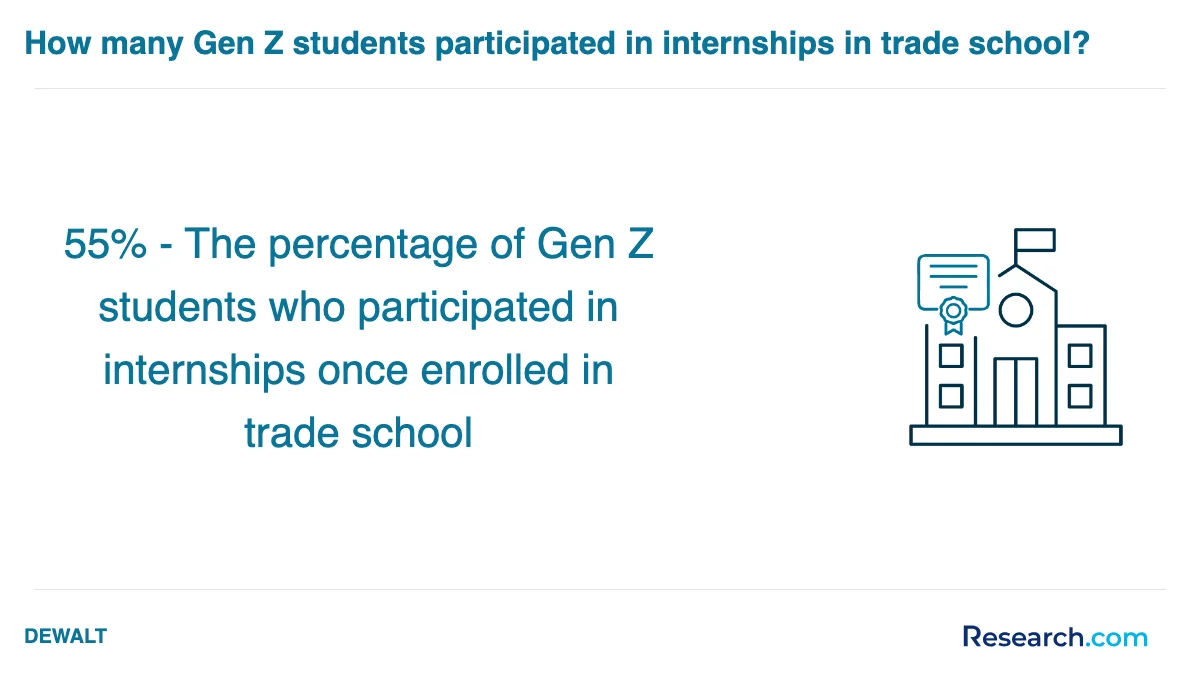
Building a professional resume and practicing interview skills are crucial steps, supported by resources available at Sanford community career centers. Internship or apprenticeship experiences gained during or after schooling significantly increase job prospects by offering hands-on experience recognized by employers.
Employers in Sanford highly value trade school graduates who possess strong technical skills specific to their industry. For example, proficiency in electrical systems, welding, HVAC, or automotive repair is essential, as these are common local trades. According to the U.S. Bureau of Labor Statistics, candidates with hands-on experience tend to be hired faster and earn higher starting wages.
Aside from technical expertise, soft skills like communication, punctuality, and teamwork are frequently highlighted in Sanford job listings. The National Association of Workforce Boards notes that over 70% of employers emphasize problem-solving abilities and adaptability in trade roles.
Overall, successful graduates combine solid practical skills with professional work habits to meet Sanford employers' expectations.
Finding internships in Sanford that align with your trade school program requires a strategic approach. Start by consulting your school's career services office, which often collaborates with local businesses to offer internship opportunities tailored to specific trades.
Sanford's growing industrial and healthcare sectors provide numerous openings for students in technical fields such as automotive repair, welding, and medical assisting. According to Workforce Central Florida, internship programs have increased by 10% in the region over the past two years.
Moreover, platforms like the Florida Department of Economic Opportunity's CareerSource can connect you to employers actively seeking interns locally. Networking through trade associations and local business events is also valuable to uncover hidden opportunities.
In Sanford, earning a trade school diploma can significantly enhance career mobility by providing specialized skills that employers highly value. According to the U.S. Bureau of Labor Statistics, occupations requiring vocational training are projected to grow faster than the average through 2028, which benefits graduates in this region. Local Sanford employers often prefer candidates with practical certifications, improving job placement rates and making it easier for diploma holders to access higher-paying roles.
Trade diplomas also support career advancement by building technical expertise and foundational knowledge. This allows individuals to qualify for promotions or supervisory positions more quickly compared to those without formal credentials. Data from the National Center for Education Statistics highlights that Sanford-area trade school graduates report higher rates of job stability and wage increases within five years post-completion.
Part-time job opportunities in Sanford that complement trade school education are diverse and often align with students' fields of study. For example, those enrolled in automotive programs can seek employment at local repair shops or dealerships, gaining hands-on experience with vehicle maintenance. According to the U.S. Bureau of Labor Statistics, automotive service technicians in Florida earn an average hourly wage of about $17, supporting students financially while building skills.
Students in health-related trades may find part-time roles as medical assistants or home health aides. Sanford's growing healthcare sector offers such positions, often requiring certifications attainable through trade schools. The Florida Department of Economic Opportunity reports steady demand in these roles.
Additionally, construction and electrical trade students can pursue part-time work with local contractors. These roles provide practical exposure to workplace safety and project management. Employers in Sanford frequently hire part-time assistants, providing flexible hours that fit educational commitments.
To find the best degree program near me in Sanford, NC, start by researching local colleges and universities that offer programs in your field of interest. Programs are available at Central Carolina Community College in Sanford, as well as other nearby institutions with diverse educational offerings. Consulting resources like Research.com can help you identify top-ranking programs near Sanford, NC, that match your educational and career goals.
No references available.


