
Best Trade School & Training Programs - Leading Certification Courses in Philadelphia for 2026

Co-Founder and Chief Data Scientist
Picking a trade school in Philadelphia is a practical career decision: you are comparing program length, tuition, hands-on training, financial aid, job placement support, and whether the credential leads to work you can actually get. The right choice can help you move into a skilled trade faster than a traditional four-year route, but the best option depends on your target occupation, schedule, budget, and licensing or certification requirements.
This 2026 Research.com guide is designed for students, career changers, working adults, and high school graduates evaluating trade school programs in Philadelphia. It explains what local programs typically cost, how long they take, what admissions requirements to expect, which specializations are available, and what career outcomes may look like after completion.
The ranking was developed by the Research.com team of data scientists to help readers compare trade school options more clearly. Use it as a starting point, then verify each school’s current tuition, accreditation, program outcomes, licensure preparation, and financial aid eligibility before enrolling.
Key benefits of finishing trade school programs trade school in Philadelphia
Finishing a trade school program in Philadelphia can offer a faster and more focused route into skilled work. Instead of spending years on broad general education, students usually train for a specific occupation, build practical skills, and prepare for employer-recognized credentials or apprenticeships.
- Strong earning potential: Trade school graduates in Philadelphia may qualify for careers with competitive pay. Examples include $86,800 for chemical plant operators, $89,090 for telecommunications installers, and up to $99,220 for power plant operators.
- Clearer path to employment: Many programs are built around local employer needs in welding, telecommunications, power plant operation, boilermaking, HVAC, electrical work, automotive technology, healthcare support, and construction trades.
- Shorter training timeline: Many certificate and diploma programs can be completed far faster than a four-year degree, which can help students start earning sooner.
- Hands-on preparation: Trade schools typically use labs, workshops, tools, simulations, and jobsite-style training so students practice the work they are preparing to do.
- Flexible online learning: Students who complete trade certifications online can often study around work or family responsibilities, especially when the program offers asynchronous coursework.
The main trade-off is that trade school is career-specific. Before enrolling, confirm that the program matches the job you want, prepares you for any required license or certification, and has documented employer connections in the Philadelphia area.
- Best Trade School & Training Programs - Leading Certification Courses in Philadelphia for 2026
- What can I expect from trade school programs trade schools in Philadelphia?
- Where can I work after finishing trade school programs trade schools in Philadelphia?
What can I expect from trade school programs trade schools in Philadelphia?
Students in Philadelphia trade school programs can expect career-focused training, structured admissions steps, and a mix of classroom instruction and hands-on practice. Local community colleges and trade schools often emphasize affordability, practical labs, employer relationships, and credentials that help students move into the workforce quickly.
Annual costs commonly range from $7,600 to $10,800 at local community colleges known for accessible pricing. Some programs are much shorter and more intensive, while others lead to diplomas, certificates, or associate degrees. A 26-week Concrete, Masonry and Framing course, for example, can prepare students for immediate workforce entry without requiring a long academic commitment.
Most students should expect the following:
- Career-specific coursework: Programs usually focus on a defined trade such as electrical work, plumbing, HVAC, welding, automotive technology, construction, healthcare support, or manufacturing.
- Hands-on labs: Campuses often try to mirror real job environments so students can practice with tools, equipment, safety procedures, and jobsite expectations.
- Admissions support: Many schools have accessible admissions policies, and some offer near-certain acceptance rates for applicants who meet basic requirements.
- Financial aid options: Eligible students may use grants, scholarships, payment plans, or federal and state aid to reduce upfront costs.
- Employer-focused outcomes: Programs may include job placement support, resume help, career advising, externships, apprenticeships, or direct employer connections.
The best programs make expectations clear before enrollment: total cost, required tools and supplies, schedule, completion time, credential earned, job placement services, and whether the training satisfies industry certification or licensure requirements.
Where can I work after finishing trade school programs trade schools in Philadelphia?
Philadelphia trade school graduates can work in construction, manufacturing, transportation, utilities, automotive services, healthcare support, logistics, building maintenance, and emerging clean energy or technical fields. The strongest options depend on the specific program completed and whether the graduate holds the certifications, license eligibility, or apprenticeship experience required for the role.
Common employment settings include:
- Construction companies: Graduates may work on residential, commercial, or infrastructure projects as electricians, plumbers, HVAC technicians, carpenters, masonry workers, welders, or general construction specialists.
- Manufacturing plants and industrial sites: Welding, machining, maintenance, telecommunications, and equipment operation skills can lead to roles in production and plant operations.
- Philadelphia Navy Yard and related employers: Skilled trades, clean energy, advanced manufacturing, and technical maintenance roles may be available in and around this major employment area.
- Automotive shops and dealerships: Automotive technology graduates can pursue technician roles in repair shops, dealerships, fleet operations, or specialized service centers.
- Utility and building management companies: Plumbing, electrical, HVAC, and facilities maintenance training can support work in commercial buildings, apartment complexes, hospitals, schools, and utility environments.
- Logistics and warehousing employers: Companies such as Amazon may hire trade-trained workers for operations, maintenance, repair, and equipment support roles.
Students should ask each school where recent graduates were hired, which employers recruit from the program, and whether the school helps students enter apprenticeships or licensing pathways. A strong local employer network can matter as much as the classroom curriculum.
Earnings after trade school in Philadelphia vary by occupation, credential, experience, union or apprenticeship status, employer, and overtime availability. Many graduates in skilled trades such as electrical work, plumbing, and HVAC can start in the range of $45,000 and $60,000 annually, while some begin as apprentices and increase pay as they gain supervised experience.
Examples mentioned for Philadelphia trade school outcomes include:
- Apprentices: Around $38,632 per year while gaining paid hands-on experience.
- Entry-level skilled trades roles: Often between $45,000 and $60,000 annually in fields such as electrical work, plumbing, or HVAC.
- Training specialists: From $58,930 to $85,983 annually, depending on role and experience.
- Trade teachers: About $50,274 annually, with top educators earning more than $70,000.
Students should compare salary expectations with total program cost. A lower-cost certificate that leads quickly to paid employment may offer strong value, while a higher-cost program may still be worthwhile if it provides recognized credentials, strong placement support, and access to better-paying roles.
- Applicants must provide proof of high school completion, such as a transcript, diploma, or GED, and may need to complete a basic entrance test in reading and math.
- Enrollment typically requires signing an agreement, attending an interview, touring the campus, and having a valid driver's license for certain trades.
- The cost to complete a trade school program in Philadelphia ranges from $8,000 to $20,000, with financial aid and payment plans available.
- Entry-level salaries for graduates range from $38,000 to $55,000 per year, while experienced professionals can earn $60,000 to $85,000 or more annually.
- Job placement rates can exceed 80% within six months due to strong partnerships between schools and local employers in trades like HVAC, electrical, and welding.
These findings point to a practical decision framework: confirm eligibility first, calculate the full cost, compare completion time, and ask for current placement data by program rather than relying only on schoolwide claims.
Trade school completion time in Philadelphia can range from a few weeks to two years or more, depending on the credential, schedule, and occupation. Short academies are designed for rapid workforce entry, while associate degree programs provide broader technical and general education preparation.
- Short-term academies: Accelerated winter trade academies may train students in carpentry and masonry in three to eight weeks through intensive full-day instruction.
- Diploma programs: Schools such as Orleans Technical College may offer programs in trades like plumbing and electrical work that can be completed within six months, with day or evening options.
- Certificate programs: HVAC, welding, and automotive technology programs commonly take 12 to 18 months, depending on the school and schedule.
- Associate degrees: Programs such as those at Williamson College of the Trades require about two years and combine technical training with general education.
- High school Career and Technical Education: Philadelphia CTE students may complete trade training over three years, including 1,080 hours of focused study alongside regular high school coursework.
When comparing program length, look beyond the number of months. Ask how many hours are spent in labs, whether evening or part-time options extend the timeline, whether externships are included, and whether graduates are ready for certification exams or entry-level employment immediately after completion.
The main difference is how students complete theory and hands-on training. Online trade school courses are best for lectures, safety instruction, terminology, codes, software-based work, and exam preparation. On-campus trade school programs are usually stronger for trades that require tools, equipment, supervised practice, and physical skill development.
- Online programs: Students may study around work and family obligations, especially through asynchronous lessons. Graduates from the Community College of Philadelphia often value the ability to access coursework on their own schedule.
- On-campus programs: Students train in workshops, labs, kitchens, clinics, garages, or simulated jobsites and receive immediate feedback from instructors.
- Hybrid programs: Students complete academic or theory-based material online and attend campus for required hands-on labs, practical assessments, or clinical components.
For hands-on trades such as welding, HVAC, electrical work, plumbing, automotive technology, and construction, a fully online format may not be enough unless the program also includes in-person labs, local externships, or verified practical training. Before enrolling, ask exactly where and how you will complete the hands-on portion of the program.
The average cost of trade school in Philadelphia depends on the institution type, program length, credential level, tools and supplies, and whether the student qualifies for financial aid. Pennsylvania statewide trends place typical tuition around $16,400, but Philadelphia students may find programs below or above that figure.
Some certificate programs cost only a few thousand dollars and offer a faster route into entry-level work. Programs leading to associate degrees in fields such as healthcare or automotive technology may approach $20,000-$22,000. More broadly, the cost to complete a trade school program in Philadelphia can range from $8,000 to $20,000, with financial aid and payment plans available.
Public trade schools and community colleges may offer more affordable options, especially for in-state residents. Private and for-profit institutions may cost more, but some students choose them for specialized facilities, flexible scheduling, or career-specific certification preparation.
When estimating the true cost, include more than tuition:
- registration and technology fees
- books, uniforms, and safety gear
- tools or required equipment
- certification or licensing exam fees
- transportation and parking
- lost wages if the schedule reduces work hours
Students interested in skilled trades may also compare local options with the most affordable electrical lineman programs online, especially if they need a lower-cost or more flexible pathway.
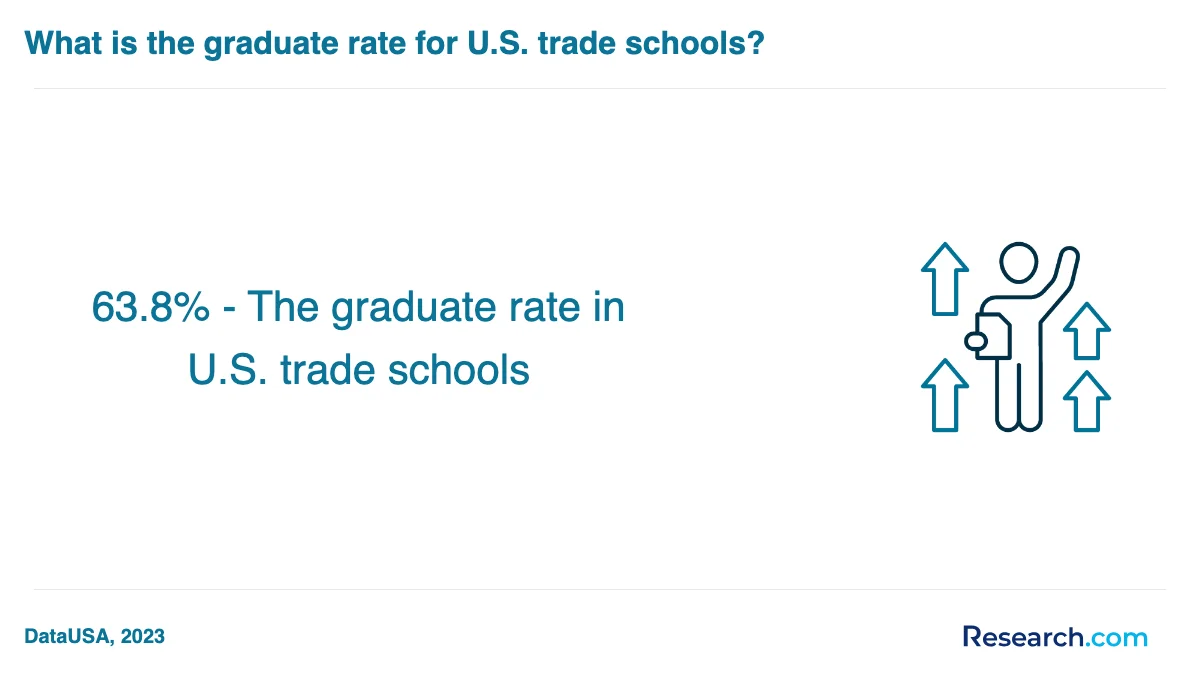
Financial aid for Philadelphia trade school students may include federal aid, state grants, local scholarships, institutional grants, payment plans, and workforce funding. Eligibility depends on the school, program length, accreditation status, financial need, and whether the program qualifies for aid.
The first step is usually completing the Free Application for Federal Student Aid (FAFSA). For eligible qualifying programs, federal aid may include the Pell Grant, which can offer up to $7,395. Students should confirm that the specific trade school and program participate in federal student aid before assuming FAFSA aid will apply.
State aid through the Pennsylvania Higher Education Assistance Agency (PHEAA) may also help. Programs such as the Pennsylvania Targeted Industry Program (PA-TIP) support training aligned with local job demand in fields such as healthcare and manufacturing.
Philadelphia students may also find local or school-based funding, including:
- Philadelphia Foundation scholarships for eligible residents
- internal grants from schools such as Mercy Vocational High School
- city-funded options such as the Octavius Catto Scholarship for Community College of Philadelphia, which may cover full tuition and basic living expenses for eligible students
- school payment plans that spread costs over time
Before accepting aid, review whether it is a grant, scholarship, loan, or payment plan. Grants and scholarships usually do not require repayment, while loans and some payment plans can create long-term obligations.
Most Philadelphia trade schools require proof of high school completion and basic admissions documents. The process is usually more direct than four-year college admissions, but requirements can vary by program, especially in healthcare, transportation, and licensed trades.
Common prerequisites include:
- High school diploma, GED certificate, or equivalent documentation: Applicants typically must show proof of completion before or shortly after enrollment.
- Official transcripts or diploma copies: Some schools allow up to thirty days after classes begin to submit missing documents.
- Homeschooled applicant documentation: Homeschooled students must provide paperwork that complies with Pennsylvania state laws.
- Entrance assessment: Some programs may require a basic test in reading and math.
- Admissions interview: Students may meet with an admissions representative to discuss goals, readiness, schedule, and program expectations.
- Campus tour and enrollment agreement: Enrollment may include touring the campus and signing an agreement that outlines costs, policies, and obligations.
- Driver's license for certain trades: Some programs or employers may require a valid driver's license, especially when fieldwork, travel, or vehicle operation is part of the trade.
- Accommodation disclosure: Students who need physical or learning accommodations should discuss support services early.
Some healthcare and skilled trade programs may also have age minimums, health screenings, background checks, drug screenings, physical ability requirements, or immunization documentation. Ask for the full admissions checklist before paying fees.

Typical trade school courses in Philadelphia are built around job-ready skills in construction, mechanical systems, manufacturing, automotive service, healthcare support, and technical fields. Programs usually combine classroom theory with labs, safety procedures, equipment practice, and career preparation.
Common course areas include:
- Electrical technician training: Students may study basic electricity, wiring, safety, codes, tools, and troubleshooting.
- HVAC maintenance: Coursework often covers heating, ventilation, air conditioning, refrigeration, diagnostics, and service procedures.
- Plumbing: Students may learn pipe systems, installation, repair, safety, codes, fixtures, and blueprint reading.
- Welding: Training often emphasizes equipment use, welding processes, materials, shop safety, and industry-standard techniques.
- Construction trades: Courses may cover carpentry, masonry, drywall, industrial painting, blueprint reading, jobsite safety, and project-based practice.
- Automotive repair: Students may train in diagnostics, repair procedures, vehicle systems, tools, and service shop operations.
- Manufacturing and welding technology: Programs may focus on industrial tools, fabrication, production processes, and certifications.
- Healthcare support services: Training may prepare students for sterile processing, patient care assistance, and other entry-level support roles.
Career & Technical Education (CTE) programs through the School District of Philadelphia include over 43 occupational areas. Students in these pathways may complete over 1,000 technical hours and work toward recognized credentials while still in high school.
The best course sequence is not simply the longest one. Look for programs that include safety training, supervised practice, certification preparation, and direct evidence that graduates can perform the tasks employers expect.
Philadelphia trade schools offer specializations connected to the city’s construction, healthcare, transportation, technology, logistics, manufacturing, and service industries. The right specialization should match the type of work you want to do, the credential employers expect, and the work environment you prefer.
- Construction trades: Options may include carpentry, masonry, drywall finishing, glazier work, pipefitting, and related apprenticeship pathways. Students at institutions such as the Philadelphia Technician Training Institute often train through a mix of classroom theory and hands-on practice.
- Automotive and diesel technology: Automotive technology and medium and heavy truck technology can lead to service, diagnostics, fleet, and repair roles.
- Healthcare support: Students may pursue training for roles such as medical laboratory technician or dental hygienist, depending on program availability and certification requirements.
- Cybersecurity and network administration: These programs prepare students for technical support, systems, and security-related roles in Philadelphia’s growing tech sector.
- Culinary arts: Culinary programs can prepare students for kitchen, food service, hospitality, and restaurant roles.
- Fashion merchandising: Creative students may explore merchandising, retail, styling, and fashion business pathways.
Students comparing careers in trade school should check whether a specialization leads to a license, certification, apprenticeship, or employer-recognized credential. A program name alone is not enough; the outcome matters.
To choose the best trade school program in Philadelphia, start with the job you want and work backward. Identify the credential, license, certification, or apprenticeship entry requirements for that occupation, then compare schools based on whether they prepare students for that outcome at a reasonable cost.
Use this checklist when comparing programs:
- Career fit: Confirm that the program trains for the occupation you actually want, not just a broad field.
- Accreditation and approvals: Check institutional accreditation, programmatic approvals, and whether employers or licensing bodies recognize the credential.
- Hands-on training: Ask how many lab or shop hours are included and whether the equipment reflects current workplace standards.
- Graduate outcomes: Request graduation rates, job placement statistics, employer partners, and placement data for the specific program.
- Cost and aid: Compare tuition, fees, tools, supplies, exam costs, and available financial aid before signing an enrollment agreement.
- Schedule: Evaluate day, evening, weekend, online, and hybrid options if you need to work while studying.
- Student support: Look for tutoring, career advising, resume help, interview preparation, and apprenticeship or externship support.
- Reputation with local employers: Ask which Philadelphia employers hire graduates and whether recruiters visit the program.
Examples of local decision factors include hands-on automotive training at Lincoln Tech and healthcare training with flexible scheduling and clinical experiences at Prism Career Institute. Cost should also be reviewed carefully; tuition at Prism Career Institute falls between $13,000 and $27,200, and grants may reduce the burden for eligible students.
Students looking for lower-cost or complementary options can also explore cheap online certificate programs in home repair, particularly if they need flexible training before or alongside local hands-on instruction.
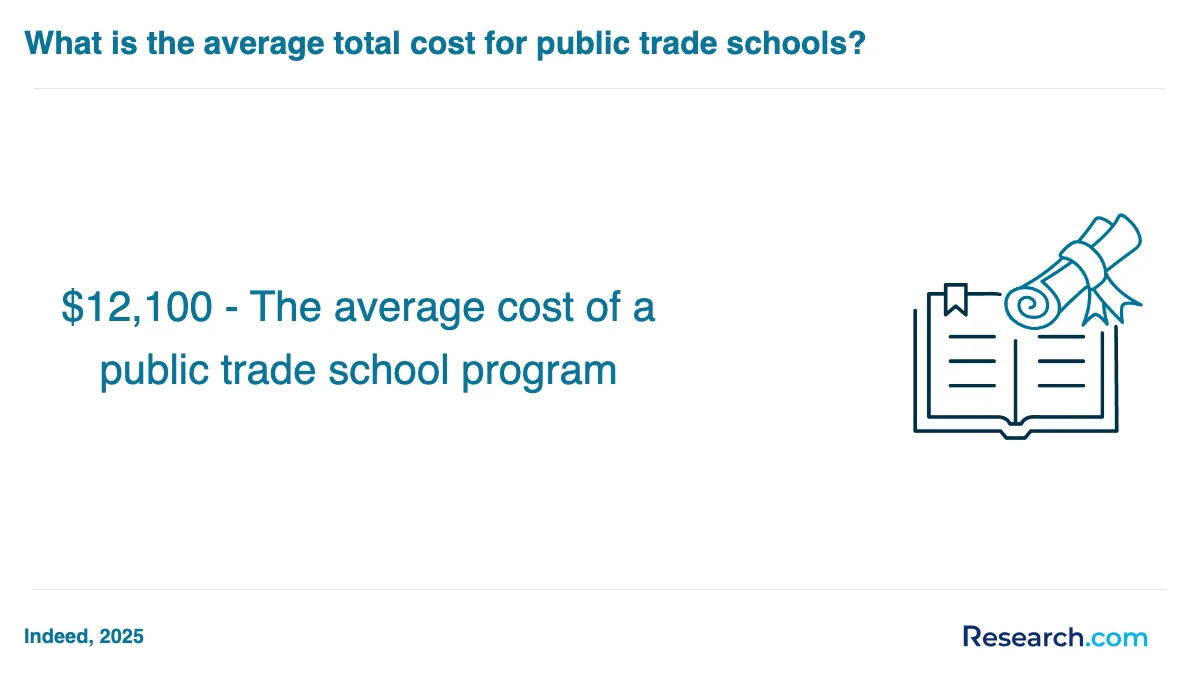
Trade school graduates in Philadelphia can pursue career paths in skilled construction, healthcare support, automotive technology, advanced manufacturing, transportation technologies, information technology, and building services. The best path depends on the program completed, the credential earned, and the graduate’s willingness to pursue apprenticeships, certifications, or entry-level experience.
Common career paths include:
- Electrician: Graduates may enter electrical helper, apprentice, or technician roles and continue toward licensure where required.
- Plumber: Plumbing graduates can work in residential, commercial, or maintenance settings and may advance through apprenticeship and licensing pathways.
- HVAC technician: HVAC training can support work in installation, repair, maintenance, refrigeration, and building systems.
- Welder: Welding graduates may work in manufacturing, construction, repair, or fabrication environments.
- Automotive technician: Graduates may work in repair shops, dealerships, fleet maintenance, or specialized vehicle service.
- Medical assistant or pharmacy technician: Schools such as All-State Career School prepare students for healthcare support roles that serve Philadelphia’s large healthcare sector.
- Cybersecurity or IT support specialist: Specialized technical training can support entry into network administration, security, and support roles.
- Advanced manufacturing or transportation technology worker: Institutions such as the Universal Technical Institute may prepare students for automotive repair and related technical fields.
Programs such as the Philadelphia Technician Training Institute often emphasize hands-on experience and may connect students with apprenticeships. Students who need flexible training options can also review best online community colleges to compare additional pathways that may align with Philadelphia’s changing labor market.
The job market for Philadelphia trade school graduates is supported by demand in construction, manufacturing, transportation, logistics, healthcare support, building maintenance, and technical services. Employers in these sectors often need workers who can perform practical tasks immediately, which makes hands-on trade training valuable.
Several factors shape employment prospects:
- Industry demand: Manufacturing, construction, and transportation employers continue to need specialists in electrical work, plumbing, welding, HVAC, and maintenance.
- Wage potential: Wage growth in trade and transportation, with hourly wages around $28.69, makes skilled trades financially attractive for many students.
- School-employer connections: Job placement rates can exceed 80% within six months when schools maintain strong partnerships with local employers in fields such as HVAC, electrical, and welding.
- Networking: Trade school apprenticeships and local job fairs can significantly improve employment chances, sometimes by as much as 40%.
- Skill stacking: Adding related certifications or cross-training can help graduates compete for broader maintenance, installation, or technical roles.
Students considering flooring, construction, or remodeling-related work may compare local training with the cheapest flooring installation training online to build flexible, job-focused skills. Regardless of the program, graduates should keep documentation of certifications, lab hours, tool experience, projects, and employer references because these details can strengthen job applications in Philadelphia’s skilled trades market.
Best Trade School & Training Programs - Leading Certification Courses in Philadelphia for 2026
# 1 position
Peirce College - Information Technology.
associatePeirce College offers an Information Technology program focusing on designing technological information systems for business and research data and communications support. The curriculum includes principles of computer hardware and software, algorithms, databases, telecommunications, user tactics, application testing, and human interface design. Annual in-state tuition is $15,060. The program is accredited by the Middle States Commission on Higher Education.
# 2 position
Peirce College - Legal Assistant/Paralegal.
associatePeirce College offers a Legal Assistant/Paralegal program preparing students to perform research, drafting, investigatory, record-keeping, and related administrative tasks under attorney supervision. The curriculum includes legal research, document drafting, pleading, courthouse procedures, and legal specializations. The program’s annual in-state tuition is $15,060. It is accredited by the Middle States Commission on Higher Education.
# 3 position
Peirce College - Criminal Justice/Law Enforcement Administration.
associatePeirce College offers a Criminal Justice/Law Enforcement Administration program designed to prepare students for leadership roles in public law enforcement agencies. The curriculum covers law enforcement history, operational command, administration, labor relations, incident response, legal responsibilities, budgeting, public relations, and organizational leadership. The program's annual in-state tuition is $15,060. It is accredited by the Middle States Commission on Higher Education.
# 4 position
Peirce College - Business Administration and Management, General.
associatePeirce College offers a program in Business Administration and Management, General, designed to prepare individuals to plan, organize, direct, and control business functions. The curriculum includes management theory, human resources, accounting, purchasing, logistics, marketing, and decision-making. Annual in-state tuition is $15,060. Graduates have median earnings of $46,242 one year after completion. The program is accredited by the Middle States Commission on Higher Education.
# 5 position
Orleans Technical College - Heating, Air Conditioning, Ventilation and Refrigeration Maintenance Technology/Technician.
certificate or diplomaOrleans Technical College offers a hybrid program in Heating, Air Conditioning, Ventilation and Refrigeration Maintenance Technology/Technician. This program prepares students to repair, install, service, and maintain HVAC and refrigeration systems. Instruction covers diagnostic techniques, testing equipment, and principles of mechanics, electricity, and electronics related to these systems. The program is accredited by the Accrediting Commission of Career Schools and Colleges. Median earnings one year after completion are $37,848.
# 6 position
Peirce College - Medical Insurance Coding Specialist/Coder.
certificate or diplomaPeirce College offers a Medical Insurance Coding Specialist/Coder program preparing students for specialized data entry, classification, and record-keeping related to medical diagnostic, billing, and insurance documentation. The curriculum covers medical records software, basic anatomy, medical terminology, medical science fundamentals, data classification, coding, and Medicare regulations. The program’s annual in-state tuition is $15,060. It is accredited by the Middle States Commission on Higher Education.
# 7 position
Peirce College - Medical Insurance Specialist/Medical Biller.
certificate or diplomaPeirce College offers a Medical Insurance Specialist/Medical Biller program designed to prepare students for managing medical and health insurance operations in various healthcare settings. The curriculum covers health insurance processes, law, policy, and regulations, as well as insurance records administration, office management, relevant software, business mathematics, billing, collection procedures, medical terminology, and communication skills. The program is accredited by the Middle States Commission on Higher Education. Annual in-state tuition is $15,060.
# 8 position
Community College of Philadelphia - Legal Assistant/Paralegal.
associateThe Legal Assistant/Paralegal program at Community College of Philadelphia offers a hybrid format with some distance-education options. It prepares students for research, drafting, investigatory, and administrative tasks under attorney supervision. Instruction covers legal research, document drafting, pleading, courthouse procedures, and legal specializations. The program is accredited by the Middle States Commission on Higher Education. Annual in-state tuition is $4,632, with median earnings of $32,311 one year after completion.
# 9 position
Orleans Technical College - Electrician.
certificate or diplomaThe Electrician program at Orleans Technical College offers hybrid learning to prepare students for installing, operating, maintaining, and repairing electric systems in residential, commercial, and industrial settings. The curriculum covers electronics principles, wiring, power transmission, safety, job estimation, electrical testing, and relevant codes. Graduates have median earnings of $39,139 one year after completion. The program is accredited by the Accrediting Commission of Career Schools and Colleges.
# 10 position
Community College of Philadelphia - Computer and Information Systems Security/Auditing/Information Assurance.
associateThe Computer and Information Systems Security/Auditing/Information Assurance program at Community College of Philadelphia offers a hybrid format with some distance-education options. It trains students to assess security needs, recommend safeguards, and manage security systems and procedures. Curriculum includes computer architecture, programming, networking, cryptography, auditing, law, risk assessment, and troubleshooting. Annual in-state tuition is $4,632. The program is accredited by the Middle States Commission on Higher Education.
Frequently Asked Questions about trade school programs
Students can prepare for certification exams in 2026 by utilizing available study resources from their schools, attending exam preparation workshops, and leveraging online practice tests. Engaging in study groups with peers and seeking guidance from instructors can also enhance readiness.
Employers in Philadelphia highly value practical and technical skills among trade school graduates. According to the Philadelphia Workforce Development Corporation, skills in electrical work, plumbing, HVAC, and welding are consistently in demand due to regional industry needs.
Beyond technical abilities, employers emphasize soft skills such as punctuality, communication, and teamwork. The National Skills Coalition reports that over 70% of local employers prioritize these interpersonal skills when hiring trade professionals.
Additionally, knowledge of health and safety regulations, including OSHA standards, is crucial. Graduates with certifications or demonstrated awareness in this area often have a competitive edge in Philadelphia's construction and manufacturing sectors.
Overall, a balance of strong hands-on expertise and essential workplace behaviors defines the ideal candidate for trade jobs in Philadelphia.
Finding internships in Philadelphia that align with your trade school program involves targeted research and outreach. Start by consulting your trade school's career services office, which often maintains partnerships with local businesses and can connect you to relevant internship opportunities. According to the Philadelphia Works organization, sectors like construction, manufacturing, and healthcare frequently offer internships tailored to trade skills. Additionally, online platforms like Handshake and local job boards list internships for students in various trades.
Networking is vital; attend city career fairs and connect with local trade unions that also provide apprenticeship and internship programs. Employers such as Comcast and PECO have historically offered hands-on training positions in technical fields. Utilizing these resources increases your chances of securing a relevant internship within Philadelphia's competitive job market.
Part-time job opportunities in Philadelphia that complement trade school education are diverse and aligned with local industry needs. For students in fields like electrical work, plumbing, or HVAC, positions as apprentices or helpers in construction companies offer practical experience alongside classroom learning. According to the Philadelphia Workforce Development Corporation, the city has seen a 5% increase in part-time roles within skilled trades sectors since 2022.
Retail and customer service jobs in home improvement stores like Home Depot and Lowe's also provide valuable exposure to tools and materials common in trade professions. Additionally, healthcare trade students often find part-time roles as medical assistants or pharmacy aides, supported by the city's strong healthcare infrastructure.
Such part-time roles typically offer flexible hours, allowing students to manage their coursework while gaining relevant skills. Wages for these positions in Philadelphia average between $12 and $18 per hour, depending on the trade and experience level, as reported by the Bureau of Labor Statistics.
Trade school students in Philadelphia often face challenges such as balancing work and study, financial constraints, and finding relevant internships. Addressing these issues with proper time management and seeking available financial aid resources can help alleviate some of these burdens.
- Best Trade School & Training Programs - Leading Certification Courses in Hamburg for 2026
- Best Trade School & Training Programs - Leading Certification Courses in Akron for 2026
- Best Trade School & Training Programs - Leading Certification Courses in Adrian for 2026
- Best Trade School & Training Programs - Leading Certification Courses in Florence for 2026
- OIC Philadelphia: Free Job Training Programs & Career Development https://oicphila.org/
- Training programs | Programs and initiatives https://www.phila.gov/programs/rebuild/training-programs/
- CTE Programs | | School District of Philadelphia https://www.philasd.org/cte/programs/
- CATC - Career Programs | Community College of Philadelphia https://www.ccp.edu/career-programs
- Trade Schools in Philadelphia, Pennsylvania | Top Trade Schools https://toptradeschools.com/states/pennsylvania/philadelphia/
- Training Opportunities - PA CareerLink® Philadelphia https://pacareerlinkphl.org/training-opportunities/
- Career and Technical Education (CTE) - JEVS Human Services https://www.jevshumanservices.org/programs/education/


