Best Trade School & Training Programs - Leading Certification Courses in Bridgeton for 2026

Co-Founder and Chief Data Scientist
Choosing the right trade school in Bridgeton can shape your future career and open doors to exciting opportunities. This article presents a carefully compiled trade school programs ranking created by the Research.com team of data scientists to guide you in making an informed decision.
By exploring these top programs, you’ll discover options that match your skills and interests, helping you earn a valued diploma or certification. Whether starting fresh or enhancing your expertise, this guide supports your journey toward a rewarding and fulfilling career.
Key benefits of finishing trade school programs trade school in Bridgeton
- Trade school graduates in Bridgeton can earn competitive salaries: carpenters make around $58,190 per year, skilled trades like electricians and plumbers earn about $81,451, and technology roles offer up to $104,934 annually, making these careers financially rewarding.
- Popular career paths include hands-on jobs like carpentry and plumbing, as well as tech-focused roles such as IT support and network technicians, providing diverse options to suit different interests and skills.
- Getting a trade school diploma online offers flexibility and convenience, allowing graduates to balance learning with work or family life while still gaining valuable skills recognized by local employers in Bridgeton.
- Best Trade School & Training Programs - Leading Certification Courses in Bridgeton for 2026
- What can I expect from trade school programs trade schools in Bridgeton?
- Where can I work after finishing trade school programs trade schools in Bridgeton?
What can I expect from trade school programs trade schools in Bridgeton?
The average cost of a trade school program in Bridgeton generally ranges from $5,000 to $15,000, depending on the field of study and credential level. Graduates from popular programs like HVAC or electrical technology often report reasonable tuition accompanied by hands-on training, making the investment feel worthwhile as they gain real-world skills directly applicable to jobs.
Many students appreciate the flexibility offered by evening and weekend classes, which allow working adults to pursue certifications without disrupting their income flow. Financial aid options and payment plans further ease the cost burden, making programs accessible for a wider group of learners.
Trade schools such as Cumberland County Technical Education Center attract students who value the blend of classroom theory and practice, often leading to immediate job placement upon graduation. Graduates emphasize the confidence gained from working with industry-standard tools and mentorship from experienced instructors, highlighting a clear return on investment.
For those pursuing specialized programs like CDL training, costs align with market demand and include licensing fees but still remain competitive within local training options.
Where can I work after finishing trade school programs trade schools in Bridgeton?
After finishing a trade school program in Bridgeton, graduates find ample opportunities across diverse sectors that value practical skills. Many secure roles in healthcare settings such as hospitals, clinics, and home health agencies, especially those trained in healthcare assistance, licensed practical nursing, or allied health services. Graduates often share strong satisfaction working as physical therapy aides or social workers, drawn by steady demand in local mental health and long-term care facilities.
Trade schools known for construction and technical programs consistently see alumni employed by local contractors, facility maintenance firms, and public agencies. For example, those certified in HVAC, plumbing, or electrical work frequently gain positions offering $17 to $19 per hour, a reliable starting wage for many entering the field.
Business and office technology graduates commonly join Bridgeton's small businesses or healthcare offices as administrative assistants or inventory clerks, benefiting from software skills learned during their training. Hospitality and foodservice roles are plentiful, with graduates noting rewarding experiences at schools and event venues across the city.
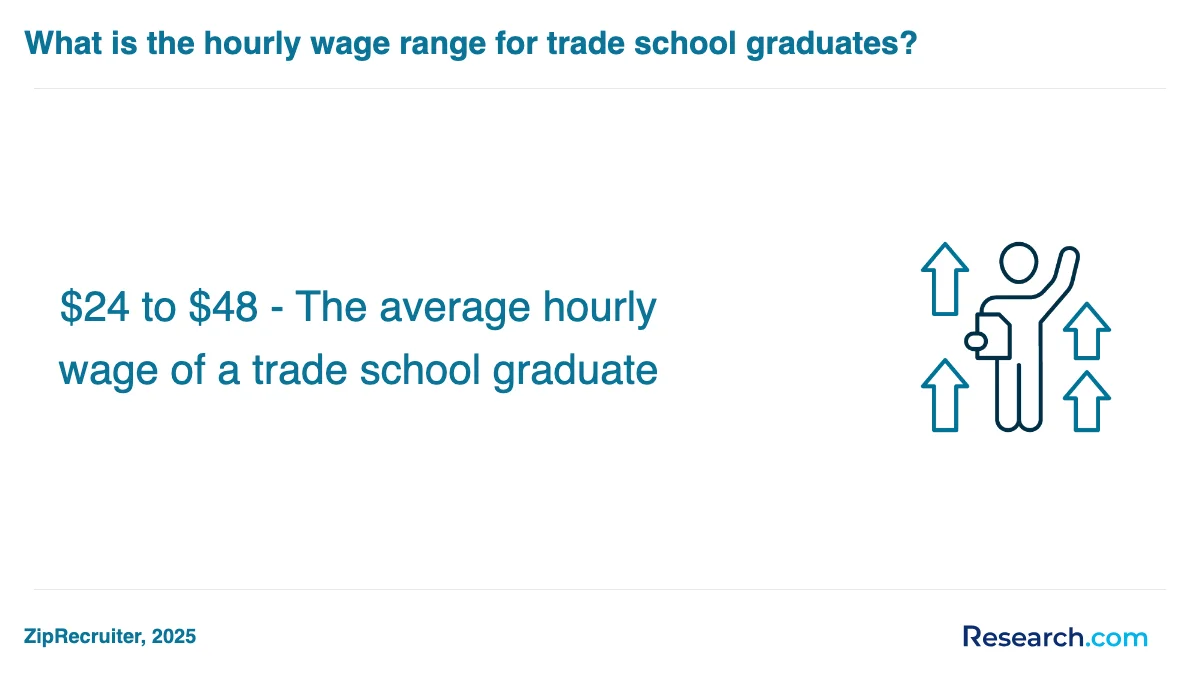
This job market, with over 28,000 postings and hourly wages from $17 to $50, highlights Bridgeton as a promising environment for trade school graduates aiming for career growth and financial stability.
Graduates of trade school programs in Bridgeton report earning competitive salaries that vary significantly by field, reflecting local demand and specialization. For instance, many technology program graduates from popular Bridgeton schools enter roles such as IT support specialists or network technicians, where annual wages average around $104,934, or $50.45 per hour as of mid-2025. These figures highlight the strong earning potential in tech-related trades, attracting students eager to enter a high-demand industry.
Carpentry graduates also share positive financial outcomes. Median salaries for carpenters in New Jersey are about $58,190 per year, with hourly rates near $28. Experiences from Bridgeton graduates show incomes ranging from $34,370 to over $100,000, depending on expertise and project complexity, which provides motivation for hands-on learners excited about building tangible skills.
Trade school alumni in Bridgeton pursuing training representative roles-a job focused on workforce training delivery-earn an average of $89,788 annually. These success stories illustrate how specialized trade programs can lead to fulfilling, well-paid careers closely tied to local industrial needs.
- Trade schools in Bridgeton offer programs in fields such as automotive technology, construction trades, cosmetology, culinary arts, health sciences, and welding.
- High school students can attend shared-time programs, splitting their education between academic and technical courses, usually from grades 9-12.
- Tuition at public technical schools ranges from around $3,000 to $8,000 per year, with financial aid available for some programs.
- Admission generally requires being on track for high school graduation, with some programs needing additional academic or skill qualifications.
- Starting salaries for entry-level trades like automotive technology and welding range from $36,000 to $45,000 annually, while experienced professionals can earn between $55,000 and $70,000 per year.
Most trade school programs in Bridgeton are designed for completion in less than two years, with many entry-level courses finishing within 12 months. Graduates from popular local schools often share that electrician programs usually require about 7 to 12 months, meeting New Jersey's state-mandated minimum of 576 classroom hours. For example, a recent graduate recalls gaining hands-on experience rapidly while balancing evening classes, making the journey manageable and motivating.
HVAC technician training in Bridgeton typically spans 6 to 12 months when pursuing certificates or diplomas, though associate degrees may extend to around two years. Many automotive, welding, culinary arts, and construction technology courses follow a similar six-month to one-year timeframe, allowing students to enter the workforce quickly.
Trade schools here also offer flexible options like full-time one-year programs or part-time evening formats, helping students balance work and study. Apprenticeship-based paths combine paid work with classroom learning and can take one to two years, offering a rewarding blend of income and education.
The core difference between online and on-campus trade school programs in Bridgeton lies in how instruction is delivered and experienced. Online programs offer remote learning flexibility, ideal for students balancing work or family. Graduates from Camden County College's online allied health and business administration courses often praise the ability to study on their own schedule while still accessing video lectures and interactive digital platforms.
In contrast, on-campus programs demand presence at Bridgeton facilities, providing hands-on training essential for trades like HVAC and welding. Graduates from these programs highlight the value of real-time instructor guidance and immediate access to specialized equipment during labs. Many appreciate the communal atmosphere, feeling supported through peer interaction and collaborative projects.
Some students opt for hybrid models blending online theory with on-site practical sessions, combining flexibility with crucial hands-on experience. In this way, Bridgeton trade schools cater to varying learning styles and life commitments, enabling students to find paths that fit their unique circumstances while advancing their careers.
The average trade school tuition in Bridgeton aligns closely with New Jersey's statewide average, which stands at about $9,896 per year for public institutions. Graduates from Bridgeton-based schools often note that this cost represents a solid investment, offering access to quality programs without the exorbitant tuition price tag seen at some private institutions. Evelyn, a recent HVAC program completer, recalls how this affordability eased her financial stress while providing hands-on training that directly boosted her employability.
Bridgeton trade school program costs 2026 vary depending on the field of study, with highly specialized trades such as automotive technology or healthcare typically ranging between $12,000 and $20,000 annually. For instance, students at local campuses often experience fees toward the lower end of this spectrum, contrasting with higher-priced, larger schools in the state. One graduate from a popular auto technician program shared how the practical experience she gained justified every dollar spent, catalyzing a swift transition into a rewarding career.
Beyond tuition, the total cost to complete a trade school program in Bridgeton, including books, supplies, and accommodation, falls between $26,000 and $38,000. Many students benefit from financial aid programs like the New Jersey Governor's Industry Vocations Scholarship, which can reduce costs by up to $2,000. The Community College Opportunity Grant is another helpful resource for eligible learners. Those weighing the financial aspects might find it useful to understand the difference between a trade school program and a vocational program, as this can influence cost considerations and program selection.
Trade school students in Bridgeton benefit from multiple financial aid options that significantly ease the burden of tuition and related expenses. Federal grants like the Pell Grant and Federal Supplemental Educational Opportunity Grant (FSEOG) provide crucial support to those with demonstrated financial need. Many graduates from popular Bridgeton vocational programs recall how these grants allowed them to focus on welding or technical studies without overwhelming debt.
State aid is equally impactful. The New Jersey Tuition Aid Grant (TAG) helps full-time residents, including Bridgeton trade students, based on income eligibility, often under $60,000 annually. Recipients from local construction and health-related trade schools highlight how TAG funding made education attainable. The Community College Opportunity Grant (CCOG) covers tuition for qualifying county college attendees, common among Bridgeton students pursuing vocational certificates.
Specialized scholarships, such as those from the American Welding Society or Governor's Industry Vocations Scholarship (NJGIVS), further support underrepresented groups or specific trades, fostering confidence and persistence among recipients. Many trade schools also offer Federal Work-Study and state loans like NJCLASS, enabling students to balance work and study, helping graduates achieve career-ready skills without undue financial stress.
Enrolling in trade school programs in Bridgeton primarily requires a high school diploma, GED, or an equivalent qualification. Graduates often recall how presenting these credentials at schools like Salem County Career and Technical High School streamlined their admissions. These prerequisites verify that students have a foundational education before diving into specialized training.
Age is another key requirement, with most programs setting the minimum at 16 years old. This maturity cutoff ensures students are ready to handle hands-on learning and safety protocols common in fields such as automotive technology or healthcare.
Unlike traditional colleges, Bridgeton trade schools usually do not require SAT or ACT scores. Instead, some administer placement tests to gauge skills in math or reading. For example, students have shared that these assessments helped identify if they needed extra prep before starting their courses.
Additional prerequisites vary based on the program:
- Healthcare tracks may require immunization records and background checks.
- Cosmetology students might need physical exams due to industry standards.
- Application steps typically include filling out forms, submitting credentials, and sometimes attending interviews to ensure alignment with career goals.
Many graduates appreciate the flexible GPA expectations, which make trade education accessible even if traditional academics weren't their strength. This approach motivates a diverse student body eager to launch rewarding careers in Bridgeton's growing technical sectors.

Trade school programs in Bridgeton typically focus on hands-on, career-oriented courses that prepare students for immediate employment. Popular fields include electrical technology and HVAC, where graduates from South Jersey Technical Training report gaining practical skills in system diagnostics, safety, and repairs that translate directly to on-the-job success.
Other common courses encompass:
- Welding technology, with training in multiple welding methods and blueprint reading.
- Automotive studies, covering vehicle repair and maintenance, ideal for those entering repair shops or dealerships.
- Medical assisting and allied health sciences, offering hands-on patient care and medical office procedures.
- Cosmetology, culinary arts, construction technology, child care and education, and computer-assisted design & drafting.
Many students appreciate that Bridgeton's trade schools offer flexible scheduling like evening and weekend classes, enabling them to balance work and study. Graduates often highlight the blend of classroom learning with real-world training that builds confidence and readiness for local job markets.
Trade school programs in Bridgeton commonly focus on specializations that align with strong local and national demand. Graduates often highlight hands-on training in skilled trades such as electrical work, HVAC (Heating, Ventilation, and Air Conditioning), and telecommunications, thanks to partnerships with local institutions like Cumberland Regional High School. This practical approach prepares students for well-paying jobs with steady growth, especially as aging infrastructure increases demand.
Healthcare specializations are also highly sought after. Programs in medical assisting and medical billing and coding equip students with skills to work directly with patients or handle essential administrative tasks, making graduates feel confident stepping into expanding healthcare roles in Bridgeton and nearby areas like Lawrenceville.
- Automotive technology and refrigeration, offering real-world applications from industry-seasoned instructors
- Electrical and electronic systems, focusing on technical proficiency
- Occupational safety training, seen as a vital certification by construction employers
Many local graduates praise the practical curricula, which reflect the latest workforce trends. For those exploring options, the top trade schools in the US also influence Bridgeton programs, ensuring up-to-date skills and competitive advantages. To explore further, prospective students can refer to top trade schools in the us for benchmark standards and opportunities.
Choosing the best trade school program in Bridgeton involves prioritizing accredited trade schools in Bridgeton to ensure quality training and eligibility for federal aid. Graduates from well-known local institutions often highlight the confidence gained through hands-on labs and real-world training scenarios, which significantly enhance job readiness. Comparing Bridgeton trade school program costs is also critical; several schools offer competitive tuition coupled with financial aid options, helping students manage expenses without compromising education quality.
Reputation and outcomes matter-data from the U.S. Department of Education reveal a strong correlation between schools' graduation rates and local job placement success. Students frequently praise flexible scheduling options that accommodate working adults, with evening and weekend classes proving invaluable for balancing studies and family life. Additionally, prospective students should explore curricula directly with program advisors to confirm the inclusion of up-to-date equipment and practical components. Some graduates recommend online supplementary resources like low cost flooring installation training online to expand skills affordably and conveniently.

Trade school career opportunities in Bridgeton are diverse and tailored to local industry demands. Graduates from programs at Cumberland Regional High School often find roles in skilled trades such as electrical work, HVAC, and telecommunications, fields that benefit from ongoing infrastructure projects. Additionally, students attending nearby technical schools like Pennco Tech enjoy hands-on training in automotive technology, welding, construction, culinary arts, and allied health services.
Many graduates report immediate employment as electricians, automotive technicians, welders, or medical assistants, reflecting the Bridgeton skilled trades job market's strong demand. These roles offer financial stability and chances for advancement through certifications or apprenticeships. Training programs align with state and industry standards, ensuring students acquire relevant skills employers seek.
For those interested in expanding their expertise or exploring cheap home remodeling and repair courses online, trade schools also provide flexible learning options. Graduates often share how their education empowered them to build rewarding careers directly connected to their community's economic needs.
The job market for trade school graduates in Bridgeton is robust, driven by strong connections between county vocational-technical schools and local employers. Graduates from popular trade schools in Bridgeton frequently find opportunities in high-demand fields such as electrical work, HVAC, automotive technology, and manufacturing. Many report securing positions quickly due to the practical skills and certifications attained during their programs. This ongoing local employer collaboration ensures that curriculum stays aligned with industry needs, enhancing employability.
Examples from graduates indicate job opportunities for trade school graduates in Bridgeton often include roles offering paid training, health benefits, and professional growth. Additionally, many employers require a high school diploma or GED plus vocational credentials, reflecting the recognized value of these programs in the job market.
Starting salaries reflect this demand, with Bridgeton trade school graduate starting salaries competitive within the region. Graduates also benefit from state-supported career services that provide job placement assistance and workplace readiness training, further strengthening their chances of success.
For those exploring options, numerous low cost construction training programs online complement local offerings and expand possibilities for acquiring in-demand skills.
Best Trade School & Training Programs - Leading Certification Courses in Bridgeton for 2026
# 1 position
Saint Louis Community College - Diagnostic Medical Sonography/Sonographer and Ultrasound Technician.
certificate or diplomaSaint Louis Community College offers a Diagnostic Medical Sonography/Sonographer and Ultrasound Technician program in a hybrid format, combining in-person and distance education. The program trains students to use medical ultrasound technology to collect sonographic data for diagnosing conditions. It covers patient care, data processing, equipment operation, and professional ethics. Annual in-state tuition is $3,660. Graduates have median earnings of $51,903 one year after completion. The program is accredited by the Higher Learning Commission.
# 2 position
Saint Louis Community College - Dental Assisting/Assistant.
certificate or diplomaSaint Louis Community College offers a Dental Assisting/Assistant program with a hybrid format that includes some distance education. The program prepares students to provide patient care, take dental radiographs, assist chairside, and handle office administrative tasks under supervision. Instruction covers medical record-keeping, equipment maintenance, sterilization, and supervised practice. Annual in-state tuition is $3,660. The program is accredited by the Higher Learning Commission.
# 3 position
Saint Louis Community College - Physical Therapy Assistant.
associateSaint Louis Community College offers a Physical Therapy Assistant program with a hybrid format, including some distance-education options. The program prepares students to implement treatment plans, conduct interventions, and monitor patient progress under a physical therapist's supervision. Coursework covers anatomy, physiology, biomechanics, neuroscience, and professional ethics. The annual in-state tuition is $3,660. Graduates have median earnings of $32,094 one year after completion. The program is accredited by the Higher Learning Commission.
# 4 position
Saint Louis Community College - Legal Assistant/Paralegal.
associateSaint Louis Community College offers a Legal Assistant/Paralegal program designed to prepare students for roles involving research, drafting, investigatory, and record-keeping tasks under attorney supervision. The hybrid program includes instruction in legal research, document drafting, courthouse procedures, and legal specializations. Annual in-state tuition is $3,660. Graduates have a median earning of $31,842 one year after completion. The program is accredited by the Higher Learning Commission.
# 5 position
Saint Louis Community College - Computer and Information Sciences, General.
associateSaint Louis Community College offers a hybrid program in Computer and Information Sciences, General, focusing on computing, computer science, and information systems. The annual in-state tuition is $3,660. Graduates have median earnings of $27,552 one year after completing the program. This program is accredited by the Higher Learning Commission and provides some distance-education options for flexible learning.
# 6 position
Saint Louis Community College - Computer Systems Networking and Telecommunications.
associateSaint Louis Community College offers a hybrid program in Computer Systems Networking and Telecommunications that prepares students to become network specialists and managers. The curriculum includes instruction in operating systems, systems design, networking theory, security, and troubleshooting. Annual in-state tuition is $3,660. Graduates have a median earning of $27,552 one year after completion. The program is accredited by the Higher Learning Commission.
# 7 position
Saint Louis Community College - Computer and Information Systems Security/Auditing/Information Assurance.
associateSaint Louis Community College offers a hybrid program in Computer and Information Systems Security/Auditing/Information Assurance designed to prepare students for assessing security needs and managing the implementation and auditing of security systems. The curriculum covers computer architecture, programming, networking, cryptography, risk assessment, and investigation techniques. The program’s annual in-state tuition is $3,660 and it is accredited by the Higher Learning Commission.
# 8 position
Saint Louis Community College - Automobile/Automotive Mechanics Technology/Technician.
associateSaint Louis Community College offers a hybrid program in Automobile/Automotive Mechanics Technology/Technician that prepares students to repair, service, and maintain various automobile systems. The curriculum covers brake systems, electrical systems, engine performance and repair, suspension and steering, transmissions, and heating and air conditioning. The program is accredited by the Higher Learning Commission and has an annual in-state tuition of $3,660.
# 9 position
Saint Louis Community College - Accounting Technology/Technician and Bookkeeping.
associateSaint Louis Community College offers an Accounting Technology/Technician and Bookkeeping program designed to prepare individuals for technical administrative support roles in accounting and financial management. The curriculum covers posting transactions, record-keeping systems, accounting software operation, and general accounting principles. The program’s annual in-state tuition is $3,660 and it is accredited by the Higher Learning Commission.
# 10 position
Saint Louis Community College - Baking and Pastry Arts/Baker/Pastry Chef.
associateSaint Louis Community College offers a hybrid Baking and Pastry Arts/Baker/Pastry Chef program that prepares students for careers as professional bakers and pastry specialists in commercial settings. The curriculum covers bread and pastry making, handling, storage, decorating, industry operations, packaging, marketing, and counter service. The in-state annual tuition is $3,660. The program is accredited by the Higher Learning Commission. Median earnings one year after completion are $26,318.
Frequently Asked Questions about trade school programs
Preparing for the job market after completing trade school in Bridgeton involves several practical steps. First, graduates should focus on building a professional resume that highlights their technical skills and any hands-on experience obtained during training. According to the U.S. Bureau of Labor Statistics, trade school graduates typically see higher employment rates when they participate in internships or apprenticeships while studying.
Networking is crucial; connecting with local businesses through job fairs or trade associations often leads to job opportunities. Additionally, obtaining relevant certifications recognized in Bridgeton's industries can enhance employability.
Understanding the local job market by researching in-demand trades helps tailor job searches effectively, as construction and manufacturing remain strong sectors in the area.
Employers in Bridgeton highly value trade school graduates who demonstrate strong technical skills relevant to their specific industries. According to the U.S. Bureau of Labor Statistics, skills such as electrical knowledge, welding proficiency, and HVAC system maintenance are among the most in-demand for local trade positions. Beyond technical expertise, employers also prioritize soft skills including communication, problem-solving, and reliability. A 2023 survey by the National Association of Manufacturers found that 78% of employers in the region believe teamwork and adaptability strongly influence hiring decisions. Developing both specialized abilities and interpersonal competencies significantly improves job prospects for trade school graduates in Bridgeton.
Finding internships in Bridgeton that align with your trade school program involves several strategic steps. Start by consulting your trade school's career services office, which often maintains connections with local employers and can provide tailored internship listings. Many Bridgeton trade schools partner with city businesses in fields like construction, healthcare, and automotive technology.
The Bridgeton Chamber of Commerce website offers a directory of local companies that frequently offer internships. Additionally, online platforms such as Indeed and Handshake list internships specifically available in Bridgeton, helping you filter by trade specialty and location.
Networking within local industry groups and attending career fairs held in Bridgeton can significantly boost opportunities. According to the National Association of Colleges and Employers (NACE), about 60% of internships in smaller U.S. cities, including Bridgeton, are obtained through direct employer contact and networking rather than online applications.
In Bridgeton, obtaining a trade school diploma can significantly enhance career mobility and advancement opportunities. Trade diplomas often lead to quicker entry into skilled professions in fields like healthcare, construction, and manufacturing, which are vital to the local economy. According to the New Jersey Department of Labor, technicians and skilled tradespeople in Bridgeton have seen a 12% wage growth over the past five years, outpacing many degree-holding professions.
Trade schools in Bridgeton typically offer hands-on training aligned with regional employer needs, increasing graduates' job placement rates. This direct connection helps diploma holders move up the career ladder faster, especially in growing industries requiring certified expertise. The U.S. Bureau of Labor Statistics also notes that trade credentials improve job stability and earning potential in comparable urban areas.
Part-time job opportunities in Bridgeton that complement trade school education are varied and practical. Students studying fields such as automotive technology, HVAC, or electrical work often find part-time roles in local repair shops, service centers, and maintenance companies. These jobs provide hands-on experience and help build essential skills.
Retail positions in hardware stores or supply centers are also popular among trade students, allowing them to apply product knowledge while earning income. According to the U.S. Bureau of Labor Statistics, part-time jobs in skilled trades and retail in the Bridgeton area show steady availability, supporting flexible student schedules.
Healthcare trade students might find part-time openings in clinics or pharmacies, gaining relevant exposure while studying. Overall, these jobs help bridge classroom theory with real-world skills, improving future employment prospects.
To find the best degree program near Bridgeton, MO, you can start by researching universities and colleges in nearby areas through platforms like Research.com, which can provide detailed program offerings and rankings. Additionally, visiting campuses or attending open days for institutions near me can give firsthand insight into the facilities and faculty. Finally, consider reaching out to current students or alumni networks to get personal recommendations and experiences related to programs of interest.
- Trade Schools Overview | ACT https://www.act.org/content/act/en/students-and-parents/career-planning/career-planning-resources/trade-schools.html
- Medical/Construction/Industrial Training Center - Why I Chose Trade School Over a Four-Year College: A Comprehensive Journey into the Advantages https://mcitcnj.com/why-i-chose-trade-school-over-a-four-year-college-a-comprehensive-journey-into-the-advantages/
- Trade School: What Is It & What to Expect https://erieit.edu/what-to-expect-when-attending-trade-school/
- Meet STLCC: Education That Changes Lives https://stlcc.edu/