# 1 position

Audited and Verified:
Our Editorial and Data Verification Process
Research.com uses government datasets, official education statistics and primary institutional information to support its career and degree guides. Our review process checks factual accuracy, occupational definitions, source dates and the requirements associated with the credentials discussed.
How This Article Was Fact-Checked
Our editorial team verifies salary estimates, employment projections, education requirements and program information against original data providers and official organizations. Salary figures are checked against the relevant occupational definitions and reporting periods. Information about licensure, accreditation and required in-person training is reviewed separately.
Fact-checked and verified on:

Co-Founder and Chief Data Scientist

Reviewed by Karolina Broda
Fact-Checker and Data Verification
Choosing sonography training near Rockville means checking more than a school's name: you need supervised scanning experience and a realistic route to certification. The U.S. Bureau of Labor Statistics reports a May 2025 national median annual wage of $96,590 for diagnostic medical sonographers, but that is not a starting salary. This guide helps prospective students and career changers compare training, costs, and career requirements. It also features a Best Medical Sonographer Trade Schools in Rockville for 2027 ranking created by the Research.com team of data scientists to help students make an informed choice about programs worth considering.
Diagnostic medical sonographers use ultrasound equipment to create images for clinical interpretation. Training combines anatomy and physics with patient positioning, image acquisition, documentation, and supervised scans. Rockville applicants should look beyond the city boundary when comparing clinical placements: a workable commute to assigned sites elsewhere in the Washington metropolitan area can determine whether a program is feasible.
These pathways differ in the credential they award and the experience they expect at entry. Confirm the specific concentration - such as general, cardiac, or vascular sonography - rather than assuming that a program labeled "ultrasound" prepares students for every specialty.
| Pathway | Typical fit | What to verify |
| Associate-degree sonography program | Someone seeking an entry pathway that combines general education and occupational training | Concentration, accreditation status, supervised clinical placements, and certification eligibility |
| Sonography certificate for qualified healthcare workers | Someone who already holds the required clinical credential or education | Entry prerequisites and whether their existing background meets certification rules |
| Employer-supported clinical training | An eligible employee whose employer offers a structured pathway | Supervision, documented experience, exam eligibility, wages, and any work commitment |
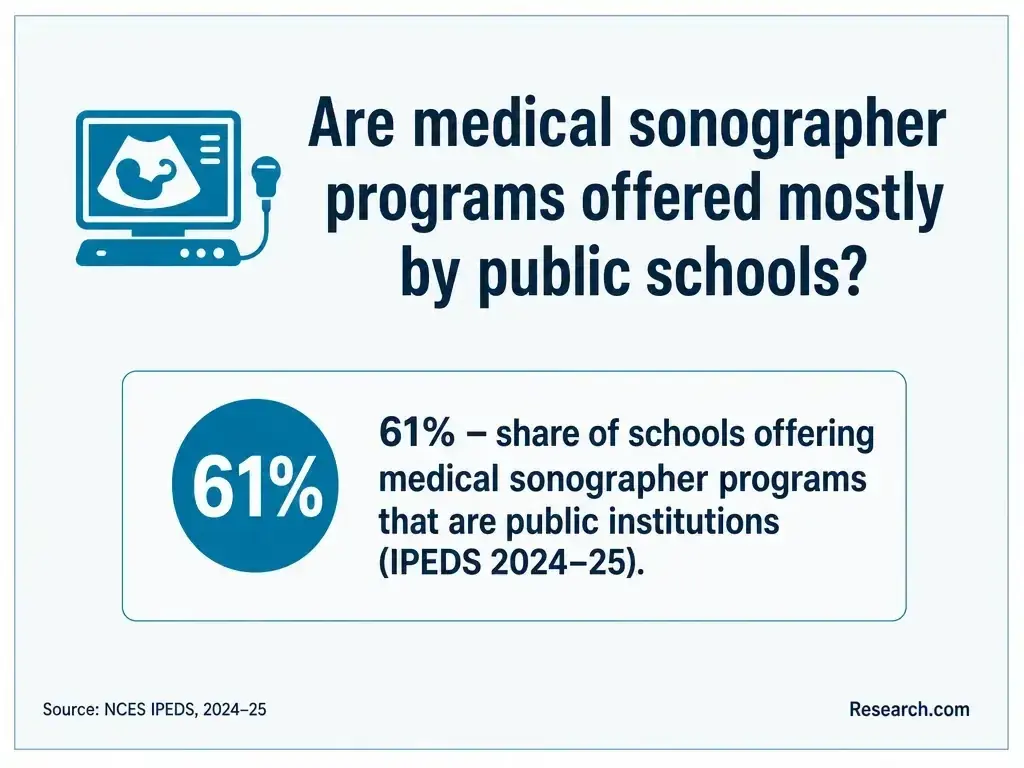
Montgomery College is a local institution to investigate for current sonography offerings, prerequisites, and clinical arrangements. Request the current program handbook: a credential's name alone does not show how much time you will spend scanning patients. Unlike trades with a conventional paid apprenticeship route, sonography generally depends on structured clinical education; do not assume an employer placement or an apprenticeship listing substitutes for a qualifying program. Sources: U.S. Bureau of Labor Statistics (BLS); CAAHEP; American Registry for Diagnostic Medical Sonography (ARDMS).
Potential workplaces include hospital imaging departments, outpatient imaging centers, physician practices, and specialty clinics. BLS identifies hospitals as the largest national employer of diagnostic medical sonographers. For a Rockville resident, that makes the wider Montgomery County and Washington metropolitan healthcare market relevant - but a broader commute also adds time and transportation costs, particularly for early clinical shifts.
Ask a program where its recent students completed clinical rotations and whether those sites accept students in your intended specialty. Rotations expose you to workplace routines and possible employers, but they do not guarantee an offer. Hospital roles may involve evenings, weekends, or on-call coverage; outpatient schedules may differ by employer and specialty. Source: BLS Occupational Outlook Handbook.
A verified Rockville-specific median is not established here. The appropriate benchmark is the BLS national median annual wage of $96,590 in May 2025 for diagnostic medical sonographers. A median describes workers across experience levels, employers, and specialties - not what a new graduate should expect in their first Rockville offer. Source: BLS Occupational Outlook Handbook, May 2025 wage data.
For a useful local comparison, collect posted pay ranges for the specialty and shifts you would accept, then distinguish base pay from differentials and on-call compensation. Compare those offers with your current earnings and training costs; applying the national median directly to a personal return-on-investment calculation could overstate the benefit of enrolling.
An associate-degree pathway commonly takes about two years of full-time study after any required prerequisites; an eligible healthcare worker's certificate pathway may be shorter. The actual calendar can be longer if prerequisites are taken separately, clinical placements follow a fixed sequence, or a student attends part time. Montgomery College applicants should request the current course sequence and ask which prerequisites must be finished before applying.
There is no single national sonography clock-hour total that makes every program interchangeable. Ask for the program's scheduled lab and supervised clinical hours, clinical-site schedule, and policy for missed rotations. An accelerated calendar is useful only if it preserves the scanning experience and certification eligibility you need. Search results for a best accelerated online associates business degree address a different kind of study; their timelines should not be used to estimate clinical training. Sources: BLS Occupational Outlook Handbook; CAAHEP; ARDMS.
Online delivery can make lectures and some assignments easier to schedule. It cannot replace learning to position a patient, handle a transducer, adjust an image in real time, or complete supervised scans. A hybrid option therefore makes sense only if its in-person labs and clinical sites are accessible from Rockville and fit your work and caregiving schedule. Sources: CAAHEP; ARDMS.
Compare formats by asking where each lab meets, who secures clinical placements, and whether travel beyond Montgomery County is required. Also check whether students must attend daytime rotations even when lectures are online. An online schools with open admission search may help explain flexible entry policies generally, but open admission does not establish eligibility for a selective sonography clinical sequence. Treat any claim that an entirely online course alone qualifies you to perform diagnostic scans or sit for a credentialing exam as a red flag.
There is no reliable single Rockville average that captures every sonography pathway and student circumstance. For Montgomery College, request a current program-specific estimate and confirm which tuition rate applies to your residency. Compare the total cost to become job-ready, not just the advertised tuition; required travel to clinical sites can materially change the budget.
A complete estimate should include the following charges and offsets, with amounts supplied by the program rather than assumed.
Ask the financial aid office which costs are included in its attendance budget and whether your specific program is aid-eligible. A list of online college that accept financial aid does not establish aid eligibility for a particular sonography credential; verify it with the institution and Federal Student Aid. To judge whether training is worth the expense, consider debt, the chance of completing clinical requirements, lost earnings during study, and plausible entry-level pay - not tuition or the national occupational median alone. Sources: Federal Student Aid; Montgomery College.
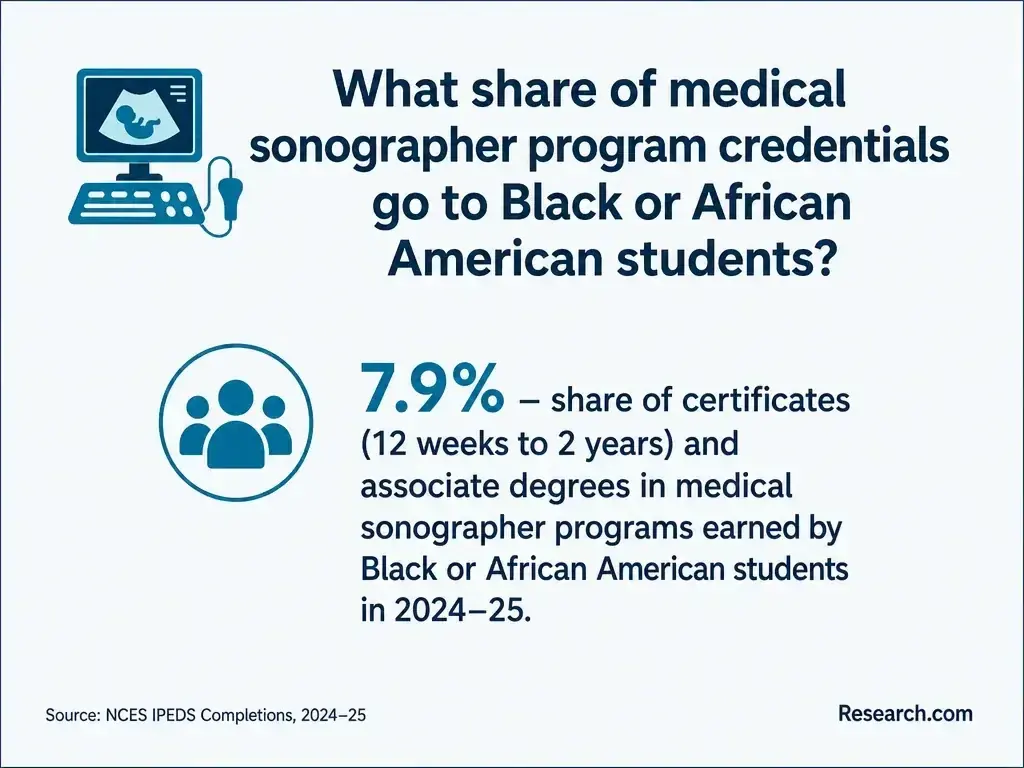
The school credential depends on the pathway: it may be an associate degree or, for an applicant with the required prior qualifications, a certificate. A school credential is not the same as professional certification. ARDMS credentials require meeting an applicable eligibility prerequisite and passing the required examinations; graduation alone should not be treated as certification. Sources: ARDMS; CAAHEP.
Before applying, obtain written confirmation of the credential awarded, the concentration completed, and the ARDMS eligibility pathway the program expects graduates to use. If you hope to add another specialty later, ask which additional clinical experience and exams it would require rather than assuming the first credential covers it.
Requirements vary by pathway and admission cycle. Applicants commonly need prerequisite coursework in subjects such as anatomy and physiology, evidence of academic readiness, and documentation needed for patient-facing clinical work. A certificate intended for qualified healthcare workers may require an existing credential or prior clinical education. Check Montgomery College's current program materials for its actual prerequisites and selection process rather than treating general college admission as admission to the sonography cohort. Source: Montgomery College.
Clinical sites may impose health, background-check, and scheduling conditions in addition to school admission requirements. Ask whether a site restriction could prevent placement, whether prerequisite credits can transfer, and whether prior clinical learning receives any advanced standing. Get those answers before paying for courses that may not advance you toward a clinical seat.
Core instruction connects cross-sectional anatomy, ultrasound physics, instrumentation, patient care, image optimization, and documentation. In labs and clinical rotations, students practice obtaining diagnostic-quality images while responding to patient needs and working within a clinical team. Specialty content depends on whether the pathway focuses on general, cardiac, vascular, or another area of sonography. Sources: BLS Occupational Outlook Handbook; CAAHEP.
Ask to see a current curriculum map showing when supervised patient scans begin and how performance is assessed. A course list heavy on theory but unclear about clinical supervision is not enough evidence of job readiness. Communication and physical stamina matter too: BLS notes that sonographers work directly with patients and may spend substantial time on their feet.
Maryland does not have a separate state occupational license for diagnostic medical sonographers. That does not make credential planning optional: employers may require or prefer professional certification, and certification has its own education, experience, and examination rules. Verify current Maryland requirements before enrollment if you intend to practice across state lines, because another state's rules may differ. Sources: Maryland Department of Health; ARDMS.
Keep the distinctions clear. Institutional accreditation concerns the school; CAAHEP programmatic accreditation concerns a specific allied-health program and concentration; ARDMS certification concerns an individual who meets its prerequisites and passes its exams. State authorization to operate a school is another matter. None automatically substitutes for the others. Request the program's current accreditation status and a written explanation of how its graduates qualify for the certification you intend to seek. Sources: CAAHEP; ARDMS.
Start with the occupation you want to enter, then compare programs on evidence that affects entry into that role. Montgomery College is a practical local option to investigate, but a ranking position alone cannot tell you whether its current concentration, clinical schedule, and costs fit your circumstances. Use the following checks when speaking with admissions and program staff.
A cheaper or faster program is not a bargain if it leaves you without a workable clinical placement or the intended exam pathway. Conversely, a longer commute may be worthwhile if the placement and schedule better fit your specialty goal. Comparisons built for a cheap bachelor's degree online cannot resolve those sonography-specific requirements. Choose based on the training-to-employment route, not the lowest headline price. Sources: CAAHEP; ARDMS; Federal Student Aid.
An entry pathway can lead to supervised-to-independent work in the specialty for which a graduate is qualified, subject to employer expectations and certification rules. With experience and any additional required training or examinations, a sonographer might pursue another imaging specialty, a lead role, clinical education, or equipment applications work. These are potential progressions, not automatic outcomes of an entry program. Sources: BLS Occupational Outlook Handbook; ARDMS.
If your goal is direct patient imaging, prioritize a pathway with substantial scanning practice over a credential chosen primarily for its title. A resource about masters degrees that pay the most addresses a different education decision and should not be used to predict the return from entry-level sonography training. For this investment, compare the role you can realistically enter after training with the role and earnings you have now.
BLS projects 13.9% growth nationally from 2025 to 2035 for diagnostic medical sonographers. That indicates expanding demand across the U.S.; it is not a forecast of Rockville openings or the likelihood that any one graduate will be hired. Source: BLS Employment Projections, 2025-2035.
For a local decision, review openings across Rockville and the surrounding Washington metropolitan area by specialty, required certification, experience, shift, and travel distance. Compare those requirements with the program's clinical concentration before enrolling. If most appealing postings require experience, ask how the program supports the transition into a first role rather than assuming the national growth projection will overcome an entry-level mismatch.
Investing in training is a consequential decision, especially when a program's clinical placements, costs, and credential eligibility affect the route into work. Research.com's team built the ranking to compare programs with other options in the same occupation and location, using reported data and relevant quality indicators. Only programs with completions reported to the Integrated Postsecondary Education Data System (IPEDS) are eligible; an unlisted training provider is not necessarily unapproved or ineffective.
The best-program ranking evaluates student outcomes, earnings and return on investment, costs and debt, and quality and recognition. Its current weights assign 20% to occupation-relevant programmatic accreditation or industry recognition, 10% to institutional accreditation, and 10% to student support. The remaining 60% covers completion and full- and part-time retention; earnings one year after completion and relative to annual attendance cost; and tuition, attendance cost, median debt - including for students who withdrew - and federal loan default rate. An entropy-based method gives more weight to indicators that differ more across programs.
The most-affordable-program ranking is different: it scores tuition, attendance cost, median debt, and federal loan default rate using entropy-based weights. Accreditation and other quality indicators are not part of that affordability score. Readers should therefore use either ranking as a shortlist, then verify clinical training and certification fit directly with a program.
The following sources inform the ranking. Some recognition sources cover other trades or health occupations in Research.com's broader ranking work; their inclusion here does not make them sonography accreditors.
See Research.com's methodology for more about how rankings are created. No ranking can establish whether a particular clinical site, schedule, or certification pathway meets your needs; those are decisions to confirm before enrolling.
# 1 position
# 2 position
Montgomery College is a local institution to check. Confirm its current sonography offering, specialty, admissions cycle, accreditation status, and clinical-site arrangements directly before applying.
Online coursework may cover theory, but hands-on labs and supervised clinical scanning require in-person participation. Confirm that any advertised format supports your intended certification pathway. Sources: CAAHEP; ARDMS.
No. ARDMS sets eligibility prerequisites and examinations. Ask the program which prerequisite its graduates use and what additional steps they must complete. Source: ARDMS.
An associate-degree pathway may suit someone entering the field without a qualifying healthcare background. A shorter certificate may suit an applicant who already meets its clinical-entry requirements. Compare supervised training and certification eligibility, not duration alone.
It may be if the credential, clinical placements, and certification route lead to the work you want at a manageable total cost. Estimate aid, debt, lost earnings, completion risk, and plausible first-job pay before deciding; the national median wage is not a graduate earnings guarantee.