
Most Affordable HVAC Technician Schools & Training in York for 2027
Audited and Verified:
Our Editorial and Data Verification Process
Research.com uses government datasets, official education statistics and primary institutional information to support its career and degree guides. Our review process checks factual accuracy, occupational definitions, source dates and the requirements associated with the credentials discussed.
How This Article Was Fact-Checked
Our editorial team verifies salary estimates, employment projections, education requirements and program information against original data providers and official organizations. Salary figures are checked against the relevant occupational definitions and reporting periods. Information about licensure, accreditation and required in-person training is reviewed separately.
Fact-checked and verified on:

Co-Founder and Chief Data Scientist

Reviewed by Karolina Broda
Fact-Checker and Data Verification
Choosing an affordable HVAC program in York, Pennsylvania, means comparing more than tuition: you need enough equipment time to enter the trade without taking on unnecessary debt. The U.S. Bureau of Labor Statistics projects 10.9% national employment growth for HVAC mechanics and installers from 2025 to 2035. For prospective students and career changers, the Research.com team of data scientists created the Most Affordable HVAC Technician Trade Schools in York for 2027 ranking to help identify training worth considering. This guide explains costs, credentials, certification, local pathways, and how to compare them.
Key findings about HVAC technician degrees in York
- Affordable does not mean job-ready: compare total charges, HVAC lab access, and preparation for federally required EPA Section 608 certification when the intended work involves regulated refrigerants.
- York-area applicants can compare school-based training with paid registered apprenticeships and employer training; only programs reporting completions to IPEDS can appear in this affordability ranking.
- The national median annual pay for HVAC mechanics and installers was $61,010 in May 2025, and projected national employment growth is 10.9% for 2025-2035 (U.S. Bureau of Labor Statistics). Neither figure is a York starting-pay estimate.
Table of Contents
- Most Affordable HVAC Technician Schools & Training in York for 2027
- What can I expect from an HVAC technician trade school program in York?
- Where can I work with an HVAC technician trade school training in York?
What can I expect from an HVAC technician trade school program in York?
An HVAC training program should teach students to install, troubleshoot, maintain, and safely service heating, ventilation, air-conditioning, and refrigeration systems. Expect a mix of electrical fundamentals, refrigeration theory, controls, safety, and supervised work on actual equipment. A program with limited equipment access may look inexpensive but leave a new technician needing substantial additional training.
York-area students should ask York County School of Technology-Adult & Continuing Education and YTI Career Institute-York which HVAC offerings are currently available, what credential each awards, and how much instruction takes place in a shop or at a worksite. Program names, schedules, and equipment can change. The useful comparison is not whether both advertise HVAC, but whether each provides practice diagnosing faults, measuring system performance, and handling refrigerants safely.
Where can I work with an HVAC technician trade school training in York?
Training can lead to work with residential service contractors, commercial building-maintenance teams, refrigeration service companies, facilities departments, or installation crews. The distinction matters in York: residential service often involves travel to customers and variable schedules, while facilities roles may emphasize maintaining systems at a fixed site. Refrigeration-focused work may require additional experience with the equipment an employer uses.
Ask prospective employers whether they hire trainees before completion and whether they pay for tools, certification testing, or supervised field training. An employer-sponsored route may be a better investment than paying for a full school program if it offers structured instruction and meaningful equipment experience - not merely time spent assisting a crew.
The national median annual wage for heating, air-conditioning, and refrigeration mechanics and installers was $61,010 in May 2025 (U.S. Bureau of Labor Statistics). This is the midpoint for workers across experience levels nationwide, not a promised wage for a new York technician. Before borrowing, request recent, occupation-specific placement and pay information from the training provider, and compare actual entry-level offers from York-area employers.
Pay can change with service experience, overtime, commercial-system skills, and employer. Compare offers on the same basis: hourly rate, expected paid hours, on-call requirements, benefits, travel time, and who buys tools. A higher advertised rate may not compensate for substantial unpaid travel or equipment costs.
Completion time depends on the pathway and schedule. A school certificate may be designed for quicker entry than a longer diploma or associate-degree program, while part-time attendance extends the calendar even if required instruction stays the same. A registered apprenticeship combines related classroom instruction with supervised paid work over multiple years; its structure and required hours depend on the registered program (U.S. Department of Labor, Apprenticeship.gov).
Do not choose an accelerated option solely by its finish date. Ask for the published total clock or credit hours, scheduled lab hours, field placement requirements, and whether a working adult can attend every required practical session. General advice about an accelerated online degree for working adults cannot establish how quickly someone can acquire HVAC shop skills.
Online instruction can cover concepts such as electrical theory, load calculations, codes, and service documentation. It cannot replace supervised practice wiring controls, measuring pressures, diagnosing equipment, or demonstrating safe refrigerant handling. For a York student, a hybrid program is useful only if its required lab and worksite locations are reachable on the advertised schedule.
Compare formats by the in-person work they actually require, not by the percentage of lectures delivered online. Ask who supplies equipment, how practical skills are assessed, and whether the program arranges local field experience. A search for what certifications can i get online that pay well is not a substitute for checking the specific HVAC credential and any applicable exam rules. In particular, do not assume online course completion confers EPA Section 608 certification.
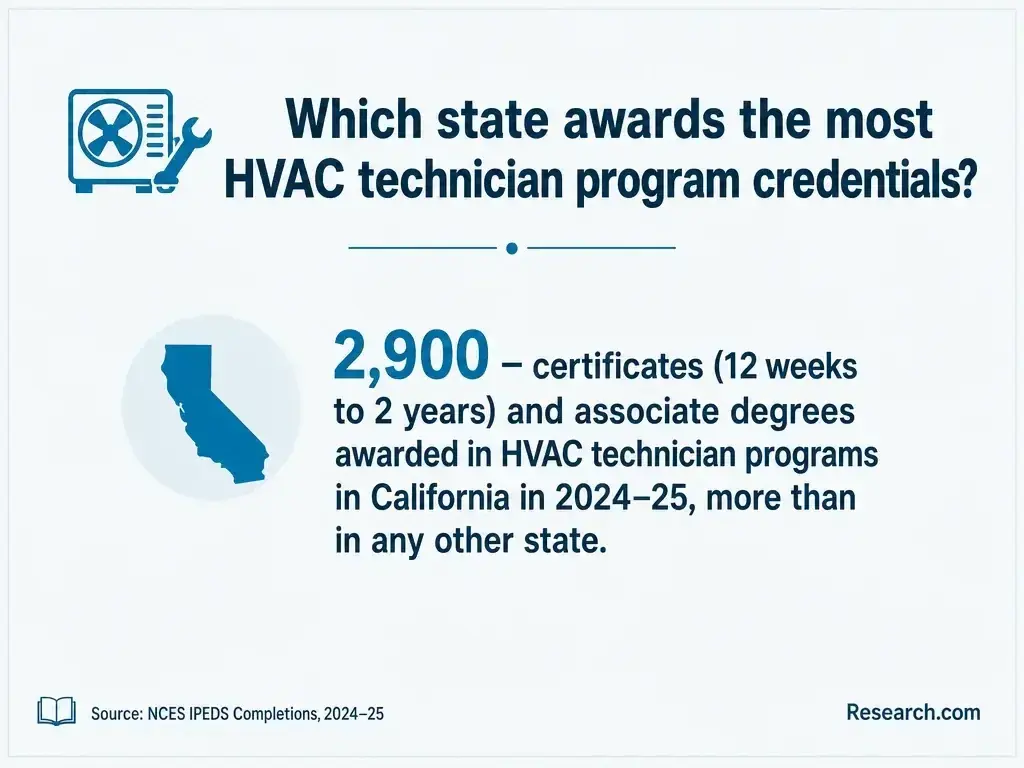
There is no defensible single average price for every York HVAC pathway: school credentials, part-time courses, and paid apprenticeships have different charges and wage arrangements. Request a current, itemized quote from each provider before treating the ranking's affordability position as your likely bill. Compare the cost to become employable, not tuition alone.
The following cost categories help reveal differences between a lower-tuition program and one that includes more equipment or support. Confirm whether each item is included, optional, or required.
| Cost category | What to verify | Why it changes the comparison |
| School charges | Tuition, mandatory fees, materials, and consumables | Advertised tuition may exclude required purchases. |
| Job-entry expenses | Tools, PPE, uniforms, and applicable certification exams | These costs may arise before the first paycheck. |
| Attendance costs | Travel to York-area labs or worksites and earnings forgone while training | A short but intensive schedule can still be expensive to attend. |
| Offsets | Grants, eligible aid, employer payments, or apprenticeship wages | Net cost can differ substantially from the listed price. |
For aid, confirm the specific program's eligibility with its financial-aid office; a school's participation in federal aid does not make every short course eligible (Federal Student Aid). Ask whether Pennsylvania workforce assistance through PA CareerLink or other applicable grants can cover the offering, and compare written net-cost estimates after aid rather than assuming eligibility from a list of online FAFSA schools.
The credential depends on the route: a school may award a certificate, diploma, or associate degree; a registered apprenticeship provides a completion credential after its required instruction and work experience (U.S. Department of Labor, Apprenticeship.gov). These are not interchangeable. A course-completion certificate documents training, whereas EPA Section 608 certification documents passing the applicable federally required technician examination for work covered by that rule (U.S. Environmental Protection Agency).
Ask whether examination fees and preparation are included and whether graduates receive a transcript or documented competencies an employer can inspect. If you may later enter an apprenticeship, ask its sponsor whether prior coursework earns advanced standing; do not assume credits or hours will transfer automatically.
Entry requirements vary by provider and pathway. School programs may request an application and evidence of readiness for technical reading and math; employers and apprenticeship sponsors set their own selection and hiring conditions. Rather than assuming one York provider's rules apply to another, ask about minimum age, prior education, placement testing, required driving, physical work, and any costs due before enrollment.
For an apprenticeship, ask the sponsor when applications open, how applicants are selected, what the starting wage is, and whether prior HVAC training affects placement. For school-based training, request the current catalog and refund policy before paying a deposit. Unrelated search results - even online doctorate programs without dissertation - cannot answer those trade-entry questions.
Useful HVAC instruction connects theory to repeatable tasks: reading wiring diagrams, testing electrical components, diagnosing airflow problems, understanding the refrigeration cycle, using gauges and meters, documenting repairs, and following electrical and refrigerant safety procedures. The U.S. Bureau of Labor Statistics identifies installation, inspection, maintenance, and repair as core occupational duties.
Equipment coverage matters because residential cooling, heat pumps, and commercial refrigeration do not present identical service problems. Ask to see the lab inventory and practical assessments, then ask how the curriculum addresses newer, lower-global-warming-potential refrigerants and associated safety procedures as federal refrigerant rules affect equipment choices (U.S. Environmental Protection Agency). A syllabus that names a topic without giving students practice on relevant equipment is weaker evidence of readiness.
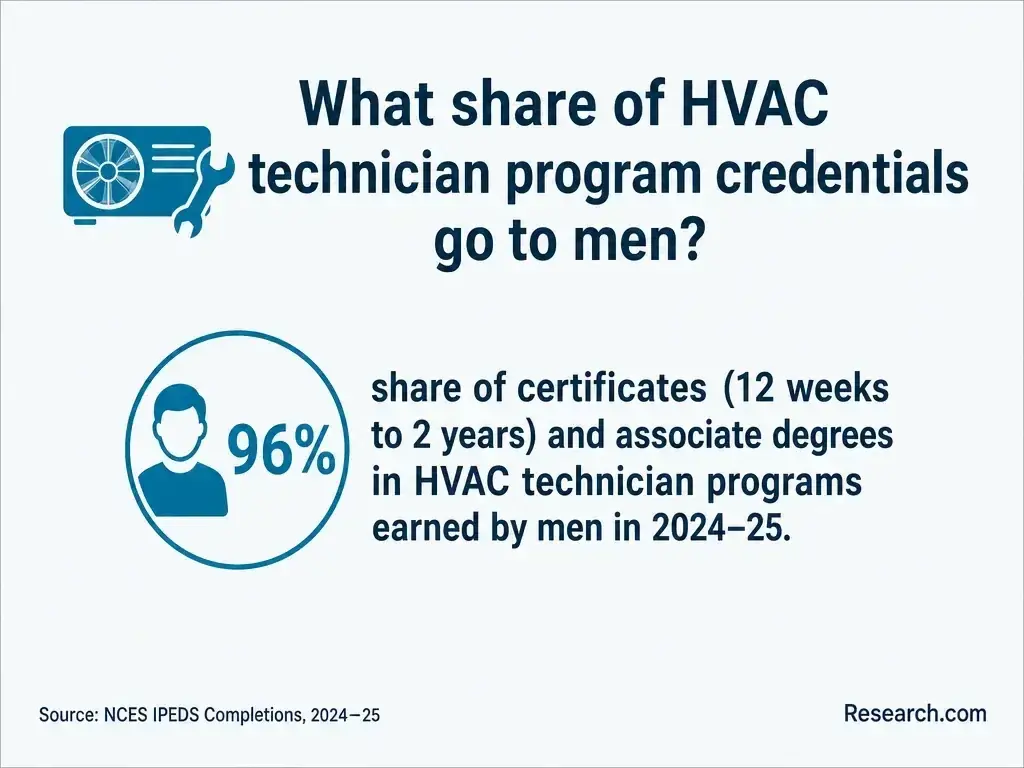
EPA Section 608 certification is the key federal requirement to check. Technicians performing covered maintenance, service, repair, or disposal that could release regulated refrigerants must be certified; the appropriate certification type depends on the appliances serviced (U.S. Environmental Protection Agency). Completing an HVAC class does not itself award that certification.
Pennsylvania does not impose a general statewide occupational license solely for working as an HVAC technician, but local rules and the nature of the work may introduce other requirements. Before selecting a York program, check requirements with the municipality where you expect to work and with prospective employers; do not confuse a technician's certification with business, contractor, or other trade requirements (Pennsylvania Department of Labor & Industry; U.S. Environmental Protection Agency). Institutional accreditation, state school authorization, apprenticeship registration, and professional certification serve different purposes - none automatically substitutes for another.
The best-value program is the least costly suitable route to your intended job, not necessarily the lowest-priced listing. A student seeking quick residential entry may prioritize a focused credential with substantial lab time; someone targeting broader systems work may value longer supervised training. A paid apprenticeship can reduce borrowing but requires finding a sponsor and committing to its work-and-instruction schedule.
Use these checks before enrolling; each tests a common reason an apparently affordable program can disappoint:
- Identify your target work - residential service, installation, facilities maintenance, or refrigeration - and ask employers which competencies they expect from new hires.
- Get written confirmation of the credential, total required hours, practical-training hours, equipment access, and any field placement.
- Verify institutional accreditation and applicable school authorization separately from EPA Section 608 exam preparation; ask who administers the exam and what it costs.
- Compare itemized net costs, likely forgone earnings, available aid or paid training, and realistic completion prospects rather than tuition or a ranking alone.
- Request recent occupation-specific completion and placement information, and speak with an apprenticeship sponsor or employer before committing.
Return on investment also depends on your starting earnings, post-training earnings, debt, completion probability, time horizon, and the value of earnings received sooner rather than later. Avoid treating a national median wage as your expected first salary. If you are still testing whether hands-on service work fits you, a general list of best jobs for creative introverts cannot replace observing an HVAC worksite or discussing daily duties with a technician.
A common first step is installer helper or supervised service trainee, followed by more independent maintenance and troubleshooting as skills develop. Experienced technicians may move toward commercial systems, refrigeration, controls, field supervision, or running a service business. Those transitions depend on demonstrated experience and, where relevant, additional credentials or business requirements - not on an entry-level school award alone.
Choose training backward from the work you want. If you aim to service refrigerant-containing equipment, plan for the applicable EPA Section 608 certification (U.S. Environmental Protection Agency). If you want controls or commercial refrigeration work, ask whether the provider teaches and assesses those systems or whether an employer would provide the next stage of training.
National employment for heating, air-conditioning, and refrigeration mechanics and installers is projected to grow 10.9% from 2025 to 2035 (U.S. Bureau of Labor Statistics, Employment Projections). That signals a growing occupation nationally, but it does not measure York openings or guarantee local placement. Replacement hiring and the mix of nearby residential and commercial employers also shape the opportunities available to a new technician.
Use the national projection to justify investigating the trade, then test local demand before paying for training: review current York-area postings for required experience and certifications, ask programs which employers hire their trainees, and compare school claims with what those employers say. A program aligned with actual entry-level openings is more useful than one promising broad demand without showing a route into work.
Most Affordable HVAC Technician Schools & Training in York for 2027
Education is a consequential investment, so the Research.com team evaluates programs against others in the same occupation and location rather than against unrelated schools. The 2027 affordability ranking considers tuition, cost of attendance, median student debt, and federal loan default rates. It uses an entropy-based method that gives more weight to measures that differ more across eligible programs. Accreditation and other quality indicators do not contribute to this affordability score.
Only programs with completions reported to the Integrated Postsecondary Education Data System (IPEDS) are eligible. That rule supports consistent comparisons, but it means the ranking does not represent every York-area apprenticeship, employer training route, or provider outside IPEDS reporting. A low-cost rank also does not establish that a program offers the practical training or certification preparation a particular student needs.
Research.com uses the following data sources in its ranking work. Some cover fields other than HVAC; their inclusion in the methodology does not mean they accredit HVAC programs.
- IPEDS database - program completions and institutional reporting.
- National Center for Education Statistics - federal education data and documentation.
- College Scorecard database - available institutional cost, debt, and outcomes measures.
- Peterson's database - supplementary institutional information.
- Commission on Accreditation of Allied Health Education Programs (CAAHEP) - occupation-specific recognition where applicable.
- Accrediting Bureau of Health Education Schools (ABHES) - occupation-specific recognition where applicable.
- Commission on Dental Accreditation (CODA) - occupation-specific recognition where applicable.
- Dental Assisting National Board (DANB) - occupation-specific credential information where applicable.
- National Center for Construction Education and Research (NCCER) - construction-trade training recognition.
- Apprenticeship.gov Partner Finder - apprenticeship pathway information.
For context, Research.com's separate best programs rankings assess student outcomes, earnings and return on investment, costs and debt, and quality and recognition. Their current weights assign 20% to relevant programmatic accreditation or industry recognition, 10% to institutional accreditation, 10% to student support, and 60% to outcomes, earnings, and costs using entropy-based weighting. Those are not the weights for this most-affordable ranking. Readers can review the fuller approach on the Research.com methodology page and use the ranking as a shortlist before confirming current prices and training details directly with providers.

# 2 position

Frequently asked questions about HVAC technician programs in York
What is the cheapest way to train for HVAC work in York?
There is no universal cheapest route. Compare each school's full required costs with registered apprenticeships and employer training, accounting for wages earned during training and any aid available to you.
Can I become an HVAC technician entirely online?
Online lessons can teach theory, but equipment diagnosis and safe hands-on work require practical training. Confirm where and how a hybrid provider assesses those skills.
Do I need EPA Section 608 certification before starting school?
Not necessarily. You need the applicable certification before performing covered refrigerant work as a technician; ask the provider when preparation and testing occur (U.S. Environmental Protection Agency).
Is a certificate enough to get hired?
It may support an entry-level application, but employers also assess practical ability and may require certification or supervised experience. Check hiring requirements for the particular role you want.
Does the affordability ranking include York apprenticeships?
Not unless a program meets the ranking's IPEDS-reported-completions eligibility rule. Compare registered apprenticeships separately even if none appears in the school ranking.
- U.S. Bureau of Labor Statistics - Heating, Air Conditioning, and Refrigeration Mechanics and Installers
Used to verify salary, employment outlook, and typical education requirements.
https://www.bls.gov/ooh/installation-maintenance-and-repair/heating-air-conditioning-and-refrigeration-mechanics-and-installers.htm - NCCER - Accredited Training
Used to verify programmatic accreditation or industry recognition of programs.
https://www.nccer.org/ - EPA - Section 608 Technician Certification
Professional certification reference for graduates of this occupation.
https://www.epa.gov/section608/section-608-technician-certification - York County School of Technology-Adult & Continuing Education - official website
Official school website (programs, tuition, admissions).
https://www.educationthatpays.com/ - YTI Career Institute-York - official website
Official school website (programs, tuition, admissions).
https://www.yti.edu/