
Most Affordable HVAC Technician Schools & Training in Troy for 2027
Audited and Verified:
Our Editorial and Data Verification Process
Research.com uses government datasets, official education statistics and primary institutional information to support its career and degree guides. Our review process checks factual accuracy, occupational definitions, source dates and the requirements associated with the credentials discussed.
How This Article Was Fact-Checked
Our editorial team verifies salary estimates, employment projections, education requirements and program information against original data providers and official organizations. Salary figures are checked against the relevant occupational definitions and reporting periods. Information about licensure, accreditation and required in-person training is reviewed separately.
Fact-checked and verified on:

Co-Founder and Chief Data Scientist

Reviewed by Karolina Broda
Fact-Checker and Data Verification
Choosing affordable HVAC training in Troy, New York, means looking beyond tuition: the cheapest program may leave you paying separately for tools, certification or the hands-on practice employers expect. The U.S. Bureau of Labor Statistics projects 10.9% national employment growth for heating, air conditioning and refrigeration mechanics and installers from 2025 to 2035. This guide helps prospective students and career changers compare costs, credentials, practical training and paid alternatives. It will feature a Most Affordable HVAC Technician Trade Schools in Troy for 2027 ranking created by the Research.com team of data scientists to help students identify programs worth considering.
Key findings about HVAC technician degrees in Troy
- The lowest-ranked cost is not necessarily the lowest cost to become job-ready: compare fees, tools, travel, lost earnings and any paid-training alternative.
- The national median for HVAC mechanics and installers was $61,010 in May 2025, not a Troy starting-wage estimate (U.S. Bureau of Labor Statistics).
- In Troy, compare a hands-on college or trade-school credential with paid employer or registered-apprenticeship training; neither program completion nor institutional accreditation replaces EPA refrigerant certification when that work requires it (U.S. Environmental Protection Agency).
Table of Contents
- Most Affordable HVAC Technician Schools & Training in Troy for 2027
- What can I expect from an HVAC technician trade school program in Troy?
- Where can I work with an HVAC technician trade school training in Troy?
What can I expect from an HVAC technician trade school program in Troy?
Expect a mix of classroom instruction and work with actual HVAC equipment. A useful entry-level program teaches students to read wiring diagrams, measure electrical values, diagnose airflow and refrigeration problems, and work safely around pressurized systems. Ask to see the lab equipment and the portion of instruction spent troubleshooting rather than watching demonstrations.
For a Troy resident, Hudson Valley Community College is a local provider to investigate; confirm its current HVAC offerings, credential and schedule directly before comparing them with nearby career schools. A registered apprenticeship or employer-sponsored trainee position may be a better fit if you need wages while learning and can accept a longer, worksite-based route. A short school program may fit someone who wants structured preparation before applying for helper jobs. Neither route makes a new technician independently proficient on every system.
Where can I work with an HVAC technician trade school training in Troy?
Potential workplaces include residential service firms, commercial building contractors, facilities-maintenance teams and refrigeration-service employers across the Capital Region. The distinction affects training: residential work emphasizes customer visits and split systems, while commercial and refrigeration roles may require more controls, larger equipment and varied schedules (U.S. Bureau of Labor Statistics, Occupational Outlook Handbook).
Ask prospective employers whether entry-level hires ride with experienced technicians, travel between job sites or take on-call shifts. Those answers may matter more to a Troy commuter than a program's broad claim that graduates can work "anywhere."
The latest national median supplied by the U.S. Bureau of Labor Statistics is $61,010 for May 2025 for heating, air conditioning and refrigeration mechanics and installers. It covers workers at many experience levels and is not an entry-level offer or a Troy-specific wage. Do not use it alone to calculate what a training program will repay.
For a local decision, compare actual Capital Region trainee and technician postings by hourly rate, paid travel, overtime expectations, benefits and tool allowances. A paid trainee role can improve your finances during training even if its initial hourly rate is below that of an experienced service technician.
Length depends on the credential, course load and work-based component. A short certificate concentrates on entry skills; a longer diploma or associate degree may add general education or more advanced technical work. Registered apprenticeships combine paid work with related instruction over a longer period, according to the U.S. Department of Labor. There is no single Troy-wide number of clock or contact hours that makes every HVAC school program equivalent.
Compare published total contact hours, hands-on lab hours and evening or part-time availability - not just advertised calendar length. An accelerated option is less useful if it cuts the practical time you need or prevents you from earning while enrolled. If speed is the overriding constraint, colleges with fast track programs offer a broader comparison of accelerated study; check HVAC-specific lab hours separately.
Online instruction can cover theory, safety, calculations and some exam preparation. It cannot replace practicing electrical testing, equipment setup, leak detection and fault diagnosis on physical systems. A hybrid program can work well if its in-person labs are reachable from Troy and scheduled when you can attend; an entirely remote course is better viewed as theory preparation unless the provider documents a separate practical-training arrangement.
Ask where every required lab occurs and whether travel is included in the quoted cost. People exploring programs for older adults online should apply the same test to HVAC: convenient coursework is useful, but hands-on competence still needs a real setting.
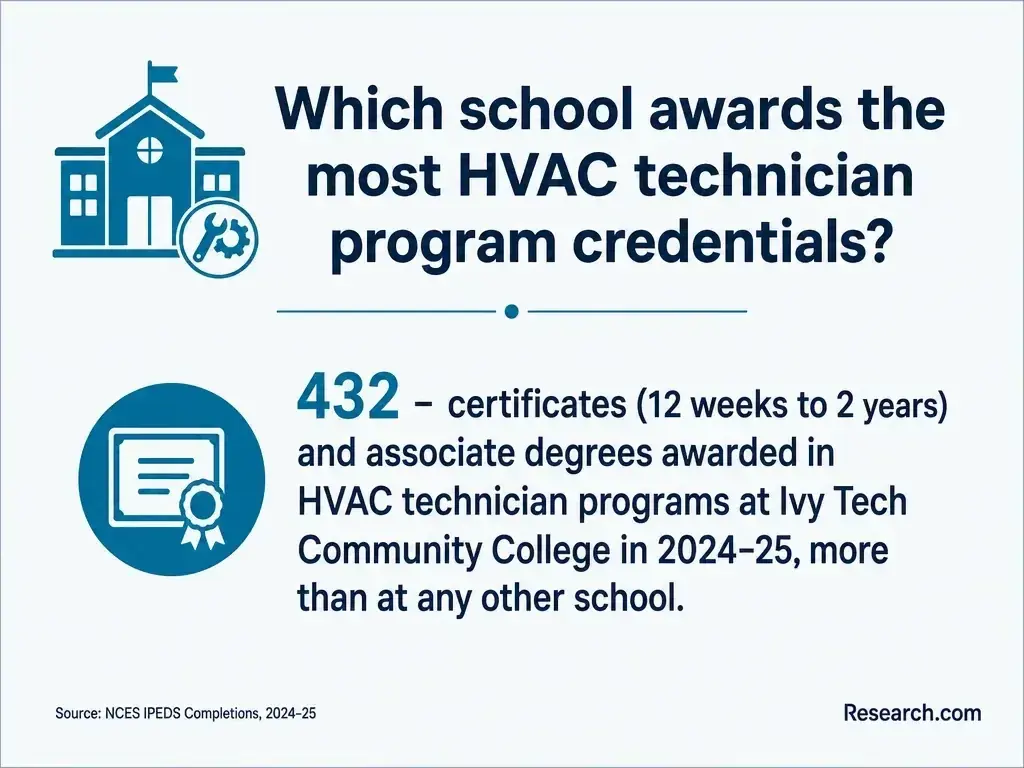
There is no defensible Troy-wide average here that covers college programs, career schools, apprenticeships and employer training on the same basis. Published tuition alone also misses the amount you may need before earning a technician's wage. Request a current, itemized quote from each provider and compare the cost to become job-ready.
The following categories make unlike training offers easier to compare without treating a paid apprenticeship as though it charges conventional tuition.
| Cost or offset | What to verify |
| School charges | Tuition, mandatory fees, books, software and consumable materials |
| Practical preparation | Tools, testing equipment, PPE and travel to labs or worksites |
| Career entry | Refrigerant-certification exam fees and any employer-required purchases |
| Financial offsets | Grants, eligible aid, employer-paid training and apprenticeship wages |
| Time cost | Earnings forgone while attending classes or unpaid training |
Ask whether a specific program qualifies for federal student aid and check New York's eligible training-provider information for possible workforce assistance; eligibility depends on the program and applicant (Federal Student Aid; New York State Department of Labor). A lower sticker price is not automatically better if it shifts equipment costs to you or delays paid employment. Broader low cost bachelor degree online comparisons use a different educational and cost structure; do not substitute them for an HVAC program quote.
Depending on the provider, completion may lead to a certificate, diploma or associate degree. A registered apprenticeship documents a different pathway: supervised employment plus related instruction, with its completion credential determined by the registered program (U.S. Department of Labor). An employer may instead provide internal training without awarding a school credential.
Do not confuse any of these with EPA Section 608 technician certification. The U.S. Environmental Protection Agency requires that certification for technicians who maintain, service, repair or dispose of equipment in ways that could release regulated refrigerants. Ask whether exam preparation and the exam itself are included, and what credential you receive if you finish classes but do not pass it.
Requirements vary by school and sponsor. Check the provider's current rules for prior schooling or equivalency, placement, application deadlines and any physical or worksite requirements. Apprenticeship sponsors and employers may also screen for work authorization, transportation and the ability to follow safety procedures; do not assume that admission to a classroom program is admission to a paid apprenticeship.
If you have relevant work experience, ask whether the provider grants prior-learning credit or whether an apprenticeship sponsor offers advanced standing. Get any credit decision in writing before relying on a shorter completion timeline.
Core instruction typically addresses electrical circuits and controls, heating and cooling cycles, refrigeration, airflow, installation, maintenance, diagnostic measurements and jobsite safety (U.S. Bureau of Labor Statistics, Occupational Outlook Handbook). EPA refrigerant-handling rules also make certification preparation relevant to many service roles (U.S. Environmental Protection Agency).
Curriculum names alone reveal little about proficiency. For each topic, ask whether you will test a working system, interpret a fault and document the repair. As equipment and refrigerant requirements change, current lab equipment and instructor familiarity with the systems local employers service are more valuable than an impressive course list without practical access.
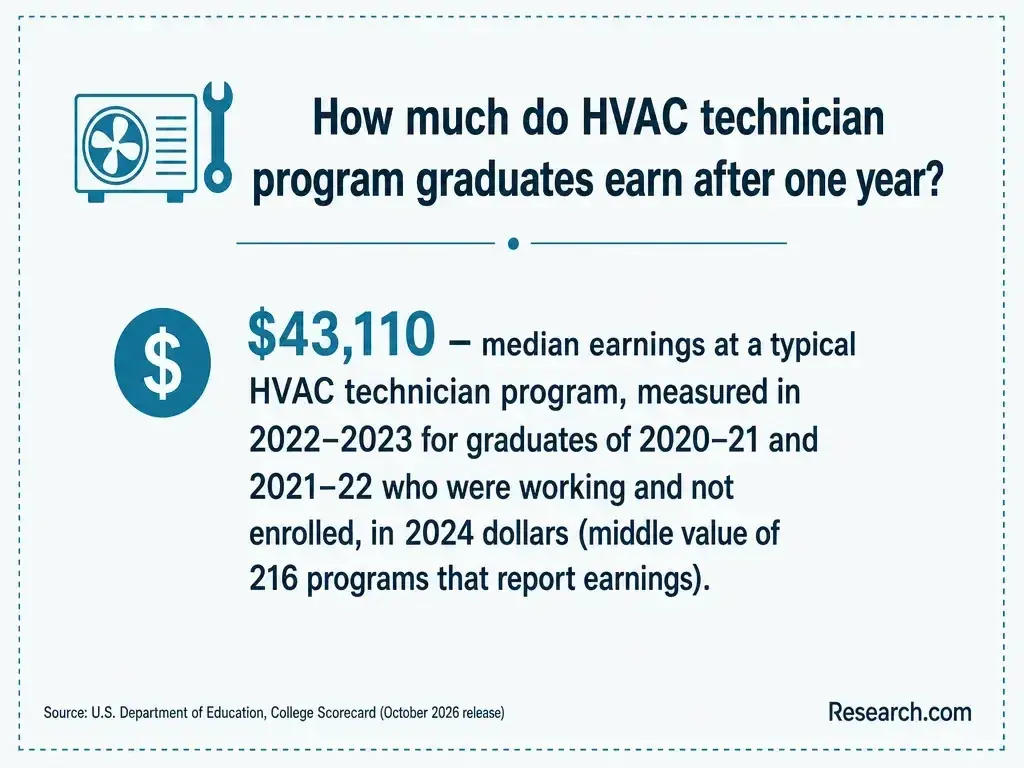
New York does not have a single statewide occupational license for every HVAC service technician. However, particular work can trigger local contractor rules, permits or other trade-specific requirements; confirm the rules for the work and jurisdiction you intend to enter rather than assuming a school credential grants permission to perform it (New York State Department of State; applicable local authorities).
The clearer federal requirement is EPA Section 608 certification for the refrigerant-related activities it covers. It requires passing the applicable exam; finishing an accredited or state-authorized program does not replace it (U.S. Environmental Protection Agency). Institutional accreditation, career-school authorization, industry credentials, apprenticeship registration and occupational licensing serve different purposes. Ask a provider which, if any, apply to its program and your target job.
Start with the job you want - residential service, commercial HVAC or refrigeration - then test each option against the skills and entry requirements for that job. An affordability ranking is a useful shortlist, not a quality or hiring guarantee.
Before paying a deposit, get clear answers to these comparison questions:
- What credential is awarded, and what are the total contact and supervised practical hours?
- Where and when will I use equipment, troubleshoot faults and complete any worksite training?
- What is the full cost after mandatory fees, tools, travel and certification exams, and what aid or wages might offset it?
- Is the school appropriately authorized, what accreditation does it hold, and does the training prepare me for relevant EPA certification?
- What entry-level roles do recent completers pursue, and can the provider substantiate its outcome claims?
Then compare a school offer with a paid trainee or apprenticeship opportunity. Consider completion probability, debt, earnings you would give up while studying and the time needed to recoup your investment - not institution type alone. Top non profit accredited online colleges address a different format decision; accreditation by itself cannot tell you whether HVAC labs or employer-recognized practical training are adequate.
A common entry point is installer's helper, maintenance trainee or junior service technician working under experienced staff. With practice, technicians may focus on commercial equipment, refrigeration, controls or service supervision; some pursue contracting after learning the applicable business and local requirements. These are progression possibilities, not automatic outcomes of one credential (U.S. Bureau of Labor Statistics, Occupational Outlook Handbook).
Choose training for the first role you can realistically obtain, while checking whether its electrical, diagnostic and refrigeration skills can support later specialization. Career comparisons such as highest paying bachelor's degrees concern a different pathway; they do not predict the return on a Troy HVAC certificate or apprenticeship.
The U.S. Bureau of Labor Statistics projects 10.9% national growth from 2025 to 2035 for heating, air conditioning and refrigeration mechanics and installers. That supports investigating the trade, but a national projection cannot establish how many openings a new trainee will find in Troy or which employers will hire without experience.
Check current Capital Region postings for required certifications, driving expectations and commercial versus residential skills before choosing a program. If most attractive openings require field experience, a provider with substantial supervised practice - or a paid training route - may offer a better first step than the shortest classroom credential.
Most Affordable HVAC Technician Schools & Training in Troy for 2027
Education is a significant investment, so Research.com's team designed the ranking to make local cost comparisons more credible and useful. Trade programs are compared with other programs in the same occupation and location; only programs with completions reported to IPEDS are eligible. That boundary matters: an unlisted apprenticeship or employer training program is not necessarily unavailable or inferior.
The most affordable ranking scores tuition, cost of attendance, median student debt and federal loan default rate. An entropy-based method assigns more weight to cost and debt indicators that distinguish programs more clearly. Accreditation and other quality measures are not part of this affordability score. Separately, Research.com's best-program rankings consider student outcomes; earnings and return on investment; costs and debt; and quality and recognition. Their weights are 20% for relevant programmatic accreditation or industry recognition, 10% for institutional accreditation, 10% for student support, and 60% for outcomes, earnings and costs, with the last group weighted by the entropy-based method.
The team draws on the following databases and organizations when creating its trade-program rankings. Some sources cover occupations other than HVAC; their inclusion does not mean that a healthcare accreditor approves HVAC training.
- IPEDS database
- National Center for Education Statistics
- College Scorecard database
- Peterson's database
- Commission on Accreditation of Allied Health Education Programs (CAAHEP)
- Accrediting Bureau of Health Education Schools (ABHES)
- Commission on Dental Accreditation (CODA)
- Dental Assisting National Board (DANB)
- National Center for Construction Education and Research (NCCER)
- Apprenticeship.gov Partner Finder
Use the ranking to narrow your search, then verify each program's current price, practical training and fit with your intended job. Research.com explains its broader approach on its methodology page.
# 2 position
Frequently asked questions about HVAC technician programs in Troy
Is the cheapest HVAC program the best choice?
Not necessarily. Compare total job-entry cost, lab time, certification preparation and the likelihood that you can finish while meeting your income needs.
Can I become an HVAC technician without trade school?
Yes. An employer trainee position or registered apprenticeship can combine work and learning. Ask what instruction, supervision and credential each route provides.
Can I complete HVAC training entirely online?
You can study theory online, but equipment testing and troubleshooting require hands-on practice. Verify where that practice takes place before enrolling.
Does graduating qualify me to handle refrigerants?
No. Covered refrigerant-handling work requires the applicable EPA Section 608 technician certification and exam (U.S. Environmental Protection Agency).
Should I choose a certificate or a longer program?
Choose a certificate if it provides sufficient practical preparation for your target entry job. Consider a longer program if its additional training, credential and cost fit a specific advancement goal.
- U.S. Bureau of Labor Statistics - Heating, Air Conditioning, and Refrigeration Mechanics and Installers
Used to verify salary, employment outlook, and typical education requirements.
https://www.bls.gov/ooh/installation-maintenance-and-repair/heating-air-conditioning-and-refrigeration-mechanics-and-installers.htm - NCCER - Accredited Training
Used to verify programmatic accreditation or industry recognition of programs.
https://www.nccer.org/ - EPA - Section 608 Technician Certification
Professional certification reference for graduates of this occupation.
https://www.epa.gov/section608/section-608-technician-certification - Hudson Valley Community College - official website
Official school website (programs, tuition, admissions).
https://www.hvcc.edu/