# 1 position


Audited and Verified:
Our Editorial and Data Verification Process
Research.com uses government datasets, official education statistics and primary institutional information to support its career and degree guides. Our review process checks factual accuracy, occupational definitions, source dates and the requirements associated with the credentials discussed.
How This Article Was Fact-Checked
Our editorial team verifies salary estimates, employment projections, education requirements and program information against original data providers and official organizations. Salary figures are checked against the relevant occupational definitions and reporting periods. Information about licensure, accreditation and required in-person training is reviewed separately.
Fact-checked and verified on:

Co-Founder and Chief Data Scientist

Reviewed by Karolina Broda
Fact-Checker and Data Verification
Choosing HVAC training in Kentucky means comparing more than tuition: you need enough hands-on practice to work safely and a route toward the credentials your job requires. The U.S. Bureau of Labor Statistics projects 10.9% national growth for heating, air conditioning, and refrigeration mechanics and installers from 2025 to 2035. This guide explains Kentucky training pathways, costs, licensing, and career prospects. It also features a Best HVAC Technician Trade Schools in Kentucky for 2027 ranking, created by the Research.com team of data scientists to help students make an informed choice about programs worth considering.
Expect instruction in heating, cooling, and refrigeration systems paired with lab work on real components. Students typically practice reading wiring diagrams, measuring electrical values, diagnosing airflow problems, joining tubing, and following refrigerant-handling procedures. Ask how many hours take place in a shop or at an employer worksite: a classroom-heavy course and a lab-intensive course may award similar certificates but prepare students differently for service calls.
Public community and technical colleges offer stackable HVAC credentials; Kentucky options to investigate include Jefferson Community and Technical College, Southcentral Kentucky Community and Technical College, Bluegrass Community and Technical College, Maysville Community and Technical College, and Gateway Community and Technical College. Offerings, schedules, and campuses can change, so verify the current catalog rather than assuming every location teaches every course. A short certificate suits someone seeking an entry-level helper role; a longer diploma or associate degree can suit someone wanting broader technical and general-education coursework. Compare the actual curriculum, not the credential label.
Trade school is not the only route. A registered apprenticeship combines paid work with related instruction, while some employers train helpers directly. Those routes can reduce foregone earnings and build field experience sooner, but entry depends on available positions and may offer less scheduling flexibility than college classes. If speed matters, compare short degrees that pay well with the shorter HVAC certificate options actually available near you; the quickest credential is worthwhile only if its practical training fits your intended job.
HVAC workers serve residential customers, commercial buildings, industrial facilities, and refrigeration-dependent businesses. Installation contractors and service companies are common entry points; building-maintenance teams and facilities employers may favor applicants who can troubleshoot multiple systems. The U.S. Bureau of Labor Statistics describes work in homes, schools, hospitals, stores, and factories, often involving travel between sites.
Location changes the training decision. Someone near Louisville, Lexington, or the Northern Kentucky market can compare more potential employers and service territories; someone in a rural area should check the commute to both labs and job sites before choosing a campus. Ask local employers whether they hire program completers as helpers, apprentices, or service technicians, and whether the program's equipment reflects the residential, commercial, or refrigeration work they perform. Training alone does not determine the position an employer will offer.
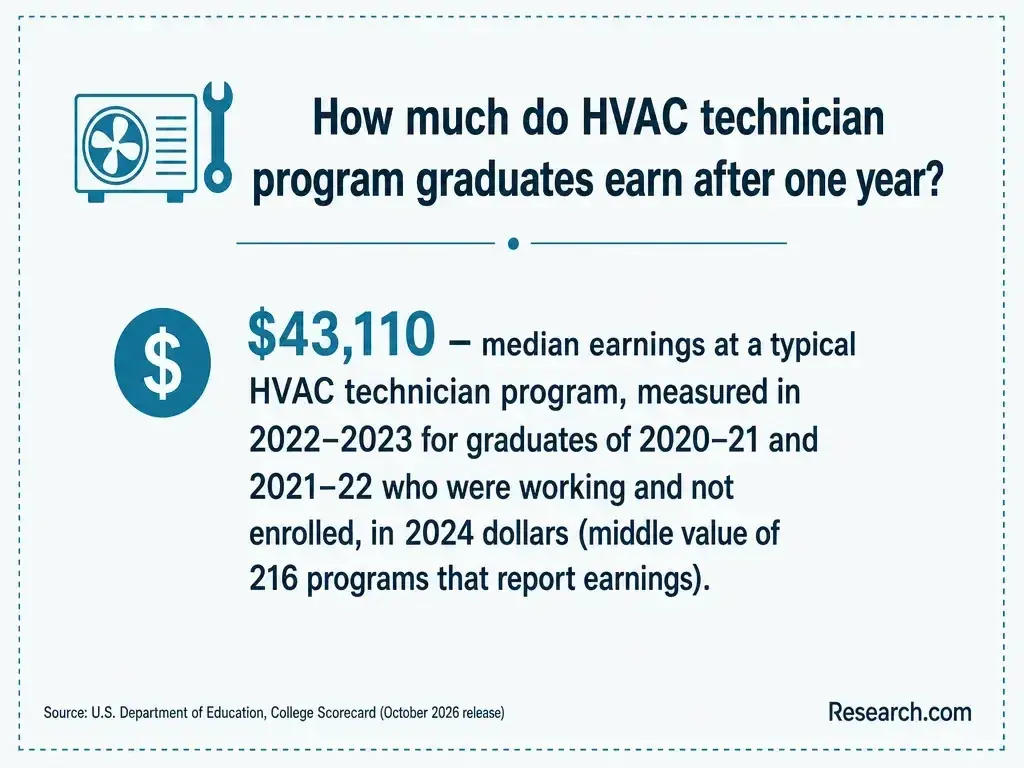
There is no responsible single salary promise for a new Kentucky HVAC trainee. The U.S. Bureau of Labor Statistics reports a May 2025 national median of $61,010 for heating, air conditioning, and refrigeration mechanics and installers. It covers experienced workers as well as newer ones and is not a Kentucky wage or an expected first-year salary. For a local decision, compare current Kentucky occupational wage estimates from the Kentucky Center for Statistics with entry-level job postings in the area where you intend to work.
Pay can differ between a helper, a licensed mechanic, an experienced commercial-service technician, and a supervisor. Overtime, on-call work, travel, benefits, and whether tools are supplied also change the value of an offer. When weighing training costs against likely earnings, use a realistic starting offer and consider how long it may take to gain the experience needed for higher-paying work.
Length depends on the credential, course load, and whether training includes paid work. A focused certificate generally requires less study than a diploma; an associate degree adds a broader course sequence. Part-time attendance can make any option longer. Registered apprenticeships extend training across multiple years while participants work and earn wages, rather than waiting until all instruction is finished to enter a job. The U.S. Department of Labor distinguishes registered apprenticeships by their structured, paid on-the-job learning and related instruction.
Do not rely on an advertised completion date alone. Request the program's total clock or credit hours, scheduled lab hours, required work-based learning, and the next start date. Kentucky licensing rules and employers may evaluate documented experience separately from school attendance, so ask whether any coursework can count toward experience and obtain the answer from the Kentucky Department of Housing, Buildings and Construction before planning a licensing timeline. If comparing easy associate degrees to get, remember that an HVAC associate degree still requires demonstrated technical and safety skills; choose it for its curriculum, not an assumed shortcut.
Online study can cover theory, codes, load calculations, and preparation for written exams. It cannot by itself provide the same practice as measuring live circuits under supervision, brazing, checking airflow, or diagnosing equipment in a shop or at a worksite. A hybrid program is a practical option when its in-person labs are accessible and frequent enough to develop those skills; a fully remote course may be useful for theory or continuing training but should not be assumed to establish job readiness or licensing eligibility.
Ask where practical assessments take place, who supplies equipment, and whether missed labs can be made up. For rural students, the number and location of required campus visits may matter more than the "online" label. Searches about phd without a dissertation address a different kind of education; for HVAC entry, the decisive online-program question is how you will obtain supervised, hands-on practice.
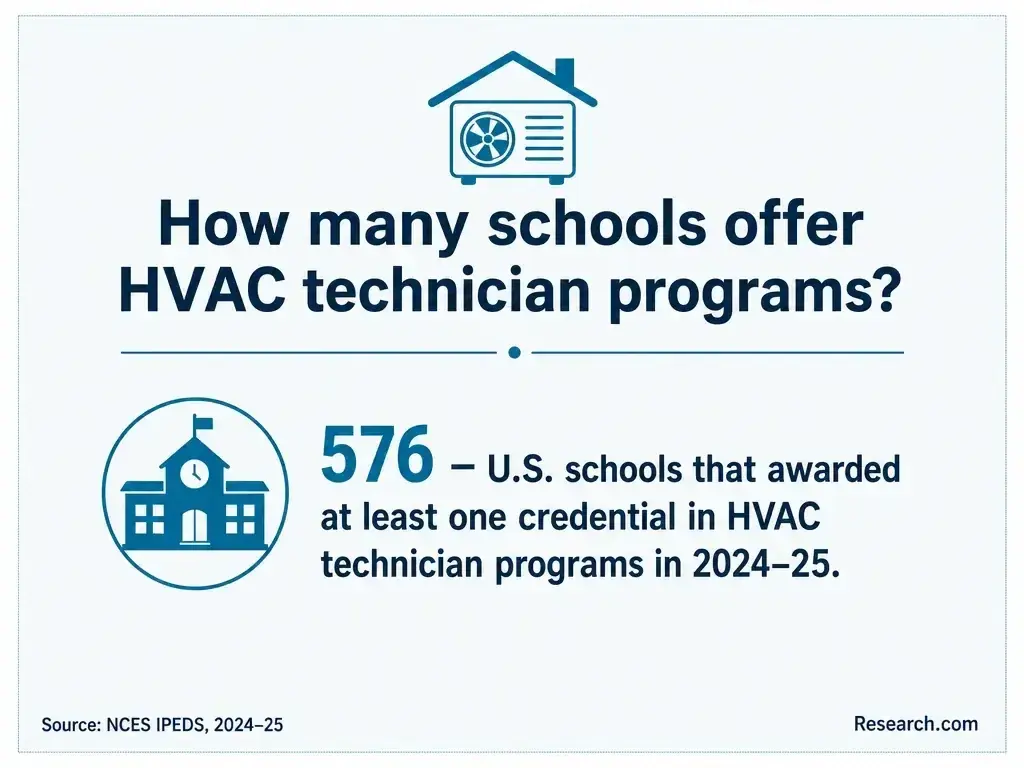
A single defensible statewide average is not available here: certificates, longer college programs, private training, and paid apprenticeships have different pricing structures, and published tuition may omit essential expenses. Request a written, program-specific estimate for the full training period rather than comparing one school's per-credit tuition with another provider's entire-program price.
The following comparison shows which costs can change the decision even when one option advertises lower tuition. Confirm what is included before accepting an offer.
| Cost or offset | What to check |
| School charges | Tuition, mandatory fees, books, software, and consumable lab materials for the complete credential. |
| Job-ready equipment | Required tools, meters, safety gear, uniforms, and any equipment supplied by the school or employer. |
| Entry expenses | Certification exams, applicable license applications, transportation, and any employer-required screening. |
| Offsets and foregone earnings | Grants, eligible aid, employer-paid training or apprenticeship wages, and income lost while attending classes. |
Public-college resident tuition rules can affect the price you pay, and aid eligibility differs by program. Check the institution's current charges and financial-aid office; also ask Kentucky's workforce system about training assistance and a registered-apprenticeship sponsor about wages and covered costs. Federal Student Aid notes that eligibility depends on both the student and the eligible institution or program. A lower sticker price is not a better investment if it means inadequate lab practice, a difficult commute, or a schedule you cannot finish.
The award might be a certificate, diploma, or associate degree, depending on the program completed. These are school credentials, not Kentucky occupational licenses. A registered apprenticeship has a different structure: it provides paid, supervised work and related instruction and leads to an apprenticeship completion credential when its requirements are met (U.S. Department of Labor). Employer training may build useful skills without awarding the same portable school credential.
For jobs involving regulated refrigerants, EPA Section 608 technician certification is a separate federal requirement; the appropriate certification type depends on the equipment serviced (U.S. Environmental Protection Agency). Ask whether a course teaches the applicable material, whether the exam is included, and when you can take it. If you are exploring what are some certificate programs that pay well, keep a school completion certificate distinct from an industry certification or government license: each establishes something different.
Requirements vary by provider and credential. Ask whether the program requires a high school diploma or equivalent, placement assessment, prerequisite courses, minimum age, or a particular schedule for labs. Also ask about physical tasks and safety expectations: HVAC work can involve ladders, confined spaces, electrical hazards, and outdoor conditions (U.S. Bureau of Labor Statistics). These realities matter when deciding whether a program fits your circumstances.
Apprenticeship sponsors and employers set their own application and hiring requirements, which may differ from college admission rules. Before enrolling, distinguish admission to training from eligibility for an HVAC license. If you have related military, maintenance, or construction experience, ask the provider about prior-learning credit or advanced standing, then separately confirm with Kentucky licensing officials whether any experience will count toward occupational requirements.
A useful HVAC curriculum connects refrigeration-cycle and electrical theory to diagnosis on working equipment. Look for supervised practice with electrical measurements, controls, motors, airflow, heating systems, refrigerant recovery, and safe use of tools. Reading schematics, documenting findings, and explaining repairs to customers are just as important as identifying a faulty component. The U.S. Bureau of Labor Statistics identifies installation, maintenance, repair, and testing as central occupational duties.
Compare programs against the work you want. Residential service calls demand broad troubleshooting and customer communication; commercial refrigeration calls for relevant equipment and controls practice. Ask to see the lab, the equipment students actually use, and how instructors assess independent fault-finding. Training on modern controls and efficient equipment is valuable, but an impressive equipment list means little if students rarely work on it.
It depends on the work and your role. Kentucky regulates HVAC work through its Department of Housing, Buildings and Construction, Division of HVAC, with apprentice, journeyman, and master-contractor pathways. School graduation alone does not confer one of those licenses. Experience, examinations, and other applicable conditions must be checked against the current Kentucky rules for the credential you intend to pursue (Kentucky Department of Housing, Buildings and Construction).
Separately, federal EPA Section 608 certification is required for technicians who maintain, service, repair, or dispose of equipment in ways that could release regulated refrigerants; certification type must match the equipment and work (U.S. Environmental Protection Agency). It is not a substitute for a Kentucky HVAC license. Institutional accreditation, state authorization to operate, industry recognition, apprenticeship registration, EPA certification, and occupational licensure likewise answer different questions. Before paying a deposit, ask the Kentucky Division of HVAC how your proposed schooling and supervised work fit the relevant license pathway, and keep documentation of both.
Start with the job you want, then work backward to the training and regulatory steps it requires. A ranking can narrow the search, but it cannot show whether a particular lab schedule, commute, or employer connection works for you. The following checks help expose gaps before enrollment.
For a fair return-on-investment comparison, account for your current earnings, likely post-training earnings, program duration, completion probability, borrowing costs, and how long you expect to work in the field - not just tuition or a national median wage. If you are still choosing an occupation, a list of college majors and careers can provide broader context; for this decision, verify the specific HVAC pathway. Red flags include a promised salary, no accessible hands-on lab, or an unsupported claim that a school credential automatically grants a license.
Many people begin as helpers, apprentices, or installation-team members and take on more independent troubleshooting as their experience grows. Others concentrate on residential service, commercial systems, refrigeration, controls, or building maintenance. Advancement into lead, supervisory, or contracting work depends on demonstrated ability and, where applicable, meeting Kentucky's licensing requirements; a classroom credential alone does not authorize independent contracting (Kentucky Department of Housing, Buildings and Construction).
The best first position may be the one that provides documented supervised experience, reliable mentoring, and exposure to the equipment you want to service - not simply the highest advertised hourly rate. Ask prospective employers who will supervise your work, which tools they provide, and whether they support certification preparation and progression toward a Kentucky license.
The U.S. Bureau of Labor Statistics projects 10.9% national employment growth from 2025 to 2035 for heating, air conditioning, and refrigeration mechanics and installers. That indicates continuing demand across the occupation, not a guarantee of a vacancy in any Kentucky county. Installation and repair needs also differ by local building stock, employers, and the mix of residential, commercial, and refrigeration work.
For a Kentucky-specific decision, review the latest Kentucky Center for Statistics occupational projections alongside current postings and ask employers which entry-level skills they struggle to hire. Compare opportunities within a realistic commute of your chosen campus or apprenticeship worksite. A strong national outlook is most useful when paired with a local route to practical experience and the credentials required for the work you plan to do.
Investing in training is an important decision, so the Research.com team created the ranking to help readers compare programs against other HVAC options in Kentucky - not against unrelated trades. The team examines reported outcomes, costs, recognition, and student support, while checking multiple sources for credibility and accuracy. Only programs with completions reported to IPEDS are eligible; a missing apprenticeship or employer program is not necessarily a poor option.
Best-program rankings evaluate student completion and full- and part-time retention; earnings one year after completion and relative to annual attendance cost; tuition, attendance cost, debt - including debt held by students who withdrew - and federal loan default rates; and institutional accreditation, relevant programmatic accreditation or industry recognition, and support services. Relevant programmatic recognition receives 20% of the score, institutional accreditation 10%, and student support 10%. Outcomes, earnings, and costs share the remaining 60%, with entropy-based weighting that gives more weight to indicators that vary more across programs. Separate most-affordable rankings use only cost and debt indicators, also weighted by that method; they do not score accreditation or other quality measures.
The ranking draws on the following databases and organizations. Several cover occupations other than HVAC and should not be mistaken for HVAC-specific program approval.
Use the ranking to identify programs for closer review, then confirm current prices, lab access, employer connections, and Kentucky licensing implications directly. More detail about the approach is available on the Research.com methodology page.
# 1 position
# 5 position

# 6 position

# 8 position

# 9 position

# 10 position

# 11 position
# 13 position
# 15 position

# 17 position

# 18 position

# 19 position

# 20 position

It can be if the program offers substantial hands-on training, fits your schedule, and supports your intended job and licensing pathway at a manageable total cost. Compare it with paid apprenticeship and employer-training opportunities before deciding.
Yes. An employer or registered apprenticeship may provide supervised work and instruction. Check Kentucky's rules for your intended license and document your experience; skipping school does not waive applicable licensing or refrigerant-certification requirements.
You can study theory online, but diagnosis, tool use, and equipment work require in-person practice. Confirm the lab or worksite component and do not assume a remote course establishes licensing eligibility.
No. A school certificate, EPA Section 608 certification, and a Kentucky HVAC license are separate credentials with different requirements. Check your intended license pathway with the Kentucky Department of Housing, Buildings and Construction.
Choose a certificate for focused entry training if its labs are strong; consider an associate degree for a broader course sequence; compare an apprenticeship if earning wages while gaining supervised experience is the priority. For each, confirm the cost, available positions, and route toward the work you want.