# 1 position
Emily Griffith Technical College - Electrician.
certificate or diploma

Audited and Verified:
Our Editorial and Data Verification Process
Research.com uses government datasets, official education statistics and primary institutional information to support its career and degree guides. Our review process checks factual accuracy, occupational definitions, source dates and the requirements associated with the credentials discussed.
How This Article Was Fact-Checked
Our editorial team verifies salary estimates, employment projections, education requirements and program information against original data providers and official organizations. Salary figures are checked against the relevant occupational definitions and reporting periods. Information about licensure, accreditation and required in-person training is reviewed separately.
Fact-checked and verified on:

Co-Founder and Chief Data Scientist

Reviewed by Karolina Broda
Fact-Checker and Data Verification
Choosing an affordable electrician program means comparing more than tuition: you need a route to supervised work and Colorado licensure. The U.S. Bureau of Labor Statistics projects 9.2% growth in electrician employment nationally from 2025 to 2035, making the training decision timely. This guide explains Denver-area costs, credentials, apprenticeships, and career prospects. It also accompanies the Most Affordable Electrician Trade Schools in Denver for 2027 ranking, created by the Research.com team of data scientists to help students identify programs worth considering and make an informed choice.
Expect safety instruction, electrical theory, code interpretation, and supervised practice wiring and testing circuits. A school program may prepare you to seek an apprenticeship or entry-level electrical work; a registered apprenticeship combines related instruction with paid, supervised job training. These routes are complementary, not interchangeable.
In Denver, compare the actual path from classroom to worksite. Ask Emily Griffith Technical College or Lincoln College of Technology-Denver which electrical credentials they currently offer, how much instruction is hands-on, and whether they help students connect with employers. For a direct-to-work alternative, ask registered apprenticeship sponsors about entry requirements, wages, instruction costs, and when placements are available. A short school program may get you into the field sooner, while an apprenticeship builds the documented experience needed for licensure as you earn wages (Colorado State Electrical Board; U.S. Department of Labor).
Training can lead to supervised work with electrical contractors on residential construction, commercial buildings, renovations, and maintenance projects. Some electricians later work on industrial equipment, controls, or power-related installations. These settings demand different experience: residential wiring practice does not, by itself, establish competence in commercial or industrial work (U.S. Bureau of Labor Statistics).
For a Denver student, the important question is where an employer can provide qualifying, documented experience - not just whether it offers an entry-level job. If you aim for Colorado's journeyman license, ask prospective employers whether they can supervise and document the required mix of work, including commercial or industrial experience (Colorado State Electrical Board).
The latest national median annual wage supplied by the U.S. Bureau of Labor Statistics is $63,190 for electricians in May 2025. This is a midpoint across the occupation, not a Denver-specific estimate or a likely first-year apprentice wage. Pay depends on experience, employer, work type, and hours.
Before borrowing for training, request current Denver-area apprentice wage scales from prospective sponsors and compare them with the schedule for wage increases. Use an official Denver-area occupational wage estimate when available rather than applying the national median to your expected starting pay. Paid training can change the cost comparison substantially, even when a school program has lower advertised tuition (U.S. Bureau of Labor Statistics; U.S. Department of Labor).
A school certificate's schedule depends on the provider and whether you attend full time or part time. Completing it is not the same as completing an apprenticeship. Colorado's journeyman experience route calls for 8,000 hours over at least four years, including specified commercial or industrial experience; applicants must also meet applicable classroom-instruction and examination requirements (Colorado State Electrical Board). Ask a provider to identify which of its hours are classroom hours and which, if any, can be documented as qualifying work experience.
Be wary of comparing an accelerated electrician course with an associate's degree online in 6 months: the advertised length of either educational credential does not shorten Colorado's supervised-experience requirement. Choose a schedule you can complete while reaching an eligible jobsite.
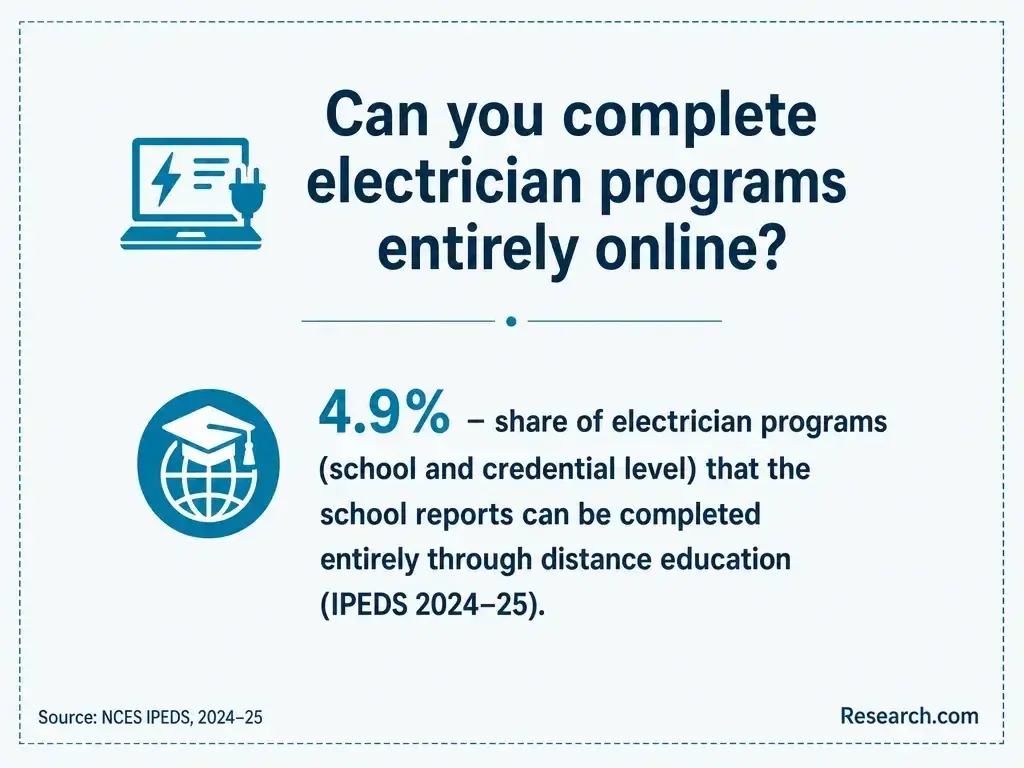
Online lessons can cover theory, calculations, and code reading. On-campus labs allow an instructor to observe wiring, measurements, troubleshooting, and safe tool use; supervised worksites provide experience a simulated lesson cannot replace. A hybrid option is useful only if its in-person component and work placement fit your schedule and licensing plan.
Ask where each practical assessment takes place and who records work hours. Even if you are also exploring what certifications can i get online that pay well, do not assume an online electrician certificate meets Colorado's work-experience or examination rules. Verify eligibility with the Colorado State Electrical Board before paying (Colorado State Electrical Board).
There is no reliable single average that captures every Denver school program and paid apprenticeship. Costs vary by provider and by what tuition includes; quoting an unverified 2027 average would make comparison harder, not easier. Request an itemized, current quote from each school and sponsor.
The comparison below separates charges you may pay upfront from costs or earnings that can change the value of a pathway. It is more useful than comparing tuition alone.
| Cost factor | What to verify | Why it matters |
| Program charges | Tuition, mandatory fees, books, and materials | Advertised tuition may omit required purchases. |
| Job-ready equipment | Tools, meter, workwear, and personal protective equipment | Requirements differ between school and employer. |
| Career-entry costs | Examination and license fees, commuting, and any required screening | Expenses can continue after classes end. |
| Financial offsets | Grants, eligible aid, employer support, and apprentice wages | Paid work can reduce borrowing and lost earnings. |
Ask each provider which expenses are mandatory and whether the particular program qualifies for aid. Online schools that take financial aid are a useful reminder to check eligibility, but an institution's participation in federal aid does not mean every electrician course qualifies. Compare net cost and likely debt, not the sticker price alone (Federal Student Aid).
A school may award a certificate or diploma; a registered apprenticeship documents completion of its structured training. These credentials show different things. A school certificate can attest to coursework and lab skills, while apprenticeship records document related instruction and supervised work. Neither should be described as a Colorado journeyman license (Colorado State Electrical Board; U.S. Department of Labor).
Ask for the exact credential name and a transcript or record showing instruction completed. Also ask whether an apprenticeship sponsor will recognize prior coursework for placement or advanced standing; do not assume it will. If independent electrical work is your goal, map the credential to the required experience, exam, and license rather than choosing by credential title alone.
Requirements depend on the school or apprenticeship sponsor. Expect to verify the provider's current rules for educational preparation, math readiness, age, identification, and the ability to participate safely in shop or field work. An employer or sponsor may impose additional hiring or placement requirements; admission to a classroom program does not guarantee an apprenticeship position.
Before applying, ask whether there is a waitlist, whether you need a sponsoring employer, and what must happen before you can begin supervised work. Colorado regulates electrical apprentices separately from school admissions, so confirm registration and supervision requirements with the Colorado State Electrical Board and your prospective employer (Colorado State Electrical Board).
Relevant training covers electrical safety, reading plans, electrical calculations, circuits, grounding, code use, installing devices and raceways, and testing faults. What matters is whether students perform these tasks with feedback - not merely watch demonstrations. Ask to see a skills checklist and the hours allocated to lab practice versus lectures.
Match practice to your intended work. Someone targeting commercial projects should ask about conduit, larger systems, and opportunities to obtain commercial experience; someone entering residential work should look for substantial practice with branch circuits and service-related tasks. Employers still need to supervise new workers on real sites, regardless of the school's equipment (U.S. Bureau of Labor Statistics; Colorado State Electrical Board).
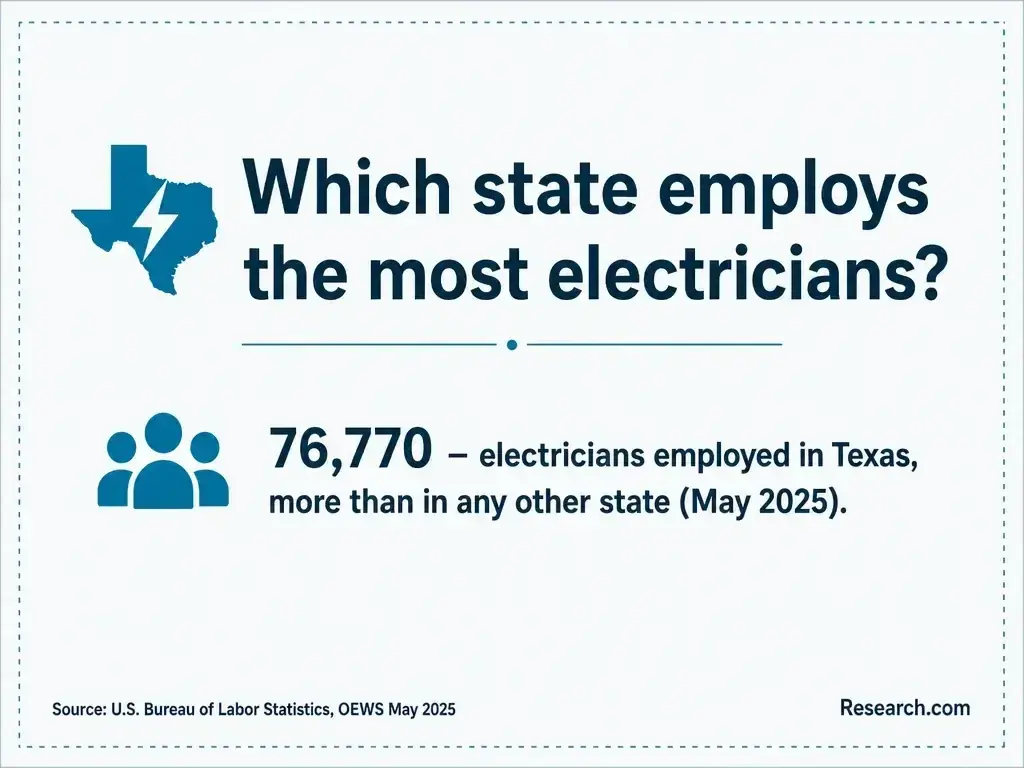
Yes, Colorado regulates electrical work, but an apprentice does not start with a journeyman license. Apprentices work under required supervision and registration rules; advancing to journeyman involves documented experience, applicable classroom instruction, and an examination. The Colorado State Electrical Board specifies the requirements for each license category. Check the category that matches your intended work before enrolling (Colorado State Electrical Board).
Keep the distinctions clear: institutional accreditation concerns the school; state authorization concerns its permission to operate; apprenticeship registration concerns a structured training program; and occupational licensure concerns your authority to perform electrical work. An optional industry certificate cannot replace a state license. Confirm current rules directly with the board because eligibility depends on your own records, not a school's marketing claim.
Start with the job and license you want, then compare only pathways that can realistically get you there. An affordable school program may suit someone who wants structured lab preparation before seeking an employer. A registered apprenticeship may suit someone ready to compete for a paid position and learn alongside supervised work. Neither is automatically the better investment.
Use these checks before making a deposit or accepting a training offer:
Do not let an affordability ranking substitute for those checks. Searches for cheap phd online are unrelated to electrician entry: no academic credential replaces the supervised electrical experience required by Colorado. The best-value route is the one you can complete and use toward your specific goal.
The usual progression is supervised apprentice work, qualification for an applicable Colorado license after meeting its requirements, and then more independent responsibility. With further experience, electricians may pursue advanced licensure, supervision, estimating, or a specialty such as controls or commercial installations. Requirements differ by role; a short training credential is an entry step, not an automatic promotion (Colorado State Electrical Board; U.S. Bureau of Labor Statistics).
If you are comparing occupations rather than committed to electrical work, a trade school careers list can broaden your options. If you are committed, compare prospective employers on the quality and documentation of supervised experience, not just the first job title.
The U.S. Bureau of Labor Statistics projects 9.2% national growth for electricians from 2025 to 2035. That supports considering the occupation, but it does not predict the number of Denver openings, your chance of obtaining an apprenticeship, or a starting wage. Local construction activity and employer hiring can change during the years it takes to qualify.
For a practical local test, compare current Denver-area apprenticeship openings and employer requirements before committing to a program. If placements are scarce when you apply, a school with strong lab training and a workable schedule may help you prepare - but ask for evidence of employer connections rather than treating a national projection as a placement guarantee.
Education is a significant investment, so Research.com designed its affordability ranking to help readers compare electrician programs against other programs in the same location and occupation. The team checks multiple sources for cost and debt information, but the ranking has a defined boundary: only programs with completions reported to IPEDS are eligible. A registered apprenticeship or employer-sponsored program can be a good option even if it does not appear in the ranking.
Most-affordable rankings use tuition, cost of attendance, median student debt, and federal loan default rates. An entropy-based method gives more weight to measures that vary more across eligible programs. Unlike Research.com's separate best-programs rankings, the affordability score does not include accreditation, completion, earnings, or student support. Readers should verify those factors independently. The following sources support Research.com's ranking data and recognition checks; health-specific sources in this broader source inventory should not be mistaken for electrician-program approval:
The ranking can narrow a cost-conscious shortlist; it cannot establish that a program supplies the experience needed for a Colorado license. See Research.com's methodology for more about how the rankings are created.
# 1 position
# 2 position
Electrician
Delivery mode: On Campus (May Include Online Courses)
25.19
/ 100
Final score
Accreditation
The school is listed by NCCER as a training center for this trade. Institutional accreditation from Accrediting Commission of Career Schools and Colleges.
Lincoln College of Technology-Denver received a Research.com Affordability Score of 25.19/100. The school is listed by NCCER as a training center for this trade.
A paid registered apprenticeship may minimize upfront school costs, but compare required purchases, commuting, entry wait time, and wages. A lower-tuition school is not necessarily cheaper overall.
No. Colorado licensure depends on the applicable experience, instruction, and examination requirements, not the certificate alone (Colorado State Electrical Board).
Online study can cover theory, but safe electrical practice and qualifying supervised work require in-person participation. Confirm how a hybrid program supplies both.
Not necessarily. Apply directly if you meet a sponsor's requirements and want paid training; consider school first if you need structured preparation. Ask whether prior coursework earns recognition before enrolling.
No. Ranking eligibility requires IPEDS-reported program completions. Compare registered apprenticeships separately, even when they are absent from a school-based ranking.