Most Affordable CNC Machinist Schools & Training - Budget-Friendly CNC Trade Programs in New York for 2026

Co-Founder and Chief Data Scientist
Choosing the right CNC machinist trade school in New York can shape your future career and open doors to exciting opportunities. This article introduces a carefully crafted ranking of CNC machinist trade school programs developed by the Research.com team of data scientists to help you make an informed decision.
Whether you seek a diploma or certification, completing a CNC machinist program can boost your skills and confidence in a growing industry. Reading this guide will give you clear insights and inspire your next step toward a rewarding trade career.
Key benefits of finishing CNC machinist trade school in New York
- Graduates from CNC machinist trade schools in New York can expect starting salaries around $25.87 per hour, with opportunities to earn up to $40 per hour or more as they gain experience and specialize.
- A typical graduate from a popular New York trade school can pursue roles such as CNC Machinist II or III, advancing quickly in manufacturing with strong job demand and career growth.
- Completing a CNC machinist program online offers flexibility and convenience, allowing students to learn skills efficiently while balancing work or family, as experienced by many successful online trade school graduates in New York.
- Most Affordable CNC Machinist Schools & Training - Budget-Friendly CNC Trade Programs in New York for 2026
- What can I expect from CNC machinist trade schools in New York?
- Where can I work after finishing CNC machinist trade schools in New York?
What can I expect from CNC machinist trade schools in New York?
Enrolling in a CNC machinist trade school program in New York means diving headfirst into a whirlwind of hands-on machine time and real-world skills. Imagine spending over a thousand hours at Alfred State, where graduates share stories of mastering complex mills and lathes, transforming raw metal into precision parts with the confidence of seasoned pros. At Monroe Community College, students balance technical coursework in CNC programming and CAD/CAM software with labs that feel more like creative workshops than classrooms.
Small class sizes at Erie Community College create an atmosphere where instructors, often industry veterans, become mentors who know your name and your strengths. Schools like the Brooklyn Navy Yard don't just teach; they open doors with job placements and free access to cutting-edge equipment, making the leap from learner to employee seamless and exciting.
Financial aid eases the burden, and the promise of starting wages around $18 per hour keeps motivation high. Graduates report not just skills but a sense of pride and readiness to thrive in New York's fast-paced manufacturing scene.
Where can I work after finishing CNC machinist trade schools in New York?
Graduates from CNC machinist trade schools in New York, like those from well-known programs in NYC and upstate, jump into a bustling job market hungry for their skills. Imagine stepping into a large aerospace firm one morning, programming high-precision parts for aircraft, then the next day setting up a CNC mill in a local custom cabinetry shop crafting intricate wood designs. The possibilities feel endless.
Many find themselves thriving as CNC operators, programmers, or general machinists earning between $25 and $36 per hour, with overtime and benefits sweetening the deal. One graduate shared how starting as an apprentice at $18 per hour quickly led to promotions and steady wage increases, thanks to programs like ApprenticeNYC that blend hands-on training with real-world experience.
From the hum of metalworking in small specialty shops to the structured environment of public agencies such as the New York City Department of Environmental Protection, graduates carve unique career paths. The blend of technical mastery and varied industries means every day brings new challenges and rewards, fueling both passion and financial stability.
After finishing a CNC machinist trade school program in New York, graduates often find themselves stepping into a world where their skills turn into solid paychecks. Imagine clocking in at a bustling Manhattan workshop and seeing $25.87 an hour roll in-that's the average for many fresh-from-school machinists, translating to roughly $53,000 a year if you're working full-time. It's not just numbers; it's the thrill of knowing your craftsmanship is valued in one of the most competitive job markets.
Graduates from well-known trade schools in Queens or Brooklyn share stories of quick advancement. One started as an entry-level machinist earning near $22 per hour but, after just a couple of years, stepped up to a CNC Machinist III role pulling in over $82,000 annually. For those who dive deeper into programming, the salary possibilities widen dramatically-some programmers report earnings soaring past $63,000, with top performers hitting over $130,000 in New York City.
These wages reflect not only the demand but also the pride and confidence graduates feel, knowing their skills unlock doors to a rewarding career. From the classroom to the shop floor, the journey's payoff is both thrilling and real.
- Most CNC machinist programs in New York require a high school diploma or GED and basic math and reading skills.
- Programs range from short-term certificates of about 15 weeks to associate degrees lasting two years, combining classroom and hands-on training.
- Certificate programs cost between $2,000 and $6,400, with possible state grants reducing costs to around $2,000 or less.
- Associate degree tuition ranges from $2,450 to $10,818 per year depending on residency and program choice.
- Starting wages for apprentices are at least $18 per hour, increasing to $21 per hour after one year of training.
- Entry-level CNC machinists earn $37,000 to $45,000 annually, while experienced workers can make $55,000 or more.
Completing a CNC machinist trade school program in New York typically takes about 6 to 12 months, depending on the intensity and schedule of the course. Imagine starting your mornings at a bustling trade school in Queens or Brooklyn, surrounded by the hum of machines and the focused energy of classmates turning raw metal into precision parts. Graduates often recall the thrill of quickly mastering the basics, then diving into complex setups, all within a year's time.
Many find the accelerated pace exciting rather than overwhelming, balancing hands-on training with classroom lessons. Evening or part-time options stretch the timeline a bit, perfect for those juggling work or family, but still wrapping up within a year.
One graduate from a top New York trade school shared how the clear timeline kept motivation high-each month marked by new skills and growing confidence, making the goal feel tangible. If you're eager to transform your passion for machines into a skilled trade, this timeframe offers a focused, achievable path right in the heart of New York.
Imagine clocking 1,300 hours right next to buzzing CNC machines at Alfred State College, feeling the hum of real tools under your hands-that's the on-campus experience in New York. Graduates rave about the tight-knit classes where instructors guide every twist of the dial, turning theory into muscle memory. Erie Community College and The Brooklyn Navy Yard take it further, partnering with local manufacturers so students don't just learn-they become part of the industry's heartbeat.
Contrast that with online programs, where flexibility is king. You might be juggling family or a job while diving into CAD/CAM concepts through interactive modules. But the catch? Most online students still need to arrange hands-on labs nearby or partner facilities to get that tactile feel. The thrill of direct machine access is mostly reserved for on-campus students, making networking and real-time feedback a bigger challenge for remote learners.
Both paths lead to skills, but in New York's trade schools, feeling the machine's pulse in person often sparks confidence and connections that online alone can't match.
The average tuition fees for CNC machinist programs in New York often inspire a mix of excitement and careful budgeting among prospective students. Picture a graduate who completed a 15-week CNC Operator program at a community college paying just about $2,000 after financial aid, gaining hands-on experience that feels worth every penny. Meanwhile, another graduate recalling their 12-week journey at a more intensive course might have faced a tuition near $4,800 but found it an investment in real-world skills and job readiness that transformed their path.
Many find the cost of CNC machinist training in New York State to be a balance between opportunity and expense. For instance, the City University of New York's online course charges around $2,245, offering flexibility with comprehensive content on metal cutting and safety that suits students juggling work and study. These practical examples reflect tuition fees ranging roughly from two to five thousand dollars, capturing diverse educational settings and schedules.
Graduates often describe how understanding these numbers helped them access financial assistance or scholarships tailored to their needs, turning the price tag from a hurdle into a managed step toward a satisfying technical career. Exploring options and tapping into resources like easy certifications that pay well can be a game changer for those who want to boost their skillset without breaking the bank.
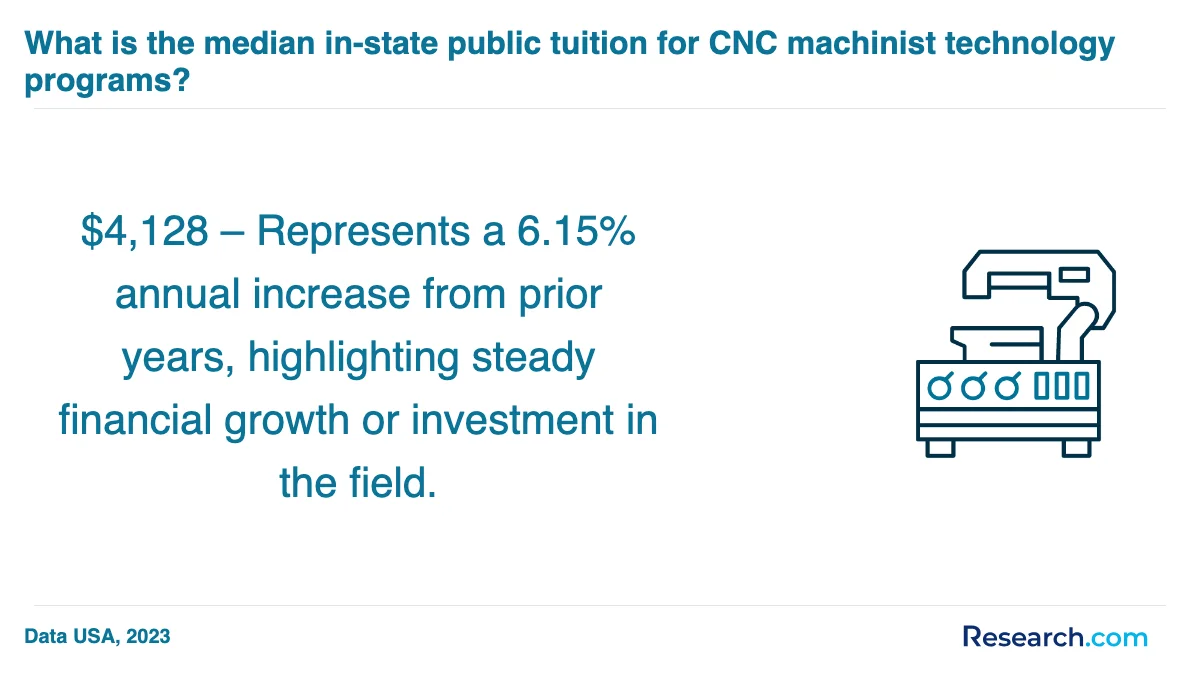
Imagine starting your CNC machinist journey at a school like Jamestown Community College, where the sticker shock of a $6,400 program instantly softens thanks to workforce development funds and Individual Training Accounts (ITAs) from the New York State Department of Labor. Many grads share how these ITAs sliced their costs down to $2,000 or less, turning dreams into reality without drowning in debt.
Then there's the magic of Pell Grants, with up to $7,395 available annually for eligible students across New York's community colleges and technical schools. One graduate recalls how this grant made the difference between hesitation and enrollment, covering a huge chunk of tuition without expecting a dime back.
Part-time students at SUNY Ulster often tap into the NYS Part-Time Tuition Assistance Program (TAP), easing the financial burden while juggling work and classes. Plus, countless local scholarships offered by community groups or schools themselves add extra layers of support, often uncovered with a little help from savvy financial aid offices.
Dreaming of mastering CNC machining in New York? Most trade schools here expect you to have a high school diploma or GED-think of it as your ticket to unlocking the world of precision manufacturing. Graduates often recall how a solid grasp of math, especially basic algebra and geometry, smoothed their path through complex programming tasks.
Some schools, like those popular in the city, also look for applicants who bring a spark of curiosity and a steady hand rather than just perfect grades. Imagine stepping into a vibrant workshop where hands-on projects turn technical jargon into tangible skills.
Here's what many New York CNC machinist programs typically require before you can enroll:
- A high school diploma or GED
- Basic proficiency in math and blueprint reading
- Strong problem-solving attitude and mechanical interest
- Sometimes, a placement test or interview to assess readiness
Graduates often share stories of how these prerequisites didn't just prepare them academically but also fueled their excitement to dive into real-world machining challenges at well-known trade schools around New York.

In New York's CNC machinist trade schools, the curriculum is a dynamic blend of theory and hands-on mastery that prepares you to hit the shop floor confidently. Picture yourself starting with machine shop fundamentals, learning the ropes on safety and tool handling-just like graduates from Erie Community College who rave about their first days getting comfortable with real machinery.
Then comes blueprint reading, where you decode mechanical drawings that feel like secret maps to precision. This skill is a game-changer, especially for Brooklyn Navy Yard students who say it's the key to unlocking complex projects.
The heart of your training? CNC machine operation. You'll program, set up, and run mills and lathes using industry-standard equipment, gaining confidence through practical sessions. Imagine crafting parts with CAD and CAM software, skills that graduates highlight as essential for modern machinists.
- Laser and water jet technology for cutting-edge manufacturing
- Wire EDM for precision shaping
- Materials science and quality control to understand what makes parts last
- CNC programming languages like G-code and MasterCAM
Many students also prepare for NIMS certifications, boosting their employability in New York's thriving manufacturing scene. These programs don't just teach you to run machines-they build confidence, skill, and a clear path to a rewarding career.
Step into any CNC machinist trade school in New York, and you'll find a vibrant array of specializations designed to turn novices into precision pros. Graduates from Monroe Community College rave about mastering precision machining and tooling, where they wield laser and water jet tech alongside CAD and CAM software to craft exact, intricate parts. Meanwhile, those who dive into CNC operator and programmer training New York come out confident in decoding blueprints, programming machines, and fine-tuning operations-skills that put them a notch above in the job market.
- Optical fabrication is a standout niche, with programs honing students' ability to create tiny, flawless optical components-a field growing fast in the Empire State.
- Tool and die making, popular at Erie Community College, transforms learners into artisans of molds and dies essential for custom manufacturing gigs.
- Project design courses, like at Mohawk Valley Community College, thrill those eager to lead by integrating design, manufacturing, and project evaluations into real-world challenges.
- Machine maintenance classes round out the skillset, ensuring graduates can keep high-tech equipment humming smoothly on factory floors.
Whether chasing a quick certificate or aiming higher with an associate degree linked to high paying accelerated associates degrees online, New York's CNC machinist specializations give students hands-on, career-ready tools and a satisfying sense of achievement.
Picking the best CNC machinist trade school program in New York means zoning in on hands-on experience and real-world readiness. Graduates from Jamestown Community College rave about their 15-week Machining/CNC Operator program where blueprint reading and actual machine operation transform abstract concepts into second nature. Nearby, New York City College of Technology offers flexible options-ideal if commuting is a hassle-with a blend of online and in-person training that fits busy lives, a big plus when searching out the best CNC machinist trade schools in New York.
Cost shouldn't be a barrier either. Many find value in programs that balance quality with affordability, like Jamestown's reduced tuition through grants, proving that affordable CNC machinist programs in New York can still provide excellent credentials. Exploring scholarships, grants, or flexible payments can widen your options, and discovering low cost cnc machinist training courses online is a smart move for budget-conscious students.
Graduates of CNC machinist trade schools in New York find themselves at the gateway to an array of thrilling career opportunities. Many start as CNC operators or machinists, mastering the art of running precision machinery-a perfect launchpad into the bustling realm of advanced manufacturing careers in New York. Trade schools like those at the Brooklyn Navy Yard equip students with hands-on skills that graduates recall fondly as the moment their passion for metal and code truly ignited.
From there, paths branch to specialized roles including CNC programmers who write the digital blueprints that guide machines with surgical precision. Further experience can lead to coveted positions such as tool and die makers or machine setters, stepping stones toward becoming a highly sought-after CNC engineer.
Some graduates share stories of putting their skills to work in industries spanning aerospace, custom fabrication, and marine engineering-a vivid illustration of how diverse CNC machinist jobs in New York State can be. For those dreaming bigger, returning to school for technology management or exploring supervisory roles is a natural next chapter.
Prospective students weighing their options may also consider looking into the cheapest associate's degree online to complement their trade education and boost career prospects.
Imagine stepping out of a top CNC machinist trade school in New York and walking into a sea of opportunities. Graduates from popular technical schools in the region share stories of snapping up jobs within weeks, thanks to the high demand for hands-on skills. The CNC machinist job opportunities in New York are thriving, with over 400 openings statewide in early 2025. Entry-level machinists find themselves welcomed with wages starting near $25.42 per hour in NYC, climbing higher with experience and programming skills.
Employers don't just want warm bodies; they look for candidates who can set up, operate, and program machines confidently. Benefits like health insurance and paid overtime sweeten the deal. Apprenticeship programs such as ApprenticeNYC smooth the path, offering guaranteed starting pay and steady raises. Graduates often highlight the boost they got from learning advanced CNC programming, making their profiles shine in this competitive market.
For anyone weighing CNC machinist trade schools in New York, this real-world demand and solid pay make the journey worthwhile. Some students even explore affordable online woodworking classes to complement their skills and stand out.
Most Affordable CNC Machinist Schools & Training - Budget-Friendly CNC Trade Programs in New York for 2026
# 1 position
Mohawk Valley Community College - Computer Numerically Controlled (CNC) Machinist Technology/CNC Machinist.
certificate or diplomaMohawk Valley Community College offers a hybrid Computer Numerically Controlled (CNC) Machinist Technology program. It trains students to operate CNC machine tools, including lathes and mills, covering setup, programming, operations, and troubleshooting. Coursework includes blueprint reading, machining, technical math, CAD/CAM systems, and safety practices. The program’s annual in-state tuition is $6,114. It is accredited by the Middle States Commission on Higher Education, with median earnings of $29,615 one year after completion.
# 2 position
SUNY College of Technology at Alfred - Computer Numerically Controlled (CNC) Machinist Technology/CNC Machinist.
associateThe Computer Numerically Controlled (CNC) Machinist Technology program at SUNY College of Technology at Alfred is a hybrid program preparing students to operate CNC machine tools, including lathes and mills. It covers CNC terminology, setup, programming, blueprint reading, and CAD/CAM systems. The program includes technical mathematics, safety practices, and equipment operation. In-state tuition is $8,862 annually, with median earnings of $42,739 one year after completion. It is accredited by the Middle States Commission on Higher Education.
# 3 position
Ulster County Community College - Computer Numerically Controlled (CNC) Machinist Technology/CNC Machinist.
certificate or diplomaUlster County Community College offers a program in Computer Numerically Controlled (CNC) Machinist Technology/CNC Machinist, preparing students to operate CNC machine tools such as lathes and mills. The curriculum covers CNC programming, setup, troubleshooting, blueprint reading, machining, technical mathematics, CAD/CAM systems, and safety practices. The program is accredited by the Middle States Commission on Higher Education. Annual in-state tuition is $6,376.
# 4 position
Erie Community College - Computer Numerically Controlled (CNC) Machinist Technology/CNC Machinist.
certificate or diplomaErie Community College offers a hybrid Computer Numerically Controlled (CNC) Machinist Technology program that trains students to operate CNC machine tools for cutting, drilling, shaping, and finishing parts. The curriculum includes CNC programming, setup, blueprint reading, machining, CAD/CAM systems, and safety practices. The annual in-state tuition is $6,100. The program is accredited by the Middle States Commission on Higher Education.
# 5 position
Rochester Institute of Technology - Computer Numerically Controlled (CNC) Machinist Technology/CNC Machinist.
associateThe Computer Numerically Controlled (CNC) Machinist Technology program at Rochester Institute of Technology offers a hybrid learning format. It trains students to operate CNC machine tools, including lathes and mills, and covers programming, setup, operations, and troubleshooting. The curriculum includes blueprint reading, technical mathematics, CAD/CAM systems, and safety practices. Annual in-state tuition is $57,016, and the program is accredited by the Middle States Commission on Higher Education.
Frequently Asked Questions about CNC machinist
After completing a CNC machinist trade school in New York, preparing for the job market involves several key steps. First, obtaining industry-recognized certifications, such as those from the National Institute for Metalworking Skills (NIMS), can significantly improve job prospects. According to the New York State Department of Labor, CNC machinist jobs are expected to grow by 5% through 2030, reflecting steady demand in manufacturing hubs like Long Island and upstate regions.
Networking through local trade unions and job fairs can also help graduates connect with employers. Additionally, building a strong resume that highlights hands-on experience gained during training enhances employability. Many schools offer career services-utilizing these can provide vital support in job placement and interview preparation.
Employers in New York highly value CNC machinist graduates who demonstrate strong technical skills. Proficiency in computer-aided manufacturing (CAM) software and understanding of machine operation is essential. According to the New York State Department of Labor, 85% of CNC machinist job postings require knowledge of G-code programming and blueprint reading.
Problem-solving skills and the ability to maintain precision during production are also critical. Attention to detail ensures parts meet strict industry standards, which is especially important in aerospace and automotive sectors prevalent in New York.
Additionally, employers look for candidates with good communication skills and teamwork abilities, as CNC machinists often collaborate with engineers and quality control staff. Safety awareness and familiarity with workplace standards remain fundamental for all entry-level positions.
Finding internships relevant to CNC machinist trade school programs in New York requires a strategic approach. Start by contacting your trade school's career services or internship coordinator, as many schools maintain partnerships with local manufacturers and machine shops. According to the New York State Department of Labor, manufacturing remains a significant sector, employing over 500,000 workers, creating numerous internship opportunities.
Additionally, explore platforms like the New York State Job Bank and industry-specific job boards that list internships in machining and manufacturing. Networking events and trade shows in New York can also connect you with employers seeking CNC machinist interns. Finally, consider reaching out directly to companies in regions such as Long Island or the Hudson Valley, where manufacturing is concentrated.
Obtaining a CNC machinist trade school diploma in New York significantly enhances career mobility and advancement opportunities. According to the New York State Department of Labor, individuals with specialized technical diplomas in CNC machining have a higher likelihood of securing skilled manufacturing jobs, which are projected to grow by 5% from 2022 to 2032.
Employers in New York often prefer candidates with formal training, as diplomas demonstrate practical knowledge of CNC machines and programming. Graduates typically start with entry-level positions but can advance to roles like lead machinist or CNC programmer within a few years.
Trade school diplomas also facilitate networking and apprenticeships, further supporting career growth in the region's manufacturing sector.
Part-time job opportunities in New York that complement CNC machinist trade school education often include positions in manufacturing facilities, machine shops, and prototyping labs. These roles provide hands-on experience with tools and materials, reinforcing classroom learning. According to the New York State Department of Labor, the manufacturing sector employs over 350,000 workers in the state, with demand for skilled machinists expected to grow by 6% through 2030.
Jobs such as machine operator assistants or quality control technicians offer practical skills in measuring, programming, and operating CNC equipment. These positions typically pay between $15 and $22 per hour, helping students support themselves while gaining relevant experience.
Internships or apprenticeships offered by local manufacturers also enhance technical knowledge and improve employability after graduation.
Yes, there are affordable CNC Machinist degree programs both near you and near New York. Research.com is a helpful resource for identifying community colleges and trade schools that offer such programs, which often emphasize practical skills and job readiness. Many of these educational institutions provide competitive tuition rates and financial aid opportunities to make pursuing a CNC Machinist degree more accessible.
- Most Affordable CNC Machinist Schools & Training - Budget-Friendly CNC Trade Programs in Connecticut for 2026
- Most Affordable CNC Machinist Schools & Training - Budget-Friendly CNC Trade Programs in Massachusetts for 2026
- Most Affordable CNC Machinist Schools & Training - Budget-Friendly CNC Trade Programs in New Hampshire for 2026
- Most Affordable CNC Machinist Schools & Training - Budget-Friendly CNC Trade Programs in Ohio for 2026
- Most Affordable CNC Machinist Schools & Training - Budget-Friendly CNC Trade Programs in Maine for 2026
- Most Affordable CNC Machinist Schools & Training - Budget-Friendly CNC Trade Programs in North Carolina for 2026
- Most Affordable CNC Machinist Schools & Training - Budget-Friendly CNC Trade Programs in Indiana for 2026
- Most Affordable CNC Machinist Schools & Training - Budget-Friendly CNC Trade Programs in Michigan for 2026
- Most Affordable CNC Machinist Schools & Training - Budget-Friendly CNC Trade Programs in Georgia for 2026
- Most Affordable CNC Machinist Schools & Training - Budget-Friendly CNC Trade Programs in Illinois for 2026
- CNC Machinist | Minneapolis Community & Technical College https://minneapolis.edu/academics/school-trade-technologies/cnc-machinist
- CNC Operator/Programmer - Numerika Wrocław https://numerika.pl/cnc-operator-programmer
- CNC Machinist Technician | NAIT https://www.nait.ca/programs/cnc-machinist
- Machinist Training with New Castle School of Trades https://www.ncstrades.edu/new-castle-programs/high-quality-cnc-machine-training/
- Is becoming a CNC machinist difficult? https://www.cloudnc.com/blog/is-becoming-a-cnc-machinist-difficult
- How to Become a CNC Machinist in New York | Top Trade Schools https://toptradeschools.com/near-you/cnc-machinist/new-york/
- ApprenticeNYC for CNC Machinists - SBS https://www.nyc.gov/site/sbs/careers/apprenticenyc.page
- How to Become a Machinist in NYC in 2024. A Quick, Step by Step Guide https://www.getgild.com/posts/how-to-become-a-machinist-in-nyc-in-2024-a-quick-step-by-step-guide
- Online CNC Machinist from City College of New York https://careertraining.ccny.cuny.edu/training-programs/cnc-machinist/
- CNC Machining Technology | HVCC https://www.hvcc.edu/programs/all/stem/cnc-machining-technology/index.html