2027 Public Policy Degree Schedule Flexibility Report: Online, Hybrid, Evening, Weekend, and Accelerated Options Compared

Co-Founder and Chief Data Scientist
Choosing a Public Policy degree schedule is often harder than choosing the major itself. NCES reported in 2024 that more than half of U. S. college students took at least one distance education course, showing how normal flexible learning has become. This guide is for working adults, caregivers, career changers, and traditional students comparing online, hybrid, evening, weekend, and accelerated Public Policy programs. You will learn how each format differs in live attendance, campus visits, pace, workload, cost, and career fit so you can choose a schedule you can realistically finish.
Key Things You Should Know
- Fully online Public Policy programs usually offer the most location flexibility, but they are not automatically self-paced; many still require weekly deadlines, live sessions, group projects, or proctored exams.
- Hybrid, evening, and weekend programs can work well for full-time employees, but students should verify campus days, commute time, childcare coverage, and whether required courses are offered outside standard business hours every term.
- Accelerated formats may shorten completion by using 5-week to 8-week terms or heavier course loads, but a 3-credit course can still require roughly 9 to 12 total hours per week when class time, reading, writing, and policy analysis projects are included.
- Key Things You Should Know
- How Do Online, Hybrid, Evening, Weekend, and Accelerated Degree Programs Differ?
- How Flexible Are Fully Online Degree Programs?
- How Much In-Person Attendance Do Hybrid Degree Programs Require?
- How Quickly Can Students Complete an Accelerated Degree?
- Should Students Choose Part-Time, Full-Time, or Self-Paced Study for a Degree?
- Which Degree Schedule Works Best for Working Adults and Caregivers?
- Do Flexible Degree Formats Meet Accreditation and Licensure Requirements?
- How Do Tuition, Financial Aid, and Hidden Costs Compare Across Degree Formats?
- How Should Students Compare Support, Workload, and Outcomes in Flexible Degree Programs?
- Top Trending Public Policy Rankings
How Do Online, Hybrid, Evening, Weekend, and Accelerated Degree Programs Differ?
Public Policy degrees prepare students to analyze laws, budgets, social programs, regulatory decisions, and public-sector outcomes. At the undergraduate level, students may study policy analysis, economics, statistics, ethics, public administration, and research methods. At the graduate level, common options include the Master of Public Policy, Master of Public Administration, and related public affairs degrees. Flexible schedules change how students attend, not necessarily what they study.
The most important difference is control over time and place. Online programs reduce travel, hybrid programs blend campus and remote learning, evening and weekend programs preserve daytime work hours, and accelerated programs compress the calendar. The table below compares the core scheduling features students should review before applying.
| Format | Typical attendance pattern | Best fit | Main trade-off |
| Fully online | Courses delivered remotely, either live, asynchronous, or mixed | Students who need location flexibility or live far from campus | May still include fixed deadlines, live meetings, or proctored assessments |
| Hybrid | Some online coursework plus required campus meetings | Students who want face-to-face networking without attending campus every week | Campus visits can complicate work, caregiving, and travel schedules |
| Evening | Classes usually meet after the standard workday | Full-time workers with predictable weekday schedules | Long days can affect energy, study time, and family routines |
| Weekend | Classes meet on Saturdays, Sundays, or intensive weekend blocks | Students whose weekdays are fixed by work or caregiving | Weekends become less available for rest, family, or assignments |
| Accelerated | Shorter terms, heavier course sequencing, or year-round study | Motivated students who can protect consistent weekly study blocks | Less recovery time if work or family obligations spike |
Flexible programs can lead to similar academic outcomes when they are properly accredited and well supported, but the student experience can feel very different. A student who likes live discussion may prefer hybrid or evening classes, while a student managing rotating shifts may need asynchronous online courses with recorded lectures and flexible weekly deadlines.
Public Policy students should also consider the type of work expected in the program. Policy memos, data analysis assignments, public budgeting projects, simulations, internships, and capstones often require sustained attention outside scheduled class time. Schedule flexibility helps only when the workload fits the student's actual calendar.
How Flexible Are Fully Online Degree Programs?
Fully online Public Policy programs offer the highest location flexibility because students can usually complete lectures, discussions, readings, and assignments from home. This can be especially valuable for students in rural areas, military families, people with disabilities, and workers who cannot relocate to a campus with a public affairs school.
The key distinction is synchronous versus asynchronous delivery. Synchronous online classes meet live at set times, while asynchronous classes allow students to watch lectures and complete weekly tasks on their own schedule. Many programs use both, so students should read the course schedule rather than relying on the phrase "online."
The table below shows the kinds of online requirements that can affect schedule flexibility. These details matter because a program advertised as online may still require real-time participation or specific technology arrangements.
| Online feature | What it usually means | Schedule impact |
| Asynchronous lectures | Recorded lessons, readings, and discussion boards | High flexibility, but weekly deadlines still apply |
| Live online class | Students meet through video at a fixed time | Moderate flexibility; time-zone conflicts can matter |
| Group policy project | Students coordinate research and presentations with peers | Requires meeting times outside class |
| Proctored exam | Testing may use online proctoring or approved test centers | May require scheduled appointments and technology checks |
| Virtual internship or practicum | Fieldwork or applied projects completed remotely | Can be flexible, but agency availability may control timing |
A strong online program should publish technology requirements, live-session expectations, internship rules, and student support hours before enrollment. Students comparing Public Policy with other online professional degrees can use similar cost and schedule questions used for programs such as cheapest SLP master's programs, where clinical or applied requirements can change how "online" the degree really feels.
Students should choose fully online study when they can manage independent learning, written communication, and weekly deadlines without frequent in-person reminders. They should be cautious if they need immediate face-to-face help, have unreliable internet access, or cannot attend occasional live sessions required by the program.
How Much In-Person Attendance Do Hybrid Degree Programs Require?
Hybrid Public Policy programs combine online coursework with required in-person learning. The campus portion may include weekly classes, monthly intensives, weekend residencies, orientation, exams, networking events, or capstone presentations. This format can preserve some flexibility while giving students direct access to faculty, classmates, alumni, and local public-sector organizations.
The most common mistake is assuming "hybrid" means only occasional campus visits. In practice, one hybrid program might require campus attendance every week, while another may require only a few intensive sessions per term. Students should ask for the full academic calendar, not just a general description.
The table below summarizes common hybrid attendance models and how they affect students with jobs or caregiving responsibilities.
| Hybrid model | Typical in-person requirement | Who it may suit | Risk to check |
| Weekly hybrid | One or more campus meetings each week | Students who live near campus and want regular classroom contact | Commute time can turn a flexible program into a fixed schedule |
| Alternating weeks | Campus attendance every other week | Students with predictable work schedules and local transportation | Missed sessions may be difficult to make up |
| Monthly intensive | One long campus day or weekend per month | Students who can plan childcare, travel, and work leave in advance | Long sessions can be demanding and may require overnight travel |
| Residency-based | Several required campus blocks during the program | Students seeking networking and applied workshops | Travel, lodging, and time off can add hidden costs |
Hybrid study can be a good choice for students who want structured interaction and local career connections. Public Policy students often benefit from in-person exposure to city agencies, nonprofit leaders, legislative staff, and policy labs, especially if they want to work in the same region as the university.
Hybrid study may not be ideal for students with rotating shifts, unpredictable caregiving coverage, long commutes, or limited transportation. Before enrolling, students should ask whether absences can be handled through recordings, makeup assignments, remote attendance, or deferral to another cohort.
Can Evening and Weekend Degree Programs Fit a Full-Time Work Schedule?
Evening and weekend Public Policy programs are built for students who need to protect standard daytime work hours. They can be especially useful for public employees, nonprofit staff, teachers, military personnel, and career changers who cannot attend weekday classes. However, fitting classes around work is not the same as having a light schedule.
Evening programs commonly require students to attend class after work, which can make the weekly rhythm predictable. Weekend programs may reduce weeknight conflicts but concentrate class time into longer blocks. In both cases, students still need time for reading statutes, reviewing budgets, analyzing datasets, writing memos, and meeting with project teams.
The comparison below helps students think through the real-life trade-offs between evening and weekend formats.
| Schedule type | Typical strength | Possible challenge | Best question to ask |
| Evening classes | Predictable weekly routine after work | Fatigue after a full workday | Are all required courses available in the evening, or only electives? |
| Weekend classes | Fewer weekday conflicts | Less time for family, rest, errands, and assignments | How many weekends per term are required? |
| Evening online live classes | No commute and real-time discussion | Time-zone issues for remote students | Are sessions recorded if work runs late? |
| Weekend intensive blocks | Concentrated instruction and networking | Long sessions can be mentally demanding | What happens if a student misses one intensive weekend? |
Students comparing flexible professional degrees often see similar scheduling trade-offs in programs designed for employed adults, including an executive online MBA. The lesson is the same for Public Policy: the calendar should match the student's work rhythm, not just look convenient on a brochure.
Evening and weekend programs can fit a full-time job when students have predictable hours, supervisor support, and protected study blocks. They are riskier for students who work frequent overtime, travel unpredictably, or rely on childcare that is unavailable at night or on weekends.
How Quickly Can Students Complete an Accelerated Degree?
Accelerated Public Policy degrees shorten the path by using shorter academic terms, heavier course loads, transfer credit, prior learning assessment, summer enrollment, or combined bachelor's-to-master's pathways. The format can be attractive for students who want to move into policy analysis, government management, nonprofit leadership, or graduate study sooner.
Speed depends on degree level and credit requirements. A bachelor's degree still generally requires about 120 credits, while many master's-level public policy or public administration programs require roughly 36 to 48 credits. Acceleration changes the calendar, but it does not remove the need to master economics, statistics, research design, ethics, budgeting, and policy writing.
The table below compares common completion patterns. These are typical planning ranges, not promises, because transfer credits, prerequisites, internship requirements, and course availability vary by institution.
| Program path | Common pacing approach | Typical completion implication | Who should be cautious |
| Traditional bachelor's | Fall and spring terms over several academic years | Often designed around a 4-year full-time plan | Students who need faster entry into the labor market |
| Adult-completion bachelor's | Transfer-heavy plan with evening, online, or accelerated courses | May shorten time if the student already has credits | Students with few transferable credits |
| Traditional master's | Standard 15-week or 16-week semesters | Often manageable for part-time students over multiple terms | Students who need rapid completion |
| Accelerated master's | Shorter 5-week to 8-week sessions or year-round enrollment | Can reduce calendar time but increases weekly intensity | Students with heavy work travel, caregiving uncertainty, or limited study time |
| Combined bachelor's-to-master's | Graduate courses taken during the senior year | Can reduce duplicated coursework if allowed | Students unsure about committing to graduate study |
Accelerated study makes the most sense when students can maintain a steady routine and already have strong reading, writing, quantitative, and time-management skills. It is less suitable when a student is adjusting to college-level work, learning statistics for the first time, or managing a major life transition.
A practical test is to map one accelerated course onto a weekly calendar before enrolling. If lectures, readings, discussion posts, policy memo drafts, data work, and group meetings do not fit without sacrificing sleep or job performance, a slower pace may lead to better persistence.
Should Students Choose Part-Time, Full-Time, or Self-Paced Study for a Degree?
Part-time, full-time, and self-paced study describe workload control rather than delivery mode. A fully online student can be full-time, and an on-campus student can be part-time. Public Policy students should choose pacing based on available study hours, financial aid rules, employer benefits, family obligations, and target completion date.
According to the Federal Student Aid framework, enrollment intensity can affect eligibility for certain aid calculations, loan timing, and satisfactory academic progress rules. That means pacing is not only a lifestyle choice; it can also affect cash flow and academic standing.
The table below helps students compare pacing options in practical terms.
| Pacing option | Typical course load | Schedule advantage | Decision risk |
| Full-time | Multiple courses in the same term | Faster progress and stronger academic momentum | Harder to combine with full-time work or intensive caregiving |
| Part-time | One or two courses per term | More manageable for working adults | Longer completion time and possible aid limitations |
| Self-paced | Student advances within a defined completion window | Helpful for uneven schedules and prior knowledge | Requires strong self-discipline and may not suit group-heavy courses |
| Cohort-based | Students move through courses together | Built-in peer network and predictable sequence | Less flexibility if a student needs to stop out or slow down |
Students should avoid assuming that self-paced means unlimited time. Many self-paced or competency-based courses still have term dates, tuition periods, assessment windows, and maximum completion rules. In Public Policy, group simulations and capstone projects may also limit how independently a student can move.
A balanced approach often works best for adults with competing responsibilities: start part-time, test the workload, then increase course load after confirming that the schedule is sustainable. Students who need to graduate by a specific date should ask whether courses are offered every term or only once per academic year.
Which Degree Schedule Works Best for Working Adults and Caregivers?
The best schedule for working adults and caregivers is the one that protects nonnegotiable responsibilities while leaving enough uninterrupted time for coursework. Public Policy programs are writing- and analysis-heavy, so students need more than short gaps between obligations; they need focused blocks for research, data interpretation, and drafting.
Caregivers and full-time workers should begin by identifying their least flexible commitments: work shifts, school pickup, medical appointments, eldercare coverage, commute windows, and sleep. Then they can match those constraints to the degree format instead of trying to force life around a rigid program.
The following list gives a practical way to choose a workable schedule. Use it before speaking with admissions so you can ask specific questions rather than relying on general flexibility claims.
- Block fixed obligations on a weekly calendar, including work, commuting, caregiving, meals, and sleep.
- Add realistic study blocks of at least 60 to 90 minutes for reading, writing, statistics practice, and policy analysis.
- Mark times when live attendance is possible, including evenings, weekends, and lunch-hour options.
- Identify backup coverage for required campus visits, exams, residencies, or group presentations.
- Compare the program's required course sequence against your calendar for the next two terms, not just the first course.
Students researching adult-friendly professional degrees can also compare scheduling language across fields, such as online masters human resources programs that often serve employed learners. The useful takeaway is to look for transparent calendars, predictable course rotations, and support outside standard office hours.
Working adults may prefer asynchronous online or evening programs when weekday routines are predictable. Caregivers may prefer asynchronous online or low-residency hybrid formats if they need control over daytime and evening obligations. Weekend programs can work well when family support is available, but they can become stressful if weekends are the only time available for recovery.
Do Flexible Degree Formats Meet Accreditation and Licensure Requirements?
Flexible delivery does not automatically weaken academic quality. An online, hybrid, evening, weekend, or accelerated Public Policy degree can be legitimate when it is offered by an institution with recognized accreditation and meets the academic standards expected for the credential. The delivery format should be separate from the question of whether the school is properly accredited.
For U.S. students, institutional accreditation is the baseline to verify because it can affect transfer credit, graduate admission, employer recognition, and federal financial aid eligibility. Some public affairs programs may also hold specialized recognition through public administration or public affairs accrediting bodies, although requirements vary by degree type and employer expectations.
Public Policy degrees usually do not lead to a single required state license in the way nursing, teaching, counseling, or speech-language pathology programs might. However, students pursuing adjacent careers should check requirements carefully. For example, policy roles in education, environmental regulation, urban planning, healthcare administration, or public finance may favor or require additional credentials, exams, clearances, or field experience.
Before enrolling, students should verify these items directly with the school and, when relevant, the employer or licensing board. This short checklist is especially important for programs that advertise maximum flexibility.
- Confirm the institution's accreditation status through the accreditor or the U.S. Department of Education database.
- Ask whether the diploma or transcript identifies the delivery mode, especially if employer policies are unclear.
- Review internship, practicum, capstone, and residency requirements before assuming the degree is fully remote.
- Check whether out-of-state online students face state authorization limits or placement restrictions.
- Ask whether credits will transfer if you later move to another public policy, public administration, law, or doctoral program.
A strong program should answer these questions clearly. Red flags include vague accreditation language, pressure to enroll quickly, unclear internship rules, missing faculty information, and refusal to provide a written academic calendar.
How Do Tuition, Financial Aid, and Hidden Costs Compare Across Degree Formats?
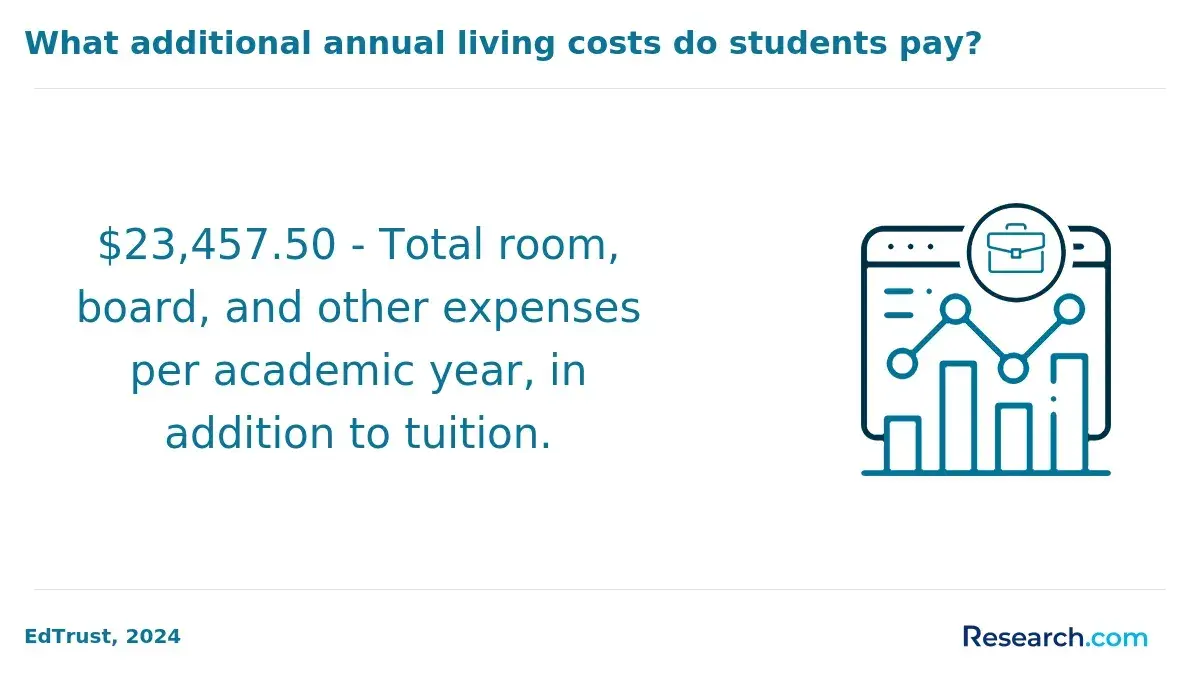
Schedule flexibility can reduce some costs, especially commuting, relocation, parking, and lost wages. It can also add costs through technology, online course fees, travel for residencies, proctoring, childcare, or longer enrollment if studying part-time. Students should compare total cost of attendance, not just tuition per credit.
College Board's 2024 pricing data reported average published tuition and fees of $11,610 for in-state students at public four-year institutions and $43,350 at private nonprofit four-year institutions for the 2024-25 academic year. Those figures are undergraduate sector averages, not Public Policy-specific prices, but they show why students should compare public, private, online, and transfer-friendly options carefully.
When a school provides estimated costs, students should separate direct charges from indirect costs. The table below shows common cost differences by schedule format.
| Cost category | Online | Hybrid | Evening or weekend | Accelerated |
| Tuition | May be per credit or flat-rate online tuition | Often similar to campus tuition | Often similar to campus tuition | May reduce calendar time but not credits required |
| Fees | Technology, platform, proctoring, or distance learning fees may apply | Campus and online fees may both appear | Campus service fees may still apply | Short terms may create frequent billing cycles |
| Travel | Usually low unless residencies are required | Can be significant if campus visits are frequent | Depends on commute distance and parking | Depends on whether accelerated intensives require travel |
| Childcare | May be easier to schedule around home routines | Needed during campus sessions | May be harder to find at night or on weekends | More study hours may require more coverage |
| Lost income | Often lower if coursework fits around work | May require time off for residencies | Lower if classes avoid work hours | Could rise if the pace forces reduced work hours |
Students should use the same cost discipline they would use when comparing any professional degree: tuition, fees, time to completion, aid eligibility, and schedule-related expenses all matter. Researching affordability across fields, including easiest MBA pathways, can help students see how admissions flexibility, cost, and program structure are separate decisions.
Common hidden costs deserve special attention. The most frequent include these items, which can change whether a flexible program is truly affordable.
- Residency travel, hotel stays, meals, parking, and local transportation for hybrid or low-residency programs
- Required laptop upgrades, statistical software, webcams, microphones, or stable high-speed internet
- Proctoring fees, transcript fees, graduation fees, and background checks for placements
- Childcare during evening classes, weekend intensives, exams, or group project meetings
- Extra terms caused by part-time enrollment, limited course availability, or missed prerequisites
Financial aid rules vary by school, program level, enrollment intensity, and student status. Before enrolling, students should ask the financial aid office how part-time study, summer courses, accelerated terms, employer tuition reimbursement, and stop-out policies affect their aid package.
How Should Students Compare Support, Workload, and Outcomes in Flexible Degree Programs?
A flexible Public Policy degree should offer more than convenient class times. Students also need advising, library access, writing help, statistics support, career services, internship guidance, faculty availability, and clear policies for missed classes or schedule changes. These supports matter because public policy coursework often requires applied research and polished communication.
Labor market outcomes vary by role, location, degree level, prior experience, and sector. BLS reported a 2024 median annual wage of $139,380 for political scientists, a research-oriented occupation that often requires graduate training. That figure should not be read as a typical salary for every Public Policy graduate; it is better used as one example of how advanced policy analysis roles can differ from entry-level nonprofit, legislative, or government positions.
Students should compare programs using evidence that connects schedule design to completion and career readiness. The following questions can help reveal whether a program's flexibility is practical or mostly promotional.
- Are live classes required, and are recordings available for students who miss a session because of work or caregiving?
- How many hours per week do faculty recommend for each 3-credit course, including readings, projects, and group work?
- Are required courses offered in the same flexible format every term, or do some shift back to daytime campus delivery?
- Can students slow down, take a leave, or rejoin a later cohort without losing progress?
- What support is available after business hours for advising, tutoring, technology help, and library research?
- How are internships, capstones, simulations, or client-based projects scheduled for online and working students?
- What career outcomes data does the program publish, and does it separate public-sector, nonprofit, private-sector, and graduate-school pathways?
Students should also watch for red flags. A program may be a poor fit if it advertises flexibility but cannot provide a course rotation, requires campus attendance with little notice, treats online students as secondary, or offers limited access to faculty outside weekday office hours.
The best final decision is usually not the fastest or most convenient option on paper. It is the format that aligns with the student's weekly schedule, learning style, finances, support needs, and career goals. For many Public Policy students, sustainable flexibility is what makes completion possible.
Other Things You Should Know About Public Policy
Sometimes, but it depends on the school's course rotation, seat availability, cohort structure, and campus policies. Students should ask whether format changes are allowed before enrolling and whether switching could delay graduation.
Policies vary widely. Some programs allow recordings, makeup assignments, or remote attendance, while others treat intensives as mandatory. Students with work travel or caregiving duties should get the missed-class policy in writing.
Students should confirm the time zone for live sessions, advising, exams, and assignment deadlines. Asynchronous courses are usually easier across time zones, but group projects may still require coordination with classmates.
Many programs allow students to reduce their course load, but cohort-based or lockstep programs may offer fewer options. Before choosing an accelerated format, ask whether pacing can be adjusted without losing credits or waiting a full year.
Top Trending Public Policy Rankings
References
- Navigating Accelerated Online Graduate Programs While Working Full-Time - Oklahoma's Nursing Times https://oknursingtimes.com/07-13-26/navigating-accelerated-online-graduate-programs-while-working-full-time/
- For Career-Driven Master's Students, a Flexible Program is Essential https://paloaltou.edu/resources/blog/career-driven-masters-students-flexible-program-essential
- Full-time, part-time, online - which study mode is right for you? https://www.studentspace.pl/en/blog/post/studia-stacjonarne-zaoczne-wieczorowe---ktory-tryb-wybrac
- Full-Time vs Part-Time MSW Programs – Traditional and Advanced Standing https://www.masterofsocialwork.com/faqs/full-time-vs-part-time-msw-programs
- Best Online Master of Public Policy (MPP) Degree Programs 2026 https://publicadministrationpolicy.org/degree/master-of-public-policy/
- Master in Technology and Public Policy https://www.itcilo.org/courses/master-technology-and-public-policy
- Making College Affordable by Improving Aid Policy https://issues.org/long-2/