2027 Criminal Justice Degree Unemployment Risk Report: Which Career Paths Offer the Most Stability

Co-Founder and Chief Data Scientist
Criminal justice students face a real trade-off: some paths are highly stable, while others depend on local budgets, hiring cycles, or specialized credentials. U.S. Bureau of Labor Statistics projections show forensic science technician employment growing much faster than average through 2033, while correctional officer employment is projected to decline.
This report is for students, graduates, career changers, and working public safety professionals who want to compare criminal justice careers by stability, salary potential, skills, certifications, and long-term risk before choosing a degree concentration or career path.
Key Things You Should Know
- Lowest-risk criminal justice paths generally combine essential public service demand, specialized credentials, and transferable skills, forensic science technicians are projected by the BLS to grow 14% from 2023 to 2033, while information security analysts are projected to grow 33%.
- Correctional officer roles carry higher long-term unemployment risk than many alternatives because BLS projections show a 7% employment decline from 2023 to 2033, making advancement planning especially important for students considering corrections.
- Salary alone is not the best stability signal, police and detectives had a BLS median wage of $77,270 in May 2024, but regional hiring, civil service rules, academy requirements, background checks, and local government budgets strongly affect access to those jobs.
- Which Criminal Justice Career Paths Have the Lowest Unemployment Risk?
- Which Industries Offer the Most Stable Employment for Criminal Justice Graduates?
Which Criminal Justice Career Paths Have the Lowest Unemployment Risk?
The criminal justice career paths with the lowest unemployment risk are usually those tied to essential government operations, specialized evidence work, compliance, cybersecurity, or roles with clear credential barriers. "Unemployment risk" here means the likelihood that a graduate may struggle to find or keep relevant work because of weak demand, shrinking occupations, budget cuts, automation, limited regional openings, or a mismatch between skills and employer requirements.
The table below compares common criminal justice career paths using recent BLS wage and projection data where available, plus practical stability factors such as credential requirements and transferability. Use it as a starting point, not a guarantee, because hiring rules vary by state, agency, employer, and background-check standards.
| Career path | Typical education or entry route | Recent BLS salary or outlook signal | Unemployment risk level | Why it tends to be stable or risky |
| Cybercrime or information security analyst | Bachelor's degree plus technical training, security tools, and often certifications | BLS reported a $124,910 median wage in May 2024 and projected 33% growth from 2023 to 2033 for information security analysts | Low | Demand comes from government, finance, healthcare, consulting, and private security, making skills more transferable than traditional agency-only roles. |
| Forensic science technician | Bachelor's degree in forensic science, biology, chemistry, criminal justice, or related field | BLS projected 14% growth from 2023 to 2033 | Low to moderate | Specialized evidence skills support stability, but openings can be limited in smaller regions and lab hiring can be competitive. |
| Police officer or detective | High school diploma or college coursework plus academy training; bachelor's degree often helps for advancement | BLS reported a $77,270 median wage in May 2024 and projected 4% growth from 2023 to 2033 | Moderate | Public safety is essential, but hiring depends on civil service exams, local budgets, fitness standards, background checks, and local staffing needs. |
| Probation officer or correctional treatment specialist | Usually bachelor's degree in criminal justice, social work, psychology, or related field | BLS projected 4% growth from 2023 to 2033 | Moderate | Demand is tied to courts, community supervision, and rehabilitation programs; emotional resilience and caseload management affect retention. |
| Compliance officer, investigator, or fraud analyst | Bachelor's degree plus industry knowledge; certifications may help | BLS wage and outlook vary by occupational category and industry | Low to moderate | Skills transfer across banking, insurance, healthcare, government contracting, retail loss prevention, and corporate risk departments. |
| Correctional officer | High school diploma or some college; academy or employer training required | BLS projected a 7% employment decline from 2023 to 2033 | Higher | Prison population trends, facility closures, turnover, and policy shifts can reduce long-term stability even when local openings exist. |
For most students, the most stable strategy is to avoid a narrow "law enforcement only" plan. A stronger plan pairs criminal justice knowledge with evidence handling, data analysis, cybersecurity, compliance, report writing, interviewing, or behavioral health skills that employers can use across multiple settings.
Career fit matters, too. A cybercrime role may offer excellent long-term stability but requires comfort with technical systems and continuous learning. A policing role may provide structured advancement and benefits but requires meeting physical, legal, ethical, and community-facing standards. A forensic role may be stable for well-prepared candidates but may require relocation because labs and medical examiner offices are not evenly distributed.
Which Industries Offer the Most Stable Employment for Criminal Justice Graduates?
Industry choice can matter as much as job title. A criminal justice graduate working in federal investigations, cybersecurity, healthcare compliance, or financial fraud may face a different risk profile than someone competing for a small number of local agency roles in one county.
The table below summarizes where criminal justice graduates often find the strongest employment stability and why those industries can reduce unemployment risk. It focuses on the nature of demand rather than promising any specific outcome.
| Industry or employer type | Common roles for criminal justice graduates | Stability profile | Best fit for students who want |
| Federal, state, and local government | Law enforcement, courts, probation, corrections administration, investigations, victim services | Generally stable because public safety and court operations are essential, though hiring can slow during budget constraints | Structured career ladders, benefits, pension systems, and mission-driven work |
| Cybersecurity and digital investigations | Cybercrime analyst, digital forensics assistant, threat intelligence support, security analyst | Strong stability because demand spans public and private sectors | Technical work, high transferability, and long-term growth potential |
| Financial services and insurance | Fraud analyst, anti-money laundering analyst, compliance investigator, claims investigator | Stable when regulatory pressure and fraud prevention remain business priorities | Office-based investigative work with private-sector mobility |
| Healthcare compliance and privacy | Compliance specialist, privacy investigator, risk analyst, abuse and neglect investigator | Stable because healthcare organizations must manage regulations, records, billing integrity, and patient privacy | Criminal justice work connected to policy, documentation, and regulation |
| Corporate security and risk management | Security manager, workplace violence prevention coordinator, loss prevention investigator | Moderate to stable, depending on the employer's size and risk exposure | Private-sector advancement and operational leadership |
| Private investigation and contract security | Private investigator, background investigator, surveillance specialist, security supervisor | More variable because demand can depend on contracts, client budgets, and licensing rules | Independence, flexible work, or entrepreneurial career options |
Public sector roles often provide stronger job protections and clearer promotion rules, but they can be slow to enter because of academy schedules, background investigations, civil service lists, and budget timing. Private-sector roles may move faster and pay more in specialized areas, but they can be more sensitive to business cycles unless the role is tied to regulation, fraud prevention, cybersecurity, or safety compliance.
A common mistake is assuming that "government equals stable" and "private sector equals risky." The better question is whether the role is essential, regulated, hard to automate, and supported by durable funding. A local corrections job in a shrinking facility may be less stable than a private-sector fraud or cybersecurity role with strong demand across industries.
Specialization is one of the strongest ways criminal justice students can reduce unemployment risk. A general criminal justice degree can open doors, but employers increasingly value candidates who can show a focused skill set: digital evidence, forensic methods, regulatory compliance, victim advocacy, intelligence analysis, or behavioral intervention.
These specializations tend to provide the strongest stability because they solve problems that agencies and employers cannot easily postpone. Students should compare them based on required training, geographic availability, and whether the skills transfer outside one employer type.
- Cybercrime and digital forensics: This is one of the most stable long-term options because cyber incidents, data breaches, financial scams, and digital evidence appear across nearly every sector. It fits students who are willing to build technical skills beyond traditional criminal justice coursework.
- Forensic science: This path can be stable for candidates with strong science preparation, lab discipline, and evidence-handling training. It is less ideal for students who want quick entry with minimal science coursework because many roles prefer biology, chemistry, or forensic science depth.
- Compliance, fraud, and financial crime: This specialization offers strong transferability because banks, insurers, government contractors, healthcare organizations, and corporations all need investigators who understand rules, documentation, and risk.
- Probation, reentry, and rehabilitation: Stability is supported by courts and community supervision systems, but success depends on communication, case management, crisis response, and tolerance for high caseloads.
- Homeland security and emergency management: These areas can be stable for candidates who understand risk planning, incident response, grants, infrastructure protection, and interagency coordination, but entry-level roles may be competitive.
Specialized does not always mean safer. A specialization can increase risk if it is too narrow, available in only a few regions, or tied to one technology vendor. The safest specializations combine a recognizable criminal justice focus with skills that employers also value in adjacent fields.
The strongest degree plan usually includes internships, scenario-based projects, writing-intensive assignments, and exposure to real tools or records systems. Students should ask programs how many courses involve digital evidence, data analysis, legal writing, ethics, statistics, or applied investigations rather than relying only on course titles.
Location has a major effect on unemployment risk because criminal justice employment is highly regional. A student in a large metro area may find openings in municipal policing, courts, private security, corporate compliance, hospitals, and federal agencies, while a student in a rural area may have fewer employers and longer waits between openings.
Regional demand is shaped by population growth, local government budgets, crime trends, retirement patterns, jail and prison policy, court backlogs, airport or port activity, and the presence of laboratories or federal facilities. This means a career that looks stable nationally may still be difficult to enter in a specific county.
The table below shows how different locations can change the risk profile for criminal justice graduates. It is especially useful for students deciding whether they are willing to relocate after graduation.
| Location type | Likely stability advantages | Possible risk factors | Smart strategy |
| Large metropolitan areas | More agencies, courts, hospitals, corporate employers, and specialized units | Higher competition, higher cost of living, stricter hiring screens in some agencies | Apply across public, private, nonprofit, and compliance roles rather than only one police department. |
| State capitals | Access to state agencies, courts, corrections administration, regulatory offices, and policy roles | Hiring may depend on budget cycles and civil service lists | Track state job portals early and build credentials aligned with public administration, analysis, or investigations. |
| Border, port, and airport regions | Stronger demand for customs, transportation security, fraud, trafficking, and emergency coordination roles | Federal hiring can be lengthy and highly competitive | Prepare for long background checks and maintain interim employment options. |
| Rural areas | Lower applicant volume for some local roles and broader generalist duties | Fewer specialized forensic, cybercrime, or federal openings | Develop remote-friendly or transferable skills such as compliance, report writing, data analysis, and records management. |
| Regions with major universities or medical centers | Campus safety, research compliance, hospital security, behavioral threat assessment, and privacy roles | Roles may require specialized policy or healthcare knowledge | Combine criminal justice with compliance, privacy, emergency management, or behavioral intervention coursework. |
Relocation flexibility can significantly reduce unemployment risk. Students who cannot relocate should evaluate local employer diversity before choosing a narrow specialization, especially if the region has only one crime lab, one major law enforcement agency, or limited private-sector compliance employers.
A red flag is choosing a career path because it sounds stable nationally without checking local job volume. Before enrolling in a specialization, students should search recent postings, talk to local agencies, ask where alumni work, and confirm whether entry-level roles actually exist within commuting distance.
Skills are often the difference between a criminal justice graduate who can only apply to a narrow set of jobs and one who can move across agencies, industries, and economic cycles. Employers still value knowledge of law, courts, ethics, and procedure, but stability increasingly depends on applied skills that make a candidate useful on day one.
The most protective skills are transferable, documentable, and relevant to both public and private employers. Students should prioritize skills they can prove through internships, portfolios, certifications, simulations, or work experience.
- Professional writing and documentation: Reports, affidavits, incident summaries, case notes, compliance memos, and evidence logs must be accurate, objective, and defensible.
- Data literacy: Crime analysis, fraud detection, risk scoring, intelligence support, and performance reporting all require comfort with spreadsheets, databases, dashboards, and basic statistics.
- Digital evidence awareness: Even nontechnical roles increasingly involve phones, cameras, cloud records, access logs, body-worn camera footage, and social media evidence.
- Interviewing and communication: Stable careers in probation, investigations, victim services, compliance, and policing depend on active listening, de-escalation, clear questioning, and cultural competence.
- Ethics and legal reasoning: Employers need people who can follow constitutional limits, privacy rules, chain-of-custody requirements, and organizational policy under pressure.
- Case management: Courts, probation, reentry programs, compliance teams, and victim services rely on organized professionals who can track deadlines, documents, contacts, and outcomes.
Technology skills deserve special attention because they reduce exposure to automation rather than increasing it. AI may help draft reports, flag anomalies, summarize records, or identify patterns, but employers still need humans to verify facts, protect rights, make judgment calls, and explain decisions.
Students interested in records, privacy, compliance, and regulated data can also compare criminal justice options with healthcare data careers by reviewing how a health information management degree salary aligns with privacy, documentation, and compliance-focused work. This comparison can help students decide whether their strongest stability path is justice, healthcare regulation, or a hybrid of both.
A common mistake is listing skills on a resume without evidence. A stronger approach is to build proof: a mock investigative report, a data dashboard, an internship supervisor reference, a certification, a capstone project, or documented volunteer experience with courts, victim services, emergency management, or reentry programs.
Certifications can improve job security when they signal job-ready skills that employers actually request. They are most useful in cybersecurity, fraud, emergency management, compliance, digital forensics, investigations, and specialized safety roles; they are less useful when they are generic, unknown to employers, or unrelated to a student's target job.
The certifications below can strengthen stability because they add a marketable layer to a criminal justice degree. Requirements, recognition, and eligibility vary, so students should verify employer preferences before paying for any credential.
| Certification or credential area | Best aligned roles | How it can reduce unemployment risk | Important caution |
| CompTIA Security+ or similar entry cybersecurity credential | Cybercrime analyst, security analyst, digital investigations support | Shows foundational security knowledge that transfers across industries | Not a substitute for hands-on tools, networking knowledge, or security experience |
| Certified Fraud Examiner preparation or fraud-focused training | Fraud analyst, financial crime investigator, insurance investigator | Connects criminal justice knowledge to banking, insurance, retail, and corporate risk roles | Eligibility and full certification requirements may include education and professional experience |
| Emergency management certifications | Emergency management assistant, continuity planner, homeland security support | Signals familiarity with incident command, preparedness, response, and recovery concepts | Experience and local government knowledge often matter as much as coursework |
| Digital forensics tool training | Digital evidence technician, forensic lab assistant, cyber investigator | Builds practical ability with evidence acquisition, preservation, and analysis workflows | Tool-specific credentials can become outdated if not paired with broader forensic principles |
| State peace officer, corrections, or probation academy credential | Sworn law enforcement, corrections, probation roles | Meets mandatory entry requirements for many public safety jobs | Rules vary by state and agency, and background standards can be strict |
| Healthcare compliance or privacy training | Healthcare investigator, privacy analyst, compliance specialist | Expands criminal justice skills into a large regulated industry | Employers may prefer experience with medical records, billing, or privacy operations |
Certification choices should follow the job target, not the other way around. For example, a student aiming for cybercrime work should prioritize security fundamentals, digital evidence, scripting or database exposure, and internships over a stack of unrelated investigation certificates.
Some criminal justice students become interested in controlled-substance investigations, pharmacy diversion, drug policy, or healthcare fraud. If that interest shifts toward clinical medication expertise rather than enforcement or compliance, researching an online pharmacist degree can clarify the much longer licensure-driven pathway required for pharmacist roles.
The main red flag is paying for certificates before confirming that local employers value them. Students should compare job postings, ask internship supervisors, contact agency recruiters, and check whether the credential is recognized in the exact field they want to enter.
Employment stability changes by career stage. Entry-level criminal justice graduates often face the highest unemployment risk because they may lack academy credentials, investigative experience, technical skills, or a clean match with agency hiring standards. Mid-career professionals usually become more stable when they develop supervisory ability, specialized knowledge, and strong documentation habits.
Students should understand how risk shifts over time so they can plan the first five years, not just the first job. The table below outlines typical stability patterns and the best move at each stage.
| Career stage | Main unemployment risk | Stability-building move | Best-fit examples |
| Student or pre-entry | No experience, unclear specialization, weak professional network | Complete internships, ride-alongs where appropriate, volunteer work, writing samples, and skill-based projects | Police applicant, court intern, victim services volunteer, crime analysis assistant |
| First 0 to 2 years | Competition for limited entry-level openings and employer concerns about readiness | Accept roles that build credible experience, even if they are adjacent to the ideal job | Dispatcher, records technician, security supervisor, loss prevention investigator, case aide |
| Years 3 to 5 | Risk of being stuck in a narrow role without advancement credentials | Add certifications, specialize, document measurable achievements, and seek cross-training | Fraud analyst, probation officer, evidence technician, compliance investigator |
| Mid-career | Burnout, policy changes, technology gaps, or limited promotion slots | Develop leadership, data, training, compliance, or emergency planning expertise | Detective, supervisor, intelligence analyst, emergency management coordinator |
| Late career or transition stage | Physical demands, retirement timing, or need to move from field work to advisory work | Translate experience into consulting, training, compliance, policy, or management roles | Background investigator, corporate security manager, compliance consultant, instructor |
One of the smartest ways to reduce early unemployment risk is to treat the first job as a platform. A dispatch, records, security, or court support role may not be the final goal, but it can build agency knowledge, references, terminology, and proof of reliability.
Another mistake is waiting until burnout or layoffs to reskill. Criminal justice work can be stressful, and some roles have physical, emotional, or schedule demands that become harder over time. Building analytical, supervisory, compliance, and technology skills early gives professionals more options if they need to shift away from front-line work.
The strongest emerging career paths for criminal justice graduates are those connected to digital risk, data, regulation, and complex social problems. These areas are less likely to depend on one local agency's hiring cycle and more likely to remain relevant as crime, evidence, and public safety operations become more technology-driven.
The table below highlights emerging paths that offer a strong mix of long-term stability and career mobility. Salary and growth may vary by occupational category, but these areas align with durable employer needs.
| Emerging path | Why it is gaining stability | Useful degree focus | Skills that matter most |
| Cybercrime analysis | Organizations face persistent cyber fraud, ransomware, identity theft, and digital evidence challenges | Criminal justice with cybersecurity, computer science, or information systems coursework | Security fundamentals, digital evidence, report writing, threat research, legal awareness |
| Digital forensics | Criminal and civil investigations increasingly involve phones, cloud accounts, vehicle systems, and network records | Forensic science, criminal justice, or information technology with evidence procedures | Chain of custody, forensic tools, documentation, court-ready communication |
| Financial crime and anti-fraud investigations | Fraud prevention remains important in banking, insurance, ecommerce, healthcare, and government benefits | Criminal justice with accounting, finance, or compliance electives | Pattern recognition, interviewing, documentation, regulatory knowledge, data analysis |
| Behavioral threat assessment | Schools, workplaces, healthcare systems, and public agencies are investing in prevention-oriented safety teams | Criminal justice with psychology, social work, emergency management, or counseling-adjacent coursework | Communication, risk assessment, ethics, team coordination, documentation |
| Healthcare fraud, privacy, and abuse investigations | Healthcare organizations must manage fraud, privacy, patient safety, and regulatory exposure | Criminal justice with healthcare compliance, privacy, or public administration electives | Policy interpretation, records review, interviewing, privacy rules, case management |
| Emergency management and resilience planning | Public and private employers need planning for disasters, cyber incidents, workplace violence, and continuity | Homeland security, emergency management, public administration, or criminal justice | Incident command, planning, communication, grants, coordination, risk analysis |
AI will reshape many of these roles, but it is unlikely to remove the need for accountable human judgment. In criminal justice, decisions must be explainable, ethical, legally defensible, and sensitive to context. Graduates who understand both technology and due process will be better positioned than those who only know one side.
The higher-risk emerging paths are those based on hype rather than employer demand. A program promising "AI policing careers" without coursework in law, data ethics, statistics, privacy, bias, and actual investigative procedures should be evaluated carefully.
Students should evaluate unemployment risk by comparing stability, salary, job growth, entry barriers, location, and personal fit together. A career with high pay but few local openings may be riskier than a moderate-paying role with steady demand, clear credentials, and advancement options.
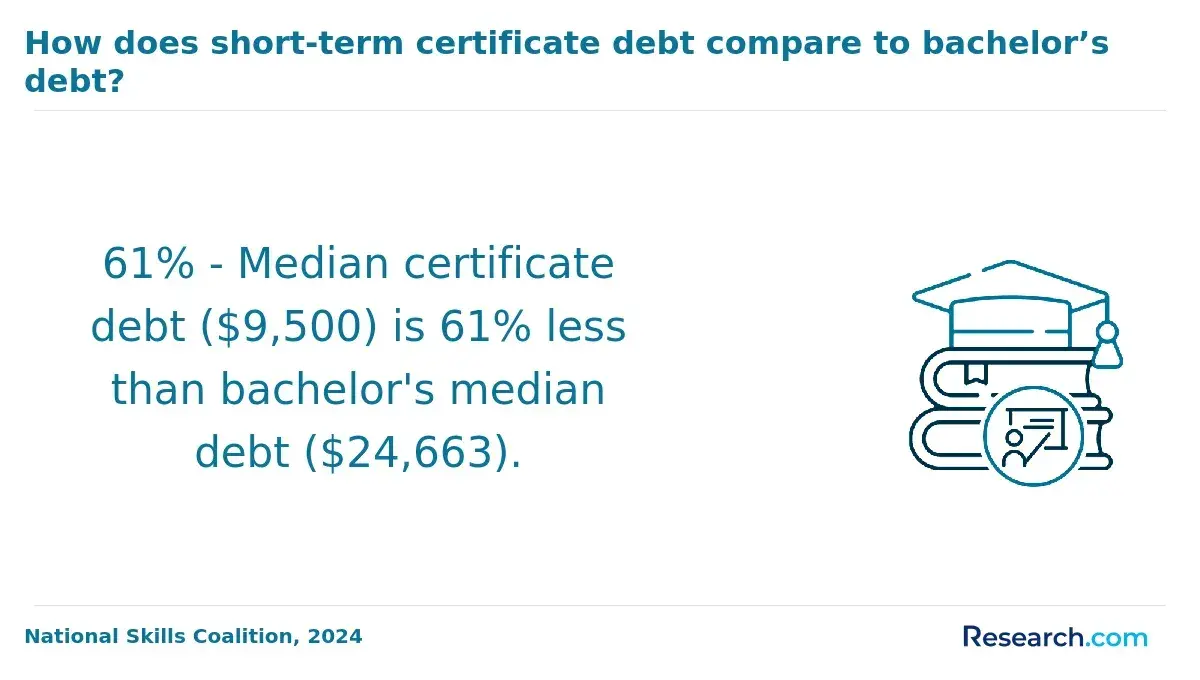
Cost also matters because debt can make unemployment risk more painful. College Board's 2024 pricing data reported average published tuition and fees of $11,610 for in-state students at public four-year institutions and $4,050 for in-district students at public two-year colleges for the 2024-25 academic year. For criminal justice students, that means an associate-to-bachelor's transfer route can be worth comparing against starting at a four-year school, especially when the target career does not require a specific undergraduate major.
Use the following checklist before choosing a criminal justice degree concentration or career path. It is designed to prevent the most common mistake: choosing based on interest or salary without checking the labor market mechanics behind the job.
- Identify the exact role you want, such as probation officer, cybercrime analyst, forensic technician, police officer, compliance investigator, or emergency management specialist.
- Check whether the role requires a bachelor's degree, academy training, licensure, a clean background check, physical standards, citizenship status, certifications, or specialized science or technology coursework.
- Compare national outlook with local job postings in your target region, because criminal justice hiring is often location-specific.
- Ask whether the skills transfer to at least two other industries or employer types if your first-choice path slows down.
- Compare median salary context with education cost, time to credential, unpaid internship expectations, academy length, and relocation costs.
- Choose programs with internships, career placement support, experienced faculty, writing-intensive assignments, and transparent outcomes.
- Look for accreditation at the institutional level and verify any program-specific approvals required for academy, forensic, or licensure-related paths in your state.
Students should also decide what kind of stability they want. Public-sector stability may mean benefits, structured promotions, and union or civil service protections. Private-sector stability may mean broader mobility, higher compensation in specialized areas, and less dependence on one local agency. The best choice depends on your tolerance for bureaucracy, competition, shift work, technology learning, and relocation.
If you are comparing criminal justice with adjacent public service fields, look at how each path handles licensure, physical demands, and labor-market stability. For instance, students drawn to wellness, injury prevention, public safety fitness, or rehabilitation-adjacent work may also compare kinesiology programs with criminal justice programs before committing to one degree direction.
A good decision is not simply "choose the safest job." It is choosing a path where your interests, abilities, background eligibility, location, education budget, and backup options align. The lowest unemployment risk usually belongs to graduates who can qualify for a specific role while still having enough transferable skills to pivot.
Economic cycles affect criminal justice careers unevenly. Essential public safety, court, probation, and regulatory functions usually continue during downturns, but new hiring can still slow if state and local governments face budget pressure or if agencies delay academies and promotions.
Students should think about recession resistance in three layers: whether the work is essential, whether the employer has stable funding, and whether the skills transfer if hiring pauses. The careers most exposed to downturns are typically contract-based security, discretionary consulting, some private investigation work, and roles tied to retail expansion or corporate spending.
Criminal justice students who want recession-resistant public-service work sometimes compare adjacent healthcare paths because healthcare demand is less discretionary than many consumer-facing industries. For example, someone weighing public safety against patient-care support roles may research a fast track medical LPN pathway to understand how training length, licensure, and recession resilience differ from criminal justice careers.
During downturns, the lowest-risk criminal justice graduates usually have a backup lane. A police applicant waiting for an academy date may work in loss prevention, dispatch, emergency management support, compliance, or court administration. A forensic science graduate may broaden the search to toxicology labs, quality assurance, evidence technician roles, or crime analyst positions.
To reduce economic-cycle risk, students should use a practical decision sequence before committing to a path. These steps help separate durable demand from temporary hiring spikes.
- Check whether the role is funded by an essential public function, regulation, security need, or discretionary employer spending.
- Review current job postings in at least three target regions instead of relying only on national averages.
- Identify the minimum credential, academy, license, or certification needed to be considered job-ready.
- Build a transferable skill set in writing, interviewing, data analysis, case documentation, ethics, and technology.
- Create a backup path that uses the same degree if the first-choice agency freezes hiring.
Other Things You Should Know About Criminal Justice
Cybercrime, digital forensics, compliance, fraud investigation, and forensic science roles often have lower risk because they use specialized and transferable skills. Traditional law enforcement can also be stable, but access depends on local hiring, academy requirements, background checks, and budgets.
No, but you need a focused plan. A criminal justice degree is more flexible when paired with skills in data analysis, cybersecurity, forensic science, compliance, emergency management, writing, or case management.
They can provide local employment, but long-term risk is higher than in some criminal justice paths because BLS projections show declining employment for correctional officers from 2023 to 2033. Students interested in corrections should plan for advancement into probation, case management, training, administration, or compliance.
Choose a specialization with strong demand, complete internships, build technology and writing skills, check local job postings, understand state requirements, and keep a backup path in a related industry such as compliance, fraud, cybersecurity, emergency management, or healthcare privacy.
See What Experts Have To Say About Studying Criminal Justice
Read our interview with Criminal Justice experts

Mark Moore
Criminal Justice Expert
Research Professor of Public Management
Harvard University

Frank Schmalleger
Criminal Justice Expert
Professor Emeritus
The University of North Carolina

David Carter
Criminal Justice Expert
Professor, School of Criminal Justice
Michigan State University

- Conviction, Imprisonment, and Lost Earnings: How Involvement with the Criminal Justice System Deepens Inequality https://www.brennancenter.org/our-work/research-reports/conviction-imprisonment-and-lost-earnings-how-involvement-criminal
- The Labor Market for People with Conviction Histories https://www.vera.org/publications/the-labor-market-for-people-with-conviction-histories
- Out of Prison & Out of Work https://www.prisonpolicy.org/reports/outofwork.html
- The Most In-Demand Criminal Justice Careers in 2025 https://www.allcriminaljusticeschools.com/blog/most-in-demand-criminal-justice-careers-for-the-next-decade/