2027 Criminal Justice Degree Underemployment Report: Which Graduates Are Most Likely to Work Below Their Education Level

Co-Founder and Chief Data Scientist
Criminal justice graduates often face a hard choice: take an available public safety job now or wait for a role that fully uses their degree. The Federal Reserve Bank of New York's recent labor market data shows underemployment among recent college graduates remains near 40%, and criminal justice is one of the fields where mismatch risk can be higher. This report is for students, graduates, career changers, and parents who want to understand overqualification, compare realistic career paths, and choose steps that reduce the chance of getting stuck in low-credential work.
Key Things to Know About Underemployment in Criminal Justice Industry
- Criminal justice underemployment is most common when graduates rely on a general degree alone and compete for jobs that prioritize academy training, prior public safety experience, data skills, or state-specific credentials.
- The salary trade-off can be meaningful: BLS May 2024 wage data shows security guards had a median wage of $39,340, while probation officers and correctional treatment specialists had a median wage of $64,520.
- The strongest protection against low-credential work is a targeted plan before graduation: internship experience, a specialized track such as crime analysis or digital forensics, clean background-screening readiness, and resumes built around measurable justice-related skills.
- How likely is it for Criminal Justice graduates to become underemployed?
- Is the college curricula for Criminal Justice keeping up with employer expectations?
How likely is it for Criminal Justice graduates to become underemployed?
Criminal justice graduates face a moderate-to-high underemployment risk compared with majors tied to licensure-heavy occupations such as nursing, accounting, or engineering. Underemployment means a graduate works in a job that does not typically require a bachelor's degree, even if the job is full time and related to public safety in a broad sense.
The key reason is structural: many entry-level criminal justice jobs are divided between sworn roles, which often require academy completion and background screening, and support roles, which may not require a degree. A bachelor's degree can help, but it does not automatically place a graduate into investigator, analyst, federal, probation, or policy roles.
The table below summarizes the most common risk levels for criminal justice graduates. It is not a guarantee of outcomes; local hiring, civil service rules, internship history, physical requirements, and background checks can change the picture quickly.
| Graduate profile | Underemployment risk | Why the risk looks this way |
| General criminal justice major with no internship | High | Often competes for security, corrections, dispatch, and administrative roles that may not require a bachelor's degree. |
| Graduate with police academy pathway or cadet experience | Moderate | Degree may support advancement, but initial hiring can still be based on exams, academy eligibility, and background standards. |
| Graduate with crime analysis, GIS, statistics, or data coursework | Lower | More aligned with analyst roles that commonly value a bachelor's degree and technical evidence of skill. |
| Graduate with digital forensics or cybercrime preparation | Lower to moderate | Can qualify for more specialized roles, but employers may still expect tools experience, certifications, and lab work. |
| Graduate targeting federal law enforcement immediately | Moderate to high | Competition is strong, hiring timelines are long, and many federal roles prefer specialized experience, language skills, military experience, or advanced credentials. |
For students deciding whether the degree is worth it, the practical answer is this: criminal justice can lead to degree-level work, but the major needs to be paired with a specific occupational target. A student aiming for "law enforcement" in general is more exposed to underemployment than a student aiming for probation, crime analysis, digital evidence, intelligence analysis, victim services, compliance, or emergency management with matching coursework and experience.
Is the college curricula for Criminal Justice keeping up with employer expectations?
Many criminal justice programs cover the right foundations: courts, policing, corrections, criminological theory, ethics, constitutional law, and research methods. The gap appears when employers expect graduates to show job-ready evidence in data systems, report writing, digital evidence, case documentation, trauma-informed communication, or compliance workflows.
This matters because entry-level hiring is increasingly skills-based. Agencies and private-sector employers may screen for tools and competencies that are not always embedded deeply enough in traditional criminal justice coursework.
| Curriculum area | What many programs teach | What degree-level employers increasingly expect |
| Research methods | Basic statistics and social science research concepts | Ability to interpret crime trends, build dashboards, clean data, and explain findings to nontechnical decision-makers. |
| Policing and corrections | Agency structure, legal rules, and historical context | Scenario-based judgment, documentation quality, community interaction, and understanding of accountability systems. |
| Courts and law | Criminal procedure, constitutional rights, and case flow | Practical familiarity with evidence handling, records systems, legal writing, and victim or witness coordination. |
| Cybercrime | Often offered as an elective | Hands-on exposure to digital evidence concepts, chain of custody, OSINT, and relevant investigative tools. |
| Career preparation | Internship encouraged but not always required | Documented field experience, references, physical/background readiness, and an application pipeline before graduation. |
The best programs now treat criminal justice as an applied field, not only a social science major. Students should look for required internships, partnerships with local agencies, crime analysis labs, GIS or data electives, mock case files, writing-intensive assignments, and faculty with current field connections.
Students interested in justice data, privacy, records, and compliance can also compare adjacent regulated data careers by reviewing health information management degree salary outcomes, since both fields reward accurate documentation, confidentiality, and systems knowledge.
Criminal justice tends to sit closer to the high-risk side of the underemployment spectrum than majors with direct licensure pathways. The reason is not that the degree lacks value; it is that many criminal justice occupations have hiring gates outside the degree itself, including academy admission, civil service exams, background checks, physical standards, security clearance, or prior experience.
The Federal Reserve Bank of New York's recent college labor market work shows recent graduates overall continue to experience underemployment near 40%. Criminal justice students should use that as a warning benchmark: if the program does not add occupational specialization, the degree may not be enough to separate them from applicants for non-degree public safety jobs.
| Major or field type | Typical underemployment pattern | Why outcomes differ |
| Nursing and allied health licensure fields | Generally lower | Degree maps directly to licensed roles with clear employer demand and regulated entry requirements. |
| Engineering and computer science | Generally lower to moderate | Employers can evaluate technical skills through projects, tools, internships, and role-specific assessments. |
| Business and public administration | Moderate | Outcomes depend heavily on internships, analytics skills, school network, and specialization. |
| Criminal justice | Moderate to high | Degree may support advancement, but many entry jobs use non-degree hiring screens or require separate academy and civil service processes. |
| Psychology, sociology, and general social science | Often higher unless specialized | Many graduates need additional credentials, internships, or graduate study for professional-level roles. |
The comparison is useful for planning. If a student wants the most direct path from school to a credentialed job, regulated health programs may offer clearer occupational alignment; for example, some career changers compare a fast track medical LPN pathway with criminal justice when they want a shorter, license-based route into stable employment.
Yes, it can. A low-credential role is not automatically harmful, but it can slow career growth when it does not build the competencies employers associate with degree-level criminal justice work. The risk is highest when graduates spend several years in work that emphasizes presence, monitoring, or routine procedures but offers little exposure to analysis, investigations, policy, supervision, legal documentation, or interagency collaboration.
The main career-growth issue is signaling. A degree-level employer reviewing a resume wants proof that the applicant can use judgment, write clearly, handle sensitive information, follow legal standards, and solve operational problems. If the resume only shows low-level duties, the bachelor's degree may not overcome the experience gap.
Technology is also changing the entry-level landscape. Automated reporting tools, surveillance systems, records platforms, body-camera review systems, and AI-supported administrative workflows can reduce the value of routine tasks while increasing demand for workers who can interpret information, document decisions, and communicate risk clearly.
Graduates can reduce long-term damage by turning any entry-level role into evidence of higher-level ability. The most useful strategy is to document achievements that show scope, judgment, and measurable responsibility.
- Track examples of incident reports, audit findings, process improvements, training responsibilities, or cross-agency coordination without revealing confidential information.
- Volunteer for assignments involving records, evidence handling, compliance checks, investigations support, community outreach, or data review.
- Ask supervisors for feedback on writing quality, decision-making, and readiness for internal promotion.
- Use the role to build references from sworn officers, supervisors, analysts, case managers, or administrators who can speak to degree-level potential.
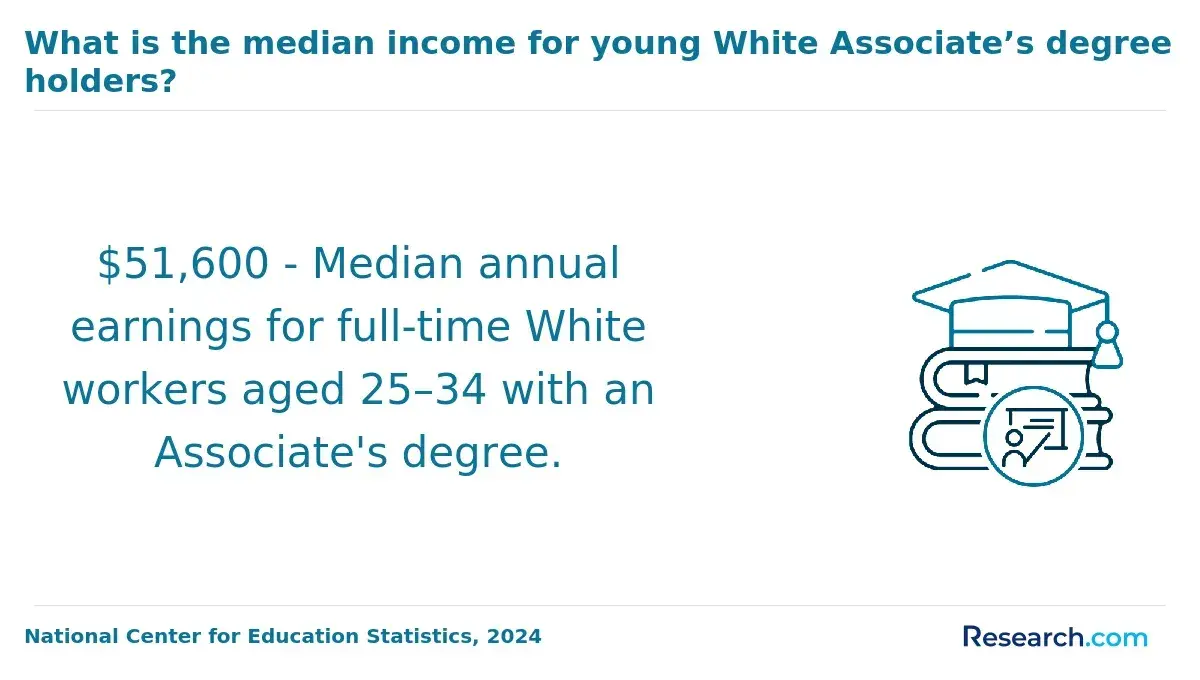
The salary gap can be large enough to affect loan repayment, housing choices, and the return on a criminal justice degree. BLS May 2024 wage data shows that several degree-aligned public safety and justice roles have median wages well above common fallback roles such as security guard work.
The table below compares selected U.S. roles that criminal justice graduates often consider. These are occupational medians, not starting salaries, and actual pay varies by state, union contract, agency budget, shift differential, overtime, and cost of living.
| Role | Degree alignment | Typical education or hiring pathway | Median annual wage from BLS May 2024 data |
| Security guard | Low-credential fallback | Usually high school diploma plus employer training and state guard requirements | $39,340 |
| Correctional officer or jailer | Gateway or fallback, depending on employer | Often high school diploma plus academy or agency training; some agencies prefer college | $57,080 |
| Probation officer or correctional treatment specialist | Degree-aligned | Commonly bachelor's degree plus background screening and agency training | $64,520 |
| Forensic science technician | Degree-aligned but specialized | Usually bachelor's degree in forensic science, natural science, or related field | $67,440 |
| Police and sheriff's patrol officer | Degree-supported, not always degree-required | Academy, exams, background checks, and agency requirements; college may support hiring or promotion | $76,290 |
The practical takeaway is that not all "criminal justice-related" jobs produce the same return. A graduate earning security-guard wages while carrying bachelor's-level debt may have less flexibility to pursue unpaid internships, relocation, academy preparation, or graduate study. That financial pressure can make underemployment harder to escape.
For borrowers, the safest approach is to estimate monthly loan payments against likely early-career wages before accepting a program or job offer. Income-driven repayment may help some federal loan borrowers, but it should not be treated as a substitute for a career plan that moves toward degree-level pay.
Criminal justice underemployment usually comes from a combination of market structure, program design, and job-search execution. The barriers are often predictable, which means students can address many of them before graduation.
The most common barriers fall into several categories. Understanding them helps graduates diagnose whether the problem is their degree, their target role, their location, or their application strategy.
- No specialization: A broad criminal justice degree without a concentration in crime analysis, cybercrime, forensic science, homeland security, emergency management, or victim advocacy may look too general for degree-level postings.
- Weak field experience: Employers often prefer candidates who completed internships, cadet programs, ride-alongs, court observation, nonprofit victim services work, or agency-based projects.
- Background-screening problems: Drug history, credit issues, driving record, social media conduct, arrests, or undisclosed past conduct can affect eligibility for sworn and sensitive roles.
- Geographic mismatch: Some regions have limited analyst, probation, federal, or forensic openings, while others have stronger agency networks and higher hiring volume.
- Hiring-process delays: Civil service exams, academy cycles, clearance reviews, and federal application timelines can leave graduates taking temporary work while they wait.
- Resume misalignment: Many graduates describe coursework and interest in justice but fail to show measurable writing, data, documentation, interviewing, or case-management skills.
- Overreliance on online applications: Public-sector hiring is formal, but referrals, internship supervisors, alumni, and agency contacts still help candidates understand timelines and requirements.
A major red flag is applying to every public safety job with the same resume. A probation role, crime analyst role, police trainee role, and compliance role require different evidence. Graduates who do not tailor applications often look unfocused even when they are qualified.
Students who like criminal justice but are drawn to records, privacy, and regulated operations may also compare health-sector compliance pathways, where credentials and pay structures differ from justice agencies.
A criminal justice resume should not read like a list of classes. It should prove that the graduate can handle sensitive information, write accurately, analyze situations, work with diverse communities, and follow legal or procedural rules.
Before writing the resume, graduates should choose one target lane. A general resume for "criminal justice jobs" is usually weaker than a focused resume for probation, crime analysis, law enforcement trainee, victim services, compliance, emergency management, or investigations support.
Use the following sequence to make the resume stronger for degree-level screening systems and human reviewers.
- Choose one target role and collect 10 recent job postings from the same role type in the same state or region.
- Highlight repeated requirements such as report writing, case notes, data analysis, interviewing, community outreach, records systems, bilingual ability, de-escalation, or evidence handling.
- Rewrite the resume summary around the target role instead of using a broad statement about passion for criminal justice.
- Convert coursework into applied evidence by naming research projects, policy briefs, mock case files, statistical analyses, GIS maps, or legal memos.
- Add a skills section with tools and competencies only if the graduate can discuss them in an interview.
- Use accomplishment bullets that show scope, such as number of reports reviewed, clients served, calls handled, datasets analyzed, or presentations delivered, when accurate and nonconfidential.
- Create separate resume versions for sworn roles, analyst roles, case-management roles, and compliance roles.
Common mistakes include listing "criminal justice knowledge" without proof, using police-focused language for social services roles, ignoring writing samples, and failing to explain internships in operational terms. A better approach is to show how classroom learning translated into decisions, documentation, communication, and problem-solving.
Graduates should also prepare a small evidence portfolio when appropriate. This can include a redacted policy memo, crime trend analysis using public data, court observation reflection, emergency management plan, or research poster. The portfolio should never include confidential agency records.
Certifications can help when they match the target role. They are not magic shortcuts, and they do not replace state licensing, academy completion, civil service rules, or employer background requirements. However, the right credential can signal job readiness in specialized areas where a general criminal justice degree may be too broad.
The table below summarizes certifications and credential areas that may support degree-level movement. Requirements, recognition, and cost vary, so students should verify whether local employers actually request the credential before paying for it.
| Certification or credential area | Best fit | How it may reduce underemployment risk |
| Crime and intelligence analysis training | Crime analyst, intelligence analyst, fusion center support | Shows ability to work with data, patterns, reports, and decision support rather than only general justice theory. |
| GIS mapping certificate | Crime mapping, emergency management, public safety planning | Adds a technical skill many traditional criminal justice programs do not deeply cover. |
| Digital forensics or cybercrime certificate | Digital evidence, fraud, cyber investigations support | Helps graduates compete for specialized roles where tools knowledge matters. |
| Emergency management credentials | Emergency management, homeland security, disaster response coordination | Connects criminal justice knowledge to planning, interagency coordination, and incident command concepts. |
| Victim advocacy training | Victim services, nonprofit justice programs, court support | Signals readiness for trauma-informed communication and service coordination roles. |
| Paralegal certificate | Legal support, court operations, compliance, investigations documentation | Can strengthen writing, legal procedure, records, and evidence-management credibility. |
A certification makes the most sense when it is cheaper and faster than a graduate degree and clearly requested in job postings. It makes less sense when the graduate is using credentials to avoid choosing a career direction.
Some students compare criminal justice certifications with longer professional routes in other regulated fields, such as an online pharmacist degree, but the decision should be based on licensure requirements, time to completion, debt, and realistic career fit rather than salary alone.
The best strategy is to treat the criminal justice degree as a platform, not a complete career plan. Students who start building a job pathway in their first two years are usually better positioned than students who wait until senior year.
The following steps are practical because they connect coursework, experience, and employer screening requirements before the job search begins.
- Pick a target role by the sophomore or junior year, such as probation, crime analysis, law enforcement, digital forensics, emergency management, victim services, court administration, compliance, or federal service.
- Audit the degree plan against job postings and add missing skills through electives, minors, certificates, or community college courses in statistics, GIS, cybersecurity, writing, psychology, Spanish, or public administration.
- Complete at least one field experience before senior year, preferably with an agency, court, nonprofit, emergency management office, legal services organization, or research center.
- Build relationships with faculty, internship supervisors, alumni, and local agency recruiters before positions open.
- Prepare early for background checks by reviewing credit, driving history, social media, references, and disclosure requirements honestly.
- Take writing seriously because reports, case notes, affidavits, policy memos, and incident summaries are central to degree-level justice work.
- Develop a technical edge through data analysis, GIS, digital evidence, records systems, or compliance documentation.
- Create a job-search calendar that accounts for civil service exams, academy dates, federal hiring timelines, and graduate school deadlines if needed.
- Evaluate every entry-level offer by asking whether it builds experience for the next role within 12 to 18 months.
Students should also compare alternative or complementary majors if their interests sit at the edge of criminal justice. For example, those drawn to rehabilitation, injury prevention, tactical strength and conditioning, or public safety wellness may want to compare kinesiology programs with criminal justice before committing to a path.
The smartest route is not always the highest-status title immediately after graduation. Sometimes a probation assistant, court services internship, crime analysis fellowship, cadet position, or victim services role is a better launchpad than a better-paying job with no promotion path. The goal is to avoid accidental underemployment by choosing roles that compound into degree-level responsibility.
Some criminal justice graduates use low-credential roles as stepping stones, especially when the job provides agency contacts, field exposure, dispatch experience, report-writing practice, or eligibility for internal promotion. Others remain stuck because the role does not build the skills required for degree-level openings.
A major 2024 report from the Strada Institute and Burning Glass Institute found that graduates who begin underemployed are much more likely to remain underemployed years later. For criminal justice graduates, that means the first job after graduation should be evaluated not only by pay, but by whether it creates a credible path to analyst, officer, probation, investigator, compliance, or case-management work.
The difference between a gateway job and a trap is whether the role produces transferable evidence. The following list can help graduates judge whether an immediate job offer is strategically useful.
- A gateway role gives access to case documentation, records systems, emergency communication, investigations support, victim services, intelligence briefings, or agency references.
- A risky fallback role has no formal promotion track, no skill development, no tuition support, no exposure to degree-level staff, and no timeline for moving into better-aligned work.
- A short-term low-credential job can make sense if the graduate is simultaneously applying for academy, analyst, probation, federal, or compliance roles and has a clear exit date.
- A low-credential job becomes dangerous when the graduate stops building specialized skills and begins applying only to similar non-degree positions.
Graduates should set a review point after six to nine months. If the role has not produced stronger references, relevant accomplishments, or access to internal postings, it may be time to change strategy rather than wait passively.
Other Things You Should Know About Criminal Justice
Not automatically. Employers usually care more about accreditation, internship access, writing ability, background readiness, and role-specific skills than whether the degree was online or campus-based. Online students should be especially intentional about securing local field experience.
Graduate school can help for policy, research, forensic psychology, public administration, or federal advancement goals, but it is not always the fastest fix. If the main gap is experience or technical skill, an internship, certificate, academy pathway, or analyst training may offer a quicker return.
Yes. The degree can support roles in probation, courts, victim services, investigations support, emergency management, compliance, intelligence analysis, nonprofit justice programs, and policy work. The student should choose electives and internships that match the non-policing path.
Many do, especially sworn, corrections, federal, court, and sensitive records roles. Standards vary by employer and state, but applicants should expect checks involving criminal history, drug use, driving record, credit, references, and honesty during disclosure.
See What Experts Have To Say About Studying Criminal Justice
Read our interview with Criminal Justice experts

Frank Schmalleger
Criminal Justice Expert
Professor Emeritus
The University of North Carolina

David Carter
Criminal Justice Expert
Professor, School of Criminal Justice
Michigan State University

James W. Marquart
Criminal Justice Expert
Associate Provost and Professor of Criminology
Texas Christian University

- A Popular College Major Is the Most Likely to Leave Students Underemployed - Newsweek https://www.newsweek.com/popular-college-major-most-likely-leave-students-underemployed-1973974
- College and Employment During Incarceration https://www.regis.edu/news/2024/jpen-newsletter/03/college-and-employment-during-incarceration
- Early careers at Justice | Work for us https://www.justice.qld.gov.au/about-us/work/earlycareers