2027 Computer Science Degree Job Posting Analysis: Skills, Credentials, and Experience Employers Request Most Often

Co-Founder and Chief Data Scientist
Computer science students face a crowded choice: which skills, credentials, and experiences are actually worth prioritizing before applying? The stakes are high because BLS employment projections released in 2024 estimate about 356,700 computer and IT job openings per year from 2023 to 2033. This guide breaks down what employers commonly request in computer science degree job postings, including industries, job titles, technical skills, soft skills, education, experience, certifications, and AI-related trends, so students and career changers can build a smarter, more targeted plan.
Key Things You Should Know
- Computer and IT occupations remain a strong labor market category: BLS May 2024 data reports a median annual wage of $105,990, well above the median for all occupations.
- The strongest computer science candidates combine degree-level fundamentals with applied evidence: projects, internships, GitHub portfolios, cloud tools, SQL, APIs, testing, and collaboration experience.
- Entry-level postings often list 0-2 years of experience, but employers commonly treat internships, capstones, open-source work, research, and production-like projects as evidence of readiness.
- Key Things You Should Know
- Which Industries Have the Highest Demand for Computer Science Graduates?
- Which Job Titles Appear Most Frequently in Computer Science Degree Job Postings?
- What Skills Do Employers Request Most Often in Computer Science Degree Job Postings?
- How Much Experience Do Employers Expect From Computer Science Degree Candidates?
- Which Certifications Increase Competitiveness in Computer Science Job Postings?
- How Do Employer Expectations Differ Across Computer Science Degree Job Postings?
- What Emerging Skills Are Becoming More Common in Computer Science Degree Job Postings?
- How Can Computer Science Students Match Their Qualifications to Employer Expectations?
- How Should Students Use Computer Science Job Posting Trends to Choose a Career Path?
- Top Trending Computer Science Rankings
- See What Experts Have To Say About Studying Computer Science
Which Industries Have the Highest Demand for Computer Science Graduates?
Graduates of traditional and online computer science degree programs are hired across nearly every sector, but demand is not evenly distributed. Job postings cluster in industries where software, data, security, automation, and digital infrastructure directly affect revenue, risk, or operations.
The table below summarizes common industry patterns in computer science degree job postings. Use it to compare where your target skills are likely to matter most, rather than assuming every employer wants the same profile.
| Industry | Common Computer Science Roles | Skills Employers Emphasize | Candidate Fit |
| Technology and software | Software engineer, full-stack developer, DevOps engineer, QA automation engineer | Programming, system design, APIs, cloud platforms, testing, agile development | Best for students who enjoy building products, solving technical problems, and learning new frameworks quickly |
| Finance, banking, and insurance | Software developer, data analyst, cybersecurity analyst, quantitative technology analyst | SQL, Python, data pipelines, risk controls, secure coding, compliance awareness | Best for candidates who can combine technical skill with accuracy, documentation, and business judgment |
| Healthcare and health technology | Data engineer, application developer, systems analyst, security analyst | Databases, interoperability, privacy, analytics, cloud security, workflow automation | Best for candidates who want mission-driven work and can handle regulated data environments |
| Government and defense | Cybersecurity analyst, systems engineer, software developer, database administrator | Security, networks, scripting, documentation, identity management, clearance eligibility when relevant | Best for candidates who value stability, formal processes, and long-term technical operations |
| Retail, logistics, and manufacturing | Data analyst, automation engineer, software developer, operations technology specialist | Data analytics, APIs, ERP systems, forecasting, automation, cloud integration | Best for candidates interested in applied systems that improve supply chains, customer platforms, and operations |
One practical takeaway is that "computer science job" does not mean one labor market. A student aiming for fintech should prioritize data, security, and reliability, while a student aiming for consumer software may benefit more from product development, user-facing applications, and cloud deployment experience.
BLS projections released in 2024 show especially strong growth for data scientists and information security analysts from 2023 to 2033. That matters because many non-tech industries now compete for the same analytics and security talent that software companies traditionally hired first.
Which Job Titles Appear Most Frequently in Computer Science Degree Job Postings?
The most frequent computer science degree job postings tend to fall into a few recognizable role families. The exact title can vary by employer, but the underlying work usually centers on building software, managing data, securing systems, improving infrastructure, or translating business needs into technical solutions.
The table below groups common job titles by hiring frequency and role focus. This helps students avoid chasing titles alone and instead understand the responsibilities behind the posting.
| Job Title Family | Typical Posting Titles | Core Responsibilities | What Usually Makes Candidates Competitive |
| Software development | Software engineer, software developer, application developer, backend developer | Design, code, test, debug, and maintain applications or services | Strong programming fundamentals, data structures, version control, testing, and project evidence |
| Web and full-stack development | Full-stack developer, frontend developer, web developer | Build user interfaces, APIs, databases, and application features | JavaScript or TypeScript, frontend frameworks, backend frameworks, SQL, APIs, deployment experience |
| Data and analytics | Data analyst, data engineer, business intelligence developer, junior data scientist | Collect, clean, model, analyze, and report data for business decisions | SQL, Python, data visualization, statistics, data pipelines, communication with nontechnical teams |
| Cybersecurity | Security analyst, SOC analyst, application security analyst, security engineer | Monitor threats, protect systems, review vulnerabilities, respond to incidents | Networking, Linux, scripting, identity and access management, security frameworks, hands-on labs |
| Cloud and infrastructure | Cloud engineer, DevOps engineer, site reliability engineer, systems administrator | Deploy, automate, monitor, and maintain cloud or hybrid systems | AWS, Azure, or Google Cloud familiarity, containers, CI/CD, Linux, scripting, observability tools |
| Systems and business technology | Systems analyst, IT analyst, technical analyst, solutions analyst | Connect business requirements with technical implementation | Requirements analysis, documentation, SQL, workflow knowledge, communication, troubleshooting |
Students should read beyond the job title. A "software engineer" posting at a hospital may emphasize privacy and enterprise systems, while the same title at a startup may prioritize rapid product development, cloud deployment, and frontend-backend flexibility.
What Skills Do Employers Request Most Often in Computer Science Degree Job Postings?
Employers usually evaluate computer science candidates across three layers: technical fundamentals, job-specific tools, and workplace skills. The most competitive applicants show that they can not only write code, but also deliver reliable work with other people under real constraints.
The table below separates commonly requested skills by category. This distinction helps students decide which skills belong in coursework, which belong in projects, and which should be demonstrated through internships or team experience.
| Skill Category | Commonly Requested Skills | Why Employers Ask for Them | How Students Can Demonstrate Them |
| Programming languages | Python, Java, JavaScript, C++, C#, TypeScript | Employers need candidates who can build, maintain, and debug production code | Course projects, coding assessments, GitHub repositories, internship tasks |
| Computer science fundamentals | Data structures, algorithms, object-oriented programming, operating systems, databases | Fundamentals help candidates solve unfamiliar problems and pass technical interviews | Technical interview practice, systems projects, database design assignments |
| Data and databases | SQL, relational databases, data modeling, ETL, analytics, data visualization | Many roles involve storing, retrieving, cleaning, or interpreting data | Dashboards, analytics projects, database-backed applications, data pipeline demos |
| Cloud and DevOps | AWS, Azure, Google Cloud, Docker, Kubernetes, CI/CD, Linux, Terraform | Employers increasingly deploy software in cloud or hybrid environments | Deployed applications, containerized projects, automated test and deployment pipelines |
| Security | Secure coding, authentication, access control, network basics, vulnerability awareness | Security risk affects software, infrastructure, data, and compliance | Security labs, capture-the-flag exercises, threat modeling, secure app features |
| Soft skills | Communication, teamwork, problem-solving, documentation, adaptability | Most technology work happens in teams with changing requirements | Team projects, presentations, internship reviews, clear README files, issue tracking |
For students choosing electives for their computer science degrees, the best sequence is usually fundamentals first, then applied specialization. For example, a student interested in machine learning still needs programming, statistics, data management, and software engineering practices to make models usable in real systems.
What Educational Credentials Do Employers Expect From Computer Science Graduates?
Most computer science job postings use education requirements as a screening signal, but the wording matters. "Required," "preferred," and "or equivalent experience" can mean very different things depending on the employer, role, and applicant pool.
| Credential | How It Appears in Postings | What It Signals | When It Matters Most |
| Bachelor's degree in computer science or related field | Often listed as required or preferred | Foundational preparation in programming, algorithms, systems, databases, and theory | Most valuable for software, systems, data, cybersecurity, and graduate-study pathways |
| Related bachelor's degree | Often accepted if paired with technical skills | Transferable analytical or engineering preparation | Useful for math, statistics, engineering, information systems, or physics graduates with coding evidence |
| Associate degree | Common for support, technician, junior development, and some IT roles | Practical preparation for entry-level technical work | Best when paired with certifications, internships, or a transfer plan to a bachelor's program |
| Master's degree | Usually preferred for specialized or advanced roles | Depth in areas such as AI, data science, cybersecurity, systems, or research | Most useful when targeting advanced analytics, research, machine learning, or senior technical leadership |
| Bootcamp or certificate program | Sometimes accepted as equivalent preparation for specific skills | Focused, job-oriented training in a tool stack or role area | Best as a supplement to a degree or for candidates with strong portfolios and prior work experience |
Students should not assume that a computer science degree alone is enough. Employers often expect applied proof: internships, capstone projects, deployed software, documented code, lab work, or measurable contributions to team projects.
Accreditation can matter when comparing programs, especially if you want a recognized transfer pathway, federal financial aid eligibility, or graduate school options such as a masters in data analytics. Programmatic accreditation is less universally required in computer science than in licensed fields, but institutional accreditation remains important for credit transfer and employer recognition.
How Much Experience Do Employers Expect From Computer Science Degree Candidates?
The table below shows how experience expectations typically differ by job level. It also clarifies what students can use as evidence when they do not yet have full-time experience.
| Job Level | Common Experience Language | What Employers Usually Want to See | Strong Evidence for Students |
| Internship | Currently pursuing a degree; coursework in programming or systems | Learning ability, basic coding skill, teamwork, curiosity | Relevant classes, small projects, hackathons, professor recommendations |
| Entry-level | 0-2 years of experience or equivalent projects | Ability to code, test, debug, document, and learn a team workflow | Internships, capstones, GitHub portfolio, deployed applications, technical interview practice |
| Junior to midlevel | 2-5 years of experience with specific tools or systems | Independent delivery, code review participation, troubleshooting, ownership of features | Professional experience, substantial freelance work, open-source contributions, production-like projects |
| Senior | 5+ years of experience, architecture, mentoring, or lead responsibilities | System design, technical judgment, mentoring, cross-team communication | Shipped systems, architecture decisions, leadership examples, measurable business or technical impact |
Students can reduce the experience gap by building a portfolio that mirrors professional work. A single polished project with tests, documentation, version control, deployment, and a clear problem statement is often more persuasive than several unfinished class assignments.
Which Certifications Increase Competitiveness in Computer Science Job Postings?
Certifications can increase competitiveness, but they are not equally useful for every computer science career path. In job postings, certifications usually function as a supplement: they validate tool familiarity, security knowledge, cloud exposure, or project management readiness.
The table below summarizes certifications that commonly align with computer science job families. Students should prioritize certifications that match the roles they are actually targeting.
| Certification Area | Examples Employers May Recognize | Best-Fit Roles | Decision Guidance |
| Cloud computing | AWS Certified Cloud Practitioner, AWS Solutions Architect Associate, Microsoft Azure Fundamentals, Azure Administrator | Cloud engineer, DevOps engineer, software developer, systems analyst | Useful when postings mention cloud platforms, deployment, infrastructure, or distributed systems |
| Cybersecurity | CompTIA Security+, CySA+, CISSP, GIAC credentials | Security analyst, SOC analyst, application security analyst, systems security roles | Security+ is often more realistic for students; CISSP is generally better suited to experienced professionals |
| Networking and systems | CompTIA Network+, Cisco CCNA, Linux certifications | Systems administrator, network-focused security roles, infrastructure support | Helpful when roles involve networks, Linux servers, identity systems, or troubleshooting |
| Data and analytics | Vendor certificates in data analytics, database, or cloud data platforms | Data analyst, data engineer, BI developer | Most useful when paired with SQL projects, dashboards, and data cleaning examples |
| Project and agile methods | Scrum or project management credentials | Technical analyst, product-adjacent roles, team lead pathways | Usually a differentiator, not a substitute for technical ability |
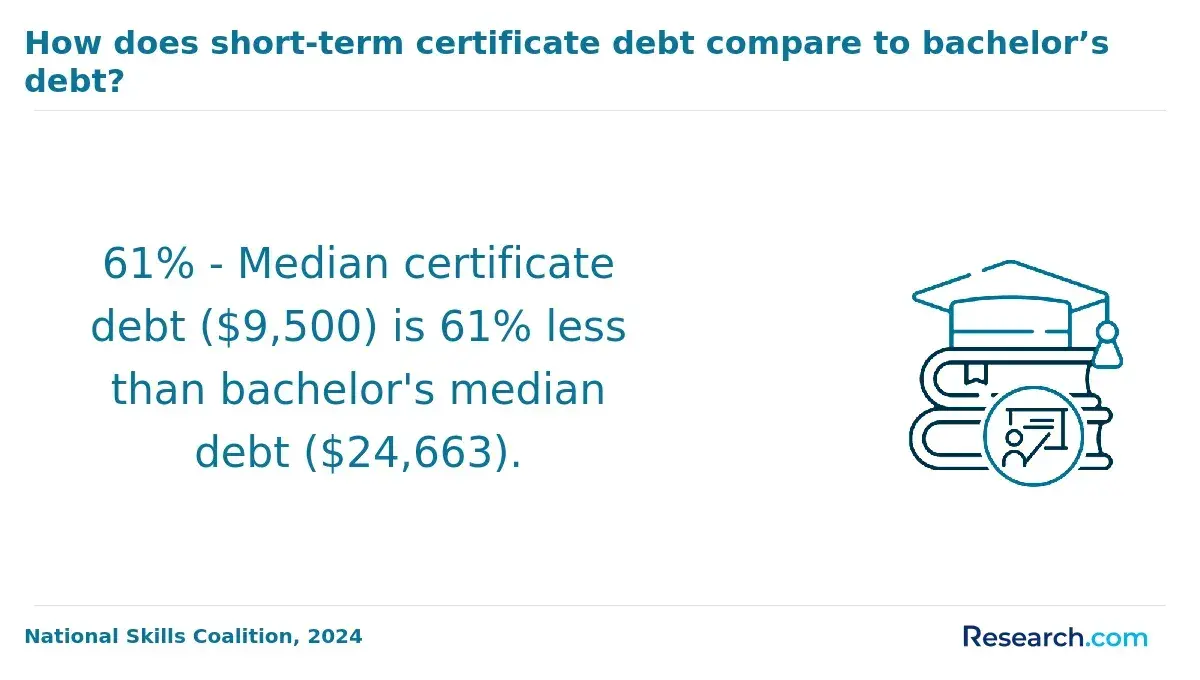
Short certificate programs are worth considering when they appear repeatedly in postings for your target role, fill a specific gap, and can be completed without delaying higher-value experience. It is less useful when it is unrelated to your intended job family or when it replaces time that should be spent building projects, practicing interviews, or applying for internships.
A practical rule is to scan 20-30 postings for the same target title and track certifications that recur. If a credential appears only once or only in senior postings, it may not be the best first investment for an undergraduate or recent graduate.
How Do Employer Expectations Differ Across Computer Science Degree Job Postings?
Employer expectations differ by industry, company size, role specialization, security requirements, and local labor markets. A national software company may emphasize algorithms and scalable systems, while a regional healthcare employer may value database reliability, privacy awareness, and communication with clinical teams.
The table below shows how the same computer science degree can lead to different hiring expectations. This helps students tailor applications instead of sending the same résumé to every employer.
| Employer Context | What They Often Emphasize | What May Be Less Important at Entry Level | Résumé Strategy |
| Startups | Full-stack ability, speed, ownership, adaptability, product thinking | Formal hierarchy experience or narrow specialization | Show shipped projects, independent problem-solving, and comfort with ambiguity |
| Large technology companies | Algorithms, system design, scalable software, coding interviews, collaboration | One-off tool certificates without deep fundamentals | Emphasize computer science foundations, internships, coding practice, and measurable project outcomes |
| Regulated industries | Security, documentation, privacy, reliability, compliance awareness | Experimental tools that lack governance or auditability | Highlight careful testing, data handling, access controls, and documentation |
| Government contractors | Security, systems knowledge, documentation, eligibility for clearance when relevant | Consumer app polish unless related to the work | Include citizenship or clearance eligibility only when requested and appropriate |
| Small and midsize businesses | Practical troubleshooting, broad technical range, communication with nontechnical staff | Highly specialized research experience | Show versatility across software, databases, support, automation, and business workflows |
Students should also pay attention to geography. In regions with large defense, healthcare, finance, logistics, or energy employers, job postings may emphasize industry-specific systems and risk requirements more than consumer software trends.
One common mistake is copying keywords into a résumé without evidence. A better approach is to connect each important keyword to a project, course, internship, or measurable result so the employer can verify that the skill is real.
What Emerging Skills Are Becoming More Common in Computer Science Degree Job Postings?
AI and automation are changing computer science hiring, but not by eliminating the need for fundamentals. Employers increasingly value candidates who can use AI-assisted tools responsibly, work with data, evaluate model outputs, and integrate automation into secure, maintainable systems.
The table below summarizes emerging skills that are appearing more often in computer science-related postings and interviews. These skills are most valuable when they extend core programming and data skills rather than replace them.
| Emerging Skill | Where It Shows Up | Why It Matters | Best Preparation |
| AI-assisted development | Software engineering, QA, DevOps, data roles | Developers are expected to use tools efficiently while still reviewing, testing, and securing code | Practice prompt-based coding support, but document your own reasoning, tests, and design choices |
| Machine learning foundations | Data science, analytics, product engineering, research-adjacent roles | Employers need candidates who understand model behavior, data quality, and evaluation limits | Study statistics, Python, data preprocessing, model evaluation, and responsible AI concepts |
| Data engineering | Analytics, cloud, AI, business intelligence roles | AI and analytics depend on clean, reliable, accessible data pipelines | Build projects with SQL, Python, APIs, batch processing, and cloud storage |
| Cloud-native development | Software, infrastructure, DevOps, platform roles | Modern applications often run on distributed cloud systems | Deploy applications with containers, CI/CD, monitoring, and secure configuration |
| Secure software development | Software engineering, cybersecurity, cloud, fintech, healthcare | Security is increasingly part of every technical role, not only dedicated security jobs | Learn authentication, input validation, dependency scanning, access control, and threat modeling |
BLS projections released in 2024 estimate particularly rapid growth for data scientists from 2023 to 2033. For students, that does not mean every computer science major must become a data scientist, but it does suggest that data fluency is becoming a broader employability advantage.
The best response to AI-driven change is not to chase every new tool. Students should build durable skills in programming, data, systems, security, and communication, then add AI tools as productivity enhancers and specialization signals.
How Can Computer Science Students Match Their Qualifications to Employer Expectations?
Students can use job postings as a practical curriculum map. Instead of guessing which skills matter, compare postings for your target title and identify the requirements that repeat across employers.
The following steps help turn job posting trends into an action plan. Use them before choosing electives, certifications, internships, or portfolio projects.
- Choose one target role family, such as software development, data analytics, cybersecurity, cloud engineering, or systems analysis.
- Collect 20-30 recent U.S. job postings for entry-level or internship roles in that family.
- Separate requirements into three groups: required skills, preferred skills, and nice-to-have tools.
- Count recurring patterns qualitatively, such as skills that appear in most postings versus skills that appear only occasionally.
- Match each major requirement to evidence you already have, such as coursework, projects, internships, labs, or certifications.
- Choose one portfolio project that combines multiple requested skills instead of building unrelated small projects.
- Revise your résumé so each important skill is connected to a result, tool, project, or work sample.
- Practice explaining trade-offs, debugging decisions, and teamwork examples because interviews often test judgment, not just definitions.
A strong résumé does not simply list "Python, SQL, AWS, teamwork." It explains how those skills were used: for example, building a database-backed web application, deploying it to a cloud service, writing tests, documenting the API, and collaborating through version control.
Students should also avoid overinvesting in credentials too early. If you have no internship, no substantial project, and no technical interview practice, a third certification may provide less value than applied experience that proves you can do the work.
How Should Students Use Computer Science Job Posting Trends to Choose a Career Path?
Job posting trends are most useful when they help you choose a direction, not when they pressure you to learn everything at once. A computer science degree can support many paths, but each path rewards a different mix of skills, credentials, and experience.
The table below compares common computer science career paths by what students should prioritize first. It is designed to support decisions about electives, internships, projects, and optional certifications.
| Career Path | Prioritize First | Strong Supporting Evidence | Best Optional Add-On |
| Software engineering | Programming, data structures, algorithms, testing, APIs | Deployed applications, code samples, internships, technical interview preparation | Cloud or DevOps exposure |
| Data analytics or data engineering | SQL, Python, statistics, data cleaning, visualization | Dashboards, data pipelines, analytics reports, business-facing explanations | Cloud data platform certificate or advanced database coursework |
| Cybersecurity | Networking, Linux, scripting, secure coding, threat analysis | Security labs, SOC simulations, vulnerability writeups, internship experience | CompTIA Security+ or role-specific security certification |
| Cloud and DevOps | Linux, scripting, containers, CI/CD, cloud services, monitoring | Automated deployments, infrastructure projects, reliability-focused documentation | AWS, Azure, or Google Cloud certification aligned with postings |
| AI or machine learning | Python, statistics, linear algebra, data management, model evaluation | ML projects with clean data pipelines, evaluation metrics, and clear limitations | Advanced coursework, research, or specialized graduate study |
Cost should also influence the path you choose. College Board's 2024 data lists average published tuition and fees for the 2024-25 academic year at $11,610 for in-state public four-year institutions and $43,350 for private nonprofit four-year institutions, before grants and scholarships. That gap makes net price, transfer credits, internship access, and career services important ROI factors, not just program reputation.
A practical decision rule is to choose the least expensive accredited program that still gives you access to rigorous coursework, employer-aligned projects, internships, advising, and recruiting opportunities in your target field. Higher cost can make sense when it comes with strong placement support or specialized opportunities, but institution type alone does not determine career value.
Students should revisit job postings every semester. Employer expectations shift as tools, security risks, AI adoption, and business priorities change, so your plan should evolve with the labor market while staying grounded in durable computer science fundamentals.
Other Things You Should Know About Computer Science
For many students, yes, especially if the program builds strong fundamentals and includes internships, projects, and career support. The degree is most valuable when paired with evidence that you can code, solve problems, communicate, and work with real tools.
Start with programming, data structures, algorithms, databases, version control, testing, and communication. After that, specialize based on your target role, such as cloud for DevOps, SQL and Python for data, or networking and Linux for cybersecurity.
Usually no. Certifications can strengthen a résumé when they match the job posting, but they rarely replace degree-level fundamentals, projects, internships, and interview performance. They are most useful as targeted supplements.
Use internships, capstone projects, research, open-source contributions, freelance work, hackathons, and deployed portfolio projects to show applied ability. Employers are more likely to take entry-level candidates seriously when they can review concrete examples of work.
Top Trending Computer Science Rankings
See What Experts Have To Say About Studying Computer Science
Read our interview with Computer Science experts

Kathleen M. Carley
Computer Science Expert
Professor of Computer Science
Carnegie Mellon University

Imed Bouchrika, Phd
Computer Science Expert
Professor of Computer Science
National Higher School of Artificial Intelligence

Derek Riley
Computer Science Expert
Professor, Program Director
Milwaukee School of Engineering

Elan Barenholtz
Computer Science Expert
Associate Professor
Florida Atlantic University

References
- Why Soft Skills Are The Hidden Skills Employers Look For in Tech [2025 Guide] https://ntinow.edu/soft-skills-employers-look-for-in-it-careers/
- Top Careers in Computer Science | Careers, Salaries, and Resources https://www.computerscience.org/careers/
- Educational Requirements Are Gradually Disappearing From Job Postings - Indeed Hiring Lab https://www.hiringlab.org/2024/02/27/educational-requirements-job-postings/
- Most In-Demand IT Skills Employers Are Hiring For | IT Jobs UK Career Guide https://www.itjobboard.co.uk/blog/310/most-in-demand-it-skills-employers-are-hiring-for-%7C-it-jobs-uk-career-guide/
- The Crucial Computer Science Skills Employers Are Craving - TechCXO https://www.techcxo.com/the-crucial-computer-science-skills-employers-are-craving/
- 10 Skills Every Data Scientist Needs - Intuit Blog https://www.intuit.com/blog/innovative-thinking/data-science-skills/
- Fields of Work in Computer Science: Top IT Careers | Walbrook https://www.walbrook.ac.uk/subjects/computer-science/computer-science-fields-of-work-career-in-it/
- What are the basic educational qualifications required for IT jobs? https://www.indiastudychannel.com/experts/48873-what-are-the-basic-education-required-for-it-jobs
- Computer Science vs Data Science: Career Guide 2026 | Salaries & Skills https://www.unosquare.com/blog/computer-science-vs-data-science/
- Data Science Roles - A Definitive Guide - Data Science PM https://www.datascience-pm.com/data-science-roles/