2027 Most Affordable Online Bachelor's in Communication Degree Programs Ranking in the Northeast

Co-Founder and Chief Data Scientist
Are you exploring affordable ways to earn an online bachelor's degree in communication? This article presents the 2027 Most Affordable Online Bachelor's in Communication Degree Programs Ranking in the Northeast, carefully crafted by the Research.com team of data scientists.
With so many options available, finding the right program can feel overwhelming. Our ranking helps you make an informed choice by highlighting quality and affordability.
Pursuing a communication degree opens doors to rewarding careers and skill growth. We encourage you to discover programs that fit your goals and budget.
Key benefits of getting online communication degree in the Northeast
- Communication degree graduates in the Northeast can expect competitive salaries, with entry-level roles typically starting around $45,000 to $55,000 annually in fields like public relations and marketing. While exact data varies, these roles offer stable growth and rewarding earning potential.
- A graduate from a well-known Northeast school often pursues careers in media, corporate communications, or digital marketing, showing the degree's versatility in thriving industries. These paths provide exciting opportunities to engage with audiences and shape brand voices.
- Completing a communication degree online from a reputable Northeast university offers flexibility to balance work and study, allowing for practical experience during coursework. This convenience helps students graduate with both education and real-world skills, boosting confidence and career readiness.
- Key benefits of getting online communication degree in the Northeast
- What can I expect from online communication degree in the Northeast?
- Where can I work with online communication degree in the Northeast?
- How much can I make with online communication degree in the Northeast?
- 2027 Most Affordable Online Bachelor's in Communication Degree Programs Ranking in the Northeast
- Key Findings
- How long does it take to complete online communication degree in the Northeast?
- What's the difference between online and on-campus communication degree?
- What is the average cost of online communication degree in the Northeast?
- What financial aid is available to online communication degree students in the Northeast?
- What are the prerequisites for enrolling in online communication degree program in the Northeast?
- What courses are typically in online communication degree programs in the Northeast?
- What types of specializations are available in online communication degree programs in the Northeast?
- How do you choose the best online communication degree in the Northeast?
- What career paths are available for online communication degree students in the Northeast?
- What is the job market for online communication degree in the Northeast?
- Top Trending Communication Rankings
What can I expect from online communication degree in the Northeast?
The average cost of earning an online communication degree in the Northeast is generally competitive, especially at public institutions like the State University of New York (SUNY) and the University of Massachusetts system. These universities typically offer tuition rates under $12,000 per year for both in-state and out-of-state online learners, making advanced education accessible without excessive financial burden.
Graduates from these programs often highlight the affordability combined with flexible scheduling as key benefits, allowing them to balance work, family, and study. Many share experiences of leveraging financial aid and scholarships to further reduce costs, making an online communication degree a practical investment. For instance, graduates recall how affordable tuition at SUNY enabled them to pursue advanced media and communication coursework without accumulating overwhelming debt.
This combination of reasonable pricing and quality education through interactive digital platforms makes the Northeast an appealing region for prospective students seeking strong academic outcomes alongside financial stewardship.
Where can I work with online communication degree in the Northeast?
Graduates with an online communication degree in the Northeast often secure roles in dynamic industries such as public relations, corporate communications, marketing, and media production. For instance, graduates from institutions like Boston University and Syracuse University find rewarding careers managing digital content for major corporations or leading campaigns at advertising agencies in New York City. These urban centers boast a high demand for communication specialists, with more than 200,000 professionals employed in fields ranging from media outlets to nonprofit organizations.
Many graduates appreciate opportunities in healthcare communications and higher education, especially in cities like Boston and Philadelphia. Positions in university communications departments and hospital outreach programs allow them to leverage their skills in community engagement and crisis communication, often with a strong sense of purpose and fulfillment.
Additionally, roles within state and local government agencies are common, where communication graduates serve as public information officers, sharing vital information with the public. The region's robust economy and thriving tech sector, particularly around Cambridge, further stimulate careers in digital marketing and social media management, providing diverse, exciting prospects for recent graduates eager to make an impact.
How much can I make with online communication degree in the Northeast?
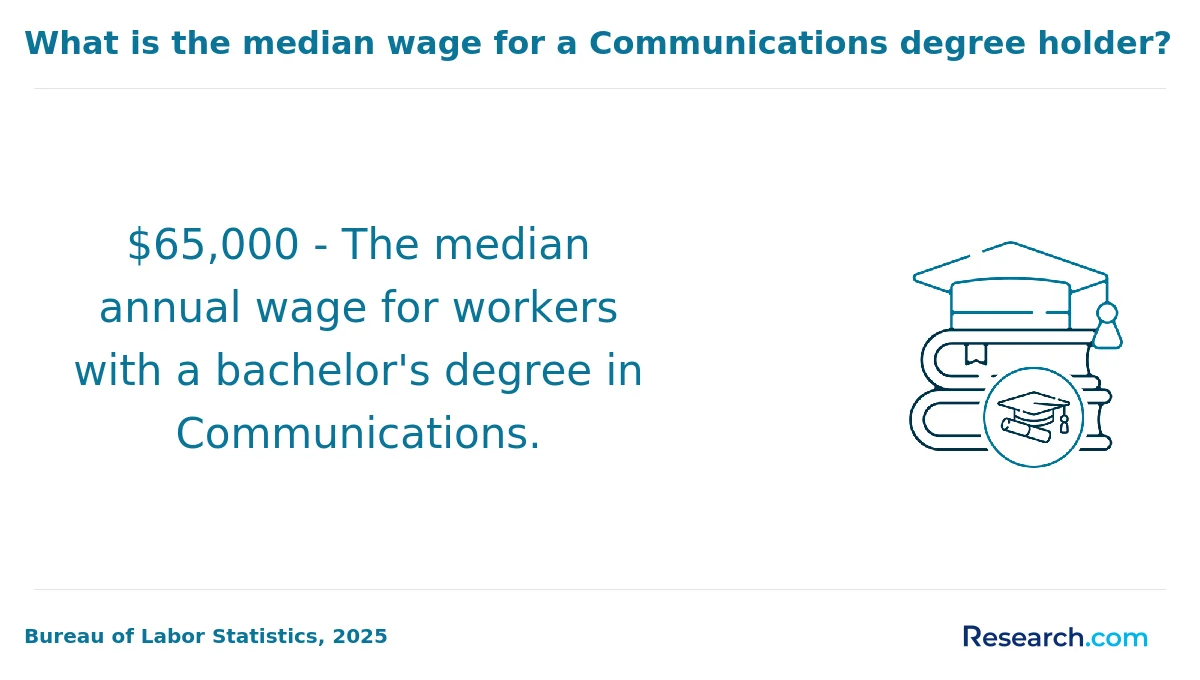
Graduates holding an online communication degree from Northeastern institutions often find promising salary prospects in the region's competitive job market. For instance, public relations specialists in metropolitan areas like Boston and Philadelphia earn a median annual wage of approximately $66,000, surpassing the national median. This salary reflects the high demand for skilled communicators in corporate, nonprofit, and media sectors common to New York City and surrounding areas.
Entry-level positions such as communication coordinators or social media managers typically offer starting salaries between $40,000 and $50,000. Many graduates from renowned universities in the Northeast report their ability to leverage digital communication skills-acquired through online programs-into roles with salaries exceeding $80,000 within a few years.
Marketing managers, another frequent career path, benefit from the region's robust economy, earning median wages around $115,000. This level of compensation provides a clear incentive for students considering an online communication degree from well-regarded Northeast schools to build expertise in strategic marketing and multimedia content development.
2027 Most Affordable Online Bachelor's in Communication Degree Programs Ranking in the Northeast
How do we rank schools?
Investing in your education is a significant decision that can shape your future, and the Research.com team understands the importance of making informed choices. To assist prospective students in the Northeast, we have carefully developed the "2027 Most Affordable Online Bachelor's in Communication Degree Programs Ranking in the Northeast." Our commitment to quality, credibility, and accuracy is demonstrated through rigorous research and analysis.
We utilized the following reputable data sources to ensure a comprehensive evaluation of communication programs:
By exploring this ranking, readers will gain valuable insights into the most affordable and credible online communication degree options in the Northeast, empowering them to make well-informed educational decisions. For more details on our methodology, please visit our Research.com methodology page.


# 3 position
Penn State University Park
Bachelor of Organizational and Professional Communication





# 8 position
SUNY Empire State College
Bachelor of Cultural Studies

# 10 position
Thomas Edison State University
Bachelor of Communications

Key Findings
- Tuition for online communication bachelor's programs in the Northeast ranges from $10,000 to $18,000 per year at public universities and $20,000 to $35,000 at private schools.
- Starting salaries for graduates average between $45,000 and $50,000 annually, rising to $70,000 to $80,000 mid-career.
- The Northeast job market for communication graduates is strong, especially in urban areas like New York City and Boston, with many roles in media, advertising, and public relations.
- Communication-related jobs in the Northeast are projected to grow about 8% over the next decade, which is higher than the national average.
- Programs focus on practical skills such as digital literacy, multimedia production, and strategic messaging to meet industry demands.
How long does it take to complete online communication degree in the Northeast?
Completing an online communication degree in the Northeast typically takes about four years of full-time study, aligning with national norms for bachelor's programs. Graduates from institutions like Northeastern University or the University of Massachusetts often share how balancing coursework with work or family responsibilities influenced their pace, some opting for part-time enrollment to extend their studies to five or six years comfortably.
The flexibility at these universities allows students to accelerate their degrees by enrolling in summer sessions or taking extra credits per term, helping those eager to enter the workforce sooner. Transfer credits from prior education or professional experience can also shorten the timeline, making it a practical choice for many.
Students frequently express satisfaction with online learning's adaptability, especially when juggling internships or capstone projects that enrich their skills without lengthening the overall program excessively. Rutgers University, for instance, offers structured pathways that support these experiential components efficiently.
This customizable approach encourages students in the Northeast to tailor their education, balancing timely graduation with meaningful, hands-on experience.
What's the difference between online and on-campus communication degree?
Online and on-campus communication degree programs in the Northeast differ primarily in their delivery and flexibility. Graduates from institutions like Boston University or Syracuse University describe on-campus studies as highly engaging, benefiting from direct interactions with professors and peers through group presentations and media lab access. This setting fosters immediate feedback and a dynamic learning atmosphere that many find motivating.
Conversely, online students from Northeastern University appreciate the ability to complete coursework asynchronously, balancing studies with professional and family commitments. This format often appeals to working adults who value the convenience of virtual classrooms without sacrificing academic rigor.
Cost considerations also play a role; online degrees tend to reduce expenses related to commuting and campus facilities, making them more affordable overall. However, students attending on-campus programs in media hubs like New York City enjoy richer networking opportunities through internships and university events, which can be critical for career advancement.
Both formats maintain consistent accreditation and curriculum standards, ensuring that graduates from either path meet professional expectations within the communication field.
What is the average cost of online communication degree in the Northeast?
The average cost of an online communication degree in the Northeast typically centers around a median total cost of $51,360. This figure reflects the diversity of institutions across the region, ranging from public universities to prestigious private colleges. Graduates from well-known programs, such as those at the University of Massachusetts or Penn State World Campus, often recall feeling satisfied with the balance of quality education and manageable expenses, considering online tuition usually falls between $12,000 and $18,000 annually for a full course load.
For many students, the median in-state total cost approximates $35,570, while out-of-state learners might anticipate higher expenses, with a median near $47,566. This variance highlights the importance of carefully examining tuition specifics, especially for those pursuing affordable online communication bachelor's programs Northeast of the country. Alumni frequently share that understanding these price differences early on enabled them to plan effectively and avoid unexpected financial strain during their studies.
Additional fees, such as technology or course materials, may apply, although some institutions bundle these into the overall tuition. Prospective students should also consider the value of financial aid options and scholarships designed to ease the investment in their education. Researching programs thoroughly can reveal opportunities to reduce costs without compromising the academic experience.
For those seeking cost-effective options, exploring resources like affordable online masters communications offers insight into programs that align affordability with quality, making the decision to pursue an online communication degree in the Northeast accessible and rewarding.
What financial aid is available to online communication degree students in the Northeast?
Students pursuing online communication degrees in the Northeast often rely on a mix of federal, state, and institutional financial aid to offset the annual tuition costs, which range from $12,000 to $25,000. Graduates from universities such as Boston University and Syracuse University frequently recall how completing the Free Application for Federal Student Aid (FAFSA) unlocked essential federal grants like the Pell Grant, providing up to $7,395 annually without the burden of repayment.
State-specific programs also play a crucial role. For example, residents attending programs at institutions like New York University benefit notably from the New York State Tuition Assistance Program (TAP), which can contribute up to $6,000 annually. Many communication students emphasize how TAP, combined with institutional scholarships targeting online learners, eased their financial challenges.
Private scholarships and virtual work-study positions further augment available resources. Graduates often credit nonprofit and industry scholarships for allowing them to engage deeply in their studies while managing expenses, highlighting that strategic financial aid planning transforms the online communication degree experience into an attainable goal in this region.
What are the prerequisites for enrolling in online communication degree program in the Northeast?
To enroll in an online communication degree in the Northeast, applicants generally must hold a high school diploma or equivalent, such as a GED. For example, graduates from well-known institutions like Boston University or Syracuse University recall their admissions hinged on submitting official transcripts demonstrating a solid academic record with a GPA around 2.5 or higher. Many programs, especially competitive ones, also value foundational skills in writing and critical thinking, often evidenced by previous coursework in English or media studies.
While standardized tests like the SAT or ACT were once a key requirement, over 70% of Northeastern colleges have adopted test-optional policies, a change positively impacting many applicants who focused instead on their personal essays or statements explaining their passion for communication. Transfer students must provide college transcripts reflecting a GPA between 2.0 and 2.5 and sometimes letters of recommendation, which Northeast graduates frequently cite as pivotal in showcasing their commitment and potential.
International students face additional prerequisites, including proof of English proficiency through exams such as TOEFL, ensuring readiness for rigorous online coursework. These requirements collectively foster a supportive and accessible learning environment that many communication students appreciate as integral to their academic success and future careers.
What courses are typically in online communication degree programs in the Northeast?
Online communication degree programs in the Northeast commonly include courses essential for developing both foundational knowledge and practical skills. Graduates from institutions well-regarded in the region often highlight courses such as Introduction to Communication and Interpersonal Communication as critical for understanding core theories and enhancing personal interaction skills. These classes simulate real-world scenarios like managing conversations in team projects or public speaking engagements, which students find rewarding and confidence-building.
Many programs also emphasize writing proficiency through Professional Writing or Business Communication, equipping students to craft clear, persuasive messages in professional settings. Learners often recall creating newsletters or press releases, experiences that directly prepare them for roles in organizations and agencies throughout the Northeast.
The growing digital landscape is reflected in courses like Media Writing, Digital Media, and Social Media Strategies. Students frequently share that working on social media campaigns for campus clubs provided invaluable hands-on skills. Regional colleges known for communication degrees often offer these specialized classes, helping students stay competitive in areas such as public relations and digital marketing.
Finally, quantitative courses such as Research Methods in Communication and Media Analytics enable students to analyze audience data, a vital skill in the Northeast's competitive job market. These experiences instill a strong sense of accomplishment, as graduates can confidently demonstrate their ability to measure and improve communication effectiveness.
What types of specializations are available in online communication degree programs in the Northeast?
Online communication degree specializations Northeast programs frequently include public relations, digital media, strategic communication, journalism, and interpersonal communication. Graduates from popular universities in the region often share how specializing in public relations enabled them to excel in corporate communication roles or nonprofit outreach, thanks to the Northeast's strong job market for this field. Digital media specialization appeals to students attracted to social media management and content creation, with many benefiting from internships at regional tech hubs and media firms.
Students focusing on strategic communication report feeling well-prepared for careers in consulting or corporate communications, mastering communication plans that align with business goals. Journalism tracks have evolved with digital tools, empowering graduates to thrive in multimedia reporting at leading news outlets around the Northeast. Interpersonal communication prepares learners for human resources or counseling by emphasizing conflict resolution and organizational communication.
Those researching the best communication majors in Northeast online programs frequently consult resources like the best online communications bachelor degree programs to find tailored options fitting their career aspirations.
How do you choose the best online communication degree in the Northeast?
When selecting the best online communication degree in the Northeast, accreditation should be the foremost priority. Graduates from popular universities often emphasize how MSCHE accreditation ensures their credits transferred smoothly and employers valued their degrees. Cost is equally critical; many find that comparing tuition at public institutions offering in-state rates versus private universities reveals significant savings, which is especially important when balancing personal finances. Students pursuing affordable communication degree programs Northeast benefit from exploring financial aid and scholarships tailored to online learners, enhancing accessibility.
Flexibility in course format is another decisive factor. Some programs offer fully asynchronous classes, enabling students juggling work and family to learn at their own pace, while others require scheduled live sessions. Practical curriculum focusing on emerging technologies, such as digital media or corporate communication, better prepares graduates for real-world challenges. Many Northeast colleges also provide robust career services and local internship connections with media and nonprofit organizations, facilitating immersive learning experiences. For those seeking options, a useful resource highlights the most affordable online bachelors in journalism degree programs.
What career paths are available for online communication degree students in the Northeast?
Graduates holding an online communication degree in the Northeast encounter a spectrum of dynamic career opportunities reflecting the region's robust economy and vibrant media landscape. Common paths include roles as public relations specialists, where many alumni from institutions like Boston University and Syracuse University find fulfillment managing corporate images and community relations. Marketing careers also attract graduates, leveraging the Northeast's advanced digital marketing hubs to excel in content creation and advertising. Communication degree job opportunities in Northeast universities are often enriched by internships, especially in New York City's media industry, allowing students to gain practical skills in journalism, digital content production, and social media management. Corporate communications roles within major regional corporations provide meaningful work managing internal and external communications. For those intrigued by journalism, exploring how many years to become a journalist can help define their educational timeline. Other potential roles include social media coordinator, brand manager, event planner, content writer, and communication consultant, all thriving in this region.
What is the job market for online communication degree in the Northeast?
The job market for graduates holding an online communication degree in the Northeast remains notably strong, fueled by the dense metropolitan hubs of New York City, Boston, and Philadelphia. These urban centers host a wealth of opportunities in public relations, marketing, corporate communication, and media, making the region attractive for those pursuing such careers. Graduates from renowned universities in these areas often remark on the advantages of networking within this competitive environment, which supports their successful entry into roles like social media manager or content creator. Employers increasingly value digital proficiency, which online communication students develop, aligning well with evolving industry demands.
Students pursuing an online communication degree job prospects Northeast benefit from collaborations between institutions and regional companies, enhancing job placement rates. Graduates report that programs offering career services and internships within major agencies improve their readiness for the workforce. For detailed insights into relevant career paths, prospective students can explore pr careers.
Frequently Asked Questions About communication
Students pursuing online communication degrees in the Northeast can enhance their education by actively engaging in virtual discussions and networking opportunities. Many accredited institutions in this region, such as those listed by the New England Board of Higher Education, offer interactive platforms that encourage real-time collaboration. According to the National Center for Education Statistics, students who participate in online forums and group projects report higher satisfaction and retention rates.
Additionally, taking advantage of internships with local media outlets or communication firms in cities like Boston or Philadelphia can provide practical experience alongside academic learning. Utilizing university career services and alumni networks also helps build industry connections crucial for career growth in communication.
The communication field is evolving rapidly, creating new niches that online degree programs in the Northeast are beginning to emphasize. One notable area is digital communication, which includes social media management and content strategy. According to the National Communication Association, jobs in digital communication are projected to grow by 13% between 2022 and 2032.
Another emerging niche is health communication, which has gained importance especially in public health campaigns and patient education across states like New York and Massachusetts.
Additionally, crisis communication and cybersecurity communication are increasingly relevant due to rising concerns about data breaches and information security.
Programs in the Northeast often tailor curriculums to meet regional industry needs, helping students adapt to these specialized roles.
Preparing for the job market after completing an online communication degree in the Northeast requires strategic planning and practical experience. Graduates should focus on building a strong portfolio showcasing skills in public relations, digital media, and writing. Internships, even unpaid ones, are important to gain hands-on experience and local industry connections.
Networking plays a key role; joining regional professional groups such as the New England Chapter of the Public Relations Society of America can open doors. According to the U.S. Bureau of Labor Statistics, communication roles in the Northeast are expected to grow by 8% through 2030, highlighting demand for qualified candidates.
Additionally, refining technical skills in social media management and data analysis can enhance employability in this competitive region.
Employers in the Northeast prioritize strong communication degree graduates who demonstrate excellent verbal and written skills. According to the National Association of Colleges and Employers (NACE), 87% of employers seek candidates with proficient interpersonal communication abilities. In this region, emphasis is also placed on digital literacy, as many companies integrate social media management and digital content creation into their strategies.
Analytical thinking and problem-solving are also critical skills. A 2023 survey by the Boston Employment Services found that 72% of regional employers expect communication graduates to adapt to evolving technology and data analysis tools.
Leadership and teamwork skills remain essential, especially for roles in public relations, marketing, and corporate communications within Northeast metropolitan areas.
Finding internships in the Northeast relevant to a communication degree involves leveraging regional resources and networks. Many colleges in this area partner with local media outlets, public relations firms, and nonprofits to offer students internship opportunities. According to the National Association of Colleges and Employers, about 60% of employers in the Northeast prefer candidates with direct internship experience in communication fields.
Students should utilize their university's career services, which often provide exclusive listings for internships and host job fairs targeting communication roles. Additionally, platforms like Handshake and LinkedIn have growing communication internship postings focused on cities such as Boston, New York, and Philadelphia.
Joining professional organizations like the Public Relations Society of America's Northeast chapters can also help students connect with regional professionals and internship leads.
An online communication degree can significantly enhance career mobility and advancement opportunities in the Northeast, a region known for its diverse media, corporate, and nonprofit sectors. According to the U.S. Bureau of Labor Statistics, communication-related fields in this area are projected to grow by approximately 7% through 2030, which is faster than the average for all occupations.
Graduates with communication degrees often find roles in public relations, marketing, and corporate communications, all of which are in demand throughout Northeast metropolitan hubs like New York City, Boston, and Philadelphia. Employers frequently value the digital literacy and adaptability gained through online learning platforms.
Moreover, earning a degree online offers flexibility for working professionals seeking promotions or career shifts without interrupting their current employment. According to the National Association of Colleges and Employers, communication majors in the Northeast report higher average starting salaries, reinforcing the degree's potential to support upward career movement.
Studying for a communication degree in the Northeast equips students with skills that transcend traditional boundaries. Many programs integrate coursework from business, technology, and social sciences, preparing graduates for diverse interdisciplinary roles. According to the National Communication Association, over 60% of communication students in this region engage in cross-disciplinary projects.
Online programs often emphasize digital media, public relations, and data analysis, reflecting current workplace demands. Schools like those in New York and Massachusetts collaborate with industries, offering practical experience that enhances adaptability.
This regional emphasis on interdisciplinarity helps graduates fill versatile roles in marketing, healthcare communication, and tech industries.
Choosing between a thesis and a non-thesis online communication degree program in the Northeast depends on your academic and career goals. Thesis options emphasize research skills, requiring students to complete an original project, which benefits those considering graduate studies or research roles. Non-thesis programs focus more on practical experience through additional coursework or internships, appealing to professionals aiming for immediate employment in media, public relations, or corporate communication.
According to the National Center for Education Statistics, many Northeastern schools offer both paths, with thesis programs often requiring about 6 credits dedicated to research. Non-thesis tracks may demand up to 12 credits of electives.
Students based in the Northeast looking to study communication abroad have several options through US institutions offering online degrees with international components. Many Northeastern universities partner with global programs, allowing students to gain cross-cultural experience without relocating.
For example, programs may include virtual internships or collaborative projects with international peers, enhancing global communication skills. The Northeast hosts top communication schools, such as Boston University and Syracuse University, known for online offerings with flexible study abroad opportunities.
According to the National Center for Education Statistics, nearly 20% of communication students in the Northeast participate in some form of international engagement during their studies. This reflects a growing emphasis on global perspectives in communication curricula.
Students pursuing online communication degrees in the Northeast have access to various part-time job opportunities that complement their studies and build practical skills. Common roles include social media coordinator, content writer, and public relations assistant. According to the U.S. Bureau of Labor Statistics, the New York metropolitan area leads in demand for communications-related roles, with a projected 5% job growth from 2022 to 2032.
Internships and part-time positions in local media outlets, marketing firms, and nonprofit organizations provide hands-on experience while accommodating academic schedules. These roles develop skills in digital communication, media relations, and audience engagement-key areas emphasized in communication curricula.
Online communication students in the Northeast benefit from numerous networking opportunities that complement their virtual studies. Many universities partner with local media outlets, public relations firms, and nonprofit organizations to offer virtual internships and project collaborations.
The Northeast is home to diverse communication hubs like New York City, Boston, and Philadelphia, providing access to professional associations such as the Public Relations Society of America (PRSA) and the Northeast Communication Association (NECA). These groups often hold regional conferences and webinars, allowing students to connect with industry leaders remotely.
Additionally, alumni networks from institutions like Penn State World Campus and Northeastern University provide valuable mentorship and job placement support focused on communication careers.
Alumni networks play a crucial role for online communication degree students in the Northeast by providing valuable professional connections. Graduates often join vibrant regional networks that include industry leaders, media professionals, and public relations experts concentrated in cities like New York, Boston, and Philadelphia.
These networks offer mentorship, internships, and job leads that help students transition smoothly into the competitive communication field. According to the National Communication Association, nearly 75% of communication graduates find employment through connections made in alumni groups.
Moreover, alumni events and online platforms enable students to stay informed about industry trends and continuing education opportunities specific to the Northeast market.
Customizing an online communication degree in the Northeast allows students to align their education with specific career goals. Many regional universities offer flexible curricula where you can choose concentrations such as digital media, public relations, or corporate communication. For example, Boston University and Penn State World Campus provide electives tailored to industry demands. This flexibility helps students gain skills relevant to growing fields like social media management or healthcare communication. According to the National Communication Association, Northeast schools emphasize practical experience, often integrating internships and projects with local businesses. This hands-on learning enriches resumes and builds valuable professional networks, enhancing job prospects after graduation.
Online communication students in the Northeast often face challenges related to balancing coursework with work and family obligations. Many students juggle full-time jobs while attending asynchronous classes, which can lead to time management issues. According to the National Center for Education Statistics, about 60% of online students in this region are part-time, intensifying these difficulties.
Technical barriers also affect learners. Reliable high-speed internet is crucial, yet rural areas in states like Maine and Vermont report connectivity issues that impact live sessions and access to materials.
Additionally, students sometimes experience limited networking opportunities compared to traditional on-campus peers, affecting career growth in fields where local connections are valuable.
Graduates with an online communication degree in the Northeast can enhance their credentials by pursuing various professional certifications. Popular options include the Certified Communication Professional (CCP) offered by the International Association of Business Communicators (IABC) and the Accreditation in Public Relations (APR) from the Public Relations Society of America (PRSA).
These certifications validate skills in corporate communication, public relations, and media management. According to the U.S. Bureau of Labor Statistics, demand for communication specialists in the Northeast increased by 8% between 2020 and 2030, making certification a valuable asset.
Other credentials focus on technical skills, such as digital marketing or social media strategy, which align well with online communication degrees.
To write a winning application for an online communication program in the Northeast, start by highlighting your relevant experience and skills. Admissions committees value clear, concise writing, so ensure your personal statement showcases your communication abilities effectively.
Research programs thoroughly; schools like Penn State World Campus and Northeastern University emphasize practical skills and critical thinking. Tailor your essay to reflect how their curriculum aligns with your career goals.
Include strong letters of recommendation from professionals or professors familiar with your communication skills. Additionally, maintain a solid GPA, as many Northeast programs prefer applicants with at least a 3.0 average.
Demonstrate familiarity with regional communication trends or industries to show your commitment to the field.
The field of communication is increasingly viewed through a global lens, reflecting the interconnected nature of today's media and business landscapes. In the United States, especially in the Northeast, communication careers emphasize skills such as intercultural competence, digital literacy, and global media strategies. According to the National Association of Colleges and Employers, over 70% of communication graduates work in roles requiring international collaboration or cross-cultural communication.
Many online communication degree programs in the Northeast incorporate global case studies and encourage awareness of diverse cultural contexts. The competitive job markets in cities like New York and Boston drive demand for professionals who understand global media trends and digital communications.
This global perspective prepares graduates for versatile roles in public relations, marketing, media production, and corporate communication. As communication technologies evolve, experts recommend that students develop skills adaptable to varied global audiences to remain competitive.
Gaining practical experience while studying for an online communication degree in the Northeast is essential for career readiness. Many programs incorporate virtual internships or project-based assignments with regional media outlets, nonprofits, and businesses. According to the National Association of Colleges and Employers, 60% of employers prefer candidates with relevant internship experience.
Students can also engage in remote freelance opportunities or campus-affiliated digital publications and clubs, offering hands-on practice in writing, editing, and public relations. Additionally, several universities in the Northeast provide access to virtual networking events and workshops, connecting students to industry professionals.
When selecting a concentration within an online communication degree program in the Northeast, start by assessing your career goals and interests. Popular concentrations include digital media, public relations, and organizational communication. Each area targets specific skills valued by employers in the region's growing media and corporate sectors. According to the Bureau of Labor Statistics, communication-related jobs in the Northeast are expected to grow by about 5% through 2030.
Consider the curriculum focus and whether it aligns with industries prominent in states like New York, Massachusetts, or Pennsylvania, which lead in media, marketing, and nonprofit organizations. Reviewing program alumni outcomes can also offer insights into which concentration best supports your ambitions.
Top Trending Communication Rankings
References
- Top Skills Employers Look for in Mass Communication Graduates https://urbeuniversity.edu/blog/top-skills-employers-look-for-in-mass-communication-graduates
- How to find communication niches? - PSMM Monitoring & More https://psmm.pl/en/how-to-find-communication-niches/
- Communication & Journalism Study Abroad Programs - Media, PR https://www.ceastudyabroad.com/academic-discipline/communication-journalism
- PR strategies for niche markets: Gaining visibility through targeted communication - HBI Communication https://www.hbi.de/en/blog/pr-strategies-for-niche-markets-gaining-visibility-through-targeted-communication/
- Communication Difficulties: The Silent Barrier - Connect https://stageslearning.com/connect/articles/communication-difficulties-the-silent-barrier/
- Communication https://northeast.edu/degrees-and-programs/communication
- Undergraduate Online Financial Aid | Bushnell University https://www.bushnell.edu/financial-aid/undergraduate-online/
- What are the benefits of online learning compared to traditional learning? https://www.onlinecu.in/blog/cu/benefits-of-online-learning-compared-to-traditional-learning.php
- Master's in Communication Salaries by Career and Position (2025 Update) https://www.mastersincommunications.com/faqs/masters-in-communication-salary
- How to Network with Alumni | Student Guide to Alumni Networking 2026 https://digitalrecordboard.com/blog/how-to-network-with-alumni/