2027 Online Real Estate Degrees With Commercial Brokerage Career Alignment

Co-Founder and Chief Data Scientist
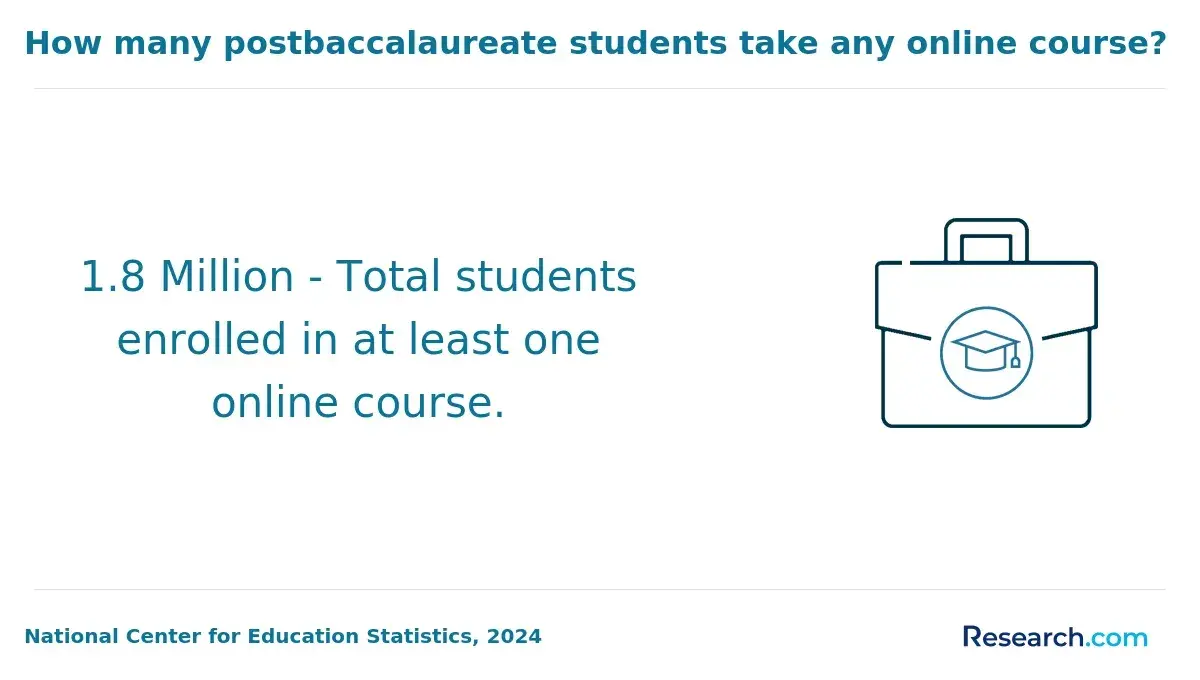
Many licensed agents aiming to shift into commercial brokerage face a critical timing and accessibility gap: balancing immediate income needs against the rigid schedules of traditional education. As reported by the National Center for Education Statistics in 2024, over 40% of online learners enroll primarily because of scheduling flexibility, a decisive factor for professionals juggling work, family, and education.
This rising demand reveals both the opportunity and challenge of finding accredited online real estate degrees that align explicitly with commercial brokerage careers-programs must deliver targeted expertise without sacrificing flexibility. This article examines degree options designed for career-aligned progression, guiding strategic choices to optimize both education and professional momentum.
Key Things You Should Know
- Online real estate degrees in 2026 show a 25% variance in time-to-license outcomes due to program accreditation differences, pressuring candidates balancing fiscal constraints and accelerated career entry.
- Employers increasingly favor candidates with integrated commercial brokerage experiential learning, with 62% of surveyed firms in 2024 prioritizing such hybrid credentials for advanced client acquisition roles.
- Cost analyses reveal median tuition for aligned programs exceeds non-specialized degrees by 18%, compelling professionals to weigh immediate debt against enhanced long-term brokerage market access.
What is an online real estate degree and how does it prepare you for commercial brokerage?
Online real estate degree programs for commercial brokerage provide essential technical skills that differentiate candidates in a competitive market, especially when paired with practical experience. Unlike short courses or entry-level licensing, these degrees offer a robust foundation in commercial property valuation, leasing, capital markets, and portfolio management. This comprehensive expertise is vital for brokers tasked with advising institutional clients and managing high-value transactions.
For instance, applying discounted cash flow models on industrial property acquisitions sets a graduate apart from peers without such analytical training. Students benefit when programs incorporate current market software and detailed case studies, increasing their aptitude for navigating multi-million-dollar commercial deals. However, completing an online degree alone does not guarantee immediate placement or earnings parity; initial broker incomes often lag the $56,869 average first-year salary for real estate bachelor's graduates reported by DegreeOutlook.
Key tradeoffs include balancing concurrent licensing requirements alongside degree work and managing early career variability in commissions. Selecting an online program with up-to-date curricula, recognized faculty, and active networking opportunities materially affects transition success into commercial brokerage roles. Familiarity with sector expectations and long-term investment return-such as the 11.0x tuition ROI over ten years-helps clarify this pathway's practical value.
Those exploring such opportunities might also consider related options, including an online finance degree, which offers complementary skill sets relevant to capital markets and investment analysis in commercial brokerage.
Choosing an online real estate degree carefully positions professionals to meet evolving employer demands but requires deliberate planning to navigate workforce realities effectively.
Which types of online real estate degrees best align with commercial brokerage careers?
Degrees aligned specifically with commercial real estate finance, property management, and commercial real estate law most accurately prepare candidates for brokerage roles focused on office, retail, industrial, and multifamily asset classes. Programs labeled as a Bachelor of Science or Bachelor of Business Administration with a commercial real estate emphasis provide practical skills tailored to employer expectations, including valuation, investment analysis, and market research. By contrast, degrees concentrated only on residential transactions or broad real estate principles often leave graduates underprepared for the technical complexity and capital markets knowledge essential in commercial brokerage.
The U.S. Bureau of Labor Statistics projects 3% growth for real estate brokers and sales agents from 2024 to 2034, with roughly 46,300 annual job openings. Working professionals pivoting into commercial brokerage should consider programs that integrate internship experiences and use commercial databases like CoStar or LoopNet to develop market analytics and regulatory compliance skills. These practical components reduce reliance on costly supplementary certifications and accelerate career progression.
For individuals balancing ongoing work commitments, flexible schedules and coursework that supports licensing requirements are vital. Evaluating online real estate degree programs for commercial brokerage careers requires recognizing that a curriculum with depth in finance, commercial law, and property management offers the clearest pathway to employer readiness. Additionally, professionals interested in operations within commercial real estate might explore the best MBA in operations management as a complementary credential.
How do online real estate programs compare with on-campus options for aspiring commercial brokers?
Online real estate degree programs for commercial brokerage offer accessibility but lack the immersive, market-specific experiences on-campus programs provide. Employers hiring commercial brokers prioritize candidates with proven negotiation skills and regional market familiarity-advantages typically gained through localized internships and direct mentorships available with on-campus study. This distinction impacts practical workforce readiness and subsequent earning potential.
Graduates of traditional programs benefit from structured engagements such as site visits and live case studies fostering crucial face-to-face networking with industry professionals. Online students must proactively supplement their education with local brokerage involvement to remain competitive. This gap in experiential learning can affect both employability and compensation leverage.
Brokers earn a median annual wage of $72,280, with top earners exceeding $166,730, highlighting how the depth of applied training influences career trajectory. Students targeting top-tier commercial brokerage roles or large metropolitan markets should carefully weigh these experiential factors against the logistical flexibility and affordability of online programs. For example, a candidate in Chicago can leverage on-campus internship pathways, whereas a professional in a smaller city relying on online education must engage local events and brokerage exposure to demonstrate practical competencies.
In some cases, combining online study with targeted, in-person industry immersion serves as a strategic hybrid approach to workforce readiness. Cost considerations may also lead prospective students to explore options such as a masters in construction management online, which shares some industry parallels.
What accreditation should online real estate programs have for commercial brokerage roles?
Accreditation directly influences the practical value of online real estate degrees in commercial brokerage, especially when pursuing roles that require verified industry knowledge and licensing. Degrees accredited only by unrecognized bodies often complicate job eligibility and interstate licensing, creating significant career roadblocks. Employers and licensing agencies expect credentials from programs sanctioned by regional entities recognized by the U.S. Department of Education or specialized agencies like the AACSB or ACBSP. Without this, candidates risk limited mobility and questionable program legitimacy.
Choosing recognized online real estate programs for commercial brokerage careers ensures curriculum relevance aligned to current market demands, including commercial financing, lease structuring, and property management regulations. These facets heavily impact employability, particularly in jurisdictions enforcing strict educational audits. Prospective students must weigh the tradeoff between convenience and program rigor: programs lacking solid accreditation often deliver lower long-term returns despite short-term flexibility.
Real-world workforce data supports accreditation's influence on outcomes. For instance, DegreeOutlook's comparison found typical graduates of accredited real estate programs produce an 11-fold tuition return within 10 years, confirming a substantial value gap connected with program quality.
Before enrollment, carefully verify accreditation status and its impact on professional licensure eligibility. Assess whether the curriculum will equip you for advancing in commercial brokerage or if it might cause friction in high-regulation states. For professionals eyeing healthcare-adjacent managerial roles, consider also pathways like a doctorate healthcare administration to diversify credentials.
What courses and skills do online real estate degrees typically include for commercial brokerage?
Commercial brokerage degrees positioned for online study focus intensively on the transactional complexity and portfolio management skills that employers demand. Candidates must master financial modeling essential for underwriting deals-such as evaluating cash flow variations between retail centers and office buildings-to provide sound investment advice. Core coursework integrates property management, investment analysis, commercial law, and the nuances of zoning regulations across different commercial property types.
Practical limitations arise from the remote format, notably reduced exposure to on-site inspections and physical property assessments. This compels students to seek supplementary internships or field experience to meet employer expectations for readiness. Soft skills like negotiation and client relationship management are reinforced through project-based simulations tailored to commercial deal dynamics, which is critical for sustaining long-term client engagement.
Tuition costs typically range from $500 to $610 per credit hour, often without out-of-state surcharges, offering a financially accessible route for working professionals. However, choosing a program demands scrutiny of curriculum rigor and practical relevance, as employers prioritize graduates who can immediately apply specialized legal, financial, and analytical competence in fast-paced markets.
- Financial modeling proficiency is non-negotiable for underwriting diverse lease structures.
- Zoning and land use expertise varies significantly by property type, requiring targeted study.
- Virtual learning limits hands-on experience; internships remain critical for comprehensive skill development.
What are the admission requirements and time to completion for online real estate degrees?
Online real estate degree programs often require a high school diploma or equivalent, with bachelor's applicants sometimes needing SAT/ACT scores. Transfer students must submit college transcripts reflecting a GPA generally above 2.5 on a 4.0 scale. Due to the field's reliance on finance and business skills, quantitative proficiency is usually expected. While personal statements and recommendation letters are occasionally requested, online formats tailored to working adults tend to minimize these requirements.
Completion time varies by degree type and enrollment status. Associate degrees generally require about two years full-time, while bachelor's programs range from three to four years. Accelerated bachelor's options-common among working professionals-can reduce this to near two years, provided students leverage transferable credits or maintain heavy course loads. Master's degrees typically span one to two years full-time, with part-time pathways extending up to three years.
Part-time enrollment, a practical choice for employed learners, frequently doubles or triples the typical timeframe due to course sequencing and workload constraints. Employers targeting deal-side roles like investment sales and capital markets prioritize candidates with degrees emphasizing finance or business aspects of real estate; a NAIOP 2023 survey confirms over 70% preference for such backgrounds. This preference directs students toward programs embedding rigorous finance coursework and applied learning.
To avoid prolonged study duration, students should strategically choose curricula focused on commercial real estate applications and clarify credit transfer policies early. Planning for full-time study or accelerated programs is essential to minimize educational downtime during career pivots or advancement.
How much do online real estate degrees cost and what financial aid is available?
Online real estate degrees cost between $2,000 and $15,000, largely determined by course content, accreditation, and inclusion of licensing preparation. Candidates must consider required pre-licensing hours, which range from 30 to 180 depending on state mandates-Texas, for instance, requires 180 commission-approved hours, increasing overall expense and duration.
Financial aid is limited: federal student loans and Pell Grants are often unavailable for certificate programs, while some community colleges offer subsidized pathways under $3,000. Employer tuition assistance can help brokers or property managers but rarely covers licensing exam fees or related costs. Beyond tuition, candidates face exam fees ($50-$150), licensing applications, and continuing education mandated to keep licenses active.
These ancillary costs are frequently overlooked in financial planning but can create significant budget gaps. For example, a California candidate might complete 135 hours online for around $7,000, supplementing costs with a state education grant and employer support. Conversely, in Texas, higher hour requirements push prices upward, necessitating more strategic budgeting during career transition.
Choosing programs aligned with state-specific requirements ensures the degree supports practical licensing eligibility-critical for employers who prioritize licensure over incomplete credentials. Evaluating these financial and regulatory tradeoffs upfront helps prospective students avoid sunk costs and streamlines paths toward commercial brokerage roles.
What are the licensing and certification requirements for commercial real estate brokers by state?
Gaining licensure as a commercial real estate broker demands navigating a state-dependent maze of prerequisites that often require holding a valid real estate salesperson license first. This initial step alone imposes a practical barrier: accumulating 1,000 to 3,000 hours-generally one to three years-of supervised real estate experience, which delays entry but ensures foundational exposure under a licensed broker's guidance. States like California and Texas impose rigorous pre-licensing coursework from 180 to 270 hours that cover contracts, finance, and property management before candidates face a broker exam overseen by the state real estate commission.
Exam content typically prioritizes contract law, ethics, and local commercial codes to reflect the high monetary stakes of commercial transactions. For instance, New York's 150-question exam incorporates both state and national law, demanding comprehensive knowledge and proof of qualifying experience, an administrative hurdle that limits how quickly one can progress. Employers consistently favor candidates who combine this regulatory compliance with verifiable transaction expertise.
Essential factors influencing employability and career trajectory include:
- Completion of demanding pre-licensing education and rigorous licensing exams
- Accumulated licensed experience hours that extend the timeline before independent brokering
- National certifications like the Certified Commercial Investment Member (CCIM), which require substantial transaction volume and coursework, adding real-world credibility
- Ongoing continuing education requirements-typically 18 to 30 hours every two to four years-to maintain competitiveness and legal currency
Given the complexity and duration, candidates must weigh the extended time and administrative investment against the higher barriers to entry and enhanced employer expectations. A critical workforce implication is the underrepresentation of certain racial and ethnic groups, with NAIOP reporting only a 19% enrollment rate in real estate programs among these cohorts, signaling persistent equity challenges within the licensing pipeline.
What salaries, commissions, and earning potential can commercial real estate brokers expect?
Commercial real estate brokers face a unique compensation structure where base salaries around $60,000 are supplemented substantially by performance-based commissions, often doubling annual earnings. Entry-level brokers typically see base pay between $45,000 and $55,000, with commissions adding 20-50% or more depending on deal flow and market context. For example, a broker managing leases or sales in high-value asset classes-such as office or industrial properties-in major urban centers can surpass $200,000 annually, but this requires navigating intense competition and complex regulatory environments.
Commission variability demands brokers maintain financial resilience, given unpredictable deal closings. A deal valued at $10 million might yield a 3-6% commission, yet negotiation skills and firm commission splits critically influence final take-home pay. This highlights the importance of strong networking and transaction management competencies.
Technological adaptation is increasingly decisive. According to DegreeOutlook's 2024 assessment, a 50% AI automation risk looms for broker roles, underscoring mastery of data analysis, AI tools, and digital market intelligence as essential for sustaining deal flow and competitive positioning. Brokers lacking tech proficiency risk diminished earnings and fewer opportunities.
- Urban markets offer higher commissions but demand superior skill sets and risk tolerance.
- Smaller markets provide steadier, albeit lower, income with less volatility.
- Continuous professional development aligned with evolving technology and market trends is critical for long-term viability.
How is the job outlook and long-term career path for commercial real estate brokers changing?
Commercial real estate brokerage increasingly demands a hybrid skill set that combines traditional transactional expertise with advanced competencies in data analysis, risk evaluation, and sustainability. Brokers without formal education in the field face a steeper learning curve and limited upward mobility, especially as firms prioritize candidates who can navigate multi-tenant leases and institutional investment deals with confidence.
A commercial real estate degree offers a structured foundation in finance, law, and urban economics-areas critical for evaluating complex deals and regulatory compliance. For career pivots, this educational path reduces onboarding friction and can accelerate influence in decision-making processes. However, sales performance remains a daily priority, requiring brokers to balance short-term targets against building a long-term portfolio aligned with strategic growth.
Career trajectories reflect this dynamic: data from Cornell SC Johnson College of Business show that over one-third of their commercial brokerage graduates achieve senior roles such as vice president or principal within 10-15 years. This trajectory relies heavily on leveraging networks and deep market knowledge acquired both during and after formal education.
Challenges persist around adapting to digital transaction platforms and evolving regulatory standards. Continuous learning post-degree is critical, as firms emphasize data-driven deal practices. Professionals lacking formal qualifications risk stagnation or exclusion amid industry consolidation and technological shifts.
Other Things You Should Know About Real Estate
Prior experience in real estate or related fields is not mandatory for enrollment, but programs with some foundational business or finance background yield better comprehension. Without any work history, students may struggle with the practical aspects of commercial brokerage, such as client interaction and market analysis, which are often integrated into coursework or internships. Candidates without experience should prioritize programs offering strong mentorship or practicum components to simulate on-the-job learning.
Online degrees typically offer fewer organic networking possibilities compared to on-campus programs, which can limit access to local market insiders and direct employer connections. Prospective commercial brokers should focus on programs with structured networking events, industry webinars, and active alumni networks, as these components significantly improve job placement and mentorship chances. Students unable to leverage such program features should expect to invest more effort externally to develop relationships essential for deal flow and referrals.
General real estate degrees provide useful foundational knowledge, but specialized commercial real estate courses offer targeted skills directly aligned with brokerage work such as property valuation, lease negotiation, and investment analysis. For those aiming specifically at commercial brokerage, prioritizing programs with commercial real estate specialization improves employer perception and practical application readiness. Without this focus, graduates face a disadvantage competing against candidates with more concentrated expertise on complex commercial transactions.
References
- Commercial Real Estate Career Advice - Martin Commercial https://martincommercial.com/commercial-real-estate-career-advice/
- How To Choose an Online Real Estate School | 360training https://www.360training.com/blog/how-to-choose-online-real-estate-school
- Online Master’s in Real Estate Degree Programs https://www.onlineeducation.com/business/masters-in-real-estate-programs
- Comprehensive Guide to Financial Aid for Real Estate Education: Scholarships, Grants, and Loans https://goldcoastschools.com/news/financial-aid-real-estate-education/
- Real Estate https://icieducation.com/courses/business/real-estate/
- Business Broker State Licensing Requirements Info | Business Brokerage Press https://businessbrokeragepress.com/industry-resources/state-licensing/
- Real Estate Job Outlook: Is Real Estate a Good Career Path? https://www.vaned.com/blog/real-estate-job-outlook
- Real Estate Degrees - What Matters (& What Doesn't) - Break Into CRE https://breakintocre.com/real-estate-degrees-what-matters-what-doesnt/
- Comprehensive Guide to Financial Aid for Real Estate School https://www.colibrirealestate.com/career-hub/blog/financial-aid-real-estate-school/
- How To Get a Real Estate License at No Cost With Keller Williams & KSCORE® - KW Outfront Magazine https://outfront.kw.com/training/get-real-estate-license/