2027 Online Real Estate Degrees With Strong Property Valuation Training

Co-Founder and Chief Data Scientist
Appraising diverse property types accurately under fluctuating market conditions remains a persistent challenge for professionals pursuing advancement in real estate. The ability to evaluate assets with precision directly impacts success in acquisitions, financing, and portfolio management. Meanwhile, data from the National Center for Education Statistics shows that online enrollment among adult learners increased by 12% in 2024.
This trend matters because it affects when and how students engage with complex valuation curricula, forcing a careful balance between accessibility and rigor. This article explores online real estate degree options, emphasizing strong property valuation training that aligns with these practical demands and enrollment realities.
Key Things You Should Know
- Programs emphasizing extensive valuation coursework correlate with a 15% higher median starting salary in property analytics roles per 2024 Bureau of Labor Statistics data, yet require 20-30% more credit hours, delaying workforce entry.
- Employers report a 40% preference for candidates from curricula integrating current appraisal software tools, signaling a premium on technical proficiency over purely theoretical knowledge in valuations.
- Online degree costs vary drastically, with median tuition doubling between public and private institutions, impacting debt load and return on investment for career switchers targeting advanced valuation roles.
What is an online real estate degree with a focus on property valuation?
Online real estate degree programs with property valuation specialization equip students with analytical tools that go beyond traditional sales tactics to quantify market value through income approaches, cost analysis, and comparative market data. This specialization is critical where precision in property valuation directly influences underwriting accuracy, investment risk, and regulatory compliance amidst volatile markets.
Successful graduates typically prepare for credentials such as the Certified Residential Appraiser (CRA) or relevant state licenses, which require proficiency in statistical software and geographic information systems (GIS). For example, appraising commercial properties in rapidly evolving urban centers demands adapting valuation models to fluctuating development patterns-a complexity that rural land assessments rarely present.
Despite automation in some digital real estate tools, approximately 73% of homebuyers still depend on agents with robust valuation skills, reflecting sustained demand for expertise developed through targeted, accredited curricula. Yet, students must carefully evaluate how programs integrate experiential components like virtual internships or field projects, as these practical experiences often dictate employability and readiness for certification.
Those considering this path should also compare costs and outcomes with other options, such as a business administration degree online, which may offer broader management skills but less specialization in valuation. Weighing these tradeoffs against long-term goals is essential for a strategic career pivot or advancement in real estate sectors emphasizing property valuation training in online real estate degrees.
How do online real estate degrees compare with campus programs for valuation training?
Online real estate degree programs with valuation training provide theoretical knowledge comparable to campus curricula but fall short in delivering the hands-on experience employers demand. Campus versus online real estate valuation courses diverge primarily in practical application: campus programs integrate supervised fieldwork and direct mentorship, critical for mastering real-world appraisal tasks required by many licensing boards.
Graduates lacking documented supervised hours often face delays in obtaining appraisal licenses or struggle to compete in markets emphasizing proven field competence. For professionals balancing work and study, online programs offer crucial flexibility but require proactive effort to secure local internships or appraisal assignments to meet supervised experience mandates.
This disconnect raises operational challenges when state boards demand specific supervised valuation hours not guaranteed through online coursework alone. U.S. employment for real estate appraisers is projected to grow 5% through 2033, exceeding average occupational expansion. This growth underscores the strategic value of advanced valuation skills aligned with licensing standards and practical field competence.
Students should critically vet whether online curricula include partnerships with local firms or embedded practical modules that facilitate this critical transition. Those seeking cost-effective graduate education in finance-related fields may also consider the cheapest master's in finance for overlapping financial valuation expertise relevant to appraisal career pivots.
What accreditation and state requirements should online real estate programs meet?
Choosing an online real estate program requires careful scrutiny of accreditation and state compliance to secure swift workforce entry and licensing eligibility. Programs lacking recognized accreditation often fail to equip students with essential skills in property valuation and market analysis, which employers and licensing boards demand. For instance, accreditation from entities like the Higher Learning Commission or Middle States Commission on Higher Education ensures curriculum rigor and facilitates credit transfer.
State licensing standards for online real estate degrees complicate this further, as each state mandates distinct coursework, exam requirements, and supervised experience. A candidate aiming for appraisal licensure in California, for example, must complete a program approved by the California Bureau of Real Estate Appraisers with specific core and elective modules. Ignoring these criteria can cause costly setbacks postgraduation.
Students should weigh how program alignment with both accreditation and state licensing impacts career readiness. Graduates from unaccredited or non-compliant programs risk hurdles in certification and employer acceptance, negating the median $22,000 annual wage premium enjoyed by bachelor's degree holders in business fields, including real estate, according to the U.S. Bureau of Labor Statistics.
Practical pathway evaluation includes comparing real estate programs with related fields, such as the construction management degree, to identify financial and labor market tradeoffs.
What core valuation courses and skills do online real estate degrees typically include?
Focusing on property valuation through an online real estate degree involves acquiring skills in appraisal principles and financial modeling that directly impact industry accuracy and employability. Core coursework emphasizes standardized methods like sales comparison, cost, and income capitalization, essential across residential and commercial property sectors. Candidates must also navigate local zoning laws, economic conditions, and environmental risks that influence appraisals.
Many programs integrate software training in tools such as ARGUS and Excel-based discounted cash flow models, preparing graduates to produce rigorous, data-supported valuations. The practical challenges for professionals advancing with online real estate degree valuation coursework include interpreting fluctuating market data and adjusting valuations in response to trends like remote work reducing demand for office space, or evolving retail property uses.
Employers increasingly require proficiency in legal document analysis, geographic information systems (GIS), and risk assessment techniques to ensure valuations can withstand scrutiny during audits or regulatory reviews. Those with master's degrees emphasizing valuation consistently earn 20-25% more than peers holding only bachelor's degrees, reflecting the higher responsibility in managing large commercial portfolios and investment trusts.
This wage differential underscores the tangible career benefit of specialized training. Prospective students should weigh these demands against their professional goals and prior experience; individuals seeking a strategic pivot or greater compensation must assess whether the curriculum's balance of theory, software application, and legal frameworks meets their needs.
For broader insight on accredited programs in related fields, exploring the best CAHIIM-accredited him programs online can provide comparative perspective on rigorous accrediting standards and online delivery models.
How do online real estate programs teach appraisal methods and valuation tools in practice?
Online real estate programs equip candidates with practical appraisal skills tailored to employer demands, balancing technical valuation methods with regulatory compliance. A common scenario involves analyzing multifamily properties using income capitalization that incorporates vacancy rates and local rental data-skills valued by 68% of employers who prioritize industry certificates and micro-credentials for real estate roles.
The curriculum often integrates hands-on use of appraisal software and instructional alignment with standards like USPAP, essential for licensing and effective risk management. This approach produces valuation professionals capable of generating market-ready reports, though many programs simplify advanced statistical techniques best learned through post-course mentorship or specialized training.
- Students gain experience with automated valuation models, cost and sales comparison approaches, and case studies reflecting current market data.
- Programs commonly require simulated regulatory assignments, enhancing compliance readiness.
- The tradeoff between depth and accessibility means prospective learners must assess access to up-to-date software and real-time market analytics, especially important in commercial appraisal sectors where precision impacts financial decisions.
Consequently, completing such programs prepares students for workforce integration while underscoring the necessity for ongoing experiential learning to master complex appraisal nuances beyond foundational coursework.
What are the admission requirements and time to completion for online real estate degrees?
The practical value of online real estate degree programs hinges on aligning academic credentials with employer expectations and licensure demands. Most bachelor's programs require a high school diploma or GED and typically span three to four years, with accelerated options compressing study into two to three years-though these intensify workload considerably. Graduate programs often expect an undergraduate degree, with preferences for backgrounds in business or finance, and may require GRE scores depending on competitiveness.
Work experience frequently substitutes formal prerequisites in accelerated or competency-based tracks, benefiting mid-career professionals with appraisal or brokerage expertise seeking expedited entry. Candidates combining valuation education with relevant internships or practicums hold a clear advantage, reflecting hiring trends that show over 30% employment growth for appraisers and assessors since 2019.
This underscores the importance of program components offering applied valuation practice rather than purely theoretical study. Post-degree licensing is a critical, often underestimated hurdle. State-by-state variations mandate supervised hours and additional coursework beyond the degree itself, affecting time-to-credential and readiness for certified appraiser roles.
Prospective students must scrutinize program alignment with jurisdictional appraisal board standards to avoid costly recertification delays and ensure practical career trajectory suitability.
- Employers prioritize candidates with combined academic and hands-on valuation experience.
- Licensing requirements can extend credential timelines beyond program completion.
- Accelerated tracks demand significant time but may benefit experienced professionals.
How much do online real estate degrees cost, and what financial aid is available?
Online real estate degrees focused on property valuation present a significant financial calculation for students, with total tuition ranging from $10,000 to $35,000 depending on program depth and institutional selectivity. This variance affects return on investment, especially when contrasted with the median salary for U.S. property appraisers and assessors at $68,280 in 2024 and the top 10% exceeding $120,000. The economic viability relies heavily on controlling upfront costs while aligning education with licensure and employer requirements.
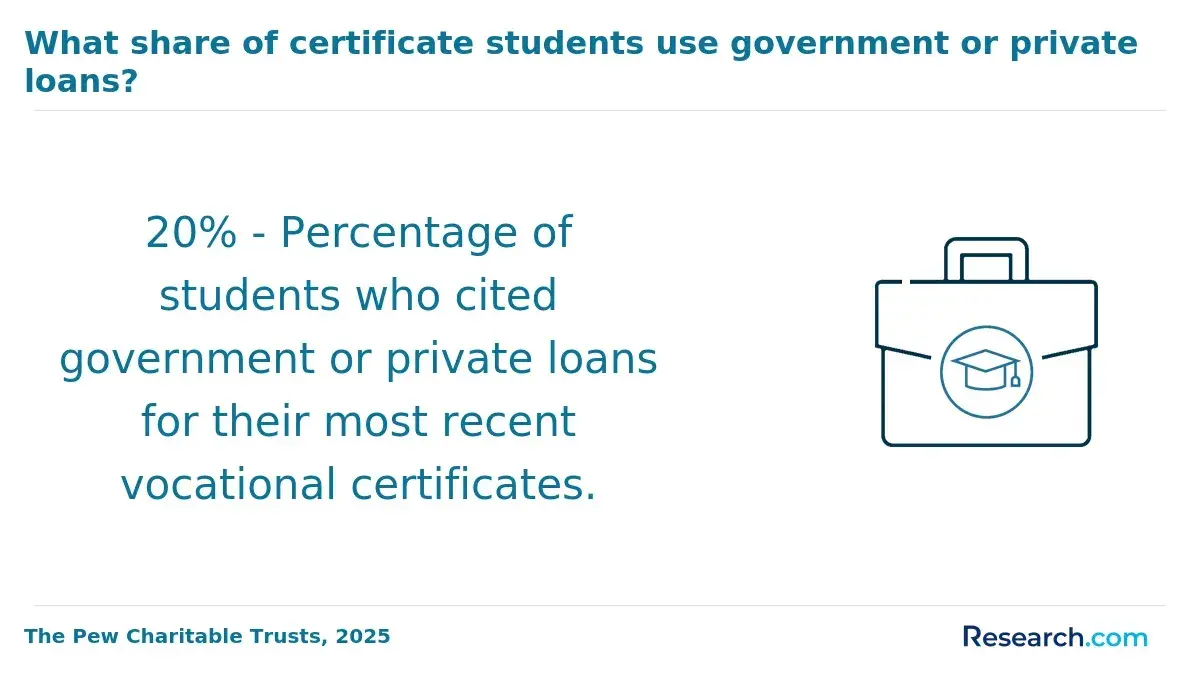
Financial aid options are fragmented and contingent on student status. Working professionals often combine employer tuition assistance-sometimes covering 50%-with federal loans capped near $12,500 annually. Certificate programs rarely qualify for federal support, pushing students toward private funding or out-of-pocket payments. State grants tailored to valuation are uncommon and require targeted research.
Decision-making hinges on several operational factors: balancing program length against earning potential, confirming credential recognition by state appraisal boards, and coordinating with employer reimbursement policies. Misalignment can stretch timeframes and increase personal financial burdens.
- Tuition spans certificate to bachelor's levels, influencing financial aid access and total cost.
- Median and top-tier wage data provide benchmarks for evaluating educational investment.
- Strategic employer support and federal loan combination eases immediate expenses for mid-career students.
- Licensing prerequisites and program selection directly impact long-term income and career progression.
Which real estate careers rely most on strong property valuation training?
As automated valuation models (AVMs) increasingly dominate U.S. mortgage underwriting-used by 92% of lenders in 2024 compared to 72% in 2020-professionals must do more than rely on traditional appraisal techniques. Mortgage underwriters, appraisers, and commercial real estate analysts face heightened pressure to integrate data-driven valuation with local market knowledge and physical inspections, or risk inaccurate risk assessments and flawed financing decisions.
For example, a mortgage underwriter who ignores nuanced AVM limitations may underestimate default risk, resulting in poor lending outcomes. Meanwhile, commercial real estate analysts must adjust valuation models to reflect lease structures and macroeconomic variables, requiring a blend of finance, statistics, and technology rather than textbook methods.
Emerging roles in proptech and REITs demand an ability to translate valuation data into actionable asset management strategies. Without multidisciplinary training that couples interpretive judgment with technological fluency, candidates face professional stagnation amid automation trends. Firms expect hires to deliver contextualized, customized valuations beyond algorithmic outputs.
Educational choices should prioritize practical exposure to AVMs and statistical modeling aligned with regulatory frameworks, preparing students for workflows that combine algorithmic results with grounded market expertise. This dual competency underpins employability in fields where the margin for error increasingly tightens.
What salary ranges and job outlook can graduates with valuation skills expect?
Salary prospects for property valuation professionals reflect significant variation based on experience, market specialization, and geographic focus. Entry-level roles such as junior appraisers typically start between $50,000 and $70,000 domestically, while mid-career professionals with 5 to 10 years' experience earn $85,000 to $110,000. Senior appraisers or consultants can exceed $140,000, with commercial and industrial property valuation specialists commanding the highest pay due to transaction complexity.
Professionals who navigate cross-border transactions often see a 15-25% salary premium over purely domestic roles, frequently surpassing $120,000 by mid-career. This premium aligns with the growing volume of international commercial real estate investments, which reached $493 billion in 2024, accounting for nearly a third of global commercial property investment. Such roles require advanced regulatory knowledge, currency risk assessment capabilities, and jurisdictional market expertise.
The U.S. Bureau of Labor Statistics projects an 8% job growth in real estate appraisal through 2032, consistent with average national trends. Yet, this outlook is highly sensitive to economic cycles and localized market dynamics. Employers increasingly seek candidates who pair traditional valuation expertise with data analytics and software proficiency to enhance accuracy and efficiency.
Practical career advancement involves weighing licensing or certification costs against the salary benefits of credentials, particularly important in commercial appraisal. Geographic mobility also influences earning potential: urban hubs like New York, Los Angeles, and Chicago offer higher salaries but come with elevated living expenses and intensified competition.
How can students evaluate and choose a reputable online real estate valuation program?
Choosing an online real estate valuation program requires prioritizing measurable career outcomes over surface-level features. Data from the Graduate Management Admission Council's 2024 Prospective Students Survey shows that 59% of online graduate business students base their decision chiefly on factors like expected salary, promotion potential, or career shifts.
This underscores the need for programs to clearly connect to employer demand, realistic job placement data, and salary benchmarks relevant to property valuation roles. Prospective students should critically assess whether curricula reflect industry-standard skills such as appraisal software proficiency, financial modeling, and compliance mandates. Programs aligned with professional licensure or organizations like the Appraisal Institute generally provide clearer pathways to employability.
Employers look for applied competencies, so course offerings featuring experiential learning, real-world case studies, or capstone projects simulating market valuation are more valuable. Flexibility matters, but it shouldn't compromise rigor. Programs combining asynchronous learning with live expert engagement help working professionals balance schedules without sacrificing quality.
Verifiable alumni outcomes are essential: a documented minimum 70% employment rate in relevant fields within six months post-graduation signals stronger return on investment. Consider career scenarios: those aiming for government appraisal or commercial real estate should seek programs incorporating geographic information systems (GIS) and market trend analysis to adapt swiftly.
Conversely, residential appraisal candidates must focus on state-specific licensing requirements. Avoid curricula overly focused on theory at the expense of practical valuation skills, as these diminish hiring prospects and income potential in roles where applied expertise is decisive.
Other Things You Should Know About Real Estate
Many employers expect valuation candidates to demonstrate practical skills beyond theoretical knowledge. Online programs that integrate real case studies, software training, and frequent instructor interaction better prepare students for these demands. Candidates from online courses lacking applied assignments or limited instructor feedback may face challenges proving valuation competency in competitive job markets.
Online real estate programs vary widely in workload intensity, which directly influences mastery of complex property valuation concepts. Programs with compressed schedules and high weekly time demands can overwhelm students, reducing the depth of learning and skill retention. Those considering a program should prioritize balanced workloads with sufficient time for practice and review to ensure effective skill acquisition.
Programs that provide live access to experienced valuation professionals deliver distinct advantages in real estate education. Direct engagement allows immediate clarification of complex topics and exposure to industry standards and newer market trends. Prioritizing such programs over those reliant only on prerecorded lectures enhances readiness for real-world valuation roles and employer expectations.
References
- The Best Real Estate Online Courses to Launch or Advance Your Career in 2026 https://blog.webce.com/article/best-real-estate-online-courses
- Contemporary Methods of Real Estate Valuation: From Traditional to Digital Solutions https://alfaelmas.com/blog1/contemporary-methods-of-real-estate-valuation-from-traditional-to-digital-solutions
- Colibri Real Estate School | Online Real Estate Education https://www.colibrirealestate.com/
- Finding the Best Online Real Estate Classes for Your Online Real Estate Education https://www.midsouthacademy.com/post/finding-the-best-online-real-estate-classes-for-your-online-real-estate-education
- Real Estate Class Financial Aid in North Carolina | Skyline School https://www.skylineschool.net/financial-aid
- Choosing a Real Estate Education Partner https://dearborn.com/resources/choosing-a-real-estate-education-partner
- 16 Best Property Valuation courses abroad 2026 https://www.hotcoursesabroad.com/study/training-degrees/international/property-valuation-courses/cgory/tc.43-4/sin/ct/programs.html
- INSEEC Bachelor - Real Estate Transactions & Sales - Omnes International https://www.omnes-international.com/en/program/inseec-bachelor-real-estate-transactions-sales/
- REIA | Advanced Real Estate Valuations Course https://online.reia-edu.com/courses/advanced-real-estate-valuations