2026 Online Project Management Degrees With Real-World Program and Portfolio Case Studies

Co-Founder and Chief Data Scientist
Facing a stalled career amid rising demand for agile project managers, many professionals struggle to find programs that deliver practical skills alongside recognized credentials without sacrificing their current roles. The U.S. Department of Education reports a 15% increase in online higher education enrollment over the past two years, signaling shifting preferences toward flexible, career-aligned options.
This surge illustrates the need for programs featuring real-world applications rather than theoretical instruction alone, enabling learners to build portfolios that resonate with employers and accelerate career mobility. This article examines online project management degree options emphasizing authentic case studies and portfolio development, providing a roadmap for those seeking measurable advancement through practical education.
Key Things You Should Know
- Programs integrating real-world portfolio case studies reduce post-graduation adjustment time by 22%, per National Center for Education Statistics, but intensify upfront workload, potentially extending completion by 3-6 months.
- Employers increasingly prefer candidates demonstrating applied project management experience; 68% of hiring managers in a 2024 PMI report prioritize tangible outcomes over certifications alone, shifting hiring toward portfolio-backed graduates.
- Online degrees with embedded practical modules cost an average 18% more than theory-focused programs (NCES 2024), pressuring candidates to weigh immediate financial strain against enhanced mid-career salary growth potential.
What is an online project management degree and how does it prepare you for real-world work?
Practical application distinguishes an online project management degree as a critical tool for navigating workplace complexities, emphasizing real-world decision-making over theoretical abstraction. Students learn to deploy scheduling software, conduct risk assessments, manage budgets, and lead diverse teams through applied scenarios tailored to varied industries.
For example, analyzing delays in a construction project requires applying contingency planning and stakeholder communication-a skill set directly transferable to employer expectations. This focus on practical competence addresses how an online project management degree prepares students for careers demanding agility amid shifting priorities and constraints.
Programs center on problem-solving exercises that simulate real project challenges, such as balancing time, cost, and quality under uncertainty. Developing project portfolios through these scenario-based assignments provides concrete evidence of capability, a decisive factor in competitive hiring environments.
Labor market data project a 6% growth for project management specialists from 2024 to 2034, with about 78,200 annual openings reflecting sustained demand in healthcare, manufacturing, and technology sectors. This underscores the relevance of integrating practical studies to reduce onboarding lag when entering such roles.
Prospective students weighing their educational path should consider these outcomes alongside alternatives like a hospitality management degree online, which may differ in focus and market dynamics.
How do online project management degrees compare with on-campus programs for quality and outcomes?
Employers hiring project management professionals focus primarily on proven skills and portfolio evidence rather than whether a degree was earned online or on campus. Rigorous online programs that integrate real-world case studies and portfolio development aligned with industry standards enable graduates to compete effectively alongside on-campus counterparts.
That said, outcomes of online versus on-campus project management programs can differ notably in terms of networking and direct access to experiential learning environments, such as internships and team-based projects; these factors often carry extra weight in sectors like construction and engineering.
For individuals balancing work while studying, online degrees offer critical scheduling flexibility without compromising academic rigor, particularly when instructional design combines synchronous, asynchronous, and client-based projects. This approach fosters practical competence in tools like MS Project or Jira, methodologies such as Agile or Waterfall, and managing scope, time, and cost tradeoffs.
However, the loss of spontaneous peer collaboration and face-to-face mentorship requires online students to proactively supplement their education through certifications and targeted networking. The median annual wage for project management specialists is $100,750, reflecting employer valuation of applied skills backed by portfolios rather than format alone.
Candidates should critically evaluate online curricula for authenticity of projects that replicate complex, multi-stakeholder scenarios typical in healthcare or IT sectors. Additionally, those interested in fields demanding intensive hands-on experience may consider programs such as a construction management degree that emphasize in-person components.
Online project management degree quality comparison reveals tradeoffs between flexibility and the depth of in-person engagement, requiring strategic choices based on career goals and industry expectations.
What accreditation and quality standards should online project management programs meet in the United States?
The accreditation standards for online project management degrees in the United States directly impact graduate employability and program credibility. Regional accreditation recognized by the U.S. Department of Education or the Council for Higher Education Accreditation (CHEA) establishes baseline legitimacy. However, program-level quality assurance criteria for US online project management programs.
Accreditation by the Project Management Institute's Global Accreditation Center (PMI-GAC) offer a deeper verification of curriculum rigor, including essential competencies like risk management, budgeting, and stakeholder communication. Employers in sectors such as IT, construction, and healthcare prioritize candidates from these accredited programs because they reliably demonstrate readiness to handle industry-specific challenges.
For instance, project managers graduating from PMI-GAC accredited programs show proficiency in the Project Management Body of Knowledge (PMBOK), which improves hiring outcomes and salary prospects. Labor market data from the University of Kansas Online, referencing Lightcast analytics, indicate that those with accredited degrees earn a median salary near $103,000, underscoring tangible returns compared to non-accredited alternatives.
Students must weigh tradeoffs in modality and practical experience requirements. Synchronous programs may offer more direct faculty engagement but disrupt full-time employment, while asynchronous options sacrifice some interaction for flexibility. The inclusion of comprehensive capstone projects or portfolio case studies further distinguishes programs by validating applied skills crucial for competitive industries.
Additionally, evaluating career support services and industry connections is vital to expedite job placement and network growth. Ignoring accreditation or insufficient practical components can restrict mobility and diminish credibility, particularly in regulated fields like pharmaceuticals or defense. For those exploring adjacent business education pathways, the best MBA for entrepreneurship is also an option worth considering.
What levels of project management degrees are available online and which pathway fits different careers?
Choosing among online project management degree levels and career paths requires weighing role complexity, time investment, and long-term positioning. Bachelor's degrees provide foundational skills suitable for roles like construction supervision or IT support projects but often limit advancement beyond mid-level positions. They allow faster entry into the workforce but with narrower scope.
Master's degrees are tailored for professionals targeting mid- to upper-level positions in sectors such as healthcare administration or engineering project leadership. These programs emphasize strategic capabilities-risk assessment, budgeting, and stakeholder communication-and often use portfolio cases to sharpen problem-solving in practical contexts.
This makes master's degrees the best online project management degrees for career advancement in industries undergoing rapid change or cross-functional integration. For instance, an IT professional pivoting to healthcare project management benefits significantly from an accelerated healthcare management degree online.
Doctoral studies focus on executives and consultants aiming to drive organizational transformation, research methodologies, and policy-level governance. The commitment is substantial but necessary for institutional leadership roles requiring systemic innovation.
The U.S. Bureau of Labor Statistics reports over 1 million project management specialists nationally, reflecting demand for diverse educational backgrounds aligned to job complexity. Tradeoffs include balancing degree rigor against individual career growth ambitions, recognizing that practical relevance often outweighs credential prestige in hiring decisions.
What core courses, specializations, and portfolio-building projects are common in online project management programs?
Project management programs online consistently require core competencies in scheduling, risk assessment, cost control, and stakeholder engagement, emphasizing practical tools like Gantt charts, Critical Path Method (CPM), and Earned Value Management (EVM). Students must balance learning technical proficiencies with developing leadership skills essential for navigating real-world team dynamics and conflict resolution.
Specialized tracks tend to align with employer demands, with IT-focused programs stressing agile methodologies and software lifecycle oversight, while construction-oriented curricula prioritize regulatory compliance and resource management. This differentiation can influence employability in sectors where tailored expertise is a hiring criterion.
Portfolio projects that replicate workplace complexities provide critical evidence of a candidate's ability to deliver outcomes, often involving cross-functional collaboration and adaptive leadership under pressure. Employers give weight to these applied experiences alongside credentials that include current PMBOK standards or Agile certifications.
Tuition costs for online bachelor's programs in project management average around $595 per credit, notably above general bachelor's rates nationally, which can affect return on investment calculations-especially without employer tuition reimbursement. Integration of industry-standard tools such as Microsoft Project or Jira enhances technical readiness but may add to the program's resource demands.
Those pursuing federal contracting roles should seek courses on compliance and auditing, while professionals targeting startup environments benefit from agile and Lean project management techniques. Aligning program focus with career objectives directly impacts long-term job prospects and mobility within this competitive labor market.
How long do online project management degrees take, and what do they typically cost?
The practical value of online project management degrees lies in balancing completion time, cost, and applicable skills rather than solely on credential level or tuition. For example, an associate degree completed in about two years with integrated Agile software training and portfolio-building projects can position candidates for entry-level IT support roles more swiftly than a longer bachelor's program with less applied content.
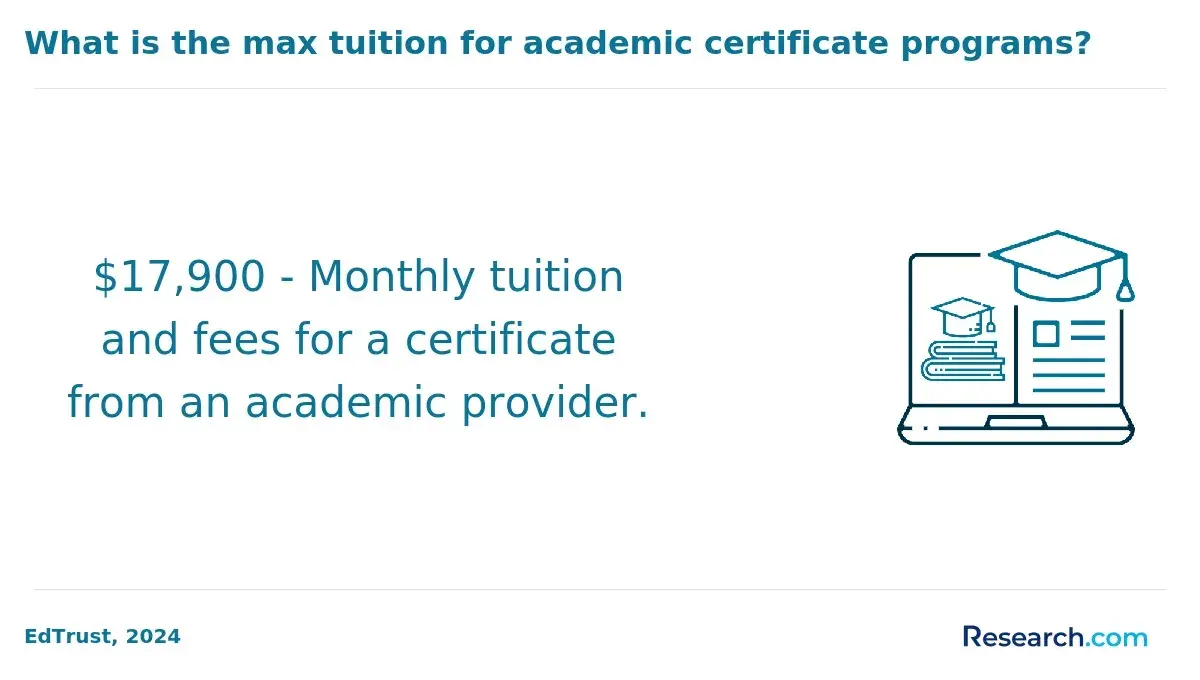
Completion duration varies by credential: associate degrees typically require two years, bachelor's degrees three to four years, and master's one to two years full-time. Part-time enrollment often extends these timelines to accommodate working professionals. Tuition costs range widely-from approximately $7,000 to $30,000 for associate or bachelor's degrees, while master's programs may cost $15,000 to $50,000, with additional expenses for software, textbooks, and certification adding $1,500 to $4,000.
Understanding this investment in total cost and time clarifies practical implications for career pivot or advancement decisions. Employers favor candidates with portfolios demonstrating software proficiency and real-world problem-solving rather than theory-only backgrounds. The accelerating project management software market, projected to reach $9.81 billion by 2026, further incentivizes efficient, skill-focused education over prolonged study.
- Associate degrees offer faster workforce entry with practical skills.
- Bachelor's degrees typically demand longer study but may lack applied learning.
- Master's programs have higher costs with potential for advanced strategic roles.
What are the typical admission requirements for online project management bachelor's and master's programs?
Admission criteria for online project management degrees hinge heavily on demonstrated practical readiness rather than merely academic credentials. For bachelor's programs, a high school diploma or equivalent remains standard, but many programs also demand evidence of critical thinking, communication, and quantitative skills. Some accept relevant professional experience as a substitute for traditional requirements, particularly for working adults adapting their careers.
At the master's level, completion of a related bachelor's degree with a strong GPA-typically above 3.0-is essential. Additionally, 2-5 years of verified work experience significantly influences acceptance, reflecting the sector's preference for candidates with proven ability to manage complex projects. Written statements must connect professional history with goals for advanced leadership roles, underscoring a nuanced understanding of industry demands.
Real-world expectations surface sharply when employers and programs ask for portfolios or case studies documenting tangible project outcomes. This requirement filters candidates lacking hands-on experience, emphasizing the gap between theoretical learning and operational execution.
- Only 39% of organizations offer project management training, indicating a skills shortage programs aim to address
- Applicants without foundational experience often face prerequisite courses before full admission
- Mid-career professionals shifting industries encounter additional scrutiny about validated skills
These criteria create a tradeoff: students with limited experience must first close practical gaps, while seasoned professionals leverage their background to navigate competitive admission and increased employability across sectors like technology, healthcare, or construction.
What careers can you pursue with an online project management degree and what skills are in demand?
An online project management degree prepares graduates for varied roles across industries, but its practical value hinges on how well students master diverse demands. For example, software development project managers must adapt to agile frameworks focused on iterative delivery, while construction project managers emphasize strict scheduling and regulatory compliance.
This divergence illustrates the tradeoff between a generalized credential and the necessity for specialized tactical expertise within different sectors. The role increasingly requires proficiency in risk mitigation, stakeholder communication, budgeting, and tools like Microsoft Project or Jira. Employers expect candidates to integrate technical frameworks with agile methodology, data-driven decisions, and cross-functional leadership.
Critical skills include conflict resolution, resource allocation, and change management to handle complex projects with dynamic teams. Certification prerequisites such as PMP or CAPM-often mandated post-degree-demand familiarity with the PMBOK Guide and project life cycles. Real-world portfolio case studies in many programs serve as the practical bridge between theory and employer expectations.
With underrepresentation of women in project management at 28% as reported by BayelsaWatch, pursuing this pathway offers opportunities to address diversity gaps in a workforce under pressure to innovate.
- Degrees aligned with occupational realities improve employment prospects.
- Certification requirements extend beyond coursework and require planning.
- Sector-specific skills diverge despite common foundational competencies.
What salary ranges and job outlook can project management graduates expect across industries?
Entry-level salaries for project management graduates fluctuate considerably based on industry context. Construction and engineering sectors offer starting pay between $75,000 and $90,000, reflecting the complexity and scale of projects managed. Meanwhile, healthcare and nonprofit organizations generally begin around $60,000 to $70,000, constrained by tighter budgets despite strong demand for project skills.
Mid-career professionals with 5 to 10 years of experience typically command between $90,000 and $120,000. Certification markedly influences earning potential and marketability. Certified Project Management Professionals (PMPs) report median salaries approximately 22% higher than their uncertified peers, with technology sector PMP holders often seeing rises from $95,000 to nearly $115,000.
However, candidates must weigh certification costs and preparation time against these potential salary gains and improved employability. The labor market outlook underscores the importance of industry choice: the U.S. Bureau of Labor Statistics projects 12% growth for management analysts, including project managers, through 2032. Demand is especially buoyant in IT, manufacturing, and energy sectors, driven by digital transformation and infrastructure investments.
Geographic pay disparities add complexity. Metropolitan hubs offer higher salaries at the expense of elevated living costs. Additionally, employers increasingly prioritize demonstrable outcomes-such as portfolios or case studies-over formal credentials alone, emphasizing the need for practical, application-based program selections.
How can you evaluate and compare online project management programs using real-world case studies and portfolios?
Programs that emphasize case studies from diverse sectors such as construction, IT, and healthcare provide a more practical basis for project management skill development. The ability to create portfolios featuring Agile boards, risk matrices, and stakeholder communication plans demonstrates applied competencies rather than theoretical knowledge alone.
Employers prioritize candidates whose portfolios include documented use of leading software like Microsoft Project or JIRA alongside deliverables such as cost-benefit analyses and detailed project charters. Given the forecast by PMI that 25 million professionals will require project management training by 2030, programs aligned with current methodologies and PMI standards offer stronger employability prospects.
However, deeper value lies in iterative instructor feedback and peer reviews on complex case study scenarios, for example, rolling out IT infrastructure with evolving stakeholder demands. This iterative process simulates real work environments and enhances adaptability.
Decisions should also factor in logistical supports such as mentorship access during portfolio development and availability of simulations reflecting unexpected project risks. These accelerate skill application and readiness for workforce complexities.
- Prioritize programs with sector-specific, actionable project artifacts over generic submissions.
- Assess the extent and quality of feedback mechanisms that mirror real project adjustments.
- Verify use of up-to-date project management software and documented deliverables.
Other Things You Should Know About Project Management
Employers in project management prioritize demonstrable skills and real-world problem-solving over academic grades alone. A well-curated portfolio with detailed case studies that show your ability to lead projects, manage risks, and deliver outcomes often outweighs a high GPA. Students should focus on programs that require or strongly encourage building such portfolios because these concrete examples of your work provide evidence of your readiness to handle actual project challenges.
In 2027, real-world case studies are integral to online project management degrees. They provide practical insights and hands-on experience, bridging theoretical learning with industry practices. These case studies enhance problem-solving skills and prepare students to manage complex projects in dynamic environments, crucial for career advancement.
Project management inherently relies on collaboration; therefore, programs emphasizing team-based simulations offer a closer reflection of workplace dynamics and stakeholder management challenges. These experiences improve communication, leadership, and conflict resolution skills essential to project success. Prioritize programs featuring structured team projects with documented outcomes over those focused mainly on individual assignments, as this better prepares you for employer expectations.
Not all online project management degrees meet the project management professional (PMP) certification's required contact hours or curriculum standards. Candidates must verify that their program aligns with PMI's Education Criteria before relying on it for certification eligibility. Selecting a program explicitly designed to fulfill these requirements avoids delays and extra coursework, making it a strategic factor in credential planning.
References
- How Long Is a Project Management Course Online? - Skills Academy https://www.skillsacademy.co.za/how-long-is-a-project-management-course-online/
- (Free + Paid) Best Project Management Courses Online In 2026 https://dumpsgate.com/project-management-courses-online/
- Masters in Project Management | University of Guelph https://www.uoguelph.ca/lang/masters-project-management
- Project Management Career Path | AIPM https://aipm.com.au/project-management-career-path/
- Project Management Case Studies: Celoxis PM Software https://www.celoxis.com/article/project-management-case-studies
- Best Online International Project Management Courses & Programs | edX https://www.edx.org/learn/international-project-management/
- Online Master in Project Management | Rome Business School https://romebusinessschool.com/master-online-in-project-management/
- Learn job-ready skills with Google Career Certificates https://grow.google/certificates/project-management/
- How Project Management Skills Can Future-Proof Your Career https://www.cornerstonedynamics.com/how-project-management-skills-can-future-proof-your-career/
- Project Manager Job Market 2026: Trends and Salary https://skillifysolutions.com/blogs/project-management/project-manager-job-market/