2026 Best Online Master's in Project Management for Strategic Delivery Leadership

Co-Founder and Chief Data Scientist
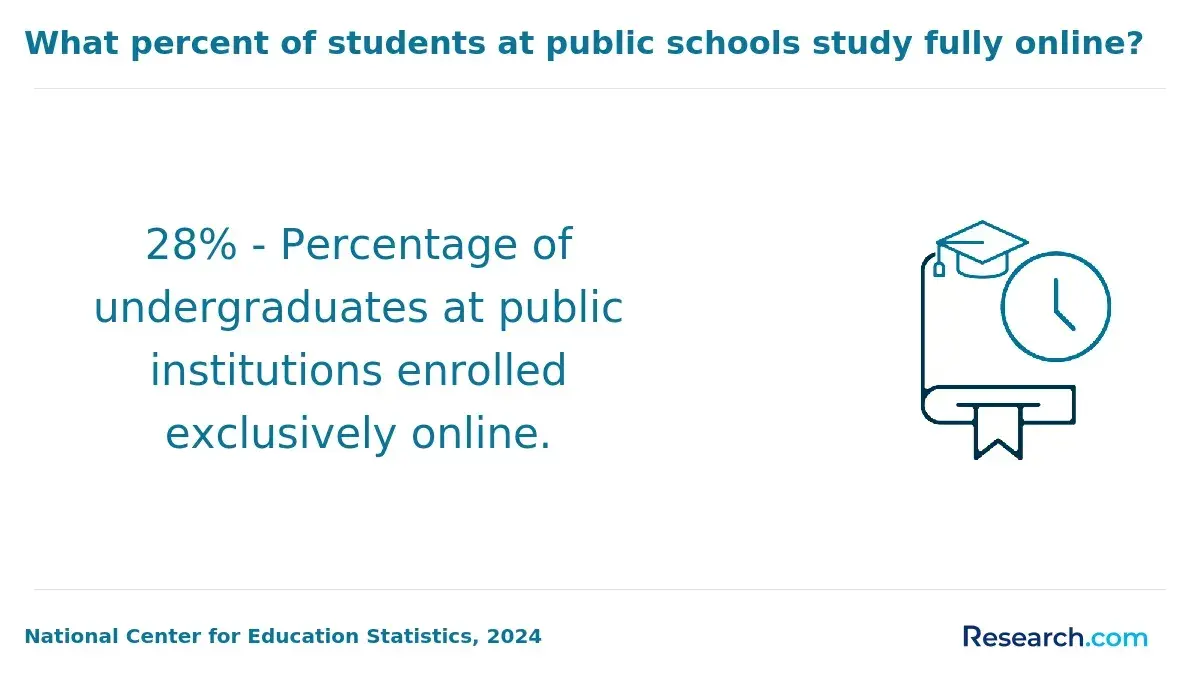
Facing intense pressure to lead complex initiatives while juggling unpredictable schedules, many mid-career professionals in project management struggle to find graduate programs that match their time constraints without sacrificing rigor. According to the National Center for Education Statistics, online master's enrollment grew by over 15% from 2022 to 2024, revealing a clear shift toward flexible, remote learning that accommodates working adults.
This trend reflects employers' increasing demand for candidates with advanced strategic delivery skills who can quickly adapt without career interruption. This article assesses the top online master's programs designed specifically for those targeting leadership roles in strategic delivery, offering a detailed comparison to aid informed enrollment decisions.
Key Things You Should Know
- Employers increasingly prioritize candidates with certifications over master's degrees in project management roles, as reported by PMI's 2024 Talent Gap Analysis; this tradeoff challenges whether an MS degree yields superior ROI versus targeted credentials.
- The US Bureau of Labor Statistics projects 12% growth in project management jobs by 2032, but employers favor strategic delivery leadership experience over academic credentials, pressuring candidates to balance work progression against degree completion timelines.
- Median tuition for online master's in project management programs rose 8% in 2023 according to NCES, complicating access for mid-career professionals who must evaluate cost against delayed salary gains during degree pursuit.
What is an online master's in project management for strategic delivery leadership and who is it best for?
Strategic delivery leadership requires project managers to operate beyond conventional task coordination, focusing instead on aligning initiatives with broad organizational goals and managing risk in complex environments. Online master's in project management for strategic delivery leadership programs cater primarily to mid- and senior-level professionals who seek to develop leadership skills that propel enterprise-wide transformation rather than just improving routine project execution.
These programs typically serve the best candidates for strategic delivery leadership project management degrees-those with existing project management experience needing a shift in mindset and competencies toward portfolio oversight, agile methodologies, and stakeholder influence across industries like technology, healthcare, and financial services.
Consider a healthcare project manager tasked with upgrading compliance systems. The challenge lies not only in coordinating timelines but in navigating regulatory complexities and cross-department collaboration, which demands training focused on strategic rather than operational delivery.
Such real-world scenarios are embedded in coursework, reinforcing leadership frameworks that employers rank highly for measurable impact in budget adherence and risk reduction. Online formats offer flexibility but require candidates to balance heavy workloads and practical application with professional responsibilities. Those new to project environments may find this approach demanding.
Employment outcomes reflect this specialization; for example, New York University graduates from project management master's programs report median earnings of $221,872, the highest among online hybrid options, illustrating the market premium for strategic delivery expertise. For prospective students weighing whether an advanced degree fits their goals and context, the question is a project management degree worth it invites consideration of these tradeoffs and expectations.
How do online project management master's degrees compare with on-campus programs for learning and career impact?
Deciding between online project management master's programs vs on-campus learning outcomes for strategic leadership depends on contextual workforce needs and individual circumstances. Online programs often cost about half as much annually-around $11,000 compared to $22,000 for on-campus equivalents-making them financially attractive for mid-career professionals minimizing debt while aiming for leadership roles.
Online formats leverage digital collaboration tools that mirror distributed team environments typical in industries such as IT and construction. However, sectors like defense contracting still privilege in-person networking and hands-on labs to build trust and nuanced stakeholder engagement. Career impact aligns more closely with program accreditation, curriculum rigor, and the alignment with certifications such as PMP and PgMP than delivery mode.
Employers prioritize proven strategic delivery skills and documented outcomes over physical classroom presence. Challenges in self-discipline and practical experience in online study can be offset by programs that include live sessions, capstone projects, and mentorship tailored for working professionals balancing study and employment. Real-world hiring data validate that candidates with online project management master's degrees in the US hold competitive footing when supported by relevant certifications and applied experience.
For professionals weighing career advancement opportunities for online vs traditional project management master's degrees in the US, maintaining income while upgrading skills often tips the balance towards online options. For those exploring related fields, comprehensive comparisons of finance degrees can provide further insight into cost-effective, accelerated credentials vital for career pivots.
Which online master's in project management programs are most reputable and how should you evaluate rankings?
Top online master's in project management programs must deliver measurable career returns, not just reputation. USC and Georgetown University illustrate this through median salaries of $192,109 and $175,402 respectively, according to OnlineU's 2026 earnings data. Such figures demonstrate consistent placement in senior strategic roles, including portfolio and program managers, where graduates apply advanced leadership skills tied to industry demand instead of relying only on generic rankings.
Evaluating rankings of online master's in project management degrees requires triangulating data from federal employment statistics, accreditation agencies, and sector-specific reports to confirm long-term employability and upward mobility. For example, USC graduates often lead technology firms handling complex project portfolios, while Georgetown alumni typically enter government or consulting sectors emphasizing risk management.
This distinction matters when considering a program's relevance to your career trajectory. Choose programs that balance practical application and specialization. Curricula emphasizing agile methodologies, strategic decision-making, and stakeholder engagement better reflect workplace realities compared to condensed formats that may expedite completion but limit depth.
Confirm that salary progression and senior role accessibility align with your target sector. Prospective students should also consider how project management credentials integrate into broader business contexts, as seen in complementary degrees like an online BA business administration, which may enhance strategic versatility.
What accreditation and quality standards should an online project management master's program meet?
Accreditation from recognized bodies such as the Accreditation Council for Business Schools and Programs (ACBSP) or the Project Management Institute (PMI) Global Accreditation Center is non-negotiable for a credible online project management master's program accreditation standards. Without this, graduates face diminished employability due to curricula that may not meet industry benchmarks for competencies across sectors like construction, IT, or healthcare. Employers specifically seek accredited credentials because only those programs reliably deliver risk management, resource allocation, and strategic delivery skills aligned with workforce needs.
Effective programs must incorporate quality criteria for strategic delivery leadership programs, including comprehensive coverage of the PMI Talent Triangle: technical project management, strategic business management, and leadership, reinforced through practical case studies or simulations. Methodologies such as Agile, Lean, and Six Sigma frameworks should be embedded to prevent graduates' skills from becoming obsolete in fast-evolving fields like technology or pharmaceuticals.
Beyond curriculum content, measurable outcomes like certificate-eligible credits for the Project Management Professional (PMP) exam are critical. Programs that facilitate internships or mentorships significantly improve employment shifts or promotions. For example, Rome Business School's graduates show an average 34% salary increase one year post-completion, illustrating the tangible impact of program quality on career trajectory. Students evaluating options should also consider the utility of an accredited online masters degree in human resource management as a benchmark for how accreditation affects career mobility.
Failing to prioritize accreditation or current curricula means additional time and expense post-graduation to secure necessary credentials or adapt to new methodologies, delaying strategic delivery leadership opportunities. Prospective students must weigh these tradeoffs carefully, recognizing that prioritizing convenience or cost over rigorous standards risks long-term setbacks in career pivots.
What admission requirements and prior experience do online project management master's programs typically expect?
Admission to online project management master's programs typically requires a completed bachelor's degree with a minimum GPA near 3.0, though relevant professional experience can sometimes offset lower academic scores. Employers and programs often expect two to three years of project-related work, ensuring candidates can immediately link coursework to workplace realities. For example, a mid-career healthcare professional applying for such a degree must demonstrate both project leadership and domain-specific knowledge to stand out in competitive cohorts.
Standardized test submissions, such as the GRE or GMAT, are less uniformly required, often waived for experienced professionals or those with prior graduate credits. Essential application components include carefully crafted statements of purpose emphasizing strategic project delivery improvements and two to three recommendation letters from supervisors or mentors confirming leadership capabilities.
Prerequisite coursework-commonly in business fundamentals, statistics, or introductory project management-may be mandated, particularly if the applicant's undergraduate degree is outside business or technical fields. This ensures learners possess the foundational skills to engage with advanced concepts efficiently.
Tuition costs vary widely, from approximately $11,529 at Sam Houston State University to $95,697 at Boston University, reflecting differing program selectivity and resources. Candidates must balance this financial range against their professional goals and employer tuition benefits, considering potential return on investment and long-term career implications.
What courses and specializations are common in online project management programs focused on strategic delivery?
Strategic delivery in project management demands more than technical knowledge; it requires mastering leadership, risk mitigation, and financial control amid shifting scopes and strict budget constraints, especially in volatile industries like healthcare and technology. Candidates proficient in financial modeling and resource allocation can pivot swiftly as project parameters evolve, a capability essential for maintaining organizational agility.
Specializations such as supply chain management, IT project delivery, and change management enable professionals to confront distinct regulatory, operational, or innovation challenges prevalent in sectors like pharmaceuticals or software development. These focused tracks are critical when virtual leadership and stakeholder communication across time zones are becoming normative workplace expectations.
Quantitative rigor is increasingly nonnegotiable. Skills in earned value management and data-driven performance metrics are not optional but expected by employers aiming to forecast and control project risks proactively. This distinct emphasis differentiates candidates who can demonstrate measurable project impact from those with theoretical knowledge alone.
Flexibility in program pacing and cohort collaboration emerges as a practical necessity for working professionals balancing full-time roles and complex project responsibilities. Incorporating emerging technologies such as AI-based analytics into curriculum allows students to maintain strategic relevance as organizations integrate digital transformation initiatives.
Programs with strong completion outcomes-like Georgetown University's online project management master's program with a 94% graduation rate-reflect deliberate design aligning practical leadership training with technical expertise, a combination that significantly affects long-term career resilience.
How long do online project management master's programs take and what do they cost to complete?
Choosing an online master's program in project management involves balancing the program duration, tuition costs, and career disruption risks. Full-time tracks typically take 18 to 24 months, while part-time pathways extend beyond 30 months, directly affecting both upfront financial outlay and time before workforce reentry. For instance, an IT project manager eyeing senior roles may face a $40,000 tuition cost over two years, risking lost salary growth during study. Shorter accelerated options cut time but amplify workload, threatening job performance if not managed carefully.
Tuition generally ranges from $20,000 to $45,000 based on credit requirements and institutional reputation, with more prestigious programs demanding higher investment. However, longer enrollment periods introduce indirect costs such as deferred career progression and personal opportunity loss.
Employers increasingly expect graduates to combine certifications with strategic leadership capabilities. OnlineU data indicates median salaries for graduates from competitive programs fall between $103,843 and $135,798, suggesting significant return on investment aligned with advanced, technical, and leadership roles.
Prospective students should critically assess their ability to maintain work-study balance, consider program intensity against professional demands, and factor indirect costs when selecting a program to ensure strategic timing for salary advancement and career pivot.
What careers and leadership roles can a master's in project management prepare you for?
Advanced project management education equips professionals for leadership roles that demand nuanced coordination of complex initiatives and strategic resource deployment. Positions like program manager within healthcare IT illustrate this well, where overseeing software integrations across multiple hospitals requires balancing cross-department collaboration alongside strict regulatory compliance. These real-world responsibilities highlight the necessity of mastering multifaceted stakeholder communication and risk mitigation under regulatory and operational pressures.
Employers prioritize candidates who can not only execute project tasks but also integrate outcomes with overarching business objectives. Roles such as operations manager or change management consultant demand analytical skills to translate project data into actionable strategy support, frequently under demanding time and budget constraints. Workforce projections from the U.S. Bureau of Labor Statistics indicate a 12% growth in project management roles through 2032, pointing to sustained demand but also increasing competition seeking credentials that demonstrate both technical and strategic aptitude.
Programs like Penn State World Campus' 30-credit Master of Project Management, offered fully online and asynchronously, accommodate professionals maintaining full-time employment while pursuing advanced credentials. This structure addresses common barriers such as schedule inflexibility but requires high self-discipline to complete rigorous coursework without on-campus engagement.
What salary ranges and advancement potential can graduates of project management master's programs expect?
Advanced degrees in project management typically translate to a 20% salary premium over bachelor's holders, yet real earnings differ sharply by industry and region. For instance, a graduate starting as a project portfolio leader in Silicon Valley may earn around $120,000, whereas a healthcare project director in a smaller city might start near $95,000. These disparities underscore how geographic location and sector influence compensation more heavily than credentials alone.
Career progression depends less on technical execution and more on demonstrating strategic leadership and cross-functional influence. Employers prioritize candidates who convert complex project frameworks into measurable business outcomes, which master's programs aim to develop. However, these programs serve as accelerators rather than substitutes for practical experience managing high-stakes projects. Those combining a master's degree with certifications like PMP or PgMP see faster salary growth and promotion rates, reflecting demand for credible proof of both knowledge and leadership.
Cost-to-benefit considerations are critical; for example, the International Online Master in Project Management from Rome Business School costs €9,400 but opens pathways to global firms such as Maserati, Celine, and Accenture, illustrating international mobility potential. Still, students must evaluate if the financial and time investment aligns with their career timing and access to relevant roles.
Strategic factors to optimize salary and career elevation include:
- Focusing on industries with rapid project cycles and significant capital investment, like construction and technology.
- Building networks within multinational organizations to leverage global opportunities.
- Developing hybrid expertise in financial management and strategic communication to advance beyond operational roles.
How do professional certifications like PMP or Agile relate to an online project management master's degree?
Holding an online project management master's degree and certifications such as PMP or Agile serve distinct yet complementary workforce functions. A master's degree provides broad strategic frameworks and leadership skills required for senior roles, while certifications validate hands-on mastery of specific methodologies essential for daily operational success.
Consider a construction project manager: an online master's equips them to lead complex developments, whereas a PMP certification verifies their ability to manage schedules, risks, and resources under pressure. In healthcare, Agile credentials support iterative improvements in care delivery amid rapidly shifting clinical priorities. Technology firms typically expect both the analytical insight from graduate study and current Agile practices to manage software projects effectively.
The cost and time investment between these pathways differ substantially. Accredited master's programs average $20,500 annually, including $12,596 for public in-state and $28,017 for private schools. By contrast, certifications are faster and less expensive but narrower in scope. Prospective candidates must balance immediate operational needs against long-term strategic leadership goals when deciding which credential or combination to pursue.
Integrating certifications with a master's enhances appeal by meeting employer preferences for both technical proficiency and strategic vision. This dual pathway mitigates hiring biases favoring candidates who demonstrate documented technical competence alongside advanced academic training.
Other Things You Should Know About Project Management
Online programs vary significantly in pacing and synchronous requirements. Programs with asynchronous coursework and flexible deadlines better accommodate professionals working full-time, allowing critical project leadership skills to be applied directly and immediately. Intensive cohort-based formats, while potentially beneficial for networking, can create scheduling conflicts and increase stress, which may affect learning outcomes and work performance.
An online master's degree alone does not secure leadership roles; employers expect demonstrated practical experience and strong soft skills alongside academic credentials. To advance into strategic delivery leadership, apply program learnings through active roles or internships that highlight your ability to manage complex projects. Prioritize programs offering real-world project simulations or capstone projects that can serve as proof points in job applications and interviews.
Networking is a critical factor in advancing to leadership positions in project management, as many opportunities arise through professional connections. Some online programs facilitate robust virtual networking through cohort models, discussion platforms, and live sessions, which can partially substitute for in-person networks. Evaluate programs on the quality of these interactive elements and alumni engagement to ensure they align with your goal of building influential industry relationships.
References
- Top 5 online courses for Project Managers https://zoetalentsolutions.com/top-5-online-courses-for-project-managers/
- Online Master of Science in Management: Project Management https://www.umgc.edu/online-degrees/masters/project-management
- Getting a master’s degree in project management: Should you do it? https://blog.planview.com/getting-a-masters-degree-in-project-management/
- How to Pick the Best Project Management Training https://projectmanagementacademy.net/resources/blog/how-to-pick-the-best-project-management-training/
- What Jobs Can You Get with a Project Management Diploma? - MANCOSA https://www.mancosa.co.za/blog/what-jobs-can-you-get-with-a-project-management-diploma/
- Project and Program Management Online Master's Degree https://www.brandeis.edu/online/academics/masters-degrees/project-program-management/index.html
- Is a Master’s Degree in Project Management Really Worth It? | CSU Global https://csuglobal.edu/blog/is-a-masters-degree-in-project-management-worth-it
- Graduate Project Manager - Career Advice in Australia | SEEK Grad (formerly GradConnection) https://au.gradconnection.com/career-advice/role/graduate-project-manager/
- How to become a Project Manager | Postgraduate Search https://www.postgraduatesearch.com/advice/course-advice/how-to-become-a-project-manager/ap-122357/
- 9 Best Project Management Courses in 2026 — Class Central https://www.classcentral.com/report/best-project-management-courses/