2026 Online Project Management Degrees With Long-Term Career Stability in Delivery Work

Co-Founder and Chief Data Scientist
Balancing full-time work with advanced training challenges many aspiring project management professionals aiming for stable, growth-oriented roles in delivery work. With 59% of adult learners preferring part-time or fully online formats according to the National Center for Education Statistics, flexibility is no longer optional but essential. This shift reflects broader workforce demands for accessible education that accommodates ongoing employment without sacrificing depth or accreditation.
Yet, selecting a viable online program hinges on understanding its impact on long-term career stability and employer recognition, often overlooked in enrollment decisions. This article evaluates online project management degrees by their practical value, career resilience, and delivery-focused outcomes to guide strategic education choices.
Key Things You Should Know
- Despite 15% salary growth projections for project management roles by 2030 from the U.S. Bureau of Labor Statistics, degree durations and costs average 2-3 years and $20,000+, delaying ROI compared to certification-only paths.
- Employer surveys from PMI's 2024 Workforce Report reveal a 40% higher preference for candidates with degree-level expertise in complex delivery environments, especially in sectors undergoing digital transformation.
- Regional disparities in program accreditation and industry alignment increase hiring friction, making institution selection critical to minimize retraining risk in rapidly evolving delivery frameworks.
What is an online project management degree and how does it prepare you for delivery-focused roles?
An online project management degree benefits for delivery roles by offering proficiency in structured methodologies such as Agile and PMI standards, which are essential for aligning project goals with resource allocation and risk control. This preparation is vital in industries like IT and healthcare, where coordinating timelines, budgets, and stakeholder communication directly affects on-time delivery and quality.
For example, delivery managers in technology firms must rapidly adjust plans based on evolving development cycles, a skill developed through simulation-based online learning. The curriculum frequently incorporates training on platforms like Microsoft Project and Jira, emphasizing not just technical aptitude but also soft skills such as conflict resolution and adaptive decision-making under pressure.
These competencies reflect employer expectations for practical command of delivery tools coupled with leadership capabilities. The job market for such roles remains stable yet mature. In 2026, over 281,700 active U.S. project management job postings with a median salary of $108,000 show solid demand, though a modest five-year growth projection of 0.9% signals limited upward mobility beyond consistent execution roles.
Flexibility is an advantage of the online format, enabling working professionals to maintain employment while refining skills integral to delivery-focused positions. However, time management and sustained engagement remain significant challenges affecting program completion and post-degree outcomes. Those evaluating this pathway alongside other options, such as pursuing an MBA healthcare management, should assess their career goals carefully and operational needs.
How do online project management degrees compare with campus programs for quality and employer respect?
In assessing online project management degrees versus campus programs quality, employer respect hinges on demonstrated practical skills rather than the format of learning. Industries like IT and construction increasingly treat online credentials as equivalent, provided graduates exhibit applied project delivery experience and hold recognized certifications such as PMP or CAPM.
However, sectors reliant on close-knit networks or federal contracts often still favor campus-based education for its inherent face-to-face mentorship and organic networking advantages. Employers' growing talent demands-reflected by the projected increase from 40 million to 65 million project management roles worldwide by 2035-create openings for candidates from varied educational backgrounds.
This makes practical experience and certification alignment with standards like those from PMI essential for online graduates to gain genuine credibility. Students pursuing online programs must proactively secure internships or real-world projects to offset limited physical access to industry networks. When choosing programs, the emphasis should be on curriculum coherence with PMI guidelines, availability of practical simulations, collaborative platforms, and faculty expertise rather than brand recognition alone.
Working professionals considering a shift must weigh the flexibility online degrees afford against the necessity to build professional networks strategically and acquire hands-on experience. One resource for evaluating program quality includes the business degree, which exemplifies rigorous standards relevant across disciplines, including project management.
Which accreditations and program approvals should online project management degrees have in the United States?
Regional accreditation recognized by the U.S. Department of Education forms the baseline quality assurance for online project management degrees in the United States, impacting federal aid eligibility and credit transferability. Beyond this, alignment with domain-specific bodies like the Project Management Institute (PMI) is often pivotal.
Programs carrying PMI's Registered Education Provider (R.E.P.) status directly support certification pathways such as the PMP credential, which remains a preferred benchmark for many employers-especially in sectors like construction and IT where risk and compliance management are paramount. Choosing programs without PMI endorsement may lead to additional study burdens or certification upkeep costs, which can delay or hamper immediate employability despite degree completion.
Healthcare and other regulated fields also expect relevant certifications alongside degrees, heightening the practical value of specialized approvals. State authorization and participation in compacts like NC-SARA further ease legal and logistical hurdles for students enrolling across state lines, a frequent complication in online education.
With projected employment growth of 6% and 78,200 openings annually for project management specialists, U.S. candidates should weigh the tradeoffs of program accreditation and approvals carefully. These factors correlate strongly with salary prospects, access to federal funding, and employer demand. For comparative insight into program accreditations within related fields, consider this resource on accredited online health information management degree CAHIIM.
What courses and specializations in online project management programs best support long-term delivery work?
Specializations within online project management courses can significantly influence career stability in delivery-focused roles. Emphasizing agile methodologies, risk management, and supply chain coordination aligns skillsets with industries experiencing sustained or growing demand, such as renewable energy and IT infrastructure rollout.
Data from Levelup.degree (2025) indicates entry-level project coordinators holding relevant bachelor's degrees earn 15-20% more than those with unrelated backgrounds, though financial break-even may take 3 to 7 years. This underscores the importance of selecting courses that reflect long-term delivery work stability rather than transient market trends.
Core competencies in digital negotiation, vendor communication, and contract management remain essential regardless of specialization, facilitating alignment across complex delivery chains. Hands-on experience with software such as MS Project, JIRA, or Primavera also accelerates onboarding efficiency, a factor employers increasingly prioritize.
Candidates targeting senior delivery or program management positions benefit from combining technical project management skills with business analytics to justify strategic decisions and resource allocation. Capstone projects focusing on cross-functional leadership simulate real-world challenges, preparing students for these roles.
Professionals evaluating specialization focus should also consider complementary training like online human resource management masters programs for enhanced stakeholder engagement. Selecting long-term delivery career paths requires balancing technical proficiency with sector-specific demand trends to avoid programmatic misalignment.
What admission requirements and prior experience are typically needed for online project management bachelor's and master's programs?
Admission criteria for online project management degrees often reveal the tension between academic credentials and practical experience. Bachelor's programs mainly require a high school diploma and standardized test scores, with GPA thresholds between 2.5 and 3.0, and may slightly favor applicants with business or mathematical coursework. These programs do not mandate professional experience, making them accessible to recent graduates. Nonetheless, candidates with internships or relevant volunteer coordination roles gain an edge because employers increasingly value demonstrated skills.
In contrast, master's-level admissions emphasize proven project leadership through two to five years of full-time work experience, often alongside a bachelor's degree in a related field and a minimum undergraduate GPA near 3.0. GRE or GMAT scores may influence admission in competitive programs. Cohort-based or accelerated master's formats particularly expect applied competencies, creating obstacles for those without prior project management roles.
A construction supervisor moving into project delivery or a healthcare administrator managing cross-functional teams exemplifies the kinds of practical backgrounds that align with academic expectations and employer needs. The Pnet Job Market Trends Report, 2026, notes over 715,000 open project management jobs in Sub-Saharan Africa, with around 87,000 annual new openings through 2030, illustrating urgent demand where experiential learning and bridging courses can improve graduate market fit.
Prospective students must weigh the trade-off between accessible bachelor's pathways and experience-heavy master's programs, considering that employers increasingly prioritize leadership-ready candidates with verifiable project delivery histories over purely academic qualifications.
How long do online project management degrees take and what do they cost from start to finish?
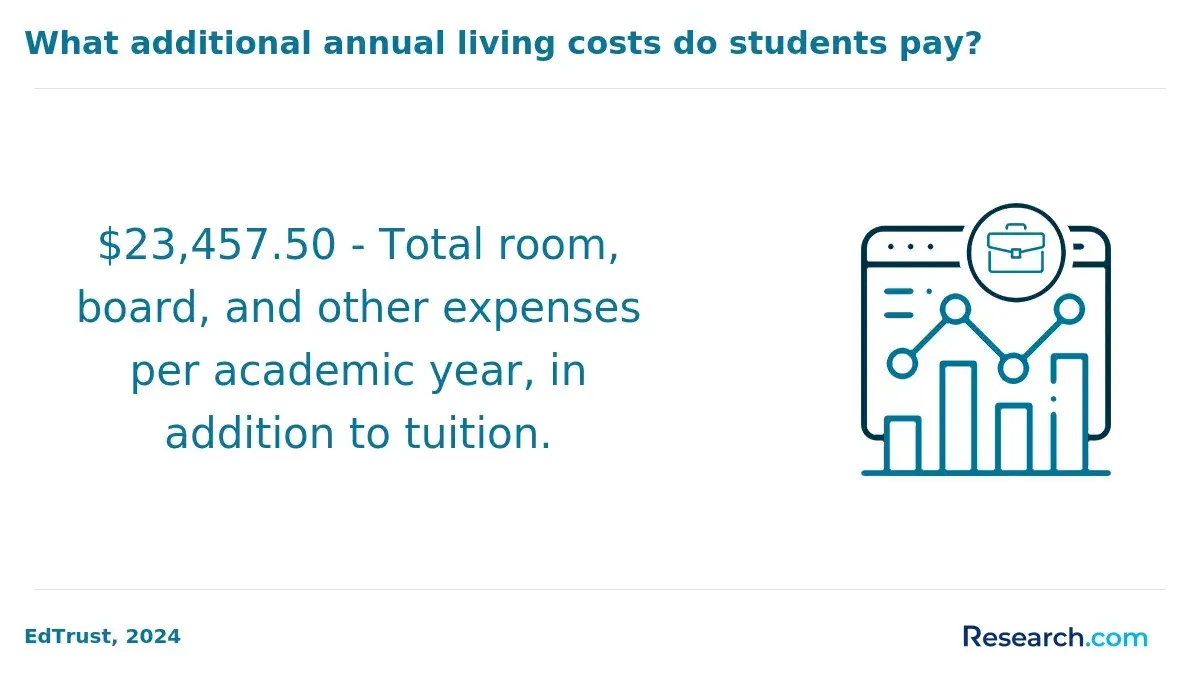
Choosing an online project management degree requires balancing time, cost, and career objectives with realistic expectations about workforce outcomes. Program durations vary: bachelor's degrees typically take 18 to 36 months depending on full-time or part-time enrollment, while master's degrees run 1.5 to 2 years. Part-time options stretch closer to three years, benefiting working professionals maintaining income streams during study.
For instance, an IT professional might select a flexible 24- to 30-month program to integrate skill-building without sacrificing employment. Financial outlay differs significantly by institution type and level. Public universities often charge between $10,000 and $25,000 for fully online bachelor's programs, while private institutions or graduate degrees reach $20,000 to $50,000.
Additional fees-such as technology surcharges, textbooks, and certification prep-can add $1,500 to $3,000. Tuition assistance from employers offsets expenses but requires careful eligibility verification and understanding of coverage limits in advance. Given that senior project managers in U.S. technology sectors earn median salaries exceeding $150,000-well above the general average-investing in a technically focused program can enhance prospects for top-tier roles.
Critical factors include accreditation that matches industry standards, honest assessment of time commitments, and thorough financial planning to avoid excessive debt. These considerations heavily influence net returns and timing of career transitions into project management delivery positions.
What delivery-oriented careers can you pursue with an online project management degree?
An online project management degree in 2026 directly responds to employer demands for professionals adept at balancing supply chain complexity, cost constraints, and delivery timelines. Roles such as delivery project manager, supply chain coordinator, logistics analyst, and operations supervisor emerge with distinct operational focuses rather than generic management tasks.
Consider a delivery project manager within e-commerce: optimizing last-mile routes depends on real-time coordination across warehouses, vendors, and customer-facing teams under tight deadlines. This practical expertise contrasts with supply chain coordinators who prioritize inventory flow, demand forecasting, and risk mitigation using econometric tools learned during their studies.
The real challenge lies in handling unpredictable disruptions, navigating transport delays, or shortages. Candidates who only master theory without exposure to risk assessment and contingency planning risk falling short in dynamic environments.
Skills developed through such online degree programs also apply to construction delivery roles, where managing subcontractors and regulatory timelines necessitates negotiation and leadership capacities beyond routine scheduling.
Annual tuition, about $9,900, lowers access barriers for professionals pivoting careers, but students must critically assess return on investment since labor growth in delivery-focused project management positions aligns with a moderate 6% increase through 2030.
What salaries, advancement opportunities, and leadership roles can project managers expect over time?
Project managers with a relevant degree and certifications such as PMP or CAPM earn median salaries roughly 33% higher than uncertified counterparts, creating a significant financial divide in delivery-focused roles. Entry-level salaries typically range from $65,000 to $85,000 annually, but combining a degree with PMP certification often pushes median earnings above $100,000 within five years.
Progression depends on mastering complex delivery challenges, strategic planning, and leading diverse teams. Advancement typically moves professionals from small project oversight to managing multi-project portfolios or programs, especially in sectors like construction, IT, and healthcare where budgets can exceed $10 million. Leadership roles extend from team lead to project director or PMO head, demanding alignment with organizational goals and mentoring capabilities.
Employers consistently prefer candidates who validate skills in agile methodologies, risk mitigation, and resource optimization. Lack of formal credentials usually results in salary ceilings near $75,000 and restricted upward mobility. For instance, a certified project manager in tech leveraging PMP often reaches senior director roles within 7 to 10 years with salaries between $130,000 and $160,000, whereas uncertified managers rarely surpass $90,000 outside niche markets.
How strong is the job outlook for project managers working in delivery roles across industries?
Project managers in delivery roles face a labor market shaped by accelerating digital transformation and industry dependency on AI-enabled execution tools. Employers across logistics, software development, and manufacturing seek delivery managers fluent in adaptive scheduling and AI-augmented project delivery platforms to handle complex timelines and evolving stakeholder demands.
The project management software market, valued at $7.24 billion in 2023 and projected to reach $15.06 billion by 2030 at an 11.1% CAGR, signals sustained investment in delivery infrastructures that favor technologically proficient managers. In practical settings, delivery project managers mitigate critical risks such as healthcare supply chain delays, where shortages directly impact patient outcomes, and IT service delivery requiring swift iteration supported by continuous feedback integration.
Failure to master these AI-enhanced tools can limit upward mobility and wage growth. Key challenges include frequent scope changes, supply chain disruptions, and coordinating cross-functional teams. Professionals who invest in technologysavvy training aligned with these evolving operational demands gain a competitive edge.
Delivery managers must balance flexibility with rigorous use of software platforms to optimize resources and maintain stakeholder alignment. Employers prioritize candidates demonstrating advanced fluency in AI-driven project tracking and adaptive execution strategies. Ongoing skill development in digital tools is increasingly non-negotiable for career resilience in this specialization.
Which professional certifications align best with online project management degrees for delivery-focused careers?
Choosing between PMP and CSM certifications fundamentally reflects differing delivery environments and employer expectations within project management careers. PMP targets professionals operating in sectors like construction or manufacturing, where rigorous, predictive planning and risk control govern workflows. In contrast, CSM suits agile, iterative delivery typical in software and technology industries, where adaptability to rapid customer feedback is critical.
For example, a logistics project coordinator aiming for senior delivery roles can anticipate a 59% salary increase after two decades in the field, with a master's degree providing an additional 9% premium - data that aligns directly with PMP's emphasis on scope and schedule leadership. Entry-level candidates often start with CAPM to signal foundational competence before progressing to PMP, while risk-sensitive sectors such as healthcare often require PMI-RMP certification to demonstrate specialized oversight capabilities.
Certification selection also demands realistic assessment of maintenance burdens: PMP requires significant initial investment and sustained professional development, delivering higher long-term returns within traditional industries. Meanwhile, CSM's lighter renewal requirements facilitate greater career agility in fast-moving markets.
Integrating these certifications with an online project management degree enhances employability and earning potential by pairing academic credentials with industry-recognized expertise tailored to specific delivery methodologies and sector demands.
Other Things You Should Know About Project Management
A general project management degree offers broader principles applicable across sectors but may lack depth in industry-specific practices crucial for effective delivery. For long-term stability in delivery roles, prioritize programs that incorporate case studies or electives tied to your target industry, such as IT, construction, or healthcare. Employers often value candidates with relevant contextual knowledge alongside foundational project management skills, making focused degrees or dual specializations more strategically advantageous.
Programs with mandatory internships, live projects, or simulated delivery environments significantly improve real-world readiness and employability in project management. Purely theoretical programs limit your ability to navigate complex team dynamics, stakeholder communication, and unpredictable delivery risks. Prioritize degrees offering immersive, hands-on components or co-op options; these better align with employer expectations and reduce early-career adjustment gaps.
Accelerated online degrees offer faster entry into the workforce but often compress critical learning and practical exposure, which can hinder depth of understanding in delivery management challenges. More extended programs allow for paced mastery, including project simulations and leadership development that employers screen for. Choose based on your current experience: if you lack delivery work background, longer programs with experiential learning will yield better career stability.
While a project management degree can enhance prospects, it does not guarantee leadership roles in delivery. Success often requires additional skills like communication, strategic thinking, and relevant experience. Networking and continuous learning can also be crucial in advancing to leadership positions.
References
- Timeline for PMP Certification: Steps and Time Required https://projectmanagementacademy.net/resources/blog/how-long-does-it-take-to-get-pmp-certification/
- Project Management Courses https://www.oxfordhomestudy.com/project-management-courses
- How Employers View Online Degrees: Interviews with Nine Hiring Executives https://www.onlineeducation.com/features/how-employers-view-online-degrees
- Best Online Degrees for Working Adults in 2026 https://www.straighterline.com/blog/degreecompletion-best-online-degrees-for-working-adults-in-2026
- Top Degrees in Demand for the Future: 2026 & Beyond https://skillifysolutions.com/blogs/career-growth/top-degrees-in-demand-for-the-future/
- Project Management Degree Programs Courses Seminars Certificates Diplomas Certification Training and Certified Courses https://www.projectmanagementcertification.org/expertwaivers.html
- Best Project Management Courses: Your Ultimate Guide 2026 https://www.bmc.net/blog/management-and-leadership-articles/best-project-management-courses
- Learn job-ready skills with Google Career Certificates https://grow.google/certificates/project-management/
- 31 Honest Project Manager Salaries https://www.cbtnuggets.com/blog/career/career-progression/honest-project-manager-salaries
- Project Management Degree Vs Certification: Which is Best for You? https://pmoglobalinstitute.org/project-management-degree-vs-certification/