2027 Best Online Associate in Paralegal Studies With Rolling Start Options

Co-Founder and Chief Data Scientist
Choosing an online associate in paralegal studies is often a timing decision as much as a career decision: you may want to start before the next traditional semester. The U. S. Bureau of Labor Statistics reported a May 2024 median pay of $61,010 for paralegals and legal assistants, making this a practical path for people seeking legal support roles without law school. This guide explains rolling start options, accreditation, costs, curriculum, admissions, and career outcomes so you can compare programs with less guesswork.
Key Things You Should Know
- Rolling start online paralegal associate programs commonly use monthly, eight-week, or multiple annual start dates, but start calendars and course availability should be verified directly with each school before applying.
- The most important quality check is institutional accreditation from a U.S. Department of Education-recognized accreditor; ABA approval is optional and program-specific, not the same as college accreditation.
- According to the U.S. Bureau of Labor Statistics, the May 2024 median annual wage for paralegals and legal assistants was $61,010, but pay varies by region, employer type, experience, and legal specialty.
What is an online associate degree in paralegal studies and how does it work?
An online associate degree in paralegal studies is a two-year undergraduate credential designed to prepare students for legal support work under attorney supervision. It usually combines general education courses with legal specialty courses in research, writing, civil litigation, contracts, legal technology, ethics, and law office procedures.
The degree is not a law degree and does not qualify graduates to practice law, give legal advice, represent clients in court, or set legal fees. Instead, it prepares students to assist lawyers by organizing case files, drafting routine legal documents, conducting research, managing discovery materials, and supporting client communication within ethical boundaries.
Most online programs use a learning management system where students watch lectures, complete readings, submit assignments, join discussions, and take exams. Some courses are asynchronous, meaning students can complete weekly work on their own schedule, while others may include live sessions, proctored exams, virtual legal research labs, or internship requirements.
The degree usually fits students who want a structured entry into legal services, adult learners who need flexible scheduling, military-affiliated students, and career changers who want a credential broader than a short certificate. It may be less ideal for students who already hold a bachelor's degree and only need focused legal training; in that case, a post-baccalaureate paralegal certificate may be faster.
The main trade-off is depth versus speed. An associate degree takes longer than a certificate, but it can provide transferable college credits, general education coursework, and a stronger foundation for students who may later complete a bachelor's degree in legal studies, criminal justice, public administration, business, or a related field.
Which online paralegal associate programs offer rolling start or year-round enrollment?
Rolling start does not always mean "start any day." In higher education, it usually means the school offers multiple entry points throughout the year, such as monthly starts, eight-week terms, five-week terms, or several sessions per semester. For students comparing the best online paralegal programs, the best rolling-start option is the one that aligns start dates with course sequencing, financial aid timing, and personal availability.
The table below summarizes examples of U.S. online associate-level paralegal or legal studies programs that commonly advertise multiple start opportunities or year-round enrollment models. Program details can change, so treat this as a shortlisting tool rather than a substitute for confirming dates with admissions.
| School or program example | Online associate-level option | Rolling or year-round format to verify | Best fit |
| Liberty University | Associate of Arts in Paralegal Studies | Multiple online start dates with shorter course sessions | Students who want a faith-based university with accelerated online terms |
| Purdue Global | Associate-level legal support or legal studies pathway | Frequent online term starts | Working adults who want a career-focused online structure |
| Rasmussen University | Paralegal Associate's degree | Multiple start dates during the year | Students seeking a professional-skills curriculum with online flexibility |
| Herzing University | Legal studies associate pathway | Year-round online enrollment cycles | Students who want a career-oriented private university format |
| Bryant & Stratton College | AAS in Paralegal Studies | Multiple academic sessions, depending on campus and online availability | Students who want an applied associate degree with legal office preparation |
| National University | Associate-level legal studies or paralegal-related pathway, where available | Short course cycles that may allow frequent starts | Adult learners who prefer concentrated courses |
When checking a rolling-start program, ask whether legal specialty courses are available every term or only in certain sessions. A school may allow you to begin general education courses quickly, but a delayed legal research or litigation course can still extend your graduation timeline.
Before enrolling, confirm these details in writing so you do not mistake a flexible admissions calendar for a truly accelerated completion plan:
- Next available start date for both general education and legal specialty courses
- Whether the program is fully online or includes in-person, synchronous, internship, or proctored requirements
- How transfer credits affect your first-term schedule and expected graduation date
- Whether financial aid can be packaged before your intended start date
- Whether the program has institutional accreditation and, if relevant to your goals, ABA approval
How can you compare online and campus-based associate paralegal programs effectively?
The best format depends on how you learn, how much schedule control you need, and what kind of career support you expect. Online programs can be excellent for working adults and students outside major legal markets, while campus programs may offer more structured routines, local internships, and face-to-face networking.
The comparison below highlights practical differences that matter when choosing between online and campus-based associate paralegal programs.
| Factor | Online associate paralegal program | Campus-based associate paralegal program | Decision point |
| Schedule | Often asynchronous or offered in shorter terms | Usually tied to scheduled class times | Online is stronger if work or caregiving limits your availability |
| Networking | May rely on virtual events, faculty outreach, and online career services | May offer easier access to local legal employers and student groups | Campus can help if you want local law office connections |
| Technology | Requires comfort with legal databases, document systems, and online collaboration | May include computer labs and in-person support | Online works best if you are self-directed and tech-ready |
| Cost structure | May reduce commuting, parking, and relocation costs | May offer lower tuition at local community colleges | Compare total cost, not just tuition |
| Internship access | May require students to find approved local placements | May have established relationships with nearby firms or courts | Ask how placements are arranged before enrolling |
A common mistake is assuming online automatically means cheaper or easier. Some online private institutions charge more per credit than local community colleges, and online coursework requires strong reading, writing, and time-management habits. Conversely, a campus program is not automatically better if its class schedule prevents you from staying enrolled consistently.
Use this decision process to compare formats realistically:
- List the weekly hours you can reliably study, including reading-heavy weeks and major writing assignments.
- Compare total program cost, including fees, books, technology, transportation, and lost work hours.
- Ask each school how it helps online students secure internships, job leads, and legal research training.
- Review sample syllabi to see whether assignments mirror real legal support tasks.
- Choose the format that you can complete with the fewest interruptions, not simply the one that looks fastest.
What accreditation should online associate paralegal studies programs have in the United States?
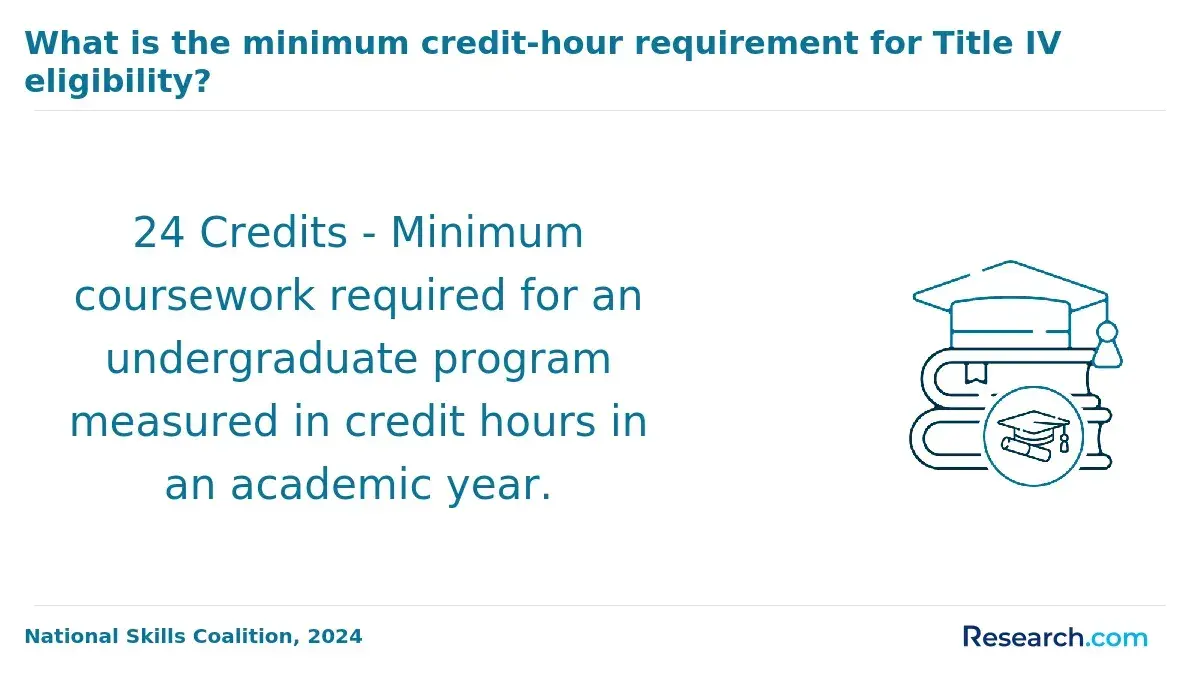
The baseline requirement is institutional accreditation from an accrediting agency recognized by the U.S. Department of Education or the Council for Higher Education Accreditation. This matters because it affects federal financial aid eligibility, credit transfer, employer confidence, and whether another school may accept your credits later.
Paralegal education also has a separate quality marker: American Bar Association approval. ABA approval is voluntary and applies to specific paralegal programs, not to the entire college. A program can be legitimate without ABA approval, but some employers prefer ABA-approved programs, especially in competitive legal markets.
The table below separates the main quality signals so you can evaluate them correctly.
| Quality signal | What it means | Why it matters | What to verify |
| Institutional accreditation | The college or university meets recognized academic and administrative standards | It is the most important accreditation check for financial aid and transferability | Accreditor name and recognition status |
| ABA approval | A specific paralegal program meets ABA paralegal education guidelines | It may strengthen employer confidence in some markets | Whether the exact online or hybrid program is listed as approved |
| State authorization | The school is permitted to offer distance education to students in your state | It affects whether you can legally enroll from your location | Your state's eligibility for the online program |
| Transfer articulation | The associate degree has pathways into bachelor's programs | It matters if you may continue your education later | Written transfer agreements and accepted credits |
Be cautious with schools that use vague language such as "nationally recognized," "career approved," or "industry certified" without naming a recognized institutional accreditor. Also be careful if a school implies that a paralegal degree allows you to provide legal services independently; paralegals work under attorney supervision, and unauthorized practice of law rules vary by state.
To verify a program, check the school's accreditation page, the U.S. Department of Education's accreditation database, the ABA paralegal program directory if ABA approval matters to you, and the school's state authorization disclosures.
What courses and skills are typically taught in an online paralegal associate curriculum?
An online associate paralegal curriculum is built around legal reasoning, document preparation, research, ethics, and office technology. The goal is not to turn students into lawyers; it is to help them support attorneys accurately, efficiently, and ethically.
Most programs combine general education with legal specialty courses. The following table shows common curriculum areas and the workplace skills they are designed to build.
| Course area | Typical topics | Workplace skill developed |
| Introduction to law | U.S. court systems, legal terminology, sources of law | Understanding how legal matters move through the system |
| Legal research and writing | Case law, statutes, citations, memoranda, research platforms | Finding reliable legal authority and communicating findings clearly |
| Civil litigation | Pleadings, discovery, motions, trial preparation | Supporting lawsuits from intake through resolution |
| Contracts and business law | Agreement formation, breach, business entities | Assisting with commercial documents and transaction files |
| Family law, criminal law, or real estate law | Practice-area-specific procedures and documents | Preparing for common legal office specialties |
| Legal ethics | Confidentiality, conflicts, attorney supervision, unauthorized practice of law | Recognizing professional boundaries and risk areas |
| Law office technology | Case management systems, e-filing, document management, billing tools | Working productively in modern legal environments |
Current paralegal work is increasingly shaped by legal technology, including e-discovery platforms, document automation, cloud-based case management, and AI-assisted research tools. These tools can speed up repetitive work, but they also raise accuracy, confidentiality, and citation-checking risks. A strong program should teach students to verify outputs rather than rely blindly on software.
Look for assignments that resemble real legal work. Practical curriculum features often include:
- Drafting complaints, discovery requests, client letters, contracts, or legal memoranda
- Using legal research databases rather than relying only on textbook examples
- Learning citation formats and source validation
- Practicing deadline tracking, file organization, and document control
- Completing a capstone, internship, practicum, or simulated law office project
If a program is mostly theory-based and does not require legal writing, research, or document production, it may not provide enough hands-on preparation for entry-level paralegal work.
What are the admission requirements and application steps for online paralegal associate programs?
Most online associate paralegal programs are designed for first-time college students, transfer students, and working adults. Admissions are usually less selective than bachelor's programs, but requirements vary by institution, state authorization rules, and whether the school uses open admissions or selective review.
Common admission requirements include:
- High school diploma, GED, or recognized equivalent
- Official transcripts from high school and any prior colleges
- Online application and identity verification
- Placement assessment or college readiness review, depending on the school
- Proof of English proficiency for applicants whose prior education was not in English
- Technology access, including reliable internet and a computer that meets course requirements
Some programs may ask about criminal history because internships, court placements, government offices, or law firms may have background check requirements. A past record does not always prevent enrollment or employment, but students should ask early how it could affect practicum eligibility or hiring in their state.
A practical application sequence can help you avoid delays, especially if you want the next rolling start date:
- Confirm the school is institutionally accredited and authorized to enroll students in your state.
- Request an unofficial transfer credit review if you have prior college coursework.
- Ask for the next legal specialty course start date, not only the next general enrollment date.
- Complete the admissions application and send official transcripts as early as possible.
- Submit the FAFSA if you plan to use federal financial aid.
- Review your degree plan before registering so you understand course order, prerequisites, and expected graduation timing.
One common mistake is rushing into the next available start without confirming transfer credits. If a school accepts prior English, communication, computer, or social science credits, you may reduce both cost and time to completion.
How long do online associate paralegal programs take, and what do they cost?
Most associate degrees require about 60 credits. Full-time students often finish in about two academic years, while part-time students may need longer. Rolling start and accelerated terms can help you begin sooner, but they do not automatically reduce the total number of credits required.
Cost varies widely by institution type, residency status, transfer credit, fees, books, and whether the program is public, private nonprofit, or private for-profit. The College Board's 2024 pricing report listed average published tuition and fees for public two-year in-district colleges at $4,050 for 2024-2025, which gives students a useful benchmark when comparing associate-level options. Online private programs can cost more, so the total degree price should be calculated before enrollment.
When comparing costs, include both published tuition and hidden expenses. Common cost items include:
- $4,050 average published tuition and fees for public two-year in-district colleges in 2024-2025, according to the College Board
- Per-credit tuition charges that may differ for online, out-of-state, or private college students
- Technology fees, online course fees, graduation fees, and transcript fees
- Books, legal research access, citation manuals, and document software
- Internship-related costs such as transportation, background checks, or professional clothing
The table below shows how timeline choices affect cost and workload. It does not predict a specific school's price, but it can help you understand the trade-offs before choosing a pace.
| Enrollment pace | Typical completion pattern | Main advantage | Main trade-off |
| Full-time | About two academic years for many 60-credit programs | Faster entry into the job market | Heavier weekly reading and writing load |
| Part-time | Often longer than two years | Easier to balance with work or caregiving | Delayed graduation and possible exposure to tuition increases |
| Accelerated terms | Shorter course sessions across the year | More start dates and faster course rotation | Less recovery time between assignments |
| Transfer-heavy plan | Depends on accepted credits | May reduce cost and time | Not all prior credits may apply to legal specialty requirements |
To estimate return on investment, compare your net price after grants and transfer credits with realistic entry-level wages in your local legal market. Avoid using national median pay as a guaranteed outcome; new graduates, rural applicants, and students entering small firms may see different starting pay than experienced paralegals in large metropolitan firms, corporations, or federal agencies.
What entry-level legal and paralegal jobs can you get with an associate degree?
An associate degree in paralegal studies can support entry-level roles in law firms, corporate legal departments, insurance companies, banks, real estate offices, government agencies, courts, and nonprofit legal service organizations. Job titles vary because some employers distinguish between legal assistant, paralegal, legal secretary, case assistant, and litigation support roles.
The table below connects common entry-level jobs with typical duties so you can target programs and internships that match your goals.
| Job title | Typical responsibilities | Good fit for students who like |
| Legal assistant | Scheduling, file organization, client communication, document preparation | Administrative organization and client-facing work |
| Entry-level paralegal | Legal research, drafting, discovery support, case tracking under attorney supervision | Research, writing, and procedural detail |
| Litigation support assistant | Managing evidence, e-discovery files, document databases, trial preparation materials | Technology, data organization, and deadlines |
| Real estate legal assistant | Closing documents, title materials, transaction checklists, client coordination | Transactional work and document accuracy |
| Compliance assistant | Policy records, regulatory files, audit support, internal reporting | Rules, documentation, and business processes |
| Court or government legal clerk | Case records, filings, public inquiries, procedural support | Public service and court systems |
Students interested in law-adjacent careers should also compare paralegal studies with related fields. For example, if you are more interested in offender behavior, victim advocacy, or court-connected mental health work, reviewing what can you do with a forensic psychology degree may help you decide whether a legal support or behavioral science path fits better.
To improve entry-level competitiveness while enrolled, build a portfolio of writing samples, learn legal research tools, seek an internship, and become comfortable with spreadsheets, PDF editing, e-filing systems, and case management software. Employers often value accuracy, confidentiality, responsiveness, and professional judgment as much as the degree itself.
What is the salary outlook and demand for paralegals and legal assistants?
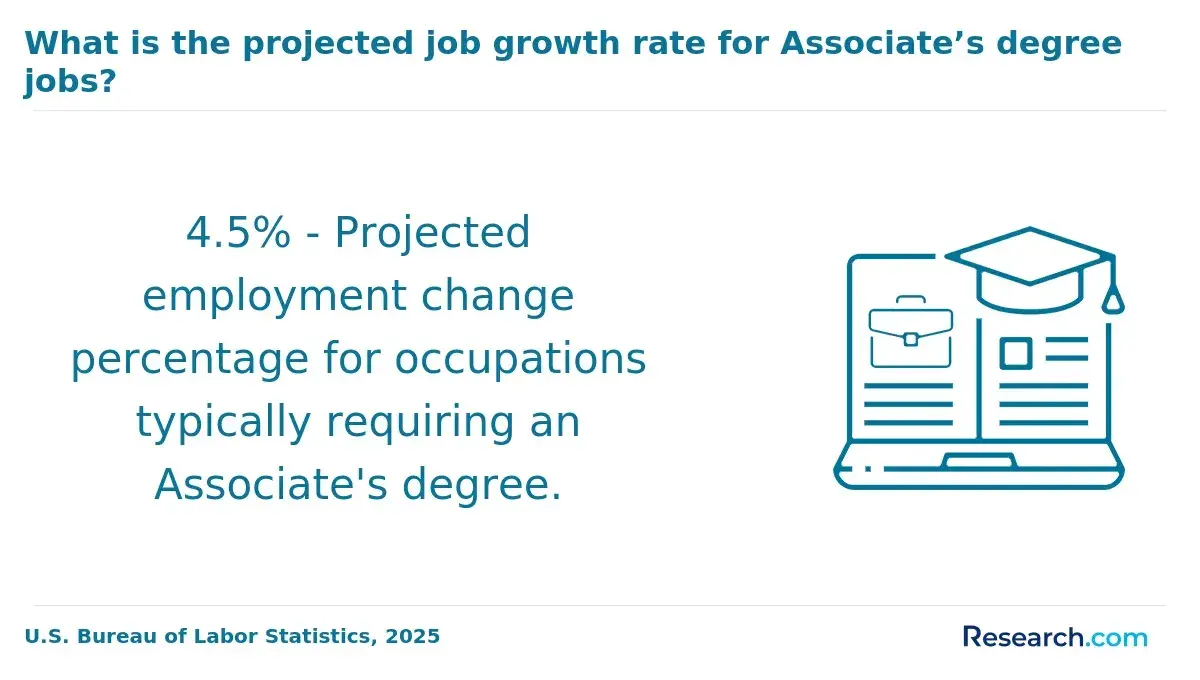
The U.S. Bureau of Labor Statistics reported a May 2024 median annual wage of $61,010 for paralegals and legal assistants. Median wage is not an entry-level guarantee; it reflects the middle point across workers with different experience levels, locations, employers, and specialties.
Pay can differ substantially by work setting. Corporate legal departments, federal agencies, large law firms, and specialized litigation practices may pay more than small firms or entry-level administrative legal roles, but they may also expect stronger technology skills, experience, or bachelor's-level education.
Demand is shaped by law firm cost control, legal technology, document automation, e-discovery growth, and the need for trained staff who can support attorneys efficiently. AI tools may reduce some repetitive drafting and document-review tasks, but they also increase the need for workers who can verify citations, protect confidentiality, organize digital evidence, and recognize when attorney review is required.
For readers comparing legal support with adjacent evidence-focused careers, it can be useful to look at other pathways such as becoming an autopsy tech, which involves medical-legal work but requires different training, work environments, and tolerance for laboratory or morgue settings.
The strongest salary strategy is to pair the associate degree with practical experience. Internships, court volunteering, legal aid work, notary skills where appropriate, bilingual communication, e-discovery exposure, and strong writing samples can help candidates stand out without overstating what the degree alone can do.
How do you choose a reputable online paralegal associate program with strong career support?
A reputable online paralegal associate program should be accredited, transparent about costs, realistic about outcomes, and specific about how it prepares students for legal support work. The best choice is not always the fastest or cheapest; it is the program that you can complete, afford, and connect to your target legal job market.
Use the following questions when comparing schools. They are designed to uncover red flags that rankings and advertisements may not show.
- Is the institution accredited by a recognized accreditor, and is the exact program eligible for federal financial aid?
- Does the curriculum include legal research, legal writing, ethics, civil litigation, and law office technology?
- Are legal specialty courses taught by attorneys, experienced paralegals, or faculty with relevant legal practice backgrounds?
- Does the school publish total program cost, not just per-credit tuition?
- How many start dates are available, and are required paralegal courses offered every term?
- Does the program include an internship, practicum, capstone, or simulated law office experience?
- What career services are available specifically to online students?
- Will credits transfer into a bachelor's program if you continue your education?
Watch for red flags such as pressure to enroll immediately, unclear accreditation language, vague job placement claims, no sample degree plan, limited access to faculty, or promises that the program will guarantee a paralegal job. No school can guarantee employment or salary, and legal hiring depends on the local market, employer needs, experience, and professionalism.
If your long-term goal is broader investigative or evidence-based work rather than law office support, compare paralegal studies with programs in criminal justice or forensic science. Reviewing the best online colleges for forensic science can help you evaluate whether laboratory, evidence, or investigative coursework is a better match.
A strong final shortlist should include three to five schools. For each one, request a degree plan, total cost estimate, transfer evaluation, start-date calendar, internship policy, and career services description. Then choose the program that offers the best combination of credibility, affordability, course access, and career alignment.
Other Things You Should Know About Paralegal Studies
Enrolling in a top online Associate in Paralegal Studies program in 2027 offers several key benefits, such as flexible scheduling with rolling start options, a comprehensive curriculum that meets industry standards, and increased career opportunities. These programs also provide networking prospects and practical skills for immediate application in legal environments.
A certificate may be better if you already have college credits or a bachelor's degree and want focused legal training quickly. An associate degree may be better if you need a first college credential, want general education credits, or plan to transfer into a bachelor's program later.
Some programs require an internship, practicum, or capstone, while others make it optional. Even when it is not required, practical experience can improve your resume and help you confirm which legal specialty you prefer.
Some paralegal and legal assistant roles are remote or hybrid, especially in firms that use cloud-based case management and e-filing. Entry-level workers may still need office time for training, client files, court deadlines, and supervision by attorneys.
References
- Best Online Paralegal Associate Degrees https://www.onlineu.com/degrees/associate-paralegal
- Paralegal Program Comparison https://paralegal.edu/compare/
- Paralegal Positions for Beginners – Your Next Job Awaits! https://www.paralegalinst.com/entry-level-paralegal-job
- Your Guide to Online Paralegal Programs: Certificate, Associate Degrees, and Career Paths https://masteroflegalstudies.com/programs/online-paralegal/
- Associate ofParalegal Studies https://www.nationalparalegal.edu/Associates.aspx
- How to Choose an Online Paralegal Studies Program | Campus https://campus.edu/blog/paralegal/how-to-choose-online-paralegal-program
- Online Associate Degrees in Paralegal Studies: Compare Schools https://www.degreesforgood.org/online-degrees/paralegal-programs/associate/
- Career Outlook and Projected Growth - NALS... the association for legal professionals https://www.nals.org/page/USDEPlabor
- Paralegal https://www.fanshawec.ca/programs/plg1-paralegal/next
- Associate in Paralegal Studies (Online) https://www.marian.edu/academics/programs/associate/online/paralegal-studies