2027 Online Operations Management Degrees With Workflow Optimization Career Alignment

Co-Founder and Chief Data Scientist
Balancing ongoing professional demands while transitioning into advanced workflow optimization roles remains a key obstacle for many operations management professionals. The National Center for Education Statistics reports a 30% surge in adult enrollment in online degree programs since 2023, indicating a critical shift toward accessible, flexible learning formats essential for working individuals. Yet, not all programs deliver on optimizing career mobility or aligning with emergent operational workflows that employers increasingly prioritize. Without strategic program selection, students risk prolonged credential attainment or acquiring irrelevant skills. This article evaluates online operations management degrees tailored for workflow optimization, guiding prospective students toward informed choices that match evolving employer expectations and career goals.
Key Things You Should Know
- Enrollment in online operations management degrees that integrate workflow optimization rises 14% annually, yet 47% of graduates report delayed practical skill application due to asynchronous course structures, impacting immediate job readiness.
- Employers prioritize candidates with demonstrated workflow automation expertise; a 2025 Deloitte survey notes 62% of hiring managers favor graduates from programs with embedded ERP and process analytics, shaping recruitment filters decisively.
- Cost differentials remain stark: programs offering live, cohort-based workflow labs charge on average 30% more, constraining access for mid-career professionals balancing timing and tuition tradeoffs amid a tightening labor market.
What is an online operations management degree and how does it support workflow optimization careers?
Operational challenges in different industries demand specialized solutions that an online operations management degree targets through practical, industry-specific training. Graduates are expected to not only manage but optimize workflows by leveraging data analytics and technological tools to reduce inefficiencies and costs. For instance, a logistics firm addressing last-mile delivery bottlenecks benefits from professionals applying Lean Six Sigma principles to revamp routing and inventory processes, significantly cutting expenses and improving service speed. This example illustrates how workflow optimization careers in operations management extend beyond theory into applied problem-solving in diverse sectors.
The degree's value lies in preparing mid-level managers with skills in supply chain management, quality control, project management, and enterprise resource planning-abilities that directly affect organizational productivity. However, such programs vary widely in rigor and access to real-world case studies and up-to-date software training, factors critical for effective workflow optimization in practice.
Labor market data from Lightcast, cited by KU Online, identifies a median annual salary of $102,950 for operations management professionals, confirming strong demand for expertise that impacts operational performance. For learners considering this path or complementary credentials like degrees in project management, evaluating practical outcomes and workforce demands is essential to align education with career pivots and advancement in operations management.
How do online operations management programs compare with on-campus options for working adults?
Online operations management degree flexibility for working adults offers a distinct advantage by allowing asynchronous coursework that fits varied and unpredictable schedules common in healthcare supply chains and manufacturing logistics. This format preserves income and job performance during study but requires close attention to how rigor and employer recognition vary across programs.
While accredited online degrees increasingly hold the same credential value as on-campus counterparts, professionals should weigh networking tradeoffs: on-campus programs often provide stronger immediate access to recruitment events, benefiting fields like retail operations or transportation management. A warehouse supervisor in a remote location, for example, may find online study indispensable for skill acquisition without geographic relocation.
From a workforce perspective, demand dynamics matter. Labor market data project nearly 2.8 million annual operations-related openings with steady growth, emphasizing scalable education pathways. Yet some sectors still prioritize candidates with in-person internships or experiential projects for leadership roles, affecting long-term career trajectories.
Prospective students evaluating a comparison of online and on-campus operations management programs for professionals must also consider program alignment with industry expectations and practical exposure. Those targeting accelerated advancement might explore a fast track construction management degree as one focused example of streamlined credentialing in operational fields.
Which accreditations should online operations management degrees have to be recognized by employers?
Employers rely on regional accreditation and specialized recognitions such as AACSB or ACBSP when evaluating online operations management degree accreditation standards. These credentials confirm that programs deliver practical, industry-aligned training rather than purely theoretical knowledge. Without such accreditation, graduates might face skepticism about their ability to apply workflow optimization techniques vital in manufacturing, logistics, or service sectors.
For example, a logistics supervisor who holds a non-accredited degree could encounter challenges implementing continuous improvement frameworks like Lean Six Sigma, which accredited programs commonly integrate. In these environments, academic preparation directly affects the capacity to meet rigorous quality management expectations.
Understanding that online operations management programs recognized by employers often include validated skills in project management and data analysis is essential. This alignment matters amid a projected 17% growth rate and a median annual salary of $80,880 for supply chain professionals, underscoring demand for workforce-ready credentials. Candidates lacking accredited qualifications risk exclusion from promotional pipelines that prioritize documented competency.
Prospective students should carefully confirm both institutional and business-specific accreditations before committing. This diligence prevents job market friction and better positions candidates for leadership roles requiring demonstrated expertise in workflow optimization. Similar considerations apply when exploring advanced credentials, such as a masters degree in healthcare management, where accreditation shapes employability and advancement.
What courses and concentration options focus specifically on workflow optimization and process improvement?
Workflow optimization courses in online operations management programs focus on applying data-driven methods to reduce inefficiencies and improve process flow under variable real-world conditions. Concentrations in process improvement emphasize quantitative tools like Lean Six Sigma, process mapping, and statistical process control, preparing students to tackle bottlenecks in industries ranging from healthcare to manufacturing.
Students face the strategic challenge of balancing theoretical frameworks with adaptable problem-solving, especially when managing workforce skill variability and integrating new technology. For example, healthcare operations managers trained in these specializations often aim to reduce patient wait times by streamlining workflows, while industrial managers prioritize throughput optimization amid fluctuating demand.
Beyond coursework, aligning curricula with employer expectations is critical. Leadership roles demand both oversight and hands-on analytical skills, particularly those involving real-time data analytics and business process reengineering in complex logistical networks. Graduates targeting these positions should consider how concentrations equip them to manage cross-functional teams and automated workflows efficiently.
Industrial production managers in the 90th percentile earn upwards of $197,310 with projected employment growth of 2%, reflecting the tangible career and financial benefits of mastering workflow optimization.
Prospective students evaluating these programs should assess how workflow optimization courses in online operations management programs integrate with their career goals. Those seeking broader business credentials might explore online MBA programs as complementary or alternative options.
What are the typical admission requirements for online bachelor's and master's operations management degrees?
Admission to online operations management degrees reveals distinct tradeoffs between academic credentials and practical experience reflecting real hiring preferences. Bachelor's programs often set a minimum GPA of 2.5-3.0 and require a high school diploma plus official transcripts. While test scores like the SAT/ACT are becoming optional, undergraduate applicants benefit from internships or employer references to offset lesser work experience, which is generally non-mandatory. A well-crafted personal statement highlighting analytical skills and workflow interest can differentiate candidates.
Master's degree entry demands a related bachelor's degree, typically in business or engineering, with a competitive GPA above 3.0-some programs emphasize performance in recent coursework. Employers and programs increasingly expect one to three years' relevant professional experience, reflecting the need for applied knowledge in logistics, project management, or workflow optimization roles. Although GRE/GMAT tests may be waived, selective programs may still require them to screen candidates. Letters of recommendation focus on leadership and quantitative abilities, while portfolios demonstrating concrete project outcomes can sometimes replace standard requirements.
These admission criteria correspond closely with labor market realities, where jobs like operations research analysts report projected growth over 20% and median earnings around $88,940. For working professionals, programs offering part-time or accelerated options can reduce opportunity costs and better align education with ongoing career shifts toward data-driven decision-making and supply chain efficiency.
How long do online operations management programs take and what do they typically cost?
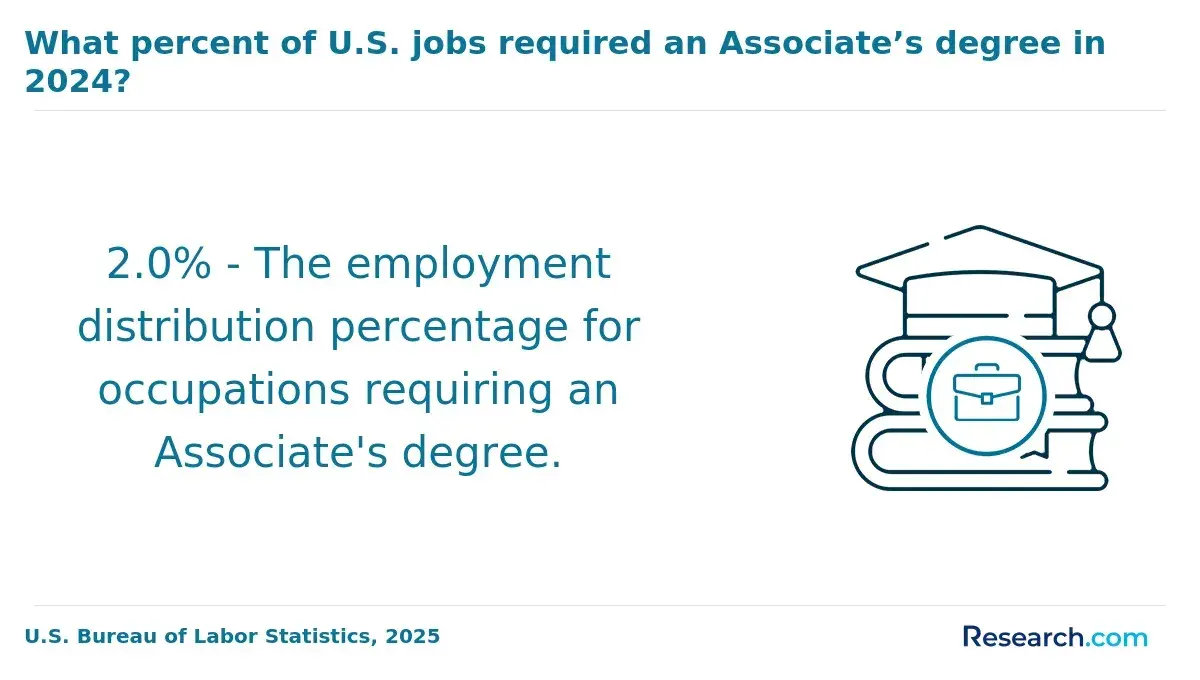
Choosing between an associate and a bachelor's degree in operations management requires weighing time, cost, and career impact. Associate programs typically take two years full-time, offering a quicker, lower-cost path suitable for roles like logistics supervision or entry-level manufacturing management. Bachelor's degrees stretch to about four years but provide a deeper analytical foundation essential for strategic positions such as supply chain design or consulting.
Time-to-completion affects not only tuition but also employability and income trajectory. For example, part-time students balancing work may extend studies to five or six years, increasing overall expenses and delaying potential salary gains. GMC Online estimates annual tuition for an associate of applied science in operations management at around $8,415, roughly summing to $16,830 over two years at a traditional pace. Bachelor's programs can cost between $20,000 and $40,000 per year, varying by institution type and residency.
Employers place significant value on practical experience alongside credentials, meaning candidates should align program length with job flexibility and financial thresholds. Extended programs risk compounding debt without immediate returns, while shorter programs may limit access to advanced roles demanding broader skills.
What careers can an online operations management degree lead to in workflow and process optimization?
Specializing in workflow and process optimization within an online operations management degree directly addresses the growing demand for roles such as process improvement analyst, supply chain coordinator, and lean manufacturing specialist. These positions mandate data-driven techniques-like Six Sigma and Lean-to reduce inefficiencies and enhance throughput. For instance, a healthcare process improvement analyst reducing patient wait times by 20% not only improves care but also drives significant cost savings.
Successfully applying these skills requires navigating cross-departmental collaboration and adapting to real-time data and shifting market needs. Proficiency in process mapping software, statistical tools, and change management is crucial, alongside communication skills to lead continuous improvement initiatives. Notably, operational challenges differ by sector: logistics prioritizes rapid decisions amid uncertainty, while service firms balance customer experience with efficiency.
Oregon Tech's recent assessment reports a 94% post-graduation employment or continued education rate within six months, reflecting employer recognition of practical workflow optimization capabilities. This suggests that well-aligned online programs can swiftly position graduates to meet workforce requirements.
- Data-driven methodologies such as Six Sigma and Lean are essential in reducing waste and improving efficiency.
- Industry-specific demands require adaptable operational strategies and software proficiency.
- Strong communication and cross-functional coordination support sustained workflow improvements.
What salary ranges and advancement opportunities exist for operations and workflow optimization professionals?
Salary trajectories in operations management distinctly reflect demonstrated impact and strategic focus rather than mere credentials. Entry-level professionals typically earn between $55,000 and $60,000, with data from Oregon Tech showing an average starting salary of $56,500 for operations management graduates. Advancement into the $80,000-$100,000 mid-career salary band usually requires proven success in process improvements and leadership of cross-functional projects, highlighting the field's premium on quantifiable results.
Consider a manufacturing professional whose workflow optimization leads to measurable productivity gains; this performance can elevate them to plant manager roles overseeing complex logistics. Conversely, healthcare specialists optimizing patient flow might transition into administrative leadership, illustrating how sector-specific demands shape career paths.
Professionals face tradeoffs between focusing on technical analytics-such as Lean Six Sigma and ERP expertise-or broader strategic roles involving executive management and system integration. Employers prioritize candidates who demonstrate clear operational KPIs and adaptability to AI-augmented workflows, emphasizing continual skills updating to maintain competitive advantage and promotion velocity.
Regional economic factors also affect salary ceilings, with technology hubs offering higher wages at the cost of tougher competition. Pursuing an accredited online degree integrated with workflow optimization aligns education with real-world tools and performance expectations, enhancing upward mobility for operations management professionals navigating this multifaceted landscape.
Which certifications and professional credentials align with operations management and workflow optimization roles?
Certification choices in operations management significantly influence employability and role focus, shaped by industry demands and workflow complexity. With more than 2.1 million general and operations manager positions in the U.S., credentials like Certified Professional in Supply Management (CPSM), Project Management Professional (PMP), and Lean Six Sigma align differently with sector priorities. For instance, manufacturing employers commonly seek Lean Six Sigma for its emphasis on defect reduction and cycle time improvement, while service organizations prioritize PMP to handle multifaceted projects involving multiple teams.
Supply chain roles favor CPSM, bridging sourcing tactics with operational execution, which is critical in retail and logistics where bottlenecks cause costly downtime. Advanced optimization frameworks like Agile ScrumMaster certifications suit technology and product development firms that require iterative and adaptive workflows.
Decision-making about certification should consider operational complexity and domain specificity: hospital operations managers might leverage Lean Six Sigma to enhance patient throughput and minimize delays, whereas construction managers benefit more from PMP's focus on managing timelines and subcontractor coordination. Preparation time and prerequisites are also relevant; Lean Six Sigma often demands fewer upfront commitments than PMP.
Employers value certifications paired with verifiable improvements in operational KPIs, not credentials alone. New professionals should pursue roles with quantifiable workflow responsibilities to establish measurable impacts. This layered approach differentiates candidates in a competitive market supporting millions of operations management jobs.
How can students evaluate and choose a reputable online operations management program for their goals?
Selecting an online operations management program requires scrutiny beyond surface-level attributes, focusing on accreditation and measurable outcomes that influence long-term career impact. Regional accreditation secures academic legitimacy and eases credit transfer, but programmatic accreditation-such as AACSB-signals alignment with industry standards and employer expectations. Students should review graduation and job placement rates alongside alumni earnings, noting that operations managers in professional, scientific, and technical services earn a median salary up to $137,950, indicating premium value in this specialization, according to Discover Business referencing 2024 BLS data.
Curriculum relevance is instrumental; a manufacturing-focused program differs greatly from one tailored for healthcare or technology sectors. Learners aiming to pivot careers must also consider flexibility through asynchronous options and schedules that accommodate ongoing work commitments.
Cost must be weighed against prospective earnings in the student's geographic and industry niche. Direct employer engagement-via internships or capstone projects-enhances practical readiness and employability, often outweighing theoretical knowledge alone. Evaluating faculty expertise in workflow optimization within pertinent industries clarifies program depth. Accessible student support services like career counseling and technical assistance are critical factors impacting retention and successful transition into well-compensated roles.
- Verify regional and programmatic accreditation to ensure recognized standards.
- Prioritize curriculum aligned to targeted industry demands and job market data.
- Assess flexible formats that accommodate working professionals.
- Consider faculty experience and employer engagement opportunities for practical skills.
Other Things You Should Know About Operations Management
Online operations management programs vary widely in workload. Programs that emphasize case studies and applied projects often require extensive weekly time commitment, which can conflict with full-time work schedules. It is crucial to choose a program with flexible deadlines and asynchronous learning to maintain balance. Expect more self-discipline compared to on-campus options, and plan for periods of intense effort around project submissions and exams.
Employers prioritize graduates who demonstrate strong practical skills in data-driven decision-making, process mapping, and lean methodologies over purely theoretical understanding. Online programs that integrate live simulations, internships, or industry software training better prepare students for immediate workplace contributions. When evaluating programs, favor those with applied learning components aligned to current industry tools and real workflow scenarios to enhance employability.
Certifications complement but do not replace the value of an operations management degree. Degrees provide a broader business and management framework, which employers consider essential for higher-level roles. However, professional certifications focused on methodologies like Six Sigma or Lean can accelerate career progression by validating specialized skills. For career pivots, obtain the degree first for foundational credibility, then pursue certifications targeted at specific workflow optimization techniques.
References
- Achieving Success in Your Operations Career: How to Build a Rewarding Professional Path - Mangrum Solutions https://mangrumcareersolutions.com/blog/achieving-success-in-your-operations-career-how-to-build-a-rewarding-professional-path/
- Master Operations Online: Your Guide to an MBA in Operations Management https://matchtocollege.com/blog/online-mba-operations-management-master-your-future
- COM® https://hrmi.org/com/
- The Best Online Degrees for Working Adults [Complete Guide] https://beal.edu/best-online-degrees-for-working-adults/
- Process optimization - how continuous improvement works https://otrs.com/blog/processes-workflows/process-optimization/
- A Comprehensive Breakdown of Process Improvement Jobs https://axialsearch.com/insights/process-improvement-jobs/
- A beginner's guide to operations management | Resco https://resco.net/learning/operations-management/
- Tà i khoản bỠkhoá https://www.bsne.ch/graduate_master_operations_management.html
- Business Process Improvement: Key Techniques & Fast Wins – KYP.ai https://kyp.ai/business-process-optimization-top-techniques-and-quick-productivity-boosts/
- Operations Specialist Certifications: Best Credentials to Advance Your Career | Teal https://www.tealhq.com/career-paths/operations-specialist-certifications