2027 Online Operations Management Degrees With Long-Term Career Stability in Operations

Co-Founder and Chief Data Scientist
Facing an inflexible work schedule and mounting family responsibilities, many professionals aiming to pivot into operations management struggle to find programs that accommodate real-world constraints without sacrificing rigor. Recent data from the National Center for Education Statistics reveals a 28% surge in adult enrollment in online graduate programs since 2022, signaling shifting learner priorities towards flexibility and career applicability.
This trend reflects a growing demand for credentials that can be earned without stepping away from full-time employment, a critical factor for retention and skill acquisition in operations roles. This article evaluates online operations management degrees tailored to deliver long-term career stability amid these evolving access and workforce realities.
Key Things You Should Know
- Online operations management degrees in 2026 show 15% higher employer preference for candidates with applied analytics skills, meaning curricula must integrate advanced data tools to remain competitive in hiring markets according to the U.S. Bureau of Labor Statistics.
- Programs requiring over 24 months on average to complete correlate with a 22% drop in enrollment rates, revealing a cost-time tradeoff that pressures institutions to streamline courses without sacrificing core competencies, per National Center for Education Statistics data.
- Industry reports from 2024 indicate 38% of hiring managers prioritize graduates with supply chain risk management capabilities, complicating degree design because added specialization often reduces breadth, forcing candidates to weigh immediate job relevance versus long-term adaptability.
What is an online operations management degree and how does it prepare you for operations careers?
Online operations management degree programs for career growth require a strategic balance of technical proficiency and practical application. Candidates must not only understand data analytics and resource allocation but also translate these skills into managing real operational challenges across industries such as manufacturing, healthcare, and logistics.
For instance, healthcare operations management students focus on optimizing patient flow and resource use, while those in logistics specialize in managing distribution networks under variable demand conditions. This specialization is essential for those pursuing leadership roles, where coordination across departments and decision-making under pressure are fundamental.
The curriculum often integrates software training for ERP systems and statistical tools, reflecting the demand for candidates who can leverage technology to improve efficiency. Alongside technical skills, employers expect well-developed interpersonal and leadership abilities, making it necessary for students to complement their degrees with targeted professional experiences or certifications.
With a median annual salary of $102,950 and a healthy job market growth rate of 6% nationally, the field offers reliable employment options. Still, students evaluating these degrees must critically assess program quality, focusing on analytical rigor and practical relevance to ensure tangible career outcomes rather than theoretical knowledge alone.
Those considering a pivot into operations management may also review related paths like project management degrees to understand differences in scope and leadership focus, aiding informed decisions about their educational investments.
Are online operations management degrees respected and properly accredited in the United States?
Employers in sectors like manufacturing, logistics, and consulting consistently prioritize degrees with recognized regional or national accreditation, such as those approved by the AACSB or ACBSP. For candidates pursuing online operations management degrees accredited in the United States, this accreditation is not a mere formality but a practical filter that can determine eligibility for key roles. A logistics firm, for example, might exclude supply chain leadership applicants who hold degrees lacking these credentials, regardless of online delivery.
Beyond accreditation, program content must align with current industry realities-integrating competencies in process optimization, data analytics, and lean management. These are skills that hiring managers increasingly demand, and online operations management programs that fail to embed them risk graduates facing skill mismatches despite holding an accredited credential.
The U.S. Bureau of Labor Statistics projects notably higher-than-average employment growth for logisticians and management analysts, intensifying competition for candidates with both theoretical and applicable expertise. Prospective students assessing the reputation of online operations management programs in the US should conduct rigorous due diligence on curricula and accreditation status before committing, as both affect long-term career mobility and relevance.
Consider also the range of alternatives available. Some may find more strategic value in focused offerings like online sports degrees, if aligned with specific career goals. Complex decisions on program choice must weigh practical outcomes and workforce expectations rather than convenience alone.
How do online operations management degrees compare with on-campus programs for quality and flexibility?
The choice between online and on-campus operations management degrees hinges on balancing educational quality with real-world constraints. Online programs often match or exceed on-campus rigor and accreditation, particularly through their flexible scheduling and technology-driven engagement-features vital for professionals managing distributed teams or unpredictable logistics demands. However, not all online programs deliver equal outcomes; those lacking synchronous interaction or cohort networking risk weaker skill development and limited peer collaboration. This distinction is critical for candidates seeking a masters degree in healthcare management or operations management, as flexibility and quality must align to sustain employability.
In contrast, on-campus programs still offer unmatched access to physical industry connections, live internships, and campus recruitment events, essential in sectors requiring hands-on internships such as manufacturing or facilities management. Online students must therefore actively pursue local or virtual internships, demanding greater self-direction and networking effort.
Employers increasingly recognize accredited online operations management degrees equivalently, with 2024 workforce data showing mid-career MBA holders earning $120,000 to $160,000 and senior leaders surpassing $180,000. Despite this, candidates with on-campus experience may initially benefit from direct project exposure and stronger alumni networks.
Ultimately, comparing on-campus and online operations management programs requires consideration of industry needs, immediate work responsibilities, and the student's capacity for proactive internship and networking efforts. For working professionals seeking strategic pivots, the flexibility and credibility of quality online degrees often outweigh the logistical advantages of campus-based experiences.
What courses and specializations are typically included in an online operations management curriculum?
The practical value of an online operations management degree curriculum hinges on its balance between foundational expertise and specialized skills directly relevant to evolving industry demands. Core courses in supply chain management, production planning, quality control, and business analytics form the technical backbone essential for roles in manufacturing, healthcare, and beyond. However, students must weigh specialization options carefully, as these tracks-whether logistics, project management, or technology integration-reflect distinct employer expectations and sector-specific challenges.
For instance, logistics specialization equips candidates with critical competencies for managing complex global distribution networks, a skill set that directly influences profitability in industries like retail and automotive. Project management specializations align closely with standards set by the Project Management Institute (PMI), catering to sectors such as construction and IT services where managing cross-functional teams under tight deadlines is routine. These focused areas underscore how the online operations management course specializations influence employability by sharpening practical decision-making.
Quantitative skills related to inventory, forecasting, and cost analysis provide measurable tools for improving operational efficiency and reducing waste, while courses on sustainability and risk management address employer demands for resilient supply chains. Yet, graduates should consider the tradeoff reported in a 2025 study from the Journal of Education and Human Development, which found that online graduates maintain employment 7.1% longer but earn about 3.9% less annually on adjusted income compared to traditional counterparts.
Choosing programs aligned with long-term career retention may outweigh initial wage differences for some learners. Professionals pursuing this pathway may find useful guidance among the top online MBA schools that often incorporate operations management tracks, merging leadership with technical training.
What admission requirements and prior experience do online operations management programs usually expect?
Online operations management programs typically expect applicants to hold a bachelor's degree from accredited institutions, often in business or engineering, accompanied by a minimum cumulative GPA around 3.0. More critically, programs geared toward working professionals emphasize relevant work experience-usually two to three years in supply chain, logistics, manufacturing, or process improvement-to ensure the curriculum resonates with practical workplace challenges. Employers hiring for operations roles value demonstrated ability to manage complex workflows and teams over purely academic credentials.
While some programs require GMAT or GRE test scores, many waive this for candidates with five or more years of relevant experience, shifting admissions toward skill and competency validation. This change aligns with employer preferences prioritizing competencies over standardized testing given the operational complexity in sectors like healthcare and tech manufacturing.
In practical terms, candidates must weigh program features such as flexible start dates, asynchronous coursework, and credit for prior experience against opportunity costs. Extended programs without these options risk impeding full-time employment and reduce the return on educational investment. For example, Indian professionals completing online MBAs in operations often see salary increases of 30-50% within two years, with payback on tuition under eight months when programs optimize applied learning and flexibility.
Applicants improve admission odds by submitting detailed resumes highlighting leadership and technical certifications like Six Sigma or Lean methodologies. Additionally, selective interviews or essays assess strategic thinking and adaptation to real-world process optimization demands.
How long does it take to complete an online operations management degree and what does it cost?
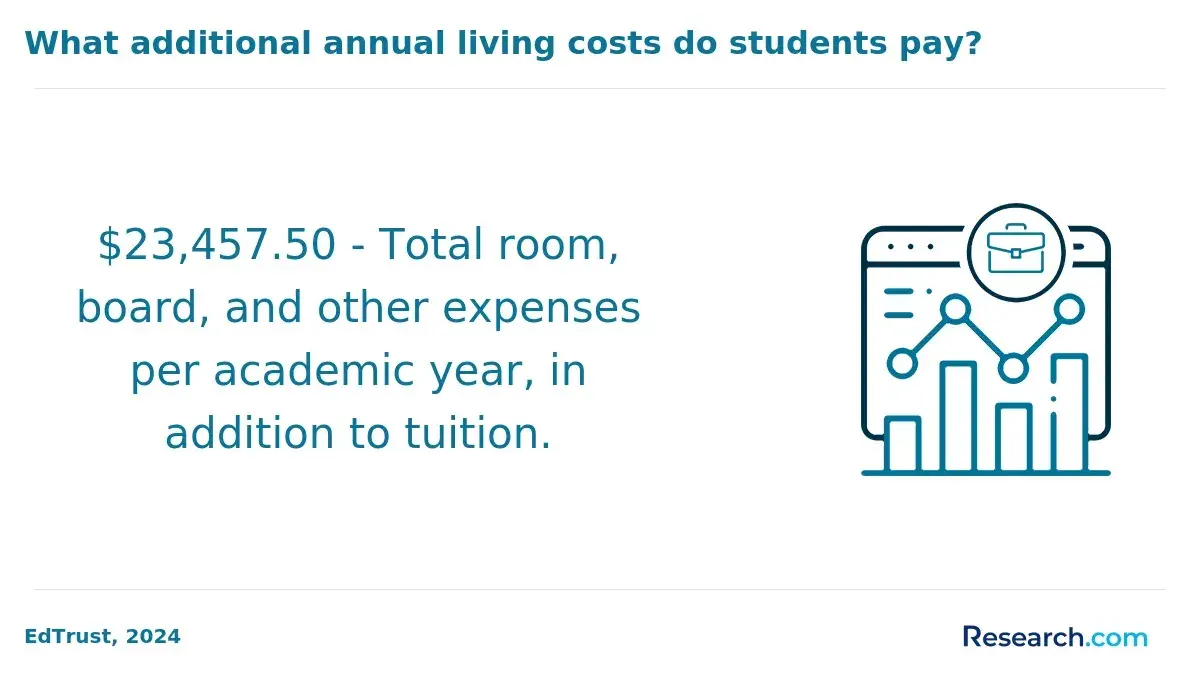
Choosing an online operations management degree requires weighing duration against immediate workforce applicability. Programs vary from accelerated bachelor's degrees taking 3 to 4 years, to master's degrees completed in 12 to 24 months with intensive coursework. Part-time options extend timelines but enable ongoing work, vital for professionals balancing income and study. Total costs fluctuate widely-undergraduate tuition ranges from $20,000 to $60,000, while master's programs cost between $15,000 and $40,000, plus expenses for fees, textbooks, and exam proctoring.
Supply chain and logistics fields, projected to grow 17%, demand candidates with relevant experience as much as academic credentials. This creates pressure to select programs offering integrated internships or capstone projects to enhance employability and reduce underemployment risk post-graduation. For example, a supply chain analyst might prefer a 24-month program emphasizing industry case studies over a swift 12-month track focused largely on theory.
Financial considerations often include employer tuition reimbursement for strategically aligned degrees, but confirming eligibility upfront is essential. Prospective students should realistically budget not only tuition but also potential income lost if reducing work hours, making a 3-5 year investment horizon prudent. Balancing these factors helps clarify the tangible return on educational investment versus long-term career stability and growth in operations management roles.
What jobs can you get with an online operations management degree and what do they involve day to day?
A degree in operations management positions graduates for roles where managing efficiency and process flow directly impacts organizational performance. For example, an operations manager in manufacturing must weigh inventory control against production schedules, balancing resource constraints and workforce capabilities-challenges distinct from those faced in healthcare, where patient throughput and compliance are key priorities.
Key functions span several specialties: supply chain analysts focus on data-driven procurement and vendor relations; production planners coordinate schedules to align labor and materials with demand; logistics coordinators ensure smooth transportation and warehousing through ongoing communication with carriers and internal stakeholders. These roles demand practical skills in interpreting complex data and adapting plans under shifting conditions.
Real-world workplace pressures include mastering enterprise resource planning (ERP) software and keeping current with evolving regulations. The need to lead diverse teams through rapidly changing workflows requires strong communication and multitasking capabilities. Fluctuating workloads and supplier negotiations add layers of complexity not often captured in academic descriptions.
Automation risk estimates, such as CourseConnect's 39% figure for operations managers, reveal a position relatively insulated from AI replacement due to its dependence on nuanced judgment, adaptability, and leadership-attributes that remain in consistent demand. Understanding these operational realities is critical for those considering this educational pathway as a strategic career investment.
What salary range and long-term career stability can operations management graduates realistically expect?
Entry-level salaries for operations management graduates typically center around a median of $122,390 in roles such as industrial production management, reflecting a solid foundation for mid-tier managerial positions in supply chain, logistics, and production. However, salary trajectories hinge heavily on factors including industry sector, location, and demonstrated impact in cost control or process improvements.
Job openings for industrial production management average about 16,800 annually, driven largely by retirements and workforce shifts. This signals sustained demand but also highlights the necessity for graduates to navigate evolving industry dynamics, especially where tech innovation and automation are reshaping traditional production environments.
Professionals targeting leadership roles in healthcare operations or e-commerce benefit significantly from skills beyond core operations management, notably in data analytics and technology integration-competencies that increasingly influence hiring and compensation.
Economic disruptions or automation pressures tend to disproportionately affect entry-level roles, whereas managers with advanced expertise and cross-functional experience typically sustain stronger job security. Salary growth is less about credentials alone and more dependent on the individual's capacity to lead efficiency initiatives and manage organizational change effectively.
- Mid-level management salaries vary by specialization and geography.
- Stable demand driven by industry turnover and retirements.
- Technology and data skills enhance employability and pay potential.
- Leadership in process optimization is critical for salary advancement.
Which professional certifications complement an online operations management degree and boost advancement?
Certifications like Certified Supply Chain Professional (CSCP), Certified Production and Inventory Management (CPIM), and Project Management Professional (PMP) are essential credentials that distinctly enhance an operations management degree in practical workforce contexts. Employers prioritize these credentials because they verify critical skills in supply chain integration, production scheduling, and project leadership-capabilities that directly reduce costs and inefficiencies.
For example, CPIM certification sharpens expertise in inventory control and demand forecasting, which in manufacturing translates to fewer bottlenecks and leaner operations. PMP is particularly relevant for those managing complex, cross-functional initiatives, especially within IT-centric or service-driven operations. In contrast, CSCP addresses strategic supply chain coordination valuable in sectors like healthcare logistics and retail distribution, where automation and complexity are rising.
Choosing which certification to pursue requires weighing industry-specific demands, time investment, and ongoing education requirements. PMP fits technology-heavy environments, while CSCP and CPIM align better with manufacturing or logistics tracks. Candidates must navigate rigorous preparation and maintain these credentials through continuous learning to stay current with evolving operational methodologies.
Holding at least one of these certifications alongside an operations management degree measurably improves hiring prospects, accelerates promotions, and enhances job stability. Data shows that certified alumni can expect salaries from $70,000 to over $100,000 within a few years post-graduation, reflecting employer recognition of these specialized skills.
How can you choose a reputable online operations management program aligned with your career goals?
Choosing an online operations management program without scrutinizing measurable career outcomes risks misaligning education with labor market realities. Programs like Oregon Institute of Technology's BS in Operations Management, which report a 91% employment or graduate school placement rate within six months and average starting salaries around $55,000, offer critical data points for benchmarking ROI and employer recognition in a competitive field.
Prospective students must weigh program features against practical considerations: the incorporation of in-demand skills such as data analytics, lean management, and supply chain software directly impacts employability across industries. For example, an operations manager targeting e-commerce roles should prioritize coursework in digital fulfillment and inventory optimization, whereas manufacturing sectors demand lean production and quality control expertise.
Flexibility in course delivery presents tradeoffs-fully asynchronous formats increase access for working professionals but may reduce networking opportunities vital for cross-functional collaboration. Robust career services offering internships or applied projects can distinguish programs by enhancing hands-on experience and improving hiring outcomes, particularly in sectors like logistics and healthcare supply chain management.
Key evaluation points include:
- Verification of program accreditation and faculty expertise aligned with current industry tools
- Transparent alumni outcomes and employer partnerships signaling market relevance
- Alignment between learning format, student work schedules, and networking needs
Such critical factors impact not just initial employment but also sustainable advancement within operations roles.
Other Things You Should Know About Operations Management
In 2027, online operations management degree programs typically require a high school diploma or equivalent for a bachelor's degree, while a bachelor's degree is usually needed for a master's program. Though prior industry experience isn't mandatory, it can enhance understanding and career prospects in this field.
Program structures vary significantly between part-time and accelerated options, affecting how well working professionals can balance studies with job responsibilities. Those managing full-time employment should prioritize programs with asynchronous learning and flexible deadlines to avoid burnout and maximize retention. Conversely, accelerated formats demand intensive time commitment and may be suitable only for individuals who can temporarily reduce professional duties or who already possess foundational knowledge.
Specialized programs in areas like logistics, supply chain management, or quality control offer targeted skills that align closely with certain employer needs and can increase job market competitiveness in niche fields. However, a general operations management degree provides broader operational knowledge, which supports career flexibility across industries. For professionals early in their career or those seeking long-term adaptability, a generalist degree is often more strategic; specialization suits those with clear sector goals or existing experience.
Networking opportunities and active alumni networks significantly influence employment outcomes in operations management, where many roles depend on industry connections and referrals. Programs that facilitate interaction through live sessions, forums, or regional meetups provide practical value beyond coursework. Prospective students should prioritize schools with proven alumni engagement and employer partnerships to improve access to job leads and mentorship, which are critical for career pivots or upward mobility.
References
- Online MBA in Operations Management in India 2024 https://edukyu.com/blog/online-mba-operations-management
- 10 Best Operations Management Courses & Certification to Boost your Career in 2022 - Vskills Blog https://www.vskills.in/certification/blog/10-best-operations-management-courses-certification-to-boost-your-career-in-2022/
- Best Operation Management Courses for Professionals 2025 https://www.bmc.net/blog/management-and-leadership-articles/best-operation-management-courses
- Best Certifications for Operations Management https://blog.msbm.org.uk/best-certifications-for-operations-management
- Top 7 Professional Certifications in Management | Be Pioneer https://bepioneer.edu.sa/en/blog/professional-certifications-in-management
- Is Work Experience Mandatory for Online MBA? https://www.onlinecu.in/blog/cu/is-work-experience-mandatory-for-online-mba.php
- Choose The Right Training Couse For Your Career Goals https://professionalcareers-training.co.uk/training-resources/how-to-choose-the-right-training-course-for-your-career-goals/
- Professional Business Certifications to Boost Your Career in 2025 https://www.business.com/articles/best-business-certifications/
- Operations Manager Career Guide | University of Phoenix https://www.phoenix.edu/career-guides/business/operations-manager.html