2027 Human Services Specializations That Build the Most Transferable Helping Skills

Co-Founder and Chief Data Scientist
Facing the challenge of selecting a human services specialization that maximizes skill portability is critical for professionals navigating a volatile job market and evolving client needs. With 45% of adult learners in 2024 enrolling in flexible or hybrid programs-according to the National Center for Education Statistics-accessibility now drives educational choices as much as content relevance.
Employers increasingly prioritize candidates who demonstrate adaptable communication, assessment, and intervention capabilities beyond narrow credentials. Programs lacking these transferable competencies risk locking graduates into stagnant roles despite workforce demand growth.
This article evaluates key human services specializations to identify which cultivate the most versatile helping skills, guiding strategic educational decisions for career mobility and long-term success.
Key Things You Should Know
- Behavioral health specialization yields 27% higher employer demand per U.S. Bureau of Labor Statistics 2024 data, but requires extensive certification, delaying workforce entry by an average of 18 months.
- Case management training enhances cross-sector mobility; 62% of professionals pivot to social work or healthcare administration within five years, indicating high transfer value but competitive labor market pressure.
- Youth services programs cost 20% less on average than clinical tracks per National Student Clearinghouse 2024, trading off immediate credential depth for faster licensure and entry-level employment opportunities.
What are the main human services specializations that develop the most transferable helping skills?
Specializations within human services that cultivate the most transferable helping skills tend to be social work generalist programs, case management, mental health counseling, and substance abuse counseling. Choosing among these pathways involves weighing practical tradeoffs such as licensure requirements, direct client contact opportunities, and sector-specific competencies. For instance, social work generalist programs provide wide-ranging experience with diverse populations across institutional settings, easing transitions between community, school, and healthcare environments.
Case management emphasizes organizational acuity, advocacy, and empowering clients, which is pivotal when managing complex caseloads in child welfare or veteran affairs. Mental health counseling integrates diagnostic skills and therapeutic communication valued in clinical or correctional settings. Substance abuse counseling focuses on behavioral health strategies relevant in public health and non-profits, appealing to those seeking a specialized but versatile skill set. For those researching addiction counseling online degree options, addiction counseling online degree programs present flexible alternatives balancing accessibility with credentialing pathways.
Labor market demand confirms the utility of these core competencies: community and social service occupations report median annual wages about 16% above the U.S. median and project over 300,000 openings annually through 2034. Employers prioritize candidates with integrated skills in interpersonal communication, case coordination, and systemic understanding. However, prospective students should scrutinize alignment with local licensing criteria and practical experience opportunities, especially in these key human services fields that develop versatile support abilities, to ensure the programs translate effectively into sustainable employment.
How do different human services concentrations shape core counseling, case management, and advocacy skills?
Selecting a human services concentration shapes distinct professional capabilities with measurable tradeoffs between direct client interaction and systemic proficiency. Concentrations focused on substance abuse counseling cultivate core counseling techniques in human services specializations like crisis intervention and motivational interviewing, enhancing skills critical for addiction relapse prevention. However, this path may restrict exposure to broader systemic advocacy roles.
In contrast, case management and advocacy skills development in human services concentrations prioritize coordinating resources across multiple organizations, eligibility determination, and interagency communication. This training equips professionals to navigate complex service systems efficiently-a demand reflected in the projected 6% employment growth for social and human service assistants from 2024 to 2034, including 50,600 annual openings and a median wage of $45,120 (U.S. Bureau of Labor Statistics).
Advocacy tracks lean heavily on policy analysis, community organizing, and coalition-building, preparing graduates for legislative or nonprofit leadership roles where systemic change outweighs direct counseling. Students should assess their career goals against these operational realities, especially when considering programs focused on easy counseling degree programs online, which may favor accessible yet limited specialization.
For example, practitioners targeting homeless services benefit from combining case management with crisis counseling skills, while those seeking policy reform must focus on advocacy expertise and research fluency.
Which human services specializations offer the most flexible career paths across settings and populations?
Specializing in mental health and substance use services requires navigating diverse human services specializations with flexible career options, yet it demands strategic attention to credentialing and market realities. With a projected 13.76% employment growth for substance abuse, behavioral disorder, and mental health counselors from 2022 to 2032, this area offers broader prospects than many fields. However, licensure varies significantly across states and settings, complicating mobility and career pivots. Practitioners skilled in telehealth and digital platforms stand out amid a shifting service delivery landscape.
Transferable helping skills across diverse human services roles, such as crisis intervention, motivational interviewing, and culturally sensitive communication, underpin practitioners' adaptability. For example, a counselor initially focused on school-based adolescents might pivot to workforce reentry programs supporting individuals with substance use histories, or eldercare settings addressing rising substance misuse among seniors. This flexibility offsets challenges like geographic relocation or organizational restructuring by broadening employment options.
Prospective students should thoroughly evaluate these practical tradeoffs and regulatory nuances early in their pathway. For those weighing educational investments, options like an online master's degree in counseling can enhance employability while accommodating working professionals' schedules.
What degree levels and educational pathways lead into high-impact human services specializations?
Bachelor's degrees in social work, psychology, public health, or human services degree programs with high transferability better position students for roles that demand both conceptual knowledge and applied skills. For example, community health workers and health education specialists benefit from curricula including health communication, behavior change theories, and community assessment. In contrast, associate degrees or certifications often open immediate access but limit advancement opportunities or specialization in critical tasks like grant writing or program evaluation. Employers favor candidates demonstrating measurable outcomes, making degrees that integrate internships or practicum experiences more strategically aligned with workforce expectations.
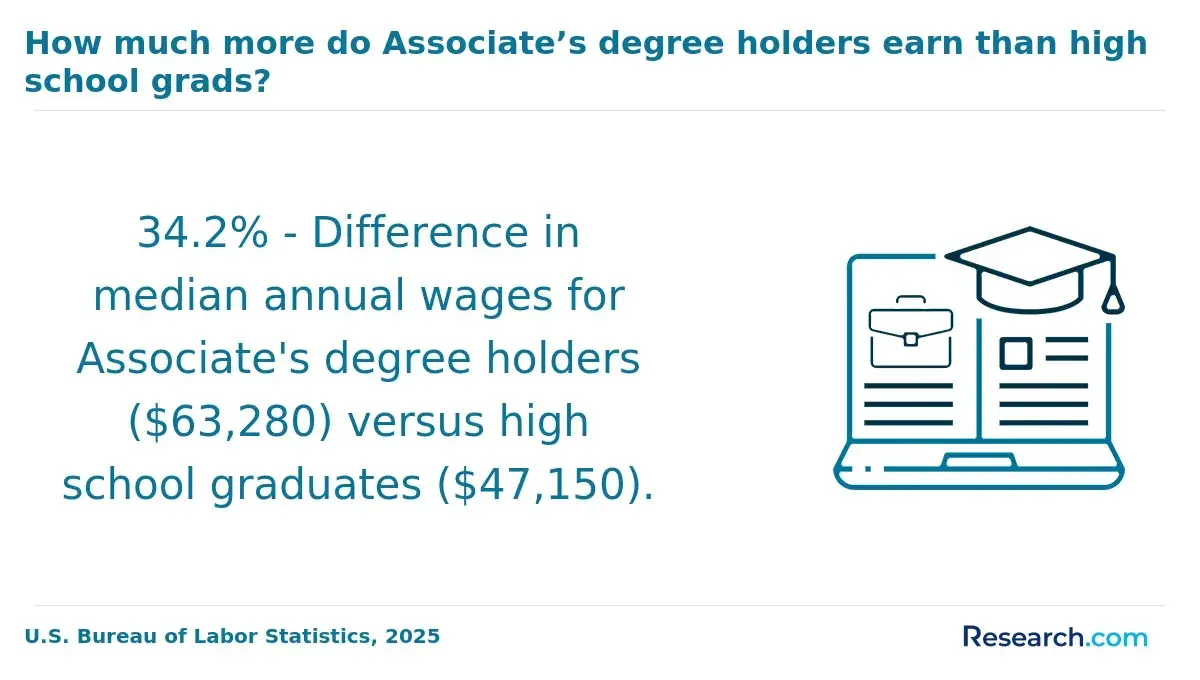
In workforce realities such as community health, transferable skills like effective communication, data collection, and culturally sensitive outreach hold significant weight. Health education specialists earning a median wage of $63,000 illustrate the premium tied to bachelor-level credentials, compared to $51,030 for community health workers who typically hold associate degrees or certifications. Job postings increasingly prefer bachelor's degrees connected to public health or human services with real-world training, reflecting labor market demand for credentials that exceed purely academic knowledge.
Graduate degrees usually target specialization but are often less essential for entry or mid-level community health roles, requiring prospective students to assess time and financial investment against clear career benefits. Those seeking rapid reskilling should focus on accredited certificate programs aligned with labor market needs, especially from institutions recognized by industry standards, ensuring relevant skill acquisition and economic stability based on recent U.S. Bureau of Labor Statistics data.
Educational pathways for impactful human services careers increasingly emphasize practical exposure over purely theoretical study. For detailed considerations on cost-effective program options, students may explore human resources online masters offerings to understand crossover opportunities within workforce priorities.
How do online human services programs compare with campus options for building practical helping skills?
Online human services programs struggle to replicate the immersive, hands-on practicum experiences critical for developing applied counseling, crisis intervention, and case management skills. Employers in these fields prioritize direct observation and in-person practicum hours, which campus-based programs more reliably provide through integrated internships and synchronous role-playing labs with immediate feedback. Without affiliated local practicum sites, online students face inconsistent placement quality and logistical hurdles that can delay progress or limit geographic options.
Conversely, online formats offer distinctive flexibility for employed professionals balancing work and education. This advantage becomes meaningful when paired with verified practicum partnerships and scheduled coaching sessions, which are essential for demonstrating real-world competence-especially in roles like school or career counselors, who earn wages notably above the national median. Failure to secure these elements risks employer skepticism despite degree completion.
Key decision drivers include:
- Access to reputable practicum agencies and supervisors
- Employer expectations for practical experience over theoretical knowledge
- Personal capacity to engage with experiential learning components in person
The choice between online and campus-based human services pathways hinges less on content and more on the structure and quality of hands-on training. Graduates lacking embedded fieldwork risk diminished readiness for workforce demands in complex social service environments.
What courses and fieldwork experiences best strengthen transferable skills in human services majors?
Success in human services hinges on blending foundational interpersonal skills with applied practicum experience to meet workforce demands. Active listening, client assessment, and crisis intervention courses develop versatile capabilities essential across diverse settings. For instance, engaging in disability services programs equips students with rehabilitation counseling skills, a subfield projected to expand 7.8% over the next decade per U.S. Bureau of Labor Statistics data, which mirrors employers' growing need for expertise in disability inclusion and independent living supports.
Programs should require at least 300 practicum hours in environments like mental health clinics or substance abuse centers, where students encounter real-world complexities requiring ethical decision-making, interdisciplinary collaboration, and resource navigation. Skipping embedded fieldwork results in graduates facing steep adaptation challenges on entry-level jobs.
Courses focused on program evaluation and data-driven practice provide critical analytical tools to quantify client outcomes and program effectiveness, skills transferable across nonprofit, governmental, and healthcare sectors. This adaptability is vital as accountability standards tighten.
Students benefit from a broad skill set cultivated through varied placements and coursework rather than premature specialization. A deliberate sequence that starts with interpersonal capabilities and progresses toward targeted interventions enhances practical value and employment readiness in a labor market characterized by shifting priorities and employer expectations.
What admission requirements and prior experience help applicants enter competitive human services tracks?
Entry into competitive human services roles hinges on more than academic credentials; practical experience remains a decisive factor. A bachelor's degree in social work, psychology, or behavioral sciences is the baseline for many positions, but roles demanding advanced clinical skills require a master's degree from accredited programs focused on ethical, evidence-based interventions. Employers explicitly prefer graduates from such verified curricula because these credentials better align with real job demands.
Relevant fieldwork-paid or volunteer-is indispensable, often making or breaking a candidate's prospects. For instance, healthcare social workers, who face a projected increase of approximately 18,700 jobs annually between 2022 and 2032, must demonstrate clinical practicum experience combined with case management exposure. This hands-on training directly impacts employability and wages, with the median annual income near $61,330 across specialties.
Additional hurdles include standardized tests, background screenings, and letters highlighting communication and cultural competence. Programs allowing waivers for prior experience usually impose extensive post-admission supervised practice, delaying credentialing and increasing financial pressures.
Candidates should strategically seek internships offering direct client impact and structured supervision rather than generic volunteering. Balancing employment and study further complicates timelines, as most accelerated tracks are limited and clinical hours mandatory. These realities demand careful planning to trade off between speed and thorough skill development.
What are the typical job roles, employers, and work settings for major human services specializations?
Specializations within human services channel graduates into distinct roles-social workers, case managers, counselors, and social and community service managers-each aligned with varied organizational contexts such as government agencies, nonprofits, and healthcare systems. For instance, a social work track often positions candidates into child protective services or hospital social work, while leadership-focused paths gear professionals toward managing outreach or service programs.
Employers prioritize not only direct client engagement skills but also competencies in program evaluation, funding compliance, and interdisciplinary coordination. This is evident in social and community service managers earning a 2024 median wage of $78,240, with top earners exceeding $100,600. Projected employment growth of 9.1% through 2032-triple the average for all occupations-underscores sustained demand for managerial expertise in diverse settings like rehabilitation, housing, and youth services.
Workforce realities include navigating varied state credentialing, balancing large caseloads often found in rural healthcare networks, and adapting to inconsistent public funding. For example, case managers in rural areas face organizational challenges due to fewer resources per client compared to urban counterparts, requiring advanced prioritization and coordination skills.
Successful navigation of this pathway depends on strategic alignment between specialization choice, employer expectations, and practical constraints encountered in specific service environments.
How do salaries, advancement potential, and job outlook differ by human services specialization?
Entry-level personal care and frontline roles in human services present quick access points to employment but carry lower wages, generally between $25,000 and $35,000 annually. These positions see the most rapid job growth, about 17.12% over a decade, producing roughly 794,500 openings each year nationwide. However, competition is intense, and upward mobility requires additional certification or an associate degree focused on social work or counseling to move into better-paid roles such as case management or clinical support, which command starting salaries in the mid-$40,000s and can exceed $60,000 with experience.
Specialized areas including clinical social work and mental health counseling offer higher median salaries ranging from $50,000 to over $70,000, but their job growth is more moderate, between 6% and 10%, reflecting steadier demand for licensed professionals.
Consider a personal care aide working in a nursing facility: without credentialing, wage increases are minimal, but practical experience combined with formal qualifications can lead to case management opportunities. Employers prioritize this blend of hands-on skill and education, meaning career decisions weigh immediate employment prospects against long-term salary growth and job stability.
- High entry-level openings but low starting wages in personal care roles
- Targeted education required for advancement to clinical and management jobs
- Specialized roles balance higher pay with less dramatic job growth
Which human services specializations align with licensing or certification options in the United States?
State licensure and certification remain pivotal for credible positioning within human services specializations such as substance abuse counseling, case management, mental health support, and social work. These credentials-examples include Certified Alcohol and Drug Counselor (CADC), Certified Case Manager (CCM), and Licensed Clinical Social Worker (LCSW)-are gateways to regulated roles often concentrated in government, clinical, and healthcare settings. For instance, substance abuse counselors must navigate state-specific licensure processes involving verified clinical hours and exam passage, which can constrain mobility due to varying state standards.
Certifications like the CCM, endorsed by the Commission for Case Manager Certification, expand opportunities beyond traditional social services into hospitals and insurance companies, enhancing professional legitimacy. Social work licensing, typified by the LCSW, demands graduate-level education, supervised practice, and rigorous testing-investments that correlate with elevated responsibility and salary but require substantial time and financial commitment.
Less regulated human services roles without such certifications offer fewer portability and recognition advantages, potentially limiting broader labor market access. This dynamic aligns with labor trends revealing a surge in demand for skills such as prioritization and creativity, emphasizing how credentialed practitioners may better translate soft skills into employer-valued competencies.
Prospective candidates must weigh the practical tradeoffs of licensure preparation-longer timelines, cost, and geographic restrictions-against expanded career versatility and eligibility, especially when targeting roles in public sector or clinically intensive environments.
Other Things You Should Know About Human Services
Fieldwork placements are essential but can demand significant time and emotional energy alongside coursework, affecting students' ability to maintain grades and personal wellbeing. Programs with integrated practicum schedules that limit concurrent heavy academic loads tend to yield better skill absorption and lower burnout. Prospective students should prioritize programs that offer flexible, well-structured field experiences rather than those that overload students with simultaneous responsibilities.
Employers in human services often value specialization because it indicates clear expertise with specific populations or interventions, which can reduce onboarding time. However, some settings like nonprofit or community-based organizations may prefer candidates with broad transferable skills for diverse case management. When choosing a specialization, candidates must weigh employer demand in their target geography alongside the flexibility of the skill set to avoid limiting job prospects.
Switching specializations is feasible but frequently requires additional training or certification, especially in clinical or licensed tracks. Transferable skills like communication and advocacy ease transitions, but employers typically expect documented expertise in the new focus area. Professionals should pursue formal credentials or targeted continuing education before attempting a pivot to maintain competitive viability and meet employer expectations.
For-profit institutions often focus on career-specific education, while nonprofit institutions may emphasize a broader liberal arts approach. This difference can affect the type and breadth of transferable skills acquired. Nonprofits might offer more diverse skills, whereas for-profits often concentrate on industry standards and specific competencies.
References
- Guide to bachelor's in human services | edX https://www.edx.org/bachelors/human-services
- Explore UM | University of Manitoba - Faculty of Social Work (Fort Garry Campus and Thompson External Applicant) Information https://umanitoba.ca/explore/undergraduate-admissions/requirements/social-work
- Careers with a Degree in Human Services https://www.mhaonline.com/faq/careers-with-degree-in-human-services
- Humanity in Action: Understanding Human Services Degrees https://www.ucumberlands.edu/blog/humanity-in-action-understanding-human-services-degrees
- High-demand social work careers in California: trends and opportunities https://socialwork.pacific.edu/blog/high-demand-social-work-careers-california-trends-and-opportunities
- Undergraduate Research Experiences Grow Career-Ready Transferable Skills - The Council on Undergraduate Research https://www.cur.org/journal-article/undergraduate-research-experiences-grow-career-ready-transferable-skills/
- What Are My Career Options After a Course in Human Services? https://columbia.ca/career-options-after-a-course-in-human-services/
- What is Human Services https://www.nationalhumanservices.org/what-is-human-services/
- Human Services Careers | PublicHealthOnline.org https://www.publichealthonline.org/human-services/
- What Careers Can You Pursue with a Human Services Degree? - Grace Christian University https://gracechristian.edu/blog/what-careers-can-you-pursue-with-a-human-services-degree/