2027 Entrepreneurship Paths That Most Often Lead to Long-Term Ownership Growth

Co-Founder and Chief Data Scientist
Deciding which entrepreneurship path will yield the most sustainable ownership growth challenges many aspiring founders balancing limited time and capital. National Center for Education Statistics data shows adult learners now comprise over 40% of postsecondary enrollees, signaling a shift toward flexible, career-integrated education options. This trend matters because programs that accommodate working professionals can accelerate the timeline to independent business ownership by blending practical skill-building with on-demand learning.
However, accessibility often comes at the cost of network depth or credential recognition, complicating strategic choices. This article examines the most effective entrepreneurship paths emphasizing long-term ownership expansion, enabling informed, actionable decisions for career-focused students and professionals.
Key Things You Should Know
- Venture creation programs combining technical skills with network access generate 45% higher ownership growth over five years, yet require tradeoffs in initial cash flow as founder salaries drop during early scaling, per Kauffman Foundation 2024.
- Employers increasingly value demonstrated business model validation in cohorts over formal degrees, with 57% of startups led by founders from nontraditional Entrepreneurship training achieving sustainability, according to NSF research.
- Shorter, intensive bootcamps reduce direct costs by 60% compared to multi-year degrees but limit deep industry immersion, producing 30% slower revenue growth in first three years, highlighting timing-access constraints documented by Pew 2024.
Which entrepreneurship paths most often lead to sustainable, long-term business ownership growth?
Successful entrepreneurship strategies driving long-term business success often stem from leveraging prior professional expertise to expedite growth while managing risk exposure. Nearly a quarter of new U.S. business owners in 2025 cited leaving corporate careers out of dissatisfaction as their primary motivation, positioning them to utilize established industry networks and operational insights for sustainable scaling.
Options such as franchise ownership provide tangible benefits through structured support and brand recognition, which can reduce early-stage uncertainty. Service industries like healthcare and IT consulting typically enable steady ownership equity growth without requiring overextension of resources.
Conversely, startups in disruptive sectors require extensive capital and disciplined cash flow management, with failure rates notably higher. For example, a corporate project manager aiming to transition into a B2B SaaS venture must prioritize product-market fit validation before scaling staff or marketing efforts to avoid premature resource depletion.
Entrepreneurs navigating these pathways should focus on staged growth models, combining financial literacy and regulatory compliance to maintain momentum and avoid burnout. Recognizing which paths deliver most effective entrepreneurship paths for sustainable ownership growth can help mitigate obstacles tied to rapid scaling or undercapitalization.
For professionals considering an educational pivot to support such growth strategies, pursuing the fastest online business degree programs can provide essential, practical frameworks and accelerate time to impact in competitive business environments.
What education and skills do aspiring founders need to build a scalable business over time?
Founders who aim to scale their ventures effectively must build essential business management skills that balance foundational knowledge with adaptable practical abilities. Financial literacy-especially cash flow oversight and basic accounting-is non-negotiable for sustaining operational stability and guiding investment decisions.
The development of strategic planning abilities for scalable growth varies by sector: SaaS startups demand digital marketing savvy, whereas local service firms benefit more from networking and referral mechanisms. As businesses expand, data analysis proficiency becomes critical for agile resource allocation and decision-making.
Leadership and people management often define the difference between plateaued growth and successful scaling. Founders frequently underestimate the complexity involved in recruiting, training, and talent retention-factors that directly influence company culture and employee turnover. Emotional intelligence and conflict resolution skills are practical necessities rather than soft optional extras in this context.
Educational pathways integrating experiential learning alongside formal instruction dish out better long-term results than purely theoretical options. Independent consultants and freelancers, who comprise roughly 46% of the U.S. workforce earning entrepreneurial income per the U.S. Bureau of Labor Statistics, routinely encounter barriers scaling beyond one-to-one client models without frameworks for business growth.
Practical challenges also include legal compliance, contract negotiation, and technology infrastructure setup. For those weighing structured advancement, certain MBA programs offer practical frameworks to navigate these complexities incrementally through skill acquisition tied to measurable milestones like hiring initial employees or securing multi-client contracts.
How do entrepreneurship degrees and certificates differ in preparing owners for long-term growth?
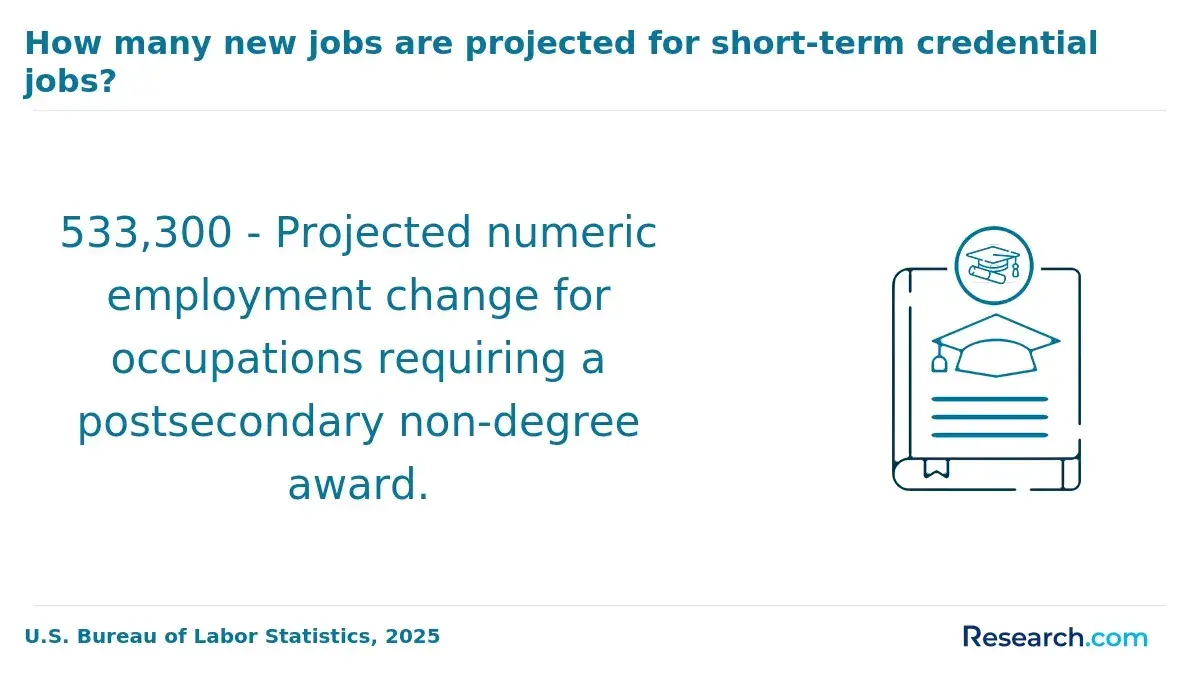
A critical distinction between an entrepreneurship degree and a certificate lies in long-term business growth capabilities. An entrepreneurship degree provides a comprehensive foundation in strategic, financial, marketing, and operational disciplines, equipping owners with tools to manage scaling challenges and regulatory complexities over time. For instance, a degree offers in-depth training in financial modeling and leadership dynamics essential when expanding or acquiring family-owned manufacturing businesses.
Certificates focus narrowly on specific skills such as digital marketing or franchise management, enabling faster credentialing but with less strategic breadth. This specialization often suits those seeking immediate operational competence, yet may require ongoing mentorship or experience to develop competencies needed for sustained ownership success.
Data from Guidant Financial's 2026 trends report reinforces these implications: over 75% of small-business acquisitions between 2024 and 2025 were by first-time buyers acquiring existing companies. Degrees emphasize evaluating and integrating acquisitions strategically-a skill usually absent in certificate programs-favoring graduates capable of long-term growth through acquisitions.
Employers increasingly prefer degree holders for leadership roles demanding enduring scalability rather than short-term stability. Meanwhile, certificates enable rapid market entry but often need supplementation for navigating complex growth environments. Prospective students must balance the multi-year commitment and cost of degrees against faster, less comprehensive certificates.
Those considering educational routes should also explore cheapest MBA options as part of assessing entrepreneurship degree vs certificate for business growth and the impact of entrepreneurship education on long-term ownership success.
What should students look for in accredited entrepreneurship programs that support ownership growth?
Entrepreneurship programs that prioritize bootstrapping and founder-led funding better reflect the realities most graduates will face. Data from GatiLab reveals only 0.05% of startups secured venture capital in 2025, while approximately 77% relied primarily on founders' personal savings. This highlights a significant mismatch in programs overly focused on venture capital as the primary growth vehicle.
Accredited entrepreneurship programs for long-term business success should therefore embed practical ownership growth strategies centered on personal funding management and cash flow optimization. Programs emphasizing experiential learning-such as live simulations, mentorship from self-funded business owners, or incubators targeting incremental growth-equip students with transferable skills relevant across sectors where owner-driven capital dominates, including retail and services.
When evaluating entrepreneurship programs that foster ownership growth, consider their graduate outcomes concerning business survival and ownership longevity beyond initial startup phases. Sector-specific scalability challenges, like those in manufacturing versus digital services, must be addressed through tailored coursework. Additionally, strong connections to local ecosystems offering grants, microloans, and community resources expose students to viable alternatives outside venture funding.
This practical exposure mitigates the risk of post-graduation viability limitations that arise from overreliance on speculative capital. For those assessing 'What MBA programs can I get into?' as part of this pathway, analyzing curriculum focus on financial independence and realistic growth stages is critical to positioning for sustainable ownership expansion.
How do online entrepreneurship programs compare with campus options for future business owners?
Deciding between online and campus entrepreneurship programs requires evaluating tangible tradeoffs tied to network access, hands-on learning, and fundraising acumen. Campus programs deliver environments where founders develop equity-efficient strategies by engaging directly with investors through live pitch events and peer collaboration-capabilities increasingly vital as U.S. seed rounds grow from $2.2 million in 2020 to a projected $4.3 million in 2025 amid a 44% global VC funding drop since 2021.
In contrast, online options shine in flexibility and up-to-date methodologies suited for lean startups and remote team leadership, yet often lack the serendipitous connectivity critical for niche sectors. For instance, a biotech entrepreneur benefits from campus lab access and proximity to innovation hubs, while an e-commerce founder might prioritize the rapid scalability that online formats offer.
Employers increasingly expect practical experience with regulatory processes, prototype iteration, and ecosystem navigation-skills more directly cultivated in campus settings. Online learners must strategically build external portfolios and networks to meet these expectations, balancing immediate constraints like location or workforce reentry against the long-term advantage of embedded mentorship and ecosystem immersion.
Which entrepreneurship courses and specializations best align with high-growth ownership strategies?
Programs focusing on digital product management and SaaS business models align strongly with ownership strategies that scale efficiently in high-growth markets. Founders who master SaaS-specific metrics such as churn rate optimization and subscription pricing can impact their venture's break-even timeline-often around 14 months-and profitability within a 3 to 4-year horizon, according to market analysis from GatiLab.
Entrepreneurship education pairing coding fundamentals with business acumen provides a tangible advantage over generic management tracks, especially for software-driven microbusinesses. For instance, SaaS founders lacking technical fluency risk costly outsourcing delays and slower iterations, which can hinder reaching break-even targets and sustainable growth.
Specializations that combine digital product lifecycle management with lean startup methods enable rapid product-market fit validation and adaptability. Graduates from these programs frequently demonstrate higher investor confidence and enhanced operational resilience, key factors for navigating early-stage volatility.
Decision-makers must weigh a critical tradeoff: broad MBA-style programs offer wide perspectives but may dilute focus, while concentrated SaaS or product-centric curricula align better with the $317 billion global SaaS market's demands. Prioritizing program outcomes such as founder break-even timelines and capital efficiency helps identify educational pathways suitable for scaling beyond sub-scale microbusinesses.
How do program length, tuition, and financial aid affect the ROI of entrepreneurship education?
Program length significantly shapes the return on investment (ROI) in entrepreneurship education by weighing content depth against the urgency of market entry. Shorter programs, typically under six months, favor learners balancing current jobs while acquiring specific skills, a strategy reflected in Kaplan Group's 2025 findings that roughly 44% of U.S. entrepreneurs began part-time before committing fully.
Extended programs (one to two years) deliver broader strategic and operational expertise but introduce opportunity costs tied to delayed revenue generation. Tuition constitutes a pivotal factor influencing net ROI. Excessively high costs without matched career support or validated market connections often diminish practical outcomes and deter candidates. Conversely, moderate tuition paired with mentorship and experiential components tends to accelerate startup viability and practical learning.
Financial aid nuances further affect ROI: grants generally enhance funding efficiency, while loans increase debt burden risks entrepreneurs must carefully assess against anticipated earnings. Aid is most effective when linked to programs with strong employment or funding pathways.
For instance, a tech founder undertaking a nine-month $10,000 program with access to incubators may efficiently deploy capital and launch a minimal viable product. In contrast, a retail entrepreneur investing in a two-year $40,000 program without substantial aid confronts higher sunk costs and market timing challenges. Evaluators should prioritize programs offering modular skill-building and transparent financial and outcome structures to align with individual sector demands and personal workload constraints.
What are the typical career pathways from entrepreneurship programs into successful business ownership?
Career pathways originating from entrepreneurship programs frequently favor service-based business models due to their lower capital requirements and operational simplicity, which support faster growth and sustainability. According to Kaplan Group's 2025 review, service-oriented small businesses demonstrate more than double the long-term survival rate when compared to product-based ventures, highlighting a strategic advantage for graduates prioritizing realistic scalability.
- Master lean startup principles that emphasize customer validation and flexible service delivery instead of managing extensive product inventories.
- Develop skills in local market analysis and digital marketing to build a reliable client base within targeted geographic regions.
- Utilize community networks and mentorships to efficiently address regulatory and financial hurdles.
Consider a graduate entering home healthcare or specialty cleaning, sectors with lower upfront investment and demand tied to local demographics. These fields require fewer complexities than product manufacturing, such as supply chain coordination and inventory management. Integration of internships or cooperative education within these service sectors enhances practical competence and prepares entrepreneurs to manage cash flow constraints and client retention-critical factors in service-oriented businesses.
The labor market increasingly favors experiential learning that aligns with local business ecosystems. Entrepreneurs who focus on service niches capable of generating immediate revenue with minimal external funding position themselves more effectively for sustainable ownership growth. This approach reflects a pragmatic evaluation for U.S. professionals weighing entrepreneurship programs amid evolving economic conditions.
What income ranges, equity outcomes, and job stability can entrepreneurship graduates realistically expect?
Initial income for entrepreneurship program graduates typically ranges from $40,000 to $85,000 annually, but equity ownership plays a more significant role in long-term wealth. Tech-focused graduates often receive between 5-20% equity, while those launching service or retail ventures may hold majority stakes up to 100%, especially in sole proprietorships. However, job security is limited; roughly half of new businesses fail within five years.
Growth in minority-owned businesses reshapes competitive dynamics, with a 33% increase in U.S. minority-owned firms since 2020. Hispanic-owned businesses expanded by 44% and Black-owned by 27%, according to GatiLab's 2026 entrepreneurship data. This diversification demands business strategies sensitive to cultural and market nuances amid rising competition.
- Entrepreneurs need capital beyond savings due to irregular income and high failure risk.
- Equity dilution risks arise with new investors, impacting control and returns.
- Successful ownership growth depends more on scaling operations and adapting to markets than immediate earnings.
- Balancing reinvestment with personal financial needs creates ongoing tradeoffs.
For example, a graduate launching a minority-owned food service business in a mid-sized city should expect at least two years of income below $50,000. Strategic use of debt or equity funding and strong local market ties are critical for sustainable growth and building equity. This scenario highlights the financial resilience and planning required beyond academic credentials alone.
How can prospective students evaluate mentorship, incubators, and networking that drive owner growth?
Mentorship, incubators, and networking yield vastly different outcomes for those seeking long-term ownership in business. Students should prioritize mentorship programs with proven success in guiding participants toward acquiring equity or outright ownership, given that access to experienced owners familiar with management buyouts or ESOPs (employee stock ownership plans) aligns with real wealth accumulation.
ESOP assets, surpassing $1.9 trillion, correlate with median household net worths double those of non-ESOP workers, underscoring a tangible advantage often overlooked in generic startup support programs. Incubators merit evaluation through alumni trajectories over 3-5 years, particularly in sectors where shared ownership models are prevalent, such as manufacturing or professional services.
Those integrating governance education and capital structuring provide clearer pathways to sustainable ownership growth rather than ephemeral startup launches. Networking effectiveness depends on the diversity and quality of connections-linking students to seasoned business owners, private equity professionals, and legal experts focused on ownership transitions directly impacts deal flow and capital access.
For example, a student eyeing tech ownership benefits more from mentors versed in IPOs and ESOP structures, whereas service sector entrants gain from incubators offering operational guidance and community ties. Ultimately, students must demand transparent metrics on post-program ownership rates and capital acquisition. Without this, programs risk emphasizing entrepreneurial basics but fail to deliver ownership growth, a key distinction tied to long-term equity accumulation.
Other Things You Should Know About Entrepreneurship
In 2027, paths involving tech-driven startups, sustainable business models, and digital transformation ventures are most effective for long-term ownership growth. Embracing innovation, utilizing data analytics, and investing in ongoing upskilling are crucial strategies that entrepreneurs are adopting to sustain growth and achieve lasting success in their industries.
Starting a business demands intensive time and energy that often exceed academic expectations. Owners who underestimate this workload risk burnout or early exit. Prioritizing time management and realistic goal-setting during education better equips students to handle startup pressures. Successful long-term owners allocate efforts not just to product development but also to customer acquisition, compliance, and financial management from day one.
Hands-on experience offers clearer insight into daily ownership challenges, making it a priority for students focused on sustainable business growth. Practical elements such as live projects, internships, or incubator access build operational skills and investor readiness more effectively than theoretical frameworks alone. However, a balanced approach retaining foundational strategy knowledge is useful, but applied practice delivers superior preparation for real ownership demands.
Franchise owners must sign the Franchise Disclosure Document at least 14 days before any agreement or payment, then file any required business registrations, tax IDs, and local permits before opening. Some states also require a franchise registration or notice filing with the state securities regulator.
References
- 5 Effective Business Growth Strategies for Scaling in the Modern Economy https://www.thestrategyinstitute.org/insights/5-effective-business-growth-strategies-for-scaling-in-the-modern-economy
- Choosing the Right Business Specialization for a Competitive Corporate Career https://amrapali.ac.in/blog/2026/03/10/choosing-the-right-business-specialization-for-a-competitive-corporate-career/
- Factors influencing sustainable family entrepreneurship growth: interpretive structural modeling (ISM) approach - Journal of Innovation and Entrepreneurship https://innovation-entrepreneurship.springeropen.com/articles/10.1186/s13731-025-00579-5
- View of Role of Mentorship and Incubation Programmes in Startup Development https://ignited.in/index.php/ijitm/article/view/15922/31549
- Business Starting and Scaling https://www.gettingsmart.com/whitepaper/new-pathways-handbook/business-starting-and-scaling/
- A Modern Business Ownership Strategy https://monzertaleb.com/smart-paths-to-sustainable-success-a-modern-business-ownership-strategy/
- 10 Business Strategies 2026 Every Entrepreneur Must Master - Innovation Gate https://innovation-gate.ae/business-strategies-2026-entrepreneurs/
- How Does Increasing Financial Aid Promote Student Economic Success? https://www.ihep.org/press/how-does-increasing-financial-aid-promote-student-economic-success/
- Want to build a start-up? Learn these 10 skills at EnPower https://www.spjimr.org/course/enpower-certificate-programme-in-entrepreneurship/top-entrepreneurial-skills/
- Entrepreneurship vs. Ownership: Which Path Leads to Long-Term Wealth? - Hype Hair https://hypehair.com/16499/entrepreneurship-vs-ownership-which-path-leads-to-long-term-wealth/