2027 How to Choose an Online Clinical Psychology Degree With Good Student Support

Co-Founder and Chief Data Scientist
Choosing an online clinical psychology degree is a high-stakes decision because the wrong program can delay licensure, add debt, or leave you without practicum support. The U.S. Bureau of Labor Statistics projects psychologist employment to grow 6% from 2024 to 2034, making preparation quality increasingly important.
This guide is for prospective bachelor's, master's, PsyD, and PhD students who want flexibility without sacrificing advising, clinical training, accreditation, or career fit. You will learn how to compare programs and avoid costly enrollment mistakes.
Key Things You Should Know
- For psychologist licensure, most states require a doctoral degree, supervised clinical hours, a passing EPPP score, and state-specific requirements; a fully online degree without in-person clinical training is usually not enough.
- Student support should include proactive academic advising, practicum placement help, faculty access, writing and statistics support, crisis resources, disability accommodations, and clear licensure guidance before enrollment.
- Costs vary widely, but graduate borrowers can use up to $20,500 per year in federal Direct Unsubsidized Loans, so total program price, internship travel, and time-to-completion matter as much as tuition.
How do online clinical psychology degrees compare with campus programs for student support?
Online clinical psychology degrees can offer strong student support, but the quality depends less on the delivery format and more on how intentionally the school designs advising, clinical placement, faculty access, and student services. The key question is not "online or campus?" but "will this program support me through coursework, practicum, internship, and licensure steps?"
Distance education is now a mainstream part of U.S. higher education. NCES data released in 2024 show that more than half of postsecondary students had some distance education enrollment in fall 2022. For clinical psychology students, that means online support should be treated as a core program feature, not an optional convenience.
The table below compares the support issues that matter most when evaluating online and campus-based clinical psychology programs. Use it to identify where flexibility may help you and where online students need extra confirmation before enrolling.
| Support area | Strong online program | Traditional campus program | What to verify |
| Academic advising | Scheduled virtual advising, degree maps, registration reminders, and progress tracking | In-person advising with easier drop-in access | Whether advisors specialize in psychology licensure pathways |
| Faculty access | Video office hours, discussion boards, quick response policies, and research mentoring online | Office visits, lab participation, and informal faculty contact | Average faculty response time and how doctoral students receive dissertation support |
| Clinical placement | Placement coordinators help identify approved local sites, but students may still need to network | Established local partner sites may be easier to access near campus | Whether the school guarantees, assists with, or merely approves placements |
| Peer community | Cohort models, virtual case conferences, online student groups, and occasional residencies | More spontaneous peer interaction and campus organizations | Whether students meet regularly beyond asynchronous coursework |
| Technology and accessibility | Online library, telehealth simulation tools, remote tutoring, and digital testing support | Campus labs, library spaces, and in-person technical support | Whether platforms meet accessibility standards and support secure clinical documentation |
Online programs usually make the most sense for working adults, caregivers, military-affiliated students, and learners who do not live near a suitable campus. Campus programs may be a better fit if you want daily lab access, in-person faculty mentorship, or a highly structured environment.
A common mistake is assuming online automatically means weaker support. Another mistake is assuming a campus program automatically offers better support. The better approach is to ask for evidence: advising caseloads, placement outcomes, residency requirements, response-time policies, and licensure pass-rate information when available.
What accreditation should an online clinical psychology degree have for licensure?
Accreditation is one of the most important filters when choosing an online clinical psychology degree. It affects transfer credit, financial aid eligibility, internship options, employer recognition, and whether your education meets state licensing board expectations.
Clinical psychology licensure requirements vary by state, but doctoral-level psychologist licensure commonly requires graduation from a properly accredited doctoral program, completion of supervised experience, and a passing score on the Examination for Professional Practice in Psychology. For doctoral clinical psychology programs, the American Psychological Association Commission on Accreditation is the most important programmatic accreditor to check.
The table below summarizes the main accreditation checks and why each one matters. This is especially important for online and hybrid programs because some schools market psychology degrees that are not designed for psychologist licensure.
| Accreditation or approval | Applies to | Why it matters | Reader action |
| Institutional accreditation | The college or university | Supports federal financial aid eligibility, transferability, and baseline academic legitimacy | Confirm the school is accredited by a recognized institutional accreditor |
| APA accreditation | Doctoral clinical, counseling, and school psychology programs; internships; postdoctoral residencies | Often expected or strongly preferred for psychologist licensure, internships, and competitive employment | Search the APA accredited program directory and confirm the exact campus or delivery format |
| State authorization | Online programs enrolling students across state lines | Determines whether a school may legally enroll students in your state | Ask whether the program is authorized for your state of residence |
| State licensing board alignment | Any degree intended for licensure | Licensure rules are state-specific and may include coursework, practicum, internship, and exam requirements | Compare the curriculum with your state board's education requirements before applying |
Be careful with programs described as "clinical psychology" at the master's level. In many states, a master's in clinical psychology does not qualify you to become a licensed psychologist, though it may support entry into doctoral study or related licensure pathways if the curriculum matches state requirements.
Red flags include vague accreditation language, refusal to disclose licensure alignment by state, no published practicum requirements, and claims that a degree "guarantees" licensure. Licensure is never automatic; it is granted by state boards after education, supervised experience, exams, and background requirements are met.
How can I evaluate student support services in online clinical psychology programs?
Good student support in an online clinical psychology program should be measurable, accessible, and connected to your path from admission through licensure. A polished learning platform is useful, but it is not a substitute for clinical placement guidance, faculty mentoring, and responsive advising.
Start by asking schools for specific examples of how they support online students. The strongest programs can explain who helps you, when support begins, and what happens if you fall behind or cannot secure a practicum site.
- Ask whether every student has a named academic advisor and how often advising meetings are required.
- Confirm whether the program helps locate practicum and internship sites in your area or only approves sites you find independently.
- Request the expected faculty response time for emails, discussion posts, dissertation questions, and clinical supervision concerns.
- Check whether tutoring is available for statistics, research methods, writing, assessment, and dissertation preparation.
- Ask how the program supports students during residency periods, comprehensive exams, internship applications, and EPPP preparation.
- Verify access to disability services, mental health resources, library databases, career services, and technology support for online students.
The table below highlights common support red flags and the better alternative you should look for during admissions conversations.
| Red flag | Why it matters | Better sign |
| "Students are responsible for finding all clinical sites" | This can delay graduation if local placements are competitive | The school provides placement coaching, site lists, affiliation support, and early planning |
| No licensure disclosure for your state | You may complete a degree that does not meet your board's requirements | The program publishes state-by-state licensure disclosures and encourages board verification |
| Mostly asynchronous with little faculty contact | Clinical training requires feedback, supervision, and professional socialization | Regular live sessions, supervision meetings, case discussions, and faculty office hours |
| No clear student escalation process | Online students may struggle to resolve advising or placement problems quickly | Published contacts for advising, program leadership, clinical training, and student complaints |
Strong support also includes preparation for current practice realities. Look for training in telepsychology, electronic health records, privacy rules, digital assessment limits, and ethical use of AI-supported tools. These technologies are increasingly present in behavioral health settings, but clinicians still need human judgment, cultural competence, and board-compliant documentation practices.
What are the typical admission requirements for online clinical psychology degrees?
Admission requirements depend on the degree level. A bachelor's program focuses on general college readiness, a master's program usually expects prior psychology coursework, and a doctoral program looks for research fit, clinical readiness, academic strength, and evidence that you understand the profession.
The table below shows common requirements by degree level. Use it to decide whether you are ready to apply now or should strengthen your academic record, research experience, or professional background first.
| Degree level | Typical admission requirements | Best fit | Important caution |
| Bachelor's in psychology or clinical psychology concentration | High school diploma or equivalent, transcripts, placement requirements, and sometimes transfer credits | Students starting college or preparing for graduate study | A bachelor's degree alone does not qualify you to practice as a clinical psychologist |
| Master's in clinical psychology or counseling-related field | Bachelor's degree, minimum GPA, personal statement, recommendations, prerequisite psychology courses, and sometimes interview | Students seeking doctoral preparation or related mental health roles | Licensure eligibility depends heavily on state rules and curriculum design |
| PhD in clinical psychology | Strong GPA, research experience, faculty fit, statement of purpose, recommendations, interviews, and often statistics preparation | Students interested in research, assessment, teaching, and clinical practice | Admission is often highly competitive and may require relocation for internship |
| PsyD in clinical psychology | Bachelor's or master's degree, clinical or human services experience, essays, recommendations, interview, and academic prerequisites | Students focused primarily on clinical practice | PsyD programs can be expensive, so funding and internship match support matter |
Most applicants should prepare a focused application packet rather than using the same essay for every school. Admissions committees want to see that your goals match the program's model, faculty expertise, and clinical training structure.
- Explain why clinical psychology fits your goals instead of using broad statements about wanting to help people.
- Connect your experience to the program's training model, such as scientist-practitioner or practitioner-scholar.
- Identify faculty, research areas, populations, or clinical settings that align with your interests.
- Address academic weaknesses directly and show evidence of readiness through recent coursework, research, or supervised experience.
If you are unsure whether clinical psychology is the right route, compare it with counseling-oriented paths before applying. Some students find that easiest counseling degree programs are more aligned with their need for a shorter, practice-focused path, though "easiest" should never mean skipping licensure checks.
How long do online clinical psychology programs take, and how much do they cost?
Program length and cost depend on degree level, transfer credits, enrollment pace, residency requirements, dissertation timelines, and clinical placement availability. Online study may reduce commuting or relocation costs, but it does not remove the cost of supervised training, books, technology, travel for residencies, or unpaid internship time.
The table below provides practical planning ranges. These are general U.S. patterns, so you should confirm each school's credit requirements, tuition model, and clinical training schedule.
| Program type | Typical time to complete | Cost factors | Decision point |
| Bachelor's in psychology | About 4 years full time; shorter with transfer credits | Tuition, general education credits, textbooks, technology fees, and transfer policies | Best for students who need a foundation before graduate school |
| Master's in clinical psychology or related field | About 2 to 3 years | Per-credit tuition, practicum fees, supervision requirements, and state licensure alignment | Best if it leads to a clear next step, such as doctoral admission or an eligible counseling license |
| Online or hybrid PsyD | Often 4 to 6 years after prior college study | High credit load, residencies, clinical training, dissertation or doctoral project, and internship travel | Best for students committed to psychologist licensure and able to manage intensive clinical requirements |
| Online or hybrid PhD | Often 5 to 7 years | Research expectations, assistantship availability, dissertation work, and internship placement | Best for students who want research, assessment, academia, or advanced clinical roles |
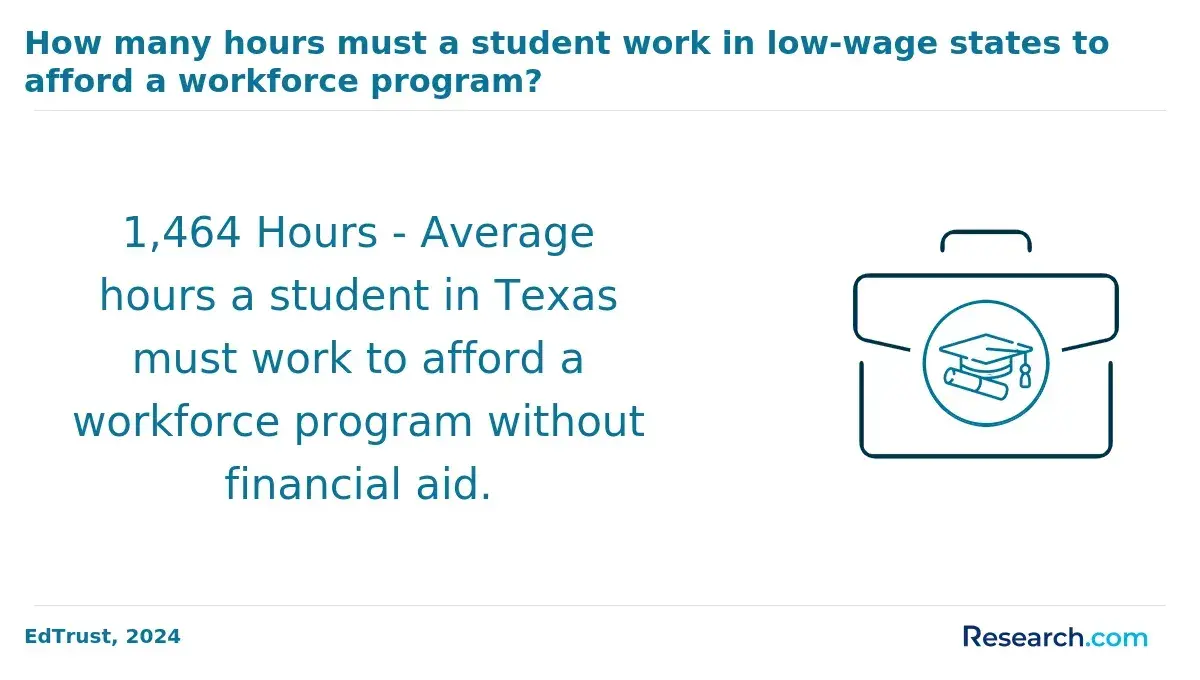
For cost planning, use total program cost instead of tuition alone. Federal Student Aid sets the annual Direct Unsubsidized Loan limit for graduate and professional students at $20,500, which means students in high-cost doctoral programs may need savings, assistantships, employer support, scholarships, or Graduate PLUS Loans to cover remaining expenses.
When comparing costs, include the major expense categories that can change your real price of attendance.
- Tuition by credit hour or term, including whether online students pay separate distance learning fees.
- Residency travel, lodging, meals, and time away from work or caregiving responsibilities.
- Practicum and internship costs, including background checks, liability insurance, transportation, and possible unpaid hours.
- Books, assessment materials, software, laptop requirements, and secure internet access.
- Dissertation or doctoral project fees, continuation fees, and costs if clinical placement delays extend enrollment.
If affordability is your main concern at the undergraduate level, a psychology degree online cheap comparison can help you find lower-cost starting points before committing to expensive graduate training. Just remember that the least expensive option is not always the best value if it lacks transferability, advising, or graduate-school preparation.
What core courses and clinical training should an online clinical psychology curriculum include?
A strong online clinical psychology curriculum should combine scientific foundations, clinical skills, supervised practice, ethics, and assessment training. Because clinical psychology is a regulated profession, the curriculum must do more than deliver online lectures; it must build competence through feedback, supervision, and applied experience.
Look for courses that cover the foundations expected in graduate clinical training. The exact course titles vary, but the content should prepare you for evidence-based practice and state licensing expectations.
- Psychopathology and diagnostic systems, including differential diagnosis and cultural considerations.
- Psychological assessment, testing ethics, measurement, interpretation, and report writing.
- Evidence-based psychotherapy approaches, such as cognitive behavioral, psychodynamic, family systems, and trauma-informed interventions.
- Research methods, statistics, program evaluation, and critical appraisal of psychological literature.
- Ethics, professional standards, diversity, supervision, and legal issues in clinical practice.
- Biological, cognitive, affective, social, and developmental bases of behavior.
The table below explains the training components that should appear in a licensure-oriented clinical psychology program. These elements are especially important to verify in online or hybrid formats.
| Training component | Purpose | What strong support looks like |
| Skills labs or simulations | Build interviewing, assessment, diagnosis, and therapy skills before practicum | Live feedback, recorded practice sessions, rubrics, and faculty review |
| Practicum | Provides supervised clinical experience during the program | Early placement planning, approved site criteria, supervision documentation, and problem-solving support |
| Internship | Provides intensive supervised experience, often near the end of doctoral training | Internship application advising, match preparation, and APA-accredited internship guidance where applicable |
| Dissertation or doctoral project | Demonstrates ability to apply research to clinical questions | Chair availability, methods support, writing resources, and realistic milestone tracking |
Specialization can be valuable, but it should not replace core clinical training. For example, students interested in criminal behavior, assessment, or legal settings may want to compare forensic psychology master's programs, but forensic study is not the same as completing a licensure-ready clinical psychology doctorate.
What is the pathway from an online clinical psychology degree to licensure?
The pathway to becoming a licensed psychologist is longer than earning an online degree. Licensure is controlled by state boards, and requirements can differ by jurisdiction, but most pathways include doctoral education, supervised clinical experience, examination, and continuing education.
The sequence below shows the general pathway many U.S. students follow. Always verify the details with the psychology licensing board in the state where you plan to practice.
- Complete the required undergraduate preparation, usually including psychology, statistics, research methods, and behavioral science coursework.
- Earn a qualifying doctoral degree in clinical psychology, counseling psychology, or school psychology from a program accepted by your state board.
- Complete required practicum experiences during the program and document supervised clinical hours according to school and state rules.
- Apply for and complete a qualifying internship, often a full-time supervised placement near the end of doctoral training.
- Complete any required postdoctoral supervised hours if your state requires them.
- Pass the Examination for Professional Practice in Psychology and any state jurisprudence or ethics exams.
- Submit the state licensure application, background checks, transcripts, supervision verification, fees, and any additional documentation.
- Maintain the license through continuing education, ethical practice, and renewal requirements.
Online students should pay close attention to internship and practicum geography. A program may be online, but clinical training occurs with real clients under supervision, and approved sites may not be equally available in every region.
A major mistake is enrolling before checking your target state's rules. Some students assume that a school's national reputation or online convenience will automatically satisfy local licensing requirements. The safer approach is to print or save the state board requirements and ask the program to show exactly where each requirement is met in the curriculum and training plan.
What clinical psychology careers can an online degree prepare me for?
An online clinical psychology degree can support several career paths, but the specific roles you can pursue depend on degree level and licensure. A bachelor's degree may open entry-level human services work, while independent clinical practice as a psychologist usually requires a doctoral degree and state licensure.
The table below connects degree levels with realistic career directions. Use it to avoid overinvesting in a program that does not match your intended role.
| Career direction | Typical minimum education | Common responsibilities | Licensure note |
| Behavioral health technician or case management support | Bachelor's degree | Client support, documentation, referrals, crisis response assistance, and care coordination | Usually not independent clinical practice |
| Master's-level counselor or therapist in eligible pathways | Master's degree in a licensure-aligned counseling, MFT, or related field | Therapy, treatment planning, intake assessment, and client education | Requires state-specific licensure; clinical psychology master's degrees do not always qualify |
| Licensed psychologist | Doctoral degree plus supervised experience and exams | Assessment, diagnosis, psychotherapy, consultation, supervision, research, and clinical leadership | Requires psychologist licensure from a state board |
| Clinical researcher or academic psychologist | Usually PhD | Research design, teaching, grant work, publication, and supervision | Clinical practice still requires licensure if providing services |
| Assessment specialist or consultant | Often doctoral-level training | Psychological testing, report writing, program consultation, and expert input | Scope depends on license, setting, and state law |
Clinical psychology is not the only mental health pathway. If your primary goal is relationship therapy rather than psychological testing or doctoral-level assessment, online marriage and family therapy programs may be a better match because they are built around relational, couple, and family systems practice.
Students should also consider work setting. Clinical psychology graduates may work in hospitals, community mental health agencies, private practice, schools, correctional settings, veterans' services, university counseling centers, integrated primary care, or research organizations. Each setting values different strengths, such as assessment skill, crisis experience, cultural competence, documentation accuracy, and interprofessional collaboration.
What salary ranges and job outlook can clinical psychology graduates expect?
Salary depends on licensure, degree level, location, employer type, specialization, and experience. You should use salary data as a planning tool, not as a guarantee of personal earnings. The most relevant national benchmark comes from the U.S. Bureau of Labor Statistics, which publishes wage and outlook data for psychology and counseling-related occupations.
The table below uses recent BLS wage and outlook categories to give a realistic view of related paths. The figures are national medians or rounded benchmarks, so local job markets may differ substantially.
| Occupation category | Recent national wage context | Recent outlook context | How to interpret it |
| Clinical and counseling psychologists | About $95,000 median annual wage in May 2024 | Psychologist employment is projected to grow 6% from 2024 to 2034 | Doctoral licensure can support higher-responsibility clinical, assessment, and supervisory roles |
| Substance abuse, behavioral disorder, and mental health counselors | About $59,000 median annual wage in May 2024 | Projected growth is much faster than average in the 2024 to 2034 period | May be a shorter route than psychology licensure, but it follows different state licensing rules |
| Marriage and family therapists | About $64,000 median annual wage in May 2024 | Demand is supported by continued need for behavioral health services | Best aligned with couple, family, and relational therapy rather than doctoral psychological assessment |
| Postsecondary psychology teachers | Pay varies by institution, rank, and contract type | Opportunities are influenced by higher education budgets and research specialization | A PhD is typically the stronger route for tenure-track academic roles |
For ROI, compare the total cost of the degree with the specific license and role you are pursuing. A doctoral program may make sense if you want to become a licensed psychologist, conduct assessments, supervise trainees, or pursue advanced clinical leadership. It may not be the best investment if your main goal is to provide therapy as quickly and affordably as possible and a master's-level license would meet your needs.
Technology is also changing the work. Telehealth has expanded access to therapy and assessment follow-up, while AI-supported documentation and screening tools are entering behavioral health workflows. However, these tools do not replace licensure, clinical judgment, ethical decision-making, or supervised training.
How do I choose a reputable online clinical psychology program aligned with my goals?
The best online clinical psychology program is the one that matches your intended license, learning style, budget, timeline, and support needs. Reputation matters, but it should never be judged by marketing claims alone. You need evidence that the program can get you from enrollment to the next professional milestone.
Use the steps below to compare programs before you apply or accept an offer. This process helps you avoid choosing based only on convenience, tuition, or brand recognition.
- Define your target outcome first, such as doctoral psychologist licensure, doctoral admission, master's-level counseling licensure, research preparation, or entry-level behavioral health work.
- Check institutional accreditation, programmatic accreditation where applicable, and state authorization for your location.
- Compare the curriculum with your state licensing board's education requirements and ask the program to identify any gaps.
- Review student support in detail, including advising, placement assistance, faculty access, tutoring, disability services, and career services.
- Calculate total cost, including tuition, fees, residencies, clinical training costs, books, technology, and possible enrollment extensions.
- Ask for outcome indicators such as completion rates, internship support, EPPP preparation, licensure disclosures, and alumni employment examples when available.
- Speak with current students or recent graduates if possible, especially about faculty responsiveness and practicum placement support.
- Choose the program that best fits your goal, not the one with the fastest timeline or most aggressive admissions process.
The table below summarizes common mistakes and the smarter alternative. These issues are especially important in online clinical psychology programs because licensure and clinical placement requirements are easy to underestimate.
| Common mistake | Why it can hurt you | Smarter alternative |
| Choosing the cheapest program without checking licensure alignment | A low price is poor value if the degree does not qualify for your intended license | Verify state board requirements before comparing tuition |
| Assuming "clinical psychology" means psychologist licensure | Some degrees use clinical language but are not doctoral licensure pathways | Confirm the exact license the program is designed to support |
| Ignoring practicum and internship logistics | Clinical site problems can delay graduation | Ask for placement processes, site criteria, and geographic limitations |
| Relying only on rankings | Rankings may not reflect your state, specialization, cost, or support needs | Use rankings as one input, then verify accreditation, outcomes, and fit |
| Overlooking faculty fit | Doctoral success often depends on research, supervision, and mentoring alignment | Review faculty interests and ask how students are matched with mentors |
A reputable program should welcome detailed questions. If admissions staff pressure you to enroll quickly, avoid answering licensure questions, or cannot explain clinical training requirements, treat that as a serious warning sign.
Other Things You Should Know About Clinical Psychology
You may be able to work full time during early coursework, especially in a bachelor's or some master's programs. Doctoral clinical psychology programs become harder to combine with full-time work once practicum, residency, dissertation, and internship requirements begin.
In 2027, many online clinical psychology programs offer flexibility with campus visits, though some may require occasional on-campus workshops or residencies for hands-on training and networking. These requirements can vary significantly between institutions.
Asynchronous coursework can work for theory-heavy subjects, but clinical training should include live interaction, feedback, supervision, role-play, case discussion, and assessment practice. A program with no real-time clinical skill development deserves careful scrutiny.
Transfer credits can shorten some bachelor's and master's programs, but doctoral programs often limit transfer credit for clinical courses, practicum, and dissertation work. Ask for a written transfer evaluation before making cost or timeline assumptions.
References
- Clinical Psychologist Salary Guide - Trusted Health https://www.trustedhealth.com/allied-career-guide/clinical-psychologist/salary-guide
- Admission Requirements https://www.torontomu.ca/psychology/programs/graduate/admission-requirements/
- How Long Does It Take to Become a Clinical Psychologist? Career Path Timeline https://www.scuhs.edu/psyd-article/how-long-does-it-take-to-become-a-clinical-psychologist-career-path-timeline/
- Ph.D. Degree in Clinical Psychology https://gsbs.utsouthwestern.edu/application-and-admissions/clinical-psychology.html
- How to set up an effective psychological support service p https://www.emundus.fr/en/resources/blog/how-to-set-up-an-effective-psychological-support-service-for-students
- Does it Matter if my Psychology Degree Program is Accredited? https://www.bestpsychologydegrees.com/faq/does-it-matter-if-my-psychology-degree-program-is-accredited/
- Guide To Online Clinical Psychology Degrees https://www.psychology.org/online-degrees/clinical-psychology/
- Master’s in Social Work vs. Master’s in Psychology https://socialworklicensemap.com/social-work-resources/comparing-social-service-degrees/social-work-vs-psychology/
- Psychology Accreditation: What you need to know https://www.onlinepsychologydegrees.com/articles/accreditation/
- How to Become a Licensed Clinical Psychologist | CIIS https://www.ciis.edu/news/how-become-licensed-clinical-psychologist