2027 Best Online Bachelor's in Clinical Psychology for Working Adults

Co-Founder and Chief Data Scientist
Choosing an online bachelor's in clinical psychology is a high-stakes decision because the degree can open mental health support roles, but it usually is not enough for independent clinical licensure. The U. S. Bureau of Labor Statistics reported a May 2024 median annual wage of $94,310 for psychologists, a career path that typically requires graduate training. This guide is for working adults comparing flexible programs, costs, accreditation, transfer credit, timelines, and career outcomes so they can choose a degree that fits both life responsibilities and long-term licensing goals.
Key Things You Should Know
- An online bachelor's in clinical psychology is usually a 120-credit degree; transfer-friendly programs may shorten the timeline for adults with prior college credit.
- Regional or institutional accreditation is essential, and students aiming for counseling, psychology, or social work licensure should verify graduate-school prerequisites before enrolling.
- According to BLS May 2024 wage data, bachelor's-level human services roles often pay less than licensed psychologist roles, so ROI depends heavily on whether the degree is used as a stepping stone to graduate study.
What is an online bachelor's in clinical psychology and how does it prepare working adults?
An online bachelor's in clinical psychology is an undergraduate degree focused on human behavior, psychological disorders, assessment basics, research methods, ethics, and helping skills. At the bachelor's level, "clinical psychology" usually means preparation for entry-level behavioral health, case management, research support, crisis services, and graduate study rather than independent diagnosis or psychotherapy practice.
For working adults, the best programs combine academic psychology with practical scheduling. Courses are commonly delivered asynchronously, meaning students can watch lectures, complete discussions, and submit assignments around work shifts. Some programs include synchronous sessions, supervised field experiences, or local internships, so applicants should check whether any required activities happen at fixed times.
This degree may be a strong fit if you want a mental health-related career but are not ready to commit immediately to a master's or doctorate. It can also help adults who already work in healthcare, education, social services, corrections, or community programs move toward roles that require more knowledge of behavioral health.
It may not be the best stand-alone option if your goal is to become a licensed psychologist, licensed professional counselor, marriage and family therapist, or clinical social worker as quickly as possible. Those paths generally require graduate education, supervised clinical hours, and state licensure. If affordability is your first concern, comparing a broader psychology online degree can help you see whether a clinical psychology concentration is worth the added specificity.
The table below shows how the degree fits different adult learners. Use it to decide whether a clinical psychology bachelor's matches your immediate needs or whether another path may be more efficient.
| Student goal | How the degree can help | Important limitation |
| Enter behavioral health support work | Builds knowledge of mental health, interviewing, ethics, and human development | Many roles are non-licensed and may involve case support rather than therapy |
| Prepare for graduate counseling or psychology study | Provides prerequisites in statistics, abnormal psychology, research, and developmental psychology | Graduate programs may require specific coursework or minimum grades |
| Change careers while working full time | Online formats can reduce commuting and support part-time enrollment | Fieldwork, exams, or presentations may still require planned availability |
| Become a licensed clinical psychologist | Can be the first step toward graduate study | A doctorate and state licensure are typically required for psychologist licensure |
How do online clinical psychology bachelor's programs compare to campus-based degrees for flexibility and quality?
Online and campus-based clinical psychology bachelor's degrees can be similar in academic quality when they are offered by accredited institutions, taught by qualified faculty, and built around the same learning outcomes. The main difference is not whether the degree is "real," but how the program delivers instruction, support, assessment, and applied learning.
Online programs are often better for working adults who need schedule control, live far from campus, or have caregiving responsibilities. Campus programs may be better for students who want frequent in-person interaction, easier access to labs, campus counseling centers, student organizations, or local faculty-led research projects.
The table below compares the practical trade-offs most working adults face. It can help you decide which format supports your learning style and career goals.
| Factor | Online bachelor's format | Campus-based format |
| Schedule flexibility | Often strongest when courses are asynchronous or offered in shorter terms | Usually tied to fixed class times and commuting |
| Faculty access | Available through email, video meetings, discussion boards, and virtual office hours | Available through office hours, in-person meetings, and campus events |
| Peer interaction | Depends on discussion design, group projects, and cohort structure | Often easier through class meetings and campus activities |
| Research exposure | Possible, but may require intentional outreach to faculty | Often easier if labs and faculty projects are on campus |
| Internship access | May be arranged locally, depending on school support and state rules | May rely on established local campus partnerships |
| Employer perception | Generally strongest when the institution is accredited and the transcript does not signal a lower academic standard | Generally familiar to employers, especially regional employers |
Quality varies more by institution than by modality. A strong online program should have clear weekly expectations, accessible instructors, library and tutoring access, career services, mental health-related electives, and transparent policies for transfer credit and field experience.
For working adults, the best format is usually the one you can finish without sacrificing academic quality. A highly ranked campus program may be a poor fit if the commute or daytime schedule forces you to stop out; a flexible online program may be a better investment if it lets you maintain income and progress consistently.
What accreditation should online clinical psychology bachelor's programs have for graduate study and licensure?
The most important accreditation for an online bachelor's in clinical psychology is institutional accreditation from an agency recognized by the U.S. Department of Education or the Council for Higher Education Accreditation. This is what generally supports federal financial aid eligibility, transfer credit review, and graduate-school recognition.
At the bachelor's level, clinical psychology programs are not typically accredited by the American Psychological Association. APA accreditation applies mainly to doctoral programs, internships, and postdoctoral residencies in health service psychology, not standard undergraduate psychology majors. That distinction matters because a bachelor's degree can prepare you for graduate study, but it does not substitute for licensure-level training.
If your long-term goal is counseling licensure, pay close attention to what graduate programs require. Many states and employers prefer or require a counseling master's from a properly accredited program, and students comparing future options may want to understand how online mental health counseling programs (CACREP-accredited) fit into the licensure pathway.
Before enrolling, verify accreditation and licensure alignment through more than one source. These checks are especially important for working adults who cannot afford to lose time or credits.
- Confirm institutional accreditation on the school's official accreditation page and through a recognized accreditation database.
- Ask whether credits have transferred to graduate psychology, counseling, social work, or human services programs in the past.
- Review admission prerequisites for the graduate programs you may apply to later, including statistics, research methods, abnormal psychology, and lab science requirements.
- Check your state licensing board if your eventual goal is counseling, psychology, social work, addiction counseling, or behavior analysis licensure.
- Get written clarification about whether online students have the same transcript, faculty, curriculum standards, and student services as campus students.
A reputable program will not promise that a bachelor's degree alone leads to clinical licensure. Instead, it should clearly explain what the degree can and cannot do, how it prepares students for graduate study, and which career paths require additional credentials.
What admission requirements and prior academic experience do online clinical psychology programs expect?
Admission requirements vary by institution, but most online bachelor's programs are designed to serve both first-time college students and transfer students. Working adults often apply with a mix of prior college credits, military training, professional experience, or associate degrees, so transfer policy can matter as much as the admission checklist itself.
Most programs ask for evidence that you are ready for college-level writing, reading, and quantitative work. Psychology is a writing-heavy and research-informed field, so applicants should expect papers, discussion posts, statistics assignments, and projects that require careful use of evidence.
Common admission materials usually include the following items. Review these early so you can avoid delays, especially if you attended multiple colleges.
- High school transcript, GED documentation, or proof of equivalent completion for first-year applicants
- Official transcripts from all previously attended colleges for transfer applicants
- Minimum GPA requirement or conditional admission process for applicants below the standard threshold
- Placement information or completed college-level English and math courses
- Application form, identification information, and possible application fee
- Personal statement or short essay for selective programs
- Optional or required resume if the program considers work, military, or volunteer experience
Prior academic experience can significantly change your timeline and cost. A student with 60 transferable credits from an associate degree may be halfway to graduation, while a student starting from zero credits may need the full four-year sequence. However, not all credits apply to the major, and some schools limit how many credits can transfer from community colleges, exams, or nontraditional learning.
Adults should ask for an unofficial transfer evaluation before committing. The key question is not "How many credits will you accept?" but "How many accepted credits will apply to my degree requirements?" Credits that transfer only as electives may not shorten your graduation timeline as much as expected.
How long does it take to complete an online clinical psychology bachelor's and can you study part time?
A typical online bachelor's in clinical psychology requires about 120 semester credits. Full-time students commonly finish in about four academic years, while transfer students with an associate degree or substantial prior credit may finish in two years or less, depending on how credits apply.
Part-time study is common for working adults. The trade-off is straightforward: taking fewer courses per term protects your schedule, but it extends time to graduation and may affect financial aid eligibility. Some federal aid programs require at least half-time enrollment, so students should confirm enrollment thresholds before reducing their course load.
The table below summarizes common pacing options. Use it to compare speed, workload, and risk before choosing a course load.
| Enrollment pace | Typical course load | Best for | Main trade-off |
| Full time | Usually 12 or more credits per term | Students who can dedicate significant weekly study time | Harder to balance with demanding work or caregiving schedules |
| Part time | Often 3 to 9 credits per term | Working adults who need flexibility and lower semester workload | Longer completion time and possible aid implications |
| Accelerated terms | Shorter sessions with concentrated coursework | Motivated students with strong time management | Fast pacing can be difficult during busy work periods |
| Transfer-completion format | Upper-division major and elective credits after prior coursework | Students with an associate degree or many prior credits | Requires careful transfer evaluation and prerequisite planning |
Adults should be realistic about weekly time requirements. A three-credit online course can still require several hours of reading, writing, discussion, and studying each week. Psychology courses with statistics, research design, or writing-intensive assignments may demand more focus than students expect.
A good strategy is to start with a manageable course load in the first term, especially if you have been out of school for several years. After you understand the platform, instructor expectations, and your study rhythm, you can decide whether to add courses in later terms.
What courses, concentrations, and clinical preparation are included in a clinical psychology bachelor's curriculum?
A clinical psychology bachelor's curriculum usually combines general education, core psychology courses, research training, and electives related to mental health. The goal is to help students understand behavior scientifically while building communication, ethical reasoning, and cultural awareness.
The "clinical" label at the undergraduate level can vary. Some schools offer a formal clinical psychology concentration, while others offer a psychology major with electives in abnormal psychology, counseling theories, trauma, crisis intervention, or health psychology. Applicants should read the degree plan rather than relying only on the program title.
Common courses include the areas below. These courses matter because they often support graduate-school readiness and entry-level human services work.
- Introduction to psychology and history of psychological science
- Abnormal psychology and psychopathology
- Developmental psychology across the lifespan
- Research methods and psychological statistics
- Personality theory and social psychology
- Cognitive psychology or biological psychology
- Counseling theories, interviewing, or helping skills
- Ethics, diversity, and multicultural psychology
- Capstone, senior seminar, research project, or field experience
Clinical preparation at the bachelor's level is usually introductory. Students may practice active listening, documentation, crisis response concepts, case conceptualization basics, and ethical decision-making, but they are not being trained to independently treat clients. If the program includes an internship or practicum, ask whether the school helps online students find approved local placements.
Current mental health workplaces increasingly use telehealth platforms, electronic records, data dashboards, and AI-assisted administrative tools. A strong undergraduate program should help students build digital professionalism, privacy awareness, and evidence-based thinking rather than treating technology as separate from clinical practice.
How much do online clinical psychology bachelor's programs cost and what financial aid is available?
Costs vary widely by school type, residency status, transfer credit, course load, and fees. Online students may save on commuting and housing, but they can still face technology fees, books, proctoring fees, internship expenses, and graduation fees. For context, the College Board's 2024 pricing report listed average published tuition and fees of $11,610 for in-state students at public four-year institutions and $43,350 at private nonprofit four-year institutions. Those figures are not online-only prices, but they show why comparing total cost matters.
When evaluating affordability, focus on net cost rather than sticker price. Net cost accounts for grants, scholarships, employer tuition assistance, transfer credits, and any discounts for military students, public employees, or adult learners.
Financial aid may include several sources. Each has different eligibility rules, so students should confirm details with the school's financial aid office.
- Federal Pell Grants for eligible undergraduates, with a maximum award of $7,395 for the 2024-25 award year
- Federal student loans, which must be repaid and should be borrowed conservatively
- State grants or workforce-development funds for eligible residents
- Institutional scholarships for transfer students, adult learners, military-affiliated students, or high-GPA applicants
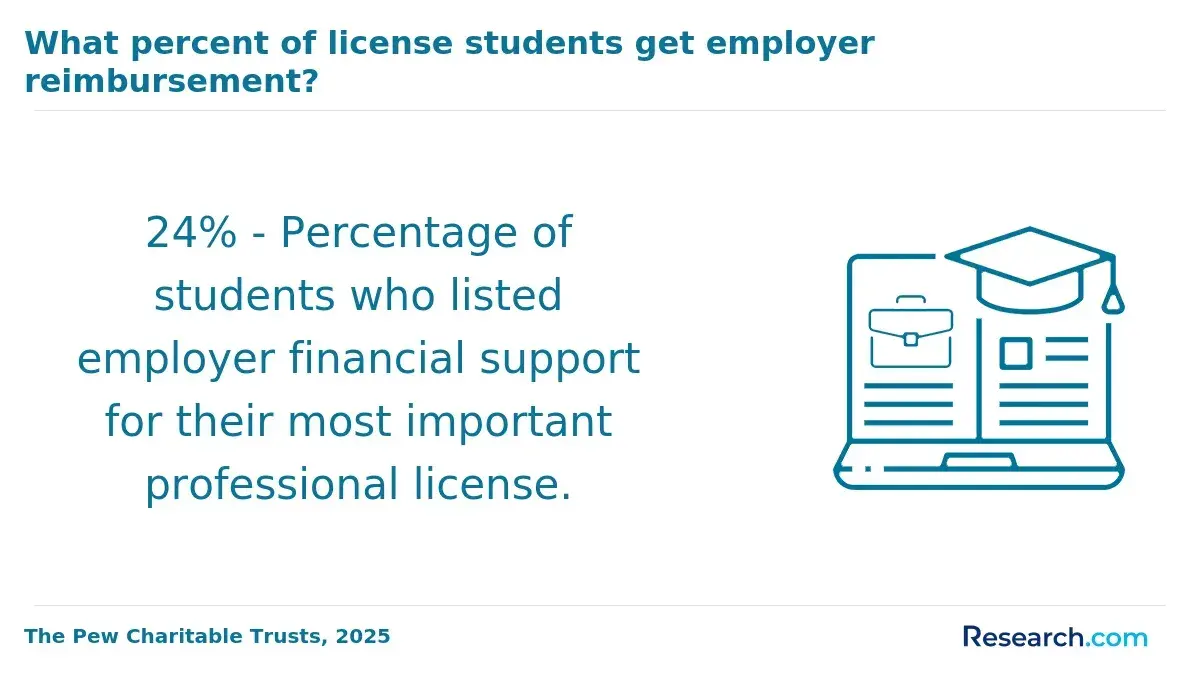
- Employer tuition assistance or reimbursement for workers in healthcare, education, government, or social services
- Credit for prior learning, standardized exams, military training, or professional certifications where accepted
The table below shows cost factors that are easy to overlook. Reviewing them before enrollment can prevent a program that looks affordable from becoming expensive later.
| Cost factor | Why it matters | Question to ask |
| Transfer credit acceptance | Accepted credits can reduce both tuition and time | How many credits apply directly to degree requirements? |
| Online course fees | Fees can raise the per-credit cost | Are online fees charged every course or every term? |
| Residency pricing | Some public universities charge different rates by state | Do online students pay in-state, out-of-state, or flat-rate tuition? |
| Books and materials | Psychology courses may require textbooks, assessments, or software | Are open educational resources used in any courses? |
| Field experience costs | Background checks, travel, or placement requirements may add expenses | Are internships required, optional, or locally arranged? |
| Completion risk | Stopping out can increase total cost without producing a credential | What advising and academic support are available to online adults? |
One practical way to reduce cost is to complete lower-division general education courses at an accredited community college before transferring, but only after confirming transfer equivalency. A cheaper course does not save money if it does not apply to your bachelor's plan.
What careers can you pursue with a bachelor's in clinical psychology and what roles require a master's?
A bachelor's in clinical psychology can support entry-level roles in behavioral health, social services, research, corrections, education, and nonprofit programs. These jobs often involve client support, intake coordination, documentation, case management assistance, community outreach, or program operations rather than independent therapy.
Typical bachelor's-level roles may include behavioral health technician, psychiatric technician, case management assistant, crisis line worker, community outreach coordinator, research assistant, residential counselor, victim advocate, or human services specialist. Job titles vary by state and employer, and some roles require background checks, supervised training, or additional certifications.
Many clinical careers require graduate education. If you want to diagnose mental health conditions, provide psychotherapy independently, or practice as a licensed clinician, you will usually need a master's, doctorate, supervised experience, and a state license.
The table below separates common bachelor's-level options from roles that typically require graduate preparation. This distinction is essential when evaluating the return on your degree.
| Career direction | Typical minimum education | What the work may involve | Licensure note |
| Behavioral health technician | Bachelor's preferred or required by some employers | Support clients in treatment settings, observe behavior, document progress | Usually works under supervision |
| Case management or human services support | Bachelor's commonly preferred | Connect clients to services, maintain records, coordinate care | Licensure usually not required for support roles |
| Research assistant | Bachelor's commonly required | Collect data, manage studies, support faculty or clinical research teams | Not a clinical license |
| Licensed professional counselor | Master's commonly required | Provide counseling and psychotherapy under state scope of practice | Requires state licensure and supervised hours |
| Clinical social worker | Master of Social Work commonly required | Provide therapy, assessment, advocacy, and care coordination | Requires state licensure and supervised hours |
| Clinical psychologist | Doctorate commonly required | Assessment, diagnosis, therapy, testing, supervision, research | Requires state licensure |
Students interested in substance use treatment should also compare specialized programs and state credential rules. In some states, addiction counseling credentials can begin below the master's level, but advancement often requires more education; reviewing accredited online colleges for drug and alcohol counseling can clarify whether a focused counseling pathway is more direct than a general clinical psychology degree.
The best career strategy is to treat the bachelor's degree as a platform. Use internships, volunteer work, research projects, and electives to test your interests before committing to graduate school.
What are typical salaries and long-term earning potential for clinical psychology and mental health careers?
Salary potential depends heavily on education level, licensure, employer, location, and job duties. Bachelor's-level mental health support roles generally pay less than licensed clinical roles, but they can provide experience that strengthens graduate applications and helps students confirm whether client-facing work is a good fit.
BLS May 2024 data reported a median annual wage of $59,190 for substance abuse, behavioral disorder, and mental health counselors and $94,310 for psychologists. These medians are not guarantees for individual graduates, but they show why many students use the bachelor's degree as a step toward graduate-level licensure.
The table below gives a practical salary context across related roles. Use it as a labor-market benchmark, not as a promise of earnings.
| Role or occupation group | Typical education pattern | BLS May 2024 median annual wage | What affects earnings |
| Social and human service assistants | High school to bachelor's, depending on employer | $44,240 | Agency type, region, experience, public funding, case complexity |
| Substance abuse, behavioral disorder, and mental health counselors | Bachelor's to master's, depending on role and state | $59,190 | Licensure, setting, specialization, supervision responsibilities |
| Psychologists | Usually doctoral-level for clinical practice | $94,310 | License type, specialty, practice setting, testing expertise, location |
Long-term earning potential often improves when students pursue licensure-eligible graduate programs, gain supervised experience, and specialize in areas with employer demand, such as trauma-informed care, assessment, child and adolescent services, integrated healthcare, or substance use treatment. However, graduate debt can reduce ROI, so students should compare tuition, assistantships, employer reimbursement, and realistic salary ranges before enrolling.
If you are interested in psychology careers outside traditional counseling, forensic psychology is one example where education level, employer, and role definition can vary widely. Students comparing specialties can review how much do forensic psychologists make to understand how salary context changes across psychology-related fields: how much do forensic psychologists make.
How do you choose a reputable online clinical psychology bachelor's program aligned with licensing goals?
The best online bachelor's in clinical psychology for a working adult is not simply the cheapest or fastest option. It is the accredited program that fits your schedule, accepts meaningful transfer credit, teaches the prerequisites you need, supports online learners, and aligns with the graduate or career pathway you may pursue later.
Use a structured evaluation process before applying. This reduces the risk of choosing a program that looks convenient but does not support your actual licensing or career goals.
- Define your end goal first, such as behavioral health support work, graduate counseling, social work, psychology doctoral study, or addiction services.
- Verify institutional accreditation and avoid schools that make vague claims about "approval" without recognized accreditation.
- Compare degree plans course by course, especially abnormal psychology, statistics, research methods, developmental psychology, and ethics.
- Request a transfer evaluation before enrollment and ask which credits apply to the major, general education, and electives.
- Ask whether online students receive the same advising, tutoring, library, career services, and faculty access as campus students.
- Confirm whether any internships, practicums, proctored exams, or synchronous sessions are required.
- Check graduate-program prerequisites now, even if you do not plan to apply for several years.
- Calculate total net cost after grants, transfer credits, employer benefits, fees, books, and likely time to completion.
Red flags deserve serious attention. A program may not be the right choice if it promises licensure from a bachelor's degree alone, refuses to provide a clear transfer-credit review, lacks transparent tuition and fees, has weak online student support, or uses a curriculum with few clinical psychology or research-focused courses.
Working adults should also consider academic fit. If you dislike research, statistics, writing, or emotionally complex topics, a clinical psychology degree may feel harder than expected. If you are motivated by understanding people, supporting vulnerable populations, and preparing for graduate study, the degree can be a strong foundation.
A final decision should balance three questions: Can I afford it, can I finish it, and does it move me closer to the credential or job I actually want? If the answer is yes to all three, the program is more likely to be a smart investment.
Other Things You Should Know About Clinical Psychology
Usually no. A bachelor's degree can prepare you for support roles and graduate study, but independent therapy typically requires a master's or doctorate, supervised clinical hours, and state licensure.
Neither is automatically better. A BS may include more science, statistics, or research coursework, while a BA may include more liberal arts or social science electives. Choose the curriculum that best matches your graduate-school prerequisites and career goals.
Students in online bachelor's programs in clinical psychology should develop strong communication, analytical, and critical-thinking skills. Additionally, empathy and active listening are crucial for understanding client needs, making these skills highly valuable for working adults aiming to excel in the field by 2026.
References
- Guide To Online Clinical Psychology Degrees https://www.psychology.org/online-degrees/clinical-psychology/
- Online Psychology Degrees | Accredited Programs 2026 https://www.bestpsychologydegrees.com/online-degrees/
- Bachelor’s in Psychology Programs Online | Social Work License Map https://socialworklicensemap.com/social-work-resources/comparing-social-service-degrees/ba-psychology/
- Applying to Graduate Programs in Clinical Psychology: A Guide for Prospective Students, Advisors, and Faculty Part II https://nobaproject.com/blog/2019-09-12-applying-to-graduate-programs-in-clinical-psychology-nbsp-a-guide-for-prospective-students-advisors-and-faculty-part-ii
- How to Choose an Online Psychology Degree Program That Fits Your Goals and Budget - Lancaster Bible College https://www.lbc.edu/blog/how-to-choose-an-online-psychology-degree-program/
- Why Get a Psychology Degree Online? | University of Bridgeport https://www.bridgeport.edu/news/reasons-to-get-your-psychology-degree-online/
- Bachelor’s in Psychology Programs Online https://www.onlinemswprograms.com/careers/social-work-vs-counseling-vs-psychology/ba-psychology/
- What Do Psychologists Earn? Highest Paying Psychology Jobs | Walbrook https://www.walbrook.ac.uk/subjects/psychology/psychologist-salaries-highest-paying-jobs/
- Online Master’s in Clinical Psychology https://onlinecounselingprograms.com/online-counseling-degrees/online-masters-in-psychology/clinical-psychology/
- Clinical Psychology Graduate Program https://www.uregina.ca/arts/psychology/clinical-program.html