2027 Online Biology Degrees With Practice-Focused Curricula

Co-Founder and Chief Data Scientist
Professionals aiming to advance in biology frequently confront the obstacle of balancing rigorous lab work with unpredictable schedules. Traditional degree programs often lack the flexibility to accommodate employed adults seeking immediate skill application. According to the National Center for Education Statistics in 2024, online enrollments surged by 12%, signaling a shift toward accessible education that prioritizes adaptability without compromising quality.
This rise reflects a growing demand for practice-focused curricula that integrate real-world competencies alongside theoretical knowledge, essential for meeting employer expectations in biotech, research, or environmental sectors. This article examines online biology degrees emphasizing applied learning to assist informed program selection and skill alignment.
Key Things You Should Know
- Online biology degrees averaging 20% lower tuition than in-person programs reduce upfront cost but often limit hands-on lab exposure, which employers rank as essential for entry-level biotech roles-posing a tradeoff in skill depth.
- Employers report a 15% preference increase for candidates with accredited practical training components, pressuring prospective students to verify curricula rigor beyond generic online lectures to maintain workforce competitiveness.
- Median time-to-completion for practice-focused online biology degrees is 30% longer due to asynchronous lab modules, extending opportunity cost and delaying career pivots by up to a year per National Center for Education Statistics 2024 data.
What is an online biology degree with a practice-focused curriculum, and who is it best for?
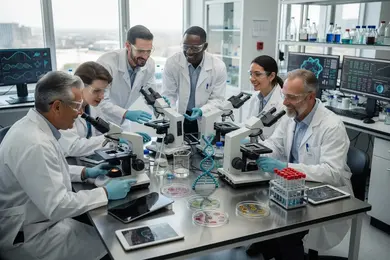
Online biology degree programs with hands-on training respond directly to employer demand for graduates who can operate lab equipment, manage biological datasets, and contribute immediately to roles such as clinical lab technician or environmental analyst. These best practice-oriented biology degrees online integrate virtual labs, field simulations, and local practicums, offering applied skills over purely theoretical learning. However, the logistical complexity of securing site approvals and supervisors for in-person components distinguishes these programs from traditional fully online degrees.
This model suits working adults needing flexible schedules, those changing careers into healthcare or labs, and students geographically or financially excluded from campus labs. Program advisors play a critical role in aligning practicum placements with local standards and specific career targets. Yet, tradeoffs include fewer specialization options and limited opportunities for independent research publication, making this pathway less suitable for academic or biotech R&D ambitions.
With 44 fully online biology degree programs offering hands-on training worldwide in 2025-a 26% increase since 2023-the approach reflects a measurable shift toward skills-oriented distance learning. It reduces time-to-hire for technician and biotech product lifecycle roles by equipping graduates with versatile, work-ready competencies rather than abstract theory.
For students evaluating long-term value and employability, it is important to weigh practical training benefits against career trajectory limitations. Those aiming for academic science careers should consider hybrid or on-campus degree options instead. Detailed data on 20 careers in biology salary further illustrate workforce realities and salary expectations for graduates.
How do online biology degrees compare to campus programs for labs and hands-on learning?
Online biology degree lab experience achieves real value only when virtual labs and project-based courses are fully integrated, matching much of what campus programs offer through physical lab access. While traditional programs enhance skill acquisition with direct equipment handling and live experimentation, advanced simulations in online biology programs mimic many lab scenarios, especially in areas like molecular biology or ecology. Graduates from online STEM degrees featuring virtual labs report being 18% more likely to feel career-ready according to EduMed's 2024 analysis.
Consider a student in environmental biology: an online program that includes virtual fieldwork and data analysis projects can approximate the practical experience gained from campus field sampling. However, fields that rely heavily on tactile work-such as microbiology involving culture techniques-still see gaps when studied entirely online.
Employers prioritize demonstrated skills, so prospective students must verify whether online degrees offer synchronous lab sessions, local internships, or collaboration with nearby institutions to supplement hands-on learning. Without this, graduates risk lacking essential manual proficiencies required for lab technician or research assistant positions.
To manage these realities, focus on programs that
- embed virtual labs and real-world projects as core elements
- provide in-person practicum or local lab access options
- align with employer demands for physical lab experience in your specialty
Prospective students balancing time constraints might also explore related options such as an accelerated computer science degree for interdisciplinary skill sets that complement biology fields emphasizing data analysis or bioinformatics.
In summary, carefully evaluating how an online biology program incorporates hands-on learning in online biology programs is essential to ensure technical rigor matches workforce expectations and supports meaningful career outcomes.
Which types of accredited online biology degrees are available and how do they differ?
Deciding between Bachelor of Science (BS) and Bachelor of Arts (BA) online biology degree programs explained requires focusing on career alignment and skill outcomes rather than surface-level distinctions. BS degrees are tailored for students seeking intensive scientific training, including rigorous labs and data analytics, which align with roles in biotech, clinical research, or graduate study. Conversely, BA degrees offer broader interdisciplinary study with flexibility suited for education, communication, or environmental policy roles.
Graduate options such as online Master of Science (MS) programs concentrate on specialized domains like molecular biology or ecology, often including research components that replicate laboratory experience remotely. Master of Public Health (MPH) degrees leverage biology foundations toward public health and epidemiology, offering a practical bridge between biological sciences and applied health fields.
Employers in biotechnology, environmental consulting, and pharmaceuticals expect demonstrated competencies in scientific communication, data interpretation, and laboratory techniques. Programs integrating synchronous labs or partnerships for local internships more effectively prepare graduates for these expectations.
For instance, a student targeting regulatory affairs might choose a BS with molecular specialization and required practicum, while a future science educator could benefit from a BA with teaching certification options. Such strategic choices impact employability and reduce skill gaps.
Biology majors in scientific roles earned a median annual wage of $76,260 in 2024, notably above the general workforce average. Selecting a degree that prioritizes applicable skills and recognized credentials is essential to accessing higher-paying, specialized careers.
Prospective students weighing an online computer science degree alongside biology should consider how cross-disciplinary competencies influence job markets and adaptability.
What core courses and experiential learning opportunities are included in practice-focused biology curricula?
Selecting practice-focused biology core courses profoundly impacts employability by directly shaping technical competence. Programs emphasizing molecular and cellular biology, genetics, ecology, and biochemistry develop foundational expertise while embedding lab-intensive classes that hone industry-standard techniques such as microscopy and DNA sequencing. For example, students targeting clinical research must acquire aseptic handling and precise data gathering, whereas those aiming at environmental consulting benefit more from ecological fieldwork and GIS applications integrated into their curriculum.
Program designs that incorporate experiential learning opportunities in biology programs offer a critical bridge between theory and applied skills. Virtual internships, supervised lab practicums, and structured capstone projects simulate professional settings, refining competencies in scientific writing, project management, and compliance. These elements are particularly valuable for working professionals who need flexible externships to integrate learning with ongoing employment.
Employers prioritize graduates with measurable practical experience. Data from a 2024 OnlineU study correlates tuition costs between $4,860 and $16,620 with early-career salaries ranging from $45,000 to $60,000, evidencing higher ROI for programs embedding hands-on training. However, curricula that sacrifice applied components for faster completion or lower cost often leave graduates grappling with steeper learning curves in entry-level fields.
Decisions revolve around tradeoffs: investing time and resources upfront in internships and research elevates candidate performance in pharmaceuticals, biotech, and environmental sciences but demands greater initial commitment. Prospective students should also consider institutional reputation, for instance by consulting rankings like the best library schools, which signal quality and affordability in related scientific disciplines.
What admission requirements and prior academic preparation are needed for online biology programs?
Strong foundational requirements for online biology programs sharply influence both admission success and long-term employability. Candidates typically must hold a high school diploma or equivalent with demonstrated proficiency in science and math, including biology, chemistry, and algebra. Admissions committees favor applicants with GPAs around 3.0 or higher and emphasize standardized test performance in math and science sections, though working professionals with relevant college credits can leverage transfer pathways to bypass redundancy and accelerate progress.
Practical laboratory skills continue to reshape admissions criteria. Over 70% of bachelor's programs now mandate virtual or hybrid labs, reflecting a shift from purely lecture-based instruction. This evolution requires students to manage digital simulation tools and lab platforms remotely, demanding reliable technology access and technical aptitude, especially for programs linked to biomedical research or bioinformatics.
The inability to meet these requirements often delays graduation or restricts practicum options, critical for fields like environmental biology and clinical research where employers prioritize applied competence over theoretical familiarity. Candidates lacking demonstrated lab experience or technological readiness generally face barriers in competitive job markets.
- Applicants should ensure completion of prerequisite coursework and lab experience early to avoid bottlenecks.
- Technical proficiency with remote lab software increasingly separates qualified candidates from peers.
- Transfer credit policies can offer strategic advantage for career pivots from allied STEM fields.
Such detailed admissions standards act as gatekeepers, signifying the practical demands underlying biology careers and the necessity of aligning academic preparation with employer expectations.
How long do online biology degrees take to complete, and what schedules do they offer?
Completing an online biology degree within two to four years depends heavily on prior credits and program structure, with accelerated tracks compressing coursework into 18-24 months through quarter-based, continuous enrollment models. This option suits full-time students prioritizing speed but demands significant time management. Part-time pathways extend over three to four years, providing flexibility for working professionals balancing employment and academics. Asynchronous course delivery accommodates irregular schedules but cannot fully replace hands-on requirements.
Clinical placements and lab practicums remain indispensable, often necessitating in-person attendance coordinated through regional partnerships. Students targeting health professions-such as physician assistant roles projected to grow 20% by 2034 with median earnings above $133,000 per U.S. Bureau of Labor Statistics and ASU Online data-must carefully schedule these practical components. Delaying clinical hours can prolong degree completion and affect workforce entry timing.
Key decision factors include cohort start dates, hybrid versus fully remote options, and how clinical hours integrate into curricula. Employers expect candidates to demonstrate steady academic progression combined with sufficient experiential practice. Prospective students should evaluate these trade-offs pragmatically:
- Accelerated programs may expedite career entry but reduce flexibility for external responsibilities.
- Part-time or hybrid formats offer scheduling adaptability at the cost of longer timelines.
- Ensuring seamless clinical placement arrangements is critical to avoid extended delays.
How much do online biology degrees cost, and what financial aid options can students access?
Online biology degree costs reflect a strategic investment with significant variability linked to institution type, residency, and program level. Public universities offer more affordable tuition for in-state undergraduates, often between $15,000 and $30,000, while private or research-intensive schools can charge upwards of $45,000 for a bachelor's degree. Graduate programs exhibit broader cost swings, reaching $60,000 or more, particularly when specializing in niches like biotechnology or environmental biology where advanced labs and practicum requirements elevate expenses.
Financial aid options decisively influence affordability but require targeted navigation. Federal Pell Grants and loans provide baseline support, yet working professionals must often prove employer relevance for tuition assistance. STEM-focused scholarships and state grants supplement these options but demand proactive application and awareness of eligibility nuances.
Employers increasingly seek candidates with applied skills and focused practical experience, pushing candidates toward curricula integrating laboratory modules and fieldwork. This shapes funding efficiency, as programs minimizing time-to-completion and offering transferable credits reduce overall cost burden. Additional expenses-software, lab kits, travel for practicums-are common and frequently excluded from aid, impacting net cost.
- Attending community colleges initially can lower direct tuition costs while maintaining degree progress.
- Prioritizing STEM-specific financial aid aligns funding with industry demand and reduces out-of-pocket spending.
- Verifying transfer policies is essential to prevent credit loss and inflated program length.
Prospective students must weigh these tradeoffs in the context of an expected 6-8% job growth in environmental and biological sciences through 2034, ensuring that financial planning extends beyond tuition to encompass total program-related costs and realistic career outcomes.
What biology-related careers can graduates pursue and which roles value practical training most?
Online biology degrees provide access to careers spanning research, healthcare, environmental management, biotechnology, and education, but the depth of practical training differentiates employability and earnings potential. Employers in medically and technically intensive roles demand demonstrable hands-on experience, often requiring completion of internships or lab practicums that mirror real-world workflows. This requirement stems from the high cost of onboarding and error mitigation in clinical and industrial settings.
For example, candidates aiming for medical technologist or biotech quality control positions must present documented lab skills, while others oriented toward research design or bioinformatics benefit from theoretical knowledge paired with basic experimental familiarity.
Practical training impacts salaries: graduates from online bachelor's programs with embedded experiential components achieve median earnings within 3-5% of on-campus peers five years after graduation, according to a 2024 OnlineU analysis. However, purely laboratory-based roles may still necessitate further in-person certifications.
Students pivoting from unrelated fields or pursuing environmental biology should critically assess whether their online program offers access to local labs or field stations. Without these, practical competency suffers, limiting employability in specialized biological sciences despite degree completion.
What salary ranges and job outlook can biology graduates expect in applied and lab-based roles?
Applied and lab-based biology roles present salary ranges that correlate strongly with practical experience and geographic location. Entry-level salaries span approximately $45,000 to $70,000, but mid-career wages can reach $95,000 in specialized sectors. For example, clinical laboratory technologists average near $58,000 annually, while biological technicians at biotech firms often start closer to $48,000. Employers emphasize tangible lab skills, making curricula that integrate hands-on training indispensable for competitive hiring.
Job growth in these fields is projected at 6% through 2030, driven by sectors like biotechnology, pharmaceutical research, healthcare diagnostics, and environmental monitoring. However, candidates must often supplement degrees with certifications or specialized training in molecular biology techniques or instrument operation to stand out.
Location impacts earning potential significantly; technicians in urban biotech hubs such as Boston or San Francisco frequently earn 15% to 25% more than their counterparts in less concentrated regions. This wage disparity reflects regional demand and available opportunities.
Cost considerations influence educational decisions. One 2024 example showed an online biology program reduced tuition by 45% for students maintaining a 3.5+ GPA, lowering costs from $275 to $150 per credit hour. This strategy improves return on investment by decreasing upfront expenses without sacrificing access to essential practice-oriented coursework, which remains critical for workforce readiness.
How can students evaluate accreditation, program quality, and industry alignment in online biology degrees?
Institutional accreditation by recognized agencies such as the Higher Learning Commission is a non-negotiable baseline for validating an online biology program's legitimacy and access to federal aid. Beyond accreditation, the real challenge lies in assessing how effectively the curriculum and experiential components prepare students for tangible workforce demands. For instance, a student aiming for roles in molecular biology must scrutinize whether the program integrates recent advances in bioinformatics and offers partnerships with industry labs for internships or applied research. Conversely, someone focused on environmental biology should seek programs that provide fieldwork and relevant certification opportunities. Without these distinctions, students may end up with credentials that lack critical practical relevance.
Employers increasingly prioritize demonstration of applied skills over theoretical knowledge, making lab access, internships, and capstone projects decisive evaluative criteria. Transparency on graduate outcomes, including job placement rates and alumni career trajectories, provides insight into return on investment that generic program descriptions do not offer. Rapid program growth-more than 50% increase in accredited online biology degrees-has expanded options but introduced significant variation in quality and industry alignment.
Students must confirm ongoing faculty and industry advisory involvement ensuring curricula reflect evolving biological technologies and analytical tools. Neglecting such alignment risks graduates with outdated skills, limiting their readiness for competitive positions or advanced study.
Other Things You Should Know About Biology
Online biology programs with practice-focused curricula often rely on virtual simulations and local lab partnerships, but the quality and availability of hands-on lab experience vary widely. Students aiming for lab-intensive careers should prioritize programs that provide verified internships or regional lab arrangements to ensure genuine skill development. Without sufficient in-person lab work, graduates may face gaps in technical competence that employers in clinical or research settings will notice immediately.
For career switchers, hybrid programs typically offer stronger experiential learning through on-campus labs or fieldwork, which can accelerate practical skill acquisition. Fully online degrees offer flexibility but may extend the time needed to gain market-ready competencies, especially for complex lab techniques. Prioritize hybrid options if rapid career transition into lab or applied biology roles is the goal and your schedule allows for some on-site commitments.
Employers increasingly recognize online biology degrees as legitimate. Accreditation is key, ensuring rigorous academic standards and practical experience. These programs often promote valuable skills like self-discipline and tech proficiency, making graduates competitive. Nevertheless, traditional degrees are sometimes preferred for roles requiring extensive lab work due to hands-on experience advantages.
Combining theory-heavy online coursework with practical lab sessions can create significant time management challenges, especially when labs are scheduled in fixed regional locations. Students must plan for travel and hands-on commitments alongside asynchronous study, which often requires a higher weekly time investment than fully digital programs. Effective program selection should weigh personal and professional flexibility against these added demands to avoid burnout or completion delays.
References
- Online Biology Degrees https://mycollegeguide.org/online-biology-degrees/
- Online Bachelor's Degrees in Biology: Top Schools & Programs https://www.edumed.org/online-schools/biology-degrees/
- Undergraduate Online Financial Aid | Bushnell University https://www.bushnell.edu/financial-aid/undergraduate-online/
- Accreditation processes for technical programs https://edquip.co/blog/accreditation-processes-for-technical-programs
- Types of Financial Aid for Online Colleges https://www.umassglobal.edu/blog-news/types-financial-aid-online-colleges
- Careers in Biology https://www.aibs.org/careers/
- Careers Guidance https://www.rsb.org.uk/career-guidance.html
- Can Online Biology Courses Replace In-Person Labs? https://www.straighterline.com/blog/can-online-biology-courses-replace-in-person-labs
- How to Deliver High-Quality Biology Labs Online and On Campus https://www.scienceinteractive.com/blog/2026/how-to-deliver-high-quality-biology-labs-online-or-on-campus/
- Financial Aid For Online Colleges https://www.affordablecollegesonline.org/financial-aid/financial-aid-for-online-colleges/