2027 Online Biology Degrees That Help Build Lab Skills

Co-Founder and Chief Data Scientist
Emerging biologists and professionals transitioning fields often confront a critical obstacle: acquiring credible hands-on lab experience through flexible programs that fit demanding schedules. The inability to access in-person labs delays skill acquisition, limiting job eligibility in research-intensive positions. Notably, data from the National Center for Education Statistics reveals a 12% surge in online science program enrollment among working adults since 2023, indicating a shift toward education models that accommodate career and family commitments.
This growth signals evolving employer expectations stressing validated lab proficiency acquired remotely. This article evaluates online biology degrees designed to bridge this skills gap while optimizing accessibility and workforce readiness for diverse learners.
Key Things You Should Know
- Only 42% of 2024 US online biology bachelor's programs include synchronous lab components, constraining direct hands-on skill acquisition crucial for employment in biotech firms, pressuring candidates to supplement with costly in-person internships.
- Employers increasingly demand demonstrable wet lab proficiency; a 2025 survey by the National Science Foundation found 68% of hiring managers favor candidates with integrated virtual simulation plus in-person lab experience.
- Programs offering hybrid models average 15% higher tuition costs but reduce time-to-completion by 20%, forcing prospective students to weigh upfront financial strain against accelerated workforce entry and skill relevance.
What is an online biology degree and how does it build real lab skills?
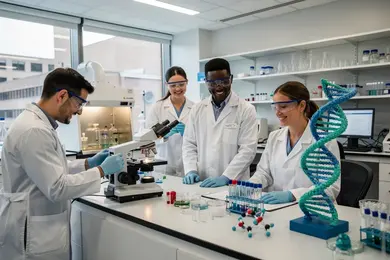
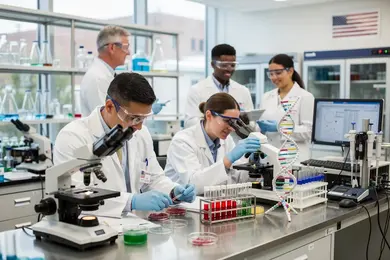
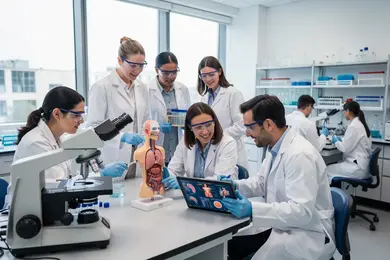
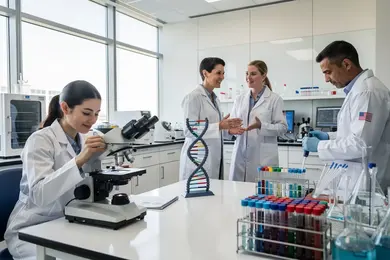
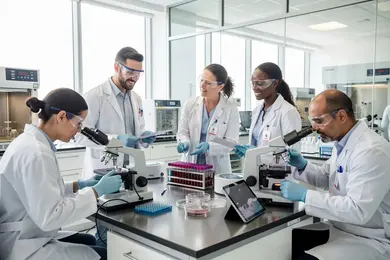
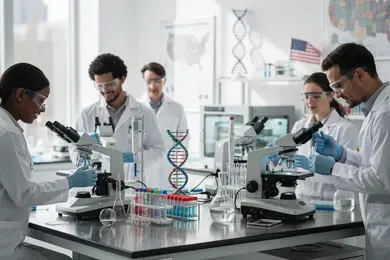
Online biology degree programs with hands-on lab experience must navigate the tension between flexibility and genuine skill acquisition. Employers in biomedical research and clinical settings increasingly demand verifiable lab competencies, which poses a significant challenge for distance education formats. To address this, programs blend virtual simulations, mailed or locally sourced lab kits, and mandatory in-person residencies or local lab partnerships. These methods allow students to practice core techniques remotely but require negotiating travel or local access, a notable tradeoff for working professionals balancing schedules and geography.
How online biology courses teach practical laboratory skills involves several specific components to build credible expertise:
- Virtual labs that replicate fundamental procedures such as microscopy and molecular analysis, offering unlimited practice without resource constraints
- Hands-on experiments using lab kits delivered to students' homes, fostering familiarity with reagents and biological specimens
- On-site intensives or collaborations with accredited local labs to master advanced techniques not feasible online
- Remote team projects emphasizing experimental design, protocol refinement, and data interpretation, enhancing applied reasoning and communication
The National Center for Education Statistics notes a 43% growth in fully online undergraduate STEM enrollment between 2019 and 2024, with biological sciences among the fastest-growing segments. However, candidates must document lab hours and supervised experiences rigorously to meet employer standards. For those weighing theoretical positions against roles requiring certified lab skills, understanding these operational details is critical.
For those considering a strategic pivot or advancement, exploring diverse pathways such as a bioinformatics degree career options can broaden applied skill sets and market engagement within biology-related fields.
Are online biology degrees as credible and respected as campus-based programs?
Online biology degrees gain respect comparable to campus programs only when they deliver accredited lab experiences with supervised practical training. Employers hiring for clinical and medical lab roles explicitly prioritize verified hands-on lab skills over purely theoretical coursework, making tangible practicum or clinical rotations essential. Without meeting these criteria, graduates from online biology degrees face significant barriers to licensure and diminished workforce opportunities, especially in regulated professions.
For instance, a student pursuing a medical laboratory technologist career must complete programs accredited by bodies such as the National Accrediting Agency for Clinical Laboratory Sciences and fulfill required clinical hours. Programs lacking these partnerships or hybrid formats that mandate in-person residencies often fall short of compliance. This reality reflects the respect and recognition of online biology degrees in the United States, where employer demand directly ties to demonstrated lab competencies.
The U.S. Bureau of Labor Statistics projects a 5% employment growth for medical and clinical laboratory technologists and technicians from 2022 to 2032, adding about 16,800 annual job openings. This trend, driven by an aging population and expanded diagnostic testing, underscores the need for graduates with verified lab experience. Online degrees relying on remote simulations alone risk undervaluation in sectors like environmental testing, biotechnology, or academic research.
Prospective students evaluating online biology degrees credibility compared to campus programs should critically assess accreditation, practicum logistics, and industry connections. Those aiming for flexible yet effective pathways might explore hybrid models or programs with clear clinical practicum supervision. Additionally, individuals seeking advanced study in data-related biological fields could consider related options such as the data science PhD online, which also balances rigorous research with remote feasibility.
How can I verify that an online biology program is properly accredited?
Proper accreditation is a decisive factor when evaluating online biology degree accreditation verification, as it directly impacts licensure eligibility, federal aid, and employer acceptance. Many life science employers and graduate programs explicitly require degrees from institutions with regional accreditation recognized by the U.S. Department of Education or CHEA. Programs holding only national or unrecognized accreditation typically fall short in academic rigor and professional mobility.
Verifying accreditation depends on checking the program's official site and cross-referencing claims with U.S. Department of Education or CHEA databases. Specialized accreditations from bodies like the Accrediting Commission of Career Schools and Colleges (ACCSC) add credibility, especially for lab-focused tracks. In practice, research and biotech employers treat verified, rigorous lab components as non-negotiable, with hybrid approaches-virtual plus in-person labs-gaining traction to balance remote learning with essential hands-on skills.
These dynamics carry weight for students targeting graduate admissions or clinical roles. Without confirmed accreditation and substantive lab experiences, credits risk non-transferability, and degrees may be discounted. For those considering degree combinations or academic pivots, understanding this ensures aligned expectations; for instance, comparing pathways as with masters in library science highlights discipline-specific accreditation nuances.
In short, independent verification and close scrutiny of curriculum design determine the practical value of an online biology program and its fit for workforce demands and academic progression, guiding informed decision-making beyond surface-level credentials.
What lab-focused courses and hands-on experiences do online biology degrees include?
Online biology degree programs that fall short on hands-on lab training risk producing graduates less prepared for industry demands. Practical laboratory skills courses for online biology degrees must integrate virtual simulations, remote lab kits, and local partnerships to develop proficiency with actual lab instruments and data analysis tools. Without clearly defined hands-on components or guaranteed access to employer-sponsored experiences, students often face gaps between theoretical coursework and real-world lab competence.
For instance, a molecular genetics student leveraging simulation software to design DNA sequencing experiments might then apply those methods during an internship at a biotechnology firm. This combination addresses a fundamental employer expectation: practical skillsets drive employability for lab roles more than theoretical knowledge alone. Graduates who cannot demonstrate lab proficiency frequently encounter limitations securing entry-level positions in biotech or pharmaceutical labs.
Program constraints on scheduling in-person labs force students to strategically select offerings or seek external local lab access. Such logistical challenges disproportionately affect remote learners and can delay skill acquisition compared to fully on-campus peers. Navigating these opportunities is critical to matching workforce readiness and earning potential in lab-centered biology careers.
PayScale data reflect the economic advantage of hands-on lab training, showing that biology graduates in lab roles earn a median early-career salary of $57,000 and a mid-career median of $101,000, representing a 20-30% earnings premium over biology majors in non-lab roles.
Prospective students evaluating educational paths might also compare related fields; those interested in Earth sciences should consider the online geology degree landscape for alternative laboratory experience structures and labor market outcomes.
How do online biology lab requirements work, including virtual and in-person components?
Blending virtual simulations with mandatory in-person lab sessions creates the current benchmark in biology education that aligns with employer expectations. Online modules, now integrated by 41% of undergraduate programs per the American Society for Biochemistry and Molecular Biology's 2024 survey, build foundational skills such as PCR and gel electrophoresis technique mastery in controlled environments, lowering material costs and risk.
This approach's tradeoff lies in the limits of virtual labs to replicate real-world variability and tactile skills critical for many biology professions. For instance, field ecologists require hands-on experience with equipment and specimen collection under unpredictable conditions, while clinical research roles demand precision in sterile technique and manual pipetting that only in-person labs provide.
Students should expect several residential lab sessions lasting days or weeks, often with flexible scheduling but potentially constrained by geography or work, narrowing program options. Employers in biotech and pharmaceutical sectors prioritize verified hands-on experience, which impacts hiring decisions considerably.
- Virtual labs emphasize protocol learning and experimental design without physical risks.
- In-person components cover equipment handling, troubleshooting, and sterile techniques.
- Hybrid curricula assess students continuously through virtual and practical labs.
Those evaluating programs must weigh the sufficiency of online components for employer-required competencies against logistical barriers to campus attendance, as the combined virtual and in-person model currently best prepares candidates for research and workforce integration.
What admission requirements and prerequisites do online biology bachelor's programs have?
Online biology bachelor's programs set a foundational expectation: students must complete rigorous prerequisites in math, chemistry, and biology before admission, ensuring readiness for demanding coursework. This baseline typically includes high school or college-level biology and chemistry plus algebra or higher math. Meeting these criteria is not merely academic but directly impacts progression and professional eligibility.
Lab experience is a pivotal factor, often overlooked by prospective students. Most programs require two semesters of college-level biology with lab work-critical for medical school applicants and research roles. While traditional on-campus labs remain standard, a growing number of accredited programs offer virtual labs or options through local partnerships. However, students without access to verified lab components risk losing graduate or licensing opportunities, as employers and professional schools scrutinize lab authenticity closely.
Pragmatically, students aiming for clinical or research careers should confirm their program's lab credits align with requirements from bodies like the Association of American Medical Colleges, which accepted online biology labs from over one-third of institutions. Failure to do so can lead to delayed graduation or diminished job prospects.
Before enrollment, verify accreditation and the recognition of lab courses within your target career path. Planning for hybrid or local lab solutions is essential for distance learners. Practical foresight in these areas safeguards against costly educational detours and aligns study with workforce expectations.
How much do online biology degrees cost, and what financial aid is available?
The financial and practical demands of online biology degrees vary significantly, with full bachelor's programs ranging from approximately $15,000 to over $50,000 depending on institution type and residency. Public in-state tuition generally falls between $15,000 and $25,000, whereas private and out-of-state options exceed $40,000. Costs unique to biology-such as specialized lab kits and technology fees-add complexity beyond quoted tuition.
Federal aid primarily includes Pell Grants, offsetting up to $7,500 annually for lower-income students, and Direct Subsidized Loans offering deferred repayment options. State-level STEM-focused grants and scholarships additionally support biology candidates, though eligibility varies. Employer tuition assistance often requires employment tied to health or environmental science sectors, limiting access for career changers.
Labor market realities sharply favor biology graduates with hands-on lab experience. The National Science Foundation's 2024 STEM Workforce Report indicates over 60% of entry-level research assistant roles demand prior lab exposure, yet only 35% of biology graduates secure such placements. This gap suggests that prospective students must prioritize programs with integrated virtual or onsite labs, embedded within tuition, to avoid costly external training.
Strategic financial aid evaluation should consider program partnerships offering paid internships or apprenticeships, which effectively bridge experiential deficits. Without these components, tuition aid alone will not overcome employment barriers related to practical skill development critical in biology careers.
What biology careers can an online degree prepare me for, and what skills are needed?
Online biology degrees equip graduates for technically demanding roles such as laboratory technician, research assistant, environmental consultant, pharmaceutical sales specialist, and quality control analyst. Success in these positions depends on mastering experimental design, precise data collection, and rigorous lab protocols. For instance, quality control analysts in pharmaceutical settings must execute assays and validate results under stringent FDA regulations, demanding exact lab and compliance skills developed during their studies.
Industry trends increasingly emphasize proficiency with digital tools-data analysis software, remote instruments, and virtual labs-as research workflows incorporate hybrid and remote elements. A survey conducted by the Online Learning Consortium reported that 71% of biology faculty teaching online skills-based courses observed tangible improvements in students' experimental design and data analysis after integrating remote lab assignments and virtual instrumentation. This highlights the potential for online programs to deliver applicable, workforce-ready skills.
Technical communication remains essential. Graduates must produce detailed lab reports compliant with institutional standards and support grant writing with reproducible data. Those pursuing environmental consulting roles also need competencies in field sampling and GIS mapping-skills occasionally offered through specialized online electives.
Prospective students should critically assess whether programs include hands-on virtual labs that mimic industry equipment. Without this, graduates risk significant gaps in practical abilities affecting employability. Prioritize programs that blend synchronous remote labs with asynchronous projects to reflect workplace expectations and improve readiness for certifications or direct entry into technical roles.
What are typical salaries and job outlook for biology careers requiring lab skills?
Laboratory skills in biology careers lead to a salary range typically between $45,000 and $85,000 annually, with entry-level roles concentrated at the lower end and specialized or managerial positions pushing salaries higher. For instance, an early-stage lab technician in a research hospital might start near $45,000, while a biotech lab manager in the pharmaceutical industry can reach $85,000. The approximately 5% employment growth projected for life science technicians through 2034 underscores steady but moderate demand driven by sectors requiring specialized lab expertise such as genomic research or clinical trials.
Meeting these demands increasingly requires candidates to combine practical lab skills with data analysis and regulatory knowledge. This intersection raises the stakes for online biology degrees that offer lab components, as employers expect demonstrable hands-on experience. Mayville State University's 2025-2026 tuition data illustrates a typical pricing model for online labs: around $1,390 for a 4-credit course, considerably less than comparable on-campus courses, offering financial relief but also presenting logistical tradeoffs.
Students must navigate the reality of securing local internships or in-person practica, tasks that can impact time, resources, and ultimately employability if not managed carefully. Deciding between tuition savings and the effort to arrange adequate lab experience highlights the practical complexity behind seemingly straightforward online program costs.
How do I choose a reputable online biology program that fits my career goals?
Choosing an online biology program requires prioritizing alignment between curriculum design and specific job functions within healthcare or research sectors. Over 80% of bachelor's degree programs focus on these employment outcomes, but this focus varies significantly in practical skill development, particularly lab work.
Students targeting clinical laboratory roles must ensure programs offer virtual labs or partnerships for local internships to gain hands-on experience essential for certification and job readiness. By contrast, aspiring research scientists should seek coursework emphasizing data analytics, experimental protocols, and independent research components to satisfy employer criteria.
Key considerations include:
- Program format: asynchronous classes support working professionals but may reduce interactive lab opportunities, complicating mastery of complex techniques.
- Accreditation status, signaling curriculum rigor and eligibility for advanced certifications or graduate programs.
- Faculty expertise and specialized career services to support field-specific job placement.
- Graduate employment outcomes, particularly in relevant biology fields, as an indicator of program effectiveness.
Cost evaluation should factor in projected salary benefits and licensure demands, balanced against the availability of technology platforms facilitating interactive simulations rather than passive lectures. Navigating these variables critically helps assure that an online biology degree confers genuine marketable skills and valid credentials rather than abstract knowledge.
Other Things You Should Know About Biology
Online biology degrees vary significantly in how they incorporate hands-on lab experience, which directly impacts readiness for lab-intensive roles. Programs that require in-person lab sessions or partner with local facilities provide better preparation for actual research environments than fully virtual labs. Students aiming for research careers should prioritize programs with mandatory practical components to meet employer expectations for technical proficiency.
Employers prioritize demonstrated lab skills and practical experience over degree delivery mode, but online degrees lacking substantial in-person lab work may be viewed as less rigorous. Candidates with online biology degrees should supplement their education with internships or volunteering in labs to offset concerns about limited hands-on training. Choosing a program aligned with recognized accreditation and clear lab components improves employer confidence in skills.
Online biology programs in 2027 offer lab skills via virtual simulations and hybrid formats, blending digital and physical lab experiences. These methods mirror campus-based training, ensuring students develop essential laboratory competencies needed for careers in biology.
Hybrid programs that blend virtual instruction with mandatory face-to-face labs offer the strongest pathway to acquiring authentic lab skills employers require. Fully virtual labs provide conceptual understanding but usually do not replicate tactile skills or the complexity of lab equipment operation seen in physical settings. For those targeting lab technician or research positions, hybrid models are the more practical choice despite potential travel or scheduling demands.
References
- How Much Does Online College Cost? https://www.affordablecollegesonline.org/financial-aid/online-college-degree-cost/
- Online Science Courses with Lab that Transfer: A Helpful Guide - Prereqcourses https://www.prereqcourses.com/online-science-courses/
- Careers Guidance https://www.rsb.org.uk/career-guidance.html
- How To Become A Biologist | Biology Degrees And Careers https://www.learnhowtobecome.org/science-technology-careers/biology/
- Turn Your Passion for Science Into a Rewarding Career With a Biology Degree - UNCF https://uncf.org/the-latest/a-biology-degree-can-open-the-door-to-life-and-living
- Online Biology Degrees https://mycollegeguide.org/online-biology-degrees/
- Is Your Online Degree Legitimate? How to Verify Private University Approval https://matchtocollege.com/blog/verify-private-university-online-degree-approval
- Three Benefits of Virtual Labs in College Science Courses - Every Learner Everywhere® https://www.everylearnereverywhere.org/blog/three-benefits-of-virtual-labs-in-college-science-courses/
- Accredited Online Courses: How to Pick Programs That Actually Count https://www.upskillist.com/blog/accredited-online-courses-how-to-pick-programs-that-actually-count/
- How Much Does it Cost to Get an Online Degree at DBU? https://www.dbu.edu/blog/how-much-does-it-cost-online-degree-dbu.html