2027 Online Behavioral Health Management Degrees for Students Who Want Substance Use Program Leadership Careers

Co-Founder and Chief Data Scientist
Leading a substance use program now requires more than clinical compassion; it requires compliance, staffing, budgeting, outcomes tracking, and community coordination. SAMHSA's 2023 National Survey on Drug Use and Health, released in 2024, estimated that 48.5 million people ages 12 and older had a substance use disorder in the past year. This guide is for students, counselors, case managers, and healthcare professionals comparing online behavioral health management degrees. You'll learn how programs work, what credentials matter, and how to choose a degree that supports substance use program leadership goals.
Key Things You Should Know
- Online behavioral health management degrees are best for students who want to supervise programs, manage compliance, coordinate services, or move from direct care into leadership rather than provide independent clinical treatment only.
- Licensure rules vary by state; a management degree may support advancement, but substance use counseling credentials often require specific supervised hours, exams, and board-approved coursework.
- BLS data released in 2025 reports May 2024 median pay of $78,240 for social and community service managers and $117,960 for medical and health services managers, showing why role type and employer setting matter for ROI.
What is an online behavioral health management degree focused on substance use program leadership?
An online behavioral health management degree focused on substance use program leadership is a degree pathway that combines behavioral health knowledge with the operational skills needed to run treatment, prevention, recovery support, or community-based programs. It is usually not the same as a counseling licensure degree, although some programs may include counseling-related courses or align with addiction certification requirements.
The "management" part matters. Substance use programs must meet payer, privacy, quality, workforce, and state regulatory expectations while serving people with complex mental health, social, housing, legal, and medical needs. Students learn how to coordinate teams, use data, follow ethical and legal standards, and improve access to care.
The table below compares common degree levels so you can match the credential to your starting point and career target. Use it to separate entry-level preparation from advancement-oriented leadership education.
| Program type | Typical student profile | Common focus | Best fit |
| Associate degree | New college student or career changer | Human services, addiction basics, case management foundations | Entry-level support roles or transfer to a bachelor's program |
| Bachelor's degree | Student seeking broader career access | Behavioral health systems, program coordination, ethics, community services | Program coordinator, case management, prevention, or supervisory-track roles |
| Master's degree | Working professional or bachelor's graduate | Healthcare leadership, policy, quality improvement, finance, workforce management | Program manager, director, operations, compliance, or advanced administrative roles |
| Graduate certificate | Professional with a degree who needs targeted skills | Addiction leadership, nonprofit management, healthcare operations, quality metrics | Skill-building without committing to a full degree |
A degree may be worth considering if you want to lead teams, improve systems of care, or oversee substance use services. If your primary goal is to become a licensed therapist, compare the curriculum against your state's clinical licensure requirements before enrolling.
How can an online behavioral health management degree prepare me to lead substance use programs?
An online behavioral health management degree can prepare you for substance use program leadership by connecting service delivery with organizational decision-making. Instead of focusing only on individual client care, these programs help you understand how treatment organizations function, how outcomes are measured, and how leaders keep programs compliant and sustainable.
Students typically build a mix of administrative, ethical, analytical, and people-management skills. These are especially important because substance use programs often operate across clinical care, criminal justice, Medicaid, nonprofit funding, peer recovery, and community partnerships.
- Program operations: Scheduling, staffing, intake workflows, referral systems, documentation standards, and service-line coordination.
- Compliance and risk management: Confidentiality, informed consent, mandated reporting, payer documentation, and quality assurance processes.
- Leadership and supervision: Team communication, conflict resolution, workforce retention, supervision boundaries, and culturally responsive management.
- Data and outcomes: Using dashboards, utilization data, client engagement measures, and quality improvement methods to guide decisions.
- Community coordination: Building partnerships with hospitals, courts, schools, housing agencies, recovery organizations, and public health departments.
The leadership focus can overlap with broader healthcare operations. If you are deciding between behavioral health leadership and a wider administrative route, comparing a healthcare administration degree can help you see whether you want a general healthcare management credential or a program more closely tied to behavioral health and substance use services.
Technology is also changing the work. Leaders increasingly evaluate telehealth models, electronic health record workflows, remote supervision practices, digital screening tools, and AI-supported documentation. These tools can improve access and reduce administrative burden, but leaders must still protect privacy, reduce bias, and make sure technology supports evidence-based care rather than replacing professional judgment.
What are the typical admission requirements for online behavioral health management programs?
Admission requirements vary by school and degree level, but online behavioral health management programs usually evaluate both academic readiness and professional fit. Programs that include fieldwork, practicum hours, or addiction counseling preparation may also require background checks or site approval.
The table below summarizes common requirements by degree level. This can help you avoid applying to programs that do not match your academic history or timeline.
| Degree level | Common admission requirements | What to check before applying |
| Associate | High school diploma or GED, placement requirements, application form | Transfer agreements with bachelor's programs and whether addiction-related courses apply to certification |
| Bachelor's | High school diploma or transfer credits, minimum GPA, transcripts, possible personal statement | Transfer credit limits, internship expectations, and whether upper-division courses are fully online |
| Master's | Accredited bachelor's degree, minimum GPA, resume, statement of purpose, recommendations, possible work experience | Whether clinical background is required and whether the curriculum supports management, licensure, or both |
| Graduate certificate | Bachelor's degree or current graduate enrollment, transcripts, short application | Whether credits can later transfer into a master's degree |
Applicants can strengthen their file by connecting their experience to the mission of behavioral health leadership. Admissions teams often value relevant work in human services, healthcare, peer recovery, case management, public health, criminal justice, education, or nonprofit programs.
Before applying, complete a focused readiness check. This is especially important for online programs because flexibility can vary widely from one school to another.
- Request a written transfer credit evaluation before committing to a bachelor's completion program.
- Ask whether any internship, practicum, or field experience can be completed near your home.
- Confirm technology requirements, synchronous class expectations, and exam proctoring rules.
- Check whether prior professional certifications or military training can reduce required credits.
- Compare total program cost, not only tuition per credit.
One common mistake is assuming that "online" means self-paced. Many reputable programs use weekly deadlines, group projects, live discussions, or supervised field experiences, so ask how the format actually works before enrolling.
How do online behavioral health management degrees compare to campus-based options?
Online and campus-based behavioral health management degrees can lead to similar academic credentials when they come from properly accredited institutions. The better choice depends on your schedule, learning style, need for local networking, and whether you already work in behavioral health.
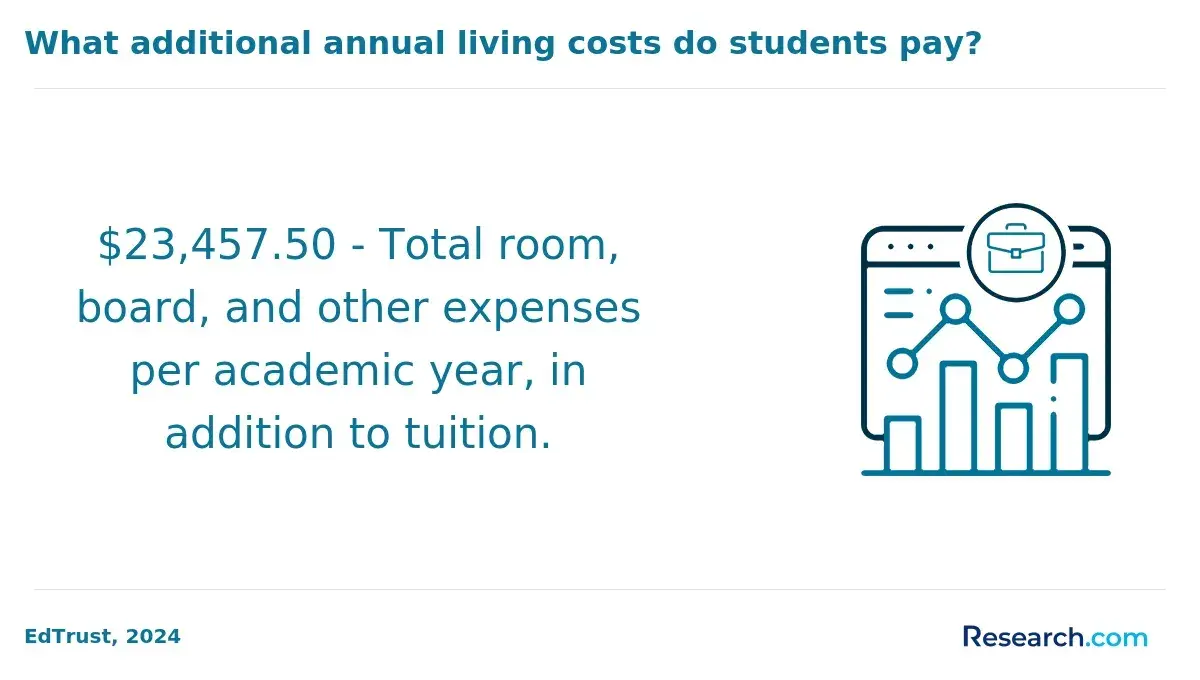
College Board's 2024 Trends in College Pricing reported average published tuition and fees of $11,610 for in-state students at public four-year institutions and $43,350 at private nonprofit four-year institutions for 2024-25. Those figures are not specific to behavioral health programs, but they show why students should compare total cost, transfer credits, and time to completion rather than assuming one format is automatically cheaper.
The table below highlights practical trade-offs between online and campus-based study. Use it to decide which format fits your career stage and responsibilities.
| Factor | Online degree | Campus-based degree | Best choice when |
| Schedule | Often designed for working adults, with asynchronous or hybrid coursework | More likely to require fixed class times and commuting | Online fits students balancing work, caregiving, or irregular shifts |
| Networking | May include virtual cohorts, online faculty access, and local field placements | Offers in-person events, campus organizations, and local employer visibility | Campus can help students who want immersive local networking |
| Field experience | Often completed in the student's region with school approval | May use established nearby partner agencies | Online works if the school has clear site-placement support |
| Cost structure | May reduce relocation and commuting costs, but fees vary | May offer campus resources but adds transportation or housing costs | Compare full attendance cost, not only tuition |
| Learning style | Requires self-direction, writing, time management, and comfort with technology | Provides more face-to-face structure and immediate classroom interaction | Campus may fit students who need frequent in-person accountability |
Choose online if you need flexibility and can stay organized without daily campus structure. Choose campus if you want in-person mentoring, local field connections, or a more structured learning environment. Hybrid programs can be a strong middle ground, especially for students who want online coursework with occasional clinical, lab, or leadership intensives.
What courses and specializations are included in substance use program leadership curricula?
Substance use program leadership curricula usually combine behavioral health foundations with management courses. The best programs help students understand both the client-service environment and the administrative systems that determine whether programs can operate ethically, sustainably, and effectively.
Course titles vary, but most leadership-oriented programs include content from several categories. Review course descriptions carefully because two degrees with similar names can prepare students for different outcomes.
- Addiction and co-occurring disorders: Substance use assessment concepts, recovery models, relapse prevention, trauma-informed care, and mental health intersections.
- Behavioral health systems: Continuum of care, integrated care, crisis services, prevention, harm reduction, peer recovery, and community-based supports.
- Healthcare and nonprofit management: Budgeting, strategic planning, grant administration, staffing, policy implementation, and service-line development.
- Ethics and law: Confidentiality, consent, client rights, professional boundaries, documentation, and regulatory compliance.
- Quality improvement and data: Outcome measurement, program evaluation, utilization review, performance indicators, and reporting for funders or payers.
- Diversity and community health: Cultural humility, rural access, health equity, family systems, stigma reduction, and population-specific services.
Students who expect to manage electronic records, reporting systems, privacy controls, or analytics-heavy operations may also compare a health information management online degree. That path is usually less counseling-focused, but it can be relevant for behavioral health organizations that need stronger data governance and compliance capacity.
Possible specializations include addiction studies, healthcare administration, nonprofit leadership, public health, human services management, trauma-informed leadership, criminal justice behavioral health, or integrated care. If your goal is substance use program leadership, prioritize programs with courses in addiction systems, supervision, compliance, finance, and outcomes measurement rather than programs that only offer general psychology electives.
Which accreditations should behavioral health management programs have for substance use careers?
Accreditation is one of the most important quality checks for an online behavioral health management degree. It affects credit transfer, graduate school eligibility, employer confidence, and access to federal financial aid. For licensure or certification, accreditation can also influence whether coursework is accepted by a state board or credentialing organization.
Start with institutional accreditation. In the U.S., the school should be accredited by an agency recognized by the U.S. Department of Education or the Council for Higher Education Accreditation. This is the baseline standard for legitimate degree-granting institutions.
Programmatic accreditation depends on the degree's focus. Not every behavioral health management program will have a specialized accreditor, but programs tied to counseling, social work, public health, or healthcare administration may have additional review. The table below explains what different accreditations usually signal.
| Accreditation or approval type | Where it may apply | Why it matters |
| Institutional accreditation | Colleges and universities | Supports financial aid eligibility, transferability, and general academic legitimacy |
| CACREP | Counseling graduate programs | May be important for counseling licensure pathways in some states |
| CSWE | Social work programs | Often required for social work licensure pathways |
| CEPH | Public health programs | Signals public health curriculum quality for population health or prevention roles |
| CAHME | Healthcare management graduate programs | Relevant for healthcare administration leadership preparation |
| State board or credentialing approval | Addiction counseling coursework or certification preparation | May determine whether courses count toward substance use counseling credentials |
Be cautious with schools that use vague phrases such as "nationally recognized" without naming the accreditor. Also avoid programs that imply accreditation is the same as licensure approval. A school can be accredited and still fail to meet your state's specific addiction counseling or clinical licensure requirements.
How do these degrees align with state licensing and certification for substance use treatment?
Online behavioral health management degrees can align with substance use careers, but they do not automatically satisfy state licensing or certification requirements. This is the area where students make some of the costliest mistakes, because addiction counselor credentials are regulated differently across states.
In many states, substance use counseling credentials are based on a combination of education, supervised experience, ethics training, exams, and continuing education. Some roles may be available with a certificate or associate degree, while independent clinical counseling generally requires a master's-level license in counseling, social work, marriage and family therapy, psychology, or a related field.
Use this sequence before enrolling if a credential is part of your goal. It can help you avoid paying for credits that your state board will not accept.
- Identify the exact job title you want, such as addiction counselor, clinical supervisor, program manager, treatment director, prevention specialist, or recovery services coordinator.
- Find the state licensing board or certification body that regulates that role in the state where you plan to work.
- Download the current education, supervised-hours, exam, and ethics requirements directly from that board or credentialing body.
- Ask the school to map its required courses to those requirements in writing.
- Confirm whether online coursework, field placements, and supervision arrangements are accepted.
- Keep syllabi, practicum documentation, supervisor credentials, and official transcripts for future credential review.
Degree-versus-certificate decisions depend on your goal. A certificate may be sufficient if you already have a degree and need targeted addiction coursework. A bachelor's degree may support coordinator and supervisory-track roles. A master's degree may be necessary if you want clinical licensure, director-level opportunities, or advancement into integrated behavioral health systems.
The safest approach is to treat licensure alignment as a verification task, not a marketing claim. If an admissions representative says the program "prepares you for certification," ask which certification, in which state, under which current rules, and whether graduates have successfully used the coursework for that credential.
What behavioral health and substance use leadership careers can these degrees support?
Behavioral health management degrees can support careers in substance use treatment, prevention, recovery services, integrated care, nonprofit programs, government agencies, hospitals, community health centers, managed care organizations, and correctional or reentry programs. The strongest fit is usually for roles that require coordination, supervision, compliance, budgeting, or service improvement.
The table below connects degree preparation to common career directions. It is not a guarantee of eligibility, because employers may require licensure, experience, or specialized certification.
| Career path | Typical responsibilities | Credential considerations |
| Substance use program coordinator | Coordinate referrals, schedules, reports, outreach, and client service workflows | Bachelor's degree and relevant experience are common; certification may help |
| Behavioral health case management supervisor | Support case managers, monitor documentation, improve client follow-up, and coordinate community resources | Employers may require human services experience or state-specific credentials |
| Recovery services manager | Oversee peer recovery programs, community partnerships, training, and service quality | Peer specialist certification or recovery experience may be valued |
| Treatment program director | Manage staff, budgets, compliance, outcomes, payer requirements, and strategic planning | Often requires significant experience; some settings prefer or require clinical licensure |
| Prevention program manager | Plan community prevention initiatives, manage grants, evaluate outcomes, and coordinate stakeholders | Public health, prevention, or nonprofit management experience can be useful |
| Quality or compliance specialist | Review documentation, prepare audits, monitor regulations, and support performance improvement | Knowledge of behavioral health regulations, privacy, and payer rules is important |
Leadership careers also reward project skills: launching a new outpatient track, implementing a medication-assisted treatment workflow, coordinating a grant-funded prevention initiative, or improving discharge follow-up all require planning and execution. Students who want a broader operations credential can compare affordable online project management degrees with behavioral health-specific programs.
This path is a strong fit if you like systems, people, and mission-driven work. It may be a poor fit if you want a role with minimal documentation, limited regulation, or no exposure to crises, staffing shortages, payer demands, or emotionally difficult client situations.
What salary ranges and job outlook can substance use program leaders expect?
Salary potential depends heavily on role, licensure, employer, geography, years of experience, and whether the position is clinical, administrative, or executive. A behavioral health management degree can support advancement, but it should be evaluated against realistic target roles rather than a single advertised salary.
BLS wage and outlook data provide useful benchmarks, although they do not isolate "substance use program leadership" as one occupation. The table below shows related U.S. occupational categories that often overlap with behavioral health and substance use services.
| Related occupation | May 2024 median annual pay | 2024-2034 projected growth | How to interpret it |
| Substance abuse, behavioral disorder, and mental health counselors | $59,190 | 17% | Useful benchmark for direct counseling and treatment roles; licensure can affect scope and advancement |
| Social and community service managers | $78,240 | 8% | Relevant for nonprofit, community program, recovery support, and prevention leadership |
| Medical and health services managers | $117,960 | 23% | Relevant for larger healthcare systems, clinics, integrated care, and operations leadership |
The main takeaway is that "behavioral health leadership" is not one salary band. A program director in a large health system, a nonprofit recovery services manager, and a counseling supervisor in a small outpatient clinic may have very different compensation structures.
To evaluate ROI, compare expected debt, time to completion, employer tuition benefits, transfer credits, and the roles you can realistically pursue after graduation. Be cautious of schools or advertisements that imply a degree alone will move you directly into director-level work. In many substance use organizations, leadership advancement depends on a combination of degree level, licensure, front-line experience, supervision ability, and regulatory knowledge.
How can I evaluate and choose a reputable online behavioral health management program?
Choosing a reputable online behavioral health management program requires more than scanning rankings or picking the lowest tuition. The best program is the one that matches your target role, state requirements, budget, learning style, and experience level.
Use the following evaluation steps before you enroll. They are designed to help you compare programs on fit, not just marketing language.
- Confirm institutional accreditation through the accreditor's official database or the U.S. Department of Education database.
- Identify whether the program is management-focused, counseling-focused, public health-focused, or healthcare administration-focused.
- Ask for a written curriculum-to-credential map if you plan to pursue addiction counseling certification or clinical licensure.
- Compare total cost, including tuition, fees, books, technology charges, travel, residency requirements, and lost work time.
- Review faculty experience in behavioral health, addiction treatment, healthcare operations, public health, or nonprofit leadership.
- Ask how online students receive advising, career support, field placement assistance, library access, and technical support.
- Request outcome information such as completion rates, internship placement support, employer partnerships, and alumni career paths.
- Check whether credits transfer in and whether graduate certificate credits can apply toward a future master's degree.
Watch for red flags: no clear accreditation information, pressure to enroll immediately, unclear practicum policies, vague licensure claims, unusually high fees, limited faculty transparency, or refusal to provide written answers about state credential alignment.
Students comparing adjacent healthcare fields should also think about work environment. For example, those interested in compliance and safety systems outside behavioral health may find the best online environmental health and safety programs more aligned with workplace risk, occupational safety, and regulatory roles than substance use services leadership.
A smart final step is to speak with three people before applying: a program advisor, your state credentialing board or licensing agency, and someone working in the role you want. If all three answers point in the same direction, you can make the decision with much more confidence.
Other Things You Should Know About Behavioral Health Management
Yes, many online programs are built for working adults, but the workload can still be demanding. Ask about weekly time expectations, live class meetings, group projects, and any required field experience before enrolling.
Not always. Some programs accept students from human services, healthcare, public health, criminal justice, education, or nonprofit backgrounds. However, leadership roles in treatment settings often favor applicants who understand client care and regulatory realities.
In 2027, online behavioral health management degrees offer flexible learning that equips graduates with skills in organizational leadership, policy development, and program evaluation. These programs often feature specialized coursework in substance use disorders, preparing students for leadership in prevention and treatment initiatives.
It can be enough for targeted advancement if you already have a relevant degree and experience. If you need broader career mobility, clinical licensure preparation, or director-level qualifications, a full degree may be more useful.
References
- Workforce Turnover in Substance Use Disorder Organizations: Why It’s Happening and How to Solve It https://www.naatp.org/resources/blog/workforce-turnover-substance-use-disorder-organizations-why-its-happening-and-how
- How Much Can You Make as an Addiction Counselor? https://www.hazeldenbettyford.org/graduate-school-addiction-studies/drug-alcohol-counselor-salary
- Online vs Hybrid vs Campus Learning in Healthcare: Which Is Right for You? https://www.edumed.org/articles/online-vs-hybrid-vs-campus/
- Part 3: Recovery-Oriented Transformational Leadership — A Holistic Model https://www.naadac.org/practice-management-series-2024-recovery-oriented-leadership
- Non-degree Admissions - Cummings Graduate Institute for Behavioral Health Studies https://cgi.edu/admissions/non-degree/
- Practitioner Training and Resources: Substance Use Disorder | SAMHSA https://www.samhsa.gov/substance-use/treatment/integrating-sud-services/resources
- Substance Abuse Counselor https://onlinecounselingprograms.com/become-a-counselor/counseling-careers/substance-abuse-counselor/
- Online Bachelor of Science in Behavioral Health | Illinois College https://www.ic.edu/behavioralhealth-online
- Ultimate Guide to Mental Health & SUD Treatment Credentialing — Behavehealth.com https://behavehealth.com/blog/mental-health-substance-use-credentialing-guide
- Best Virtual Mental Health Services | Selection Checklist - Huntington Beach Mental Health https://huntingtonbeachmentalhealth.com/best-virtual-mental-health-services-selection-checklist/