2027 ABSN Evidence-Based Practice Courses You'll Likely Take

Co-Founder and Chief Data Scientist
Facing a compressed learning schedule, many accelerated nursing students struggle to integrate evidence-based practice (EBP) knowledge swiftly enough to meet clinical demands and employer expectations. As nursing programs increasingly respond to workforce shortages, nearly 40% of accelerated nursing program applicants in 2024 opted for blended or fully online coursework, according to the National Center for Education Statistics, reflecting a demand for flexible, accessible formats.
This shift poses challenges for delivering rigorous EBP training that matches the pace and intensity of clinical settings. This article details the core evidence-based practice courses likely required in accelerated nursing tracks, clarifying their practical focus and how they prepare candidates for immediate professional integration.
Key Things You Should Know
- ABSN EBP courses require compressed study of varied protocols, raising cognitive load; this tradeoff limits depth in specialty content, affecting readiness for niche clinical roles, as reported by the National Board of Nursing in 2024.
- Employers prioritize absn graduates' demonstrated competence in evidence translation to nursing practice, with surveys from the American Nurses Association showing 68% preference for candidates with applied data-literacy skills over theoretical knowledge.
- Accelerated absn EBP programs average 12-15 months with tuition costs 20-30% higher than traditional tracks, constraining access for midcareer switchers lacking employer tuition support per 2024 education market analytics.
What is evidence-based practice in nursing and how is it taught in ABSN programs?
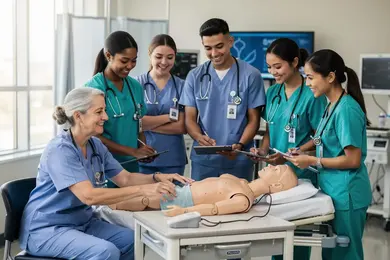
Employers increasingly demand nurses who can rapidly translate research into practice, making evidence-based nursing practice in ABSN programs a critical skill set rather than optional knowledge. Accelerated BSN courses focus heavily on combining clinical experience with targeted EBP training to meet this need, teaching students to evaluate and implement research amid limited clinical hours and compact timelines.
The structure often includes immersive simulations and interdisciplinary projects to compensate for reduced patient contact, equipping students to navigate acute care to community health contexts with agility. A recent meta-analysis reported a substantial competency gain (effect size 1.55) in nursing students exposed to such tailored curricula, emphasizing how these programs heighten the ability to interpret clinical data and adopt best practices promptly.
In practical terms, nurses trained under these conditions experience enhanced employer trust in their judgment and are better positioned to innovate and adapt in dynamic healthcare environments.
However, the compressed nature of ABSN education demands swift mastery of evidence-based skills, influencing career trajectories especially for those pivoting into nursing from other fields. Given these factors, evaluating online accelerated nursing programs that emphasize EBP can offer tangible advantages without extending time-to-practice.
Which core evidence-based practice courses are required in most ABSN curricula?
Evidence-based practice courses required in most ABSN curricula directly address the gap between research and bedside care, focusing on skills that employers demand for measurable patient outcome improvements. Core curriculum requirements for evidence-based practice in ABSN programs include fundamentals of research methods, data analysis, clinical inquiry, and applying evidence to nursing interventions.
For instance, these courses teach nurses to critically interpret clinical trial data and differentiate reliable evidence from anecdotal practice.
Most accelerated nursing programs integrate essential evidence-based practice courses that combine theory with applied skills like formulating PICOT questions, performing systematic literature reviews, and embedding evidence into electronic health record workflows. Such practical training reflects workplace realities where time constraints require efficient evidence retrieval, particularly in intensive care or emergency settings.
Students should consider how programs prepare them to navigate institutional barriers, such as limited database access or interdisciplinary resistance to change. Electives tailored to specialty populations, like geriatric or pediatric care, further refine the application of evidence to distinct clinical contexts.
For prospective students exploring accelerated entry, investigating options like accelerated direct-entry MSN programs online can expand pathways while maintaining focus on these essential courses.
How do ABSN evidence-based practice courses prepare you for NCLEX and licensure?
The direct impact of abbreviated baccalaureate nursing evidence-based practice (EBP) courses on NCLEX readiness goes beyond theory to practical critical thinking and clinical decision-making applied under pressure.
ABSN evidence-based practice courses for NCLEX success elevate a candidate's ability to quickly interpret research and apply it to patient care scenarios, aligning with employer expectations for evidence-driven problem-solving rather than simple memorization. A 2024 meta-analysis suggests significant gains, reporting large effect sizes in critical thinking and problem-solving among nursing students completing structured EBP programs.
These courses teach how to identify clinical questions, assess research validity, and tailor interventions based on evidence-skills tested during licensure and essential for acute care environments where swift management of complications or drug interactions is routine.
Preparing for nursing licensure with ABSN evidence-based practice also entails overcoming curriculum compression, often necessitating focused exercises on critiquing clinical trials and interpreting real-world case data across hospital, outpatient, or community settings.
Success in licensure and employment depends on continued application beyond the classroom, yet ABSN EBP courses provide the foundational framework employers seek to ensure graduates deliver research-backed care immediately.
Prospective students must weigh these benefits against accelerated program pacing and consider practical readiness in competitive job markets. For those comparing pathways, exam pass rates and early clinical autonomy are often higher in programs with structured EBP integration.
Those exploring accelerated routes might also evaluate the cheapest accelerated nursing programs to balance financial investment with evidence-based preparation quality.
What specific research and statistics skills will you learn in ABSN EBP coursework?
Effective evidence-based practice research skills in absn courses go beyond theoretical knowledge, directly shaping the nurse's capacity to evaluate clinical innovations and health policies with statistical rigor. Nurses equipped with the ability to assess study design quality, sampling validity, and bias risks are positioned to identify reliable evidence versus flawed research, a critical distinction in high-stakes patient care decisions.
Statistical analysis techniques taught in absn evidence-based practice include mastering descriptive and inferential measures such as relative risk, odds ratios, confidence intervals, and p-values. These competencies allow nurses to quantify intervention effects accurately and interpret population health data with nuance, reinforcing clinical judgment rather than replacing it.
Practical outcomes reflect these skills' impact: nurses who completed intensive EBP coursework and follow-ups implemented 35% of their projects after training, nearly doubling the 18% rate seen among immersion-only peers. This difference illustrates how deeper statistical literacy enhances the translation of evidence into quality improvements aligned with employer expectations.
Workforce realities require nurses to integrate these analytic abilities swiftly to avoid costly misapplications of new treatments or protocols. Students must therefore prioritize proficiency in electronic database searches, critical appraisal instruments like CASP or Joanna Briggs, and basic statistical software. Such integrated expertise supports sustained evidence translation to clinical practice.
The importance of this skill set also intersects with career outcomes, as those mastering these areas generally better position themselves within evolving job markets, where the doctor of nursing practice salary can be influenced by demonstrated competencies including research acumen.
How do online and campus ABSN programs deliver evidence-based practice training differently?
The practical divide between online and campus absn programs centers on how students engage with evidence-based practice (EBP) in clinical settings and the resulting workforce readiness. Online ABSN programs rely heavily on asynchronous coursework and virtual simulations, which suit individuals balancing full-time work but may limit hands-on skill development without proactive local preceptor arrangements.
Campus students benefit from supervised clinical rotations, gaining direct mentorship that grounds EBP within patient care and boosts employer confidence in their ability to translate research into decisions.
Employers often prioritize fluency in integrating current research during clinical judgments, a proficiency accelerated by real-time instructor feedback and peer collaboration in campus settings. For example, an online absn candidate working full-time can master EBP theory but might face inconsistent clinical experiences depending on preceptor availability and quality.
Conversely, campus students' daily immersion in clinical environments fosters more consistent application of research, directly correlating with higher job placement in hospitals emphasizing evidence-based care.
Key factors influencing this choice include:
- Access to qualified local clinical preceptors for online students
- Ability to manage time alongside demanding work shifts in asynchronous formats
- Value of hands-on mentorship and immediate feedback in campus programs
- Employer expectations regarding demonstrated EBP competence in applied settings
Prospective students must weigh flexibility against the variability of clinical integration. Online ABSN pathways require greater self-direction to secure meaningful, locally supervised practice, while campus programs streamline experiential learning-but often at the cost of scheduling rigidity.
What prerequisites and admission requirements relate to evidence-based practice readiness in ABSN programs?
Prerequisite coursework for evidence-based practice readiness in accelerated bachelor of science in nursing programs directly shapes a student's capacity to meet clinical expectations and employer standards. Foundational science courses-such as anatomy, physiology, microbiology, statistics, and chemistry-must meet rigorous GPA thresholds, often above 3.0, to ensure mastery of scientific reasoning vital for evaluating and applying clinical evidence.
Applicants frequently face requirements demonstrating quantitative literacy through standardized tests or prior college coursework, essential for interpreting research designs and statistical outcomes. Some programs also demand documented clinical exposure to foster familiarity with healthcare operations and patient safety culture, which materially impacts the transition into evidence-based components.
Data from the Quality Improvement and Patient Safety Meta-regression (2024) highlight that delivering EBP courses in a focused 4-7 week segment during the fourth year increases competency. Programs that sequence prerequisites to support concentrated, late-stage EBP curricula better prepare students for practical, evidence-driven clinical roles.
Insufficient prerequisite knowledge often delays skill acquisition during clinical rotations, forcing remediation that extends program length or strains clinical preceptors-particularly in high acuity settings like intensive care units. Conversely, strict prerequisites reduce cohort variability, lower attrition due to academic struggles, and increase licensure pass rates.
- Students equipped with solid prerequisites assimilate quality improvement concepts faster.
- Employers benefit when new nurses avoid remediation and quickly contribute in critical care.
- Programs that prioritize these entrance standards align graduate readiness with real-world clinical demands.
How are clinical rotations and capstone projects integrated with evidence-based practice courses?
Linking clinical rotations directly with capstone projects in 2026 absn evidence-based practice courses compels students to ground their work in concrete, data-driven clinical insights. This integration demands that learners leverage real-world patient outcomes to shape research questions and interventions that reflect actual challenges observed during rotations.
For instance, a clinical rotation in a geriatric unit might reveal elevated patient readmission rates, prompting a capstone project designed to evaluate targeted strategies for fall prevention using electronic health records data.
This model reflects employer expectations for graduates who can interpret clinical data trends and translate them into practice improvements, fulfilling growing workforce needs for nurses skilled in analytics and evidence application. The partnership between clinical preceptors and academic mentors is essential but introduces logistical hurdles, such as aligning clinical site capabilities and managing intensive project timelines amidst demanding rotations.
Embedding informatics training alongside clinical exposure addresses these challenges by equipping students with tools to extract, analyze, and apply outcome data efficiently. However, the reliance on accurate, accessible data systems means that program success varies significantly depending on the clinical environment's infrastructure.
The approach favors students prepared for roles requiring critical evaluation of emerging evidence and hands-on clinical problem-solving, with implications for their readiness to meet the rigorous demands of contemporary healthcare settings.
How do accreditation and professional nursing standards shape ABSN evidence-based practice curricula?
Accreditation requirements fundamentally shape accelerated bachelor of science in nursing (ABSN) curricula by enforcing competencies aligned with workforce demands and patient safety priorities. Accrediting bodies like CCNE and ACEN mandate evidence-based practice (EBP) components that include focused, multi-week modules on critical thinking, research interpretation, and data application.
This requirement ensures graduates possess measurable clinical decision-making skills valued by employers across hospital and community settings.
Curricula reflect professional standards emphasizing population health and epidemiology, which is especially relevant for ABSN students aiming for public health roles. For example, recent 2024 research demonstrated a significant improvement (effect size 0.65) in problem-solving skills among students exposed to intensive EBP training.
These elements reinforce the capacity to analyze and act on health data at the population level, differentiating programs with stronger community health components from those focused on acute care.
Students pursuing hospital-based careers should expect curricula prioritizing evidence appraisal and patient outcome monitoring, whereas those targeting community roles will encounter deeper training in epidemiology and population health metrics. The accreditation-driven curricular intensity increases course load and program demands, but it directly correlates with readiness for advanced clinical positions.
Prospective students must weigh these tradeoffs-balancing program rigor with individual career goals and workplace expectations-to select pathways that optimize practical skills alongside regulatory compliance.
What nursing career paths rely most on strong evidence-based practice competencies?
Nursing roles anchored in evidence-based practice (EBP) demand proficiency beyond clinical routine, especially in specialty domains such as advanced practice registered nurses (APRNs), nurse informaticists, clinical nurse leaders, and nurse educators. APRNs, for instance, must synthesize evolving guidelines with patient-specific data to prevent antiquated treatment paradigms and foster coordinated specialty care.
In hospital contexts, clinical nurse leaders leverage strong EBP skills to unite multidisciplinary teams, enabling protocols that minimize errors and standardize interventions. Nurse informaticists apply EBP principles to optimize electronic health records, facilitating decision support that enhances care quality and efficiency. Nurse educators continuously update curricula based on current research, ensuring graduates are prepared for complex clinical environments.
Workforce data from a 2024 study within a large health system reveals that integrating sustained EBP training into interprofessional programs boosts implementation rates of clinical initiatives by 22%. This emphasizes the necessity for ongoing professional development rather than isolated coursework.
For nurses pursuing these specialized paths, ABSN programs must offer rigorous, continuous EBP skill-building combined with interprofessional collaboration opportunities. Challenges include assessing variable research quality and measuring intervention impacts amidst complex care dynamics.
Students face a clear tradeoff between investing time in deep analytical competencies and accruing front-line clinical hours, though employers explicitly value this for leadership and advanced specialty performance.
How can you evaluate and compare schools' ABSN evidence-based practice course quality?
Outcomes-driven evaluation of absn evidence-based practice (EBP) courses hinges on verifiable improvements in clinical competencies, critical thinking, and problem-solving rather than institutional marketing claims. For example, a recent meta-analysis confirmed that structured EBP curricula produce measurable skill gains validated by standardized assessments, establishing a clear baseline for program quality.
Prospective students should demand transparent performance data, including how graduates score on national benchmarks or licensing exams related to EBP competencies.
Faculty qualifications and ongoing involvement in EBP research or clinical application are critical filters that directly influence course rigor and contemporary relevance. Effective coursework integrates theoretical foundations with applied components like clinical trial appraisals and data interpretation exercises, mirroring the analytical demands nurses face in evidence-based hospital or community health roles.
Employers consistently value graduates whose programs incorporate ethics, policy, and safety training within EBP education, as these elements reduce compliance risks and enhance patient safety. Variability among programs in offering practical experiences-whether simulated environments or clinical rotations-can significantly impact graduates' readiness for real-world decision making.
Additional logistical considerations affecting depth of skill acquisition include class size, mentorship availability, and access to updated digital resources. Transparent employment rates and employer satisfaction tied explicitly to EBP training enhance students' ability to make strategic choices targeting roles that demand rigorous evidence-based decision-making capabilities.
Other Things You Should Know About ABSN
ABSN evidence-based practice courses condense extensive content into a shorter timeframe, making them more intense than traditional nursing programs. Students face a steep learning curve balancing theory, research methodology, and clinical application simultaneously. This workload requires prioritizing time management and active engagement, as falling behind can jeopardize understanding of key concepts critical to clinical decision-making.
Prioritizing ABSN programs with early integration of evidence-based practice is advisable for stronger foundational skills and greater confidence applying research in complex clinical settings. Programs that delay this training often create a disconnect between theory and practice, reducing immediate relevance. Early exposure supports quicker adaptation to real-world nursing challenges employers expect graduates to handle.
Employers recognize ABSN graduates for their accelerated training but often scrutinize the depth of evidence-based practice competencies due to the compressed curriculum. Graduates with demonstrated proficiency in applying research within clinical settings have a competitive edge. ABSN students should seek programs emphasizing hands-on research application to meet employer expectations for critical thinking and up-to-date care standards.
ABSN evidence-based practice courses in 2027 generally cover research methodologies, appraising clinical data, and implementing evidence-based solutions in healthcare settings. Students also learn ethical decision-making, critical thinking, and collaborative skills crucial for effective nursing practice.
References
- Accelerated BSN (ABSN) Program at Avila – Fast-Track Nursing Degree https://www.avila.edu/accelerated-bachelor-of-science-in-nursing/
- 5 Tips on How to Survive an Online ABSN Program https://onlinedegrees.elmhurst.edu/blog/tips-surviving-accelerated-nursing-programs
- Core Competency Nursing: Why It Matters and How to Put It Into Practice https://oasis-lms.com/post/core-competency-nursing-why-it-matters-and-how-to-put-it-into-practice
- ABSN vs. BSN: What’s the Difference?| University of Bridgeport https://www.bridgeport.edu/news/absn-vs-bsn-whats-the-difference/
- Hybrid-Online Accelerated Bachelor of Science in Nursing (ABSN) Program - Roseman University https://www.roseman.edu/academic-programs/college-of-nursing/accelerated-bachelor-of-science-in-nursing/online-absn/
- What Is an ABSN, and Are You an Ideal Candidate? - Madonna https://absn.madonna.edu/blog/learn-what-is-an-absn/
- Accelerated Bachelor of Science in Nursing (ABSN) https://nursing.catholic.edu/programs-admission/bsn-programs/accelerated-bachelor-science-nursing-absn
- Europe PMC https://europepmc.org/article/med/35440919
- 30 of the Best Nursing Career Paths for Your Personality Type https://credenzahealth.com/career-advice/30-of-the-best-nursing-career-paths-for-your-personality-type
- Preparing for an Accelerated BSN | Essential Tips & Guide https://blog.methodistcollege.edu/preparing-for-an-accelerated-bsn-essential-tips-guide