2027 Best Generative AI Courses for Program Managers

Co-Founder and Chief Data Scientist
Program managers often face challenges understanding how to leverage generative AI amid rapidly evolving technology and dispersed team dynamics.
Without a solid foundation in key AI concepts, managing AI-driven projects can lead to costly missteps and misaligned expectations. Many professionals need accessible and credible learning pathways that fit around their existing commitments while delivering practical skills.
This article explores the best generative AI courses tailored for program managers, focusing on flexible formats, accreditation, and relevance to real-world project execution, to help bridge knowledge gaps and enhance leadership in AI initiatives.
Key Things You Should Know
- Generative AI courses for program managers emphasize practical integration of AI into project workflows, enhancing decision-making skills with 62% of managers reporting improved efficiency post-training.
- Most 2026 offerings include modules on ethical AI use and data governance, addressing growing concerns as 74% of companies face compliance challenges in AI deployment.
- Flexible online formats dominate, with 58% of courses offering self-paced options, catering to working professionals balancing ongoing projects and upskilling requirements.
Advance Your Career with AI Online Courses
Artificial Intelligence: Implications for Business Strategy
This program provides an introduction to Artificial Intelligence and their implications for business strategy. Earn an official digital certificate.

Oxford Artificial Intelligence Programme
Explore this Oxford Artificial Intelligence programme offered in a flexible learning environment and explore topics like machine learning, automation, and robotics.

Implementing Agentic AI: Building Your Organizational Playbook
This online MIT Agentic AI course offers a practical approach to deploying AI agents in your organization, including a custom playbook. 3 weeks, exclusive launch price.

AI Adoption: Driving Business Value and Impact
This online MIT AI Adoption: Driving Business Value and Impact offers practical frameworks to close the gap between AI potential and business reality.

Artificial Intelligence in Pharma and Biotech
Discover the applications and limitations of artificial intelligence in pharma and biotech with this MIT online short course.

What is generative AI for program managers, and why does it matter for their careers?
Generative AI for program managers significantly enhances project oversight by automating content creation, workflows, and data analysis.
It streamlines critical tasks such as resource allocation, risk assessment, and stakeholder communication, enabling faster, data-driven decision-making. For instance, generative AI tools can draft progress reports, propose mitigation strategies, and forecast project outcomes based on historical data patterns.
The impact of generative AI on program management careers is substantial, especially as roles demanding AI skills have surged dramatically. LinkedIn's 2025 Workplace Learning Report highlights a 21× global increase in demand for generative AI competencies between 2023 and 2024, with project and program management among the leading fields integrating these skills.
Ignoring AI adoption risks reduced efficiency and innovation. Professionals adept in generative AI boost project delivery speed and quality, which can positively affect career advancement and salary prospects.
Those interested in advancing their knowledge should explore reputable sources for education, such as the data science rankings.
Advance Your Career with AI Online Courses
Artificial Intelligence: Implications for Business Strategy
This program provides an introduction to Artificial Intelligence and their implications for business strategy. Earn an official digital certificate.
Oxford Artificial Intelligence Programme
Explore this Oxford Artificial Intelligence programme offered in a flexible learning environment and explore topics like machine learning, automation, and robotics.
Implementing Agentic AI: Building Your Organizational Playbook
This online MIT Agentic AI course offers a practical approach to deploying AI agents in your organization, including a custom playbook. 3 weeks, exclusive launch price.
What types of generative AI courses are best for current and aspiring program managers?
Generative AI training courses for program managers focus on blending foundational AI concepts with practical project management applications. They equip managers to use AI tools for risk assessment, resource allocation, and predictive analytics, enhancing decision-making processes.
Core courses often include AI Fundamentals for Managers, generative AI tools and platforms like GPT and DALL·E, AI-driven project management techniques, and change management for AI adoption.
Case studies and simulations are essential components, helping managers interpret AI-generated project risk forecasts and automate routine updates to boost efficiency and minimize errors.
The best program manager courses in generative AI applications emphasize leadership skills needed to oversee AI initiatives and align with evolving organizational demands.
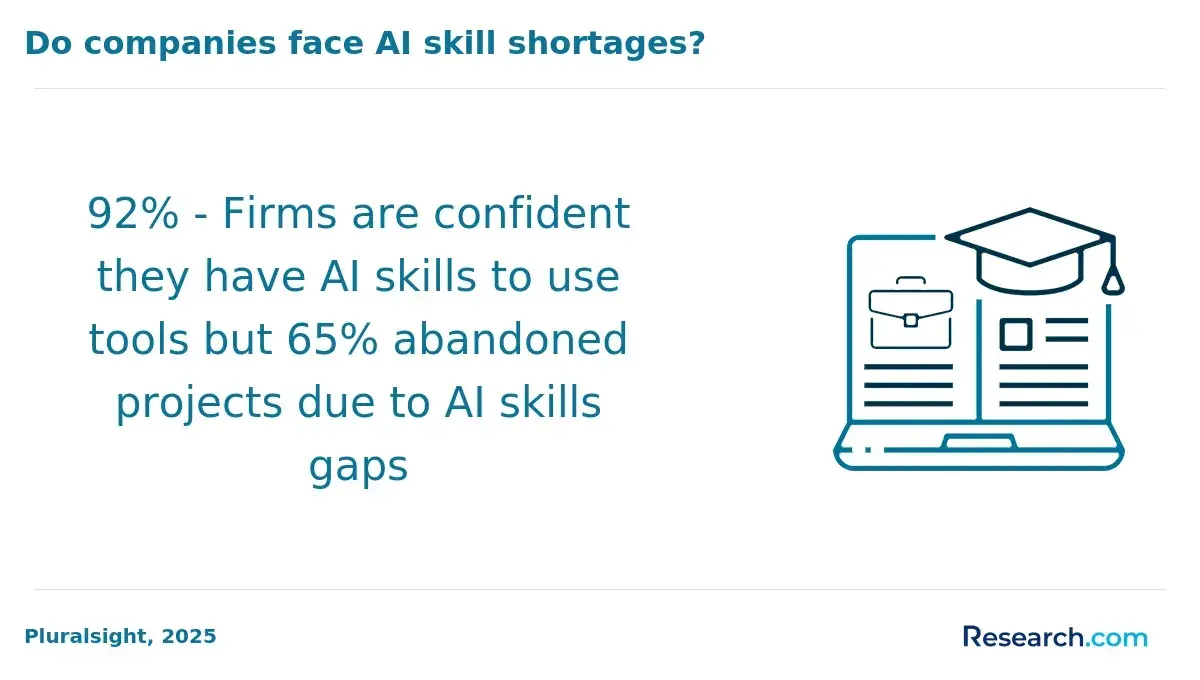
The 2024 Project Management Institute report highlights that 91% of project professionals foresee AI significantly impacting their operations soon, yet only 18% believe their organizations possess high AI maturity. Certification programs validate these critical competencies, enhancing career growth in AI project management.
For those considering further education, exploring the cheapest online mechanical engineering degree options can complement AI and program management skills, especially in tech-driven sectors.
How do online generative AI courses for program managers compare with on-campus options?
Online generative AI courses versus campus programs for program managers provide distinct advantages depending on professional needs.
Online generative AI training for program management professionals offers flexibility through asynchronous classes and shorter, specialized modules. This allows working managers to gain targeted AI skills without full-time study, focusing on practical applications like project workflows, risk mitigation, and strategic planning.
On-campus programs deliver structured learning with face-to-face faculty interaction and valuable networking. These programs usually feature hands-on labs and collaborative projects that deepen theoretical understanding, ideal for those seeking comprehensive immersion and peer support. However, on-campus options may pose time and location challenges, especially for mid-career professionals.
Cost is another factor. Online courses typically have lower tuition and no commuting expenses, while on-campus studies might be more expensive but come with the prestige of traditional institutions.
Both formats lead to significant career benefits-studies indicate that professionals with AI skills earn an average salary premium of 25% compared to those without these skills.
Program managers should assess their time availability, learning style, career goals, and budget. For those exploring related fields, considering a cyber security degree might also be valuable as part of a broader skill set in technology management.
What core skills and topics do generative AI courses for program managers typically cover?
Generative AI courses for program managers blend technical knowledge, strategic application, and leadership to manage AI-driven projects effectively.
They cover fundamentals like machine learning principles, neural networks, and natural language processing, equipping program managers to interpret AI outcomes and evaluate model performance without deep coding skills. These programs emphasize essential skills taught in generative AI programs for project leaders, such as aligning AI initiatives with business objectives and assessing ethical risks.
Students learn to manage AI project lifecycles, communicate with stakeholders, and lead cross-functional teams including engineers and data scientists. Practical components often include designing AI governance frameworks, ensuring compliance with privacy regulations, and using tools to monitor AI solution performance. Agile project management tailored to AI model iteration also features prominently.
Resource allocation and budgeting for AI technologies and talent acquisition prepare program managers for strategic decision-making in a rapidly evolving landscape. For instance, decisions around developing models in-house versus utilizing third-party AI services are explored.
According to IBM's 2024 Gen AI in the Enterprise study, 57% of CEOs prioritize upskilling leadership roles, boosting demand for program managers well-versed in AI and management methodologies.
Those interested in advancing their expertise may consider further education such as a data analytics masters program to deepen their analytical and managerial capabilities.
What education, experience, and technical background do you need to enroll in these courses?
Enrollment in top generative AI courses for program managers generally requires a solid foundation in project management and a basic grasp of data and technology concepts. Most programs expect candidates to hold at least a bachelor's degree in business, IT, engineering, or a related discipline.
Practical experience, typically two to five years in project or program management, enhances understanding of course materials and the effective use of generative AI tools in real-world scenarios.
Technical prerequisites often include familiarity with data analysis, programming basics, or project management software integrated with AI features. For instance, some courses ask for basic Python proficiency or experience with AI-driven platforms like Microsoft Project or Jira enhanced by automation.
Non-technical professionals can meet these requirements through preparatory modules focused on AI fundamentals tailored to their skill level.
According to PMI's 2024 survey, 82% of project professionals currently use some form of AI, with 40% specifically utilizing generative AI for planning, reporting, and risk analysis. Program managers lacking AI exposure risk falling behind in strategic decision-making and operational efficiency.
Successful candidates should be adept at interpreting AI outputs, assessing risks, and integrating automated insights into workflows. Advanced learners with data science experience may pursue specialized generative AI courses focusing on algorithm design and model evaluation to gain a competitive advantage.
How long do generative AI courses for program managers take, and what do they cost?
Generative AI courses for program managers typically range from 4 to 12 weeks, depending on the course focus and format. Shorter programs lasting 4 to 6 weeks emphasize essential topics such as prompt engineering, model capabilities, and practical applications for managing AI-driven projects.
Longer courses, spanning 8 to 12 weeks, tend to include hands-on labs, strategies for integration, ethical aspects, and leadership skills in AI adoption. Part-time and self-paced options offer flexibility tailored to working professionals.
Pricing varies widely based on depth and credentialing. Entry-level online courses usually cost between $300 and $800, aimed at foundational understanding. Advanced certifications and university-affiliated bootcamps typically fall between $1,200 and $4,000, reflecting intensive instruction and recognized credentials.
Some corporate programs bundled with AI consultancy services can exceed $5,000. Employers often subsidize these investments as part of professional development budgets.
Targeting courses with real-world project simulations and practical labs produces measurable skill gains. Managers new to AI should consider foundational options within the $300-$800 range. Those with experience may prioritize specialized certifications costing $1,500 or more that concentrate on strategic AI integration and governance.
How can you tell if a generative AI course or certificate is reputable and aligned with U.S. standards?
Verify that any generative AI course or certificate stems from an accredited institution or a recognized provider with a solid reputation in business or technology education. Accreditation by regional U.S. agencies confirms the curriculum meets established academic and industry standards, ensuring quality and relevance.
Look for transparent course objectives focused on practical AI applications and ethical considerations, reflecting industry demands.
Faculty expertise is critical. Instructors should have verifiable experience in AI development or application, ideally bridging business and technology sectors.
Programs affiliated with established universities or respected industry organizations typically maintain rigorous standards fitting for program managers.
Compare course content with current U.S. federal and industry AI guidelines, such as data privacy, responsible AI, and explainability. Strong programs often include case studies or project work that address real-world challenges in managing AI-driven initiatives.
The Graduate Management Admission Council (GMAC) analysis shows that short, non-degree executive AI courses from top schools range between USD $1,000 and $3,000, providing a cost-effective alternative to full-time MBA programs with AI content that can exceed $60,000. Be cautious if pricing is unusually low or if learning outcomes lack clarity.
Seek feedback from alumni, especially those in program management, to understand how well certifications support career growth and practical implementation.
What careers, roles, and advancement opportunities can generative AI training unlock for program managers?
Generative AI training equips program managers with advanced skills to lead AI-driven projects and initiatives effectively.
These competencies help them oversee AI product development, coordinate diverse AI teams, and implement scalable workflows that drive innovation. Career opportunities expand to roles such as AI program lead, transformation manager, and innovation strategist as AI integration becomes central to business strategies.
Specialized positions include managing AI deployment, assessing model impacts, and ensuring compliance with ethical AI standards. Such training fosters the ability to bridge technical and executive teams, translating complex AI concepts into actionable business strategies essential for launching AI-powered products or managing vendor partnerships.
Deloitte's Human Capital Trends report highlights that 74% of organizations prefer short-form, modular AI upskilling programs like certificates and micro-credentials, which offer flexible learning tailored to busy professionals. This approach rapidly enhances generative AI skills crucial for program managers.
Leadership roles in AI governance and risk management are also emerging, focusing on transparency, bias mitigation, and regulatory adherence. Program managers can further specialize in AI-driven project portfolio optimization to improve resource allocation and automate reporting.
Mastering generative AI significantly broadens program managers' career paths and influence in AI initiatives across industries.
What salaries and compensation ranges can program managers with generative AI skills expect?
Program managers skilled in generative AI command salaries well above generalist roles due to high market demand for AI-augmented expertise.
Entry-level positions start around $85,000 annually, while mid-career professionals with proven generative AI abilities earn between $110,000 and $140,000. Senior program managers or those leading AI-driven projects often exceed $170,000, especially in tech hubs or AI-centric companies.
Compensation typically includes bonuses, stock options, and other incentives that raise total pay by 15-30%. Holding certifications or practical experience with generative AI platforms can further boost earning potential, as employers seek talent that enhances productivity and innovation.
The World Economic Forum Future of Jobs report predicts that 44% of workers' core skills will be disrupted by 2028 due to AI and automation. Program management faces increased automation of routine tasks, increasing demand for professionals who skillfully integrate generative AI into project workflows and manage AI-enabled teams and tools.
Key career advice emphasizes focusing education and training on AI applications in management, outcome measurement, and learning AI ethics and governance to comply with evolving regulations. These skills position candidates as valuable assets in organizations adapting to the future of work.
Are there industry-recognized certifications in generative AI that benefit program managers?
Industry-recognized certifications in generative AI help program managers validate their knowledge of AI concepts, project management in AI contexts, and leadership of AI-driven initiatives. These credentials bridge technical and business strategies, enabling managers to lead cross-functional teams and align projects with organizational objectives.
Top business schools and professional organizations now offer specialized generative AI programs geared toward non-technical leaders. For instance, executive education from institutions like MIT Sloan and Wharton includes certifications emphasizing ethical AI use, governance, and implementation strategies relevant for program managers.
Accredited certifications typically cover AI lifecycle management, risk mitigation, data strategy, and effective stakeholder communication. These areas prepare program managers to supervise AI projects successfully and ensure adherence to evolving AI regulations.
According to GMAC's "AI for Business Courses" scan, the number of AI- and generative-AI-focused executive programs at leading business schools more than doubled in recent years. This growth reflects a high demand for recognized credentials targeting managers and non-technical leaders.
Professional certificates from IBM, Microsoft, and the AI Certification Institute also demonstrate applied skills in generative AI platforms, enhancing industry credibility for program managers.
Candidates should carefully choose certifications that align with career goals and are valued by employers. Key factors include curriculum quality, faculty expertise, practical components, and relevance to industry needs.
Other Things You Should Know About Artificial Intelligence
Ethical AI considerations are a key part of many generative AI training programs for program managers. These courses often cover topics such as bias mitigation, transparency, and responsible data usage to ensure AI systems are designed and deployed fairly and safely. Understanding ethical principles helps program managers guide AI projects that comply with legal and societal standards.
Data privacy and security are fundamental topics in generative AI courses tailored for program managers. Trainees learn about regulations like GDPR and HIPAA, as well as best practices for safeguarding sensitive information during AI model development and deployment. This knowledge enables program managers to oversee projects that protect user data and minimize security risks.
Yes, many generative AI courses for program managers are designed to accommodate professionals without deep technical expertise. These courses often emphasize conceptual understanding, strategic implementation, and management of AI projects rather than requiring advanced coding skills. However, some familiarity with basic AI concepts and data analytics can be beneficial.
References
- Best AI Certifications to Boost Your Career in 2026 – Dataquest https://www.dataquest.io/blog/best-ai-certifications/
- 11 AI certifications to grow your career https://www.cio.com/article/4175403/11-ai-certifications-to-grow-your-career.html
- Best AI Project Management Courses: 2025 Guide https://www.techademy.com/ai-project-management-courses
- Generative AI for Project Management https://www.iil.com/generative-ai-for-project-management/
- Generative AI Courses in 2026: Where to Start with Right One https://agilefever.com/generative-ai-courses/