2027 Best AI Courses for Tax Professionals

Co-Founder and Chief Data Scientist
Tax professionals face growing pressure to integrate artificial intelligence tools into their workflows to boost accuracy and efficiency. Many struggle to find reliable, flexible courses that fit their schedules while offering accredited credentials. The challenge intensifies for those transitioning from unrelated fields who need foundational and applied knowledge without wasting time on irrelevant content. Identifying the right program can streamline this process and ensure practical skill acquisition. This article examines the best artificial intelligence courses tailored to tax experts, focusing on accessibility, accreditation, and curriculum relevance to help professionals successfully navigate this technological shift.
Key Things You Should Know
- AI courses for tax professionals in 2026 focus on automating tax compliance, predictive analytics, and risk assessment, with over 70% of programs emphasizing practical application using real tax data.
- Recent studies show incorporating AI skills can increase tax professionals' efficiency by up to 40%, making these courses critical for career advancement in a rapidly digitalizing tax industry.
- Top courses offer certification aligned with IRS and CPA standards, ensuring learners meet professional requirements while mastering emerging AI tools tailored to U.S. tax regulations.
Advance Your Career with AI Online Courses
Artificial Intelligence: Implications for Business Strategy
This program provides an introduction to Artificial Intelligence and their implications for business strategy. Earn an official digital certificate.

Oxford Artificial Intelligence Programme
Explore this Oxford Artificial Intelligence programme offered in a flexible learning environment and explore topics like machine learning, automation, and robotics.

Implementing Agentic AI: Building Your Organizational Playbook
This online MIT Agentic AI course offers a practical approach to deploying AI agents in your organization, including a custom playbook. 3 weeks, exclusive launch price.

AI Adoption: Driving Business Value and Impact
This online MIT AI Adoption: Driving Business Value and Impact offers practical frameworks to close the gap between AI potential and business reality.

Artificial Intelligence in Pharma and Biotech
Discover the applications and limitations of artificial intelligence in pharma and biotech with this MIT online short course.

What are the best AI courses specifically designed for tax professionals today?
Top AI courses designed for tax professionals focus on practical skills that blend tax law, data analytics, and automation tools. Leading programs from organizations such as the American Institute of CPAs (AICPA) offer targeted training in AI-driven tax software and compliance automation. These trainings cover machine learning applications in fraud detection, predictive analytics for tax planning, and AI tools that simplify tax filing. Specialized platforms like the Tax Executive Institute deliver workshops combining AI fundamentals with updates on tax regulations, addressing the evolving needs of experts seeking the best tax-focused artificial intelligence training programs.
Certifications such as the "AI in Taxation" course from the IRS Taxpayer Digital Services highlight practical case studies and ethical AI use in tax preparation and audits. This emphasis corresponds with a 2024 Thomson Reuters Institute survey showing that while 73% of tax leaders anticipate AI will transform workflows in three years, only 22% of staff currently possess sufficient skills.
Courses vary in depth and concentration:
- Introductory courses address AI basics and its role in tax compliance and reporting.
- Advanced programs focus on deploying AI models for risk assessment and complex scenarios.
- Workshops emphasize integrating AI with tax software such as Intuit's ProConnect or Thomson Reuters' ONESOURCE.
Practical experience is critical; many programs combine hands-on labs with software simulations for rapid skill development. Choosing courses that provide ongoing updates is vital given AI's fast evolution in tax technology. Collaboration with technology vendors ensures access to current AI tax tools and regulatory frameworks. Prospective students exploring AI courses for tax professionals in the US may also benefit from reviewing the data science master US ranking for additional educational insights.
Advance Your Career with AI Online Courses
Artificial Intelligence: Implications for Business Strategy
This program provides an introduction to Artificial Intelligence and their implications for business strategy. Earn an official digital certificate.
Oxford Artificial Intelligence Programme
Explore this Oxford Artificial Intelligence programme offered in a flexible learning environment and explore topics like machine learning, automation, and robotics.
Implementing Agentic AI: Building Your Organizational Playbook
This online MIT Agentic AI course offers a practical approach to deploying AI agents in your organization, including a custom playbook. 3 weeks, exclusive launch price.
How can AI skills enhance a tax professional's career, salary, and job security?
AI skills directly enhance a tax professional's career advancement by increasing their ability to interpret and validate complex AI-generated data. According to Wolters Kluwer's "AI in Tax & Accounting" report, 64% of firms adopting AI prioritize this skill over creating AI tools, underscoring its critical importance. Tax professionals equipped with these skills become indispensable for firms integrating AI technology, ensuring accurate risk assessment, compliance, and decision-making.
Mastering AI-driven analysis improves job security by shifting a tax professional's role from routine data entry toward strategic oversight of AI systems. This transition guards against automation-related job losses, as nuanced human judgment remains necessary to verify AI outputs and address unexpected discrepancies. For example, a tax analyst who can evaluate AI-generated scenarios or detect anomalies adds value beyond standard software use.
Impact of artificial intelligence on tax professionals' salary and job security is significant; roles requiring AI skills often command salaries 10-20% above traditional tax positions due to their specialized nature and productivity gains. Practical AI skills include using machine learning models for predictive compliance and automating complex tax calculations while ensuring regulatory adherence.
Tax professionals should develop expertise in:
- Validating outputs from AI software
- Interpreting AI findings in the context of current tax laws
- Identifying anomalies flagged by AI tools
- Collaborating with AI developers to tailor solutions
Acquiring these skills through targeted courses will position individuals for sustained career growth and resilience in an evolving tax landscape. Those exploring affordable educational options may consider the cheapest online mechanical engineering degree as a model for cost-effective training pathways in technical fields related to AI and data analysis.
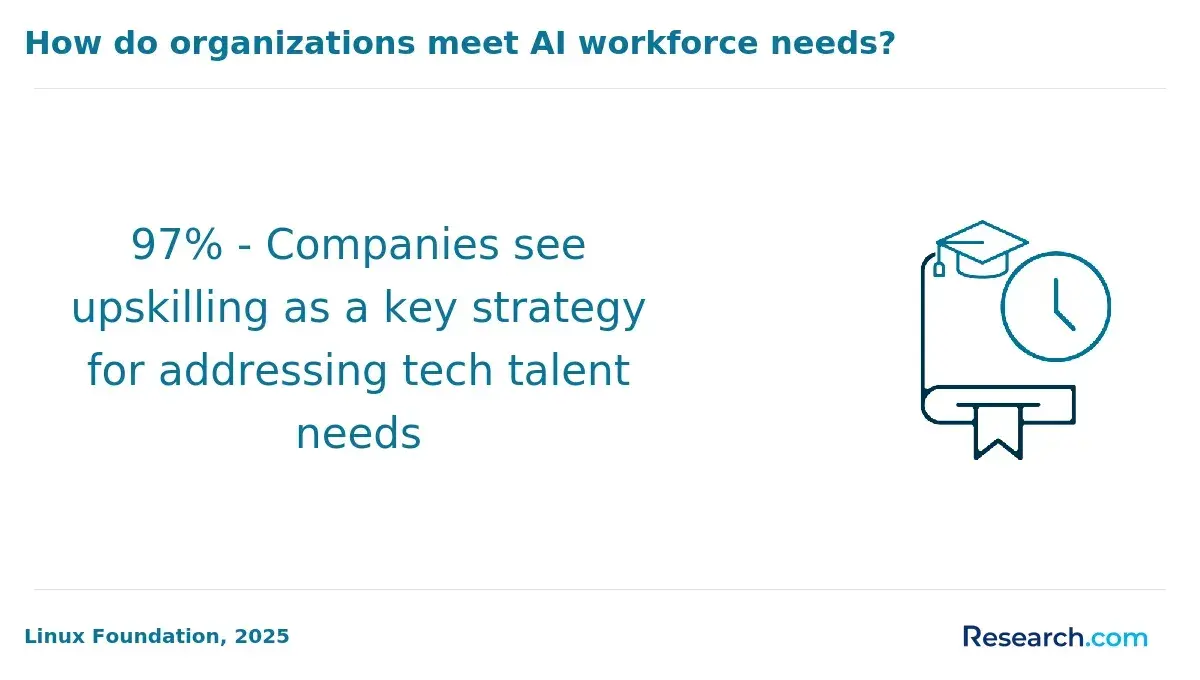
What types of AI training paths exist for tax professionals, from certificates to degrees?
AI training programs for tax professionals include options from brief certificates to full degree paths, tailored for varied expertise and career aims. Short certificate courses focus on practical AI skills like automation and data analytics, often requiring less than 10 hours of study. According to the AICPA & CIMA 2024 "Accounting Talent Trends" report, 58% of CPAs completing such courses experienced noticeable efficiency improvements within one busy season.
Professional certificates emphasize hands-on experience with tax-focused AI tools, such as AI-driven tax software or robotic process automation for compliance and reporting. These are ideal for tax professionals wanting quick upskilling without long-term commitments.
Advanced certificate and degree options in AI for tax experts include graduate certificates and master's programs with deep dives into AI programming and machine learning as applied to tax environments. These credentials enhance career opportunities in advisory and data science roles within accounting firms.
Bachelor's or master's degrees in computer science or data science with taxation electives provide foundational AI knowledge to lead integration projects. Many students find pursuing a data science masters online beneficial for expanding both IT and tax expertise.
Tax professionals should weigh their experience and goals carefully. Short courses often yield immediate productivity benefits, while graduate degrees prepare for leadership roles in AI-driven accounting innovation. Employers increasingly value credentials that combine tax knowledge with AI proficiency.
How do online AI courses for tax professionals compare with on-campus and hybrid options?
Online AI courses offer tax professionals enhanced flexibility compared to traditional on-campus training. These courses allow learners to develop AI skills while maintaining their work responsibilities, making them ideal for busy professionals seeking to stay current without disrupting their schedules. Unlike on-campus programs, online options provide self-paced modules tailored to AI tools used in tax compliance and research, addressing specific industry needs.
Hybrid ai tax professional education benefits those who want both online convenience and some in-person interaction. Hybrid formats blend real-time instruction with online study but often require commuting and fixed attendance, making them less flexible than fully online courses.
A 2024 Bloomberg Tax & Accounting survey shows 69% of U.S. corporate tax departments intend to increase investments in AI-enabled tax compliance by 2026, up from 41% in 2022. This surge drives demand for efficient AI training accessible regardless of location. Online courses provide rapid updates to reflect evolving AI technology and offer access to global expert instructors.
On-campus programs may deliver structured curriculums and direct mentorship, but they often lack agility to keep pace with fast-changing AI advancements specific to tax. For those balancing work and education, online ai courses versus on-campus tax training clearly highlight the online route's pragmatism and relevance.
For tax professionals interested in deepening their data skills, combining AI knowledge with a masters in data analytics can further enhance career prospects in this rapidly evolving field.
What core AI topics and tax-focused skills are covered in these specialized courses?
Specialized artificial intelligence courses for tax professionals combine core AI concepts with tax-specific applications to improve decision-making and compliance. Key topics include machine learning algorithms, natural language processing (NLP), and data analytics, which support automating data extraction, document classification, and predicting tax outcomes from large datasets.
Tax-focused training covers AI's role in transfer pricing analysis, audit risk assessment, and regulatory compliance monitoring. For example, Deloitte's 2024 Global Tax Management survey highlights that 61% of multinational enterprises now pilot or use AI for transfer pricing, up from 38% in 2021, underscoring AI's increasing practical relevance in tax functions.
Courses also address legal and ethical considerations, teaching how to interpret AI-driven insights within regulatory frameworks while ensuring data privacy. Hands-on modules often simulate tasks such as controversy support automation and tax anomaly detection, equipping learners to spot discrepancies and assist in dispute resolution.
Additional emphasis is placed on AI-assisted forecasting of tax liabilities and automated tax return preparation, reducing errors and boosting efficiency. Many courses include training on integrating AI software with ERP and tax management systems, helping professionals adopt AI smoothly. These comprehensive skills prepare graduates to confidently apply artificial intelligence to handle compliance complexities and large data volumes in real-world tax environments.
How do accreditation and professional standards apply to AI programs serving tax professionals?
Accredited programs for AI education tailored to tax professionals ensure quality, compliance, and practical relevance by meeting rigorous standards set by bodies like the Accreditation Council for Business Schools and Programs (ACBSP) or the Association to Advance Collegiate Schools of Business (AACSB). Aligning courses with ethical frameworks from professional organizations such as the American Institute of CPAs (AICPA) helps maintain integrity in AI applications for tax compliance and decision-making.
Key areas covered by reputable AI programs include data security, privacy, and algorithmic transparency, which are vital when handling sensitive financial information. AI governance frameworks taught in these courses address risk mitigation and accountability, remedying the widespread lack of formal governance policies found in many organizations, as noted in the U.S. Department of Labor's AI in the Workplace guidance.
Tax professionals should look for curricula that incorporate regulatory and compliance guidelines such as IRS rules on automated decisions and state-level digital compliance laws. Certifications recognized by both tax and AI professional bodies enhance credibility and career prospects. Practical training in compliant AI deployment helps avoid legal and ethical challenges in professional practice.
Overall, accredited AI programs bridging technological innovation with tax industry standards equip professionals with trustworthy knowledge and ethical competence, essential for effective and compliant AI use.
What are typical admission requirements for AI certificates, bootcamps, and degrees in tax?
Admission requirements for AI certificates, bootcamps, and degree programs in tax typically vary by program level and format but emphasize foundational skills and relevant experience. Certificate and bootcamp programs usually expect a basic grasp of accounting principles and familiarity with tax software or accounting platforms. Some may also ask for prior coursework in programming languages like Python, statistics, or a demonstrated interest in technology. Many certificate courses waive formal prerequisites for professionals already in tax or accounting, prioritizing practical experience over academic credentials.
Degree programs specializing in artificial intelligence and tax-such as master's degrees-generally require a bachelor's degree in accounting, finance, or computer science bachelor degree online. Applicants might need to submit GRE or GMAT scores and show quantitative skills including proficiency in statistics, data analysis, or programming, ensuring preparedness for advanced AI coursework tailored to tax applications.
Practical experience increasingly influences hiring decisions. According to CPA.com's 2024 Firm Tech Adoption survey, firms with partners who completed at least one AI-related certificate or micro-credential in tax within the previous 12 months are 2.1 times more likely to report double-digit growth in advisory revenue. This underscores how continuous professional development and certifications remain critical in AI-focused tax careers.
How long do AI programs for tax professionals usually take, and what do they cost?
AI programs for tax professionals typically range from brief courses to extensive certifications. Most require between 20 and 100 hours of study, generally completed over 4 to 12 weeks. Foundational courses focus on AI applications in tax automation and compliance, requiring about 20 to 40 hours-ideal for busy professionals seeking targeted skills. More advanced certifications delve into machine learning, data analytics, and AI strategy, often demanding 80 to 100 hours or more.
Costs vary widely based on program depth and provider. Entry-level courses usually start at $300 to $600, offering essential AI literacy. Mid-tier programs, ranging from $1,000 to $3,000, include hands-on projects and real-world case studies. Comprehensive or executive-level courses may exceed $5,000, reflecting in-depth curriculum and perks like expert mentorship and proprietary tools.
- Short, focused AI tax programs: 10-40 hours, $300-$600
- Intermediate certifications: 40-80 hours, $1,000-$3,000
- Advanced/executive courses: 80-100+ hours, $3,000+ to $5,000+
KPMG's Future of Tax & Legal report reveals that only 15% of tax teams at large companies consider their AI skills "advanced," despite 47% offering structured AI upskilling. This highlights the growing necessity for ongoing, comprehensive training beyond brief introductions.
Tax professionals should choose courses aligned with their current skills and goals. Budget-conscious learners might start with shorter programs to build specific AI competencies, while those pursuing leadership roles in AI-driven tax innovation should consider longer, recognized certifications that foster advanced expertise.
What AI-related roles, niches, and advancement opportunities exist for experienced tax professionals?
Tax professionals with expertise in artificial intelligence can significantly boost their careers by specializing in key roles such as AI tax technology specialists who develop software to automate compliance and reporting, minimizing manual errors. Another valuable niche is tax data analysis, where AI tools help interpret complex data to improve audit accuracy and tax forecasting. Professionals can also become AI compliance advisors, aligning tax strategies with evolving regulations influenced by AI insights.
Career growth often leads to leadership roles overseeing AI integration in accounting teams or consulting firms. Skilled tax experts manage projects that streamline workflows and increase firm efficiency. According to the Rightworks "AI in Accounting & Tax" study, firms that train staff on AI tools observe an 18% productivity boost in tax-preparation capacity per professional without increasing headcount.
Additional specialties include AI risk assessment to identify algorithm biases in tax solutions and AI-driven international tax strategies addressing digital cross-border transactions. Tax professionals gain advantages by upskilling through AI-focused education and collaborating with IT departments to implement secure AI platforms tailored for tax.
Common questions in this field include:
- How to integrate AI without compromising client confidentiality?
- Which AI tools best serve specialized tax niches?
- How to stay compliant amid regulatory changes driven by AI capabilities?
Tackling these issues through focused training and AI project engagement positions tax professionals at the forefront of industry innovation while delivering measurable business impact.
How should tax professionals evaluate and choose a reputable AI course or program?
Tax professionals benefit most from AI courses tailored to their specific learning goals and skill gaps, particularly those focused on automating compliance tasks, anomaly detection, and predictive analytics. Conducting a thorough needs assessment ensures the training is practical and relevant rather than generic.
It's crucial to verify the credibility of the course provider or instructor by choosing programs backed by recognized tax or technology organizations, or led by experts with verifiable experience in tax and AI. Alumni reviews and outcome reports can reveal a course's real-world effectiveness and rigor.
Course formats vary, including self-paced modules, live workshops, or hybrids. Programs featuring case studies, hands-on labs, and tax software integration improve practical learning. Transparent syllabi, clear learning objectives, and defined assessments signal quality.
Cost comparisons are important but should not be the sole factor. The AI for Tax Professionals guide from Thomson Reuters shows 82% of firms with positive AI ROI conducted formal needs and tool assessments prior to adoption, compared to only 37% among low ROI firms.
Other aspects to consider include accreditation, ongoing support, networking opportunities, and regular content updates reflecting evolving AI capabilities in tax law and regulation.
Tax professionals should prioritize courses that align with tax workflows, demonstrate expertise, offer applied learning, and provide evidence-based outcomes for maximizing their investment.
Other Things You Should Know About Artificial Intelligence
In 2027, top AI courses for tax professionals include "AI for Taxation" by Coursera, "Machine Learning for Tax Professionals" offered by edX, and "AI in Finance and Tax" by Udacity. These courses are tailored to integrate AI technologies into tax compliance and consultancy services.
Artificial intelligence can automate many routine tasks such as data entry and basic calculations, but it cannot fully replace accountants and tax professionals. These professionals provide critical analysis, judgment, and interpretive skills that AI currently cannot replicate, especially when dealing with complex tax scenarios and client relationships.
While programming knowledge can be helpful, many artificial intelligence courses for tax professionals are designed to be accessible without prior coding experience. These courses often focus on practical applications of AI tools relevant to tax work rather than in-depth software development.
Artificial intelligence improves tax compliance and auditing by enabling faster data processing, anomaly detection, and predictive analytics. It allows tax professionals to identify potential errors, fraud, and compliance risks more efficiently, helping organizations maintain accuracy and adhere to regulatory requirements.
References
- Can AI Replace Tax Professionals? | Bloomberg Tax https://pro.bloombergtax.com/insights/tax-automation/can-ai-replace-tax-professionals/
- Risks of Using AI for Tax Preparation - D&A https://www.davidovcpa.com/uncategorized/risks-of-using-ai-for-tax-preparation-what-taxpayers-must-know/
- Top AI courses in 2025 https://firebrand.training/en/blog/top-ai-courses
- Transforming Tax with AI: How AI Can Help Tax Professionals with Their Workflows https://www.cchcpelink.com/self-study/transforming-tax-with-ai-how-ai-can-help-tax-professionals-with-their-workflows/30154/
- Top 7 artificial intelligence courses 2025: Comparison of the best online programs https://xd-i.com/en/data-en/ai-courses/
- AI and Analytics Programs https://esmt.berlin/executive-education/analytics-ai-programs
- AI Accounting & Auditing Certificate Training https://www.becker.com/cpe/ai-for-accounting-audit-certificate
- Certified Artificial Intelligence (AI) for Accountants Training Course https://www.oakwoodinternational.com/courses/accounting-courses/certified-artificial-intelligence-ai-for-accountants-training
- AI for Tax: navigating the future of taxation | Tax Adviser https://www.taxadvisermagazine.com/article/ai-tax-navigating-future-taxation
- Artificial Intelligence in Finance: 9 AI Courses to Build Your Skills https://xledger.com/blog/artificial-intelligence-in-finance-9-ai-courses-to-build-your-skills/