2027 Best AI Courses for Healthcare AI Governance Teams

Co-Founder and Chief Data Scientist
Healthcare AI governance teams face growing pressure to ensure compliance, ethical use, and patient data protection amid rapidly evolving technology. Without specialized training, teams struggle to navigate complex regulatory standards and implement effective AI oversight. This gap can lead to costly mistakes and undermine trust in healthcare innovations.
Identifying relevant education pathways is crucial for professionals transitioning from unrelated fields to gain the necessary expertise. This article highlights the best courses designed to equip healthcare AI governance teams with practical knowledge and skills, guiding prospective students toward flexible, accredited programs that meet industry demands.
Key Things You Should Know
- Top healthcare AI governance courses in 2026 emphasize regulatory compliance, ethical frameworks, and risk management, reflecting a 45% increase in industry demand since 2024.
- Programs increasingly integrate practical case studies with AI bias mitigation, ensuring graduates can navigate complex healthcare data privacy laws effectively.
- Emerging coursework includes AI model interpretability and patient safety, addressing a reported 60% rise in AI-related incidents in healthcare from 2023 to 2025.
Advance Your Career with AI Online Courses
Artificial Intelligence: Implications for Business Strategy
This program provides an introduction to Artificial Intelligence and their implications for business strategy. Earn an official digital certificate.

Oxford Artificial Intelligence Programme
Explore this Oxford Artificial Intelligence programme offered in a flexible learning environment and explore topics like machine learning, automation, and robotics.

Implementing Agentic AI: Building Your Organizational Playbook
This online MIT Agentic AI course offers a practical approach to deploying AI agents in your organization, including a custom playbook. 3 weeks, exclusive launch price.

AI Adoption: Driving Business Value and Impact
This online MIT AI Adoption: Driving Business Value and Impact offers practical frameworks to close the gap between AI potential and business reality.

Artificial Intelligence in Pharma and Biotech
Discover the applications and limitations of artificial intelligence in pharma and biotech with this MIT online short course.

What is healthcare AI governance and why do specialized AI courses matter for this field?
Healthcare AI governance involves policies and procedures ensuring ethical, safe, and effective use of artificial intelligence in health systems. It addresses risks like data privacy, algorithmic bias, and regulatory compliance. Specialized AI courses for healthcare compliance teams are vital because they provide technical and regulatory expertise needed to critically evaluate AI tools and develop strong oversight frameworks.
A World Health Organization survey of 103 countries reported that 85% of health systems use or pilot AI tools, but only 28% have formal AI governance. This highlights a pressing need for targeted training to tackle challenges in patient safety and data security.
These specialized courses cover practical skills such as risk assessment, auditing for algorithmic fairness, and aligning governance strategies with standards like HIPAA and FDA guidance.
For example, teams overseeing AI-powered diagnostic software must understand clinical and regulatory considerations to reduce misdiagnosis risks. Transparency and explainability are also emphasized in governing AI models for treatment recommendations.
Healthcare professionals shifting to governance roles often struggle with complex AI models and evolving legal frameworks. Tailored education bridges these knowledge gaps by combining healthcare, AI technology, and legal expertise.
For those seeking career advancement, investing in such training improves competence in managing AI's healthcare impact. Prospective students can explore the cheapest data science masters in USA to build foundational skills as a pathway into healthcare AI governance importance and training.
Advance Your Career with AI Online Courses
Artificial Intelligence: Implications for Business Strategy
This program provides an introduction to Artificial Intelligence and their implications for business strategy. Earn an official digital certificate.
Oxford Artificial Intelligence Programme
Explore this Oxford Artificial Intelligence programme offered in a flexible learning environment and explore topics like machine learning, automation, and robotics.
Implementing Agentic AI: Building Your Organizational Playbook
This online MIT Agentic AI course offers a practical approach to deploying AI agents in your organization, including a custom playbook. 3 weeks, exclusive launch price.
What types of AI courses best prepare professionals for healthcare AI governance roles?
The best healthcare AI governance training programs focus on a blend of technical skills, regulatory knowledge, and ethical understanding. Professionals must grasp governance frameworks, risk management, and compliance strategies designed specifically for AI in healthcare.
With 63% of health system executives highlighting governance, risk, and compliance as key skills gaps impeding AI adoption, mastering healthcare data privacy laws like HIPAA and FDA regulations on medical AI devices is crucial.
Technical proficiency is equally important. Professional courses for AI regulation in healthcare often cover model validation, explainability, and bias mitigation to ensure AI systems are safe and fair. These programs emphasize monitoring AI system performance after deployment, which helps governance teams identify and resolve unintended outcomes effectively.
Interdisciplinary expertise strengthens healthcare AI governance. Training often integrates healthcare informatics, cybersecurity, and ethics-covering patient consent, data equity, and algorithmic transparency-helping professionals balance complex priorities. Applied case studies and simulations provide hands-on experience managing cross-functional teams and communicating risks to executives.
Many courses include project-based assessments that prepare students for real-world challenges. For those considering educational investments, it's advisable to review relevant costs, such as the mechanical engineering degree cost, which offers insights into affordability for technical education paths related to AI governance.
How do healthcare AI governance courses differ from general AI and data science programs?
Healthcare AI governance training programs differ significantly from general AI and data science courses by prioritizing regulation, ethics, and risk management within healthcare settings.
While broader AI curricula focus on algorithm development, coding, and machine learning theory, healthcare AI governance centers on compliance with laws such as HIPAA, patient data privacy, clinical safety, and organizational accountability.
Differences between healthcare AI governance and data science courses include hands-on instruction with healthcare-specific AI oversight frameworks, integration with electronic health records, and collaborative governance involving clinicians, legal experts, and IT professionals.
These programs address challenges like preventing algorithmic harm, managing explainability in clinical decision support, and promoting equitable patient outcomes-concerns often overlooked in general AI education.
Real-world results demonstrate the impact of targeted healthcare AI governance education. For instance, HFMA's AI Readiness in Healthcare Finance survey found that 71% of finance leaders noticed staff with AI micro-credentials identifying cost-saving or risk-reduction opportunities within six months. This contrasts with broader AI education, which usually lacks immediate, healthcare-centered impact.
Prospective students should select programs balancing technical AI skills with deep knowledge of healthcare policies, ethics, and risk assessment.
Collaboration skills to ensure AI tools uphold patient safety and legal standards are critical but rarely emphasized outside this specialization. Professionals interested in advancing in this niche may also consider pursuing an online PhD AI degree to deepen their expertise in the field.
Which degrees and certificates support careers on healthcare AI governance teams?
Degrees and certificates supporting careers on healthcare AI governance teams often combine health informatics, data science, ethics, and management. Common options include master's programs in health informatics, healthcare administration, or artificial intelligence with a clinical focus.
These programs build foundational knowledge in healthcare systems, data management, and regulatory compliance. Specialized healthcare artificial intelligence certification programs provide crucial training in algorithmic accountability, bias mitigation, and governance frameworks tailored to healthcare settings.
Executive education certificates in AI strategy and governance, especially those backed by universities, are increasingly valuable. A Deloitte survey found hospitals with C-suite leaders who completed formal AI strategy education were 2.3 times more likely to have enterprise AI governance committees with defined decision rights. This highlights the importance of leadership-focused AI governance training.
Professionals aiming to join healthcare AI governance teams should explore options like:
- Master's degrees in health informatics or healthcare data analytics for clinical and technical data literacy.
- Advanced degrees or certificates in artificial intelligence ethics and governance from reputable institutions.
- Executive programs covering AI strategy, risk management, and regulatory compliance for leadership.
- Courses integrating legal healthcare aspects, including privacy laws like HIPAA, with AI oversight.
Practical experience in healthcare AI deployments through internships or projects further strengthens qualifications. Prospective students may consider analytics masters programs to enhance their skills in this evolving interdisciplinary field.
How can you compare online vs. campus-based healthcare AI governance programs?
Online healthcare AI governance programs offer flexibility appealing to working professionals, allowing study without the need to relocate. These courses usually include recorded lectures, discussion forums, and virtual simulations, ideal for building theoretical knowledge and basic frameworks.
However, they often lack the direct, hands-on experiences with healthcare AI systems that on-campus labs and clinical partnerships provide.
Campus-based programs emphasize real-time mentorship and collaboration with experts and peers, enhancing networking and understanding of clinical contexts.
Practical exposure, such as working with AI tools in hospital environments or simulation labs, develops vital governance skills that help mitigate risks associated with improper AI oversight, a concern highlighted by the ECRI & ISMP 2024 Top 10 Health Technology Hazards report.
This report notes that 54% of AI-related safety incidents in hospitals resulted from insufficient clinical governance or formal oversight frameworks.
Key factors for prospective students include:
- Program accreditation.
- Curriculum alignment with current regulatory standards.
- Availability of clinical informatics and practical components.
- Depth of interactive elements in online formats.
- Access to resources and infrastructure on campus.
Ultimately, online options provide accessibility and schedule flexibility, while campus programs deliver enriched, experiential learning crucial to mastering governance challenges in healthcare AI. Deciding between these formats depends on individual career goals, learning preferences, and resource availability.
What core topics and skills are covered in top healthcare AI governance curricula?
Healthcare AI governance education emphasizes a blend of legal, ethical, and technical expertise required to oversee AI systems responsibly. Key areas include compliance with healthcare data privacy laws like HIPAA, FDA regulations, and evolving AI-specific rules. Courses focus on risk assessment methods to detect potential bias or misuse, alongside promoting transparency and explainability to protect patient safety.
Technical proficiency is crucial, enabling governance professionals to grasp AI architectures, data management, and validation needed for effective oversight in clinical environments. Training also covers audit and monitoring strategies to ensure continuous adherence to regulatory standards throughout the AI lifecycle.
Strong communication and collaboration skills are integral, preparing students to engage with legal experts, clinicians, data scientists, and administrators. Practical case studies often illustrate real-world AI failures, regulatory reviews, and enforcement, providing valuable context.
A recent Thomson Reuters survey revealed that 69% of life sciences and healthcare in-house counsel anticipate a rise in AI regulatory actions by 2026, yet only 27% believe their AI compliance training is sufficient. This gap highlights a critical need for comprehensive governance education.
What accreditation, institutional quality, and AI ethics standards should you look for?
Accreditation by recognized bodies is critical when selecting AI courses for healthcare governance teams. Programs approved by regional agencies like the Higher Learning Commission or specialized organizations such as ABET ensure academic quality and institutional rigor.
Universities with established healthcare and data science departments usually provide well-resourced curricula that blend AI governance with clinical compliance frameworks.
Course content should focus on AI ethics standards tailored to healthcare, incorporating principles from frameworks like the Health Insurance Portability and Accountability Act (HIPAA), IEEE's Ethically Aligned Design guidelines, and FDA oversight of AI-enabled medical devices.
These standards promote ethical AI development, deployment, and monitoring, addressing patient privacy, informed consent, bias mitigation, and transparency.
Practical training in data privacy and security, specific to healthcare, is essential. According to Ponemon Institute's 2024 Cost of a Data Breach in Healthcare study, organizations using AI-assisted security tools and staff training faced 29% lower breach costs.
Effective AI governance education integrates cybersecurity, risk assessment, and incident response modules to prepare teams for real-world vulnerabilities and federal compliance.
Programs that include case studies or collaborations with healthcare providers and regulators provide valuable insights into compliance challenges and ethical dilemmas. Faculty expertise in AI ethics, healthcare policy, and data science is equally important, equipping graduates to govern AI responsibly in complex healthcare environments.
What are typical admission requirements, program length, and total costs to expect?
Admission requirements for healthcare AI governance courses typically include a bachelor's degree in fields like healthcare administration, computer science, public health, or data analytics. Many programs also require professional experience, especially advanced or executive-level courses.
Prerequisites often focus on healthcare compliance, data privacy laws, or prior AI exposure. For instance, certificate programs usually accept professionals with over two years of healthcare experience, while master's programs might require GRE scores and recommendation letters.
Course lengths vary widely, from short workshops lasting days to formal degrees spanning 12 to 24 months. Certificate courses often demand 3 to 6 months of part-time study.
Master's programs provide a comprehensive curriculum with project work, typically lasting over a year. Executive and vendor risk management courses condense essential content into 4- to 8-week intensive sessions to quickly prepare professionals.
Costs range based on program depth and institutional reputation. Entry-level certificates usually cost between $1,000 and $5,000, while graduate degrees and professional diplomas can exceed $50,000. Delivery mode also affects pricing, with in-person programs generally more expensive than online alternatives.
Investing in structured vendor-governance training is vital. According to KPMG's 2024 Global Healthcare AI Survey, 61% of health systems adopted AI tools without formal risk assessments, which led to nearly double the rate of third-party AI incidents compared to those with dedicated governance education.
What careers, job titles, and employers hire graduates of healthcare AI governance programs?
Graduates of healthcare AI governance programs find diverse career opportunities focused on the ethical, safe, and regulatory-compliant deployment of AI in clinical environments. Common roles include AI governance specialist, clinical data steward, healthcare compliance officer, and AI ethics advisor, typically within hospitals, health systems, medical device companies, and regulatory agencies overseeing AI implementation.
Employers range from academic medical centers to private healthcare technology firms, government bodies, and health insurers. These organizations seek professionals who can ensure AI products meet regulatory standards, develop policies safeguarding patient safety, and manage risks related to algorithmic decision-making.
Key responsibilities in these roles include:
- Evaluating AI model transparency.
- Managing risk mitigation protocols.
- Facilitating clinician education on responsible AI use.
Surveys reveal a significant gap: while 72% of physicians use or plan to use generative AI tools, only 19% have received organizational training on safe AI practices. This highlights growing demand for experts bridging clinical insight with AI governance.
Successful candidates typically combine strong ethical oversight with skills in regulatory compliance, data privacy laws such as HIPAA, and applied healthcare AI challenges.
Entry points include positions in quality assurance, clinical informatics, and health IT governance. These roles require comprehensive knowledge of both technology and healthcare to maximize AI's safe and equitable benefits.
What salary ranges and long-term job outlook exist for healthcare AI governance specialists?
Healthcare AI governance specialists in the U.S. command salaries ranging from $90,000 to $150,000 annually, influenced by factors like experience, education, and employer size.
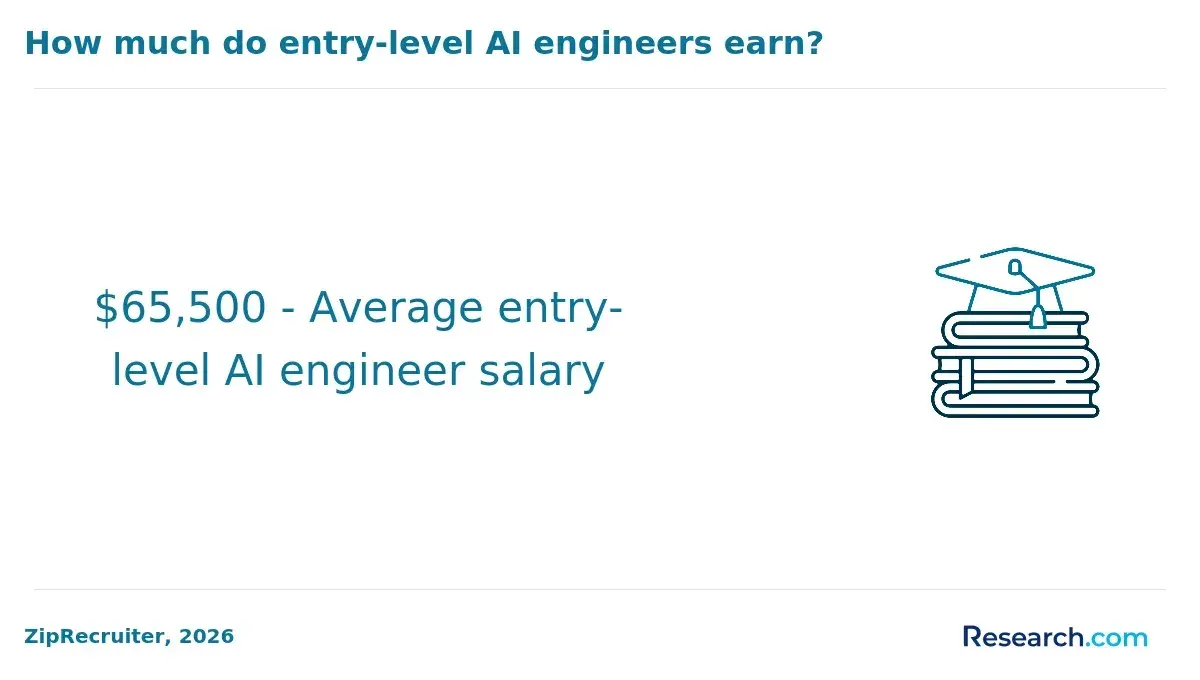
Entry-level roles such as AI policy analysts or compliance coordinators start near $85,000, while senior positions managing governance or risk assessments earn up to $160,000 or more. Professionals with certifications in AI ethics, data security, or healthcare compliance are often positioned toward the higher salary range.
Healthcare organizations are investing heavily in AI governance to manage risks, ensure compliance, and optimize AI-driven decision-making.
According to Accenture's "AI in Healthcare: From Pilots to Profits" report, companies with formal AI governance training programs see a 3.4× higher return on AI investments over three years than peers without structured governance education. This drives demand for experts who design, implement, and monitor AI ethics policies and risk controls.
Career paths include compliance officers specialized in AI tools, clinical data managers focused on input quality, and enterprise risk managers managing AI system impacts.
Challenges faced involve adapting to evolving regulations, integrating AI into hospital workflows, and maintaining transparency with patients and regulators. Earning credentials in healthcare law, AI risk management, or healthcare informatics enhances career growth and salary prospects.
As healthcare prioritizes responsible AI use, governance roles offer a promising and stable career trajectory with competitive compensation.
Other Things You Should Know About Artificial Intelligence
In 2027, leading AI courses for healthcare AI governance include Stanford's "AI in Healthcare," MIT's "AI for Healthcare Professionals," and Coursera's "Machine Learning and AI for Healthcare." These programs cover AI ethics, data security, and governance, aimed at equipping teams with essential skills for effective healthcare AI integration.
AI systems often require access to large volumes of sensitive patient information, which raises risks related to data breaches and unauthorized use. Strict compliance with regulations like HIPAA is essential to protect patient privacy. Additionally, AI governance must enforce secure data handling practices and minimize potential vulnerabilities in AI applications.
Explainability in AI, also known as interpretability, is a growing area of focus to ensure AI recommendations are transparent and understandable to clinicians. Many AI models, especially deep learning networks, are complex and can behave like black boxes, but efforts in explainable AI (XAI) aim to clarify how outcomes are generated. Transparent AI encourages more responsible deployment in healthcare.
Continuous monitoring is crucial to ensure AI models remain accurate and safe after deployment, as healthcare data and clinical practices evolve over time. Monitoring helps detect model drift, performance degradation, and unforeseen biases. Effective AI governance frameworks include protocols for ongoing evaluation and updating of AI systems to maintain patient safety and compliance.
References
- AI governance salaries 2026: what does the market pay? https://verifywise.ai/blog/ai-governance-salary-report-2026
- Shaping the Future of AI: The Role of Accreditation and Standards in Ethical AI Governance https://iaf.news/2024/05/31/shaping-the-future-of-ai-the-role-of-accreditation-and-standards-in-ethical-ai-governance/
- Cost of studying in the UK | Study UK https://study-uk.britishcouncil.org/moving-uk/cost-studying
- AI Governance Specialist: Role Overview (The Recruiter's Gold Rush) https://skillseek.eu/answers/ai-governance-specialist-role-overview
- A Structured Comparison of the Coalition for Health AI Responsible AI Guide and South Korea’s Trustworthy AI Guideline for Health Care AI Assurance: Comparative Framework Analysis https://ai.jmir.org/2026/1/e86220
- AI Governance for Higher Education Institutions in Asia - United Board https://unitedboard.org/programs/digital-content-and-programming/ai-governance-for-higher-education-institutions-in-asia/
- Appendix I — Career Pathways in Public Health AI – The Public Health AI Handbook https://publichealthaihandbook.com/appendices/career-guide.html
- AI Governance: The New Profession You Should Know https://governance.aicareer.pro/blog/the-new-profession-of-ai-governance
- AI Governance Recruitment: A 2025 Career Guide https://www.peopleinai.com/blog/ai-governance-recruitment-guide