2027 Best AI Courses for Finance Professionals With Certificates

Co-Founder and Chief Data Scientist
Finance professionals often face the challenge of integrating complex AI tools into their workflows without formal training in the field. As financial markets grow increasingly reliant on data-driven decision-making, the ability to understand and apply artificial intelligence techniques becomes essential. Many struggle to find accessible, accredited programs that fit their schedules and background. This article explores the best AI courses offering certification tailored for finance experts, emphasizing flexible learning options designed to bridge knowledge gaps and enhance career prospects within the evolving financial industry.
Key Things You Should Know
- Top AI courses for finance professionals in 2026 emphasize practical applications such as algorithmic trading, risk management, and fraud detection, aligning with 58% industry adoption rates reported in 2025.
- Most courses offer verified certificates recognized by financial institutions, enhancing career advancement opportunities in a job market growing 35% annually for AI-skilled finance roles.
- Flexible online and hybrid formats allow busy professionals to upskill efficiently, with 72% of learners reporting improved decision-making and analytical abilities post-completion.
Advance Your Career with AI Online Courses
Artificial Intelligence: Implications for Business Strategy
This program provides an introduction to Artificial Intelligence and their implications for business strategy. Earn an official digital certificate.

Oxford Artificial Intelligence Programme
Explore this Oxford Artificial Intelligence programme offered in a flexible learning environment and explore topics like machine learning, automation, and robotics.

Implementing Agentic AI: Building Your Organizational Playbook
This online MIT Agentic AI course offers a practical approach to deploying AI agents in your organization, including a custom playbook. 3 weeks, exclusive launch price.

AI Adoption: Driving Business Value and Impact
This online MIT AI Adoption: Driving Business Value and Impact offers practical frameworks to close the gap between AI potential and business reality.

Artificial Intelligence in Pharma and Biotech
Discover the applications and limitations of artificial intelligence in pharma and biotech with this MIT online short course.

What are the best AI courses for finance professionals with certificates?
Top AI certification courses for finance professionals with certificates focus on practical machine learning, data analysis, and automation skills tailored to financial applications. Leading programs offered by institutions like the Massachusetts Institute of Technology (MIT), Coursera, and edX emphasize finance-specific modules, including algorithmic trading, risk management, and predictive analytics.
These top AI training programs with certificates for finance experts provide hands-on experience using tools such as Python, R, and TensorFlow. Participants learn to build models for fraud detection, portfolio optimization, and regulatory compliance. Certificates from courses like "AI For Finance" on Coursera or MIT's "Data Science and Machine Learning for Finance" serve as proof of proficiency, enhancing career prospects in AI-driven financial sectors.
Gartner data highlights that 73% of CFOs increased investment in AI and advanced analytics, with 80% expecting AI integration across most finance processes by 2026. This underlines the urgency for finance professionals to master AI tools promptly to stay competitive.
Key course attributes include:
- Coverage of AI applications in financial forecasting and credit scoring
- Integration of regulatory and ethical considerations in AI implementation
- Training on AI-driven automation to reduce manual reporting errors
- Certificate validation from recognized institutions boosting career prospects
Finance professionals should choose programs that combine theoretical foundations with real-world financial datasets and case studies. For those exploring career paths, information on opportunities available with an AI degree can provide valuable guidance aligned with employer expectations and evolving market demands.
Advance Your Career with AI Online Courses
Artificial Intelligence: Implications for Business Strategy
This program provides an introduction to Artificial Intelligence and their implications for business strategy. Earn an official digital certificate.
Oxford Artificial Intelligence Programme
Explore this Oxford Artificial Intelligence programme offered in a flexible learning environment and explore topics like machine learning, automation, and robotics.
Implementing Agentic AI: Building Your Organizational Playbook
This online MIT Agentic AI course offers a practical approach to deploying AI agents in your organization, including a custom playbook. 3 weeks, exclusive launch price.
How do you choose an accredited AI course for finance?
Choosing an accredited AI course for finance professionals requires verifying the institution's reputation and program recognition. Look for courses from universities or organizations with strong credentials in finance or technology education. Accreditation from recognized bodies ensures the curriculum meets quality standards and that the certificate is valued by employers. It is important to confirm the program clearly states the skills and competencies acquired.
When evaluating accredited artificial intelligence courses for finance professionals, consider whether the course covers practical applications such as algorithmic trading, risk modeling, fraud detection, and financial forecasting. Programs should include hands-on projects or case studies with real financial datasets to build relevant skills. Verify that instructors have expertise in both AI methodologies and finance for effective and balanced learning.
Delivery format and flexibility are key for working professionals. Accredited online programs with asynchronous options allow you to study without disrupting your career. Ensure the course duration fits your schedule and learning goals. Cost and career support services, including job placement assistance, also affect overall value. Comparing tuition fees against certificate recognition can help determine worth.
Data from the Coursera Global Skills Report 2024 indicates finance professionals with AI skills earn about 21% higher total compensation than peers without these skills. Investing in certified AI programs in finance contributes to professional growth and salary potential.
For those weighing financial commitments, it is useful to compare costs with resources like the mechanical engineering degree online cost benchmarks, as a similar approach can guide budgeting for AI education.
What AI skills do finance certificate courses teach?
Finance certificate courses often focus on AI applications in financial analysis, equipping professionals with skills in machine learning algorithms essential for predictive analytics, risk assessment, and fraud detection. Learners gain expertise in natural language processing techniques to evaluate financial news and earnings calls, improving decision-making accuracy. Hands-on training with data manipulation and visualization tools such as Python, R, and SQL allows students to transform raw financial data into valuable insights.
Courses usually emphasize risk modeling using AI to better predict market volatility and credit risks. Automation of repetitive tasks via robotic process automation (RPA) enhances efficiency in compliance and reporting functions. Ethical considerations and regulatory frameworks related to AI deployment are also key components, preparing learners to address legal challenges responsibly.
Specialized modules may cover algorithmic trading strategies based on reinforcement learning and enhanced credit scoring methods that incorporate alternative data sources. AI-driven portfolio management, including robo-advisory systems, is another crucial area of study. These programs directly influence career advancement: the McKinsey Global Workforce Survey reports 42% of finance professionals completing at least one AI course on platforms like Coursera or edX gained promotions or salary increases within a year.
Developing machine learning skills for finance professionals opens diverse career paths, including roles beyond traditional finance. For those interested in a creative technology career, considering a position as a video game designer can also be an option worth exploring.
Are online AI courses better than campus programs for finance?
Online AI courses offer significant advantages over campus programs for finance professionals aiming for rapid, practical upskilling. These courses provide essential flexibility, enabling busy CFOs, controllers, and finance teams to learn without interrupting demanding work schedules. This flexibility addresses a critical need since 84% of finance leaders report challenges scaling AI initiatives due to limited leadership understanding, while only 18% of CFOs have formal AI training (Deloitte CFO Signals Survey Q4 2024). Online content is frequently updated to reflect current AI applications in finance, such as algorithmic risk analysis and AI-driven forecasting, which campus curricula may not refresh as often.
When comparing online AI courses versus campus programs for finance professionals, online options also offer diverse formats, including self-paced modules, live virtual workshops, and interactive labs to match different learning styles. Executive programs tailored for finance leaders emphasize strategic AI implementation and regulatory compliance, whereas campus courses often focus more on foundational theory and immersion.
Campus programs remain valuable for those seeking in-depth networking, mentorship, and collaborative peer learning. Real-time group projects enhance problem-solving skills, which some finance professionals find crucial for mastering complex AI challenges.
For finance careers, obtaining an online AI certification can provide relevant, efficient training for leadership roles requiring swift AI deployment. Those earlier in their careers or wanting theoretical depth alongside teamwork might still benefit from campus experiences. Professionals interested in broadening their technical skills may also consider a cyber security course as a complementary pathway.
What are the admission requirements for AI finance certificate programs?
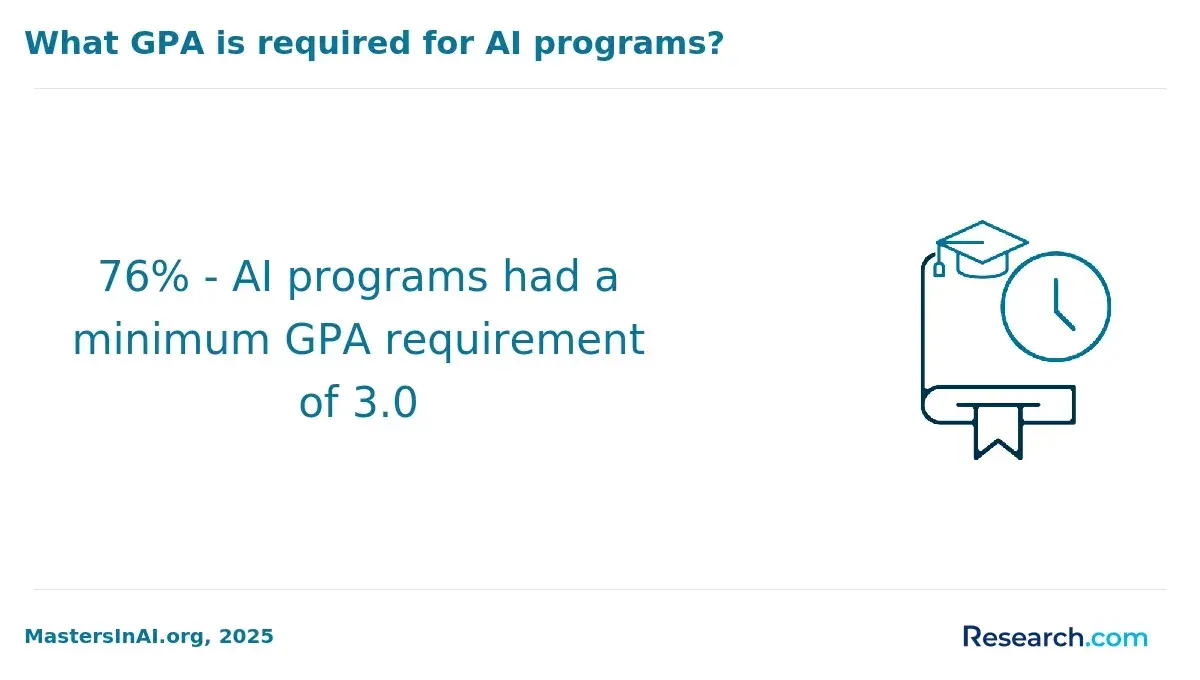
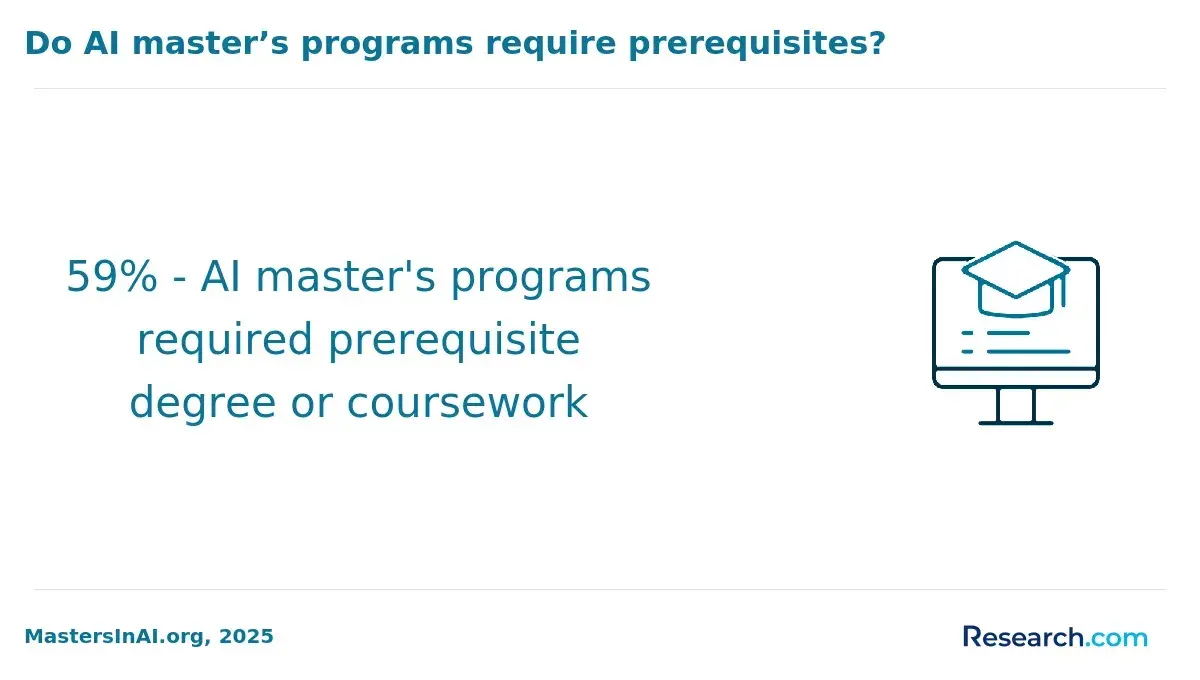
Admission requirements for AI finance certificate programs typically include a bachelor's degree in finance, accounting, economics, computer science, or a related field. This foundation is necessary to grasp core finance concepts and how AI tools enhance financial analysis. Candidates usually must demonstrate proficiency in programming languages like Python or R, which are essential for AI-driven forecasting and budgeting. Some programs offer preparatory courses to build coding skills if needed.
Mathematical competency in statistics, linear algebra, or calculus is often expected for understanding machine learning algorithms. Many programs also prefer or require 1-3 years of professional experience in finance, analytics, or IT roles to contextualize learning. For those without work experience, foundational tracks or micro-credentials may be suggested.
Standardized tests such as GRE scores are generally not required, distinguishing certificate programs from full degree courses. However, competitive institutions may use academic records or interviews during admissions. According to the Accenture Finance AI Benchmarking Study 2024, organizations applying AI and machine learning in financial planning typically reduce forecast errors by 30-50% and cut cycle times by 20-25%, highlighting the value of meeting these program requirements.
How long do AI certificate programs for finance professionals take?
AI certificate programs for finance professionals generally last from a few weeks up to six months, varying by course depth and format. Shorter options-typically 4 to 8 weeks-cover foundational concepts like machine learning basics, data analysis, and AI applications in finance. These suit busy professionals seeking targeted skills without significant time commitments.
More in-depth programs, such as those focused on AI-driven accounting, audit automation, or compliance risk assessment, often extend to 3-6 months. They usually mix theory with practical projects, allowing learners to gain hands-on experience with relevant tools. For instance, courses addressing AI automation in accounting tasks are timely given projections that 45% of repetitive accounting work will be automated by 2025.
Many certificate options offer self-paced learning, recommending around 100 to 150 total hours. This flexibility is valuable for professionals balancing work and study. Programs awarding official certification hold particular weight, especially as the World Economic Forum Future of Jobs Report 2025 reports a 27% rise in demand for accountants skilled in working alongside AI since 2020.
Choosing the right program depends on your current knowledge, schedule, and goals. Entry-level finance professionals may prefer accelerated introductory courses, while experienced accountants might opt for programs emphasizing AI integration in compliance and audit. Considering these factors can help you align education with career advancement.
How much do AI finance certificate courses cost?
The cost of AI finance certificate courses varies significantly depending on the provider, course depth, and credential type. Entry-level certificates aimed at broad financial professionals typically range from $300 to $1,200. More advanced or specialized programs, focusing on quantitative finance, trading, or investment applications, can cost between $1,500 and $5,000. Foundational certificates from popular online platforms often start in the lower price range, while university-affiliated professional certificates, with access to faculty or live projects, are usually more expensive.
Many programs bundle modules covering machine learning, data analysis, and finance theory. Although pricier, these comprehensive courses better prepare candidates for roles commanding higher salaries. According to Glassdoor Economic Research 2024, quantitative finance positions requiring machine learning skills have a median base salary of $185,000, notably higher than the $145,000 median for similar roles without AI or ML expertise. This salary premium often justifies the investment in quality certification.
Consider funding options such as employer tuition reimbursement, scholarships, or payment plans. Some courses add value by including career services or internship opportunities.
To maximize return on investment, align course content with career goals and confirm certificate recognition by hiring managers. Institutions with strong industry connections typically offer certifications that carry greater weight in the finance sector.
Expect to pay from a few hundred to several thousand dollars for credible AI finance certificates, with prices rising alongside course complexity and institutional reputation.
Which finance jobs use AI skills after certification?
Finance professionals with AI certification have access to increasingly diverse roles critical to the evolving financial landscape. Financial analysts enhance predictive modeling and automate routine data analysis, making decisions faster and with greater insight. In corporate finance, FP&A managers leverage AI algorithms to boost budgeting precision and develop more accurate scenario forecasts.
Investment bankers working in mergers and acquisitions (M&A) use AI-driven analytics to conduct due diligence more thoroughly. The Bain & Company Global M&A Report 2024 shows that firms applying AI analytics in M&A are 1.6 times more likely to surpass deal value creation goals, underscoring AI's strategic impact in high-stakes transactions.
Risk managers and compliance officers implement AI-powered machine learning models for fraud detection and portfolio risk assessment. Quantitative analysts capitalize on these tools to design faster, more precise algorithmic trading strategies.
Corporate valuation specialists use AI to automate data gathering and refine valuation models, reducing errors and accelerating analysis. Fintech product managers overseeing AI-driven financial offerings also depend on AI skills that blend finance expertise with technology.
Key roles combining finance with AI skills include:
- Financial analysts
- FP&A managers
- Investment bankers in M&A
- Risk managers
- Quantitative analysts
- Corporate valuation specialists
- Fintech product managers
These positions require certified AI proficiencies to maintain a competitive edge and implement data-driven financial strategies across the industry.
What salary can finance professionals earn with AI certificates?
Finance professionals holding AI certificates enjoy notably higher salaries than those in traditional roles. Entry-level analysts with AI skills typically earn between $70,000 and $90,000 annually. Mid-level finance managers or data analysts who apply AI in financial modeling and forecasting see salaries from $110,000 to $140,000. Senior experts using AI for strategic decisions and automation often command over $160,000, especially in banking, consulting, and fintech sectors.
The demand for finance specialists enhances by proficiency in AI tools like Excel generative add-ins, Power BI automation, and ChatGPT for report generation. According to the Microsoft Work Trend Index: AI in Finance 2024, teams leveraging generative AI copilots report 35-45% gains in productivity for spreadsheet and reporting tasks. This efficiency supports higher pay for certified AI professionals.
Certifications in machine learning for financial risk analysis or AI-driven portfolio optimization demonstrate practical expertise that employers seek for roles involving predictive analytics, fraud detection, and automating compliance reporting.
Location and industry impact salary: professionals with AI credentials in major U.S. financial hubs such as New York and San Francisco typically earn 15-20% more than those in smaller markets. Sectors quick to adopt AI, like hedge funds and corporate finance, offer higher salary ceilings.
Investing in AI certificate programs is a cost-effective strategy, enabling finance pros to exceed $120,000 salaries within 2-3 years and advance in a competitive job market.
Which professional certifications complement AI training in finance?
Professional certifications that complement artificial intelligence training in finance significantly enhance expertise and improve competitiveness in the job market. Key credentials include the Chartered Financial Analyst (CFA), which deepens investment management and financial analysis knowledge, providing essential context for AI-driven financial modeling. The Financial Risk Manager (FRM) certification hones skills in risk assessment, where AI supports predictive analytics and stress testing. The Certified Public Accountant (CPA) credential is valuable for those focusing on auditing and compliance, sectors increasingly integrating AI for fraud detection and regulatory adherence.
Certifications like the Certified Analytics Professional (CAP) connect directly to data science and machine learning, vital to finance-related AI applications. The Certificate in Quantitative Finance (CQF) broadens understanding of quantitative modeling and algorithmic trading, areas where AI automates complex strategies. Additionally, the Project Management Professional (PMP) certificate benefits finance experts leading AI implementation projects, ensuring effective deployment and integration.
According to the LinkedIn Workplace Learning Report 2025, 54% of professionals aligned with targeted certification programs advanced to new roles within 18 months, versus 27% without such alignment. This demonstrates the advantage of pairing artificial intelligence skills with certifications that reflect focused financial expertise.
Choosing relevant certifications helps finance professionals build domain-specific skills in investment, risk, compliance, analytics, and project management, supporting career growth in an AI-driven finance landscape.
Other Things You Should Know About Artificial Intelligence
While not always mandatory, prior programming experience is highly recommended for learning artificial intelligence in finance. Most AI courses expect familiarity with languages like Python or R since they are widely used for data analysis and model development. Understanding basic coding concepts will enable smoother learning and practical application of AI tools in financial contexts.
Artificial intelligence enhances financial risk management by enabling predictive analytics and real-time data processing. AI algorithms can detect patterns and anomalies in large datasets to forecast risks more accurately and faster than traditional methods. This allows finance professionals to make proactive decisions and improve the overall stability of financial portfolios.
In 2027, leading AI courses for finance professionals include “AI in Finance” from Coursera, which offers a certificate from renowned universities, and edX's “AI for Trading” from Georgia Tech. These courses equip finance experts with the necessary AI skills and certification to excel in the industry.
Finance professionals must be aware of ethical concerns such as data privacy, bias in AI models, and transparency. AI systems can unintentionally perpetuate biased decision-making if trained on flawed data. Ethical use involves regularly auditing algorithms and ensuring compliance with regulatory standards to maintain trust and fairness.
References
- Essential AI Skills for Finance Professionals in 2026 https://www.turingcollege.com/blog/ai-skills-for-finance-professionals
- AI Certification for Finance Professionals | Get Future Ready https://techcanvass.com/Courses/ai-course-for-finance-professionals
- Artificial Intelligence in Finance: 9 AI Courses to Build Your Skills https://xledger.com/blog/artificial-intelligence-in-finance-9-ai-courses-to-build-your-skills/
- Best AI Training for Finance Professionals — 2026 Buyer's Guide https://www.learnsignal.com/blog/best-ai-training-for-finance-professionals/
- (25) Top AI Finance Jobs | Murray Resources https://murrayresources.com/25-top-ai-finance-jobs/
- No Code AI for Finance Certificate Program https://www.financialprofessionals.org/training-resources/afp-learn/ai-for-finance-certificate
- AI Careers: Roles, Salaries, and Certifications to Get You Hired - ONLC https://www.onlc.com/blog/ai-careers-roles-salaries-certifications/
- Best Courses of Generative AI in Finance for Professionals - CFTE https://blog.cfte.education/best-generative-ai-in-finance-courses/
- Best AI Courses for Finance & Business Professionals (2026) https://www.wallstreetprep.com/knowledge/best-ai-courses-for-finance-business-professionals/