2027 Best AI Courses for AI Engineers

Co-Founder and Chief Data Scientist
Many professionals with unrelated undergraduate degrees struggle to transition into AI roles due to the technical depth and rapid evolution of the field. Traditional degree programs often lack the flexibility or specialization required to bridge this gap efficiently. Without targeted education, breaking into the AI industry can seem overwhelming, delaying career advancement and innovation opportunities.
This article identifies top AI courses designed specifically for working individuals seeking accredited, flexible pathways into AI engineering. It aims to equip readers with actionable insights on selecting programs that balance foundational knowledge, practical skills, and industry relevance to facilitate a successful career shift.
Key Things You Should Know
- Top AI courses in 2026 emphasize practical skills in machine learning, natural language processing, and computer vision, reflecting employer demands for hands-on expertise.
- Enrollment in AI programs in the U.S. surged by over 35% between 2024 and 2025, highlighting growing market need for skilled AI engineers.
- Leading courses now integrate ethics and AI governance, responding to regulatory priorities and ensuring responsible technology development.
Advance Your Career with AI Online Courses
Artificial Intelligence: Implications for Business Strategy
This program provides an introduction to Artificial Intelligence and their implications for business strategy. Earn an official digital certificate.

Oxford Artificial Intelligence Programme
Explore this Oxford Artificial Intelligence programme offered in a flexible learning environment and explore topics like machine learning, automation, and robotics.

Implementing Agentic AI: Building Your Organizational Playbook
This online MIT Agentic AI course offers a practical approach to deploying AI agents in your organization, including a custom playbook. 3 weeks, exclusive launch price.

AI Adoption: Driving Business Value and Impact
This online MIT AI Adoption: Driving Business Value and Impact offers practical frameworks to close the gap between AI potential and business reality.

Artificial Intelligence in Pharma and Biotech
Discover the applications and limitations of artificial intelligence in pharma and biotech with this MIT online short course.

What are the best AI courses to become an AI engineer in the United States?
The best artificial intelligence courses for AI engineers in the United States blend foundational knowledge in machine learning, data science, and software engineering with hands-on projects. Prestigious universities such as Stanford, MIT, and Carnegie Mellon offer specialized programs tailored to industry needs.
For instance, Stanford's AI Graduate Certificate highlights deep learning, natural language processing, and reinforcement learning, while Carnegie Mellon's Master of Science in Artificial Intelligence integrates robotics and computer vision.
Top AI engineering training programs in the United States also include accessible online options. Coursera's Deep Learning Specialization, led by Andrew Ng, covers neural networks, CNNs, and sequence models, providing practical, industry-relevant skills. Likewise, edX's Artificial Intelligence MicroMasters from Columbia University offers comprehensive courses in knowledge representation, planning, and robotics.
Practical experience remains essential. Engaging in courses with capstone projects or collaboration with tech firms improves job readiness. Mastering programming tools like Python, TensorFlow, and PyTorch is critical, along with cloud platforms such as AWS and Azure to enhance employability.
Employers prioritize candidates who can apply AI skills to real-world challenges rather than only theoretical knowledge. With 78% of organizations using AI in at least one business function, up from 55% previously, programs reflecting current industry applications are vital for career success. Prospective students should consider factors like cost and program outcomes, including exploring options such as an affordable data science degree when planning their education path.
Advance Your Career with AI Online Courses
Artificial Intelligence: Implications for Business Strategy
This program provides an introduction to Artificial Intelligence and their implications for business strategy. Earn an official digital certificate.
Oxford Artificial Intelligence Programme
Explore this Oxford Artificial Intelligence programme offered in a flexible learning environment and explore topics like machine learning, automation, and robotics.
Implementing Agentic AI: Building Your Organizational Playbook
This online MIT Agentic AI course offers a practical approach to deploying AI agents in your organization, including a custom playbook. 3 weeks, exclusive launch price.
What education and skills do you need to qualify for AI engineering roles?
To qualify for AI engineering roles in 2026, a strong foundation in computer science, mathematics, and specialized AI knowledge is essential. Most positions require a bachelor's degree in computer science, software engineering, data science, or a related STEM field. Many employers prefer or demand a master's degree focused on machine learning, deep learning, or AI algorithms, reflecting the rising complexity of the field.
Essential skills for AI engineering careers include programming proficiency in Python, Java, or C++, alongside expertise with machine learning frameworks like TensorFlow and PyTorch. Mastery of data structures, algorithms, and software development principles is necessary to build reliable AI models. Practical experience in neural networks, natural language processing, or computer vision improves employability.
Mathematical competence remains vital, especially in linear algebra, calculus, probability, and statistics, which underpin AI model design and evaluation. Additionally, skills in data handling such as cleaning and preprocessing datasets prepare inputs for effective AI solutions. For those exploring affordable education pathways, programs like the cheapest online mechanical engineering degree can offer insights into budget-conscious STEM learning.
Soft skills such as problem-solving, collaboration, and clear technical communication are crucial for interdisciplinary teamwork. Familiarity with cloud platforms and big data tools also adds value. Professionals changing careers may find specialized AI certification programs or bootcamps focusing on real projects particularly helpful.
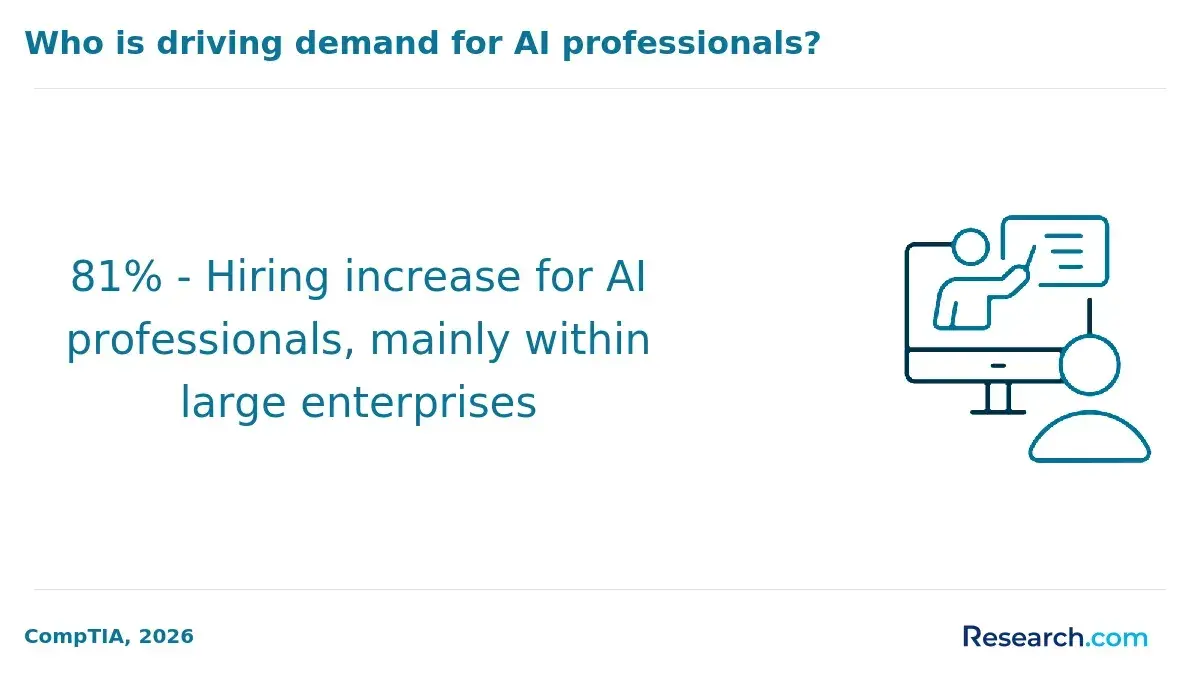
The U.S. Bureau of Labor Statistics projects 26% job growth for software developers from 2023 to 2033, much faster than average, underscoring the strong demand for skilled AI engineers. This growth highlights the importance of meeting AI engineer educational requirements in the US to secure competitive roles.
How do AI engineering degree programs compare with bootcamps and short courses?
AI engineering degree programs offer an in-depth education covering foundational theory, advanced algorithms, and specialized areas like natural language processing and computer vision. These four-year programs include extensive coursework in mathematics, computer science, and ethics, often paired with research projects or internships.
This pathway is ideal for those seeking a strong theoretical grounding and credentials that employers value for research and development roles. For a comprehensive list of options, explore AI degree programs.
By contrast, bootcamps and short courses provide focused, practical training designed to quickly develop skills such as model deployment, data engineering, or using frameworks like TensorFlow or PyTorch. Typically lasting weeks to months, these options suit working professionals or career switchers prioritizing hands-on experience and speed over formal accreditation.
The advantages of AI short courses over degree programs include flexibility and skill-specific learning without long-term commitment.
The median annual wage for computer and information research scientists was $145,080, highlighting the value of advanced knowledge often gained through degree programs. However, employers increasingly recognize bootcamp graduates with proven projects and relevant experience, especially when their technical skills align closely with job requirements.
Considering AI engineering degree programs versus bootcamps comparison, key points include:
- Degree programs provide broad, long-term foundations suitable for research, innovation, and complex AI systems.
- Bootcamps fast-track job readiness and niche technical skills but may lack theoretical depth.
- Short courses allow professionals to update specific skills efficiently.
Additionally, degree programs often offer stronger networking opportunities and access to academic research, beneficial for cutting-edge AI engineering roles.
What should you look for in an AI course curriculum for engineering careers?
Choosing an AI course curriculum for engineering careers requires a focus on comprehensive technical training aligned with industry needs. Essential skills for ai engineers in course content include machine learning algorithms, neural networks, data structures, and programming languages such as Python or R. Practical applications like natural language processing and computer vision must be covered to equip students for real-world challenges.
Strong programs offer hands-on projects and lab work that build expertise in development and deployment. Since 65% of organizations regularly use generative AI-nearly double from the prior year according to the McKinsey Global Survey on AI 2024-curricula now emphasize large language models (LLMs) and generative AI techniques. Mastery of LLM-powered application development is vital for aspiring engineers.
Well-rounded courses also address data engineering, model optimization, and AI ethics to help manage workflows and ensure fairness. Specialized modules on cloud platforms and AI tools reflect current industry practices. Collaboration opportunities and partnerships with industry enhance learning and networking prospects.
Assessment should rely on coding assignments, capstone projects, or internships rather than solely theoretical exams. Transparent objectives, current content, and expert instructors are key for competitive preparation. For those seeking advanced analytics training, consider exploring analytics master's programs that complement AI skill sets.
How do online AI engineering courses compare with on-campus programs?
Online ai engineering courses present a flexible alternative to traditional on-campus programs, particularly benefiting professionals and students with geographic or scheduling limitations. These courses often feature modular, self-paced content that allows learners to concentrate on specific topics like machine learning algorithms, neural networks, or natural language processing. Such flexibility is vital due to the fast-paced advancements in ai technologies.
In contrast, on-campus programs provide an immersive environment with direct access to professors, labs, and collaboration opportunities. This setting supports hands-on experience through research projects and mentorship, advantageous for those seeking a deep technical foundation and networking. However, on-campus studies typically involve higher tuition and relocation expenses.
Data from the Stanford AI Index 2025 shows global private investment in generative AI reached $25.2 billion, emphasizing the need for up-to-date curricula in both online and on-campus education. When deciding between the two, consider your work commitments, learning style, and career aims. For instance, professionals wanting swift entry into applied ai roles might prefer online courses with practical projects and certifications.
On the other hand, aspiring researchers or those after a thorough academic base could benefit more from on-campus graduate programs with laboratory access. Many find hybrid models appealing, as they combine online theoretical study with local lab experience, balancing flexibility and hands-on learning.
- Modular and self-paced content supports targeted skill development
- On-campus programs enhance mentorship and networking
- Significant industry investments demand continually updated course material
- Choosing between formats depends on personal commitments and career goals
How can you verify accreditation and program quality for AI engineering courses?
Accreditation verification is crucial when selecting ai engineering programs. Confirm whether the institution has regional or national accreditation recognized by the U.S. Department of Education or the Council for Higher Education Accreditation, which guarantees compliance with federal standards. Additionally, seek specialized accreditation like ABET, which focuses on technology and engineering program quality.
Curriculum quality is an important factor. Look for courses covering essential topics such as machine learning algorithms, neural networks, data structures, and hands-on projects with popular frameworks like TensorFlow or PyTorch. Faculty expertise adds value-prefer programs taught by instructors engaged in current research or industry practices.
Consider student outcomes to assess program effectiveness. Key metrics include graduation rates, job placement in AI-related roles, and partnerships with leading ai companies. Instead of relying solely on testimonials, consult authoritative education review platforms or recognized industry bodies for trustworthy evaluations.
The deep learning market is expected to expand dramatically-from $18.2 billion in 2023 to $526.7 billion by 2032-according to Fortune Business Insights, underscoring the importance of acquiring verified credentials. Pursuing accredited and quality ai engineering education equips students with relevant skills to compete in this fast-growing field.
How long do AI engineering programs take and what do they typically cost?
AI engineering programs typically last from six months to two years, depending on the curriculum's depth and format. Short-term options, such as bootcamps or certificate programs, generally focus on practical skills like machine learning, data engineering, and neural networks. These usually span 6 to 12 months. In contrast, comprehensive master's degrees or specialized postgraduate tracks take 1 to 2 years, combining theory, advanced algorithms, system design, and hands-on projects.
Cost varies widely by program type and institution: certificate programs tend to range between $5,000 and $15,000, offering an accessible route for professionals seeking rapid upskilling. Master's degrees, reflecting greater academic resources and faculty expertise, typically fall between $20,000 and $60,000 in tuition.
Employers often prioritize demonstrable skills and relevant project experience over formal degrees alone. Many candidates pursue a mix of short-term courses, self-directed learning, and industry certifications to optimize time and cost.
- Additional expenses may include software, hardware, and possible lost income for full-time study.
- Part-time or online programs provide scheduling flexibility but can extend program duration beyond one year.
- The U.S. Bureau of Labor Statistics projects a 15% growth in computer and information systems managers from 2024 to 2034, underlining growing demand for advanced AI-technical leadership roles.
What entry requirements and application materials do AI engineering programs expect?
Applicants to AI engineering programs generally need a solid foundation in mathematics, programming, and data science. A bachelor's degree in computer science, software engineering, electrical engineering, or a related STEM field is often required, though some programs accept equivalent industry experience. Key knowledge areas include linear algebra, calculus, statistics, and programming languages such as Python or Java.
Typical application materials include academic transcripts, GRE scores (increasingly optional), letters of recommendation, and a statement of purpose outlining motivation, relevant experience, and career goals. Some programs may request a portfolio showcasing prior AI projects or coding skills.
For specialized AI subfields like computer vision-used by 38% of companies as reported in the McKinsey Global Survey on AI 2024-demonstrating hands-on experience with image processing, convolutional neural networks, internships, research papers, or AI competitions can greatly enhance an application.
International candidates may face additional requirements such as English proficiency tests (TOEFL or IELTS) and credential evaluations. Programs sometimes conduct technical interviews or coding challenges to evaluate problem-solving abilities and AI knowledge. It is important to review specific program criteria carefully to tailor your application for success.
What jobs, career paths, and industries can AI engineers pursue after training?
AI engineers enjoy diverse career opportunities across industries, reflecting the broad applications of AI technology. Common positions include machine learning engineer, data scientist, AI researcher, and computer vision engineer. These roles center on developing algorithms, deploying AI models, and analyzing large datasets to tackle complex problems.
Industries such as healthcare, finance, automotive, and e-commerce increasingly rely on AI expertise. In healthcare, AI aids predictive diagnostics and personalized treatments; finance uses it for fraud detection and algorithmic trading; automotive sectors focus on autonomous vehicle development; and e-commerce applies AI to optimize supply chains and improve customer recommendations.
Specialized areas like natural language processing (NLP) - expected to grow significantly, from $24.1 billion to $158.6 billion by 2032 - open careers in chatbot development, voice assistants, sentiment analysis, and automated translation. Cybersecurity also demands AI skills for threat detection and automated defense.
Career advancement often involves specializing in robotics, computer vision, or reinforcement learning. Leadership roles require blending technical expertise with management and business acumen to shape AI strategy. Freelance consulting and entrepreneurship offer additional paths to innovate AI-driven products.
Awareness of data privacy and ethical AI use is vital for sustainability in AI careers.
What salaries, job outlook, and certifications can AI engineers expect in the U.S.?
AI engineers in the U.S. enjoy competitive salaries and strong job growth. The median annual wage for AI-related roles hovers around $120,000, with top earners exceeding $180,000. Specialized roles like machine learning engineers and AI research scientists often command salaries above this range. Employment in AI is projected to grow 31% from 2024 to 2034, significantly outpacing the average for all occupations, highlighting rapid industry growth.
Certifications are vital to closing the skills gap. The IBM Global AI Adoption Index 2024 shows that while 72% of organizations have adopted AI, only 13% have fully deployed generative AI, emphasizing demand for skilled professionals. Key certifications include the Certified AI Engineer, Microsoft Certified: Azure AI Engineer Associate, and Google Cloud Professional Machine Learning Engineer, each validating expertise in leading AI tools and frameworks.
Job seekers should target certifications offering practical experience in machine learning models, data engineering, and AI deployment. These credentials boost employability and facilitate career advancement by proving proficiency to employers. Combining formal education with recognized certifications and hands-on skills positions AI engineers to benefit from the growing AI integration across industries.
Other Things You Should Know About Artificial Intelligence
The most common programming languages in artificial intelligence engineering include Python, R, and Java. Python is widely favored due to its extensive libraries and frameworks specifically designed for AI development. R is often used for statistical analysis and data visualization, while Java is chosen for its scalability and performance in production environments.
Mathematics is fundamental to artificial intelligence, particularly concepts from linear algebra, calculus, probability, and statistics. These areas underpin machine learning algorithms, neural networks, and data manipulation techniques essential for AI engineering. A solid understanding of these mathematical principles helps in designing and optimizing AI models effectively.
Yes, artificial intelligence engineers can work across many industries beyond traditional tech companies. Sectors such as healthcare, finance, automotive, retail, and manufacturing increasingly rely on AI to improve processes, analyze data, and automate tasks. Their skills are valuable in any field integrating AI solutions for better decision-making and innovation.
In 2027, top AI courses for engineers include Stanford University's AI Specialization, MIT's Deep Learning for Self-Driving Cars, and Coursera's AI for Everyone by Andrew Ng. These courses offer cutting-edge knowledge and practical experience crucial for AI engineers today.
References
- AI pricing: how much does AI cost in 2025? | Future Processing https://www.future-processing.com/blog/ai-pricing-is-ai-expensive/
- AI Engineer Job Outlook 2025: Trends, Salaries, and Skills – 365 Data Science https://365datascience.com/career-advice/career-guides/ai-engineer-job-outlook-2025/
- AI Engineering Course Skills: Job-Ready Roadmap https://kahedu.edu.in/ai-engineering-course-skills/
- Online vs Campus Artificial Intelligence Degree Programs: Complete Comparison https://hakia.com/compare/artificial-intelligence-online-vs-campus/
- The 5 Best AI Engineering Bootcamps in 2026 - tripleten.com/blog https://tripleten.com/blog/posts/best-ai-engineering-bootcamps
- Jobs in artificial intelligence (AI) - Intuit Blog https://www.intuit.com/blog/innovative-thinking/jobs-in-artificial-intelligence-ai/
- AI Career Paths: What Jobs Are Available and How to Land One https://www.codingtemple.com/blog/ai-career-paths/
- Become an AI Engineer in 3 Months | Turing College https://www.turingcollege.com/ai-engineering
- Highest Paying AI Jobs in 2026: Top High-Salary Roles | Flashfire Blog https://www.flashfirejobs.com/blog/highest-paying-ai-jobs
- Career Path for Artificial Intelligence Engineers https://www.stratascratch.com/blog/career-path-for-artificial-intelligence-engineers