2027 How Hard Is It to Get Into Youngstown State University Online Programs?

Co-Founder and Chief Data Scientist
Imagine applying to an online program at Youngstown State University while navigating rising demand for remote education. Nationally, online program applications surged by over 20% recently, tightening acceptance decisions. This trend means that meeting basic requirements no longer guarantees admission. Candidates must consider how their academic record, relevant experience, and personal statements stack up against a growing pool of qualified peers.
Admission to Youngstown State University's online offerings reflects this competitive reality. Understanding how acceptance rates, prerequisite courses, and holistic evaluation influence outcomes is crucial. This article examines these factors, helping prospective students gauge their chances and strengthen applications based on practical admission criteria and realistic career goals.
Key Points About Admission Difficulty at Youngstown State University Online Programs
- Youngstown State University's online programs admit roughly 80% of applicants, indicating low entry barriers that limit competitive filtering by academic rigor or selectivity in candidate screening.
- With 5,799 applicants annually and about 4,639 admitted, the process reflects a broad inclusion model rather than a merit-based exclusivity, influencing the applicant pool's overall academic profile diversity.
- Applicants should balance accessible admission with the need to verify program alignment with career goals, since easier acceptance does not inherently translate to stronger labor market outcomes.
How competitive is admission to Youngstown State University's online programs?
Admission to Youngstown State University online programs is moderately competitive, with an acceptance rate of 80%. Out of 5,799 applicants, 4,658 were admitted, reflecting a broad access approach rather than stringent selectivity. In practical terms, this means applicants face less pressure gaining entry compared to more selective institutions. However, gaining admission is only a first step; students must be prepared to meet the academic rigor and technology demands that affect program retention and completion.
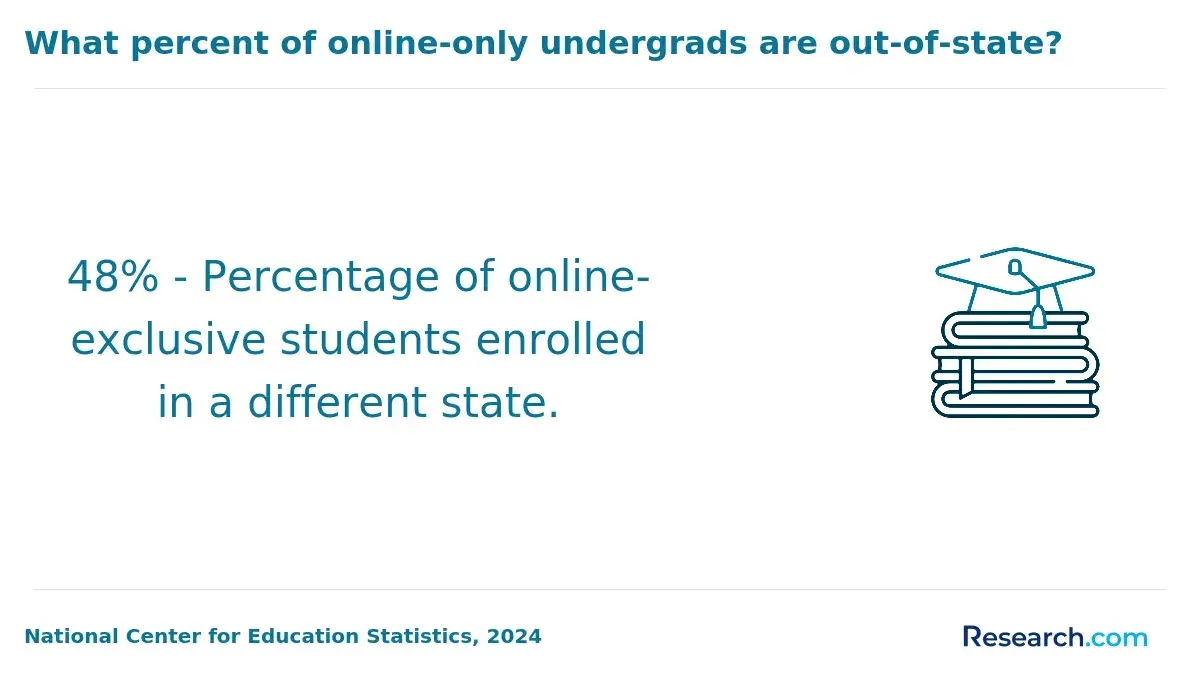
The university's admission requirements emphasize basic eligibility but do not guarantee success or job placement. Recent data from the National Center for Education Statistics highlights that while online program enrollments rise, student outcomes vary considerably depending on engagement and skill acquisition. For example, a working professional applying for a specialized business track needs to demonstrate both academic readiness and practical competencies valued by employers to translate admission into meaningful career progress.
Prospective students typically assess admission chances based on prior academic performance and the relevance of their background to the chosen program. Stronger applications often include a clear focus on discipline-specific skills and evidence of digital literacy. Understanding this dynamic helps applicants decide realistically whether investing effort in preparation and specialization aligns with their long-term professional goals.
What academic credentials do successful applicants typically have?
Successful applicants to Youngstown State University online programs typically demonstrate a balance of foundational academic skills and targeted preparation suited to their chosen field. Admissions decisions weigh both standardized test scores and preparatory coursework, reflecting the practical need for readiness in rigorous online learning environments. For example, a student with solid math and verbal scores who has completed a strong college-prep curriculum is often better positioned for success than one who relies solely on test scores. Applicants should understand that a holistic combination of credentials creates a more competitive profile. Below are key academic credentials that illustrate what successful online applicants tend to present.
- High School Diploma or GED: Completion of secondary education is mandatory. Demonstrating graduation from an accredited program affirms minimum preparedness for college-level work and verifies completion of foundational coursework needed for academic success.
- Standardized Test Scores: Typical SAT ranges are 480-600 (verbal) and 460-610 (math), or ACT scores between 17 and 24. These scores reflect moderate proficiency and are used to assess core skills relevant to program demands and workplace competencies.
- College-Preparatory Curriculum: Candidates who complete rigorous coursework in high school increase their readiness. This curriculum ensures familiarity with subjects fundamental to higher education and reduces the risk of underperformance in foundational online classes.
- Secondary School Rank and Recommendations: While not strictly required, submitting these can strengthen an application by providing contextual academic insight and character references.
- Graduate Management Admission Test (GMAT) for Business Programs: Graduate business applicants must provide GMAT scores, excluding GRE as an option. This requirement prioritizes specialized assessment of quantitative and analytical skills necessary for advanced study.
- Recognition of Life Experience: For non-traditional students, credit for relevant life or work experience offers flexible admission pathways. It acknowledges practical knowledge while maintaining academic standards.
- Secondary GPA Near or Above 3.0: Data from the National Center for Education Statistics shows that online students admitted nationwide typically meet or exceed this GPA benchmark, reflecting consistent academic performance that institutional readers consider a reliable predictor of success.
The chances of admission increase with credentials aligned to these points, especially when combined with thoughtfully chosen good degrees to get that match market demands and personal aptitudes.
What admissions requirements matter most beyond GPA?
Admission to Youngstown State University's online programs considers a broad set of factors beyond GPA, challenging applicants to present a multidimensional profile. Academic records matter, but the university values competencies and recommendations that reveal readiness in ways raw grades do not. For example, an applicant with a moderate GPA but strong competency demonstrations and convincing recommendations can enhance their competitiveness substantially. This approach aligns well with the practical demands of online learning, where self-motivation and demonstrated abilities often predict success more reliably than GPA alone. The key admissions factors beyond GPA include the following.
- High School Diploma or GED Completion: Applicants must have completed their high school education or obtained a GED certificate. This foundational step ensures adherence to minimal academic standards and signals basic educational preparedness that Youngstown State requires before admission.
- Secondary School Record Submission: Providing transcripts showcasing completed courses is mandatory. While not focusing solely on grade point averages, the content and rigor of high school coursework, especially in a college-preparatory curriculum, remain significant indicators to the admissions committee.
- Formal Recommendations: Though not required, recommendations add valuable insight into the applicant's character and motivation. Strong endorsements from educators or employers can augment an application by supplying qualitative evidence of potential, increasing admissions odds.
- Competency Demonstrations: The university values standardized assessments such as Wonderlic or WISC-III tests and recognizes life experience and AP credits. Presenting formal competencies can showcase practical skills and readiness beyond academic scores.
- TOEFL Scores for International Students: Non-native English speakers must provide proof of language proficiency through TOEFL. This requirement helps ensure students can handle the linguistic demands of online coursework effectively.
A 2024 NCES study highlights that admissions evaluations incorporating competencies and formal recommendations can improve acceptance chances by about 12% compared to GPA-only assessments. This statistic reflects Youngstown State's holistic review philosophy and underscores the importance of diversifying an application. For applicants assessing their potential, incorporating these elements while aligning their high school coursework and standardized test scores for Youngstown State University admissions is crucial.
Beyond academics, engaging in key extracurricular activities impacting Youngstown State University online program acceptance also signals well-roundedness and readiness for remote learning challenges. Furthermore, prospective students can explore related certification programs online that may complement their credentials and enhance practical skills valued by employers and the university alike.
Are online Youngstown State University programs easier to get into than campus-based programs?
Acceptance rates for Youngstown State University's online and campus-based programs are comparable, with recent data showing 77.1% for online applicants and 75.4% for on-campus applicants. Both modalities require similar academic qualifications and application materials, including evaluation of transcripts and standardized test scores when applicable. The admissions committee applies uniform criteria regardless of delivery method, underscoring equivalent rigor.
Variations in selectivity mainly arise from differences in applicant populations rather than lowered standards. Online programs attract a broader demographic, such as working adults and non-traditional students, whose unique backgrounds influence acceptance likelihood. Some specialized programs may still enforce stricter requirements based on discipline-specific demand or capacity.
Relative ease of admission should not be viewed solely through acceptance percentages. Prospective students must consider personal circumstances, program fit, and career goals. Online learning suits those needing flexibility, but employer perceptions prioritize degree outcomes over format. Understanding this helps align admission expectations with pragmatic decision-making.
For example, a prospective nursing student balancing a full-time job might find Youngstown State University's online program more feasible to apply for, not because it is easier to get into, but because it accommodates schedules better. This practical fit influences application strategy more than marginal acceptance differences.
One current online student shared that they initially hesitated, assuming the online program would be less competitive. After comparing admission standards and acceptance trends, they felt relieved to learn the process was similarly selective. This clarity helped them focus on preparing a strong application instead of searching for a perceived shortcut through the online route.
How do admissions standards vary across different Youngstown State University online programs?
Admissions standards at Youngstown State University online programs vary because each program addresses different academic disciplines, workforce needs, and professional licensure requirements. For example, programs tied to regulated fields like nursing or education will impose stricter admissions criteria due to external certification rules. High-demand disciplines, especially at the graduate level, often raise thresholds to limit enrollment and maintain quality. These variations mean acceptance is not uniform but calibrated to reflect the skill levels and experiences necessary for success in each pathway. The following points illustrate how admissions standards differ across specific Youngstown State University online programs.
- Online Bachelor's Degree Completion Programs: These programs mainly target transfer students with prior college credits and emphasize GPA over standardized test scores. A typical minimum GPA requirement is around 2.5, reflecting an accessible barrier that prioritizes adult learners completing degrees rather than fresh high school graduates. This approach aligns with a 68% acceptance rate, suiting students balancing education with work or family commitments.
- Master of Science in Nursing (MSN) Online: Admission here requires a valid RN license and often a bachelor's degree in nursing or a related field with a minimum GPA near 3.0. These standards are stricter due to licensure demands and clinical competency validation, reflecting the profession's regulatory environment. Acceptance rates tighten to around 52%, underscoring selective intake to ensure readiness for advanced nursing roles.
- Online MBA Program: This business-focused master's program values professional experience alongside a bachelor's degree and maintains GPA requirements around 3.0. Admissions committees heavily weigh leadership potential and relevant work history. The blend of academic and experiential benchmarks results in moderate selectivity and reflects employer expectations for managerial competence.
- Online Master of Education: This program often requires a teaching certificate, prior coursework in education, and a GPA above 3.0. It serves candidates aiming to meet state licensing standards, so admissions uphold stricter criteria to match these external mandates. The acceptance rate around 52% signals a balance between supply and demand in this regulated field.
- Doctorate in Educational Leadership Online: This doctoral-level program demands a master's degree relevant to education, a GPA exceeding 3.5, and evidence of research capability. With acceptance rates near 24%, admissions are highly competitive, aligning with the intensive academic rigor and advanced skills expected from graduates. Employers often perceive doctoral credentials here as signals of critical thinking and specialized expertise.
- Online Criminal Justice Graduate Programs: Admissions typically require a bachelor's degree with a minimum GPA of 3.0 and occasionally relevant professional experience. The programs focus on applied knowledge suitable for law enforcement or policy careers. These selective criteria reflect practical workforce demands and help maintain program effectiveness.
- Online Undergraduate Social Work Program: Applicants usually must show a moderate GPA, often near 2.5, but social work placements require background checks and demonstrated interpersonal skills. This program balances access with essential ethical and professional standards, resulting in a relatively high acceptance rate compared to graduate disciplines.
Considering online tuition costs at Youngstown State University is important when comparing these programs, as financial factors often influence decisions alongside admissions standards. For prospective students exploring accessible pathways, reviewing admissions rigor side-by-side with tuition value guides wise planning. Those interested in programs with lower barriers might also investigate the easiest online associates degree options available nationally as potential stepping stones within broader academic and career strategies.
How do transfer credits and prior experience affect admission chances?
Transfer credits and prior experience play a crucial role in determining admission chances at Youngstown State University's online programs because they reflect both academic readiness and efficiency in degree completion. Applicants with recognized credits can enter programs with advanced standing, reducing redundant coursework and potentially graduating sooner. This approach aligns with broader trends where students leveraging prior learning graduate at higher rates and reach the workforce faster, a notable advantage highlighted by a National Center for Education Statistics study reporting improved outcomes for transfer students with recognized credits. However, the benefits depend heavily on the type and documentation of prior credits or experience, as some forms carry more weight during admission evaluations.
The following points clarify how specific credentials and experiences may affect admission outcomes:
- Excelsior College Credits: Youngstown State University accepts credits from Excelsior College, which are often sourced from competency-based learning. Providing official transcripts ensures these credits count towards degree requirements, potentially easing admission and shortening time to degree.
- CLEP Examination Scores: Successful completion of CLEP subject or general exams demonstrates college-level knowledge and can substitute lower-division general education courses. Applicants must submit official scores to strengthen their applications and reduce entry barriers.
- DSST/Dantes Examinations: These standardized exams, used primarily by military-affiliated and adult learners, can translate into transferable credits. This flexibility supports nontraditional applicants by acknowledging prior learning without repeating foundational courses.
- Military Training and Experience: While direct work portfolios are not typically assessed, formal military training documented through credit recommendations can be applied. Proper documentation through Joint Services Transcripts improves admission prospects for veterans.
- Prior Professional Experience: Unlike academic credits, professional work experience without formal assessment or associated credits offers limited admission advantage at Youngstown State University. Applicants should focus on standardized credit routes for better chances.
- Flexible Term Entry: The ability to start in fall, spring, or summer terms benefits transfer students by accommodating varied academic timelines, thereby potentially increasing admission flexibility.
- Standardized Transcript Evaluation: The university prioritizes official, standardized credit evaluations over subjective portfolio reviews, influencing applicants to present formal documentation for smoother admission processes.
One Youngstown State University online graduate reflected on transferring Excelsior College credits after years of stopping out during prior studies. The ability to turn those credits in reduced hesitation about reapplying, as it meant bypassing many prerequisite courses. They recalled feeling urgency to complete their degree for a promotion, so the university's clear transfer policies and acceptance of standardized exam credits relieved anxiety around uncertain credit recognition. While some credits required extra verification, the process generally respected their prior efforts, accelerating admission and enrollment compared to a fresh start.
What common application mistakes lead to rejection?
Admissions decisions at Youngstown State University's online programs hinge not only on academic credentials but also on the thoroughness and clarity of the application. Overlooking key materials or submitting incomplete information often outweighs the applicant's actual qualifications. For instance, a strong transcript does no good if it arrives late or is missing. A 2024 study by the National Center for Online Education Research found that 38.7% of online program rejections nationwide result from missing or improperly formatted application documents. Below are critical common application errors that frequently lead to denial, along with guidance on how applicants can avoid these pitfalls.
- Incomplete Documentation: Omitting transcripts or forgetting required standardized test scores causes delays and sometimes outright rejection. Applicants must verify that all requested materials are received on time and meet formatting guidelines.
- Misunderstanding Prerequisites: Failure to meet specific prerequisite courses compromises program eligibility. Thoroughly reviewing course requirements and confirming qualifications beforehand prevents this.
- Unclear Personal Statements: Essays that do not clearly connect career goals to the program's focus raise doubts about candidate fit. Precision and relevance in writing demonstrate commitment and readiness.
- Neglecting Application Instructions: Ignoring detailed instructions or submission protocols signals carelessness. Following every directive exactly improves credibility with admissions.
- Failing to Highlight Relevant Experience: Overlooking opportunities to showcase applicable skills or work reduces perceived potential. Tailoring content to the program's outcomes strengthens applications.
- Submitting Late Applications: Deadlines are strict and missing them results in automatic disqualification. Applicants should plan and submit early to mitigate technical issues or errors.
- Lack of Attention to Detail: Minor errors like typos or inconsistent information reflect poorly on professionalism. Careful proofreading and double-checking data prevent this disadvantage.
Applying successfully to Youngstown State University online programs requires more than academic merit. Ensuring application completeness, clarity, and alignment with program goals directly impacts acceptance chances. Prospective students can also find options like a university with free application fee to reduce initial barriers when applying. Awareness and avoidance of these common application mistakes, common in Youngstown State University online program application rejection reasons, empower applicants to navigate the admissions process efficiently.
How can applicants improve their chances of acceptance?
Applicants aiming for admission to Youngstown State University's online programs must take a strategic approach that balances academic credentials and practical experience. The university emphasizes both a strong GPA and relevant prior coursework as key acceptance factors. A personal statement aligned with career objectives can provide critical context and demonstrate focused intent. Notably, 62.3% of admitted online students had completed at least one related professional certification before enrolling, highlighting the growing importance of industry-aligned skills in application decisions. This trend reflects employer demand for candidates who show real-world competencies combined with academic achievement.
Strategic communication with admissions advisors about program-specific requirements can further prevent errors and show genuine interest. In one example, an applicant with a basic associate degree improved acceptance odds by supplementing their portfolio with a certification in healthcare management, matching the increasing demand across healthcare systems. For seniors or those considering accelerated pathways, exploring one year degree programs for seniors also offers pragmatic options for timely credential attainment. Applicants focused on strengthening their submissions should consider these targeted approaches:
- Highlight Academic Preparedness: Maintaining a competitive GPA and including evidence of college-level coursework supports credibility. It signals to admissions committees that the applicant can handle the rigors of online study.
- Leverage Professional Certifications: Demonstrating one or more industry-relevant certifications shows practical skills and readiness for the workforce. This aligns with data showing higher acceptance for credentialed applicants at Youngstown State University online programs.
- Craft a Focused Personal Statement: Tailoring personal statements to reflect clear career goals and program fit can distinguish candidates. It also provides context beyond grades and test scores.
- Engage with Admissions Advisors: Proactively clarifying prerequisites and application components ensures completeness and reflects seriousness. This interaction can reveal nuances not detailed in public materials.
- Consider Accelerated or Senior-Focused Programs: Utilizing programs designed for seniors can demonstrate efficient academic planning and maturity, adding competitive advantage.
Does admission selectivity affect student success and career outcomes?
Admission selectivity at Youngstown State University Online can indicate how well applicants are prepared for academic persistence, but it does not rigidly determine success. The university's 53% graduation rate reflects moderate retention, meaning roughly half of enrolled students complete their programs on time. While selective admissions filter for candidates with proven academic habits, other variables such as access to strong student support and relevant curricula often have equal or greater impact on who graduates and achieves career stability.
A 2024 study found that programs with less selective admissions but emphasized career resources and practical skills had salary outcomes comparable to more selective institutions. This illustrates that admission competitiveness alone does not guarantee better economic returns. For example, a student admitted with average credentials but who leverages Youngstown State University's networking opportunities and completes internships may earn a median salary of $41,544, demonstrating that post-enrollment engagement matters more than entry standards.
Admissions standards aim to select learners likely to persist and perform, but they cannot fully predict future labor market alignment or individual effort. Factors like program relevance to current job demands, availability of mentoring, and the student's ability to apply learning deeply influence career outcomes. Consequently, students choosing Youngstown State University Online should assess program quality and support mechanisms alongside admissions difficulty to gauge return on investment accurately.
In practice, a moderately selective admission process may provide broader access to diverse learners, supporting equity without necessarily sacrificing outcomes. For those evaluating Youngstown State University, the question hinges on which institutional resources and experiential opportunities they can access after admission, not only how competitive acceptance is. This nuanced perspective aligns better with long-term career trajectories shaped by skills integration and labor market responsiveness rather than selective filtering alone.
What should students consider before applying to a Youngstown State University online program?
Admission decisions should be assessed alongside a realistic appraisal of academic demands, financial commitments, and career relevance. Simply meeting entry requirements does not guarantee that an online program will advance a student's objectives or fit their learning style. Financial costs including tuition, fees, and technology needs often exceed initial expectations. Additionally, understanding employer perceptions of online credentials from regional public universities is critical for long-term career outcomes. The following factors offer a framework to evaluate readiness and alignment before applying to Youngstown State University online programs.
- Cost of Attendance Beyond Tuition: Tuition starts near $11,400 annually for in-state students but additional fees and technology expenses can add substantially. Prospective students should factor in these total costs along with living expenses to gauge affordability and avoid unexpected financial strain.
- Self-Discipline and Time Management Skills: Youngstown State emphasizes readiness benchmarks tied to these skills, which are essential for online success. Evaluating personal habits and realistically assessing one's ability to meet deadlines without in-person oversight can predict persistence and graduation likelihood.
- Program Rigor Relative to Career Goals: Admission standards may be less competitive online, but program quality varies. Understanding whether the chosen discipline has employer recognition and aligns with career demands helps avoid credentials with limited labor market value.
- Completion Rates and Realistic Timelines: Only about 62% of online learners finish programs within expected timeframes. This statistic from national education research highlights the importance of assessing personal circumstances and support systems to avoid extended enrollment and debt.
- Access to Reliable Technology: Stable internet and adequate hardware are prerequisites not only for participation but for active engagement with coursework and peers. Lack of reliable access often leads to frustration and lower academic performance.
- Employer Perception of Online Degrees: Studies show that graduates from regional public universities online often experience a 7% lower earnings premium compared to traditional peers. Understanding this gap helps applicants set realistic expectations about return on investment and may influence program choice.
- Transcript and Admission Requirement Transparency: Since requirements vary by program, applicants must ensure they meet minimum academic thresholds and submit accurate transcripts. Early verification can prevent application delays and allow time to bolster qualifications if needed.
What Students Say About Getting Into Youngstown State University Online Programs
- Nora: "When I first looked into Youngstown State University's online programs, I was honestly uncertain how competitive the admission process would be given my GPA and limited work experience. However, their transparent admission criteria and emphasis on applicants' overall potential, rather than just test scores, helped me tailor my application thoughtfully. Choosing their program turned out to be a strategic move-completing it online allowed me to upskill without leaving my job, and it noticeably improved my qualifications as I transitioned into a project management role."
- Rosalie: "I carefully compared the admissions selectivity of several online programs before deciding on Youngstown State University. While some schools required extensive prerequisite coursework and rigid GPAs, YSU welcomed applicants with a broader range of academic backgrounds, which made applying less intimidating. Preparing my application materials to highlight relevant professional experience was crucial, and after enrolling, I found the coursework rigorous but manageable. The degree gave me a competitive edge in the marketing sector, validating my decision to prioritize accessibility balanced with quality education."
- Vivian: "My application to Youngstown State University's online degrees felt like a calculated risk because I was unsure how my non-traditional academic record would fare against typical admission standards. I spent a considerable amount of time strengthening my personal statement and gathering recommendations that emphasized my real-world skills. The acceptance boosted my confidence in the program's value, and studying online allowed me to immediately apply new knowledge at work. Ultimately, the degree has been a practical investment, enhancing my career prospects in a way that aligned with my cautious approach to education choices."
Other Things You Should Know About Youngstown State University Degrees
The rigor of admission often correlates with program intensity. For Youngstown State University online students who navigate competitive entry, expect a structured and demanding curriculum that requires consistent engagement. Lower admission barriers might indicate programs designed to accommodate working adults, potentially with more flexible pacing but still requiring self-discipline. Thus, understanding admission difficulty provides insight into the expected workload and time management challenges before enrollment.
Employers often associate perceived program selectivity with graduate quality. With Youngstown State University's online admission, moderate difficulty suggests employers may weigh experience alongside the credential rather than assume high selectivity equals superior candidates. It is important for applicants to complement their degree with practical skills or certifications, as employers might view admission ease as amplifying the need for demonstrable workplace competencies.
If admission to a specific program at Youngstown State University is relatively accessible, students must weigh reputation against flexibility carefully. Prioritizing reputation can enhance long-term career prospects but often comes with a more demanding admission process and less scheduling freedom. Conversely, programs with easier entry typically offer greater flexibility but might carry less clout with employers, making it critical to match program attributes with one's career strategy and life circumstances.
References
- Youngstown State University SAT Scores and GPA https://www.prepscholar.com/sat/s/colleges/Youngstown-State-University-sat-scores-GPA
- Youngstown State Among the Top State Universities in Ohio https://exploremahoning.com/get-to-know-ysu-a-top-public-university-in-ohio/
- Youngstown State University SAT, ACT & GPA Requirements for Admissions https://testbook.com/college/youngstown-state-university-admissions
- 6 Common Reasons College Applications Get Rejected https://colband.net.br/internacional/6-common-reasons-college-applications-get-rejected/
- Youngstown State University Acceptance Rate | CollegeData https://www.collegedata.com/college-search/Youngstown-State-University/admission
- Apply to Youngstown State University https://www.commonapp.org/explore/youngstown-state-university/
- Youngstown State University Acceptance Rate & Admissions 2026 | Unive https://unive.ai/universities/youngstown-state-university
- Youngstown State University https://abound.college/gradschool/school/youngstown-state-university/
- Youngstown State University Transfer Credit https://www.straighterline.com/colleges/youngstown-state-university/
- College Application Mistakes That Can Hurt Your Admission Chances and What to Do Instead https://www.scholaro.com/db/News/college-application-mistakes-students-make-291