2027 Cheapest Online Degrees at Ohio University

Co-Founder and Chief Data Scientist
Many prospective students face a growing challenge: the rising cost of higher education combined with the surge in remote learning options complicates the search for affordable online degrees. Research indicates that nearly 45% of all college enrollments are now fully online, pressuring institutions to balance quality and cost. This trend directly impacts students trying to avoid excessive debt while securing credentials that hold value in competitive job markets.
Ohio University emerges as a candidate for those prioritizing budget without sacrificing program variety. Evaluating the school's tuition rates alongside its degree offerings can help determine if it meets financial and academic criteria. This article will analyze the affordability of Ohio University's online degree programs and assess their practical return, helping readers make informed decisions about their educational investments.
Key Points About the Cheapest Online Degrees at Ohio University
- The total tuition cost for Ohio University's online degrees is $31,932, placing it in a mid-range bracket for affordability compared to national benchmarks in digital education.
- Programs focus on practical fields such as business, healthcare, and communication, aligning with workforce demands for credentials that support immediate employability and skill application.
- Graduates report an earnings-to-debt ratio of 2.50x, suggesting the financial returns generally exceed educational costs, though this varies by field and regional job market conditions.
Why is Ohio University emerging as a top choice for cost-effective online education?
Ohio University stands out as a practical choice for cost-effective online education by balancing financial accessibility with positive economic returns for graduates. As nationwide remote enrollment stabilizes at around 70% due to increasing demand for flexible, skill-based programs, Ohio University's online offers align well with these market realities by supporting students who must juggle work, family, and education costs. For example, a working adult aiming to shift careers can benefit from Ohio University's favorable earnings-to-debt ratio of 2.50x, signaling graduates often recoup their tuition through higher income. This economic efficiency is crucial when weighing program expenses against long-term career gains.
Several key factors explain why Ohio University continues to attract budget-conscious online learners. These points describe core strengths that directly influence student decision-making and value extraction in the online education marketplace.
- Strong Earnings-to-Debt Ratio: Graduates recover their educational investment efficiently, with an earnings-to-debt ratio of 2.50x. This ratio indicates a practical payoff, essential for students prioritizing financial return over just credential attainment.
- High Financial Aid Availability: With 97% of online students receiving aid and an average undergraduate award of $8,901, cost burdens decrease significantly, making degree completion more attainable for those with limited budgets.
- Significant Enrollment Scale: Nearly 25,000 enrolled online learners provide a robust program ecosystem that supports resource availability, peer interaction, and a range of degree options tailored to evolving workforce needs.
- Stable Retention Reflects Engagement: Retention rates signal consistent student commitment and program structure quality. This stability contributes to better graduation rates and smoother transitions into employment.
One graduate recalls the difficult choice between several online programs while managing family expenses and part-time work hours. "I hesitated at first, worried about piling up debt. Ohio University's substantial financial aid and the clear earnings-to-debt advantage persuaded me to enroll. Completing the degree online while maintaining my job was a real relief, and I finished without needing additional loans," they shared. This experience highlights how the university's cost structure and program design can ease financial pressure for students balancing multiple responsibilities.
What is the current base cost of online programs at Ohio University?
Ohio University's base tuition rates for online programs stand at about $613 per credit for undergraduate courses and roughly $775 per credit for graduate-level studies. Compared to the total annual cost of $31,932 for on-campus students, online learners avoid housing and meal expenses, making the per-credit tuition a more relevant measure of affordability.
Many institutions have increased tuition steadily, but Ohio University has implemented a tuition freeze for select semesters, reflecting a national trend to keep online education competitively priced. This stability is significant as a 2024 National Center for Education Statistics study found that average public college tuition rose 2.5%, pressuring students' long-term financial planning.
Beyond tuition, Ohio University typically charges additional technology or program-specific fees for online students. These fees can slightly raise the total cost but rarely offset the savings from reduced campus living expenses, supporting affordable online degree costs at Ohio University in Ohio.
Prospective students must weigh these cost factors alongside employer expectations and labor market demands. Selecting appropriate programs aligned with high-value fields, such as those detailed in the best majors analysis, further informs prudent investment in education.
Does Ohio University offer flat-rate tuition for out-of-state distance learners?
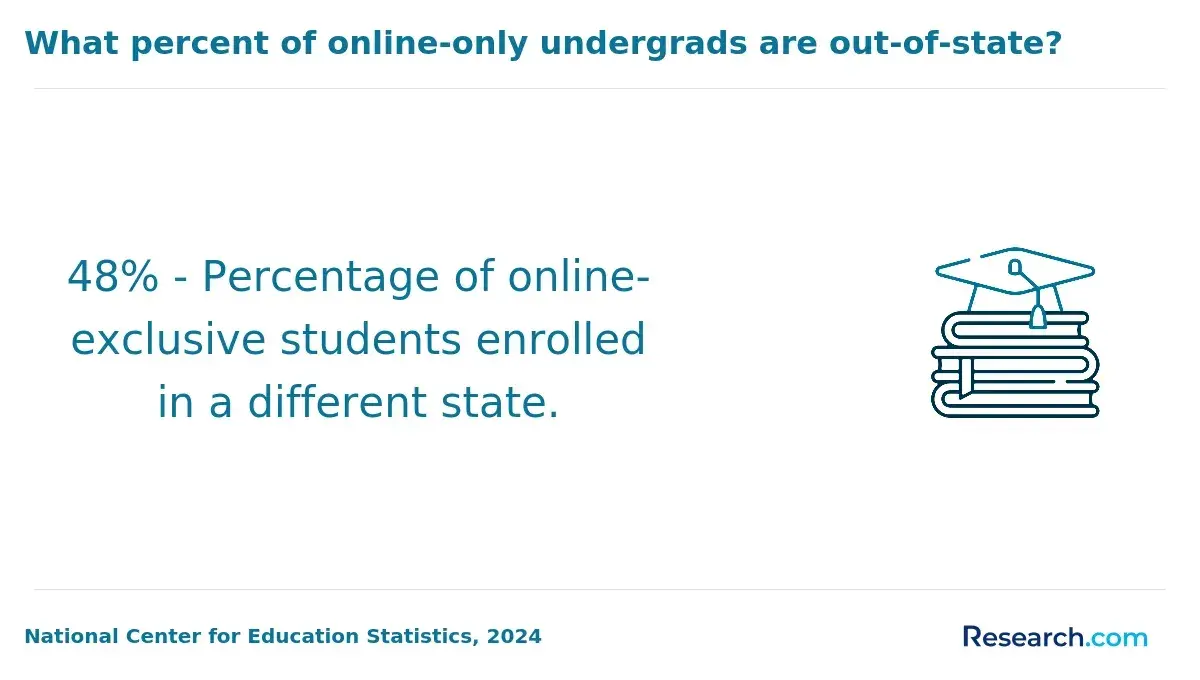
Ohio University does not offer flat-rate tuition for out-of-state distance learners. The average out-of-state tuition cost per credit often results in total attendance costs significantly higher than those for in-state students. For example, a non-resident taking a typical course load can expect a tuition bill markedly above the in-state rate, impacting affordability.
These costs vary with limited exceptions, such as state-specific waivers or regional agreements that can reduce fees for some students but do not eliminate the out-of-state premium. Ohio University's policies maintain traditional residency distinctions rather than adopting broader reciprocity models seen elsewhere.
Nationally, about 42% of public universities have embraced digital reciprocity or flat-rate out-of-state tuition models to reduce financial barriers for online learners, reflecting a notable shift in access strategies. Ohio University's model contrasts with this trend by not offering these equalizing cost structures.
Compared to many institutions applying a flat or regionally adjusted rate, Ohio University's tuition framework places a higher financial burden on out-of-state learners. This affects long-term return on investment calculations, especially for students weighing degree affordability against career advancement potential in competitive fields.
Which online bachelor's degrees at Ohio University offer the lowest total tuition?
Ohio University's online bachelor's degrees with the lowest total tuition represent strategic choices for students prioritizing affordability without sacrificing practical value. By choosing one of these programs, students can limit their out-of-pocket costs while still accessing a curriculum designed for workforce applicability. For those balancing financial constraints and career goals, understanding which majors offer the best tuition savings is critical. The following list highlights specific affordable online bachelor degree programs with notable tuition-saving features and format benefits.
- General Studies: This program offers a flexible curriculum with a low per-credit tuition of about $366, making it one of the most budget-friendly paths. Its broad interdisciplinary format is well-suited for students seeking a cost-effective degree that can adapt to diverse career interests and transfer credits.
- Organizational Leadership: With tuition costs comparable to General Studies, this degree emphasizes leadership skills that can translate into quicker salary recovery post-graduation. The fully online delivery includes some use of open educational resources (OER), lowering expenses on course materials.
- Liberal Studies: Focused on humanities and social sciences, this program benefits from Ohio University's strategy of maintaining lower tuition rates for liberal arts disciplines versus higher-cost STEM fields. Digital resources help reduce additional fees, making it a practical choice for learners mindful of total costs.
- Applied Management: Designed for working adults, this degree balances a relatively low tuition rate with a career-oriented curriculum. Its online format and integration of open-source materials contribute to minimizing educational overhead, supporting positive debt-to-income outcomes after graduation.
- Interdisciplinary Studies: This flexible major allows students to customize their learning path across various fields with a cost-effective per-credit rate. The program's adaptable structure supports both academic breadth and budget-conscious planning.
Approximately 40% of public universities report saturation rates in remote undergraduate enrollment, a trend affecting tuition pricing dynamics. Ohio University's approach reflects this, with lower tuition for humanities and applied management disciplines, compared to generally higher STEM costs requiring expensive infrastructure. Students interested in the lowest tuition online bachelor's programs Ohio University offers must also consider the impact of material fees since about 65% of students nationwide view textbook costs as a barrier to completion. While Ohio University integrates open educational resources into some online programs to mitigate these expenses, verifying specific costs per program remains important.
Choosing a degree aligned with the realities of the labor market is also essential. Majors in applied management and organizational leadership often produce faster salary recovery and better debt-to-income ratios relative to traditional humanities fields. This is a key factor for prospective students evaluating Idaho University's cheapest online bachelor degrees options in relation to their long-term financial viability.
For students seeking data-supported guidance on value within affordable online education, understanding the highest paying college majors alongside tuition costs helps clarify trade-offs. Tuition alone does not capture the full economic impact of degree choice; employability and earning potential must factor into any cost-benefit assessment.
What are the most affordable online master's degree programs at Ohio University?
Ohio University offers some of the most affordable online master's degree programs available, positioning itself as a viable option for those balancing cost against flexibility and career impact. Compared to many public universities, its tuition rates, typically ranging from $757 to $975 per credit hour, fall below or near the national average for online graduate education. These programs also minimize additional expenses by excluding mandatory campus visits and incorporating digital course materials into the tuition fee. The following list highlights key affordable online graduate programs that combine cost efficiency with practical delivery formats and career-enhancing potential.
- Master of Public Administration: This program provides a fully online curriculum with no mandatory campus residencies, reducing travel-related costs. Students benefit from a streamlined fee structure, making it easier to pursue leadership roles in public sector organizations without incurring excessive upfront debt.
- Master of Education in Instructional Design & Technology: Designed for educators seeking advancement in digital learning, this degree offers asynchronous classes and included digital resources. This format supports professionals aiming to boost salary trajectories by upskilling in educational technology without disrupting full-time employment.
- Master of Business Administration: Ohio University's MBA combines affordability with online accessibility. It fits working professionals wanting to improve managerial competence and income growth while controlling overall educational expenses.
- Master of Health Administration: Delivered mostly online, this program appeals to healthcare professionals needing flexible learning formats. The consolidated tuition and materials fee structure helps mitigate debt, aligning with the sector's growing demand for qualified administrators.
- Master of Social Work: With virtual coursework and minimal on-campus requirements, this degree supports socially oriented careers. It balances affordable tuition with flexible delivery, catering to students focused on advancing in clinical or organizational social work roles.
For practical decision-making, consider a working parent pursuing the Master of Public Administration. The lack of residency visits reduces childcare and travel obstacles. Meanwhile, the steady tuition rate aids in budgeting without surprises. A 2024 national study reveals that individuals holding graduate degrees experience lower lifetime debt-to-income ratios, evidencing the long-term financial benefits of credential investment despite initial costs. This emphasizes why Ohio University's low-cost online offerings are meaningful for students weighing professional advancement against educational expense.
Prospective students exploring the most affordable online master's degrees at Ohio University should assess these programs' structure and costs relative to their career aspirations. While virtual formats require proactive networking to compensate for fewer campus interactions, the blend of affordability, flexibility, and strong employability outcomes makes these degrees a substantive choice within the competitive landscape of online graduate education.
More details regarding affordable online master's programs can be found at the cheapest online master's degree resource.
Are digital course materials at Ohio University expensive?
Online students at Ohio University must budget beyond tuition for course materials and digital supplies that can significantly impact overall education costs. The average yearly expense for these resources is approximately $894, reflecting a considerable addition to tuition fees. Nationally, digital course material expenses for online learners often range from $800 to $1,000 per year, a pattern emphasizing that these costs are a consistent burden across institutions. Below is an outline of key digital materials and supplies that Ohio University students should anticipate when planning their finances.
- E-textbooks: Digital textbooks replace traditional print versions in many courses. These materials provide flexible access but contribute a sizeable portion of the $894 average yearly cost, affecting students who require multiple texts per semester.
- Access codes for learning platforms: Platforms like McGraw-Hill Connect and Pearson MyLab require purchase of individual access codes. These codes, mandatory for completing assignments and assessments, often cost $50 to $150 each per course.
- Specialized software licenses: Programs such as SPSS or MATLAB are necessary for data analysis and engineering courses. Licenses can be expensive, sometimes several hundred dollars, adding a specialized expense stream for relevant majors.
- Online journal subscriptions: Certain courses require access to academic journals not covered by general university subscriptions. These fees can range from moderate to high, influencing research-heavy disciplines' total educational cost.
Does Ohio University offer accelerated term options for online students?
Ohio University offers accelerated 5-week, 7-week, and 8-week online terms that allow students to complete coursework faster than the standard semester timeline. Typically, degree completion follows a traditional two-semester academic year, but these condensed sessions can reduce time to graduation by increasing course load intensity.
While the university's tuition is billed per credit hour rather than a flat subscription rate, accelerated terms do not reduce the cost per credit. However, finishing courses faster can eliminate semester-related fees and other time-based expenses, potentially lowering total spending by shortening the enrollment period.
A national trend shows institutions adopting compressed terms see about a 12% rise in on-time graduation, according to recent educational research. For Ohio University students, this means faster degree completion could positively affect career entry timing compared to peers at schools without accelerated options, provided they can manage the academic demands effectively.
Choosing accelerated tracks requires strong time management and focus. For example, a working adult might use these terms to align study periods with job schedules, accelerating their credential without extending tuition costs. Yet, this model is not suited for every learner's pace or lifestyle, as the intensity may impact retention and stress levels differently across fields and individual circumstances.
Can online students Ohio University transfer credits to reduce tuition costs?
Ohio University accepts up to 90 transfer credit hours for its fully remote bachelor's degrees, enabling students to reduce tuition by thousands of dollars immediately, given the total program costs around $31,932. This sizable transfer credit allowance can translate into significant savings for online learners aiming to minimize debt.
However, tuition savings depend heavily on where credits originate. Regional articulation agreements facilitate smoother transfers, but credits from non-accredited institutions or those without formal agreements may face rejection. Prior Learning Assessments and military training credits add flexibility but vary widely in acceptance and resulting cost reduction.
Accreditation plays a critical role in transfer eligibility, as Ohio University prioritizes recognized credentials to maintain academic rigor. Online students must verify their previous institution's accreditation to ensure credits count, or risk extending their time-to-degree and increasing overall expenses.
Nationally, a 2024 analysis from the National Student Clearinghouse shows 28% of transfer students benefit from articulation agreements, reflecting growing systemic efforts to ease credit mobility. This trend matters especially for online learners at Ohio University who seek to optimize affordability amid competitive labor markets.
A recent graduate recalled, "I hesitated before submitting military training credits, unsure if Ohio University would accept them. Once they did, I saved nearly a semester's tuition. The process was slow and required detailed documentation, but it was worth the effort to avoid extra courses." This underscores the practical impact of credit transfer policies on real online student budgets and timelines.
What financial aid options are available to online students at Ohio University?
Financial aid at Ohio University plays a critical role in offsetting the cost of online education for many students, with 97% of undergraduates receiving aid that averages $8,901. This is significant as student debt remains a national challenge, pushing institutions to emphasize grants and scholarships over loans to limit long-term financial burdens. A practical example involves a working parent balancing job and studies who can use tailored aid packages to reduce out-of-pocket costs without accumulating unsustainable debt. Below are primary financial aid options available to online students at Ohio University:
- Ohio University Advantage Scholarship: This merit-based scholarship awards up to $4,000 annually to academically qualified students, helping reduce tuition expenses and making the credential more accessible.
- Access to Success Grant: Designed for students demonstrating financial need, this grant subsidizes tuition costs by up to 50%, easing immediate financial pressure for lower-income learners.
- Minority Scholarship: Targeting underrepresented populations, this scholarship generally provides awards between $1,000 and $3,000, supporting diversity and inclusion efforts across online programs.
- Veterans Grant: Offering up to $2,500, this grant assists online students with military backgrounds, acknowledging their service while reducing education costs.
- Ohio Tuition Trust Authority Scholarship: Aimed at Ohio residents purchasing future tuition credits, this program translates prepaid credits into financial support once students are enrolled.
These funding mechanisms align with persistent trends where nearly 60% of undergraduates nationwide rely on financial aid. By prioritizing scholarships and grants, Ohio University online tuition assistance programs reflect shifting priorities intended to minimize loan dependence. Prospective students should carefully evaluate how partial aids affect total costs and consider whether the online credential aligns with job market demands and long-term return on investment. The institution is also recognized as a nonprofit university committed to making education financially feasible while meeting evolving workforce needs.
How do you know if the affordable online programs at Ohio University are worth it?
The value of affordable online degree programs at Ohio University hinges on outcomes such as earnings potential, graduate success, and long-term return on investment, rather than cost alone. For instance, a recent graduate from Electrical, Electronics and Communications Engineering earning approximately $74,736 annually illustrates how program choice dramatically affects ROI compared to Journalism graduates averaging $35,870. Selecting a program aligned with high-demand skills and robust job markets can substantially improve financial returns and career stability. The following criteria clarify how to evaluate if Ohio University's online degrees meet essential value benchmarks.
- Alumni Salary Variation: Understanding median salaries by field exposes differences in return. Ohio University shows technical and healthcare fields frequently exceed $60,000, while others may lag. Prospective students should weigh these variations against personal career intentions.
- Graduation Rate: At about 66%, Ohio University's completion rate indicates most students succeed, a critical factor in realizing education value because incomplete degrees rarely yield strong outcomes.
- Accreditation Status: Ensuring programs hold recognized accreditation protects credential legitimacy. Ohio University's accreditation guarantees employer and institutional recognition nationwide.
- Debt-to-Income Benchmark: Nationally, students whose debt surpasses 1.5 times their initial income encounter prolonged financial difficulty. Ohio University's affordable online programs help manage this risk by providing competitive costs relative to earning potential.
- Field Market Demand: Program selection should align with sectors showing strong hiring velocity, such as computer science and nursing, which offer more reliable employment prospects.
- Flexibility and Support Services: The availability of adaptable schedules and academic resources supports degree completion and workforce entry, enhancing practical value.
- Program Reputation for Remote Work: As evaluated in the best degree for remote work research, assessing a program's alignment with remote career opportunities can influence long-term satisfaction and income stability.
When considering the value of online degrees from Ohio University, analyzing these factors together enables informed decisions that reflect both financial and career realities.
What Graduates Say About the Cheapest Online Degrees at Ohio University
- Logan: "Choosing the online program at Ohio University was heavily influenced by the affordability factor, especially compared to pricier options from other institutions. While I appreciated the flexibility to manage my studies alongside a full-time job, there were some unexpected fees related to technology access that initially blurred the financial advantage. Still, saving on housing and commuting made a tangible difference, allowing me to focus on advancing my career faster right after graduation without the typical debt burden hanging over me."
- Brent: "My time studying online at Ohio University reinforced my decision to prioritize practical outcomes over brand prestige. The cheapest programs here had a few hidden costs that competitors sometimes bundled into tuition, but the ability to learn on my schedule minimized income disruption. Entering the workforce, my online degree offered credible credentials that employers respected, proving that managing those cost trade-offs was worth it for my salary growth and long-term trajectory."
- Dominic: "Ohio University's online program provided a cost-effective route to earn my degree, but it wasn't without its challenges. The convenience eliminated moving expenses and daily commutes, which definitely relieved financial pressure, but hidden digital platform fees added complexity to my budgeting. Looking back, the choice allowed me to invest time into gaining real-world experience quicker, and while it didn't promise instant career leaps, it set a solid foundation that justified the overall value."
Other Things You Should Know About Ohio University Degrees
In 2027, Ohio University offers affordable online degree programs in fields such as Business Administration, Criminal Justice, and Psychology. These programs are designed to provide quality education at a lower cost, making higher education more accessible to a diverse range of students.
Employers generally recognize Ohio University's reputation, but perceptions can vary based on industry and role. The cheapest online degrees may lack some of the networking opportunities and hands-on experiences available in on-campus programs, which can affect initial job placement for some fields. For career advancement, it is advisable to supplement the degree with relevant work experience or certifications to offset any employer bias toward online credentials.
Students with tight work or family schedules should prioritize flexibility since cheaper online degrees often require asynchronous participation, making scheduling easier. However, if professional growth depends on mentorship or networking, choosing programs with live sessions or proactive faculty access can substantially enhance the learning experience. Ultimately, balancing these factors depends on personal circumstances, but those seeking career-change outcomes may benefit more from programs offering higher faculty interaction.
Ohio University's affordable online programs typically demand a reliable internet connection and up-to-date hardware, with some courses requiring specific software or platforms that may come with extra costs. Prospective students should factor in these technology needs since insufficient equipment can hinder performance and add hidden expenses, counteracting tuition savings. Planning for these requirements upfront avoids disruptions and supports consistent engagement throughout the degree.
References
- Best Online Colleges In Ohio 2025 https://www.affordablecollegesonline.org/online-colleges/ohio/
- Cost of Online Education vs. Traditional Education [2025]: Comparison https://educationdata.org/cost-of-online-education-vs-traditional-education
- OU named Ohio’s best online college - The Tribune https://irontontribune.com/2020/08/12/ou-named-ohios-best-online-college/
- Best Online Master's Degree Programs in Ohio (OH) https://www.onlinemastersdegrees.org/best-programs/ohio-oh/
- Ohio University Tuition and Financial Aid https://www.prepscholar.com/sat/s/colleges/Ohio-University-tuition-financial-aid
- Ohio University Uses Synchronous Online Learning to Expand Language Course Access https://www.meritalkslg.com/articles/ohio-university-uses-synchronous-online-learning-to-expand-language-course-access/
- Ohio University - Main Campus Reviews https://www.onlineu.com/online-reviews/ohio-university-main-campus
- Pay In-State Tuition At Indian, Kentucky and West Virginia Schools https://www.collegeadvantage.com/blog/blog-detail/posts/2021/04/19/get-ohio-in-state-tuition-costs-at-out-of-state-schools
- Tuition, Fees and Housing & Food https://www.ohiodominican.edu/financial-aid/undergraduate/tuition-and-fees.html