2027 Can You Earn a Degree Faster at University of Illinois Springfield as an Adult Learner?

Co-Founder and Chief Data Scientist
An adult learner weighing the choice of University of Illinois Springfield's online program may wonder if prior credits or professional experience can speed up degree completion. Many face the challenge of balancing work, family, and studies while trying to avoid redundant coursework. With nearly 40% of adult college students taking accelerated or competency-based courses nationwide, understanding how these offerings translate into shorter graduation timelines is crucial for practical decision-making.
This article analyzes factors like credit transfer policies, recognition of professional experience, and flexible scheduling at University of Illinois Springfield. It offers an evidence-based perspective on strategies adult learners can use to realistically reduce their time to degree completion while maintaining academic rigor and future employability.
Key Points About Faster Degree Completion at University of Illinois Springfield
- Students can apply up to 90 transferable credits, including professional experience, which significantly reduces time to degree completion by crediting prior learning toward requirements.
- Online programs at University of Illinois Springfield offer flexible scheduling and asynchronous coursework, enabling adult learners to accelerate progress while balancing employment and personal obligations.
- Graduates experience a 2.99x earnings-to-debt ratio, indicating economic value from early completion, though a 61% graduation rate underscores the need for persistence and disciplined pacing.
Can adult learners at University of Illinois Springfield realistically complete their degrees quickly?
Adult learners at University of Illinois Springfield can realistically complete degrees faster than traditional students, but this varies widely. While the average graduation rate is 61%, accelerated online programs can reduce degree times from four years to about two. Effective use of transfer credits can further shorten this timeline by several months.
For example, an adult learner with prior college credits and professional certifications might finish in six semesters instead of the typical eight. However, this requires proactive credit evaluation and careful term planning. A 2024 national study found that adult learners leveraging credit transfer and flexible scheduling reduce degree completion time by up to 30%, highlighting the potential advantage if personal and work constraints align.
UIS supports course overloading to help motivated students increase credits per term, though this risks academic burnout. Fast-tracking options exist but are limited by course availability and institutional pacing. Online students have flexible scheduling and experiential learning assessments as tools to accelerate progress, but these must be managed prudently.
Completion speed also depends heavily on program requirements and structural flexibility. Some degrees demand sequential courses or capstone projects that limit acceleration. Adult learners must balance speed with mastery to meet employer expectations and ensure long-term career value.
Does University of Illinois Springfield have specific admission requirements for adult learners?
University of Illinois Springfield applies tailored admission requirements that address adult learners' distinct educational backgrounds and professional experiences. Adult applicants often leverage prior college credits and real-world knowledge to accelerate degree completion. For example, a working professional returning to school can reduce their time by transferring credits from CLEP or DSST exams while also receiving life experience credit. However, these benefits come with obligations such as submitting formal academic records and demonstrating competencies, which can delay entry for some.
Below are key admission criteria specifically affecting adult students at University of Illinois Springfield:
- Transfer Credit Policy: The university generally accepts transfer credits including those endorsed by ACE and earned via CLEP or DSST exams. This policy supports adult learners aiming to shorten their degree timeline by applying previously earned credits.
- Credit for Life Experience: Adult students may request credit for professional and life experiences. This requires documentation and evaluation but can translate valuable workplace skills into academic credit.
- Secondary Education Records: Applicants must provide a secondary school record and GPA or submit a GED if traditional high school completion is missing. This ensures foundational academic readiness despite nontraditional pathways.
- Competency Demonstration: Applicants need to show proficiency in required areas, sometimes including TOEFL scores for non-native speakers, adding another layer for adults balancing education with other responsibilities.
These requirements reflect broader trends recognizing nontraditional credentials but maintain rigorous standards. Recent 2024 research highlights an increasing national acceptance of credit-for-experience policies combined with flexible assessments, a positive signal for adult learners at University of Illinois Springfield. However, these policies still necessitate formal documentation and competencies that adults must plan around carefully. Prospective students should evaluate these demands alongside benefits to optimize their educational path.
For those assessing financial options as part of Illinois adult student application requirements at University of Illinois Springfield, exploring resources among most affordable online colleges might offer additional pathways to cut costs while advancing degree goals.
Are there executive programs at University of Illinois Springfield for mid-career professionals?
University of Illinois Springfield does not offer designated executive programs for mid-career professionals, but its flexible hybrid and cohort-based formats support adult learners seeking faster degree completion. These models combine online convenience with weekend intensives, allowing working professionals to maintain career obligations while progressing academically.
This approach differs from traditional online tracks by integrating structured in-person elements that facilitate networking and practical skill development. For example, a mid-level manager juggling work and study can leverage weekend sessions to deepen leadership skills without prolonged absences from the workplace. Notably, 62% of executive-level enrollees nationwide now prioritize programs offering practical leadership alongside flexibility, reflecting a shifting demand many traditional online formats do not address.
Using transfer credits and prior work experience within these program structures can further reduce time to degree. However, adult learners should critically consider how University of Illinois Springfield's cohort pacing aligns with employer expectations for accelerated executive education credentials and their own career trajectories.
Prospective students interested in accelerated options may also explore accelerated online degrees available in Illinois at University of Illinois Springfield, which accommodate pacing preferences alongside professional demands.
How can credit transfers affect the time-to-graduation for adult learners at University of Illinois Springfield?
Credit transfers at University of Illinois Springfield directly reduce the time-to-graduation by applying previously earned credits to degree requirements, allowing adult learners to bypass introductory or lower-level courses. When transfer credits align with core major classes, students proceed faster to upper-division courses, cutting down total semesters needed. Conversely, credits accepted only as electives may extend timelines if major prerequisites remain unmet.
A 2024 national study shows institutions with consistent credit transfer policies reduce average degree completion time by roughly 0.7 years, underscoring UIS's approach that leverages ACE recommendations and CLEP/DSST tests to accelerate adult learners' progress. Below are key ways credit transfers specifically impact time-to-degree for UIS adult students.
- Core Course Advancement: Transfer credits matching major core requirements eliminate the need for foundational classes, enabling students to start higher-level coursework sooner and shorten degree duration.
- Flexible Elective Fulfillment: Accepting credits as electives helps students meet credit thresholds faster, but may not replace sequential major classes, requiring strategic planning to avoid delays.
- Recognition of Experiential Learning: UIS's acceptance of standardized exams and ACE credit recommendations converts real-world experience into academic credit, offering adult learners multiple routes to reduce classroom time.
- Mitigation of Course Load: By applying transferable credits, students can lower semester course loads, balancing work or family commitments while maintaining steady progress toward graduation.
An online adult learner shared that transferring CLEP and professional certification credits cut nearly one academic year from her Bachelor's program at University of Illinois Springfield. Initially uncertain about credit equivalency, she consulted with advisors to ensure alignment with her criminal justice major requirements. This clarity prevented unnecessary classes and gave her a clear roadmap, making it possible to complete the degree while working full-time and managing family responsibilities. The acceptance of her previous learning experiences relieved significant time pressure and enabled her to graduate ahead of schedule without compromising course quality.
Can professional certifications and training be converted into credits at University of Illinois Springfield?
University of Illinois Springfield allows adult learners to accelerate their degree completion by converting professional certifications and training into academic credits through its Prior Learning Assessment (PLA) policies. This process recognizes skills gained outside traditional classrooms, such as from work experience or military service, supporting students with relevant professional backgrounds. However, eligibility for credit transfer varies depending on program requirements and the relevancy and rigor of certifications.
Since PLA policies are not uniform across all programs, adult learners must carefully assess how their credentials align with degree expectations. For example, some programs may limit credit acceptance to certifications directly tied to academic learning outcomes, affecting how substantially credit transfer shortens time-to-degree. Planning ahead is vital to ensure these credits contribute meaningfully to both graduation and employability.
Professional certifications widely accepted for credit include those with standardized industry recognition and demonstrated expertise. Below are several illustrative examples outlining why these can convert into academic credits at University of Illinois Springfield:
- Project Management Professional (PMP): A globally recognized certification validating advanced project leadership skills, PMP demonstrates competencies critical for credit transfer in management and business-related programs.
- Certified Public Accountant (CPA): The CPA credential confirms proficiency in accounting principles and ethics, fitting degree frameworks in accounting or finance through rigorous exam requirements.
- Certified Information Systems Security Professional (CISSP): This certification covers a broad spectrum of cybersecurity knowledge, suitable for credit in information technology and security fields due to its comprehensive standards.
- CompTIA Certifications (A+ and Security+): These certifications endorse foundational and intermediate IT skills, recognized for credit in technology and networking degrees aligned with practical certification content.
- Registered Nurse (RN) License: A healthcare license reflecting clinically verified nursing competencies, accepted for credit in nursing or health sciences where regulatory standards meet academic criteria.
A recent national report highlights that 48.3% of adult learners who utilized credit-for-experience mechanisms completed their degrees faster, demonstrating significant time savings from PLA. Those interested in converting training into college credits Springfield Illinois residents often pursue can also explore options with an easiest associates degree, optimizing both convenience and career applicability in their academic journey.
Does University of Illinois Springfield have competency-based education programs for adult learners?
University of Illinois Springfield does not offer formal competency-based degree programs specifically designed to accelerate degree completion for adult learners. Unlike direct-assessment models, UIS relies on traditional credit hours combined with transfer credits and prior learning assessments to provide some flexibility. This approach means students advance based on course completion rather than demonstrated mastery of skills.
Competency-based degree programs nationwide have experienced 25% annual growth in enrollment, reflecting a strong trend where adult learners leverage professional experience to finish degrees faster. At UIS, adults seeking true competency-based education must look elsewhere since no such programs exist, including in fields like nursing or IT where direct-assessment options are common. Instead, UIS emphasizes flexible online formats and credit transfer policies to help adult learners reduce time to degree.
For those aiming to shorten their educational timeline, exploring self-paced college courses outside UIS may offer better options aligned with mastery-based progression. UIS's flexible competency education options for adult learners in Illinois can ease credit accumulation but cannot match the acceleration potential of formal CBE programs available at other institutions.
Does University of Illinois Springfield run a continuous school calendar that eliminates summer breaks?
University of Illinois Springfield does not operate on a continuous school calendar that eliminates summer breaks. Instead, it maintains a traditional academic calendar with fall, spring, and mandatory summer sessions offered as options. This setup allows adult learners some flexibility but does not provide seamless year-round enrollment, limiting pacing options.
Adult learners juggling work and personal responsibilities may find this calendar somewhat restrictive. For example, a working professional aiming to finish their degree faster might struggle to enroll in enough summer courses due to limited availability, unlike schools with uninterrupted enrollment that enable continuous progress without gap terms.
Research in 2024 shows schools with accelerated multi-term calendars and continuous enrollment see a 12% higher graduation rate among adult learners within three years. This highlights how eliminating summer breaks supports faster degree completion through steady course loads and fewer administrative delays, advantages less pronounced at University of Illinois Springfield.
Term lengths and scheduling at University of Illinois Springfield can vary by program requirements. Some degrees may require fixed term start and end dates, while others allow limited summer participation as an add-on, affecting how quickly adult students can capitalize on multi-term opportunities to accelerate graduation.
What are the challenges of faster degree completion for adult learners at University of Illinois Springfield?
Adult learners attempting to accelerate degree completion at University of Illinois Springfield often encounter significant structural and personal hurdles that undercut the promise of finishing faster. The intensity of compressed course schedules demands sustained focus, frequently clashing with work and family commitments. A 2024 study shows nearly 38% of non-traditional students drop accelerated courses due to stress and overload, underscoring the reality that academic burnout is a tangible risk, not just an abstract concern.
Here are key challenges these students commonly face and approaches for managing them:
- Intense Academic Pace: Accelerated courses condense material into shorter semesters, increasing the daily workload. Students must develop disciplined time management and realistic pacing strategies to avoid burnout and maintain performance.
- Inconsistent Transfer Credit Evaluation: Transfer policies can delay progress if credits are partially accepted or re-assessed late. Proactive credit audits and early collaboration with advisors help clarify acceptable transfers and prevent surprises.
- Limited Course Availability: Fixed scheduling and limited sections of required courses restrict flexibility, forcing students to delay enrollment or extend their timelines. Exploring online or hybrid course options can provide alternative pathways.
- Financial Aid Misalignment: Accelerated terms may do not correspond with traditional funding periods, causing eligibility gaps and financial stress. Careful financial planning and consultation with aid offices are essential to maintain enrollment status.
- Insufficient Tailored Academic Advising: Advising often lacks focus on adult learners' unique commitments and goals, leading to generic degree plans. Adult learners should seek advisors experienced with non-traditional student needs to develop customized strategies.
One recent University of Illinois Springfield online graduate described the challenge vividly: "I tried to take back-to-back accelerated courses to finish on my own timeline, but balancing full-time night shifts and parenting became overwhelming. I was hesitant to drop classes because I wanted to stay on track, but after my grades started slipping, I realized burnout was real. Connecting with an adult learner advisor helped me space out tough courses and find online sections that fit my schedule better. It wasn't the fastest route, but it saved me from quitting altogether." Their experience highlights how managing workload realistically and leveraging flexible options can mean the difference between persistence and withdrawal for adult learners rushing to graduate.
How can University of Illinois Springfield students leverage school resources to fast-track their degree?
Adult learners at University of Illinois Springfield can significantly shorten their degree timelines by leveraging targeted campus resources and strategies to balance education with work and life duties. A typical scenario involves a working professional who uses credit transfer combined with flexible course scheduling to graduate faster than peers. Data on proactive advising models shows adult learner retention improves by 12.7%, reflecting how continuous guidance from success coaches helps students maintain momentum despite competing demands.
Below are key resources that enable University of Illinois Springfield students to accelerate progress and stay on track.
- Personalized Academic Advising: Advisors focus on transfer credit efficiency and help craft course plans aligned with acceleration goals. This reduces unnecessary coursework and streamlines degree pathways.
- Success Coaches: These staff provide ongoing support balancing work and study, essential for sustaining progress in non-traditional schedules and reducing dropout risk.
- Fast-Track Credit Review: Students can convert professional certifications and relevant experience into academic credits. This recognition of experiential learning has been shown to cut degree time by up to 40%, a critical advantage for many adult learners.
- Comprehensive Tutoring Services: Tailored tutoring reduces course failures and retakes, which can otherwise lengthen degree duration and increase costs.
- Flexible Scheduling Options: Online asynchronous classes and accelerated formats enable students to study around employment. However, this faster pace demands sustained competency development beyond just obtaining credits.
- Transfer Credit Assistance: Experts help evaluate prior college work and optimize its application, making sure students do not repeat content and finish earlier.
- Advising on Short Certificate Programs: The university also guides students toward short certificate programs that can supplement degrees quickly and add practical skills relevant to employer needs.
Using these resources effectively requires active time management and consistent utilization. While the University of Illinois Springfield adult learner resources for accelerated degree completion offer valuable pathways, success depends on individual circumstances, including readiness to sustain an intensive learning pace that balances speed with skill mastery.
What are the career advantages of earning a degree from University of Illinois Springfield on a shorter timeline?
Earning a degree faster from University of Illinois Springfield provides tangible career advantages by reducing time out of the workforce and signaling targeted readiness to employers. For example, an adult learner leveraging transfer credits to complete a bachelor's degree in three years rather than five can access higher-paying roles sooner, improving lifetime earnings and reducing debt exposure.
A 2024 employer survey found that 68% of hiring managers favor accelerated or alternative credential pathways, especially for positions demanding adaptable leadership and technical skills, highlighting the increased market value of expedited degrees. The following key benefits demonstrate how speeding up degree completion optimizes career outcomes for adult learners.
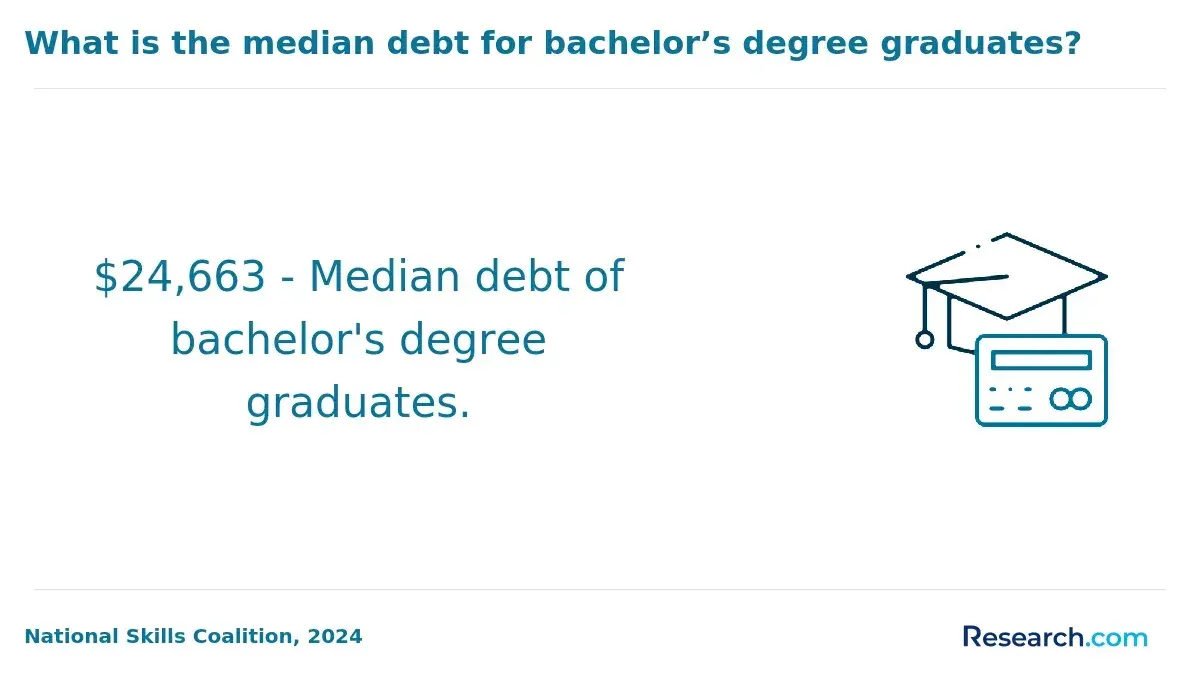
- Lower Debt Burden: Completing a degree faster decreases tuition and living costs, resulting in a lower median debt load-U of I Springfield graduates average $19,128 in debt-allowing graduates to invest in career growth rather than repay loans.
- Earlier Workforce Reentry: Accelerated programs enable learners to rejoin or advance in the workforce more quickly. This can translate into earlier promotions or role changes, creating momentum in salary growth and job stability.
- Enhanced Career Agility: Faster degree paths often rely on credit transfer and professional experience, aligning education with current skill demands. This adaptability aids in pivoting careers or upskilling in response to evolving labor market needs.
- Employer Appeal: Employers increasingly value practical skills demonstrated through accelerated or nontraditional credentials. Graduates who finish quickly can stand out by showing motivation and the ability to learn efficiently without prolonged academic interruptions.
- Balanced Academic Focus: Although accelerated pacing can challenge networking or experiential learning opportunities, planning around flexible schedules at U of I Springfield supports sustained academic performance and long-term career preparation.
What Graduates Say About Being an Adult Learner at University of Illinois Springfield
- Stella: "Enrolling in the online program at University of Illinois Springfield was a calculated decision for me as a working adult. I strategically maximized my previous college credits and professional certifications, which, combined with the test-optional admissions, reduced the usual bureaucratic hurdles. This pathway allowed me to complete my degree considerably faster than I initially anticipated, and that acceleration was critical when I transitioned back into the workforce-landing a role with a notable salary bump within three months of graduating."
- Helena: "The flexibility of University of Illinois Springfield's online program was essential while juggling family and work commitments. I appreciated how the credit-by-exam option gave me a chance to leverage my years of experience and bypass redundant coursework. Still, I remained cautious about rushing; while finishing earlier was rewarding, my career advancement was more gradual. The program helped me build credibility and confidence, but immediate salary increases were modest, signaling that industry recognition takes time beyond just the degree."
- Cecilia: "From the start, I evaluated how University of Illinois Springfield's accelerated online degree options fit my goal of minimizing time out of the job market. Navigating the admissions process, particularly the emphasis on credit transfer and professional experience as academic credit, was surprisingly smooth, easing administrative burdens. Completing the degree faster did translate into quicker eligibility for promotions at work, although I recognized that consistent on-the-job performance after graduation was equally important to capitalize on that advantage."
Other Things You Should Know About University of Illinois Springfield Degrees
Accelerated paths often mean a heavier course load per term, which can undermine learning retention and increase stress, especially for adult learners balancing work and family. University of Illinois Springfield's programs do not formally offer compressed terms, so students planning to take more credits simultaneously should realistically assess their capacity to maintain performance. It is advisable to prioritize a manageable balance over speed to avoid extending time to degree due to potential setbacks.
While University of Illinois Springfield is regionally accredited and well-known locally, some employers may view accelerated online degrees with skepticism unless the student can demonstrate solid knowledge and skills through experience or strong transcripts. Adult learners should consider integrating internships or project work where possible to bolster credibility. Earning a degree faster may have tradeoffs if it limits opportunities to build relationships or gain deeper expertise that employers value.
Though the university supports online adult learners, limitations such as course caps, prerequisite chains, and mandatory advising can slow down progress if not proactively managed. Students aiming to finish faster should engage early with academic advisors to plan a clear and efficient academic pathway. This upfront coordination minimizes surprises like unanticipated course requirements or registration bottlenecks that could extend time to graduation.
References
- Degree Completion Programs | Elmhurst University https://www.elmhurst.edu/academics/adult/
- University of Illinois Springfield https://www.uillinois.edu/about/Springfield
- Expand competency-based education to support adult learners https://www.highereddive.com/spons/expand-competency-based-education-to-support-adult-learners/642381/
- UIS Academic Calendar - Springfield | Academic Jobs https://www.academicjobs.com/employers/university-of-illinois-at-springfield/5442/academic-calendar
- UIS makes it easier for transfer students to complete their bachelor’s degrees https://www.illinoistimes.com/arts-culture/uis-makes-it-easier-for-transfer-students-to-complete-their-bachelors-degrees-17185780/
- Executive education courses from top universities | edX https://www.edx.org/executive-education
- Benefits of Graduating Early: 7 Reasons to Consider It https://www.xceedprep.org/benefits-of-graduating-early/
- Streamline Adult Learner Enrollment: Best Practices Guide - Collegis Education https://collegiseducation.com/insights/streamline-adult-learner-enrollment-best-practices-guide/
- To jumpstart career, graduate college early https://thesuffolkjournal.com/19193/opinion/to-jumpstart-career-graduate-college-early/
- Top 5 Executive Education Programs for Mid-Career Professionals in 2025 https://welingkarexedp.com/top-5-executive-education-programs-every-mid-career-professional-should-consider-in-2025/