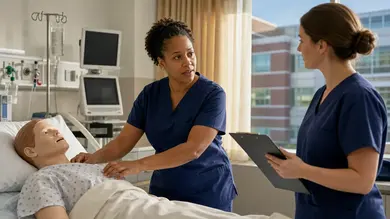
2027 Accredited Online Nurse Educator Degree Programs for Working Adults: Flexible, Part-Time, and Self-Paced Options

Co-Founder and Chief Data Scientist
Choosing an accredited online nurse educator degree is really a scheduling, cost, and career decision. The field is timely: the U. S. Bureau of Labor Statistics' 2024 wage data places median pay for postsecondary nursing instructors at about $86,900, reflecting a strong market for nurses who can teach future clinicians. This guide is for working RNs comparing flexible, part-time, and self-paced programs. You will learn how accreditation, admissions, tuition, transfer credits, practicums, and online formats affect your options so you can choose a program that fits your work schedule and long-term goals.
Key Things You Should Know
- Accreditation is the first filter: look for institutional accreditation plus nursing program accreditation from CCNE or ACEN, especially if you want employer recognition, federal financial aid eligibility, or later doctoral study.
- Working adults usually need 10 to 20 study hours per week in part-time MSN nurse educator programs; full-time plans may finish in about 18 to 24 months, while part-time plans often take 2 to 4 years depending on practicum hours and course load.
- Cost varies widely, but many online MSN nurse educator programs fall in the tens of thousands; transfer credits, employer tuition assistance, and graduate federal loans of up to $20,500 per academic year can significantly change out-of-pocket cost.
What Is an Accredited Online Nurse Educator Degree Program and Why Does Accreditation Matter?
An accredited online nurse educator degree program prepares licensed nurses to teach in academic, clinical, simulation, staff-development, and continuing education settings. Most programs are Master of Science in Nursing programs with a nurse educator concentration, post-master's certificates for nurses who already hold an MSN, or doctoral programs for nurses aiming for leadership, research, or tenure-track roles.
For working adults, "online" usually means lectures, readings, discussions, papers, and projects are completed through a learning platform. However, online does not always mean self-paced. Many accredited programs still use weekly deadlines, live sessions, group projects, proctored exams, and supervised practicum experiences.
Accreditation matters because it signals that a school or program has been reviewed against recognized academic and professional standards. Institutional accreditation applies to the college or university. Programmatic nursing accreditation, commonly through CCNE or ACEN, applies to the nursing program itself. Some employers, doctoral programs, tuition-assistance plans, and certification pathways may prefer or require graduates from accredited nursing programs.
This distinction is especially important if you are changing levels of nursing education. A nurse educator MSN is not the same as a prelicensure pathway for people entering nursing; applicants exploring initial RN preparation may need to compare options such as accelerated BSN programs for non nurses California instead of graduate nurse educator programs.
The table below summarizes common online nurse educator credential types. Use it to identify which option fits your current license, degree level, and career target before comparing tuition or course schedules.
| Program type | Typical applicant | Common goal | Working-adult fit |
| MSN in Nursing Education | BSN-prepared RN | Teach nursing students or clinical staff | Often strong if offered part-time and asynchronous |
| Post-master's nurse educator certificate | RN with an MSN or higher | Add educator preparation without earning another full degree | Usually shorter and more focused than a second graduate degree |
| DNP with education focus | MSN-prepared RN or BSN-prepared RN in a longer pathway | Lead curriculum, clinical education, quality improvement, or academic practice partnerships | Best for experienced nurses who can manage a longer workload |
| PhD in Nursing with education interests | Research-oriented nurse | Conduct nursing education research or pursue faculty scholarship | Flexible online options exist, but expectations are usually research-intensive |
A common mistake is assuming that a school's general accreditation automatically means the nurse educator program has programmatic nursing accreditation. Before applying, verify both the institution and the nursing program, then ask whether the program meets requirements for the roles, certifications, employers, or doctoral pathways you are considering.
Which Flexible Nurse Educator Degree Formats Are Best for Working Adults: Part-Time, Full-Time, or Self-Paced?
The best format depends on how predictable your schedule is, how quickly you want to finish, and how much structure you need to stay on track. For many full-time nurses, part-time asynchronous study is the most realistic option because it provides deadlines without requiring frequent live attendance.
Program labels can be confusing, so compare the actual delivery rules rather than relying on marketing language. The table below breaks down common formats and the trade-offs that matter most when you are balancing shifts, family responsibilities, and coursework.
| Format | How it usually works | Best for | Main caution |
| Part-time asynchronous | Weekly modules with deadlines, no regular live class meeting | RNs with full-time jobs or rotating shifts | Still requires steady weekly study time |
| Part-time synchronous | Live online classes at scheduled times, often evenings | Learners who want instructor interaction and structure | May conflict with night shifts or family schedules |
| Full-time online | Heavier course load, faster progress, more weekly deadlines | Students with reduced work hours or strong support at home | Can be difficult with full-time employment |
| Self-paced or competency-based | Students move through material faster or slower within term limits | Experienced nurses who are highly self-directed | Not all courses, practicums, or exams may be truly self-paced |
| Cohort-based online | Students start and progress together on a set schedule | Learners who value peer connection and predictability | Less flexible if you need to pause or change pace |
When comparing formats, focus on the rules that affect your calendar week after week. Ask admissions or program faculty for concrete answers before committing.
- How many courses do part-time students usually take each term, and what is the expected weekly workload per course?
- Are lectures recorded, live, or both, and are live sessions mandatory?
- Are assignments due on fixed days, or can students submit work at any point during the term?
- Can you pause for one term without losing your place in the program sequence?
- Are practicums arranged near your home area, or must you travel to a specific site?
Choose part-time if you need stability and manageable workload. Choose full-time only if you can protect significant study time. Choose self-paced if you are disciplined, comfortable learning independently, and willing to track completion limits carefully. Avoid assuming that self-paced means easier; it often shifts more planning responsibility onto you.
What Are the Admission Requirements for Accredited Online Nurse Educator Degree Programs?
Admission requirements vary by school, but most accredited online nurse educator programs are designed for licensed RNs who already have a BSN or graduate nursing degree. Some RN-to-MSN pathways may admit associate-degree nurses, but they usually require bridge coursework before graduate-level education courses begin.
If you are still comparing earlier nursing pathways, it may help to review affordable online nursing school options before committing to a graduate nurse educator track. Nurse educator programs generally build on RN practice rather than replacing the education required for RN licensure.
Most schools review both academic readiness and professional fit. The following requirements are common, but you should confirm exact standards with each program because GPA thresholds, experience expectations, and state authorization rules can differ.
- Active, unencumbered RN license in the state where you will complete clinical or practicum activities.
- BSN from an accredited nursing program for MSN entry, or MSN for post-master's certificate entry.
- Official transcripts from all colleges attended, including transfer and graduate credits.
- Minimum GPA, often around the 3.0 range, though some schools offer conditional admission.
- Professional resume showing nursing experience, leadership, precepting, teaching, or staff-development exposure.
- Statement of purpose explaining why you want to become a nurse educator.
- Letters of recommendation from supervisors, faculty, or advanced-practice nurses.
- Background check, immunization documentation, drug screening, or compliance documents before practicum placement.
Working adults should also ask about application timing. Programs with multiple start dates can be easier to fit around work and family obligations, while cohort programs may require you to wait until the next annual or semiannual start date. If your GPA is lower than the published preference, ask whether recent BSN coursework, professional certifications, or strong recommendations can support your application.
How Much Does an Online Nurse Educator Degree Cost, and What Financial Aid Options Are Available?
The cost of an online nurse educator degree depends on school type, credit requirements, tuition model, fees, practicum costs, and how quickly you complete the program. Public universities may charge lower tuition for in-state students, but some online programs use the same per-credit rate for all distance learners.
For context, the National Center for Education Statistics Digest published in 2024 shows that average graduate tuition and required fees are substantially lower at public institutions than at private nonprofit institutions. That does not mean the cheapest program is always the best choice, but it does mean school type can materially affect total cost.
When estimating price, look beyond the advertised per-credit tuition. A practical cost comparison should include the following items because they can change the real amount you pay while enrolled.
- Graduate tuition per credit and total credits required for the nurse educator track.
- Online learning, technology, simulation, clinical placement, graduation, and proctoring fees.
- Books, e-texts, software, webcam or testing equipment, and required professional memberships.
- Travel expenses for any campus intensives, simulation weekends, or practicum site visits.
- Lost income if you reduce work hours to finish faster.
- Interest cost if you use loans instead of employer reimbursement, savings, scholarships, or payment plans.
Common funding options include federal graduate loans, employer tuition assistance, nursing scholarships, state workforce grants, military or veterans benefits, payment plans, and institutional aid. For federal loans, graduate students may be eligible for Direct Unsubsidized Loans up to $20,500 per academic year, with Graduate PLUS Loans available for eligible remaining costs. Borrow only what you need, because nurse educator salaries vary by setting and geography.
- Typical advertised costs may include per-credit tuition, flat-rate term tuition, or total program tuition.
- Federal graduate borrowing may include up to $20,500 per academic year in Direct Unsubsidized Loans for eligible students.
- Employer tuition assistance can reduce upfront cost, but it may require staying with the employer for a set period after reimbursement.
A common red flag is choosing a program based only on tuition while ignoring fees, transfer policies, practicum placement support, and completion pace. A slightly higher tuition program may be more affordable in practice if it accepts more credits, has fewer hidden fees, or helps you graduate without reducing work hours.
How Long Does It Take to Complete an Online Nurse Educator Degree, and Can Transfer Credits Help You Graduate Faster?
Most online MSN nurse educator programs require roughly 30 to 45 graduate credits, though exact requirements vary. Full-time students may finish in about 18 to 24 months, while part-time students commonly take 2 to 4 years. Post-master's certificates may be shorter because they focus on educator coursework rather than a full graduate nursing curriculum.
Transfer credits can help, but policies are usually strict at the graduate level. Schools may limit transfer credits by age, grade, accreditation status, course equivalency, and whether the credits were already applied to another completed degree.
The table below shows how pacing choices typically affect working adults. Use it as a planning tool, not a guarantee, because course availability and practicum timing can change your actual graduation date.
| Pacing option | Typical course load | Possible completion range | Best fit |
| Full-time MSN | 2 to 3 courses per term | About 18 to 24 months | RNs who can reduce work hours or have strong schedule control |
| Part-time MSN | 1 to 2 courses per term | About 2 to 4 years | Full-time workers, parents, and nurses on variable shifts |
| Post-master's certificate | Focused education courses | Often about 1 year or more | MSN-prepared nurses adding educator credentials |
| Self-paced model | Progress depends on term rules and student pace | May be faster or slower | Highly independent learners with predictable study blocks |
If you are still completing a BSN before graduate study, transfer-friendly RN-to-BSN pathways can affect your overall timeline. For example, nurses comparing the easiest RN to BSN online program should still confirm accreditation, credit acceptance, and graduate-school alignment before using it as a bridge to nurse educator study.
To avoid delays, request a transcript review before enrolling. Ask which credits apply to your exact degree plan, whether transferred courses reduce tuition, and whether accepting transfer credits changes financial aid eligibility or full-time status. Do not assume that prior teaching experience, preceptor work, or continuing education automatically counts as graduate credit unless the school has a formal prior-learning process.
What Should You Look for When Comparing Accredited Online Nurse Educator Degree Programs?
A strong online nurse educator program should match your career goal, state requirements, learning style, budget, and weekly schedule. Accreditation is the starting point, but it is not the only quality marker. You also need to know how the program teaches online, supports practicum placement, and prepares graduates for real teaching responsibilities.
Use the following checklist when speaking with admissions counselors, faculty, or current students. These questions help you separate genuinely flexible, career-relevant programs from programs that may be online but not practical for working adults.
- Verify institutional accreditation and nursing program accreditation before reviewing cost or convenience.
- Ask whether the nurse educator track includes curriculum design, assessment, simulation, clinical teaching, online teaching, and evaluation methods.
- Confirm whether classes are asynchronous, synchronous, self-paced, cohort-based, or a mix.
- Review practicum expectations, including total hours, site approval, preceptor qualifications, and who finds placements.
- Compare total program cost, not only per-credit tuition.
- Ask how often required courses are offered so you know whether skipping one term delays graduation.
- Check whether graduates are eligible or prepared for educator-related certification pathways, if that matters to your employer.
- Review student support, including writing help, library access, advising, technology support, and career services.
Some nurses also compare nurse educator programs with other health-education degrees if their long-term goal is broader wellness, nutrition, or interprofessional teaching. For example, those interested in nutrition education may want to understand how nursing education differs from top dietetics masters programs before choosing a graduate pathway.
Common mistakes include enrolling before checking state authorization, assuming all online programs arrange local practicums, and overlooking whether the curriculum includes online teaching skills. Another red flag is vague language about "flexibility" without written details about deadlines, live attendance, course sequencing, and maximum completion time.
What Career Opportunities and Salary Potential Can You Expect With a Nurse Educator Degree?
A nurse educator degree can lead to roles in colleges, universities, hospitals, health systems, simulation centers, professional development departments, public health organizations, and healthcare technology companies. The degree is often most valuable for nurses who enjoy coaching others, translating evidence into practice, designing learning experiences, and evaluating competence.
The U.S. Bureau of Labor Statistics' 2024 Occupational Employment and Wage Statistics reports median annual pay for postsecondary nursing instructors at about $86,900. Use that number as labor-market context, not a promise; compensation can differ significantly by employer type, region, academic rank, contract length, education level, and whether the role is full-time, adjunct, clinical, or administrative.
The table below compares common career directions. It can help you decide whether a nurse educator degree supports the kind of teaching environment and income model you want.
| Role | Typical responsibilities | Common setting | Degree fit |
| Academic nurse educator | Teach courses, supervise clinical learning, assess students, support curriculum work | Community colleges, universities, nursing schools | MSN often required; doctorate may be preferred for some faculty roles |
| Clinical nurse educator | Train staff, support onboarding, teach evidence-based practice, evaluate competencies | Hospitals and health systems | MSN nurse educator track can be highly relevant |
| Simulation educator | Design simulation scenarios, run debriefings, assess clinical judgment | Schools, hospitals, simulation labs | Strong fit if the program includes simulation pedagogy |
| Professional development specialist | Create continuing education, support policy rollout, lead skills validation | Healthcare organizations | Strong fit for experienced RNs with leadership skills |
| Nursing education leader | Oversee curriculum, accreditation preparation, faculty development, or education strategy | Academic or healthcare administration | DNP, PhD, or advanced experience may be preferred |
Nurses aiming for senior academic leadership, research, or tenure-track appointments may eventually consider doctoral study. If that is part of your long-term plan, compare MSN-to-doctoral pathways early and review options such as an online PhD nursing program to understand research expectations, dissertation requirements, and faculty career preparation.
This degree may not be the best investment if you strongly prefer direct bedside care, want the highest-paying clinical advanced practice route, or dislike grading, mentoring, documentation, and public speaking. It is usually a better fit for nurses who see teaching as a long-term professional identity rather than a temporary escape from clinical work.
How Can Working Adults Balance a Nurse Educator Degree With Full-Time Work and Family Responsibilities?
Balancing graduate study with full-time work requires a realistic weekly plan before classes begin. The biggest mistake working adults make is treating online coursework as something that can be squeezed into leftover time. Accredited graduate nursing courses usually require reading, writing, discussion participation, project work, and sometimes group coordination.
Start by mapping your real schedule, including shifts, commute time, family care, sleep, and recovery after demanding workdays. Then choose a course load that fits the time you can consistently protect, not the timeline you wish you could follow.
- Block recurring study periods on your calendar before the term starts, preferably on days when you are not coming off a long or overnight shift.
- Tell your manager about practicum or live-session requirements early, especially if you may need schedule adjustments later in the program.
- Use one planning system for work, school, family obligations, assignment deadlines, and practicum paperwork.
- Take fewer credits during unusually demanding work periods, such as orientation cycles, unit transitions, peak staffing shortages, or major family commitments.
- Build a support plan for childcare, meals, transportation, and quiet study time during exam weeks or major project deadlines.
- Reassess workload after the first term rather than assuming every term will feel the same.
Asynchronous programs are often easier for shift workers because you can watch lectures and complete assignments outside regular business hours. Synchronous programs can still work if live classes are predictable and recorded, but mandatory attendance may be difficult for nurses with rotating schedules. Self-paced programs require even stronger discipline because fewer fixed deadlines can make it easier to fall behind.
One practical strategy is to start part-time for the first term, then increase your load only if your grades, health, and family schedule remain stable. Finishing slightly later is often better than overloading yourself, withdrawing, and losing tuition or momentum.
What Student Support Services and Online Learning Resources Should You Expect From a Nurse Educator Degree Program?
Student support can determine whether an online program is merely convenient or genuinely workable for adults with jobs. Strong support is especially important in nurse educator programs because students must master graduate writing, curriculum design, teaching methods, assessment, and practicum documentation while often continuing clinical employment.
Before enrolling, ask how support works for online students specifically. A campus service is less helpful if it is only available during hours when you are working a shift or caring for family.
- Dedicated academic advising that helps you plan part-time sequencing and avoid course-availability delays.
- Faculty access through virtual office hours, email, discussion boards, or scheduled video meetings.
- Online library access with nursing databases, citation tools, research guides, and librarian consultations.
- Writing support for graduate papers, evidence-based projects, curriculum documents, and APA formatting.
- Technology support during evenings or weekends, especially for learning platform, video, and proctored exam issues.
- Career services that understand academic nursing, clinical education, staff development, and simulation roles.
- Practicum coordination support, including site approval guidance and preceptor documentation.
- Accessibility services for students who need approved accommodations in online courses or practicums.
Also evaluate the online learning platform itself. Look for clear weekly modules, transparent rubrics, recorded lectures, mobile access, discussion expectations, and assignment calendars that sync with your planning tools. If possible, request a sample course shell or orientation module before enrolling.
A red flag is a program that advertises flexibility but cannot explain how online students receive advising, placement help, or faculty feedback. Working adults need predictable systems, not just recorded lectures.
Do Online Nurse Educator Degree Programs Include Internships, Practicums, or Other Hands-On Learning Requirements?
Yes, many accredited online nurse educator degree programs include a practicum, internship, field experience, or applied teaching project. These experiences help students practice lesson planning, clinical teaching, simulation facilitation, student evaluation, curriculum development, and educational leadership under supervision.
Hands-on requirements vary by school and credential level. Some programs allow students to complete practicum hours in their local area, while others have specific site, preceptor, or faculty-approval rules. Online coursework may be flexible, but practicum scheduling often depends on the availability of qualified preceptors, clinical units, simulation labs, or academic courses.
Before choosing a program, clarify the practicum details in writing. These questions are especially important if you work full time, live in a rural area, or cannot travel easily.
- How many practicum or field experience hours are required for the nurse educator track?
- Can hours be completed at your workplace, or must they be completed outside your employment role?
- Who is responsible for finding and approving the preceptor or site?
- What qualifications must the preceptor have?
- Are there campus intensives, simulation weekends, or required in-person orientations?
- Can practicum hours be completed during evenings, weekends, or academic terms that fit your work schedule?
- What happens if a placement falls through or your work schedule changes?
Do not wait until the practicum term to think about placement. Start conversations early with your employer, local nursing faculty, professional development department, or simulation center. If a school provides placement support, ask what that support includes; "assistance" may mean anything from giving you a checklist to actively coordinating sites.
The best online nurse educator programs are transparent about applied learning. They explain expectations early, provide documentation templates, and help students connect practicum work to real teaching responsibilities.
Other Things You Should Know About Nurse Educator
Certification is not always required, but it can strengthen your profile for academic or professional development roles. Common options include educator-focused credentials for eligible nurses, but requirements vary by organization, degree level, experience, and role.
Yes. A nursing education degree focuses on teaching, curriculum, assessment, simulation, and learner evaluation. A nursing leadership degree usually focuses more on operations, management, quality improvement, finance, and organizational strategy.
Possibly. Many nursing programs and healthcare organizations use online or hybrid instruction, but employers may also expect teaching experience, clinical expertise, comfort with learning technology, and strong communication skills.
A certificate may make sense if you already hold an MSN or doctoral nursing degree and want focused educator preparation. If you have only a BSN, an MSN nurse educator program is usually the more complete graduate pathway.
References
- 30 Most Affordable Online Nurse Educator Programs https://www.bestmasterofscienceinnursing.com/best/affordable-online-nurse-educator-programs/
- Master’s in Nursing Costs: What You’ll Pay and How to Get the Best Return https://www.onlineu.com/resources/financial-planning/masters-in-nursing-roi
- Nurse Educator https://nursinglicensemap.com/nursing-specialties/nurse-educator/
- Masters in Nursing, Nurse Educator Specialization https://www.chamberlain.edu/academics/nursing-school/graduate-programs/msn-nurse-educator
- Nurse Educator Concentration MSN (Online) https://www.gcsu.edu/health/nursing/nurse-educator
- Master's Education https://www.aacnnursing.org/students/nursing-education-pathways/masters-education
- Best Online MSN Nurse Educator Programs for 2026 https://www.nurseeducator.com/degrees/msn/
- Master of Science in Nursing Education https://www.niagara.edu/programs/ms-ed-nursing-education/
- MSN Nurse Educator - Online Program | Worcester State University https://online.worcester.edu/programs/nursing/msn-educator/