2027 Best Accredited Online Mobile App Development Degree Programs: Compare Tuition, Admissions, and Career Outcomes
Audited and Verified:
Our Editorial and Data Verification Process
Research.com uses government datasets, official education statistics and primary institutional information to support its career and degree guides. Our review process checks factual accuracy, occupational definitions, source dates and the requirements associated with the credentials discussed.
How This Article Was Fact-Checked
Our editorial team verifies salary estimates, employment projections, education requirements and program information against original data providers and official organizations. Salary figures are checked against the relevant occupational definitions and reporting periods. Information about licensure, accreditation and required in-person training is reviewed separately.
Fact-checked and verified on:

Co-Founder and Chief Data Scientist
Selecting an online mobile app development degree requires balancing cost, credibility, flexibility, and career return before you enroll. That choice matters since software developer roles stay robust: the U.S. Bureau of Labor Statistics reports a May 2024 median annual wage of $133,080 for software developers.
This guide is aimed at first-time students, transfer students, and working adults who are comparing accredited online options. You'll discover how to assess programs, steer clear of common warning signs, compare tuition past the sticker price, and select a degree that supports app development, software engineering, and long-term technology career goals.
Key Things You Should Know
- Best-value online mobile app development degrees usually combine institutional accreditation, applied coding projects, transfer-friendly policies, and tuition that fits the student's net cost after aid.
- College Board's 2024 pricing data shows published tuition and fees vary widely by institution type, from $11,610 for in-state public four-year colleges to $43,350 at private nonprofit four-year colleges.
- BLS data places software developers at a May 2024 median wage of $133,080, but individual outcomes depend on skills, portfolio quality, location, experience, and employer demand.
Which Accredited Online Mobile App Development Degree Programs Offer the Best Overall Value?
The top overall value is not always the cheapest tuition. For an online mobile app development degree, value generally means a solid mix of accreditation, hands-on curriculum, low total cost, flexible scheduling, transfer credit acceptance, and proof that the program helps students create a job-ready portfolio.
Since "mobile app development" may show up as a major, concentration, certificate pathway, or software development specialization, students should compare related accredited programs in software engineering, computer science, information technology, and web and mobile programming. The table below outlines common value profiles instead of naming a universal winner, since the best choice depends on your credits, schedule, budget, and career goal.
| Program value type | Ideal for | What to check | Key trade-off |
| Affordable public online bachelor's program | Students eligible for in-state or reduced online tuition | Regional accreditation, software development courses, capstone projects, transfer pathways | Could offer fewer mobile-specific electives than private career-focused schools |
| Competency-based software development degree | Working adults with prior coding experience who can progress quickly | Flat-rate term tuition, self-paced courses, solid assessment model, employer-recognized skills | Demands self-discipline and may not fit students who need live class structure |
| Career-focused private online program | Students who want app, web, UX, and project-based coursework in a single path | Institutional accreditation, clear total program cost, portfolio development, career services | Published tuition may be higher, so net cost and aid matter more |
| Computer science or software engineering degree with mobile electives | Students who want wider career mobility beyond app development | Algorithms, data structures, databases, cloud, secure coding, mobile development projects | Could require more math or theory than a narrowly applied development program |
| Associate-to-bachelor's transfer pathway | Budget-conscious students starting at a community college | Formal articulation agreement, junior-standing transfer, accepted programming prerequisites | Mobile-focused upper-division coursework might be limited until the bachelor's stage |
A practical way to define "best" is to find the program that gets you to a credible bachelor's credential with the least wasted time and the strongest portfolio. A lower-priced program can be a better investment if it accepts more transfer credits, while a higher-priced program may make sense if it provides stronger project work, career coaching, and industry-aligned software engineering depth.
Students should be wary of programs that advertise app development heavily but hide the actual degree name, accreditation status, or total cost. A strong program should make it easy to locate the curriculum, course descriptions, tuition schedule, transfer rules, faculty qualifications, and student support options before you apply.
What Accreditation Should Students Look for in an Online Mobile App Development Degree Program?
Accreditation is the primary quality filter. In the U.S., institutional accreditation means a recognized accrediting body has examined the college or university for academic quality, financial stability, governance, and student services. For online mobile app development students, accreditation also influences federal financial aid eligibility, credit transfer, graduate school options, and employer confidence.
Programmatic accreditation is less common for app development specifically, yet it can matter for related degrees. Some computer science, software engineering, information systems, and cybersecurity programs may carry specialized accreditation from ABET. ABET accreditation is not required for most mobile developer jobs, but it may be valuable if you want a more engineering-focused curriculum or plan to work in regulated, defense, infrastructure, or technical consulting environments.
Before applying, confirm accreditation directly rather than relying only on marketing language. The steps below help lower the risk of choosing a program that is expensive, hard to transfer from, or not recognized by employers and graduate schools.
- Verify the college's institutional accreditation through the U.S. Department of Education's Database of Accredited Postsecondary Institutions and Programs or the accreditor's official directory.
- Check whether the exact online program holds the same accreditation standing as the campus program, especially if the school lists multiple delivery formats.
- Seek ABET accreditation only when it is relevant to your goals, such as software engineering, computer science, or technical systems roles.
- Ask whether credits from the program have transferred to other accredited colleges, particularly if you may pursue graduate study later.
- Steer clear of schools that use vague phrases such as "licensed," "approved," or "authorized" as substitutes for recognized accreditation.
A frequent mistake is assuming that "online" lowers academic credibility. In reality, an online degree from a properly accredited institution can satisfy the same institutional quality standards as a campus degree. The more important question is whether the curriculum develops current skills in programming, mobile interface design, APIs, databases, cloud deployment, software testing, version control, and secure development.
How Do Tuition Costs Compare Across Accredited Online Mobile App Development Degree Programs?
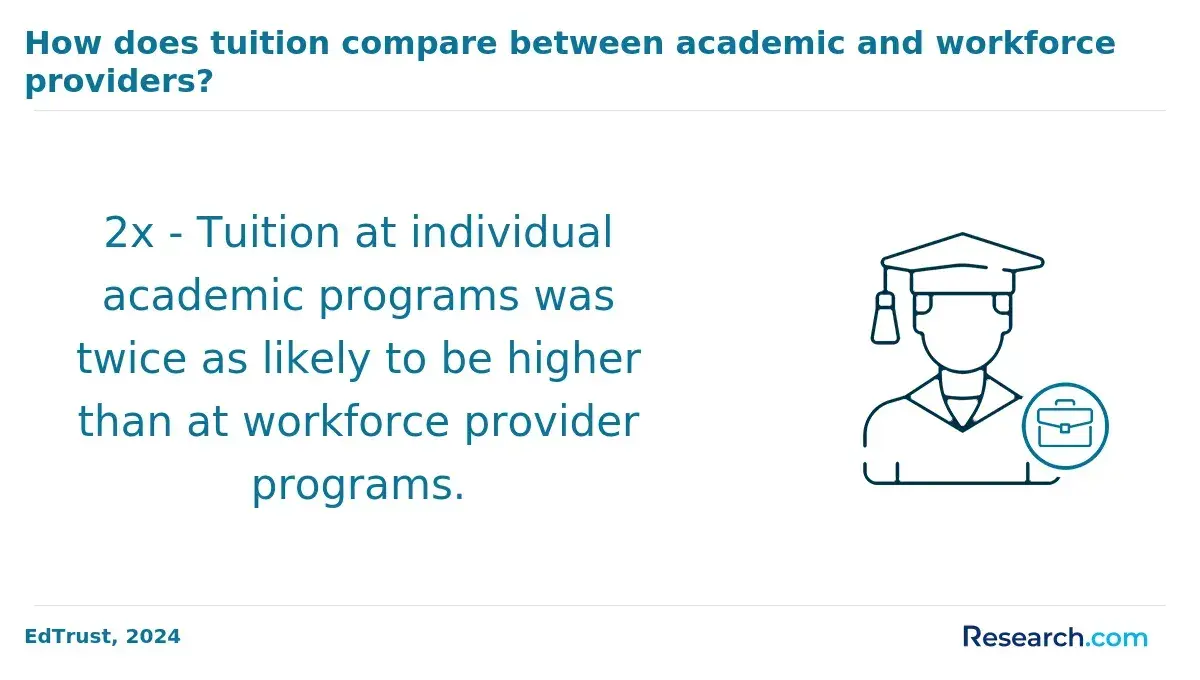
Tuition differs because online mobile app development pathways exist within different kinds of institutions: public universities, private nonprofit colleges, private career-focused schools, and competency-based universities. The smartest comparison is total cost after transfer credits, grants, scholarships, fees, textbooks, software, devices, and the number of terms needed to graduate.
College Board's 2024 Trends in College Pricing and Student Aid reported substantial differences in published tuition and fees by institution type for the 2024-25 academic year. These figures are useful benchmarks, but students should use each school's net price calculator since online pricing, residency rules, and program fees can differ from campus-wide averages.
| Institution type | Published tuition and fees benchmark | What it means for mobile app development students |
| Public four-year, in-state | $11,610 | Often the best starting point for affordability when the online program offers in-state or flat online tuition |
| Public four-year, out-of-state | $30,780 | Can become costly unless the school offers reduced online rates or strong transfer credit policies |
| Private nonprofit four-year | $43,350 | May provide strong advising and brand recognition, yet net price after institutional aid is essential |
| Community college pathway | Typically lower than four-year tuition | Can lower total bachelor's cost when credits transfer cleanly into an accredited software or app development program |
When comparing tuition, avoid stopping at the per-credit rate. A program with a higher per-credit price may cost less overall if it accepts more transfer credits, whereas a cheap program may become expensive if it requires extra prerequisites or does not accept prior coursework.
Use this cost checklist before you decide whether a program is affordable in practice. It focuses on the expenses that most often affect the real price of an online degree.
- Figure remaining credits after transfer evaluation, not just the full bachelor's price.
- Inquire about technology fees, online course fees, graduation fees, proctoring fees, and required software subscriptions.
- Verify whether a laptop, Mac computer, mobile device, or development environment is required for iOS or Android coursework.
- Compare tuition lock policies, since a multi-year program can become more expensive if rates increase before graduation.
- Check scholarship renewal rules so you know whether aid depends on GPA, enrollment intensity, or credit completion.
If you are comparing technology degrees with other online business or management credentials, the same net-cost reasoning applies. For example, research on the cheapest MBA programs online shows why students should compare total program cost instead of relying on the advertised tuition rate alone.
Admissions selectivity varies widely. Some online mobile app development and software development programs use open or transfer-friendly admission policies, whereas others require stronger academic preparation in math, computing, or prior college coursework. Selectivity is not automatically a sign of better career outcomes, and flexible admission does not automatically signal lower academic quality.
Most bachelor's programs require a high school diploma or equivalent, transcripts, and an application. Transfer students might need a minimum college GPA, finished general education courses, or prerequisites in programming, algebra, statistics, or composition. Some adult-friendly programs place more emphasis on completed credits and work experience than on standardized test scores.
The table below illustrates how admissions requirements tend to differ by student type. Use it to identify which path is likely to be realistic before you spend time and money on applications.
| Applicant type | Typical admissions focus | What to prepare | Best-fit program feature |
| First-time college student | High school completion, GPA, placement readiness | Transcripts, personal statement if required, math readiness plan | Structured advising and a beginner-friendly programming sequence |
| Transfer student | College GPA, completed credits, course equivalency | Official transcripts, syllabi for technical courses, transfer credit estimate | Generous transfer policy and a clear degree audit before enrollment |
| Working adult | Prior credits, professional experience, readiness for online learning | Resume, employer training records, prior learning assessment documents | Asynchronous or competency-based format |
| Career changer | Academic readiness and motivation | Intro coding sample, math refresher, realistic study schedule | Foundation courses in programming, databases, and web development |
Do not assume that the easiest admission offer is the best offer. If a program admits you quickly but does not evaluate transfer credits before enrollment, explain graduation requirements clearly, or provide access to academic advising, you may face unexpected costs later.
Applicants can improve their chances of success by asking admissions counselors specific questions before applying. These questions reveal whether the program is transparent and whether it matches your academic background.
- Will I get an official transfer credit evaluation before I commit to enrollment?
- Are programming prerequisites needed before upper-division mobile or software courses?
- What if I need developmental math or an introductory computing course?
- Can I start in any term, or are major courses offered only in certain semesters?
- Do admissions standards differ for the online version of the program?
The format that offers the most flexibility hinges on your learning style. Building apps calls for constant practice, debugging, code review, and project iteration, so learners ought to pick a format that backs both independence and feedback. A program that suits your schedule yet leaves you working alone may prove less effective than one that is somewhat more structured and gives you better access to instructors.
Online programs typically follow one of a few scheduling models. The comparison that follows shows how each format plays out for working adults, transfer students, and learners who depend on predictable deadlines.
| Online study format | How it functions | Ideal for | Possible downside |
| Asynchronous classes | Learners finish weekly assignments with no mandatory live class sessions | Working adults, parents, service members, students in other time zones | Demands solid time management and proactive communication |
| Synchronous online classes | Learners join live virtual sessions at set times | Students who want real-time discussion, demonstrations, and interaction with instructors | Less flexible for shift workers or learners whose schedules shift |
| Competency-based programs | Learners advance by proving mastery instead of keeping to a fixed weekly pace | Experienced students able to move quickly through material they already know | May be hard for beginners who need regular guided instruction |
| Hybrid or low-residency option | The bulk of coursework is online, with occasional campus visits or scheduled activities | Learners who want some face-to-face collaboration or lab access | Travel obligations can cut into flexibility |
| Accelerated sessions | Classes run in shorter blocks than a traditional semester | Motivated students who want to keep moving steadily | The quick pace can be tough in courses heavy on programming |
Accelerated online options may look attractive, yet speed should not cost you deep practice. If you are weighing faster routes to a degree, researching 2 year accelerated bachelor degrees can help you see how compressed formats shape workload and planning.
Before you settle on a format, chart your weekly schedule with honesty. Mobile app development assignments frequently run longer than anticipated, since debugging, testing, and interface refinement happen in cycles. A realistic plan should set aside time for lectures, coding labs, readings, project work, help sessions, and portfolio polishing.
- Pick asynchronous learning when your schedule shifts week to week and you are at ease requesting help online.
- Opt for synchronous learning if live demos, peer discussion, and set accountability help you.
- Go with competency-based learning if you already grasp programming fundamentals and can show steady progress without weekly lectures.
- Select hybrid learning only when travel obligations are predictable and clearly serve your goals.
- Steer clear of overloaded terms when you take mobile, database, or software engineering courses with large projects.
Support for students matters because coding degrees rest on skills. Learners frequently need assistance with programming logic, debugging, version control, math, project planning, and career preparation. A solid online program ought to offer help before students fall behind, rather than only after they fail an assignment.
Online learning nationwide keeps expanding, which makes the quality of support more important. The National Center for Education Statistics reported in 2024 that millions of U.S. college students enroll in at least one distance education course, so students should expect online programs to offer established advising, tutoring, and technology systems instead of treating online support as an extra.
The table that follows points out support services especially relevant to mobile app development students. Use it to compare programs on more than tuition and course titles.
| Type of support | Why it matters for app development | Questions to ask the school |
| Programming tutoring | Helps learners work through programming concepts before small gaps turn into major problems | Can tutors help with Java, Kotlin, Swift, JavaScript, databases, and Git? |
| Access to faculty | Feedback on code is more useful when instructors explain why an approach succeeds or fails | How quickly are instructors expected to respond to online students? |
| Career support | Hiring in app development often hinges on portfolio, resume, and interview readiness | Will career advisors look at GitHub profiles, app demos, and technical resumes? |
| Advising on academics | Prevents course-sequencing errors that push back graduation | Will an advisor lay out every remaining course before you enroll? |
| Support for accessibility and mental health | Students online still need accommodations, counseling referrals, and wellness resources | Can these services be reached remotely and beyond standard business hours? |
A program that stresses self-paced flexibility while providing little faculty feedback or no technical tutoring is a red flag. In app development, learners need prompt help, since a single unresolved error can stall progress on a whole project.
Solid programs typically offer students several routes to help. Seek out a support system that covers both academic and career-facing resources.
- Online tutoring in programming, math, databases, and writing.
- Academic advisors who are dedicated and understand degree sequencing along with transfer credit.
- Career coaching covering technical interviews, portfolios, internships, and entry-level job searches.
- Access to a virtual library, research databases, and citation help for general education courses.
- Technology help desk hours that line up with the schedule of online learners.
Learners enrolled in accredited online mobile app development degree programs can qualify for many aid sources that campus students use, such as federal grants, federal loans, institutional scholarships, employer tuition assistance, military education benefits, and state aid. Eligibility hinges on accreditation, enrollment status, financial need, satisfactory academic progress, and the policies of each school.
For the 2024-25 award year, the maximum Federal Pell Grant is $7,395. That figure matters because grants need not be repaid, yet it also demonstrates why students should avoid depending on a single aid source when they compare bachelor's programs that can take several years to finish.
The table that follows lays out common aid options and how they apply to online students. Use it to weigh award letters from several schools rather than focusing only on the biggest headline scholarship.
| Aid type | Who might qualify | What to confirm |
| Federal Pell Grant | Undergraduates who demonstrate financial need | Eligibility of the program, enrollment intensity, yearly award amount |
| Federal Direct Loans | Students who qualify and are enrolled at accredited institutions that participate | Yearly borrowing limit, subsidized versus unsubsidized status, repayment obligations |
| Scholarships from the institution | Students who meet merit, need, transfer, or demographic criteria set by the school | Renewal rules, GPA requirements, and whether awards cover online programs |
| Tuition assistance from an employer | Employees at companies that support education benefits | Timing of reimbursement, required grades, list of approved majors, service commitment |
| Benefits for military members and veterans | Service members, veterans, and dependents who qualify | Certification of benefits, Yellow Ribbon participation, military tuition rate |
To compare aid offers on equal footing, first subtract only grants and scholarships from direct costs. Loans may help you cover expenses, yet they are not discounts. Think too about whether a school's schedule allows you to keep working, since lost income can form part of the true cost of attendance.
Take these steps as you review financial aid offers. They help you weigh the net price and long-term affordability of every program.
- File the FAFSA as early as you can and list every school you are seriously considering.
- Ask for an official cost of attendance covering tuition, fees, books, technology, and estimated living expenses.
- Keep gift aid apart from loans so the real discount becomes clear.
- Find out whether scholarships apply to summer terms, accelerated sessions, or part-time enrollment.
- Work out the total borrowing you expect to need for the whole degree, not just the first year.
Students who plan long-term academic careers should also look past the bachelor's degree. If you eventually move into technology leadership, instructional technology, or higher education administration, comparing costs for advanced programs like the best online EdD programs can help you plan future education expenses more realistically.
An accredited online mobile app development degree can prepare you for careers in mobile application development, software development, web development, front-end engineering, quality assurance, product support, and technical project coordination. The degree delivers the most value when it helps students assemble practical proof of skill, such as app prototypes, deployed projects, code repositories, testing documentation, and team-based development experience.
BLS data indicates that software developer employment is projected to grow 17% from 2023 to 2033, far faster than the average across all occupations. For students, that growth signals strong broad demand, though it does not eliminate the need to compete with solid technical skills, a portfolio, internships, and interview preparation.
The table that follows links common roles to the skills and evidence employers tend to seek. It can help you judge whether a mobile-focused degree or a broader software development degree suits your target career better.
| Career track | Common duties | Skills to develop in the degree | Evidence for your portfolio |
| Mobile app developer | Design, build, test, and maintain apps for iOS, Android, or cross-platform use | Kotlin, Swift, React Native or Flutter, APIs, UX fundamentals, testing | Apps that are published or demo-ready, with clean code and documentation |
| Software developer | Build applications, services, internal tools, and user-facing software | Data structures, databases, object-oriented programming, Git, secure coding practices | Full-stack or back-end projects that show version control history |
| Front-end developer | Create interactive user interfaces for web and mobile-adjacent platforms | HTML, CSS, JavaScript, TypeScript, accessibility, and responsive design | Responsive web apps along with interface case studies |
| Quality assurance analyst or tester | Test software, log defects, and raise release quality | Automated testing, test planning, debugging, issue tracking | Test suites, bug reports, and documentation for releases |
| Product or technical support specialist | Assist users, document issues, and link technical teams with customers | Communication, troubleshooting, analytics, and software workflows | Support documentation, user guides, and improvements to workflows |
AI and automation are reshaping what entry-level roles expect. Employers place growing value on developers who can use AI coding assistants responsibly, review generated code, test thoroughly, and grasp security risks. A quality degree program should teach problem-solving and software fundamentals, not merely tool-specific shortcuts.
Students drawn to app businesses should also grasp user acquisition and digital communication. Combining development skills with product analytics or a related field such as a social media marketing degree can help students who want to build consumer apps, work at startups, or shift into growth-focused product roles.
Assuming the degree by itself is enough is a common mistake. For software and app development roles, hiring managers frequently examine projects, technical assessments, and problem-solving ability. The strongest students leave with both a credential and proof that they can build, test, explain, and refine real software.
When they are accredited, well-designed, and taught by qualified faculty, online and campus-based mobile app development programs can produce similar academic outcomes. The key differences are not always about quality; they involve schedule structure, access to in-person facilities, networking style, and how much independence students are expected to show.
The table that follows compares the practical differences students ought to weigh. The best format is whichever one supports your learning style, work obligations, and capacity to finish technical projects consistently.
| Factor to compare | Online degree program | Campus degree program |
| Flexibility of schedule | Often a better fit for working adults, parents, and students who live beyond commuting range | Class times and campus commitments that are more fixed |
| Practical, hands-on learning | Typically delivered via virtual labs, cloud tools, simulations, and project repositories | Can offer physical labs, in-person hackathons, and instant collaboration with peers |
| Networking | Calls for deliberate participation in virtual events, forums, internships, and professional communities | Networking that is more informal, through classmates, clubs, faculty, and campus events |
| Support for students | Can be strong when tutoring, advising, and career services are entirely remote | Face-to-face support and campus resources may be easier to reach |
| Structure of costs | Can cut commuting and relocation costs, though online fees differ | May carry commuting, housing, parking, or campus activity costs |
For students who need flexibility and can work on their own, online programs are often the better fit. Campus programs may suit students who want daily structure, in-person collaboration, or access to local tech clubs and labs.
For career outcomes, neither format is automatically superior. Employers generally care about whether you can solve problems, write maintainable code, collaborate, and communicate clearly. If you pick online learning, network on purpose by attending virtual career fairs, contributing to open-source projects, joining developer communities, and pursuing internships or freelance projects.
Students should also weigh how each format approaches group projects. In the workplace, mobile app development is seldom a solo activity, so programs that include code reviews, Agile methods, documentation, and team-based builds can mirror professional expectations more closely.
How Should Students Choose the Best Accredited Online Mobile App Development Degree Program?
To pick the best accredited online mobile app development degree, students should match program quality against personal constraints: budget, transfer credits, schedule, learning style, and target career. A wise decision balances affordability with curriculum depth, support services, and proof that the program helps students build job-ready software skills.
Work through this decision process before you enroll. It helps you narrow broad program lists into a final choice you can defend.
- Confirm institutional accreditation first, then check whether specialized accreditation counts for your target role.
- Ask for a transfer credit evaluation before you compare total cost.
- Examine the curriculum for programming fundamentals, databases, APIs, mobile development, cloud deployment, testing, security, and capstone work.
- Compare net price after grants and scholarships, rather than published tuition alone.
- Find out how online students reach tutoring, faculty, career services, technical support, and portfolio review.
- Weigh the learning format honestly against your weekly availability and how much structure you need.
- Study career outcome information closely, including internship access, employer partnerships, graduate school pathways, and portfolio expectations.
The table that follows pairs common student goals with the program features that typically matter most. Use it to sort out which trade-offs you can accept and which should be deal breakers.
| Goal for students | Put first | Watch out for |
| The lowest total cost possible | Public tuition, transfer credits, a community college pathway, grants | Programs that look cheap yet accept few prior credits |
| Finishing quickly | Accelerated terms, competency-based format, enrollment all year | Taking on too many programming-heavy courses without enough study time |
| Switching careers into tech | A beginner-friendly sequence, tutoring, portfolio projects, career coaching | Programs that assume coding experience and offer no support |
| Long-term mobility in software engineering | Depth in computer science or software engineering, algorithms, databases, security | Narrow programs that teach app tools only, with no fundamentals |
| Flexibility for working adults | Asynchronous courses, part-time options, a predictable course rotation | Unstated live-session requirements or limited evening support |
Treating rankings as a stand-in for fit is among the biggest mistakes. A highly visible program may not offer the best value if it costs more, accepts fewer credits, or lacks the schedule you need. In the same way, a less famous accredited program can be a strong choice when it is transparent, affordable, rigorous, and aligned with your goals.
If you are still working out whether software development is the right path, compare it with other career fields using the same evidence-based approach. For instance, salary-focused guides provide an explanation of how much do forensic psychologists make show why students should weigh pay, education requirements, and job fit before choosing any degree path.
Other Things You Should Know About Mobile App Development
No, plenty of bachelor's programs start with introductory programming. Even so, students who have no coding background should pick a program that offers tutoring, structured beginner courses, and enough time to practice. Trying free introductory coding exercises before you enroll can also help you confirm your interest.
Kotlin sees wide use in Android development, Swift sits at the center of iOS development, and JavaScript or TypeScript can prove useful for cross-platform and web-connected apps. Students should also pick up databases, APIs, Git, testing, and basic security, since apps seldom operate in isolation.
Seek institutional accreditation from an agency recognized by the U.S. Department of Education, such as the Higher Learning Commission, Southern Association of Colleges and Schools Commission on Colleges, or WSCUC. Should the program include a software engineering or computing concentration, ABET accreditation can add value, though it is less common for mobile app degrees.
Building for both can strengthen a portfolio, yet beginners should steer clear of spreading themselves too thin. Begin with the platform your program or target employers emphasize, then add cross-platform experience once you grasp core programming, interface design, testing, and deployment workflows.
- How to Become a Mobile App Developer in Canada? For Alberta, Canada. https://www.cdicollege.ca/study-on-campus/alberta/community/news/how-to-become-a-mobile-app-developer-in-canada/
- Education App Development Cost in 2026 (Complete Breakdown) | Trango Tech Mobile https://application.trangotech.com/blog/education-app-development-cost/
- Software & systems https://www.careerpilot.org.uk/job-sectors/software-systems/job-profile/app-developer
- Education App Development Cost in 2026 | Pricing Guide https://growrankers.com/blog/education-app-development-cost/
- CCNE Accreditation https://www.aacnnursing.org/ccne-accreditation
- ROI of Coding Bootcamps: How Fast Can You Get Hired? https://www.zaio.io/blog/roi-of-coding-bootcamps-how-fast-can-you-get-hired/
- How to Become a Mobile App Developer https://www.cbtnuggets.com/how-to-become/mobile-app-developer-career
- How to become a Mobile Application Developer - Salary, Qualifications, Skills & Reviews – SEEK https://au.seek.com/career-advice/role/mobile-application-developer
- How to Become a Mobile App Developer https://sundancecollege.com/blog/how-to-become-an-app-developer/