2027 Economics Career Outcomes by Degree Level Report: Pay, Employment, and Advancement Patterns

Co-Founder and Chief Data Scientist
Choosing whether to pursue an associate, bachelor's, or graduate degree in economics can be daunting when clear, comparative career outcomes remain elusive. For many adult learners and working professionals, the question is not just affordability but the real-world payoff in employment stability, earning potential, and progression opportunities.
Recent 2024 data reveals that 68% of economics bachelor's degree holders secure roles linked to their field within a year, compared to just 45% with associate credentials, highlighting significant variance in market access. Understanding these distinctions is critical to avoid costly detours and align education with tangible career advancement. This article analyzes pay, employment, and advancement patterns across economics degree levels to support informed decision-making.
Key Things to Know About Economics Career Outcomes by Degree Level
- Master's degree holders in economics face greater employer expectations for specialized skills, narrowing immediate job-market access compared to bachelor's, but enhancing mid-career advancement in research-intensive roles.
- Associate-level credentials offer quicker labor entry, yet trade off advancement potential, signaling that limited credential progression can restrict long-term leadership opportunities despite faster initial employment.
- Doctoral candidates often incur extended time and cost burdens, impacting practical return on investment; however, their advanced expertise aligns with elite positions demanding deep analytical proficiency, reflecting a niche labor-market segment.
- Key Things to Know About Economics Career Outcomes by Degree Level Key Things to Know About Economics Career Outcomes by Degree Level
- What Career Outcomes Can Students Expect From Each Economics Degree Level? Career Outcomes by Degree
- How Much Do Economics Graduates Earn by Degree Level? Salary by Degree Level
- Which Economics Degree Level Offers the Strongest Employment Prospects? Best Degrees for Employment
- What Entry-Level Jobs Can You Get With a Economics Degree? Entry-Level Career Opportunities
- How Do Economics Degree Levels Affect Career Advancement and Promotion Opportunities? Career Growth by Degree
- Is a Economics Degree Worth It Based on Salary, Employment, and ROI? Salary, ROI, and Value
- How Do Associate, Bachelor's, Master's, and Doctoral Economics Degrees Compare? Comparing Degree Levels
- Which Industries and Employers Hire Economics Graduates by Degree Level? Which Industries and Employers Hire Economics Graduates by Degree Level?
- What Skills, Credentials, and Experience Improve Economics Career Outcomes? What Skills, Credentials, and Experience Improve Economics Career Outcomes?
- Which Economics Degree Level Is Best for Your Career Goals? Choosing the Right Degree
What Career Outcomes Can Students Expect From Each Economics Degree Level?
Economic outcomes for graduates vary sharply by credential level, shaping their access to roles, career growth, and specialization in measurable ways. Students completing certificates or associate degrees often find their opportunities limited to entry-level or support positions involving data collection and basic financial tasks, with scarce direct advancement in analysis-heavy roles.
Bachelor's degree holders secure broader employment access in fields like financial advising or market research, where employers commonly seek demonstrated quantitative skillsets and analytical competency. Yet even within this group, progression into leadership or niche specialties typically hinges on further study or relevant work experience, underscoring the tradeoff between time invested and upward mobility in an increasingly competitive labor market focused on advanced expertise.
Master's and doctoral credentials markedly alter these trajectories by providing not only deeper specialization but also the practical exposure and research leadership demanded in higher-tier economic roles. Graduates with master's degrees, supported by internships and applied projects, experience stronger employment stability and faster salary growth, reflecting employer valuation of advanced analytical capabilities.
Doctoral economists, meanwhile, are concentrated in academia, policy advising, and senior specialist roles that require original research and sophisticated econometric modeling skills, positioning them for lower job volatility and elevated credential-based earnings ceilings. Adult learners or transfer students weighing these options must consider the long-term implications on time, credential stackability, and employer expectations, particularly when assessing pathways such as affordable PhD programs that enable leadership roles within economic research spheres.
How Much Do Economics Graduates Earn by Degree Level?
Differences in earnings among economics graduates are closely tied to degree level but also hinge on factors such as geographic location, industry specialization, and employer demands. For instance, a bachelor's degree graduate might start with a median salary around $70,000 but often faces slower wage growth without specialized skills or experience, especially in regions with lower cost of living.
In contrast, master's holders, who tend to qualify for roles in econometrics, programming, and policy analysis, typically see median earnings near $90,000, reflecting greater technical competence and access to specialized sectors like data science or international economics. Doctoral graduates, given their focus on research and high-level advisory roles, command salaries surpassing $120,000, but these positions frequently require significant academic commitment and may be geographically limited to metropolitan areas with strong research ecosystems.
Aside from raw pay differences, these figures must be weighed against educational costs and timing. Associate and certificate holders often enter the workforce more quickly with earnings generally between $40,000 and $55,000 but may encounter plateaus in advancement or job stability without upward academic mobility.
Transitioning from an associate or bachelor's to a master's degree can involve considerable time, transfer credit challenges, and financial investment, factors especially relevant for working adults or military-affiliated students balancing education with income needs. Employers also increasingly seek interdisciplinary proficiencies, meaning that credential upgrades accompanied by skills in statistics or computer science may significantly enhance both compensation and career durability in an evolving economic landscape.
A recent economics graduate shared how early job market research shaped their education decisions; initially considering a quick certificate for entry, they found local employers prioritized candidates with at least a bachelor's degree and quantitative experience, despite the slower entry timeline. After comparing posted salaries and advancement trajectories, they opted to complete a bachelor's but strategically added coding and econometrics courses to boost employability. While acknowledging the added cost and time, the graduate appreciated this approach as a pragmatic balance between immediate employment prospects and long-term earning potential.
Which Economics Degree Level Offers the Strongest Employment Prospects?
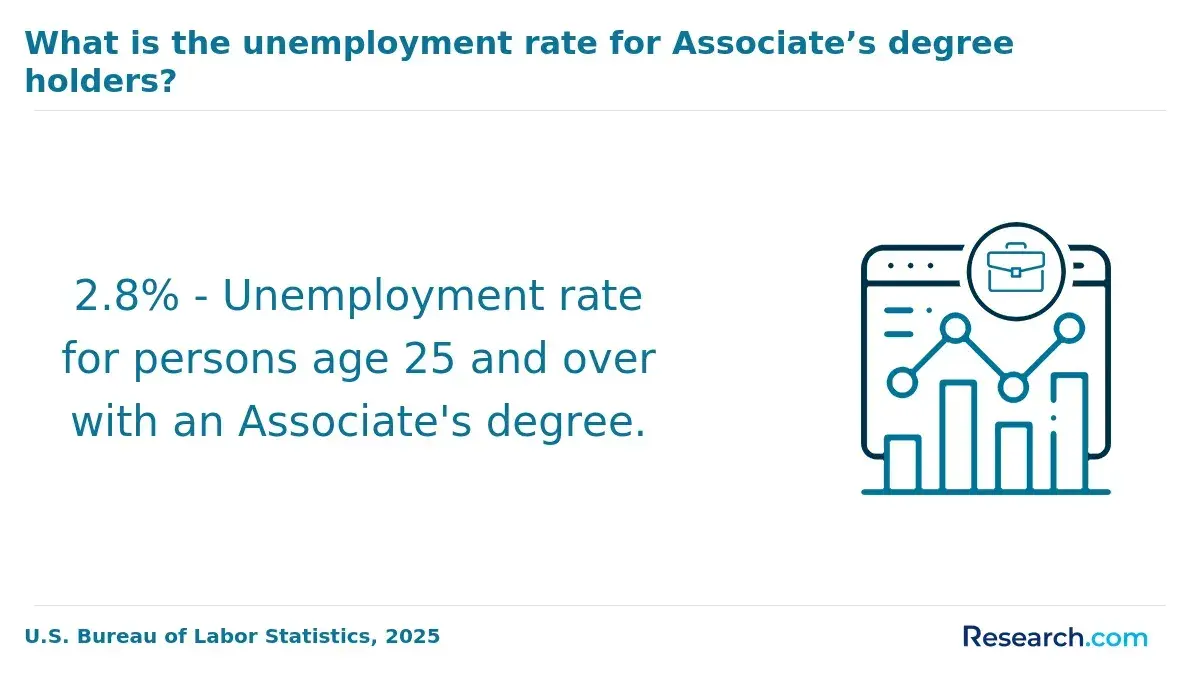
The strongest employment outlook within economics generally favors those with master's degrees, as employers increasingly seek specialized skills beyond a bachelor's baseline. While bachelor's degree holders experience relatively low unemployment-around 3.5% according to 2024 Bureau of Labor Statistics data-their roles often emphasize foundational quantitative abilities suited to entry-level positions in finance, government, and consulting.
In contrast, master's graduates gain access to higher-paying opportunities that require economic modeling, policy analysis, and advisory expertise, benefiting from higher median wages and professional networks forged through internships and research during their studies. Choosing an associate degree or certificate typically means quicker labor market entry but limits prospects mostly to technician or support positions with restricted upward mobility and lower earning potential.
Doctoral degrees open doors to elite research, academic, and governmental roles but demand lengthy training and intense competition, making them a less practical path for many. Students weighing whether to start work sooner or invest in advanced education must consider not just initial employment but also long-term advancement potential; a master's degree often justifies extended study by enabling substantial salary gains and eligibility for senior roles, whereas lower credentials may delay progression despite faster workforce entry.
What Entry-Level Jobs Can You Get With a Economics Degree?
Entry-level economics analyst jobs differ notably depending on degree level, with bachelor's graduates commonly facing a competitive landscape that favors candidates who combine foundational economic theory with practical skills like Excel, Stata, or Python. Many employers expect prior experience through internships or relevant projects to bridge the gap between academic knowledge and workplace readiness.
For example, graduates without such experience often find themselves in temporary or adjacent roles such as business analysis before securing true economist positions, reflecting a common disconnect between advertised roles and actual hiring standards. In contrast, candidates with master's or higher degrees generally qualify for specialized roles that emphasize applied econometrics, policy research, and advanced modeling, positioning them for faster career mobility.
These positions may require thesis work or field research as proof of expertise and occasionally benefit from certifications like CFA or CEcD, although these are not always mandatory across the board. Employment data from the National Center for Education Statistics suggests about 85% of economics bachelor's graduates who complete internships find employment within six months, underscoring the value of experiential learning in economics degree employment opportunities.
Students weighing degree options should consider that initial job assignments vary in stability and skill development potential, especially when planning for graduate study or long-term advancement. For those seeking cost-effective pathways to enhance credentials, exploring an affordable master degree program can provide an important boost, particularly when aiming for roles with stronger recognition of subject expertise and research experience beyond the bachelor's level.
How Do Economics Degree Levels Affect Career Advancement and Promotion Opportunities?
Advanced degrees in economics notably shape promotion trajectories by aligning candidates with roles that demand complex analytical skills and leadership capabilities. Employers commonly set graduate-level credentials as a baseline for mid to senior roles in policy analysis, consulting, and research, creating a structured hierarchy where bachelor's degree holders often remain confined to entry or support functions unless supplemented by experience or certifications.
Data from the U.S. Bureau of Labor Statistics (2024) confirms that professionals with master's or doctoral degrees reach promotion milestones approximately three to five years sooner than those with only bachelor's degrees, a difference that can influence long-term earnings and career mobility. For working adults or transfer students already holding a bachelor's, pursuing graduate study may offer a tangible advantage in crossing from technical or analytical positions into strategic and leadership roles.
From a practical standpoint, those with bachelor's degrees frequently depend on accumulating relevant experience and professional development to access supervisory positions, especially in sectors where credentials are less rigidly enforced. Meanwhile, graduate education emphasizes theoretical frameworks and specialized knowledge, which employers prize when screening for roles with policy or managerial responsibilities.
This dynamic affects internal promotion pathways, as many organizations use educational attainment as a key differentiator during talent reviews and succession planning. Adult learners balancing employment and study often face a critical decision on whether the accelerated promotion timeline associated with higher credentials justifies the costs and time commitment, particularly when licensure or certification requirements intersect with career advancement standards.
An economics graduate recalled weighing options after several years in an analyst role at a public agency. Although competent in data tasks, they hesitated about pursuing a master's degree while working full-time. Conversations with supervisors revealed that leadership tracks prioritizing influence on policy budgets practically required at least a master's credential.
The decision involved balancing worry over study intensity and lost income against cautious optimism that the degree would not only clarify promotion criteria but also increase confidence in applying for management roles. This tempered approach underscored how degree level can impact not just eligibility but also self-assurance in stepping into expanded responsibilities.
Is a Economics Degree Worth It Based on Salary, Employment, and ROI?
Salary and employment outcomes for economics graduates vary significantly by degree level, specialization, and market conditions. While bachelor's holders often face intense competition for entry-level roles, especially in saturated regional job markets, those with advanced degrees tend to access higher-paying positions in research, policy, and analytics fields.
For working adults or military-affiliated students, balancing time-to-completion with work obligations directly impacts return on investment (ROI), as prolonged studies or large debt burdens can erode financial benefits despite strong workforce demand for economics skills. Evaluating economics degree salary and employment outcomes requires considering opportunity costs such as forgone earnings during study and geographic cost-of-living differences, which affect net take-home pay.
Individuals without relevant internships or certifications may encounter underemployment risks, underscoring the importance of practical experience alongside formal credentials. Master's degrees or certificates in applied areas frequently lead to wage premiums and management roles, but prospective students should weigh these advantages against program costs and labor market realities. Adult learners or transfer students, in particular, must analyze whether incremental education aligns with their career goals and financial capacity.
For those exploring flexible or affordable pathways, comparing economics programs to alternatives like a top MBA online can be an essential part of strategic planning. Understanding these dynamics helps learners better assess the real-world tradeoffs in pursuing economics degrees and enhances decision-making by focusing on practical employability and advancement potential rather than assumptions about automatic returns.
How Do Associate, Bachelor's, Master's, and Doctoral Economics Degrees Compare?
Choosing to stop at an associate degree in economics often limits graduates to entry-level technical or support roles with constrained earnings and advancement opportunities, as reflected by employment rates near 65% within the field according to the National Center for Education Statistics (2024). In contrast, a bachelor's degree substantially broadens access to roles like economic analyst or policy advisor, improving job stability and opening pathways to mid-level leadership, especially when paired with real-world experience.
However, many specialized or senior positions still require graduate-level credentials, creating a critical decision point for students weighing immediate workforce entry against further investment in education. Master's degrees in economics offer meaningful advantages in occupational focus and resilience, supporting faster employment growth driven by demand for advanced modeling and policy expertise.
The ability to stack certifications and pursue flexible learning formats makes the master's path particularly viable for working adults aiming to boost credentials without pausing career activities. Meanwhile, doctoral studies remain essential primarily for those targeting high-tier research, academia, or policy advisory roles, involving a profound time and resource commitment with completion rates around 55%.
For many professionals, the incremental value of a PhD must be balanced against substantial opportunity costs and the fact that industry leadership roles often do not mandate this level of credentialing, underscoring the importance of strategic planning around education length, expected earnings, and career trajectory.
Which Industries and Employers Hire Economics Graduates by Degree Level?
Hiring patterns for economics graduates vary widely by degree level, fundamentally shaping access to distinct industries and roles. Associate degree holders commonly occupy operational or support positions within financial services and retail sectors, where foundational quantitative and business skills suffice but wage growth and upward mobility remain limited.
For example, a candidate with an associate credential may secure a financial clerical role yet face a competitive ceiling compared to bachelor's degree holders who are preferred for entry-level analyst jobs in finance, government, and consulting. Data from the U.S. Bureau of Labor Statistics underscores that employers at these levels emphasize critical thinking and data interpretation skills gained through four-year programs, influencing hiring decisions and long-term earning potential.
Master's degree graduates tend to target specialized mid-level roles involving advanced statistical modeling, econometrics, and leadership, often within economic consulting firms, federal regulatory agencies, or data science teams. These positions require proficiency with software like R or Python and command significantly higher compensation and project management responsibilities.
Conversely, doctoral economists primarily find roles in academia, high-level research institutions, or think tanks, where original research and strategic policy influence predominate. While doctoral degree holders face lengthier job searches, the payoff includes leadership positions with greater autonomy and income. Certificate programs, meanwhile, act as supplements rather than substitutes, enhancing technical skills in financial modeling or analytics but rarely replacing the comprehensive training required for sustained advancement.
What Skills, Credentials, and Experience Improve Economics Career Outcomes?
Employers in economics increasingly demand a precise blend of technical proficiency and demonstrable experience, with skills such as expertise in statistical software (R, Python, Stata) and econometrics acting as essential differentiators. For example, an undergraduate pursuing entry-level roles can notably improve employability by securing certifications like the Certified Economic Developer (CEcD) or credentials in data analysis, signaling readiness for complex labor market demands.
Graduate-level candidates benefit from specialized certifications aligned with sectors such as financial risk management or health economics, reflecting employer expectations for immediate applicability and domain-specific expertise. Balancing this, the value of internships and applied research cannot be overstated: the NCES (2024) data showing a 30% increase in full-time offers post-internship reflects how portfolio evidence directly influences hiring and advancement decisions across degree levels and working professionals.
Economics career advancement skills and credentials extend beyond technical mastery to include leadership and communication capabilities developed through cross-functional team involvement or military experience, which often facilitate career mobility or sector transitions. The limited role of formal licensure in economics underscores a broader industry preference for skill stacking over regulatory credentials, impacting how adult learners and transfer students strategically combine prior experiences with new qualifications.
Navigating these choices often entails a practical tradeoff: investing time in specialized certifications versus gaining applied experience, both critical for promotion readiness. For those evaluating degree options, leveraging resources such as online environmental engineering degree science and engineering programs can offer flexible pathways that integrate targeted credentials with existing skills, advancing career outcomes within a dynamic economic job market focused on key experience and certification for economics jobs.
Which Economics Degree Level Is Best for Your Career Goals?
The choice of economics degree level carries significant implications for employment access and long-term mobility, particularly when balancing specialization and advancement potential. A bachelor's degree often provides a broad foundation suitable for generalist roles, with about 85% employment within a year according to 2024 NCES data, but it may restrict immediate access to senior or technical positions.
For working adults or transfer students, the bachelor's route might represent an efficient pathway, leveraging credits while maintaining flexibility, though employers increasingly expect higher qualifications for specialized economic analyst roles. This dynamic highlights a tradeoff between quicker entry into the workforce and the need for advanced credentials to reach leadership or niche fields.
Master's degrees notably enhance specialization and technical proficiency, with employment rates nearing 90%, often viewed as a baseline for mid-level positions in finance, consulting, or government. However, the extended duration and rising student debt require careful consideration of opportunity cost, especially for those balancing work and studies.
Doctoral programs, focused on research and high-level policy roles, offer limited but high-impact pathways; over 70% of graduates transition into academia or think-tanks, reflecting narrower but prestigious employment channels. Prospective students should also note that accelerated or part-time formats and prior learning credits can reduce completion risks and financial burdens, but additional education may remain essential for leadership or regulated roles.
For those weighing economics degree career outcomes comparison, understanding sector-specific credential requirements and strategic credit transfers becomes critical. Adult learners aiming to align education with realistic market demands must consider how degree level affects licensure eligibility, specialization depth, and long-term career advancement. For insights on related career pathways, including roles that demand nuanced expertise, see how to become a profiler.
References
- 10 Best Jobs for Economics Graduates in Development for 2026 https://www.mdbjobs.com/p/10-best-jobs-for-economics-graduates
- What to Do With Your Economics Degree: Career Paths for An Economist | INOMICS - The Site for Economists https://inomics.com/terms/what-to-do-with-your-economics-degree-career-paths-for-an-economist-993218
- Is College Worth It? A Comprehensive Return on Investment Analysis - FREOPP https://freopp.org/whitepapers/is-college-worth-it-a-comprehensive-return-on-investment-analysis/
- Studying economics and job opportunities https://esacentral.org.au/what-is-economics-item/61114/studying-economics-and-job-opportunities/
- Careers in economics https://www.unitemps.com/career-advice/careers-in-economics/
- The Significance of Industry Credentials in Today's Economy - Learning Source https://learningsource.com/the-significance-of-industry-credentials-in-todays-economy/
- Economics Degree Jobs: 12+ Career Paths and Salary Data | Extern https://www.extern.com/post/economics-degree-jobs-career-guide
- How much more will you earn with Economics? https://whystudyeconomics.ac.uk/after-you-graduate/how-much-more-will-you-earn-with-economics/
- Salaries for Economics Graduates https://www.studyingeconomics.ac.uk/where-next/jobs-and-careers/money-you-could-earn/
- Economics Degree Careers and Salary in Europe - StudyinEurope.eu https://www.studyineurope.eu/economics/economics-degree-careers-salary-europe/
Other Things You Should Know About Economics
Advanced economics degrees like master's and doctoral programs require significantly more time, analytical rigor, and independent research compared to bachelor's programs. This added intensity can delay entry into the workforce and increase opportunity costs, especially for those balancing work or family. Prospective students should assess if the incremental salary and advancement benefits truly offset the extended commitment and stress, particularly since many mid-level economics roles value practical experience alongside or even over advanced credentials.
Not all economics degrees are created equal-programs emphasizing applied economics, data analytics, or econometrics often align better with employer demands than more theoretical tracks. Candidates from pragmatic, skills-focused programs tend to find smoother transitions into data-driven roles in finance, consulting, or policy analysis. If your goal is rapid workforce integration, prioritize programs with internships, industry partnerships, or strong quantitative training rather than purely academic orientations.
For professionals with several years in economics-related roles, returning for a master's or doctoral degree should be carefully justified by a clear career pivot or advancement plan. Graduate degrees might enhance prospects only if paired with a targeted shift into specialized sectors such as economic research, academia, or high-level policy organizations. Otherwise, gaining diverse on-the-job skills and professional certifications could produce better returns than further schooling, since employers often value demonstrated results over additional academic credentials alone.
Employers increasingly expect bachelor's-level economics graduates to have practical analytical skills and relevant experience, while master's candidates are often seen as ready for more independent, higher-impact roles. Doctoral graduates face expectations for specialized expertise, original research capabilities, and leadership potential. Students should tailor their education to meet these expectations by supplementing coursework with internships, quantitative projects, or publication efforts; prioritizing experiential learning can be more effective than focusing solely on degree prestige.