2027 Child Development Degree Completion Time Report: How Long Students Actually Take to Graduate

Co-Founder and Chief Data Scientist
Degree completion timelines in child development often reflect complex life circumstances rather than straightforward academic pacing. Many students juggle part-time enrollment with employment, caregiving responsibilities, or transfer credits from other programs, all of which affect progression speed.
Data from the National Student Clearinghouse Research Center in 2024 shows increased variability in graduation intervals, with more students extending beyond traditional timelines due to evolving work and family demands. This article examines how these practical factors influence actual completion times for child development degrees and highlights key patterns that shape students' educational trajectories.
Key Things to Know About Child Development Degree Completion Time
- Most students take longer than the advertised program length. Only about 45% of first-time, full-time bachelor's students graduate within four years, while roughly 64% finish within six years, making the actual completion time longer for many learners.
- The average college graduate is often older than expected. The median age of bachelor's degree recipients is around 23 years, while master's degree recipients are typically in their early 30s, reflecting the growing number of adult and returning students.
- Completing a degree can significantly increase lifetime earnings. Workers with a bachelor's degree earn roughly 65% more per week than those with only a high school diploma, and graduate degree holders typically earn even higher median wages over their careers.
- What Is the Average Graduation Time for Child Development Students? Average Graduation Timeline
- What Factors Have the Biggest Impact on Graduation Speed? Graduation Timeline Factors
- How Does Full-Time Versus Part-Time Enrollment Affect Graduation Timelines? Full-Time vs. Part-Time Graduation Timeline
- Do Online Child Development Students Graduate Faster Than Campus-Based Students? Online vs. On-Campus Timeline
- How Many Months or Years Can Transfer Credits Save? Transfer Credits
- Do Accelerated Child Development Programs Significantly Reduce Completion Time? Accelerated Program Timeline
- Which Child Development Program Requirements Most Often Extend Graduation Timelines? Factors Extending Graduation Timeline
- Does Taking Longer to Graduate Increase the Cost of a Child Development Degree? Impact on Program Cost
- Does Graduating Faster Improve Career Prospects? Impact on Career Prospects
- Which Scheduling Mistakes Commonly Delay Graduation? Mistakes to Avoid
What Is the Average Graduation Time for Child Development Students?
The typical degree completion timeline for child development programs aligns closely with broader undergraduate norms, often spanning around four years for full-time enrollees. According to the National Center for Education Statistics and recent 2024 studies, this four-year median holds for many students pursuing a bachelor's in fields related to child development. However, a substantial portion of students attend part-time due to employment, family, or financial responsibilities, frequently extending their path beyond five years. This variability reflects the reality that the average graduation time for child development students in the United States is influenced heavily by enrollment intensity and personal circumstances.
Several factors contribute to differing graduation timelines. Transfer credits play a dual role, potentially accelerating degree progress when accepted but sometimes causing delays when programs do not fully recognize prior coursework. Program design also matters; degrees requiring internships, practicum experiences, or capstone projects tend to extend completion time because of essential hands-on training components. Additionally, students balancing part-time study with work may follow slower schedules, especially if they participate in online or hybrid formats that emphasize flexibility but can lack the structured pacing of traditional on-campus programs. The interplay between these structural and individual factors shapes how long students take to finish their child development degrees.
This variability in graduation timing carries implications for academic planning, financial investment, and entry into the workforce. Extended timelines can increase overall tuition costs and delay career start, which is significant given that many employers expect practical experience alongside formal credentials in early childhood education roles. Prospective child development students must weigh these realities during enrollment decisions and may benefit from exploring resources like nurse practitioner school pathways for comparative planning in healthcare-adjacent fields. Ultimately, understanding these dynamics helps frame realistic expectations around degree completion and career readiness in child development fields.
What Factors Have the Biggest Impact on Graduation Speed?
Graduation speed for child development degrees results from a complex interplay between academic choices, program design, and individual circumstances rather than a single variable. Recognizing how elements such as enrollment status or curriculum sequencing affect time to completion allows students to better align their course load with personal and professional priorities. This understanding is critical, especially for those balancing work and family obligations, to avoid unexpected extensions in their degree timelines.
- Enrollment Status Intensity: Full-time enrollment nearly doubles the likelihood of finishing a child development master's degree within the standard timeframe compared to part-time status. Students attending part-time often manage competing commitments, which constrains their course load and slows progression, thereby elongating graduation timelines.
- Transfer Credit Policies: The acceptance and evaluation of transfer credits can either accelerate progress by waiving foundational courses or delay it when credits are rejected or require duplication. Institutions' varying policies on credit transfer mean students need to proactively assess how prior coursework will integrate into their degree path to avoid redundant semesters.
- External Work and Life Obligations: Nearly 45% of non-traditional students cite employment or caregiving responsibilities as primary contributors to protracted degree completion. These external demands reduce available study time and limit scheduling flexibility, often forcing students to reduce course loads or delay taking required internships typical in child development programs.
- Program Design and Curriculum Sequencing: Cohort models, self-paced formats, and the availability of evening or online classes significantly impact completion speed. Rigid sequential course requirements and mandatory practicum placements can add semesters when key courses are offered infrequently or only on campus, which influences whether students choose an online versus on campus program completion speed for child development degrees.
- Academic Performance and Advising Support: Students encountering academic difficulty such as probation or failed courses face inevitable delays, often compounding when support resources like advising or tutoring are insufficient or delayed. Timely academic interventions and consistent guidance correlate strongly with maintaining course progression aligned to typical graduation schedules.
The trajectory of a child development degree depends heavily on these intersecting factors. Prospective students should carefully evaluate how enrollment choices, transfer credit opportunities, and program formats align with their external responsibilities. For those considering flexible pathways, options such as a health information management degree online illustrate how program delivery affects completion speed and work-study balance. Practical assessment of these system-level dynamics informs realistic expectations and better academic planning.
How Does Full-Time Versus Part-Time Enrollment Affect Graduation Timelines?
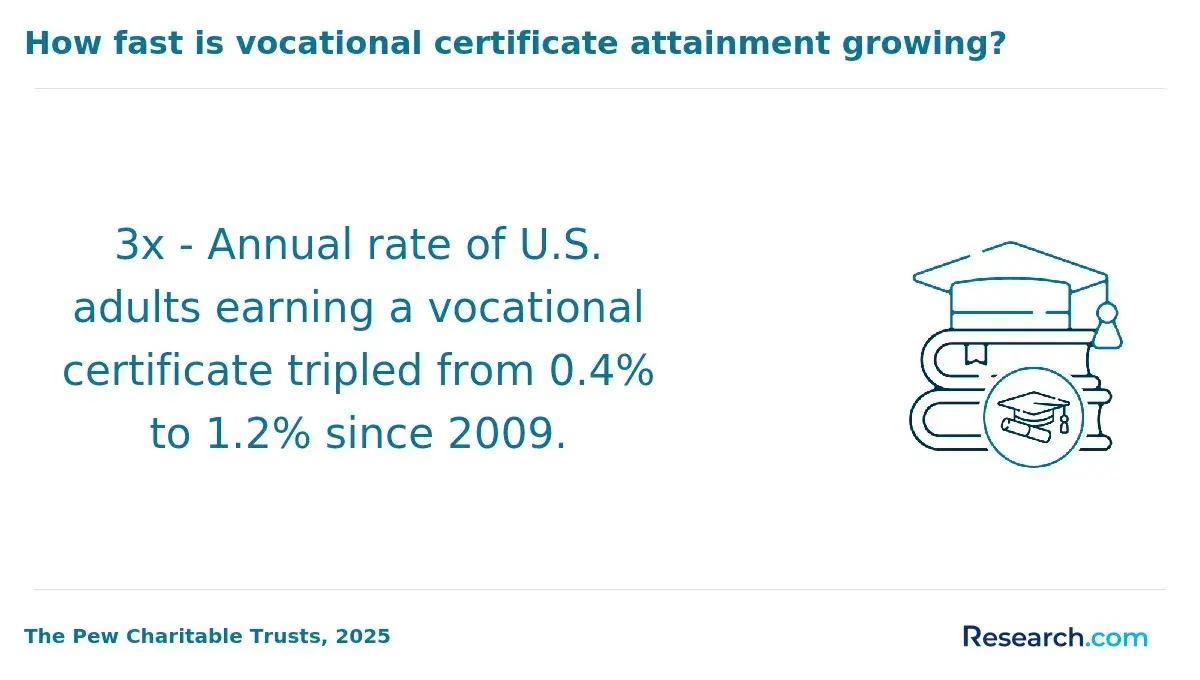
Graduation timelines for child development degrees vary significantly based on enrollment status. Full-time students generally complete associate programs within two to three years and bachelor's degrees in about four years, benefiting from heavier course loads per semester. In contrast, part-time students often extend their studies to five years or more, as reduced credit loads slow academic progress. According to recent 2024 higher education data, this temporal gap reflects not only course intensity but also institutional structuring and degree requirements that accommodate differing paces of study.
The interplay of academic and personal factors further shapes these timelines. Full-time enrollment allows for more consistent access to required courses each term and often comes with prioritized academic support, facilitating smoother progression through tightly sequenced program curricula. Conversely, part-time students face challenges such as limited course availability during off-peak terms and less flexible transfer credit policies, complicating trajectory planning. Additionally, external commitments-work obligations, caregiving, or family duties-commonly influence part-time students' decisions, making flexible scheduling a necessity but extending completion periods.
Enrollment choices also have consequential implications beyond graduation dates. Committing to full-time study often accelerates workforce entry and aligns with employer preferences for early credential attainment, which can impact salary growth and career trajectory. Meanwhile, part-time paths, while slower, afford financial steadiness and reduce burnout risk, albeit potentially delaying professional advancement. Balancing these factors involves assessing academic intensity, financial planning, and long-term career objectives, highlighting why enrollment status critically determines the practical timeline of child development education.
Do Online Child Development Students Graduate Faster Than Campus-Based Students?
There is a widespread assumption that online child development students complete their degrees more quickly than those studying on campus, primarily due to the flexibility online formats offer. However, data from the National Center for Education Statistics in 2024 suggest a more complex reality: fully online learners typically take six to twelve months longer to graduate than their campus-based peers. This trend reflects not only differences in program structure but also the diverse personal circumstances of adult learners balancing work, family, and coursework. While some accelerated online options exist, they remain uncommon, and the presumed timing advantage of online study does not consistently materialize.
Graduation timelines in both modalities are influenced by factors such as course scheduling flexibility and the availability of accelerated tracks, but self-discipline and time management play a critical role in online programs where learner autonomy is higher. Part-time enrollment is more common online as students juggle external obligations, which can prolong completion time compared to full-time campus schedules with fixed class times and on-site support. Additionally, practical requirements like internships or practicums may be easier to arrange on campus, speeding progression. These systemic and individual variables shape distinct pacing patterns rather than a simple speed comparison between online and traditional pathways.
Choosing between learning modalities entails tradeoffs beyond graduation speed, affecting how students structure their academic commitments and approach professional entry timelines. Campus programs often impose a rhythmic discipline aligned with semester cycles and immediate resource access, whereas online paths demand proactive planning and sustained motivation across less structured semesters. These differences can influence not only how quickly students earn their degree but also their preparedness for workforce demands, underscoring that modality impacts educational experience and career timing as much as total time to degree.
One recent graduate shared that during their application process, they hesitated to commit while waiting for rolling admissions decisions from multiple programs. Although the online program they preferred offered immediate start dates, uncertainty over credit transfer approvals and concern about balancing a part-time job led them to delay enrollment acceptance by several months. This pause resulted in missing the initial course start cycle, pushing their graduation timeline further out despite the program's flexible format, highlighting how admissions timing and personal readiness can affect completion speed regardless of study mode.
How Many Months or Years Can Transfer Credits Save?
Transfer credits can significantly shorten the time required to complete a child development degree, with potential savings ranging from a few months to over a year, depending largely on how many credits a student brings in and how well these align with program requirements. According to recent data from higher education research organizations, students with a moderate to substantial volume of applicable transfer credits may reduce their overall program length by 25% to 50%. This means a traditional two-year associate degree could potentially be completed in as little as one year for those whose prior coursework matches core child development subjects. Such time saved on degree completion with transfer credits is influenced not only by credit volume but also by the nature of completed courses-credits covering foundational child development concepts yield the most substantial reductions in time.
The actual months reduced by transfer credit policies depend on several institutional factors, including accreditation compatibility, course equivalency evaluations, and residency requirements that dictate how many credits must be earned directly from the granting institution. Many programs limit transfer credits to ensure students complete a minimum portion of their studies on-site or through their own curriculum, constraining potential time savings. Furthermore, transfer policies prioritize curriculum alignment, often accepting core courses related to child development, while elective or unrelated credits may be less frequently approved. The variability across institutions' policies and how rigorously course content is reviewed means time saved varies widely between students, complicating straightforward predictions of graduation timelines.
Beyond the direct timeline impact, transfer credits affect academic planning and financial investment, as students must carefully sequence remaining coursework to maintain competency progression and meet employer expectations within the field. Improper credit transfer can leave gaps in essential knowledge, undermining readiness for child development roles despite accelerated completion. For students evaluating degree options, including working adults and transfers, analyzing how transfer credit policies intersect with program structure is key to balancing expedited graduation against academic and professional readiness.
For those interested in the broader implications of degree options, especially in allied fields, exploring an accredited nutrition school online may provide useful comparative insight into transfer credit practices and workforce outcomes.
Do Accelerated Child Development Programs Significantly Reduce Completion Time?
Accelerated child development programs aim to reduce the overall time students spend completing their degrees by condensing curricula and increasing the number of credits taken each term. These programs often restructure course offerings to allow for faster progression, typically shortening bachelor's degrees by about a year and master's programs by several months compared to traditional timelines. This efficiency relies on higher course density and fewer breaks between terms, enabling motivated students to maintain momentum and finish more quickly than standard pathways. However, successful acceleration depends heavily on the institutional format and how tightly the curriculum is packed without compromising essential content.
Whether these programs deliver genuine time savings hinges on several critical factors. First, the intensity of course loads per term determines if students can sustain the accelerated pace without burnout. Second, prerequisite and sequencing requirements affect how readily students can progress; if foundational courses or required internships maintain their original durations, the potential for acceleration diminishes. Many programs also preserve capstone or practical fieldwork components that cannot be easily shortened, limiting overall compression. In essence, accelerated timelines are feasible primarily when institutional policies enable front-loading credits and offer flexible scheduling that aligns with students' prior preparation and capacity.
Trade-offs in workload intensity and reduced scheduling flexibility often challenge students in accelerated formats, raising concerns about whether cramming courses impacts the depth of learning. The compressed pace leaves little room for balancing employment, caregiving, or other responsibilities, and may increase stress levels. While faster degree completion can provide earlier credential attainment, it may come at the cost of diminished opportunities to engage deeply with material or build practical experience, factors employers often prioritize in early childhood education settings.
An accelerated child development graduate recalled waiting anxiously during the rolling admissions cycle, uncertain if their prior credits would transfer fully to meet early enrollment deadlines. Hesitating initially to apply due to incomplete documentation, they missed the first start date and then strategically adjusted their schedule to maximize the available accelerated terms. This timing challenge highlighted how administrative processes and preparatory readiness can influence whether acceleration truly shortens completion time or just shifts when students begin their intense coursework.
Which Child Development Program Requirements Most Often Extend Graduation Timelines?
Extended graduation timelines in child development programs often arise not from the total credit load alone but from embedded curricular requirements designed to ensure professional readiness. These components-while vital for hands-on competence and theoretical depth-introduce scheduling complexities and pacing constraints that affect student progress. The necessity to integrate real-world experience, sequential content mastery, and intensive research projects means time-to-degree can vary substantially depending on institutional policies and individual student circumstances.
- Supervised Practicum or Internship Hours: Many programs mandate a significant number of supervised fieldwork hours, often exceeding 400, to meet certification standards. These placements require coordination with external sites and students' personal schedules, frequently adding an extra semester or more to completion time. The practical experience is critical for employability, but its fixed timing creates inflexible program pacing.
- Sequential Prerequisite Coursework: Foundational courses covering developmental psychology, family dynamics, and special education must be completed before advancing to specialized topics or internships. Limited offerings and prerequisite chains often cause students to wait through multiple terms, effectively slowing progression well beyond credit accumulation alone.
- Capstone Projects or Theses: The requirement to conduct original research or comprehensive projects involves substantial investment in data collection, analysis, and academic writing. Without strong advising and flexible deadlines, such projects can extend graduation timelines by 20-25%, illustrating the tension between academic rigor and timely degree completion.
- Credit Transfer Limitations for Transfer Students: Many child development credits, particularly practicum hours, are non-transferable between institutions. Transfer students often need to repeat courses or field experiences, further prolonging their path to graduation compared to continuously enrolled peers.
Does Taking Longer to Graduate Increase the Cost of a Child Development Degree?
Taking longer to complete a child development degree generally leads to increased total tuition and related expenses, especially in programs that charge per semester or quarter. Students who extend their studies beyond the typical timeline often incur additional costs from repeated fees, textbooks, and campus services. Moreover, extended enrollment may reduce eligibility for certain types of financial aid structured around standard program lengths, amplifying out-of-pocket spending. This cost impact of extended degree completion in child development is also influenced by slower credit accumulation through part-time enrollment or credit transfer challenges, which prolong time to degree and necessitate payment for more terms. The financial consequences of delayed graduation for child development students include the opportunity cost of postponed workforce entry, limiting salary growth in an increasing demand field where early qualifications enhance employability.
However, the financial burden of extended timelines can vary depending on institutional tuition models and enrollment patterns. Some programs feature flat-rate tuition that caps semester costs regardless of course load, potentially mitigating additional charges for stretching the duration. Employer tuition assistance and flexible scheduling options may further reduce net expenses for working adults. On the other hand, lighter course loads to accommodate personal or professional responsibilities can slow credit completion rates, indirectly increasing total fees paid over time. Understanding these dynamics is crucial, as maintaining steady progress and strategic enrollment choices influence how the total cost accumulates. For those exploring accelerated pathways or balancing complex schedules, insights on how to be a nurse practitioner also underscore the interplay between pace, cost, and career timing in healthcare-related education trajectories.
Does Graduating Faster Improve Career Prospects?
Graduating faster with a child development degree can offer the advantage of earlier workforce entry, potentially reducing tuition costs and accelerating job searches. However, employers in early childhood education and related sectors rarely evaluate the speed of graduation in isolation. Practical experience, certifications, and demonstrated competencies typically carry more weight during hiring decisions than merely finishing earlier. The impact of early degree completion on child development job opportunities varies significantly depending on how well candidates have prepared through internships, practicum hours, and fieldwork.
Key factors that influence whether graduating early translates into stronger career prospects include the depth of internship exposure, the strength of professional references, and mastery of relevant skills. Students who complete their degrees quickly but lack extensive hands-on experience or professional certifications may find themselves less competitive compared to peers who take a more traditional timeline, acquiring stronger portfolios and networks. Aligning educational progress with industry demand and gaining accredited practicum hours often outweigh the benefits of an accelerated program for early childhood education roles.
Trade-offs between faster graduation and experiential depth are important considerations. While an expedited path might appeal to working adults or transfer students looking to minimize disruption, the overall long-term career impact depends heavily on qualitative aspects of training and readiness. Research by the National Center for Education Statistics (2024) and data from the U.S. Bureau of Labor Statistics emphasize that employers place greater value on comprehensive preparation than on the pace of degree completion. For those evaluating which LPN programs are easiest to get into, understanding these nuanced trade-offs in child development education timelines is equally critical.
Which Scheduling Mistakes Commonly Delay Graduation?
Graduation delays in child development programs commonly result not merely from academic challenges but from avoidable scheduling and enrollment planning errors. These pitfalls emerge across various degree levels and formats, affecting students who fail to align their course-taking strategy with program sequencing and institutional constraints. Recognizing these barriers is crucial for maintaining steady academic progress and avoiding unnecessary extensions in program length.
- Inconsistent Enrollment Status: Alternating between part-time and full-time enrollment disrupts momentum and can extend time to degree. Many students balance work and family responsibilities, but frequent status changes hinder timely progress through tightly sequenced curricula. Data from the National Center for Education Statistics in 2024 indicates that such patterns increase graduation time by approximately 30% on average.
- Poor Course Sequencing Awareness: child development programs often require strict adherence to prerequisite chains. Failure to register for prerequisites as soon as available forces students to delay subsequent courses, sometimes up to an entire semester. This issue stems from not proactively mapping course availability against the program's structured progression.
- Inadequate Transfer Credit Evaluation: Transfer students frequently face setbacks when their credits are not assessed early or thoroughly. This can lead to enrolling in redundant courses or missing foundational prerequisites, which triggers additional semesters and complicates degree planning.
- Late Enrollment in Limited-Capacity Courses: Waiting until late registration cycles to enroll in essential, high-demand classes can result in delayed graduation. These courses often restrict enrollment, making early planning vital for staying on track within program timelines.
Understanding how these scheduling mistakes intersect with credit rules, prerequisite sequencing, and institutional policies equips students to anticipate bottlenecks. Better coordination with academic advisors and timely course planning are key strategies to mitigate risks of extended time to completion in child development studies.
Other Things You Should Know About Child Development
Cohort-based programs can enhance timely graduation by creating structured, sequential course schedules and peer accountability, which helps maintain momentum. However, cohort models reduce flexibility, which may challenge working adults or those balancing family commitments. For students needing adaptable timelines, programs with flexible scheduling might extend completion time, but offer necessary balance-choosing structure versus flexibility depends on one's work-life situation and ability to commit to a fixed pace.
Maintaining significant work hours alongside child development studies commonly lengthens degree completion, but it can also bolster practical skills and employability if the job is related to the field. Students must weigh the short-term cost of delayed graduation against the long-term advantage of industry experience. Ideally, students should seek roles that complement their academic learning to maximize the practical value of extended study periods rather than extending timelines due to unrelated work obligations.
Taking fewer courses per term allows for greater focus on complex child development theories and applied skills, which can enhance learning outcomes and preparedness for professional challenges. Although this extends graduation timelines, employers often value demonstrated competence and depth over speed. For students targeting specialized roles or aiming for leadership in early childhood education, prioritizing mastery over speed can lead to better long-term career prospects despite the longer path.