2027 Applied Science Degree Program Availability Report: Which States and Schools Offer the Most Options

Co-Founder and Chief Data Scientist
The concentration of applied science degree programs across states and institutions reflects deeper patterns in regional workforce demands and higher education investment. Recent data from the National Center for Education Statistics reveals a 7% increase in enrollment for technical and applied science fields between 2022 and 2024, indicating shifting labor market priorities favoring practical skills over purely theoretical knowledge. Areas with diverse program offerings often align with sectors experiencing rapid growth or technological integration, shaping how institutions allocate resources. This report examines where applied science degree options cluster and what this distribution implies about access, institutional focus, and alignment with evolving employer requirements in the discipline.
Key Benefits of States and Schools That Offer the Most Applied Science Degree Program Options
- States offering extensive applied science degree options often require students to navigate varied curriculum standards, which may delay graduation but enhance interdisciplinary adaptability valued by employers.
- A 2024 NCES report shows employers increasingly seek graduates with specialized applied science skills, underscoring how diverse program availability aligns with evolving workforce demands for niche expertise.
- Broader program selections correlate with greater geographic and financial access, though students must weigh potential costs from limited credit transferability when choosing institutions within these states.
- Key Benefits of States and Schools That Offer the Most Applied Science Degree Program Options Key Benefits of States and Schools That Offer the Most Applied Science Degree Program Options
- Which States Offer the Most Applied Science Degree Programs? Top States
- Why Do Some States Have More Applied Science Programs Than Others? Why Do Some States Have More Applied Science Programs Than Others?
- Which Colleges Offer the Largest Number of Applied Science Degree Options? Top Schools
- How Do Online Programs Improve Access in States With Limited Options? Online Program Access
- How Much Does Applied Science Program Tuition Vary by State? How Much Does Applied Science Program Tuition Vary by State?
- How Does Applied Science Program Demand Affect Admissions Decisions? Program Demand
- How Do Applied Science Specialization Options Vary by Region? Specialization Options
- How Does Regional Employer Demand Affect Career Outcomes? Employer Demand
- What Factors Matter Most When Comparing Applied Science Programs Across States? Key Comparison Factors
- Which Regions May See the Fastest Growth in Applied Science Education? Fastest Growing Region
Which States Offer the Most Applied Science Degree Programs?
The availability of applied science degree programs across states closely reflects regional industry demands, population densities, and the robustness of higher education systems. States with extensive networks of colleges and universities that engage closely with local employers tend to support a broader range of applied science specializations. These clusters often emerge where labor markets require technically skilled graduates, creating educational ecosystems that meld academic offerings with workforce needs.
- California: With a vast number of public and private institutions, California provides one of the widest arrays of applied science programs nationwide. Its economy's strength in technology, healthcare, and environmental sectors drives demand for specializations such as environmental applied sciences, engineering technology, and health informatics. The presence of major research universities and strong industry partnerships enhances the practical relevance and career integration students can access.
- Texas: Texas exhibits a broad spectrum of applied science degree options tailored to regional economic priorities like energy, logistics, and biomedical fields. High institutional density alongside influential industries fuels program diversity, particularly in technical applications supporting the state's industrial backbone. In addition, expanding metropolitan areas offer extensive internship and employment opportunities, making it a significant hub for applied science education.
- New York: Concentrated urban populations in New York support numerous programs emphasizing information technology, urban infrastructure, and health-related applied sciences. The state's extensive academic networks cater to metropolitan labor markets seeking graduates with skills directly applicable to complex city environments. These programs often stress integration of theory with practical problem-solving, responding to demands from healthcare systems and tech sectors in the region.
Emerging states like North Carolina and Colorado are also notable for rapidly expanding their applied science degree availability, driven by economic diversification and research investments. Prospective students in these geographic clusters gain access to programs oriented toward evolving industries such as biotech and environmental sciences. This strategic alignment, underscored by 2024 workforce and educational analyses, highlights how regional factors shape where students find the most comprehensive applied science degree programs.
Those evaluating areas with the top states for applied science degree availability should weigh not only the volume of offerings but also the connection between institutions and labor markets. This synthesis directly impacts students' access to relevant specializations and practical career pathways. Understanding these dynamics is essential when considering which state's programs align best with individual workforce goals and educational priorities, especially for those focused on fields listed among the most lucrative college degrees.
Why Do Some States Have More Applied Science Programs Than Others?
Variations in applied science program availability across states reflect differences in higher education infrastructure and the regional demand for graduates with practical skills. States with larger populations and more diversified economies tend to support a greater number of programs, aligning with local labor market needs and institutional capacity. A state-by-state comparison of applied science program availability shows that regions with broader higher education ecosystems, including community colleges and research universities, can sustain more specialized offerings. These institutions often respond strategically to workforce demands, balancing accessibility with program depth.
Key drivers of this variation include state funding priorities that affect university research capacities and curricular development, as well as the presence of concentrated industry clusters that partner with educational providers. States that prioritize investment in STEM and applied science education often exhibit 25% more program offerings, reflecting an intentional alignment between funding models and labor market demand. Industry presence, such as biotech hubs or manufacturing centers, incentivizes educational programs that produce graduates with relevant skill sets. This dynamic is evident in the way employer demand shapes curriculum and fosters partnerships, as seen in states with comprehensive workforce planning embedded in their higher education strategies.
These geographic disparities carry significant implications for student access and regional workforce growth, especially in areas lacking diverse program options. The increasing prevalence of online education platforms complements but does not completely offset these gaps, as local economic conditions strongly influence program development priorities. For students considering degrees such as a cyber security masters, understanding these systemic patterns is crucial to navigating both educational opportunities and long-term career outcomes within the broader landscape of applied science education.
Which Colleges Offer the Largest Number of Applied Science Degree Options?
The range of applied science degree options available at a college is more closely linked to its institutional scale, funding, and academic capacity than to geographic location alone. Larger universities with robust research infrastructures tend to offer more specialized concentrations, interdisciplinary programs, and diverse delivery formats like online or hybrid models. These structural strengths enable them to continuously expand curricula in response to evolving industry demands and workforce priorities.
- Public research universities: These institutions, often part of large state systems, allocate extensive resources to STEM fields and applied science disciplines. Their significant federal and state funding supports broad program portfolios covering areas like biotechnology, environmental science, and cyber technology. Examples include universities within the University of California system and major land-grant universities, which leverage research centers and industry partnerships to develop multiple specialized tracks and certificates.
- Technical institutes and polytechnic universities: Focused on aligning education directly with employer skill requirements, these schools emphasize applied learning through hands-on training and certifications. Their more concentrated institutional missions allow them to rapidly introduce new specializations aligned with workforce trends in manufacturing, telecommunications, and industrial technology management, often with close ties to regional industry.
- Community colleges with applied science offerings: Though smaller in scale, many community colleges provide multiple associate degrees and certificate options tailored to local economic sectors. Collaborations with employers enable flexible curricula that prepare students for immediate employment or seamless transfer to four-year programs. Their affordability and accessibility make them critical in regions with fewer universities offering advanced applied science tracks.
How Do Online Programs Improve Access in States With Limited Options?
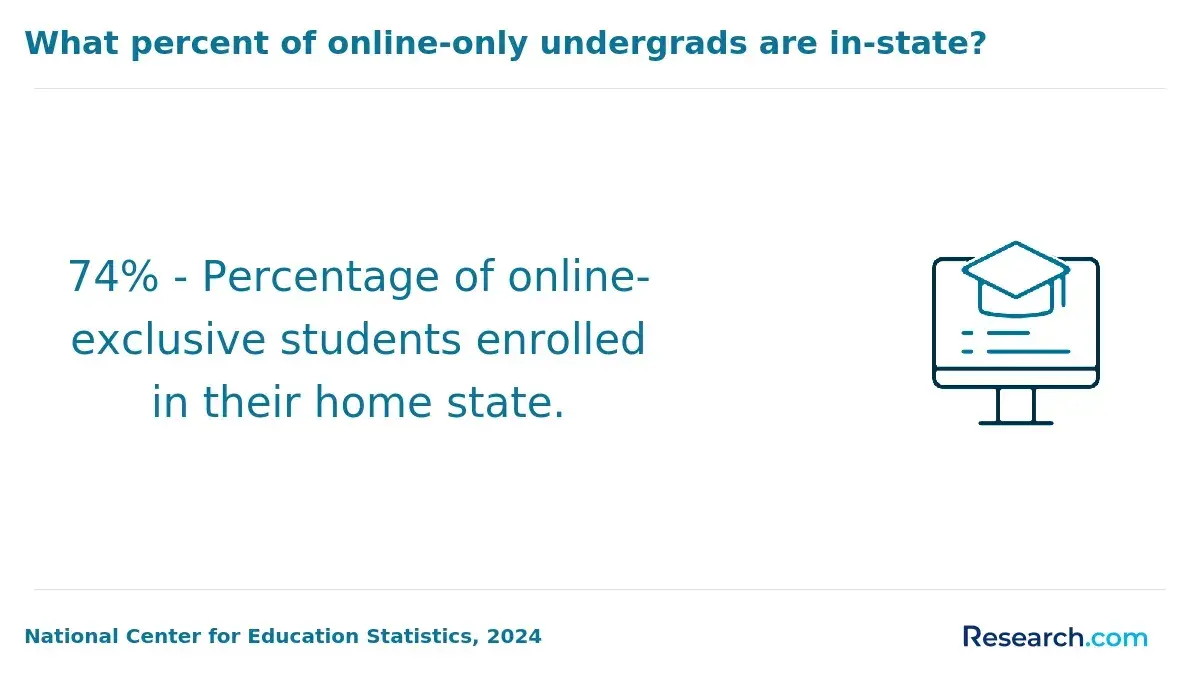
Access to applied science degree programs in states with sparse in-person options has been significantly expanded through online offerings. Many students in rural or underserved states, where on-campus programs are limited or nonexistent, rely on digital formats to bypass geographic constraints that historically hindered enrollment. According to a 2024 report from the National Center for Education Statistics, over 40% of undergraduates in applied science fields now select online modalities, highlighting a marked shift in both demand and availability driven by regional gaps in traditional program infrastructure.
The expansion of online applied science programs is enabled by key structural factors, including asynchronous course delivery that frees students from rigid schedules and location-based constraints. Institutions can now cross state lines without requiring physical presence, allowing students from Wyoming, Montana, or Alaska, for example, to enroll without relocation or expensive commuting. This shift reduces dependency on local universities and enables schools to scale their offerings nationally, addressing disparities by filling voids in state-specific program availability. Such flexibility also permits working adults to maintain employment while studying, which is critical for populations balancing financial necessity with educational advancement.
These developments foster more equitable distribution of applied science education, influencing workforce development by supporting talent pipelines in regions previously underserved by brick-and-mortar institutions. Online program accessibility also alters student enrollment flows and heightens competition among institutions contending for a geographically dispersed applicant pool. This reconfiguration has implications for how schools allocate resources and develop curricula that meet diverse regional workforce needs, potentially affecting long-term career trajectories for graduates in technology, healthcare, and engineering sectors.
One applied science graduate recalled navigating numerous delays during a rolling admissions period, initially hesitating to commit while awaiting responses from traditional campuses limited in her state. When multiple online programs finally accepted her late in the cycle, she saw an opportunity to start without relocating or pausing her part-time job. Although the uncertainty caused anxiety, the flexibility of online enrollment windows allowed her to prepare carefully and ultimately pursue a degree she might have forfeited due to timing and geographic restrictions otherwise.
How Much Does Applied Science Program Tuition Vary by State?
Applied science program tuition costs by state exhibit wide variation primarily due to differences in public funding allocations, the balance between public and private institutional offerings, and residency-based pricing structures. Public universities adjust tuition according to the degree of state financial support, which results in significantly lower tuition for in-state residents compared to out-of-state students. Private institutions, unbound by state appropriations, establish their own pricing models typically reflecting higher operational costs, thus contributing to the regional disparity in tuition rates. Additionally, state-level policies, such as differential tuition based on credit load or online versus in-person formats, further complicate these cost dynamics within and between states.
Tuition ranges demonstrate this variation concretely: public in-state tuition for applied science degrees can be as low as approximately $4,000 annually in states with substantial higher education funding like Wyoming or New Mexico, whereas states facing budget constraints, such as California and New York, may charge upwards of $12,000 per year for resident students. Out-of-state tuition often doubles these figures, creating a steep premium for nonresidents. Private colleges, which do not rely on state subsidies, generally set tuition between $20,000 and $40,000 per year for applied science programs. These figures align with data reported by sources such as the National Center for Education Statistics and state university systems, clarifying that tuition differences represent systemic budgetary and policy decisions rather than arbitrary price setting.
Regional economic conditions and institutional funding structures heavily influence these disparities, impacting student decisions and accessibility. High tuition in states with robust urban and industrial sectors may correlate with enhanced program diversity and workforce connections, yet affordability challenges can limit mobility, especially for students outside the state who face out-of-state rates. Conversely, more affordable programs in smaller or less industrialized states may restrict options in terms of program offerings and employment outcomes. For students balancing cost with employability and quality, exploring diverse pathways, including flexible options such as online programs, remains crucial. Understanding these realities is essential for selecting applied science pathways; resources like college programs for moms also highlight where cost and accessibility intersect for nontraditional students navigating these complex choices.
How Does Applied Science Program Demand Affect Admissions Decisions?
Rising demand for applied science programs frequently forces institutions to heighten selectivity, reshaping admissions criteria to manage limited enrollment capacity. As applicant volume grows, admission rates decline, sometimes sharply, especially in regions where applied science pathways align closely with local technology sectors. Institutions respond by tightening evaluation standards, emphasizing demonstrated technical competence and prior relevant experience to ensure admitted students can thrive within constrained resources and evolving program expectations.
This dynamic hinges on several operational factors, including finite faculty availability, laboratory facilities, and adherence to accreditation stipulations dictating student-to-instructor ratios. Programs must balance the need to maintain training quality with labor market requirements that increasingly privilege candidates possessing tangible applied skills, such as internships or industry certifications. The convergence of these pressures means admissions committees often filter candidates through dual lenses: capacity limits and labor-aligned competency benchmarks, which elevates competition and narrows the window for applicants lacking demonstrated hands-on proficiency.
The consequences extend to applicant behavior and program accessibility. Prospective students face mounting pressure to secure practical experience early, adjusting preparation strategies to meet heightened admissions hurdles. Concurrently, programs with high demand may cultivate stronger reputations but risk reducing equitable access, especially for non-traditional students or those from less resource-rich backgrounds. The proliferation of flexible course formats in some institutions attempts to mitigate this by accommodating diverse learners, though admissions systems remain broadly shaped by demand-supply imbalances.
One applied science graduate recalled their admissions journey marked by uncertainty amid fluctuating program popularity. They applied during a rolling admissions cycle and experienced prolonged delays in hearing back, which complicated coordinating prior internship commitments and coursework planning. Recognizing that rising applicant pressure made timing critical, they ultimately expedited documentation submission and sought early internship placements to strengthen their profile mid-process. Their experience underscored how shifting demand forces applicants to navigate an admissions landscape where timing, preparation, and strategic decision-making significantly influence outcomes.
How Do Applied Science Specialization Options Vary by Region?
Applied Science specialization offerings closely reflect the economic priorities and dominant industries within each U.S. region, shaping curricular focus and graduate skill sets accordingly. Regions with entrenched agricultural sectors, for instance, emphasize environmental and agricultural applied sciences, aligning education with local resource management needs. Conversely, areas with dense clusters of healthcare providers and research institutions, such as the Northeast, prioritize biotechnology and healthcare technology specializations to support innovation and workforce demands. Similarly, manufacturing-centric Midwestern states center programs on industrial processes and materials science, while Western states leverage technology hubs and national labs to develop expertise in renewable energy, aerospace, and data-driven applied sciences.
Variation in specialization arises from several interconnected factors including institutional research agendas, employer partnerships, and state-level workforce strategies. Universities near major manufacturing centers or medical complexes frequently tailor curricula with practical training components that directly address employer skill requirements, improving job placement prospects. The presence of leading research facilities or technology companies further steers program development toward emerging sectors such as data analytics or renewable resources. These localized alignments also reflect in workforce planning, where states target funding and support to applied science fields that forecast labor shortages or economic growth, reinforcing the cyclical relationship between education offerings and regional industry needs.
The disparities in specialization options influence student mobility and career flexibility, as geographically anchored programs often limit cross-regional transferability of skills or constrain exposure to broader interdisciplinary opportunities. According to a 2024 report by the National Center for Education Statistics, health-related specializations account for roughly 42% of applied science degree concentrations nationwide but vary significantly-from below 30% in some Plains states to over 55% in northeastern states like Massachusetts-demonstrating how regional economies shape educational focus. Prospective students and education researchers must therefore consider these regional ecosystems critically, recognizing that program availability and curriculum content not only reflect but also reinforce local labor market structures and long-term career trajectories within applied science.
How Does Regional Employer Demand Affect Career Outcomes?
regional employer demand for applied science graduates plays a decisive role in shaping job availability and early career prospects. Areas with concentrated industry clusters-such as manufacturing hubs, technology corridors, or robust healthcare systems-typically offer a wider range and higher volume of positions tailored to graduates' skills. For students assessing career outcomes for applied science degree holders by state, these regional disparities significantly impact access to relevant roles, influencing whether graduates find employment near their program or face relocation challenges.
The relationship between regional demand and career success is driven by several interconnected factors. Geographic concentrations of employers create ecosystems where universities and industries collaborate closely, often facilitating internships, apprenticeships, and direct hiring pipelines. Competitive wage structures in high-demand markets elevate salary potential, with 2024 data from the U.S. Bureau of Labor Statistics showing metropolitan areas specializing in applied science fields offering median starting salaries up to 20% above national averages. Such specialized hiring environments reinforce local retention of talent and professional development opportunities that are less available in regions with sparse employer presence.
These regional labor dynamics also influence broader career trajectories through geographic mobility decisions and adaptations to shifting work modalities, including remote roles. Graduates must weigh the tradeoffs between staying in a region with strong employer demand and pursuing opportunities in less saturated markets, recognizing that local industry vibrancy often determines long-term advancement potential. This contextual understanding helps students optimize program choices and employment strategies beyond academic considerations, integrating a realistic view of evolving regional economies and workforce supply-demand alignment. For insight into related profession income variability, see how much do forensic psychologists make.
What Factors Matter Most When Comparing Applied Science Programs Across States?
Comparing applied science degree programs across states requires looking beyond mere program availability. State-level differences significantly impact educational access, costs, specialization choices, and eventual employment outcomes. Prospective students and education researchers must consider a range of factors that reflect how regional dynamics shape program quality and workforce alignment in applied science fields.
- Program Diversity and Specialization: States with a wider array of applied science degree options-including environmental technology, health sciences, and engineering technology-offer students more focused pathways that align with evolving industry demands. The availability of specialized tracks can drastically influence a student's ability to acquire relevant skills adapted to regional economic sectors.
- Accreditation and Employer Alignment: Programs recognized by credible accreditation agencies tend to maintain curriculum rigor and meet employer expectations, which improves graduate employability. According to the 2024 National Center for Education Statistics, accredited programs correlate strongly with higher job placement rates nationwide, emphasizing the importance of vetting institutional credentials in different states.
- Regional Workforce Integration: States with programs closely tied to local industry clusters-such as manufacturing hubs or growing healthcare sectors-often provide better internship opportunities and job networking. The U.S. Bureau of Labor Statistics highlights that graduation rates and job placement success improve significantly when programs reflect regional labor market needs.
- Cost and Accessibility: Tuition rates and program delivery formats vary considerably by state, affecting affordability for both in- and out-of-state students. Increasingly, online or hybrid program structures expand access without compromising on educational quality. Evaluating financial implications alongside mode of instruction is essential for practical decision-making.
- Regional Admission Policies and Educational Infrastructure: Admission competitiveness and state investment in applied science facilities can affect program capacity and quality. Some states prioritize workforce development by funding state colleges with updated labs and equipment, which can influence hands-on training opportunities and student outcomes in applied science degree program availability by state.
For students considering specialized advanced degrees, options such as an online doctorate data science highlight the increasing trend toward flexible, industry-relevant credentials that respond to specific workforce needs. Attending to these multilayered factors will help applicants and analysts discern the true value and long-term career implications of applied science programs beyond broad state rankings.
Which Regions May See the Fastest Growth in Applied Science Education?
Growth in applied science education tends to concentrate in regions where rising employer demand, demographic shifts, and investment in higher education converge. These factors create ecosystem advantages that enable institutions to expand program offerings and align curricula with evolving workforce needs. Expansion in applied science programs usually mirrors broader economic and labor market trends, especially in technology-driven and industrial sectors.
1. Southeast: States in this region benefit from strong population growth and expanding industries in healthcare, information technology, and energy. The U.S. Department of Education noted a 12% rise in STEM enrollments in 2024 across Sun Belt states, reflecting employer-driven demand for graduates with applied science skills. Public universities and community colleges here are increasingly integrating cooperative education models, enhancing practical training and program accessibility.
2. Midwest: Economic revitalization in manufacturing hubs like Ohio and Michigan supports applied science growth through partnerships between colleges and industry. Advanced automotive and manufacturing technologies require a workforce with hands-on applied science expertise, prompting colleges to expand and specialize curricula relevant to these sectors.
3. Northeast: This region maintains a robust research university presence with interdisciplinary applied science programs bridging engineering, biotech, and environmental science. Growth potential faces constraints from high tuition and competition, but specialized programs remain prominent due to established academic infrastructure.
4. Mountain West: Growing tech startups and renewable energy projects stimulate demand for applied science graduates. Regional institutions are responding by expanding flexible credentialing and technical training pathways tailored to workforce shortages in these industries.
5. Southwest: Rapid urbanization and a diversifying economy contribute to a steady increase in applied science offerings. Community colleges and technical schools play a key role in delivering adaptable credentials aligned with regional employer requirements, supporting upward mobility for nontraditional students.
References
- The University of Applied Sciences... https://international.pwsztar.edu.pl/
- Applied Science undergraduate courses https://universitycompare.com/courses/degrees/undergraduate/applied-science
- Home - State University of Applied Sciences in Przemyśl https://international.pansp.pl/
- Top 8 Best Courses to Study in the USA for International Students https://students.studygroup.com/blog/best-courses-to-study-in-usa
- Apply - University Applied Sciences https://universityappliedsciences.com/apply/
- Best Universities of Applied Sciences in the Netherlands https://www.study.eu/article/best-universities-of-applied-sciences-in-the-netherlands
- 135 Best Applied Sciences courses abroad 2026 https://www.hotcoursesabroad.com/study/training-degrees/international/applied-sciences-courses/cgory/ra.14-4/sin/ct/programs.html
- Applied Sciences Degree Meets Job Market Demands – Alumni Satisfied with Career Progression https://www.novia.fi/en/news/news/applied-sciences-degree-meets-job-market-demands-alumni-satisfied-with-career-progression
- University vs. University of Applied Sciences - What’s the Difference? https://goingto.university/choosing-a-university/university-vs-uas/
- Universities of applied sciences https://www.research-in-germany.org/research-landscape/university-landscape/universities-of-applied-sciences.html
Other Things You Should Know About Applied Science
Employers tend to value outcome-oriented skillsets and practical experience over the sheer number of program options available in a state. Graduates from states with many applied science programs might diversify skills but risk lacking coherent training if programs are unevenly rigorous. Conversely, states with fewer but highly specialized programs often produce candidates with well-defined abilities that match industry needs. Students should assess the track record of individual schools and local employer connections rather than rely on their state's program quantity to predict employability.
States hosting many applied science programs often provide richer networking opportunities and stronger industry ties due to the density of institutional and corporate partners. However, this can also mean increased competition among students for internships and experiential learning placements. Practical implication: students should prioritize programs with demonstrated industry engagement and clear internship pipelines rather than assume all options in a populous state yield equal access. Intentionally selecting schools with quality partnerships often outweighs the benefits of sheer program numbers.
Not necessarily. While some states with many applied science programs might include flexible schedules or part-time options, others maintain traditional full-time, campus-based formats that can be demanding for non-traditional students. Students balancing work and study should carefully evaluate program delivery methods and scheduling rather than assume availability scales with program density. Prioritizing schools that explicitly support flexible learning modalities-regardless of state-better ensures successful completion and workforce reintegration.