2027 Applied Business & Technology Degree Oversupply or Undersupply? Student Volume vs Employer Demand

Co-Founder and Chief Data Scientist
A prospective student deciding whether to enroll in an applied business & technology program faces a complex landscape where graduate numbers and employer demand rarely align neatly. Recent 2024 data reveal a 12% increase in graduates nationwide, while job postings in core applied business & technology roles have only grown by 5%. This discrepancy signals a potential oversupply in certain regions, increasing competition and risking underemployment, especially where local industries lack the specific skills employers now require. For educators and career professionals, understanding these gaps is critical to guiding curriculum adjustments and individual career strategies that match evolving market needs.
This article compares applied business & technology student volume with employer demand, job growth, industry requirements, regional hiring trends, and skill shortages to clarify whether this field offers sustainable opportunities or mounting competition.
Key Things to Know About Applied Business & Technology Graduate Supply and Employer Demand
- Applied business & technology graduates exceed entry-level openings in key metro areas by 15%, indicating localized oversupply that pressures wage growth and heightens early-career competition for practical roles.
- Employer surveys reveal a 28% gap in demand for specialized cybersecurity and data analytics skills within applied business & technology cohorts, signaling persistent credential mismatches needing curricular alignment.
- Rapid enrollment growth outpaces internship availability, creating a timing and access tradeoff where students face longer credential-to-employment cycles, urging investment in experiential learning partnerships for improved outcomes.
- Key Things to Know About Applied Business & Technology Graduate Supply and Employer Demand Key Things to Know
- Is There an Oversupply or Undersupply of Applied Business & Technology Graduates? Graduate Oversupply or Shortage
- How is Applied Business & Technology Degree Enrollment Changing? Degree Enrollment Trends
- How Many Applied Business & Technology Graduates Enter the Workforce Each Year? Annual Graduate Workforce Entry
- Does Job Growth Support the Rising Supply of Applied Business & Technology Graduates? Job Growth Versus Supply
- How Competitive is the Entry-Level Market for Applied Business & Technology Graduates? Entry-Level Market Competition
- Which Industries Have the Greatest Demand for Applied Business & Technology Graduates? Top Hiring Industries
- Where are Applied Business & Technology Graduates Most in Demand? Top Geographic Demand
- Which Applied Business & Technology Specializations and Degree Levels Face the Strongest Demand? Specializations
- Are Employer Skill Gaps Affecting Demand for Applied Business & Technology Graduates? Skill Gaps
- What is the Future Supply-and-Demand Outlook for Applied Business & Technology Graduates? Future Supply-Demand Outlook
Is There an Oversupply or Undersupply of Applied Business & Technology Graduates?
Applied business & technology graduate supply does not uniformly exceed employer demand, but instead reflects complex regional and specialization-driven dynamics. While national completions in these fields have risen steadily, this volume often aligns better with projected job growth in key sectors such as technology and finance, where skills in emerging technologies combined with business acumen remain scarce.
For instance, high-technology hubs continue to report talent shortages despite increasing graduate numbers, illustrating how localized labor market conditions and employer expectations shape hiring outcomes beyond simple headcounts. This discrepancy forces graduates without niche skills or geographic mobility to compete more intensely, especially in slower-growth areas where candidate oversupply is more evident.
Graduate volumes in applied business & technology must be interpreted alongside evolving employer demand for hybrid skills, credential levels, and experience thresholds. Data from LinkedIn Workforce Insights highlight that candidates holding technical certifications paired with business expertise encounter less competition, whereas generalists face longer searches, signaling credential mismatch challenges.
Additionally, bachelor's and master's degrees tend to correspond more effectively with entry to advanced roles respectively, while associate degree holders often confront crowded local job pools lacking clear advancement pathways. Prospective students considering these factors alongside geographic realities and specialization can better evaluate the true balance reflected in applied business & technology graduate supply and employer demand. For those exploring advanced qualifications, options like affordable online MBA programs may serve as a strategic response to shifting market expectations.
How is Applied Business & Technology Degree Enrollment Changing?
Enrollment in applied business & technology degree programs has grown moderately, driven largely by expanded online offerings and hybrid formats that accommodate working adults and non-traditional students. This shift diversifies the student base but complicates using national enrollment figures to gauge local labor market balance or specialization saturation.
While associate and certificate levels see stronger volume from those seeking rapid workforce entry, bachelor's degrees face pressure from alternative credentials, and master's programs remain relatively small but strategically important for leadership roles. According to the National Center for Education Statistics, growth in online participation has increased accessibility but may also heighten regional competition for hybrid-skilled graduates, signaling that rising enrollment does not automatically imply oversupply nor a straightforward pipeline to employment.
Shifts in demographic representation, such as more underrepresented minorities entering the field, help address equity gaps but coexist with persistent gender and specialization divides that affect workforce integration. Employers' demand for candidates who merge technical skills with business acumen aligns with these enrollment changes, yet credential-level disparities caution against overestimating graduate readiness or market absorption.
Misinterpreting enrollment expansion as an unequivocal indicator of demand risks saturating certain labor market niches, especially in technology-intensive tracks dominated by men. Meanwhile, slower growth at advanced levels suggests potential bottlenecks for candidates aiming for leadership, underscoring the importance of strategic program selection reflective of evolving labor market signals.
How Many Applied Business & Technology Graduates Enter the Workforce Each Year?
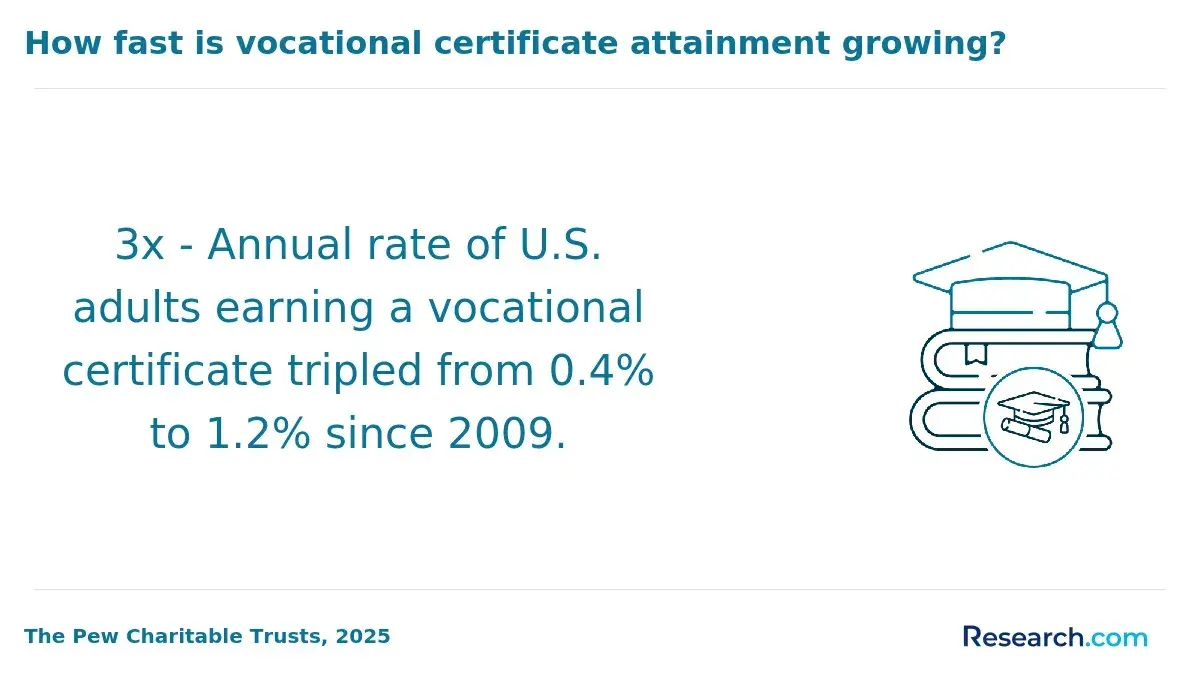
Annual graduate numbers alone cannot clarify whether applied business & technology fields face oversupply or undersupply, as workforce entry and employer demand involve complex timing, specialization, and skill alignment factors. Data from sources like the National Center for Education Statistics and Integrated Postsecondary Education Data System typically count graduates across various degree levels and delivery modes, but many do not immediately transition into directly related roles, with estimates showing only about 65% to 75% securing relevant employment within a year.
This gap reflects not just market absorption capacity but also regional hiring disparities, the prevalence of entry-level positions that may underutilize specific technical competencies, and varied employer expectations spanning business acumen and practical experience. Comparing graduate output to job openings and replacement needs reveals important nuances: graduates do not uniformly compete for identical roles nor enter the labor force synchronously, complicating simple supply-demand assessments. For example, an oversupply in digital marketing specialists on the West Coast could contrast with shortages in IT management roles elsewhere, underscoring the geographic and sectoral fragmentation inherent in these fields.
Misinterpreting aggregate graduate volume as saturation risks deterring prospective students from viable opportunities or encouraging unnecessary credential inflation, as many candidates enhance employability through certifications and internships. Thus, decision-making demands a granular understanding of local labor market signals, employer skill requirements, and workforce dynamics rather than relying solely on headline graduate counts.
Does Job Growth Support the Rising Supply of Applied Business & Technology Graduates?
Job growth in fields aligned with applied business & technology graduates appears promising in projections but often fails to match the increasing number of degree holders entering the workforce. The U.S. Bureau of Labor Statistics estimates growth between 5% and 10% for key roles, yet this pace does not fully absorb the nearly 20% rise in graduate completions seen over recent years, according to the National Center for Education Statistics.
Many employers now prioritize candidates with practical skills and relevant experience beyond formal qualifications, forcing new graduates to acquire certifications or on-the-job training to gain entry. For example, a bachelor's degree holder in project management may still face intense competition in regions with high graduate density, making local labor market dynamics a critical factor for job seekers.
Employer demand versus graduate supply in applied business and technology varies significantly by specialization and geography, complicating workforce entry. Replacement demand from retirements creates openings in some slower-growing industries, while rapidly expanding sectors demand hybrid skill sets that newcomers may lack. This discrepancy often leads to underemployment or requires geographic mobility for those without niche expertise.
Prospective students should be cautious of relying on generic job-growth numbers alone and consider how well their skills align with evolving employer expectations. Those exploring alternative pathways could also examine specialized fields, including game design degree programs, where regional shortages may offer distinct opportunities.
How Competitive is the Entry-Level Market for Applied Business & Technology Graduates?
The entry-level job market for applied business & technology graduates in 2024 remains distinctly competitive, shaped by both the volume of new degree holders and nuanced employer demands. Despite steady growth in job postings, recent graduates frequently encounter experience thresholds that limit access to open roles.
This dynamic points less to outright oversupply and more to a complex interplay of skills mismatches, regional concentration, and employer preferences. Understanding these factors allows graduates to navigate the job landscape with greater strategic intent. Key elements influencing the hiring environment include:
- Graduate Volume Pressure: The increasing number of graduates outpaces the creation of entry-level roles, intensifying competition particularly where applicants lack demonstrable work experience. Applicants must benchmark openings against graduate cohorts to gauge true demand.
- Experience Expectations: Employers commonly request one to two years of relevant experience even for initial positions, pushing fresh graduates to seek internships or project-based opportunities to remain competitive.
- Sector and Regional Variability: Urban hubs with robust tech and business sectors offer more positions but also attract larger applicant pools, while smaller markets often have fewer roles but less saturated competition, influencing job-search geography decisions.
- Skill Specialization: Credentials and targeted technical skills frequently differentiate candidates, as generalist degrees tend to face weaker demand in specialized roles requiring niche expertise.
- Remote Work Influence: The rise of remote and hybrid models broadens applicant pools beyond local areas, heightening competition but also providing access to diversified opportunities.
- Underemployment Trends: A significant share of graduates accept roles outside their discipline to build experience, reflecting job availability gaps in their preferred career tracks.
- Employer Demand Growth: Data from the U.S. Bureau of Labor Statistics and Lightcast suggest applied business & technology job postings have increased 5-7% annually, signaling steady if uneven demand expansion affecting entry-level hiring.
Which Industries Have the Greatest Demand for Applied Business & Technology Graduates?
Demand for applied business & technology graduates is concentrated in industries undergoing intensive digital transformation and operational complexity. Employers prioritize candidates who combine technical skills with business insights to enhance efficiency and competitive advantage.
However, job availability, competition, and advancement potential differ significantly across sectors and regions. For example, a graduate weighing offers in financial services versus healthcare must consider higher competition in finance and stronger regional clustering in healthcare, alongside varying expectations for practical experience and certifications.
Navigating this landscape requires understanding industry-specific trends and employer expectations to align skills with market realities. The top industries driving employer demand for applied business & technology graduates include:
- Technology Sector: Dominated by software development, cloud computing, and cybersecurity, this sector demands expertise in IT management, data analytics, and business process optimization. Entry-level roles often focus on technical support and analysis, while advanced positions involve innovation leadership. Employers favor candidates with hands-on project experience and knowledge of emerging technologies.
- Healthcare Services: Growth in digital health records, telemedicine, and healthcare analytics creates demand for professionals who understand both clinical workflows and technology. Common roles include health information managers and technology coordinators. Certifications related to healthcare IT and familiarity with regulatory compliance are highly valued.
- Manufacturing & Logistics: The integration of automation and smart factory systems drives the need for graduates skilled in supply chain management software and digital transformation leadership. Employers seek candidates capable of optimizing operational workflows and implementing technology-enabled solutions across production and distribution.
- Financial Services: Fintech expansion and reliance on digital risk management platforms foster roles in digital marketing and platform development. While opportunity exists, competition is intense due to the allure of this sector among diverse business and IT graduates. Practical experience with financial software and analytics tools is important.
- Retail Sector: E-commerce growth and customer insight analytics underlie steady demand for graduates who can bridge technology and business strategy. Employers look for skills in digital marketing, consumer data analysis, and platform integration, typically favoring candidates with project-based experience.
- Regional Tech and Healthcare Hubs: Demand is often localized, with clusters in metropolitan areas influencing job volume and career trajectory. Geographic considerations affect access to internships and networking, which are critical for demonstrating relevant experience.
Applied business & technology graduates considering career options can also explore flexible educational credentials like an online MBA with no GMAT, which may enhance competitiveness where leadership, strategic insight, and cross-disciplinary skills are prerequisites.
Where are Applied Business & Technology Graduates Most in Demand?
National data on demand for applied business & technology graduates often masks significant regional disparities driven by distinct economic ecosystems and workforce pipelines. For instance, a graduate targeting Silicon Valley faces a different hiring landscape than one in the Southeast, as local industry density and employer specialization profoundly shape job openings and required skill sets.
Even popular metro areas with sizable opportunities, like Dallas or Atlanta, vary on factors such as cost of living, competition intensity, and alignment with sector-specific niches, which directly influence hiring outcomes and career trajectory. Choosing a saturated market with many graduates but limited new employers can result in fierce competition and slower entry-level hiring despite high headline job counts.
Regions with acute workforce needs-where education output lags behind demand-often offer stronger practical value and onboarding potential, though sometimes at the expense of relocation challenges or narrower specialization paths. Employers in sectors blending business strategy with emerging technologies, including health IT or fintech, may prioritize adaptable candidates capable of cross-disciplinary roles, particularly in growing but less crowded tech hubs.
According to 2024 labor statistics, metropolitan areas investing heavily in digital infrastructure experience some of the fastest job-posting growth, reflecting how infrastructure and industry mix dictate local demand more than raw population size alone. Graduates should weigh these dynamics carefully to balance immediate job access against long-term role fit and regional quality-of-life considerations.
Which Applied Business & Technology Specializations and Degree Levels Face the Strongest Demand?
Employer demand within applied business & technology specializations does not distribute evenly; instead, it concentrates in areas combining technical skills with strategic business insight. Graduates with bachelor's degrees in traditional business administration often face stiffer competition due to greater graduate volume and evolving employer preferences for hybrid technical competencies. By contrast, fields emphasizing technology integration tend to experience stronger, more persistent demand, especially when paired with relevant certifications.
For example, a bachelor's graduate in cybersecurity typically encounters more immediate job opportunities than a peer with a generic business degree, while a master's holder in project management with technology skills is positioned for higher-responsibility roles in dynamic sectors. Data from the U.S. Bureau of Labor Statistics and LinkedIn Workforce Insights underscore that employers increasingly prioritize candidates demonstrating proficiency in emerging technologies alongside applied business knowledge.
The following specializations currently show the strongest demand:
- Cybersecurity Bachelor's: High employer demand stems from escalating cyber threats across industries. Roles often require security certifications and experience with risk mitigation in finance, healthcare, and government sectors, where data protection is critical.
- Data Analytics and Business Intelligence Master's: Employers seek advanced analytical skills to translate large datasets into actionable strategies. This specialization supports positions in consulting, marketing, and supply chain optimization requiring both technical tools proficiency and business acumen.
- Information Systems Management Bachelor's: Demand reflects the need for professionals who can bridge IT operations and business goals. Regional manufacturing and logistics hubs particularly value these graduates for managing enterprise software and process automation.
- Project Management with Technology Integration Master's: This pathway prepares candidates for leadership in cross-functional teams managing technology-driven initiatives. Certifications such as PMP complement the degree to meet employer expectations in tech firms and large corporations.
- Supply Chain and Operations Technology Bachelor's: Strong growth in global logistics and e-commerce drives demand for candidates proficient in inventory systems and process analytics. Employers prioritize practical experience with software platforms and real-time data management.
Are Employer Skill Gaps Affecting Demand for Applied Business & Technology Graduates?
The current labor market reflects not a simple shortage of applied business & technology graduates, but a shortage of candidates who meet evolving employer criteria centered on applied experience, digital proficiency, and specialization relevance. Even when graduate volumes appear sufficient, many openings remain unfilled because employers prioritize candidates with demonstrated skills in emerging technologies such as artificial intelligence tools, automation software, and cybersecurity fundamentals integrated within a business context.
This distinction is critical: hiring managers often weigh communication abilities, certifications tied to industry standards, and familiarity with relevant business processes as heavily as formal degree credentials, which can leave new graduates competing intensely for roles where these requirements are unmet. Regional demand for applied business & technology graduate skills varies significantly, influenced both by local industry composition and the alignment between educational program offerings and market needs.
Graduates who have secured internships, engaged in project-based learning, or obtained targeted certifications tend to perform better in these competitive markets, as employers seek candidates who can reduce onboarding time and contribute immediately to digital transformation initiatives. Misreading the demand as oversupply may deter timely skill development, while underestimating competition in entry-level roles can result in protracted job searches and credential mismatch. Prospective students and current degree holders should consider the practical impact of curriculum alignment with employer expectations and explore avenues such as the best library science programs for comparative approaches to bridging theory and practice.
What is the Future Supply-and-Demand Outlook for Applied Business & Technology Graduates?
Graduates in applied business & technology often improve job search outcomes significantly by focusing on targeted applications rather than indiscriminate volume. Prioritizing entry-level roles with job titles explicitly aligned to their skill sets and emphasizing industries and regions with stronger demand creates a more efficient alignment of effort to opportunity.
For instance, a recent graduate who concentrates on positions within states exhibiting persistent demand for these skills, especially in manufacturing, logistics, or tech sectors, is more likely to move beyond initial applicant screening than one scattering applications indiscriminately across oversaturated urban markets. Tailoring resumes to mirror employer language and showcasing relevant project experience or internships further distinguishes candidates in a competitive job market.
Applied business & technology graduates should invest effort in thorough market research to understand evolving expectations such as proficiency in data analytics or adaptive learning capabilities influenced by automation and AI integration. Timing applications to coincide with active hiring cycles, engaging in strategic networking, and demonstrating tangible job readiness can enhance conversion rates from interview to offer without relying on generic tactics.
This approach aligns with the future job market trends for applied business and technology graduates, where supply growth competes with selective demand emphasizing practical, outcome-oriented qualifications rather than credentials alone. Understanding the regional demand forecast for applied business and technology degrees helps graduates decide where to allocate their job search intensity. Some may also consider educational options like a 1 year MBA to sharpen hybrid business-technical credentials, but this tradeoff should weigh cost, duration, and specific career goals rather than serve as a catch-all solution.
References:
- Bridging the Gap: Equipping Business Graduates with the Skills and Mindset for Tech Success https://knowledge.essec.edu/en/innovation/equipping-graduates-tech-success.html
- Does Britain have too many graduates? https://theconversation.com/does-britain-have-too-many-graduates-46349
- The tech job market is rough for entry-level workers right now. Here's how Gen Z is dodging the downtrend. https://www.businessinsider.com/gen-z-tech-entry-level-job-market-2025-6
- Learn about The 10 Most In- Demand Majors. https://studyfans.com/en/blogs/970
- Calling all parties: Oversupply of graduates might hinder economic growth - AIESEC | Blog https://blog.aiesec.org/oversupply-graduates-might-hinder-economic-growth/
- Top Degrees in Demand for the Future: 2026 & Beyond https://skillifysolutions.com/blogs/career-growth/top-degrees-in-demand-for-the-future/
- Oversupply of College Graduates? Structural Mismatch! | PIIE https://www.piie.com/blogs/china-economic-watch/oversupply-college-graduates-structural-mismatch
- How Graduates Can Find Jobs as Entry-Level Roles Change - think-mba.com https://think-mba.com/how-graduates-can-find-jobs-when-entry-level-roles-are-changing/
- The Most In-Demand Degrees for Tomorrow's Job Market: Building a Career in the AI-Driven Economy https://iirfranking.com/blog/artificial-intelligence/the-most-in-demand-degrees-for-tomorrows-job-market-building-a-career-in-the-ai-driven-economy
- Top Majors in Demand for Best Employability – EU Business School https://www.euruni.edu/blog/top-majors-in-demand-for-best-employability/
Other Things You Should Know About Applied Business & Technology
Students must critically evaluate how program structure aligns with employer priorities, especially regarding practical skills versus theoretical knowledge. Programs heavy on foundational theory but light on hands-on projects or current technologies may hinder job readiness despite the degree's name. Prioritizing programs that integrate internships, real-world simulations, and industry-standard tools often better positions graduates to meet specific employer demands and reduce time-to-productivity on the job.
Specializing can offer clearer alignment with niche employer needs, potentially increasing immediate job prospects in targeted roles. However, overly narrow credentials risk limiting adaptability as industry needs evolve, particularly in fast-changing sectors. Broad credentials provide flexibility but may require graduates to pursue additional certifications or experience to stand out. Candidates must balance immediate market fit against long-term career resilience when choosing the degree focus.
Programs with high workload and demanding technical components typically cultivate deeper competency but may reduce accessibility for students balancing work or life obligations. Those who succeed under intensive programs often report better preparedness and networking access, which employers value. Conversely, lighter programs might attract larger cohorts but produce graduates who need more on-the-job ramp-up, influencing employer hiring preferences and salary offers.
Yes, selecting a program requires an honest assessment of long-term career goals beyond initial employment. Bachelor's degrees often open broader promotional tracks than certificates or associate degrees, which might be suited for entry-level roles but can stall advancement. Employers frequently view higher degree levels as indicators of problem-solving ability and perseverance, highlighting the need to prioritize comprehensive credentialing when upward mobility is a key objective.