
2027 Which Cybersecurity Degree Careers Offer the Best Return Without Graduate School?

Co-Founder and Chief Data Scientist
As education costs soar, many career changers weigh the benefit of pursuing graduate school versus entering the workforce directly with a bachelor's degree. In cybersecurity, where the demand for skilled professionals is rapidly increasing, approximately 33% of job postings require only a bachelor's degree or less.
This trend suggests strong opportunities for those aiming to maximize income without further schooling. Identifying degree careers within cybersecurity that offer the best return on investment without graduate education is vital for minimizing student debt and accelerating career growth. This article explores those pathways and highlights which roles provide robust earnings and stability.
Key Benefits of Cybersecurity Degree Careers That Offer the Best Return Without Graduate School
- Strong earning potential and early salary growth in cybersecurity roles enhance long-term return on investment, with median starting salaries above $70,000 nationwide.
- Consistently high job demand and projected growth rates over 30% through 2030 provide career stability and financial security.
- Accessible entry requirements without graduate education enable faster entry into the workforce, reducing upfront costs and accelerating career advancement.
Which Cybersecurity Careers Offer the Best Return Without Graduate School?
Evaluating return on investment (ROI) is crucial when selecting cybersecurity careers, especially for bachelor's degree holders who do not plan to pursue graduate education. The U.S. Bureau of Labor Statistics reports a median annual wage of approximately $103,590 for information security analysts, demonstrating strong salary potential within this field.
Understanding which roles combine competitive pay with career longevity and advancement possibilities helps highlight the best options for those seeking cybersecurity degree careers with high salary potential.
Here are several cybersecurity jobs without graduate degree requirements that offer a balanced and enduring return:
- Information Security Analyst: This role involves designing and implementing protective measures for computer systems and networks. Constant cyber threats drive ongoing demand, and the blend of technical expertise with strategic oversight supports sustained career growth and stability.
- Network Security Administrator: Focused on securing an organization's network infrastructure, this position entails vulnerability monitoring and firewall management. Its strong ROI stems from consistent need across sectors and clear paths to senior roles such as network or security architect.
- Security Software Developer: Developers in this specialty build applications that defend against cyber breaches. Combining cybersecurity fundamentals with software development skills ensures versatility and a long-lasting career as software security remains critical.
- Cybersecurity Consultant: Consultants provide guidance on digital asset protection and compliance matters. By serving a diverse range of clients, they enjoy ongoing career opportunities and the flexibility to progress without a graduate degree.
What Are the Highest-Paying Cybersecurity Jobs Without a Master's Degree?
Evaluating earning potential in cybersecurity careers without pursuing a master's degree is essential for students focused on entering the workforce quickly with strong financial benefits. The U.S. Bureau of Labor Statistics reports that the median annual wage for information security analysts was approximately $103,590 in 2022, demonstrating solid salary prospects at the bachelor's level.
Below are several high-paying cybersecurity roles available without graduate education.
- Information Security Analyst: These professionals earn between $85,000 and $130,000 annually by developing and enforcing security protocols that protect organizations from cyber threats. Their role is vital in maintaining data security, which explains their competitive salaries without needing a master's degree.
- Security Engineer: Security engineers design and implement secure network solutions and typically make $90,000 to $140,000 per year. Their advanced technical expertise to prevent cyberattacks positions them among top earners without graduate credentials.
- Penetration Tester: Also known as ethical hackers, penetration testers identify system vulnerabilities by simulating attacks, earning roughly $80,000 to $130,000 annually. The specialized skills they bring result in strong compensation.
- Cybersecurity Consultant: Consultants advise organizations on risk management and security strategies, with salaries ranging from $90,000 to $150,000 yearly. Their broad industry knowledge and client management responsibilities contribute to high pay at the bachelor's level.
Each of these roles exemplifies attractive earning potential for online bachelor degree holders seeking well-paying cybersecurity careers without graduate study.
Which Industries Offer High Salaries Without Graduate School?
Selecting the right industry plays a significant role in maximizing salary for professionals holding a bachelor's degree in cybersecurity. Wage differences across sectors can reach more than 30%, driven by varying demand, budget priorities, and regulatory pressures.
Below is a review of key industries known for offering attractive compensation without requiring advanced degrees.
- Finance and Banking: This sector invests heavily in protecting financial data and combating fraud, which results in lucrative pay for cybersecurity experts. Typical salaries range from $80,000 to $130,000 annually, reflecting the high stakes involved in securing sensitive customer information and meeting strict compliance demands.
- Information Technology and Services: IT companies managing complex networks and cloud environments need robust cybersecurity defenses, supporting salaries generally between $75,000 and $120,000. Persistent innovation and the need for cybersecurity across software platforms sustain strong compensation.
- Healthcare: With growing concerns over patient data breaches, the healthcare sector values cybersecurity roles that ensure privacy and regulatory compliance. Salary ranges commonly extend from $70,000 to $115,000, driven by the urgency to protect expanding digital health infrastructures.
- Government and Defense: Agencies focusing on national security require cybersecurity professionals to safeguard critical systems, often offering stable pay exceeding $80,000. This industry benefits from reliable funding and specialized needs that reward experienced bachelor's level candidates.
When asked about which industries offer strong earnings without advanced schooling, a cybersecurity degree graduate mentioned struggling initially to navigate sector options. "It wasn't simple deciding where to apply because each field had unique challenges," he explained.
He recounted the complexity of assessing how different industries valued hands-on skills versus certifications, adding, "I focused on sectors that emphasized practical experience and budget allocations for cybersecurity, which helped me find a role with a solid salary without further schooling." This perspective highlights the personal evaluation process behind choosing industries that balance compensation with educational background.
Selecting entry-level cybersecurity roles with strong advancement opportunities is vital for building a successful career. The U.S. Bureau of Labor Statistics projects a 35% growth in information security analyst jobs from 2021 to 2031, reflecting significant demand in early career stages.
Below are key positions that provide solid foundations for long-term growth.
- Security Analyst: This role involves monitoring systems and addressing security threats, offering hands-on experience with real-time incidents. It establishes skills useful for advancing into senior analyst or threat intelligence roles.
- Security Administrator: Focused on managing access controls and enforcing security policies, this position develops both technical and administrative expertise. It opens doors to careers in security architecture and infrastructure management.
- Penetration Tester: Also known as an ethical hacker, this job tests system vulnerabilities proactively. It strengthens problem-solving abilities and leads to specialized positions such as red team leader or security consultant.
- Incident Responder: Responsible for analyzing and mitigating active cyberattacks, this fast-paced role builds crisis management skills. It can propel professionals toward threat hunting or security operations center leadership.
For those exploring pathways to enter cybersecurity without advanced degrees, options like pursuing a cheapest online counseling degree can complement technical experience by enhancing communication and problem-solving skills important in team-based cybersecurity environments.
Building targeted skills plays a crucial role in boosting salaries for cybersecurity degree holders without graduate education. Research shows that professionals with specialized skills can earn up to 20% more than those without focused expertise.
Below are several key abilities that notably increase earning potential in this field.
- Cloud Security Expertise: Proficiency in securing cloud platforms is highly sought after as businesses move critical operations online. Knowing how to identify and mitigate cloud-specific risks enhances an organization's defenses and justifies higher compensation.
- Programming and Scripting: Skills in languages like Python or PowerShell enable automation of security processes and effective threat analysis. This technical versatility improves problem-solving speed, making those professionals more valuable and better paid.
- Incident Response and Forensics: Quickly detecting and managing cyber incidents helps prevent costly damage. Mastery in forensic methods also supports thorough investigations, which raises a professional's market worth.
- Risk Assessment and Management: The ability to evaluate and prioritize cybersecurity threats supports strategic security planning that aligns with business objectives. This competency drives better decisions, increasing organizational value and salary potential.
When I spoke with a professional holding a cybersecurity degree, she shared how expanding her scripting skills opened doors to higher-paying roles that didn't require a master's degree. She recalled feeling challenged early on when automating security tasks but saw her efficiency improve drastically over time.
"It was frustrating at first," she noted, "but gaining that proficiency made me stand out and earn noticeably more." Her experience highlights how focusing on practical, transferable skills can provide meaningful financial rewards without additional formal education.
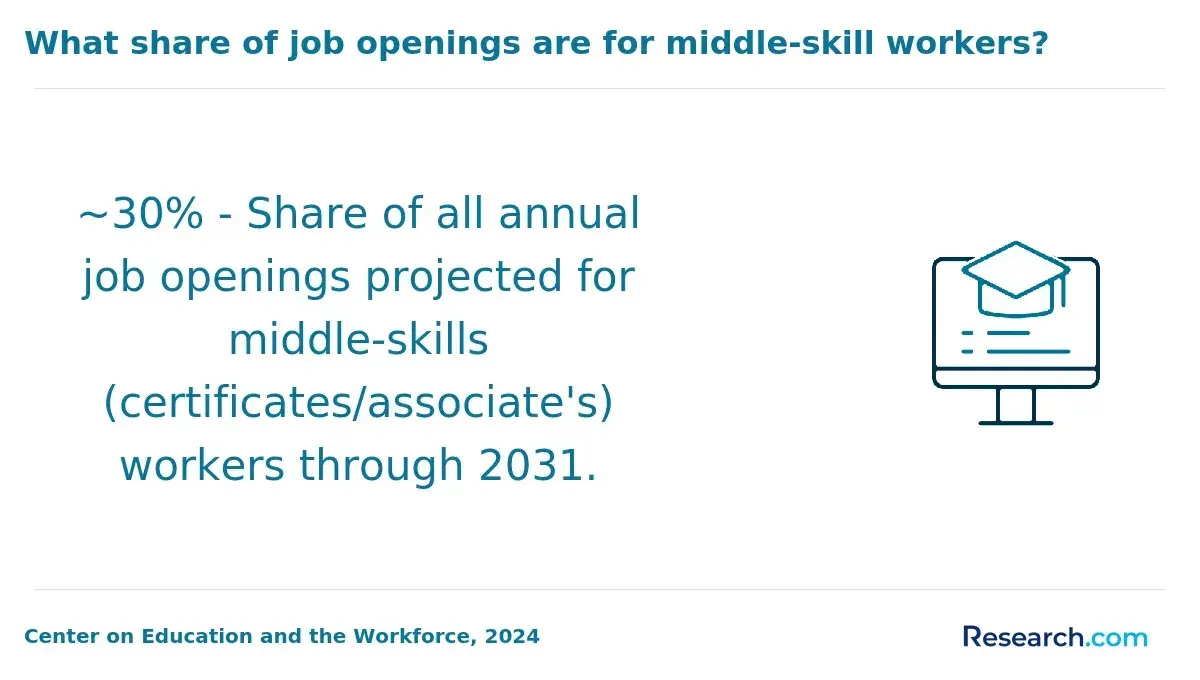
Certifications offer a practical and recognized way to validate skills in cybersecurity, often providing an effective alternative to earning a master's degree. Research shows professionals holding certain cybersecurity certifications can see salary increases averaging up to 15% compared to those without credentials.
Below are several respected certifications that enhance career prospects and professional credibility in this field.
- Certified Information Systems Security Professional (CISSP): This certification demonstrates comprehensive expertise across multiple cybersecurity domains including risk management and asset protection. It is widely respected by employers and supports advancement into leadership and high-responsibility positions.
- Certified Ethical Hacker (CEH): CEH focuses on penetration testing and vulnerability discovery, providing hands-on skills to proactively identify and counter threats. It is especially relevant for professionals involved in offensive security and threat analysis.
- CompTIA Security+: Serving as a broad foundational credential, Security+ covers essential security principles useful across various cybersecurity roles. It validates core knowledge and helps in progressing towards more specialized or senior positions.
- Certified Information Security Manager (CISM): Targeted at those overseeing governance and risk management, CISM signals capability in developing and managing security programs. This credential is valuable for professionals moving into strategic and managerial cybersecurity roles.
- GIAC Security Essentials (GSEC): Emphasizing applied skills over theory, the GSEC certification is designed for candidates who want to prove they can address real-world cybersecurity challenges, making them appealing to employers seeking well-rounded practitioners.
Professional experience often plays a crucial role in career advancement within cybersecurity, as many employers prioritize demonstrated skills, hands-on problem-solving, and proven performance over formal graduate degrees. On-the-job learning and real-world challenges provide practical knowledge that can be immediately applied, making experience a strong asset.
Internships, certification-backed roles, and entry-level positions help professionals build this expertise, which is highly valued across the industry. As a result, many specialists and engineers rise to senior roles by continuously expanding their skills rather than relying solely on advanced education.
However, relying exclusively on experience has its limitations, especially when entering higher-level positions or research-focused roles that often require graduate credentials to satisfy corporate policies or industry expectations. These credentials can open doors to leadership, consulting, or policy-making positions that may be less accessible otherwise.
Experience becomes most valuable in organizations that emphasize skills-based hiring and certifications such as CISSP, CEH, or CISM. In such environments, a portfolio of successful projects combined with relevant certifications can often match or exceed the career growth opportunities afforded by graduate education.
Many cybersecurity professionals weigh the trade-offs of stopping their education at a bachelor's degree, especially when considering career advancement and salary potential. Data from the Bureau of Labor Statistics shows that individuals with a master's degree in cybersecurity often earn about 20% more than those without graduate education.
The following points outline key limitations that arise when a graduate degree is not pursued.
- Slower Career Advancement: Certain senior or specialized roles, such as cybersecurity manager or architect, typically require or prefer candidates with graduate degrees. This limits upward mobility for professionals relying solely on a bachelor's degree, particularly in competitive job markets focused on advanced credentials.
- Reduced Access to Specialized Roles: Graduate programs often provide deeper technical knowledge in areas like cryptography and threat intelligence. Without this training, it can be harder to compete for niche roles demanding highly specialized expertise within cybersecurity career advancement without a graduate degree.
- Salary Limitations: There is a measurable earnings gap between bachelor's degree holders and those with graduate education. Employers tend to assign more complex tasks to advanced-degree holders, reflecting in overall compensation differences for cybersecurity professionals without graduate education.
- Competitive Hiring Disadvantages: Certain industries, including government and finance, maintain strong preferences for graduate credentials, which can reduce job prospects for those without master's degrees due to rigorous qualification standards and security clearance requirements.
- Limited Networking Opportunities: Graduate studies often facilitate connections with faculty, peers, and professionals that lead to internships, research projects, and job placements. Forgoing graduate education might mean missing valuable relationships that support long-term career growth.
For those considering other advanced degrees outside cybersecurity, an easiest online MSW program is one example of a graduate option with different career trajectories and requirements.
Return on investment (ROI) in education measures how effectively the time and money spent earning a degree translate into career earnings and opportunities. For a cybersecurity bachelor's degree, the balance between tuition costs and study duration relative to salary growth is crucial. According to the Georgetown University Center on Education and the Workforce, cybersecurity professionals have a median mid-career salary exceeding $90,000.
To maximize this ROI, consider the following strategic approaches.
- Focus on High-Demand Specializations: Concentrate on fields like network security, penetration testing, or cloud security that employers consistently seek. Specializing enhances job prospects and accelerates salary advancement.
- Pursue Early Hands-On Experience: Internships and cooperative education opportunities provide practical skills and improve starting salary potential by showcasing real-world readiness.
- Target Strong Cybersecurity Employers: Aim to work in sectors such as finance, healthcare, or government that prioritize cybersecurity and typically offer higher budgets for these roles.
- Leverage Career Mobility: Seek early promotions and lateral moves within cybersecurity roles to gain diverse experiences and leadership opportunities, which can boost compensation faster.
- Engage in Continual Learning: Stay updated on emerging cybersecurity threats and technologies through projects or research during your degree, building a competitive advantage without requiring graduate education.
For those exploring alternatives or complementary fields, programs like the fastest online business degree can offer additional career growth pathways. Applying these strategies helps prospective students maximize return on investment with a cybersecurity degree while focusing on best strategies for career growth with a cybersecurity bachelor's degree.
Deciding whether to pursue graduate school in cybersecurity depends largely on individual career objectives, industry expectations, and the anticipated return on investment. On average, professionals with an advanced degree earn about 20% more than those holding only a bachelor's degree. However, this advantage varies by job function and employer requirements.
For students evaluating graduate school benefits for cybersecurity professionals, it's crucial to weigh how additional education complements their target roles. To explore alternative paths with strong salary growth, reviewing careers that don't require graduate degrees can be enlightening.
Graduate education often proves valuable for accessing specialized roles like cryptography or advanced threat intelligence, as well as for progressing into leadership tracks. It also plays a strategic role in fields requiring rigorous certifications or government clearances.
Research-oriented careers focused on driving innovation within cybersecurity tools and techniques frequently necessitate a master's or higher degree. Prospective students interested in accelerated pathways may consider programs such as an accelerated masters in psychology as a model for efficient graduate study that aligns with career ambitions.
What Graduates Say About Cybersecurity Degree Careers That Offer the Best Return Without Graduate School
- Louis: "Choosing not to pursue a graduate degree after completing my cybersecurity program was a deliberate decision that saved me time and financial stress. Instead, I focused on obtaining industry certifications and gaining practical experience through internships. This approach allowed me to quickly step into a rewarding role and see the real-world impact of my degree without the added burden of graduate school."
- Zain: "Reflecting on my career, I realized that the best return on my cybersecurity degree came from continuous learning and networking rather than immediately going for a graduate degree. I took extra courses in coding and threat analysis while building relationships with professionals in the field, which opened doors to opportunities I never anticipated. Practical skills and connections proved more valuable than an advanced diploma in my experience."
- Myles: "My journey in cybersecurity has been shaped by a professional mindset focused on maximizing my bachelor's degree through targeted certifications and hands-on projects. Skipping graduate school allowed me to enter the workforce sooner and leverage real cybersecurity challenges to grow. This path not only boosted my confidence but also contributed significantly to my advancement within the industry without the need for additional formal education."
Other Things You Should Know About Cybersecurity Degrees
Networking is crucial for advancing in cybersecurity careers without a graduate degree. Building professional relationships can lead to job opportunities, mentorship, and access to industry insights. Joining cybersecurity groups, attending conferences, and participating in online communities helps create a strong professional presence.
Yes, internships and hands-on experience are highly valuable and often essential for graduates without advanced degrees. They provide practical skills that employers seek and demonstrate your ability to apply theoretical knowledge in real-world situations. These experiences can significantly enhance your resume and employability.
In 2027, industry certifications continue to be vital for cybersecurity professionals without a graduate degree. They validate skills, demonstrate expertise to employers, and often lead to better job opportunities and higher salaries, making them a valuable investment for career advancement in this rapidly evolving field.
CompTIA Security+ is the fastest entry point, and ISC2 Certified in Cybersecurity (CC) also helps for junior roles. For higher-paying jobs, employers often ask for CompTIA CySA+, Cisco CCNA, or AWS Certified Security – Specialty, with Security+ commonly meeting baseline U.S. Department of Defense 8570 requirements.
- Top Entry-Level Cybersecurity Jobs https://www.quickstart.com/blog/cyber-security/entry-level-cybersecurity-jobs-for-beginners-in-the-us/
- Top 10 Highest-Paid Cybersecurity Jobs (With Salaries) https://destcert.com/resources/highest-paid-cybersecurity-jobs/
- 8 Entry-Level Cybersecurity Roles Without a Degree https://www.dice.com/career-advice/8-entry-level-cybersecurity-roles-without-a-degree
- Cybersecurity Career Without a Degree: How To (2026) https://unihackers.com/blog/cybersecurity-career-without-degree
- Cybersecurity Certificates, Certifications and Degrees: How to Choose | CompTIA Blog https://www.comptia.org/en-us/blog/cybersecurity-certificates-certifications-and-degrees-how-to-choose/
- 20 Coolest Cybersecurity Careers and Jobs | SANS Institute https://www.sans.org/cybersecurity-focus-areas/cybersecurity-careers/20-coolest-cyber-security-careers
- Is A Cyber Security Degree Worth It? | Top 10 Reasons https://cyber-security.degree/resources/is-a-cyber-security-degree-worth-it/
- 10 Reasons Why a Cyber Security Degree is Worth It https://umsafoundation.org/10-reasons-why-a-cyber-security-degree-is-worth-it/
- Cybersecurity ROI Calculator - Programs.com https://programs.com/resources/cybersecurity-roi-calculator/
- Is a Cybersecurity Degree Worth It in 2026? - tripleten.com/blog https://tripleten.com/blog/posts/is-a-cybersecurity-degree-worth-it


