2027 What Requirements Do You Need for an Online Environmental Engineering Bachelor's Degree? Admission Rules, Credits & Eligibility

Co-Founder and Chief Data Scientist
Many prospective students face uncertainty when exploring online environmental engineering bachelor's degrees, especially those switching from unrelated fields. Understanding the specific admission criteria, credit transfer policies, and eligibility requirements is crucial to avoid wasted time and resources. Notably, 65% of students enrolling in online environmental engineering programs report needing clear guidance on prerequisites and credit evaluation before application.
This confusion can delay career shifts by months or even years. This article clarifies the typical requirements for online environmental engineering bachelor's programs, outlining admission rules, credit expectations, and eligibility standards to streamline informed decision-making and support timely enrollment.
Key Benefits of Preparing for Online Environmental Engineering Bachelor's Degree Requirements
- Choosing the right online environmental engineering program is crucial; ensure it offers regional accreditation and aligns with your career goals in sustainability and infrastructure development.
- Maximize transfer credits by confirming course equivalencies and credit policies to save time and tuition, as up to 60% of credits may transfer in some programs.
- Completing your degree opens access to jobs in a growing sector, with a 5% projected employment increase in environmental engineers through 2031, making career outlook strong.
What are the basic eligibility requirements to apply for an online environmental engineering bachelor's degree?
Eligibility in undergraduate online admissions means meeting the basic criteria required to apply for a program but does not guarantee acceptance or enrollment. For online environmental engineering bachelor's degrees, eligibility confirms that applicants have the foundational qualifications needed to submit an application.
These standards, often based on guidelines from the U.S. Department of Education and regional accreditation bodies, act as minimum checkpoints before admissions committees review details like minimum GPA and standardized test score requirements for online environmental engineering programs. Criteria focus on academic credentials, age, citizenship, and residency status to ensure candidates are prepared for college-level work and compliance with institutional policies.
While requirements vary across schools, common eligibility elements include:
- High School Diploma or Equivalent: A high school diploma or GED is essential, demonstrating secondary education completion necessary for college readiness.
- Minimum Age Requirement: Most programs require applicants to be at least 17 or 18 years old at enrollment, reflecting typical undergraduate entry ages.
- Residency or Citizenship Status: Proof of U.S. citizenship, permanent residency, or valid visa status is often mandatory to meet federal and institutional enrollment regulations.
- Proof of English Proficiency: Non-native English speakers usually must submit scores from tests like TOEFL or IELTS to certify academic communication skills.
- Accreditation and Transfer Credit Policies: Ensuring the program is regionally accredited helps with credit transferability and access to financial aid. Understanding transfer credit policies is vital for maximizing credit efficiency and affordability on your path to degree completion.
Prospective students should gather all relevant documents and consult each program's admissions office directly to verify specific eligibility criteria. For further information on affordable educational pathways including financial aid guidance, consider reviewing online SLP masters programs as a resource to explore cost-saving strategies and credit transfer practices in online degrees.
What is the minimum GPA required for admission to an online environmental engineering bachelor's degree program?
The minimum GPA required for admission to an online environmental engineering bachelor's degree program varies by institution. Many schools accept a cumulative high school GPA of 2.0, while more selective programs often require a 2.5 or higher. However, the average GPA needed for admission to environmental engineering bachelor's degree online programs is rarely the sole factor considered.
Admissions teams typically use a holistic review process that includes class rank, standardized test scores, and letters of recommendation alongside GPA to evaluate an applicant's overall academic preparedness.
Some programs differentiate between weighted and unweighted GPAs. A weighted GPA accounts for course difficulty such as honors or Advanced Placement classes, potentially elevating a candidate's profile.
Unweighted GPAs treat all courses equally on a traditional 4.0 scale. Students with GPAs near the threshold may still earn conditional or probationary admission, contingent on successful progress during initial semesters.
Applicants should calculate or self-report GPA accurately when completing applications. Using official transcripts or trusted online GPA calculators that factor in course grades and credit hours can ensure precision. For those seeking the cheapest online university options, understanding these GPA nuances and how programs evaluate academic readiness is essential before applying.
- Varying GPA Thresholds: Minimum GPA requirements typically range from 2.0 to 2.5 depending on the selectivity of the program and institution.
- Holistic Admissions Review: GPA works alongside test scores, class rank, and recommendation letters in evaluating a student's overall academic readiness.
- Weighted vs. Unweighted GPA: Some schools consider weighted GPAs which include course difficulty, while others rely on unweighted GPAs that treat all classes equally.
- Conditional Admission Options: Students with GPAs near the cutoff may qualify for probationary acceptance contingent on successful progress in early semesters.
- Accurate GPA Reporting: Using official transcripts or reliable calculators helps applicants provide precise GPA information when submitting applications.
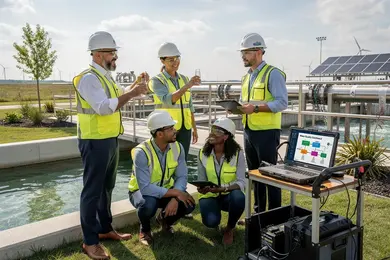
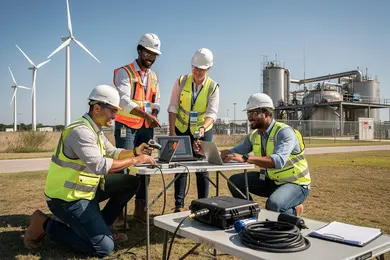
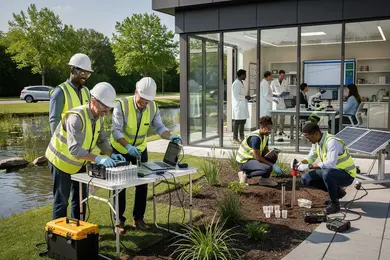
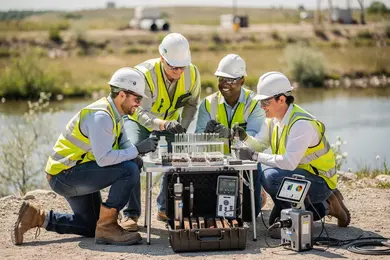
2026 Update: Checking Online Lab and Fieldwork Requirements Before Applying
For 2026, this section adds guidance on practical completion requirements that may not appear in basic admission checklists but can affect whether an online environmental engineering program fits your schedule and location.
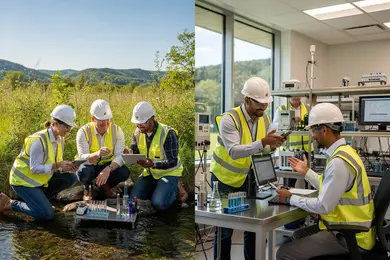
- Confirm whether required science and engineering labs are fully online, completed with lab kits, or offered through short campus visits.
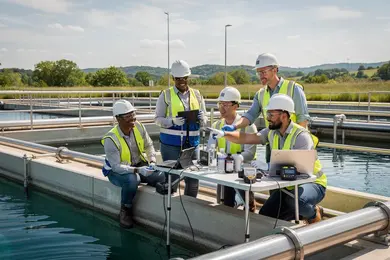
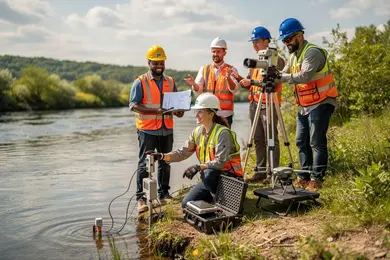
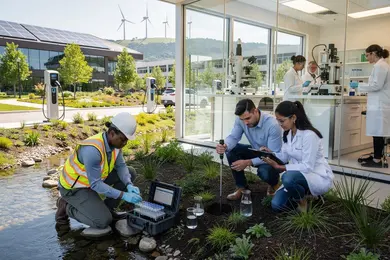
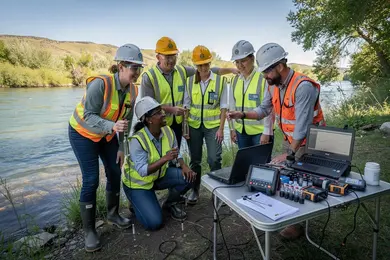
- Ask if environmental sampling, water quality testing, or field observation activities must be completed at approved local sites.
- Check whether lab courses have fixed meeting times, live sessions, or strict sequencing with lecture courses.
- Review any safety training, equipment, software, or proctored lab assessment requirements before enrolling.
- Find out whether travel, lodging, lab materials, or site fees are separate from tuition.
- Ask how missed lab or fieldwork sessions are handled, especially if you work full time.
Reviewing these details early helps students avoid unexpected scheduling barriers and choose a program they can realistically complete online.
Do online environmental engineering bachelor's degree programs require SAT or ACT test scores?
Many online bachelor's programs in environmental engineering, especially those aimed at adult learners or transfer students, have shifted to test-optional or test-free admissions. This change encourages broader access by recognizing that standardized exams like the SAT or ACT may not fully reflect the abilities of non-traditional applicants. Since 2020, an increasing number of accredited institutions have removed these score requirements to accommodate diverse educational experiences.
However, some specialized tracks within environmental engineering programs, including honors courses and merit-based scholarships, may still require standardized test scores. These scores help identify applicants with strong academic potential. Typically, competitive programs look for SAT scores ranging from 1200 to 1350 or ACT scores between 25 and 30, based on publicly available data from prominent universities.
Since testing policies frequently change and vary greatly between schools, applicants should carefully review each program's admissions page to confirm current requirements. The College Board reports that over 80% of STEM bachelor's programs nationwide embraced test-optional policies as of 2023, highlighting a significant national trend toward flexibility in standardized testing.
- Test-Optional Admissions: Many programs now allow applicants to apply without SAT or ACT scores, making entry easier for returning students and those with varied academic paths.
- Test Score Requirements: Some selective tracks and scholarship opportunities still favor applicants who submit competitive SAT or ACT scores as part of their application.
- Typical Score Ranges: Most competitive environmental engineering programs look for SAT scores between 1200 and 1350 or ACT scores from 25 to 30 to gauge readiness.
- Policy Differences: Testing rules differ widely by school, so confirming each program's current policies through their official admissions websites is essential.
- Growing Trend: Over 80% of STEM bachelor's degrees adopted test-optional policies by 2023, underscoring a widespread movement toward admissions flexibility.
A professional who enrolled in an online environmental engineering bachelor's program shared that navigating admissions was initially confusing because test score policies weren't clearly stated on all school websites. He mentioned feeling relieved when a counselor confirmed that his lack of recent SAT scores wouldn't be a barrier, adding "It was a relief not having to retake tests after so many years away from school." He also noted that understanding scholarship criteria upfront helped him prepare a stronger application with other achievements documented, showing practical advice for future students weighing test requirements.
How many total credit hours are needed to complete an online environmental engineering bachelor's degree?
Most online environmental engineering bachelor's degree programs require around 120 semester credit hours (SCH) for completion, though some majors may demand up to 128 or 130 credits. These totals account for core environmental engineering courses, general education, electives, and hands-on projects like capstones or practicums.
General education classes usually cover 30 to 40 credits in subjects such as math, science, and communication, while 50 to 60 credits focus on specialization within environmental engineering. The remaining credits typically include electives and experiential learning components.
Credit systems differ between institutions, with some using semester credit hours and others quarter credit hours. One semester credit hour equates to roughly 1.5 quarter credit hours, so students transferring between calendar systems should carefully convert credits to understand their academic progress. Prior learning credits, including Advanced Placement (AP) exams, College-Level Examination Program (CLEP) tests, or military experience, often reduce the total credits required, helping accelerate degree completion.
- Credit Hour Requirements: Total credits generally range from 120 to 130, blending core courses, general education, electives, and practical work like internships or capstones.
- Semester versus Quarter Credits: Most institutions use semester systems, but quarter hours must be converted accurately for credit transfers.
- Course Distribution: Expect about one-third of credits in general education, half in environmental engineering specialization, and the remainder in electives and experiential learning.
- Prior Learning Credits: AP tests, CLEP exams, and transfer credits can shorten the path, reducing course loads significantly.
- Practical Experience Components: Capstone projects or internships are typically 6 to 9 credits, offering essential real-world application.
For adults balancing work or returning students, efficiently mapping credits can be vital. Exploring pathways such as paralegal certificate programs may also offer insights into credit transfer strategies for accelerated learning.
What high school courses or prerequisites are required before enrolling in an online environmental engineering bachelor's degree?
Students aiming to enroll in an online environmental engineering bachelor's program typically need to complete specific high school courses that prepare them for demanding technical studies. Essential prerequisites generally include algebra, geometry, calculus, chemistry, physics, biology, and English composition, as these subjects build a strong foundation in math, science, and communication skills crucial for the discipline.
While social studies and environmental science classes are not usually required, they can enhance a student's understanding of environmental contexts and improve application strength. Many students can leverage dual enrollment or community college courses to earn transferable credits before starting their degree, potentially reducing overall study time.
For those missing some prerequisites, bridge or remedial classes offered by some schools can provide a pathway to admission. However, these additional courses may extend the duration needed to complete the degree.
- Hard Prerequisites: Completion of advanced math and science courses like algebra, calculus, chemistry, and physics plus English composition is commonly mandatory to ensure academic readiness.
- Recommended Coursework: Environmental science and social studies enrich contextual knowledge but typically don't affect admission eligibility.
- Dual Enrollment Credits: Community college classes taken during high school can satisfy prerequisites and accelerate degree completion.
- Remedial Pathways: Bridge courses help students lacking prerequisites but may prolong total time to graduation.
- Academic Foundation: Strong skills in math and sciences form the core for success in environmental engineering curricula.
A professional who built a career after earning an online environmental engineering bachelor's degree shared that the challenge was not just meeting prerequisite requirements but managing self-paced remedial courses.
She recalled feeling uncertain at first about lacking calculus and physics credits but appreciated the structured support of bridge classes. "The process was a bit daunting," she explained, "but having access to those courses allowed me to stay on track without redoing high school." This experience highlighted the importance of proactive planning and leveraging available resources to balance prerequisites with work and family commitments.
Can transfer credits count toward an online environmental engineering bachelor's degree, and how many are accepted?
Most accredited colleges allow students to transfer between 60 and 90 credits toward an online environmental engineering bachelor's degree, though exact limits vary by institution. Transfer-friendly schools often have formal agreements with community colleges, particularly for 2+2 programs, which clearly specify which credits transfer seamlessly. In contrast, institutions with stricter policies may restrict credit acceptance due to curriculum differences or accreditation demands, requiring students to complete more coursework directly with them.
When assessing transfer credits, admissions and registrar offices thoroughly review official transcripts to confirm course content, earned grades, and the prior institution's accreditation. Transfer courses must closely align with required environmental engineering or related prerequisites; courses that differ significantly or are outdated may be rejected. Additionally, some programs mandate key foundational classes-like calculus, chemistry, or physics-to be completed within their curriculum, limiting transferred credits in these areas.
- Credit Limits: Most programs cap transfer credits between 60 and 90 hours to ensure students complete a substantial portion of major coursework at the degree-granting institution.
- Transcript Evaluation: Official transcripts undergo detailed review for content relevance, grade qualifications, and institutional accreditation.
- Course Equivalency: Only courses matching core environmental engineering prerequisites with similar depth and scope are accepted as transfers.
- Prerequisite Restrictions: Some essential courses must be finished at the enrolling school, limiting transfer eligibility for foundational subjects.
Prospective students should request an official transfer credit evaluation during their application to clarify how many credits will apply. Recent studies reveal that about 75% of transfer students who secure evaluations before enrollment experience smoother progress and fewer unexpected credit rejections.
Does accreditation status affect admission requirements for an online environmental engineering bachelor's degree?
Accreditation status significantly impacts admission requirements and the overall value of an online environmental engineering bachelor's degree. Institutional accreditation, which can be regional or national, is awarded by agencies recognized by the Council for Higher Education Accreditation (CHEA) or the U.S. Department of Education. This ensures the quality of the institution and affects credit transferability, degree recognition by employers, and acceptance into graduate programs.
- Institutional Accreditation: Regional or national accreditation confirms that a college meets established quality standards, making credits more transferable between schools and enhancing degree acceptance by employers and advanced programs.
- Programmatic Accreditation: Certain environmental engineering programs hold discipline-specific accreditation such as from ABET. These accreditations may require additional admission criteria or prerequisite coursework, maintaining standards important for licensure and professional certification.
- Credit Transferability: Degrees from regionally accredited institutions generally allow smoother credit transfers. Conversely, credits from unaccredited or nationally accredited schools may not be accepted, limiting options for program changes or graduate study.
- Licensing and Employment: Many employers and state licensing boards prefer or mandate degrees from accredited programs. Graduating from such programs is often required to sit for professional engineering licensure exams and to gain reputable employment.
- Research and Verification: Students should verify accreditation status via official CHEA databases before applying. A recent study shows over 85% of employers explicitly check accreditation when evaluating engineering graduates.
Prospective students should inquire about both institutional and programmatic accreditation during admissions counseling. This knowledge helps ensure their degree holds professional and academic value, supports credit efficiency, and aligns with licensing requirements for environmental engineering careers.
What documents do you need to apply for an online environmental engineering bachelor's degree program?
Official Transcripts: Most online environmental engineering bachelor's programs require official high school transcripts to verify academic history. If you have completed any college coursework, submit those official college transcripts as well. Unofficial transcripts may be accepted initially, but official documents are usually necessary before enrollment. Gathering these transcripts is a key step in fulfilling the required application materials for online Environmental Engineering bachelor's programs.
Government-Issued ID: A valid government-issued identification, such as a passport or driver's license, is essential. This confirms your identity and residency status, which is especially important for U.S.-based programs subject to state or federal compliance requirements.
Application Essays: Many programs request essays to evaluate your motivation, goals, and fit for environmental engineering. These essays should be well-crafted and reflect your genuine interest and understanding of the field.
Supplementary Materials: More selective schools might ask for additional documents such as a portfolio of relevant projects, letters of recommendation from teachers or employers, a résumé highlighting pertinent experience, or a personal statement detailing your career aspirations.
Official vs. Unofficial Documents: Official documents are sealed and sent directly from the issuing institution, while unofficial versions are copies you provide yourself. International students applying to U.S.-based online programs must submit certified translations of transcripts and other documents not originally in English, ensuring verification standards are met.
Time Management: Start gathering all required documents at least three to four months before the application deadline. Whether dealing with rolling admissions or semester-based deadlines, early preparation will help you submit a strong application without delays.
Before applying, ask admissions offices about transfer credit rules, minimum GPA and test score policies, accreditation standards, English language proficiency requirements, and financial aid options. This helps position yourself for the most affordable, credit-efficient path to earn your environmental engineering degree. For those exploring new career directions, consider the career change for teachers higher pay insights to strategize your professional growth effectively.
Are there English language proficiency requirements for non-native speakers applying to an online environmental engineering bachelor's degree?
Most accredited U.S. online environmental engineering bachelor's degree programs require non-native English speakers to demonstrate language proficiency through standardized tests. These requirements ensure that students can effectively comprehend course materials, communicate within academic settings, and successfully complete assignments.
- Accepted Tests: Commonly accepted exams include the TOEFL iBT, IELTS Academic, and the Duolingo English Test. Each evaluates core language skills such as reading, writing, listening, and speaking.
- Typical Score Requirements: Undergraduate programs usually expect TOEFL iBT scores ranging from 61 to 80 or IELTS band scores between 6.0 and 6.5. Similar thresholds apply for the Duolingo English Test to indicate adequate proficiency.
- Exemptions: Applicants from English-speaking countries or those who have completed at least three years of study in English-medium schools or universities often qualify for waivers. This helps recognize prior demonstrated English competence without additional testing.
- Conditional Admission Options: Several online environmental engineering programs may offer conditional admission paired with an ESL or academic English bridge program when applicants nearly meet score requirements. This pathway supports language skill improvement before full enrollment.
Prospective students should contact admissions offices to clarify specific English proficiency policies and whether conditional admission or exemptions apply. Understanding these criteria, along with minimum GPA, test score policies, accreditation standards, and transfer credit rules, will help applicants prepare their documents and plan the most affordable, credit-efficient path to their environmental engineering degree. Many programs also provide financial aid opportunities to support enrollment.
For applicants exploring STEM fields in general, resources like the online physics bachelor's degree guide can offer additional insights into affordable online education options, complementing the choice of pursuing an environmental engineering online bachelor's degree.
Do online environmental engineering bachelor's degree programs accept CLEP exams or prior learning credits?
The College-Level Examination Program (CLEP) enables students to earn college credit by passing standardized exams across multiple subjects. A score of 50, as advised by the American Council on Education (ACE), can grant undergraduate credit at more than 2,900 colleges nationwide. However, each institution's acceptance of CLEP varies, with some online environmental engineering programs allowing broad credit use and others limiting it to general education classes.
Beyond CLEP, students may earn credit through other prior learning assessments (PLAs) such as DANTES/DSST exams, portfolio evaluations, or documentation of professional certifications, military service, and work experience. Policies for these credits differ by school, so gathering information early is essential.
Contacting the registrar or admissions office at your target school is crucial to understand how prior learning credits apply to your degree. Using these credits can lower tuition costs and shorten the time needed to complete an environmental engineering bachelor's degree.
- CLEP Credit Policies: Acceptance and applicability of CLEP scores depend on the institution, with some programs applying them to core courses while others restrict them to electives or general education.
- Additional Prior Learning: Credits may come from DANTES/DSST exams, portfolios, or professional experience, but institutional approval is required.
- Early Communication: Contacting schools promptly helps clarify credit transfer rules and reduces admission delays.
- Cost and Time Reduction: Prior learning credits can accelerate degree completion and lower expenses, making the program more affordable.
Are there residency or in-state tuition requirements that affect enrollment in an online environmental engineering bachelor's degree?
Many public universities grant in-state tuition rates to online students regardless of where they live, often through the State Authorization Reciprocity Agreement (SARA). SARA is a collaborative framework among member states that allows schools to provide online programs to students outside their state without breaching state authorization laws. This makes access to out-of-state online programs simpler while complying with local regulations.
Nonetheless, some universities still apply higher out-of-state tuition fees for online environmental engineering degrees. It is essential to confirm tuition policies with admissions or financial aid offices before starting to avoid unexpected costs and better prepare financially. Students aiming for in-state tuition benefits usually must prove residency with documents such as utility bills, voter registration cards, or driver's licenses.
- State Authorization Reciprocity Agreement: SARA unifies rules across member states, reducing barriers for institutions to deliver online education to non-resident students.
- Tuition Differences: While many schools offer in-state rates to online learners, some charge out-of-state fees. Checking these policies early supports better budgeting.
- Residency Proof: Establishing eligibility for in-state tuition often requires submitting official documents showing residency within the state.
- Verification Importance: Confirming policies and required paperwork with the school before enrollment safeguards against surprises and ensures optimal tuition rates.
What Graduates Say About Preparing for the Online Environmental Engineering Bachelor's Degree Requirements
- Sandy: "Starting my journey with a clear understanding of the admission requirements for the online environmental engineering bachelor's degree made all the difference. Knowing exactly what was needed upfront allowed me to focus on what mattered most and submit a strong application. The program truly equipped me with practical skills that have accelerated my career growth in sustainable infrastructure."
- Patricia: "I appreciated how thoroughly the university explained their credit policies and eligibility criteria before I enrolled in the online environmental engineering bachelor's program. This knowledge helped me maximize my prior coursework and transfer credits, reducing the time and cost of completing my degree. Reflecting back, being proactive about these details was the smartest decision I made to ensure a smooth academic experience and open new professional opportunities."
- Frederick: "Pursuing an online environmental engineering bachelor's degree has had a profound impact on my professional path. From day one, understanding the exact admission guidelines and credit policies gave me confidence and clarity. The program's rigorous curriculum combined with flexibility helped me balance work and study, ultimately leading to a promotion and new responsibilities in my field."
Other Things You Should Know About Environmental Engineering Degrees
Most online environmental engineering bachelor's degree programs take about four years of full-time study to complete. Part-time students or those transferring credits may require additional time, typically extending the program to five or six years depending on course load and credit transfer policies.
In 2027, prerequisites typically include a high school diploma or equivalent, with coursework in mathematics (such as calculus), science (physics and chemistry), and possibly an introductory environmental science class. Some programs may require standardized test scores like the SAT or ACT, though requirements can vary by institution.
Some programs offer flexible admission criteria for adult learners, including consideration of work experience or prior military service in place of traditional test scores. Working professionals may also benefit from credit for prior learning or competency-based assessments to accelerate degree completion.
References
- Academic Catalog https://academic-catalog.uscupstate.edu/academic-regulations/credit-prior-learning/
- Accreditation | Civil & Environmental Engineering https://www.unr.edu/cee/about/environmental-engineering-accreditation
- World's Largest platform as University Common Application https://www.planstudyabroad.uniagents.com/course-details.php
- Bachelor of Science in Environmental Engineering University of Arizona https://www.hotcoursesabroad.com/india/course/us-usa/bachelor-of-science-environmental-engineering/57350872/program.html
- Bachelor of Civil Engineering (Environmental) with Honours - UTAR https://study.utar.edu.my/civil-engineering-environmental.php
- Enviromental Engineering in English (spec. Modern Engineering in Water Management) - Warsaw University of Life Sciences https://www.sggw.edu.pl/en/kierunki-sggw/enviromental-protection-in-english-spec-modern-engineering-in-water-management/
- Engineering School Admissions Requirements - GPA, GRE, SAT https://www.onlineengineeringprograms.com/faq/admissions-requirements-for-engineering-school
- Accreditation - ABET https://www.abet.org/accreditation/
- Environmental engineers:Requirements https://gwulaw.vault.com/professions/environmental-engineers/requirements