
2027 What Jobs Can You Get With a Physics Bachelor's Degree?
Audited and Verified:
Our Editorial and Data Verification Process
Research.com uses government datasets, official education statistics and primary institutional information to support its career and degree guides. Our review process checks factual accuracy, occupational definitions, source dates and the requirements associated with the credentials discussed.
How This Article Was Fact-Checked
Our editorial team verifies salary estimates, employment projections, education requirements and program information against original data providers and official organizations. Salary figures are checked against the relevant occupational definitions and reporting periods. Information about licensure, accreditation and required in-person training is reviewed separately.
Fact-checked and verified on:

Co-Founder and Chief Data Scientist
Graduates holding a physics bachelor's degree often face uncertainty about where their skills fit in the job market. The degree's broad scientific foundation can apply to diverse industries, yet many wonder which roles align best with their training and career goals. According to the American Institute of Physics, about 70% of physics bachelor's graduates find employment within six months of graduation, often in fields beyond pure research.
Understanding the career pathways available is crucial for making strategic choices post-graduation. This article explores the variety of jobs accessible to physics degree holders and aims to clarify viable options for career planning.
Key Benefits of the Jobs You Can Get With a Physics Bachelor's Degree
- Jobs with a physics bachelor's degree provide versatile career options across industries such as engineering, data science, and finance, adapting to evolving market demands.
- Graduates often secure competitive salaries, with median starting income around $65,000, and strong potential for advancement based on technical expertise.
- The degree supports long-term growth by fostering analytical skills valuable in research, technology, and leadership roles, enabling diverse and sustainable career pathways.
What Entry-Level Jobs Can I Get With a Physics Bachelor's Degree?
A physics bachelor's degree opens the door to several entry-level job opportunities where graduates can apply foundational knowledge and skills in real-world settings. About 55% of graduates with bachelor's degrees in science fields, including physics, secure roles closely related to their major within the first year of graduation. This statistic highlights the strong alignment between physics education and early career employment.
Here are some common entry-level jobs for physics bachelor's degree holders within the physics field:
- Laboratory Assistant: Laboratory assistants support experimental research by preparing equipment, conducting measurements, and maintaining lab safety. A physics degree provides familiarity with scientific instruments and experimental procedures essential for these tasks.
- Research Technician: Research technicians collaborate with scientists to collect and analyze data during research projects. The mathematical and analytical skills gained through a physics program enable graduates to interpret data patterns and troubleshoot experiments.
- Quality Control Analyst: Quality control analysts use problem-solving skills to test and evaluate products or materials, ensuring they meet required standards. Coursework in materials science and instrumentation offers a solid foundation for accurate testing methods.
- Technical Support Specialist: This role focuses on assisting with the operation and maintenance of technical equipment, often in scientific or engineering settings. Physics graduates' understanding of electronic systems helps them diagnose and resolve technical issues effectively.
- Data Analyst (Entry-Level): Although data analyst positions are common across STEM fields, physics graduates' strong quantitative and computational skills make them well-suited for interpreting data trends and building models based on scientific principles.
These positions leverage core competencies developed throughout a physics bachelor's degree, such as analytical thinking and quantitative reasoning, allowing graduates to contribute professionally from the start. For students exploring career options, a physics bachelor's degree is a strong foundation, and for those interested in quick credential options, exploring a 6 month degree course might also be beneficial in certain technical areas related to physics.
What Industries Hire Physics Bachelor's Degree Graduates?
A bachelor's degree in physics opens opportunities across multiple industries, with demand for graduates varying significantly based on specific skills and areas of specialization. Employer demand for candidates holding bachelor's degrees in STEM fields, including physics, remains strong, as many organizations highly value the analytical and problem-solving capabilities these graduates bring. This trend reflects the continuing need for skilled professionals in technical and scientific roles.
Several top employers for physics degree holders across various sectors actively recruit graduates to leverage both their theoretical knowledge and practical expertise.
- Technology and Engineering: Physics graduates are prized for roles in product development, hardware design, and systems analysis. Their background in electronics, materials science, and mechanics supports engineering consultancy and quality assurance positions.
- Energy and Environmental Science: This sector offers opportunities in developing renewable energy solutions, nuclear power, and methods for environmental monitoring. Physics skills contribute to innovations in energy efficiency and managing sustainable resources.
- Research and Development: Industries such as aerospace and defense rely on physics graduates for experimental research, data modeling, and prototype creation. Their expertise in experimental techniques and theoretical modeling drives advancements in technology.
- Information Technology and Data Science: Physics programs cultivate strong analytical abilities crucial for software development, computational modeling, and complex data analysis, making graduates valuable in these growing fields.
- Education and Science Communication: Many physics degree holders pursue careers in teaching, instructional design, and public science outreach, effectively conveying complex concepts to diverse audiences.
Understanding the demand and tailoring your skillset accordingly can enhance career prospects. For those considering a physics degree, exploring degrees that make the most money can also inform your educational choices and career planning.

Can You Get Jobs Outside Your Major With a Physics Bachelor's Degree?
Graduates holding a physics bachelor's degree often explore career opportunities outside the traditional confines of their major. This flexibility is driven by their versatile skill set and the changing demands of today's job market. Research shows that nearly 40% of STEM graduates end up working in areas unrelated to their initial field of study.
- Transferable Skills: Coursework in physics strengthens abilities like analytical reasoning, complex problem solving, and quantitative data analysis. These skills are highly sought after in various sectors, allowing graduates to fit well in roles beyond purely scientific ones.
- Hiring Preferences: Employers frequently value critical thinking and technical know-how more than the exact major on a resume. Physics graduates gain an advantage because their education highlights strong logical abilities and computational expertise applicable across a wide spectrum of jobs.
- Experience and Training: Internships, research participation, and practical work enhance employability outside physics. Additionally, pursuing extra training or certifications in complementary areas such as coding or management can broaden the scope of career options available to these graduates.
These aspects combined enable physics bachelor's degree holders to navigate a diverse employment landscape and secure rewarding positions beyond their original academic focus.
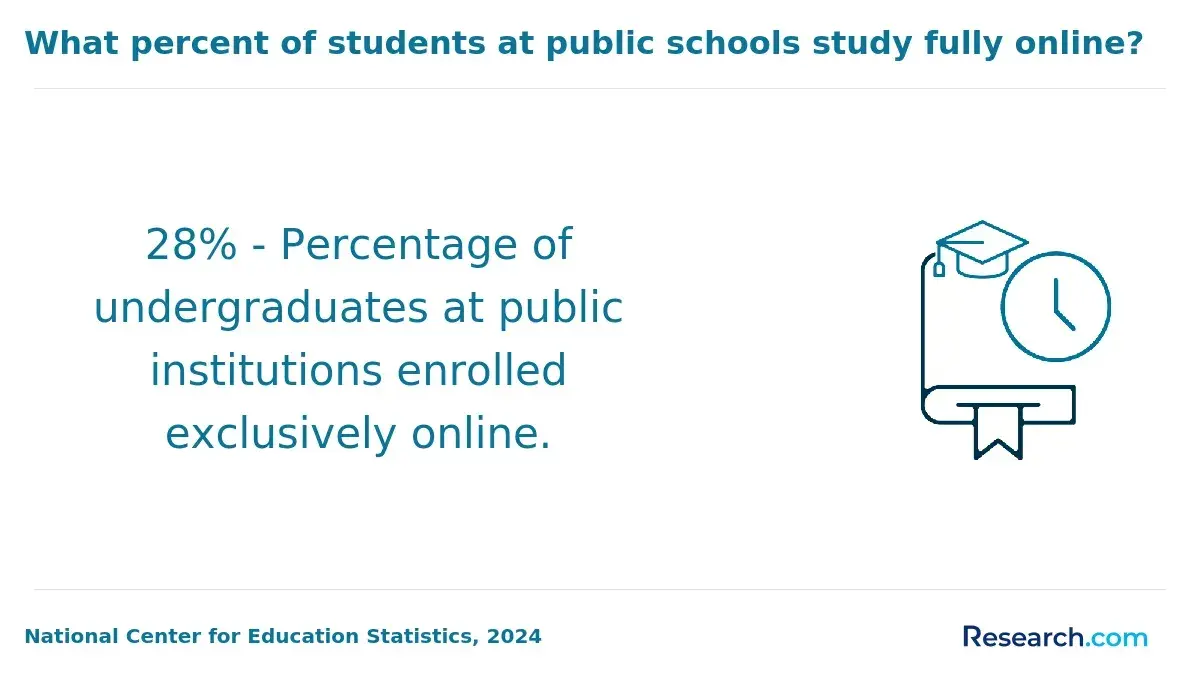
Breakdown of Private Fully Online For-profit Schools

Remote work continues to expand across many fields, with recent surveys showing that over 60% of employers are willing to offer remote positions when possible. For graduates holding a physics bachelor's degree, this shift opens doors to roles that capitalize on their analytical skills and technical knowledge while allowing work from any location.
- Data Analyst: This role involves interpreting and managing complex datasets using statistical tools and programming languages developed during physics studies. The position often relies on virtual collaboration and clear communication with diverse teams.
- Software Developer: Physics graduates with coding experience contribute by designing and maintaining software systems, using logical problem-solving skills honed through their degree. Remote teams depend on version control systems and effective digital teamwork, requiring adaptability and time management.
- Technical Writer: Crafting clear, concise documentation or research summaries is central to this role, benefiting from a physics graduate's ability to simplify complex ideas. Written communication and meeting deadlines are especially important for remote success.
- Research Assistant: Many research-related tasks-such as simulations, data analysis, and literature reviews-can be completed remotely. Physics graduates provide valuable support to scientific projects, showcasing discipline and the capacity for productive virtual collaboration.
One graduate I spoke with reflected on navigating her first remote data analyst position. She described initial challenges adapting to online communication tools and managing her schedule independently. Over time, she grew confident balancing collaboration with self-directed work, noting that her physics training helped her "stay organized and approach problems systematically." She emphasized that strong remote work habits developed gradually but significantly enhanced her professional growth.
Many professionals with a physics bachelor's degree build upon it to change careers, thanks to the adaptable skill set the degree cultivates and shifts in workforce needs. Studies reveal that nearly 30% of STEM graduates move into different occupations within several years after finishing their degrees. This trend reflects the broad foundation physics programs provide, focusing on analytical and problem-solving abilities that extend beyond conventional physics roles. For those exploring career change options for physics graduates, the versatility of the degree is a key asset, opening doors across various fields.
A physics degree fosters transferable skills like effective communication, strong analytical thinking, adaptability, and complex problem-solving, supporting successful career switches. Additional factors that enhance transition success include gaining relevant experience through internships, on-the-job training, and self-directed learning to acquire new technical knowledge. Networking within target industries and practical exposure further strengthen this adaptability. For individuals interested in broadening their professional qualifications, pursuing an office administration degree online can also complement their background and improve their employability in diverse sectors.
Earning potential for individuals with a physics bachelor's degree varies considerably depending on the industry, level of experience, and area of specialization. Graduates often find that their strong analytical and quantitative skills open doors to high-paying careers, with salaries generally surpassing the average for bachelor's degree holders. Over time, those who build expertise and tackle more complex challenges can see their compensation rise substantially.
- Data Scientist: Data scientists leverage their ability to analyze large volumes of information to uncover trends and inform strategic decisions. Physics graduates are well-suited for this field because of their proficiency with statistics and computational modeling. Salaries typically range between $85,000 and $130,000, increasing with technical skills and experience.
- Quantitative Analyst: Often called "quants," these professionals develop mathematical models to evaluate financial risk and price assets. A physics background provides the mathematical rigor and problem-solving ability essential for success. Entry salaries start near $90,000 and may exceed $150,000 as expertise grows.
- Optical Engineer: This role involves designing devices that control or utilize light, such as lenses, lasers, and imaging systems. Physics-focused knowledge in optics and electromagnetism is crucial. Compensation ranges from about $75,000 to $120,000 depending on project scope and employer.
- Software Engineer: Many physics graduates transition into software development where logical thinking and math skills are invaluable. This role offers salaries from $80,000 up to $130,000, with higher earnings linked to programming ability and experience.
- Medical Physicist (Entry-Level/Assistant Roles): Supporting applications in radiation therapy and medical imaging, these positions benefit from a physics foundation. Starting salaries are near $70,000, with significant growth potential as practical skills and certifications develop.
A bachelor's degree in Physics offers a strong foundation for long-term career development and advancement across diverse roles. Graduates often progress into positions of higher responsibility, such as supervisory or project management roles where they oversee teams and complex projects. Developing specialized expertise in areas like computational modeling or instrumentation can lead to roles focused on research and technical problem-solving. Additionally, gaining experience may open doors to leadership and cross-functional positions, enabling professionals to bridge communication between departments and influence strategic decisions. This blend of scientific knowledge and transferable skills supports a wide range of career growth opportunities.
A professional with a Physics bachelor's degree shared that early in his career, transitioning from technical tasks to project management was challenging due to the need to develop people skills alongside technical expertise. He recalled, "It wasn't just about knowing the physics anymore; I had to learn how to communicate effectively with engineers and finance teams." Over time, he embraced these demands, saying, "Learning to coordinate across departments expanded my perspective and helped me lead projects that were more impactful." His experience highlights how career growth often involves stepping outside purely scientific work to acquire broader organizational skills.
Some roles available to graduates with a physics bachelor's degree may require or strongly prefer additional certifications based on industry standards and job responsibilities. These certifications validate specialized skills and improve eligibility for certain positions, especially in technical or regulated fields where expertise beyond a degree is crucial.
Physics bachelor's degree certification requirements vary by career path, but certain credentials are commonly pursued to enhance job prospects. For example, a medical physicist technician often obtains the American Registry of Radiologic Technologists (ARRT) certification to demonstrate proficiency in radiologic technology and safety practices. This certification supports roles in diagnostic imaging and radiation therapy.
- Certified Health Physicist: This certification, administered by the American Board of Health Physics, is essential for those managing radiation safety and protection. Graduates working in nuclear energy or healthcare industries benefit from this credential as it confirms their ability to safely oversee radiation use.
- Project Management Specialist: Physics graduates entering project management frequently secure the Project Management Professional (PMP) certification. It certifies skills in leading projects, budgeting, and risk management, complementing the analytical and problem-solving strengths from a physics background.
- Data Scientist/Analyst with Technical Focus: While not mandatory, certifications like Certified Analytics Professional (CAP) or programming-specific credentials bolster qualifications for data-driven roles. They validate expertise in statistical analysis and handling large data sets.
- Certified Energy Manager (CEM): Those pursuing careers in energy systems or sustainability often obtain this certification to showcase knowledge of efficient energy use, an area grounded in physics principles.
Researching a wide range of career options can help clarify which certifications align best with your interests. For those exploring related fields, clinical psychologist online programs provide another specialized educational path to consider alongside physics-related certifications.
While a physics bachelor's degree opens many career opportunities, some positions require a master's degree for advanced knowledge, specialization, or meeting professional licensure standards. Approximately 40% of science and engineering roles prefer or require graduate-level education, reflecting the need for deeper expertise in increasingly complex fields involving advanced education requirements for physics graduates.
Several jobs in physics-related fields specifically demand the master's degrees needed for physics-related careers after a bachelor's degree. These roles benefit from the enhanced research skills and technical depth gained in graduate programs:
- Research Scientist: Many research roles, particularly in government or private labs, expect candidates to have a master's degree. This education prepares individuals to design complex experiments, analyze sophisticated data sets, and engage in theoretical modeling beyond the undergraduate curriculum.
- Data Scientist: Jobs in data science frequently require expertise in machine learning, big data analytics, and advanced statistics. A master's degree provides the specialized training that allows physics graduates to extract meaningful insights from large and intricate datasets.
- Medical Physicist: This healthcare role applies physics principles to medical imaging and radiation therapy. A master's is critical for gaining the technical knowledge and clinical experience necessary for ensuring patient safety and meeting regulatory standards.
- Engineering Physicist: Advanced coursework and research from a master's program equip candidates to develop new technologies and solve complex engineering problems within applied physics and engineering sectors.
- Academia or Postsecondary Teaching: Although K-12 teaching may not require advanced degrees, higher education teaching and educational research positions commonly expect graduate-level credentials to ensure expertise in both subject matter and pedagogy.
Students interested in further pursuing physics education might explore the best online physics degree programs to find affordable paths to graduate study that align with these career goals.
Employment prospects for physics-related careers are expected to experience steady growth over the coming decade, with physical science roles projected to expand by approximately 6% from 2022 to 2032, aligning with the average growth rate across all occupations. The demand for physics graduates varies depending on the industry, with fields like aerospace, energy, research, and technology typically showing stronger hiring trends due to continued innovation and investment. In contrast, more established sectors may see slower job growth influenced by automation and shifting economic conditions. Success in securing employment often depends on possessing strong analytical abilities and adaptability to sector-specific needs. Graduates with a versatile skill set tend to be better positioned in this evolving landscape.
Long-term career opportunities in physics are shaped by ongoing technological advancements and emerging industries that require specialized knowledge. Areas such as quantum computing and renewable energy are creating new pathways, while industries with growth potential demand interdisciplinary expertise that blends physics with data science, engineering, or related fields. The capacity to adapt and update skills in response to these trends plays a crucial role in enhancing job prospects. As technology and research methodologies advance, physics graduates who engage with current tools and techniques will find broader career options available to them across various sectors.
What Graduates Say About the Jobs You Can Get With a Physics Bachelor's Degree
- Otis: "Choosing a physics major was driven by my curiosity about how the universe works at a fundamental level. Throughout my career, I've leveraged problem-solving skills and analytical thinking gained from physics to excel in data science roles. This degree has opened doors in tech and finance, proving its versatility in fields beyond traditional science."
- Ronan: "Initially, I pursued physics because I enjoyed the challenge of abstract concepts and mathematical modeling. Navigating the job market was daunting at first, but I found that employers highly value the critical thinking and technical proficiency physics graduates bring. In my role as an engineer, the physics background continually enhances my ability to innovate and troubleshoot complex systems."
- Brooks: "My decision to study physics stemmed from a passion for understanding natural phenomena and developing practical solutions. Having a physics degree helped me transition into research and development, where analytical precision and experimental design are crucial. This education has been instrumental in shaping my career trajectory and professional growth."
Other Things You Should Know About Physics Degrees
Internships provide practical experience and networking opportunities essential for physics graduates. They help bridge the gap between academic knowledge and real-world applications, making candidates more competitive. Many employers prefer applicants with relevant internship experience in scientific or technical roles.
Skills such as analytical thinking, quantitative reasoning, and problem-solving are highly transferable from a physics degree. Graduates can apply these skills in diverse fields including finance, engineering, data science, and software development. The adaptability of these abilities often opens doors to roles beyond traditional physics careers.
Physics bachelor’s graduates can pursue the Engineer in Training (EIT) credential and, later, the Professional Engineer (PE) license after meeting state board requirements. Most states require an ABET-accredited degree or an engineering master’s, four years of supervised experience, and passing the FE and PE exams.
- 5 High-Paying Careers in Physics https://vault.com/blogs/salary-and-benefits/5-high-paying-careers-in-physics
- Physics Graduate Jobs | Gradcracker - Careers for STEM Students https://www.gradcracker.com/search/science/physics-graduate-jobs
- Physics World Jobs | jobs | Choose from 342 live vacancies https://www.physicsworldjobs.com/
- Top jobs with a masters in physics https://www.surrey.ac.uk/news/top-jobs-masters-physics
- Physics Careers: BLS Insights On Jobs & Salaries https://ftp.bills.com.au/lunar-tips/physics-careers-bls-insights-on-jobs-and-salaries-1767647330
- Remote Physics Jobs | Working Nomads https://www.workingnomads.com/remote-physics-jobs
- Why Study Physics? Top 7 Careers in Physics https://isc.surrey.ac.uk/blog/why-study-physics
- Career Services https://www.aapm.org/careers/jobseekers/resources/profiles/entry-level-physics-and-engineering-jobs.asp
- Career outlook https://clas.wayne.edu/physics/programs/career-outlook


