2027 Is an Online Physics Bachelor's Degree Worth It?
Audited and Verified:
Our Editorial and Data Verification Process
Research.com uses government datasets, official education statistics and primary institutional information to support its career and degree guides. Our review process checks factual accuracy, occupational definitions, source dates and the requirements associated with the credentials discussed.
How This Article Was Fact-Checked
Our editorial team verifies salary estimates, employment projections, education requirements and program information against original data providers and official organizations. Salary figures are checked against the relevant occupational definitions and reporting periods. Information about licensure, accreditation and required in-person training is reviewed separately.
Fact-checked and verified on:

Co-Founder and Chief Data Scientist
Considering a career shift into physics but constrained by job or family commitments? An online physics bachelor's degree offers a flexible alternative to traditional campus programs-yet questions linger about its credibility and job market value. Recent data show that 32% of physics graduates who earned their degrees online secured employment in STEM fields within six months, highlighting growing employer acceptance of remote education. This article explores the quality, recognition, and career outcomes of online physics bachelor's degrees to help prospective students determine whether this path aligns with their professional goals and life circumstances.
Key Things to Know About the Value of an Online Physics Bachelor's Degree
- Online physics bachelor's degrees offer flexible scheduling and military credit transfers, supporting diverse life goals such as career changes and continuing education for working adults.
- Accredited programs typically cost 20-40% less than traditional campus options, providing strong return on investment through lower debt and comparable employer recognition.
- Graduates find entry to physics-related roles and graduate schools is competitive, with online degrees increasingly respected when paired with internships or research experience.
What Are the Real Costs of Earning an Online Physics Bachelor's Degree, and How Do They Compare to On-Campus Programs?
Online physics bachelor's degrees tend to offer cost advantages when compared with traditional on-campus programs, according to IPEDS and the College Board's Trends in College Pricing report. Tuition per credit hour for online physics ranges from $300 to $450, slightly below the $350 to $500 charged by most on-campus institutions. This difference can be significant for students balancing budget constraints with academic goals.
- Tuition Per Credit Hour: Online rates are competitive or lower than in-person tuition, making them attractive for working adults or military veterans converting service credits.
- Fees: While on-campus students often pay extra fees for facilities and transportation, online learners usually face technology fees between $50 and $150 per term to access digital labs and resources.
- Required Technology: Online physics students must invest upfront-typically $800 to $1,500-in hardware like high-performance computers and specialized software, costs that on-campus students often avoid by using campus resources.
- Indirect Costs: Living expenses and commuting fees weigh heavily on on-campus students, especially those relocating. Online learners save here but should budget for a suitable home study environment.
- Affordable Accredited Online Programs: Institutions offering online physics bachelor's degrees below the national average tuition include Southern New Hampshire University, University of Florida Online, Northern Arizona University, and Wichita State University.
- Net Price Versus Sticker Price: The sticker price often overstates true costs, as financial aid, grants, scholarships, and institutional discounts can substantially lower net price. Prospective students should carefully evaluate expected aid to understand financial commitment.
Cost comparison of online versus on-campus physics bachelor's degrees involves considering all these elements to calculate a realistic total investment. Financial aid and tuition fees for online physics bachelor's programs vary widely, so factoring in transfer credit policies and employer perceptions can influence affordability and career outcomes. For those interested in expedited options, exploring an accelerated associate degree may also fit into broader academic planning.
What Is the Return on Investment (ROI) of an Online Physics Bachelor's Degree Over a Career Lifetime?
Return on investment (ROI) in higher education measures financial gains relative to the costs of earning a degree. For an online physics bachelor's degree, ROI compares total expenses-tuition, fees, books, and opportunity cost-to lifetime earnings a graduate can expect. The Georgetown University Center on Education and the Workforce defines ROI as lifetime earnings minus degree costs, highlighting discipline-specific outcomes rather than general averages.
The PayScale College ROI Report offers benchmarks for physics graduates, showing higher median salaries than the average bachelor's degree holder. When assessing long-term career earnings with an online physics bachelor's degree, consider affordability, accreditations, and graduate earnings compared to national data.
- Degree Cost: Low-cost online physics programs usually charge between $15,000 and $30,000 total, significantly less than many traditional degrees.
- 10-Year ROI: Graduates from affordable programs often see positive returns within 10 years, earning $60,000 to $80,000 annually in physics-related roles-surpassing averages for all bachelor's degrees.
- 20-Year ROI: Cumulative earnings over 20 years may exceed $1.5 million, illustrating substantial long-term financial benefits.
- Comparison to National Average: Physics degree holders tend to out-earn median salaries for all bachelor's fields by about 20% to 30%, confirming the discipline's strong earning potential.
Beyond salary and costs, non-monetary returns add to degree value:
- Job Satisfaction: Physics careers involve solving complex problems and innovative research, which many find fulfilling.
- Career Mobility: Physics graduates enjoy flexibility across industries like engineering, technology, education, and healthcare.
- Professional Credibility: Holding a physics degree-especially from an accredited online program-strengthens resumes and improves chances for graduate school or advanced certifications.
Prospective students should weigh program costs against realistic salary expectations and consider factors like financial aid and credit transfer policies. Employer perceptions and graduate school compatibility can impact final ROI. Exploring options such as online MLIS programs may also provide insights into other affordable online education paths.
How Do the Salary Outcomes for Online Physics Bachelor's Graduates Compare to Those With Traditional Degrees?
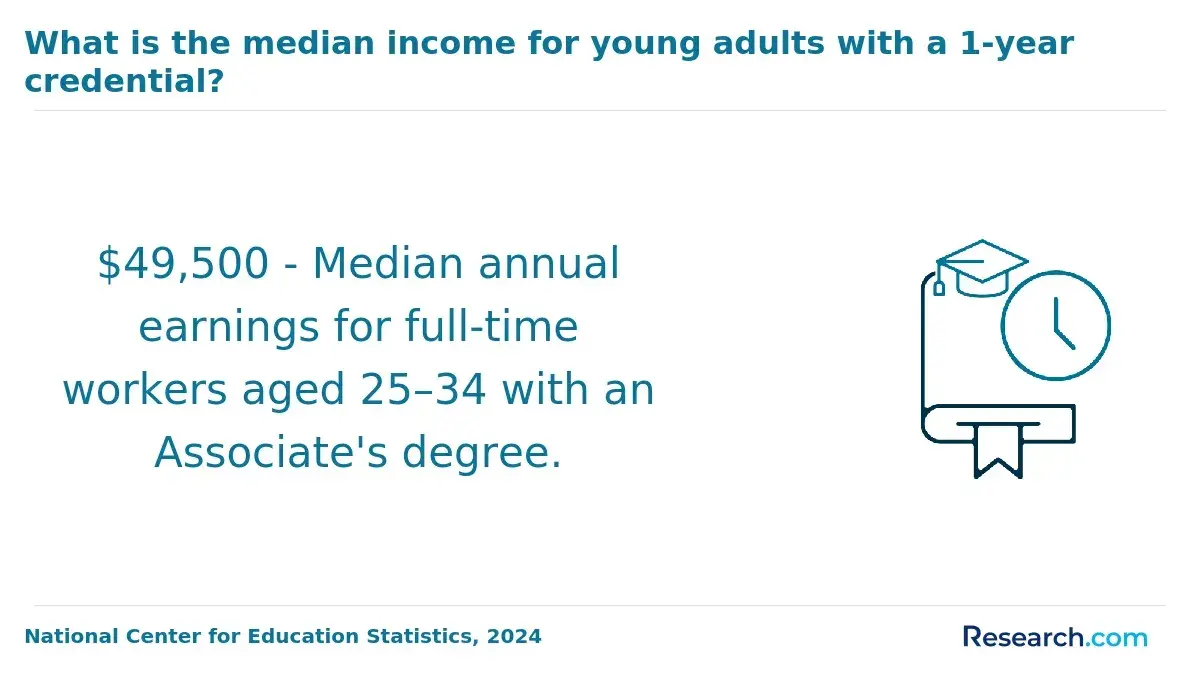
Median starting salaries for graduates of physics bachelor's programs, whether online or on-campus, tend to fall between $55,000 and $65,000 annually. This similarity reflects the broad utility of physics expertise across STEM fields and related industries, where skills proficiency often matters more than the degree's delivery format. After approximately five to ten years of experience, annual earnings typically rise to roughly $95,000 to $110,000, depending heavily on factors such as career specialization, geographic location, and additional qualifications.
- Starting Salary: Online physics graduates usually report compensation on par with those holding traditional degrees, emphasizing the growing acceptance of online education by employers in technical sectors.
- Mid-Career Earnings: Salaries increase significantly with experience and advanced roles, reflecting continued professional development and industry demand for specialized physics skills.
- Influence of Institution and Location: Graduates from reputable or highly ranked programs in major metropolitan areas often command higher salaries, underscoring the importance of researching specific program outcomes through IPEDS or institutional transparency reports.
One professional who completed an online physics bachelor's degree shared that balancing coursework with full-time employment required careful time management and resilience. He described the flexibility of the online format as critical, enabling him to integrate study around family and job commitments. When asked about salary outcomes, he noted that while advancing in his career took deliberate effort, the degree opened doors to roles he previously could not pursue. "The credibility of the program and the skills I developed mattered more than how the degree was delivered," he reflected, illustrating how nontraditional pathways can lead to rewarding physics careers.
Career opportunities with a physics bachelor's degree span multiple fields, with some roles requiring only an undergraduate credential while others need further education or certifications. Graduates often find positions as Research Assistants, supporting experimental work and data interpretation in academic or governmental settings, where physical science research is growing steadily.
- Engineering Technician: Physics graduates qualify for technician roles in mechanical, electrical, or aerospace engineering. These positions emphasize applied physics in product development and testing, with job growth projected around 4% through 2032.
- Data Analyst: Strong analytical and quantitative skills prepare physics majors for data-driven roles across sectors like finance, healthcare, and technology, a field expanding rapidly as the demand for big data expertise increases.
- High School Physics Teacher: Teaching at the secondary level generally requires a bachelor's degree plus state licensure, with steady demand for skilled STEM educators maintaining stable job prospects.
- Graduate Studies and Specialized Roles: Advanced careers such as physicist or medical physicist typically need graduate degrees and certifications. These positions are growing faster than average, especially in health-related and environmental sciences.
Selecting a specialization-whether astrophysics, applied physics, or computational physics-within an online physics bachelor's degree can enhance career focus and widen opportunities in research, software, or industry. For those exploring further education paths, exploring an MSW degree online program can be a strategic option. Understanding these pathways ensures better alignment of studies with long-term professional goals and the evolving job market.
Personalized advising helps students navigate course selection, degree paths, and transfer credits, ensuring their academic plan aligns with long-term objectives. Advisors also connect students with tailored resources to address unique challenges.
Virtual tutoring services focus on physics and related math topics, offering scheduled and on-demand support that helps learners overcome difficult concepts and maintain academic progress.
Online writing assistance develops students' ability to communicate scientific ideas effectively, enhancing performance on research papers, reports, and lab assignments essential for both academic and professional success.
Accessible telehealth counseling supports students coping with stress, anxiety, or other mental health issues, helping to promote well-being and improve persistence in their studies.
Leading programs provide robust career resources such as:
- Internship Coordination: Support in securing internships that offer real-world physics experience.
- Job Placement Assistance: Help with resume building, interview preparation, and job searches specific to physics fields.
- Alumni Mentorship Networks: Opportunities to connect with graduates offering guidance and professional networking.
- Employer Partnerships: Collaborative relationships with companies and research institutions to facilitate internships and employment.
Data from the National Survey of Student Engagement and institutional records show that comprehensive student support strongly correlates with timely degree completion in online physics programs. One graduate who transitioned into a physics career after completing an online degree shared how personalized advising was crucial during credit transfers and that frequent access to tutoring eased the anxiety of challenging courses. She emphasized that confidential counseling helped her manage work-life balance stresses, while career services opened doors to internships and mentorships that shaped her professional path. Her reflections highlight how integrated support systems not only foster academic achievement but also build confidence and career readiness.
A 2023 survey by the Society for Human Resource Management reveals that over 70% of hiring managers regard accredited online degrees as equal to those earned on campus, given the institution has proper regional accreditation and solid reputation. This shift reflects improvements in online program quality, which now align closely with traditional curricula and faculty standards.
In STEM fields like Physics, online credentials are generally well-regarded, especially in sectors focused on applied technology, research, and data analysis where practical skills weigh heavily. Companies such as NASA and Lockheed Martin openly recruit candidates with accredited online Physics degrees, emphasizing demonstrated expertise over educational delivery method. Still, some specialized areas-like academic research or national labs requiring security clearances-may prefer traditional degrees or advanced graduate studies.
Graduate programs typically accept online Physics bachelor's degrees when accreditation standards are met, facilitating seamless credit transfers and continued education. This expands opportunities for students seeking advanced degrees after completing an online program.
Students should closely examine employer preferences within their intended industry and review alumni outcomes to ensure alignment. Weighing factors like accreditation, transfer credit policies, financial aid availability, and personal circumstances makes for a comprehensive evaluation when selecting an online Physics program.
Accreditation status is a critical factor when selecting an online physics bachelor's degree, influencing credit transfer, employer recognition, and graduate school opportunities. Regional accreditation is the highest standard in the U.S., granted to nonprofit, degree-granting institutions and widely accepted across academic and professional settings. In contrast, national accreditation often applies to career-focused or for-profit schools and tends to carry less weight for credit transfer and advanced education.
The six regional accrediting bodies recognized by the U.S. Department of Education are:
- HLC: Higher Learning Commission
- SACSCOC: Southern Association of Colleges and Schools Commission on Colleges
- NECHE: New England Commission of Higher Education
- MSCHE: Middle States Commission on Higher Education
- NWCCU: Northwest Commission on Colleges and Universities
- WSCUC: WASC Senior College and University Commission
Students should verify accreditation through reliable sources like the Council for Higher Education Accreditation (CHEA) or the U.S. Department of Education (ED) databases to confirm current institutional status. Unlike disciplines such as engineering or business, physics does not have a dedicated programmatic accrediting agency; thus, attending a regionally accredited institution generally assures curriculum quality and broader acceptance.
Enrolling in unaccredited or lapsed accreditation programs entails significant risks, including losing eligibility for federal financial aid, having credits denied by transfer institutions, and diminished credibility with employers. According to a recent report by the National Student Clearinghouse, nearly 25% of students intending to transfer experienced credit acceptance issues largely tied to accreditation problems.
Most online physics bachelor's degree programs require about 120 credit hours, traditionally structured for completion in four years of full-time study. This standard timeline aligns with two semesters per academic year but can vary significantly for online students depending on their schedule flexibility and prior coursework. Factors influencing the duration of online physics bachelor's degree programs include course formats, enrollment options, and transfer credit policies.
Accelerated eight-week courses and year-round enrollment options, including summer and winter sessions, allow highly motivated students to take more classes annually, reducing completion time to as little as two to three years. Competency-based education (CBE) pathways enable learners to progress swiftly by demonstrating mastery rather than spending fixed hours in class. Institutions such as Western Governors University and Southern New Hampshire University exemplify these abbreviated timelines, with reported average completions under three years for dedicated students. Conversely, part-time enrollment, work and family commitments, and the time needed to evaluate transfer credits-especially relevant for military veterans transitioning into civilian education-may extend the time to graduate.
Faster degree completion not only lessens tuition expenses but also reduces the opportunity cost related to postponing full-time employment or advanced study. Choosing programs with flexible pacing and policies supportive of transfer credits can improve both educational and financial outcomes. Prospective students should consider program accreditation, transfer credit acceptance, and career alignment to maximize long-term return on investment. For those looking to advance their credentials further, exploring options such as the best organizational leadership master's programs is advisable to plan a coherent educational pathway.
Students pursuing an online physics bachelor's degree have access to diverse financial aid options designed to make education more affordable. These resources, backed by FAFSA and College Board data, include several key categories.
- Federal Pell Grants: These grants are awarded to undergraduate students demonstrating significant financial need and do not require repayment. The maximum award amount adjusts annually and can substantially reduce tuition expenses.
- Direct Subsidized and Unsubsidized Loans: By completing the FAFSA, students can qualify for federal loans with favorable interest rates and flexible repayment plans. Subsidized loans are need-based and do not accumulate interest while the student is enrolled, whereas unsubsidized loans are available regardless of financial need but accrue interest from disbursement.
- Institution-Specific Scholarships: Many online physics programs offer scholarships based on academic merit, financial need, or demographic criteria. Noteworthy examples include:
- The APS Minority Scholarship, providing up to $4,000 for underrepresented physics students demonstrating academic excellence.
- The Society of Physics Students (SPS) Scholarships, which support active members pursuing physics degrees with annual awards ranging from several hundred to a few thousand dollars.
- The National Science Foundation's S-STEM program, offering grants focused on low-income and high-achieving STEM students, including physics majors.
- State Grant Programs: Numerous states offer grants for residents attending in-state institutions, including online degree programs. These typically require FAFSA submission and have varied deadlines, emphasizing the need to apply early.
Completing the Free Application for Federal Student Aid (FAFSA) promptly after its October 1 opening each year is critical to accessing federal grants, loans, and institutional aid, since many funds are allocated on a first-come, first-served basis.
Students should strategically combine multiple aid sources-grants, scholarships, employer tuition reimbursement, and Federal Work-Study positions-to reduce out-of-pocket costs and dependence on loans. This multi-layered approach enhances affordability for a comprehensive online physics degree.
Prospective learners comparing the value of an online degree in physics can also examine programs like those featured at online degree in mechanical engineering sites, which illustrate financial aid opportunities in STEM fields and inform investment decisions.
Admissions criteria for online physics bachelor's degree programs range significantly, largely influenced by whether the institution employs a selective or open-admission model. Competitive programs generally require applicants to maintain a minimum GPA-often between 2.5 and 3.5-while open-access schools typically accept candidates regardless of GPA. Completion of a high school diploma or GED remains a universal prerequisite, affirming fundamental academic readiness.
- GPA Threshold: Selective programs expect applicants to demonstrate consistent academic achievement with a GPA usually around 3.0 or higher, whereas open-enrollment institutions offer greater flexibility with fewer GPA constraints.
- High School Diploma or GED: Almost all programs mandate this credential, ensuring a baseline educational foundation.
- Standardized Tests: Many online physics bachelor's programs have relaxed requirements for SAT or ACT scores due to evolving admissions policies; however, some selective schools may still consider these results in their evaluation.
- Prerequisite Coursework: Foundational knowledge in math and science is commonly required. This typically includes subjects like algebra, geometry, chemistry, or introductory physics, with competitive programs demanding completed courses and solid grades before enrollment.
- Admissions Flexibility: Numerous programs utilize rolling or continuous admissions, removing strict deadlines and thereby accommodating adult learners, military veterans, and those changing careers, who benefit from applying at their own pace.
- Strengthening Applications: Applicants with lower academic metrics can improve their candidacy by undertaking relevant coursework at community colleges, acquiring industry certifications, or submitting compelling recommendation letters from academic or professional contacts.
Confirm that programs hold regional accreditation recognized by the U.S. Department of Education to ensure credit transferability, federal financial aid eligibility, and employer acceptance. Evaluate tuition alongside hidden expenses like technology fees, proctoring charges, textbooks, and residency requirements. Consider long-term return on investment by researching graduate salaries and career opportunities.
Investigate whether the curriculum offers asynchronous classes, part-time options, or accelerated tracks to accommodate work, family, or military schedules. Analyze graduation rates, job placement statistics, and graduate school acceptance rates to determine the program's effectiveness in preparing students for physics-related careers.
Seek programs with easily accessible academic advising, tutoring, career counseling, and technical assistance specifically tailored for online learners.
Verify acceptance of previous college coursework, military training, or standardized exams like CLEP to shorten your pathway to graduation.
Use authoritative resources such as the U.S. Department of Education's College Scorecard, the IPEDS Data Center, and individual institutions' net price calculators to conduct a transparent, side-by-side comparison of finalist programs. Remember to incorporate all associated fees and residency obligations when assessing total costs beyond tuition.
- Schedule informational interviews with admissions counselors to clarify program specifics and expectations.
- Request official net price estimates including all fees and financial aid prospects.
- Review financial aid and scholarship deadlines promptly to maximize funding opportunities.
- Audit existing academic and military credits early to confirm transferability and plan coursework efficiently.
- Set a target enrollment date to maintain focus and momentum in your decision-making process.
What Graduates Say About the Value of Their Online Physics Bachelor's Degree
- Otis: "Choosing the online physics bachelor's degree program was a strategic decision for me because of the flexibility it offered alongside my full-time job. The cost was surprisingly reasonable compared to traditional programs, and I quickly saw the return on investment as I secured a promotion within a year of graduating. This program truly bridged the gap between academic theory and real-world application for my career."
- Ronan: "Reflecting on my experience, the most valuable aspect of this online physics bachelor's degree was the depth of knowledge I gained without sacrificing my personal commitments. The affordability made advanced education accessible, which lowered my financial stress. Professionally, the degree opened doors to specialized roles I hadn't thought possible before directly through remote learning."
- Brooks: "From a professional standpoint, enrolling in the online physics bachelor's degree program transformed my approach to problem-solving and analytical thinking-skills highly sought after in my industry. The program's cost-effectiveness was a pleasant surprise that made upgrading my qualifications possible without debt. I'm enthusiastic about how this degree has enhanced my resume and networking within the scientific community."
Other Things You Should Know About Physics Degrees
Yes. Most accredited online physics degrees require at least 8 to 12 laboratory credits, completed through virtual labs, take-home kits, or short on-campus residencies. For graduate school, the key is that the transcript shows calculus-based physics, modern physics, and laboratory work accepted by the institution.
Most online physics programs accept transfer credits from accredited institutions, with typical caps ranging from 60 to 90 semester hours, depending on the degree length. Some also award credit for prior learning through exams like CLEP or portfolio assessments, especially benefiting military veterans or professionals with relevant experience. Nevertheless, core physics courses often must be completed through the degree-granting institution to meet accreditation and program requirements.
An online physics bachelor's degree from an accredited university generally holds the same weight as a traditional degree in graduate admissions decisions. Admissions committees focus on coursework rigor, GPA, and research experience-areas where online students may need to demonstrate equivalent competency through lab work or internships. Strong letters of recommendation and performance in core physics courses remain critical factors for advancing to graduate study.
- Accreditations to Look for When Applying for a Physics Degree https://www.applytouni.com/courses/science/accreditations-to-look-for-when-applying-for-a-physics-degree/
- Why a physics degree is so valuable in today's uncertain job market – Physics World https://physicsworld.com/a/why-a-physics-degree-is-so-valuable-in-todays-uncertain-job-market/
- How Long to Get a Physics Degree? | ValidGrad https://validgrad.com/blog/physics-degree-timeline/
- Accreditation, Validation and Recognition of Physics Degrees https://telescoper.blog/2022/09/19/accreditation-validation-and-recognition-in-physics-degrees/
- 5 Best Online Bachelor's in Physics - Bachelors Degree Center https://www.bachelorsdegreecenter.org/best-online-physics-degrees/
- The Australian Institute of Physics https://www.aip.org.au/Accreditation
- 8 Criteria for Choosing an Online Degree Program https://www.firehouse.com/careers-education/article/10493823/8-criteria-for-choosing-an-online-degree-program
- Online Physics Degrees: Are They Useful in Today’s Scenario? https://www.allassignmenthelp.com/blog/online-physics-degrees-in-todays-scenario/
- Online College Accreditation https://www.onlineu.com/resources/online-college-accreditation
- Does College Pay Off? A Comprehensive Return On Investment Analysis - FREOPP https://freopp.org/whitepapers/does-college-pay-off-a-comprehensive-return-on-investment-analysis/