
2026 What Can You Do with a Curriculum & Instruction Doctorate? Careers, Salaries, Academic Roles, and Industry Paths

Co-Founder and Chief Data Scientist
A Curriculum & Instruction doctorate is usually pursued for one reason: moving from teaching or program delivery into designing, evaluating, and leading learning systems. The timing matters because BLS May 2024 data places instructional coordinators at a median annual wage of $74,720, while training and development managers reach $127,090. This guide is for educators, trainers, administrators, and learning leaders weighing whether a doctoral credential is worth the cost and time. You will learn which roles it can support, where salaries differ, and how to judge whether the degree fits your next career move.
Key Things to Know About Online Curriculum & Instruction Doctorate Career Outcomes
- A Curriculum & Instruction doctorate is most useful for roles that require advanced expertise in curriculum design, assessment, instructional leadership, education research, program evaluation, and change management.
- The strongest salary upside is usually outside classroom teaching: BLS May 2024 medians include $127,090 for training and development managers, $104,070 for K-12 principals, and $103,960 for postsecondary education administrators.
- Online programs can be respected when they are institutionally accredited, research-intensive, and aligned with your target sector; however, no national dataset proves a fixed promotion rate or salary increase for all Curriculum & Instruction doctorate holders.
What skills do you gain from Curriculum & Instruction doctorate degrees?
A doctorate in Curriculum & Instruction builds advanced capability in how learning is designed, implemented, measured, and improved. Unlike a master's degree, which often prepares educators to apply established practices, a doctorate typically expects students to evaluate systems, conduct original or applied research, and lead instructional change across classrooms, districts, universities, companies, or public agencies.
The skills below matter because they help explain why doctorate holders are considered for leadership and specialist roles beyond direct instruction.
| Doctoral skill area | What it means in practice | Where it is most valuable |
| Curriculum theory and design | Creating coherent learning sequences, standards alignment, and instructional models | K-12 districts, higher education, publishing, edtech |
| Assessment and learning analytics | Using data to evaluate learning outcomes, equity gaps, and program effectiveness | School systems, universities, workforce training teams |
| Research methodology | Designing qualitative, quantitative, or mixed-methods studies to answer education problems | Academic roles, policy research, program evaluation |
| Instructional leadership | Leading teachers, faculty, trainers, or designers through curriculum change | District leadership, department leadership, corporate learning |
| Equity-centered curriculum review | Evaluating whether instructional materials and practices serve diverse learners | Public education, nonprofits, government agencies |
| Technology integration | Selecting and evaluating digital tools, AI-supported learning systems, and online course models | Online learning, edtech, higher education, corporate training |
The practical value of these skills depends on your target career. A district curriculum director needs policy alignment and teacher coaching skills; a university faculty member needs research productivity; a corporate learning leader needs performance analysis, digital learning strategy, and stakeholder management.
AI is also changing the skill mix. Employers increasingly want learning leaders who can evaluate AI-generated content, protect academic integrity, personalize instruction responsibly, and measure whether new technologies actually improve outcomes. A doctorate can help if the program teaches both learning science and evidence-based technology evaluation, not just tool use.
What specializations can you pursue within Curriculum & Instruction doctorate degrees?
Curriculum & Instruction is a broad doctoral field, so specialization choice can shape career options. A general track may offer flexibility, while a niche specialization can be stronger if you already know the sector or learner population you want to serve.
This table summarizes common specializations and the career directions they most often support.
| Specialization | Best fit for | Possible career paths |
| Instructional technology or digital learning | Educators interested in online learning, AI, LMS strategy, or edtech evaluation | Director of online learning, learning experience leader, edtech researcher, instructional design executive |
| STEM education | Teachers or coordinators focused on science, technology, engineering, or math pathways | STEM curriculum director, grant leader, faculty member, education program evaluator |
| Literacy and language education | Educators focused on reading, writing, multilingual learners, or literacy intervention | Literacy director, reading program consultant, faculty role, district intervention leader |
| Urban education and equity | Professionals interested in access, culturally responsive curriculum, and system-level improvement | Equity curriculum director, nonprofit program leader, policy analyst, school improvement consultant |
| Early childhood curriculum | Educators working with young learners, early learning systems, and developmental curriculum | Early learning director, curriculum specialist, public agency consultant, faculty role |
| Higher education teaching and learning | Professionals aiming for college-level curriculum, faculty development, or academic administration | Center for teaching and learning director, faculty developer, academic program director |
A general Curriculum & Instruction doctorate makes sense if you want broad leadership roles, such as district curriculum director, academic administrator, or consultant across subject areas. A niche specialization makes more sense if your credibility depends on deep expertise, such as literacy intervention, STEM education, online learning, or multilingual education.
A common mistake is choosing a specialization based only on personal interest. Before enrolling, compare job postings in your desired sector and look for recurring requirements. If postings mention analytics, AI tools, faculty development, grant management, or state standards expertise, your specialization and dissertation topic should help you build evidence in those areas.
Are online Curriculum & Instruction doctorate programs respected by employers?
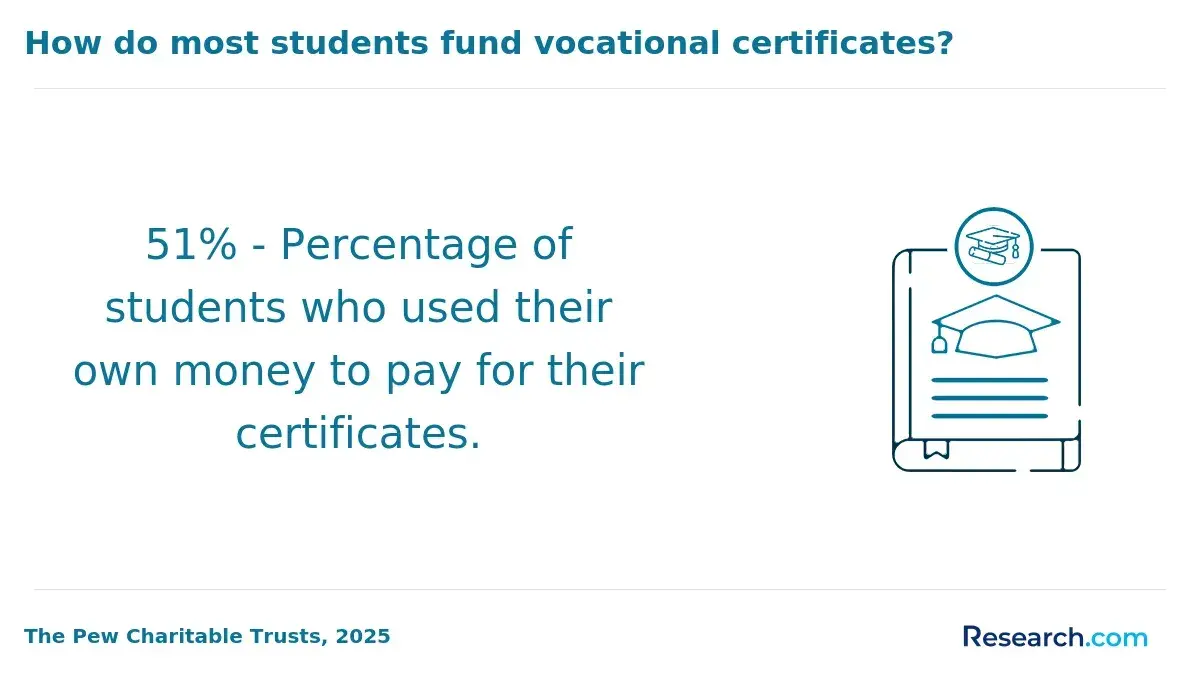
Online Curriculum & Instruction doctorates can be respected by employers when the institution is properly accredited, the program includes rigorous research or applied inquiry, and the curriculum connects to real leadership problems. Employers typically care less about whether coursework was online and more about whether the degree came from a credible institution and produced measurable expertise.
Online learning is now common in graduate education, and that helps normalize online doctorates. A Council of Graduate Schools report released in 2024 found that first-time graduate enrollment increased by 5.2% from fall 2022 to fall 2023 after prior declines, signaling renewed demand for advanced study. That figure is not specific to Curriculum & Instruction, but it shows that graduate education remains an active pathway for working professionals.
Respect varies by hiring context. A district may value an online EdD if it includes field-based leadership projects. A research university may prefer a PhD with strong methodology training, publications, and teaching experience. A corporate learning employer may care most about whether you can connect learning design to performance outcomes.
Use the following checks before trusting an online doctorate with your time and money:
- Verify institutional accreditation through a recognized accreditor, not just marketing language on the program website.
- Confirm whether the doctorate is an EdD, PhD, or another doctoral format, because research expectations and career signaling differ.
- Review faculty profiles to see whether professors publish or practice in your intended career area.
- Ask for dissertation or capstone examples to judge whether students complete work that aligns with leadership, academic, or industry goals.
- Check whether the program offers research support, writing support, cohort interaction, and career-relevant mentoring for online students.
Online may be the better fit if you plan to keep working, apply projects to your current organization, or need geographic flexibility. Hybrid may be better if you want stronger faculty networking, research apprenticeship, or access to campus-based teaching opportunities.
What industries value professionals with Curriculum & Instruction doctorate degrees?
Curriculum & Instruction doctorate holders are valued in industries where learning quality, instructional systems, assessment, compliance training, or educational outcomes matter. The degree is not limited to schools, but it is strongest when paired with experience in a specific learning environment.
The table below compares sectors that commonly value advanced curriculum and instructional expertise.
| Industry or sector | Why the doctorate can matter | Common roles |
| K-12 education | Districts need leaders who can align curriculum, assessments, teacher development, and state standards | Curriculum director, instructional coordinator, principal, assistant superintendent |
| Higher education | On-campus and online colleges need faculty, academic leaders, assessment experts, and teaching innovation specialists | Professor, program chair, assessment director, center for teaching and learning director |
| Corporate learning and development | Companies need training systems tied to performance, compliance, leadership development, and digital learning | Learning director, training and development manager, learning strategist |
| Edtech and education publishing | Product teams need experts who can evaluate instructional quality and learner outcomes | Curriculum product lead, learning science researcher, assessment strategist |
| Government and public agencies | Agencies fund, regulate, or evaluate education and workforce programs | Education program specialist, policy analyst, grant evaluator |
| Nonprofits and foundations | Organizations need evidence-based program design and evaluation for education initiatives | Program director, research director, learning impact evaluator |
BLS May 2024 data shows that instructional coordinators are concentrated heavily in educational services and government settings. For readers, the takeaway is that traditional education remains the most direct market, but the doctorate can also translate into corporate, nonprofit, and edtech work if you can show skills in analytics, digital learning, product evaluation, or organizational change.
Industry paths can pay more, but they may also require language and experience outside education. For example, corporate roles often expect familiarity with KPIs, performance consulting, vendor management, and learning technologies. Edtech roles may expect product development cycles, user research, and evidence standards for instructional claims.
What executive or leadership roles can Curriculum & Instruction doctorate degrees qualify you for?
A Curriculum & Instruction doctorate can support advancement into leadership roles where organizations need someone to direct learning strategy, supervise instructional teams, evaluate outcomes, or lead curriculum reform. The degree rarely qualifies someone by itself; employers usually expect substantial teaching, training, administrative, or research experience.
The table below shows leadership roles where the doctorate may strengthen a candidate's profile, along with BLS May 2024 salary benchmarks for related occupational categories.
| Leadership role | Why the doctorate helps | Relevant BLS May 2024 median wage |
| Director of curriculum and instruction | Signals advanced knowledge of curriculum systems, assessment, and instructional improvement | $74,720 for instructional coordinators |
| K-12 principal or instructional leader | Supports leadership in teaching quality, school improvement, and curriculum implementation | $104,070 for elementary, middle, and high school principals |
| Postsecondary education administrator | Helps with academic program oversight, assessment, accreditation, and faculty development | $103,960 for postsecondary education administrators |
| Training and development manager | Connects learning design to workforce capability, leadership development, and organizational performance | $127,090 for training and development managers |
| Chief learning officer or learning executive | Supports enterprise learning strategy, governance, digital learning transformation, and evaluation | No single BLS category isolates this role |
The highest-paying leadership outcomes often come from roles that combine curriculum expertise with management responsibility. A doctorate may help you compete for those roles, but your leadership record, budget experience, ability to manage teams, and evidence of improved learning outcomes are usually decisive.
For career advancement within your current organization, use the doctorate strategically rather than waiting until graduation. Align course projects, research questions, and dissertation work with problems your employer already values, such as improving retention, redesigning professional development, evaluating AI tools, or closing achievement gaps.
Are there academic careers available for Curriculum & Instruction doctorate holders?
Yes, academic careers are available, but they vary sharply by institution type and by whether the doctorate is research-oriented or practice-oriented. A PhD in Curriculum & Instruction is often stronger for tenure-track research faculty roles, while an EdD program can be strong for clinical faculty, lecturer, program director, faculty development, or practitioner-scholar positions.
BLS May 2024 data reports a median annual wage of $83,980 for postsecondary teachers. That number covers many fields and institution types, so it should be treated as a broad benchmark rather than a specific salary for Curriculum & Instruction faculty.
Academic paths usually fall into several categories:
- Tenure-track faculty roles, which emphasize research, publications, teaching, advising, and service.
- Clinical or practice faculty roles, which emphasize teaching, field supervision, practitioner preparation, and school partnerships.
- Higher education administration roles, which may focus on assessment, accreditation, curriculum quality, or faculty development.
- Research center roles, which involve grant-funded studies, program evaluation, data analysis, and publication support.
An academic career makes sense if you enjoy research, writing, mentoring graduate students, and contributing to scholarly conversations. It may not be the best fit if your primary goal is immediate salary growth, because academic hiring can be competitive and often depends on publications, research fit, teaching record, and geographic flexibility.
One mistake aspiring faculty members make is assuming the doctorate alone is enough. If you want an academic role, build a portfolio before graduation: conference presentations, peer-reviewed writing, teaching experience, research assistantships, grant work, and a dissertation topic that fits active hiring needs.
Are there consulting opportunities for Curriculum & Instruction doctorate holders?
Consulting can be a strong path for Curriculum & Instruction doctorate holders, especially those with a clear area of expertise and a track record of solving measurable learning problems. Common consulting areas include curriculum audits, professional development, assessment design, school improvement, instructional technology implementation, literacy programs, and program evaluation.
Consulting is not automatically more lucrative than a full-time role. It can offer flexibility and high project-based income, but it also requires client acquisition, contracts, pricing, reputation-building, and business operations. A full-time leadership role may provide steadier income, benefits, and organizational influence.
These are the signals that consulting may be a good use of your doctorate:
- You have a defined niche, such as literacy intervention, AI policy for instruction, STEM curriculum, accreditation assessment, or multilingual learner support.
- You can show evidence of outcomes, not just credentials, such as improved assessment systems, successful curriculum rollouts, or evaluated training programs.
- You are comfortable translating research into practical tools, workshops, reports, and implementation plans.
- You have or can build a network of districts, universities, nonprofits, companies, or agencies that buy education expertise.
Consulting may be less suitable if you need predictable income immediately after graduation or dislike sales and relationship-building. In that case, a director-level role inside a school system, university, company, or nonprofit may make better use of the doctorate while still allowing occasional speaking, writing, or advisory work.
What nonprofit or public sector roles are open to Curriculum & Instruction doctorate holders?
Nonprofit and public sector roles can be a strong fit for doctorate holders who want to influence education systems, workforce programs, equity initiatives, or community learning outcomes. These paths often emphasize mission, evidence, grant accountability, and policy implementation more than direct classroom instruction.
Examples of roles include education program director, grant evaluator, curriculum policy specialist, state education agency consultant, workforce development learning strategist, foundation program officer, and research director. In these settings, the doctorate is valuable when it helps you design programs, evaluate impact, interpret research, and communicate findings to funders or policymakers.
The U.S. public sector also has growing need for people who can evaluate training and education programs with credible evidence. Federal and state agencies frequently fund initiatives that require measurable outcomes, equity analysis, and defensible reporting. A Curriculum & Instruction doctorate can be useful when your research training matches those accountability expectations.
Nonprofit and public sector work makes sense if you value impact, systems change, and public accountability. It may be less appealing if your top priority is maximizing salary, since some nonprofit roles pay less than corporate learning leadership. However, senior foundation, agency, and research leadership roles can still be competitive, especially for candidates who combine doctoral training with grant management and evaluation experience.
How do Curriculum & Instruction doctorate degrees impact long-term earning potential?
A Curriculum & Instruction doctorate can improve long-term earning potential when it helps you move into roles with broader responsibility, such as leadership, administration, consulting, research, or corporate learning management. The income effect is not automatic, and it depends heavily on sector, geography, prior experience, licensure, and whether the role actually rewards doctoral-level expertise.
BLS education-pay data published in 2024 shows that workers with doctoral degrees had median weekly earnings of $2,109, compared with $1,737 for master's degree holders. This is a broad labor-market comparison, not a Curriculum & Instruction-specific outcome, but it supports the general point that doctoral-level education is associated with higher median earnings across the U.S. workforce.
For this field, the clearest salary upside usually comes from moving beyond teacher salary schedules into higher-responsibility roles. BLS May 2024 medians show stronger benchmarks for training and development managers at $127,090, K-12 principals at $104,070, and postsecondary education administrators at $103,960. These roles may require credentials or experience beyond the doctorate, especially for licensed K-12 administrative positions.
Cost should be weighed carefully. No federal dataset isolates the average cost of a Curriculum & Instruction doctorate, but the Education Data Initiative's 2024 estimate places the average total doctorate cost at $133,340 across doctoral fields. Program cost can be much lower or higher depending on public versus private tuition, online fees, transfer credits, dissertation length, employer reimbursement, assistantships, and whether you can keep working while enrolled.
Think about return on investment through scenarios rather than averages:
- The degree is more likely to pay off financially if it helps you qualify for a director, administrator, faculty, consulting, or corporate learning role that was previously out of reach.
- The degree may have weaker financial ROI if you plan to remain in the same classroom role and your salary schedule offers only a small doctoral stipend.
- The degree may still be worthwhile for nonfinancial goals, such as research credibility, academic contribution, public sector leadership, or long-term consulting authority.
Completion time also matters. Many working professionals pursue these doctorates part time, which can reduce career disruption but lengthen time to completion. Before enrolling, ask each program for its typical completion time, dissertation support structure, and recent completion patterns, because national completion averages do not tell you how well a specific program supports adult doctoral students.
How can you assess if a doctorate degree in Curriculum & Instruction is aligned with your career goals?
The best way to evaluate a Curriculum & Instruction doctorate is to start with the role you want, not the degree title. This credential is most aligned when your target career requires advanced curriculum expertise, research ability, leadership credibility, or authority to evaluate and redesign learning systems.
Use these steps to decide whether the degree fits your goals:
- Define your target outcome in one sentence, such as "I want to become a district curriculum director" or "I want to lead learning strategy in a healthcare company."
- Collect 10 to 15 job postings for that outcome and list the required credentials, skills, technologies, and experience.
- Compare EdD and PhD formats based on your goal: EdD programs, EDS to EdD bridge programs online, including often fit applied leadership, while PhD programs often fit research-intensive academic paths.
- Check accreditation, faculty expertise, dissertation support, online student resources, and whether the curriculum includes your target specialization.
- Estimate total cost, time to completion, lost income risk, employer support, and likely salary range in your chosen sector.
- Ask admissions teams for examples of recent dissertation topics and alumni roles, then evaluate whether those outcomes resemble your own goal.
There are also red flags to avoid. Be cautious if a program is vague about accreditation, cannot explain dissertation support, markets the doctorate as a guaranteed promotion, has little faculty expertise in your specialization, or does not provide clear cost information. Also avoid choosing a program only because it is fast; doctoral quality, mentoring, and career alignment matter more than speed.
Online versus hybrid is a fit question, not a prestige question. Online works well if you are self-directed and need to maintain employment. Hybrid may be better if you want stronger in-person networking, campus teaching experience, or deeper research collaboration. Public versus private university choice should also be evaluated by total cost, faculty match, support, and outcomes, not institution type alone.
A Curriculum & Instruction doctorate is most worth considering if you want to lead instructional systems, influence curriculum at scale, conduct applied or scholarly research, or move into roles where your credibility depends on advanced expertise. If your goal is mainly a modest raise in your current role, compare the degree cost against salary schedule rules before committing.
Other Things You Should Know About Curriculum & Instruction
Many programs take about three to five years, but timelines vary by enrollment pace, dissertation progress, transfer credits, and whether the student works full time. Ask programs for recent completion-time data rather than relying only on catalog estimates.
An EdD is often better for applied leadership, district administration, professional practice, and organizational change. A PhD is usually better for research-intensive faculty roles, scholarly publishing, and academic research careers.
It depends on the role and state. Some K-12 administrative jobs require teaching or administrator licensure, while higher education, corporate learning, nonprofit, and consulting roles may not. Always verify requirements with the employer or state agency.
Choose a problem connected to your target role, such as curriculum implementation, learning analytics, AI in instruction, literacy outcomes, professional development effectiveness, or equity in assessment. A practical, evidence-based dissertation can become part of your career portfolio.
References
- The Role of Professional Doctorates in Bridging Academia ... https://jies.cultechpub.com/index.php/jies/article/download/16/11/94
- Q&A: Why I Chose a PhD in Curriculum and Instruction https://www.albany.edu/graduate/news/2024-qa-why-i-chose-phd-curriculum-and-instruction
- Academic and Career Paths for PhD Graduates | European Proceedings https://www.europeanproceedings.com/article/10.15405/epes.23056.44
- What Can You Do with a PhD in Education https://aituedu.org/what-can-you-do-with-a-phd-in-education/
- Doctorate of Education Classes: A Guide | University of Bridgeport https://www.bridgeport.edu/news/doctorate-of-education-classes/
- Demystifying PhD salaries in industry https://kaidiwu.kit.com/posts/how-much-phds-actually-get-paid-in-industry
- Benefits of Getting a Doctorate in Curriculum and Instruction - Graduate Programs for Educators https://www.graduateprogram.org/blog/benefits-of-getting-a-doctorate-in-curriculum-and-instruction/
- Exploring Educational Policy Innovations and Curriculum ... https://jecs.pl/index.php/jecs/article/view/1715/1546


